Psychologische Sicherheit nach Amy Edmondson: Der Führungs-Guide 2026

Psychologische Sicherheit nach Amy Edmondson: Der Führungs-Guide 2026

Aktualisiert am: 11. Januar 2026 | Autor: Don Markland

In der modernen Führungskultur des Jahres 2026 reicht fachliche Expertise allein nicht mehr aus. Unternehmen stehen vor der Herausforderung, Künstliche Intelligenz zu integrieren, hybride Arbeitsmodelle zu etablieren und in volatilen Märkten zu bestehen. In diesem Umfeld wird psychologische Sicherheit zum entscheidenden Wettbewerbsvorteil. Die Forschung von Amy Edmondson, Professorin an der Harvard Business School, belegt eindrücklich: Teams, in denen Mitglieder bedenkenlos Kritik äußern, Fehler eingestehen und den Status quo hinterfragen können, übertreffen ihre Konkurrenz signifikant in Innovationskraft und Mitarbeiterbindung.

Dieser Leitfaden überträgt Edmondsons empirische Erkenntnisse in konkrete Handlungsanweisungen für Führungskräfte im deutschsprachigen Raum. Sie erfahren, wie Sie durch spezifische Verhaltensweisen Vertrauen aufbauen, welche Kennzahlen Sicherheit messbar machen und wie Sie eine Hochleistungskultur etablieren, die Verantwortlichkeit und Empowerment vereint.

Das Fundament: Das Forschungsmodell von Amy Edmondson

Es ist ein weit verbreitetes Missverständnis, dass psychologische Sicherheit mit einer “Kuschelkultur” oder gesenkten Standards gleichzusetzen ist. Edmondson definiert sie vielmehr als “die geteilte Überzeugung, dass das Team ein sicherer Ort für zwischenmenschliche Risikobereitschaft ist.” Diese Überzeugung ist der Motor für Lernprozesse, die organisationale Anpassungsfähigkeit in unsicheren Zeiten erst ermöglichen.
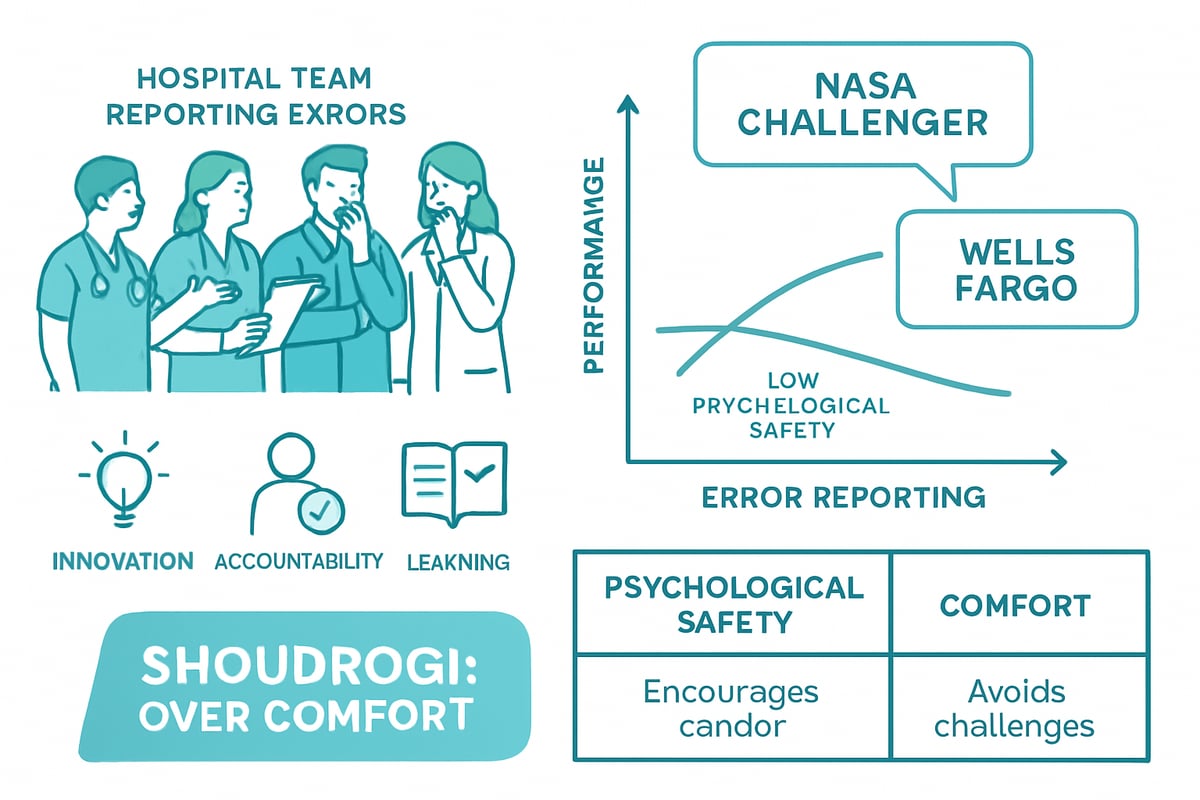
Visuelles Modell zu Amy Edmondsons Forschung: Schnittmenge aus Sicherheit, Lernen und Leistung
Das Edmondson-Framework: Wie Sicherheit, Lernen und Leistung zusammenhängen.

Kernkonzept und strategischer Wert

In ihrer wegweisenden Untersuchung in Krankenhäusern stieß Edmondson auf ein scheinbares Paradoxon: Stationen mit höherer psychologischer Sicherheit meldeten mehr Fehler. Die Analyse zeigte jedoch, dass diese Teams nicht mehr Fehler machten – sie vertuschten sie nur nicht. Diese Transparenz ermöglichte schnelle Korrekturen und führte langfristig zu besseren Patientenergebnissen.

Faktencheck: Laut einer Deloitte-Studie zur Organisationsgesundheit von 2025 verzeichnen Unternehmen im oberen Quartil für psychologische Sicherheit eine um 27 % höhere Rentabilität und eine um 40 % geringere Fluktuation als ihre Wettbewerber.

Die Unterscheidung zwischen Sicherheit und Komfort ist essenziell. Komfort impliziert oft eine passive Akzeptanz des Mittelmaßes. Echte Sicherheit hingegen fördert produktiven Konflikt: Teams debattieren hart in der Sache, ohne dass zwischenmenschliche Beziehungen Schaden nehmen. Diese “intellektuelle Reibung” ist der Schlüssel zur Problemlösung in komplexen Umgebungen.

Dimension Psychologische Sicherheit Komfortzone
Fehlerkultur Lernchance und Analyse Vertuschung oder Bagatellisierung
Feedback Direkt, konstruktiv, regelmäßig Vermeidung oder rein positiv
Debattenkultur Respektvoller Widerspruch erwünscht Harmoniesucht dominiert
Leistungskurve Kontinuierliche Verbesserung (KVP) Stagnation und Status-quo-Bias

Historische Beispiele verdeutlichen den Preis des Schweigens. Die Katastrophe der Raumfähre Challenger 1986 war teilweise darauf zurückzuführen, dass Ingenieure Angst hatten, Bedenken gegenüber dem Management zu äußern. Auch in der Finanzkrise 2008 zögerten Analysten, fehlerhafte Risikomodelle zu hinterfragen. Psychologische Sicherheit ist daher keine “weiche” HR-Initiative, sondern ein knallhartes Risikomanagement-Instrument.

Der Business Case für 2026

Drei Faktoren machen das Thema 2026 unverzichtbar: Erstens fragmentieren hybride Arbeitsmodelle den informellen Wissensaustausch. Zweitens erzeugt die Einführung von KI Unsicherheiten bezüglich der eigenen Rolle. Drittens erfordern schnelle Marktveränderungen Lernzyklen, die in starren Hierarchien nicht abbildbar sind.

Googles “Project Aristotle” identifizierte psychologische Sicherheit als den mit Abstand wichtigsten Indikator für Teameffektivität – noch vor individueller Intelligenz oder Ressourcen. McKinsey bestätigte 2025, dass Unternehmen mit hohem Sicherheitsniveau 60 % schneller auf Marktstörungen reagieren.

Für vertiefende Ressourcen zur Implementierung empfehlen wir die Führungs-Frameworks von Accountability Now.

Führungsverhalten: Vertrauensaufbau im Tagesgeschäft

Eine Kultur der Sicherheit entsteht nicht durch Unternehmensleitbilder an der Wand, sondern durch das tägliche Verhalten der Führungskräfte. Studien zeigen, dass das Verhalten der direkten Führungskraft bis zu 70 % der Varianz im Sicherheitsempfinden eines Teams erklärt.
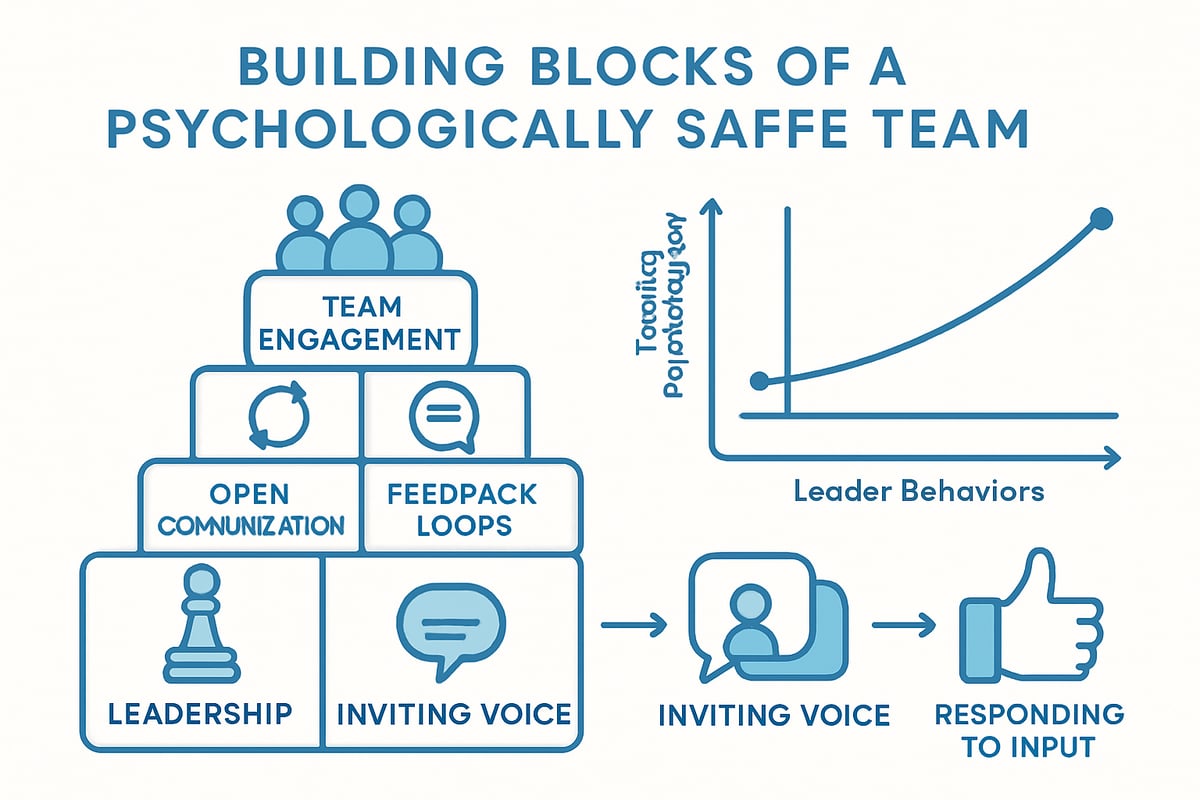
Führungsmodell mit den drei Säulen: Rahmen setzen, Einladung zur Partizipation und produktive Reaktion
Die drei Säulen des Führungsverhaltens für psychologisch sichere Umgebungen.

1. Den Rahmen setzen (Framing)

Führungskräfte müssen den Arbeitskontext explizit einordnen. Wenn Unsicherheit, Komplexität oder gegenseitige Abhängigkeit herrschen, muss dies benannt werden. Geben Sie offen zu, was Sie nicht wissen. Dieses “Framing” legitimiert Fragen und Bedenken – sie werden nicht als Zeichen von Inkompetenz, sondern als notwendiger Beitrag zur Problemlösung gewertet.

Ein effektives Framing klingt so: “Wir betreten hier Neuland. Meine Annahmen könnten falsch sein. Ich bin darauf angewiesen, dass Sie meine Denkweise herausfordern und blinde Flecken aufzeigen.”

Praktische Techniken finden Sie im Vier-Stufen-Modell der Harvard Business School.

2. Einladung zur Partizipation

Passives Warten auf Input reicht nicht aus, um Hierarchiebarrieren zu durchbrechen. Führungskräfte müssen aktiv Widerspruch einfordern. Nutzen Sie gezielte Fragen: “Welche Aspekte übersehen wir?” oder “Wer sieht das anders und warum?”. Methoden wie “Round Robin”, bei denen jeder reihum zu Wort kommt, verhindern, dass dominante Stimmen die Diskussion monopolisieren.

Führungsverhalten Auswirkung auf das Team Empfohlene Frequenz
Offene Fragen stellen 34 % mehr Ideengenerierung Jedes Team-Meeting
Strukturierte Debriefings 48 % schnellere Lernzyklen Binnen 72h nach Projektabschluss
Öffentliche Anerkennung von Input 62 % höhere Beteiligungsrate In Echtzeit während der Diskussion

3. Produktive Reaktion

Wie Sie auf schlechte Nachrichten reagieren, entscheidet über den Fortbestand der Sicherheit. Reagieren Sie bei Fehlern zunächst mit Neugier, nicht mit Urteilen. Fragen Sie: “Was können wir daraus lernen?” Danken Sie dem Überbringer der Nachricht. Eine strafende Reaktion auf ehrliche Fehler zerstört Vertrauen nachhaltig.

Etablieren Sie Systeme zur Anerkennung von “Good Catches” – also dem frühzeitigen Erkennen von Problemen. Die NASA hat diese Praxis nach der Columbia-Katastrophe eingeführt und die Fehlermeldung so vom Risiko zum Wettbewerbsvorteil transformiert.

Balanceakt: Psychologische Sicherheit und Verantwortlichkeit

Oft äußern Führungskräfte die Sorge, dass zu viel Verständnis die Leistungsstandards aufweicht. Edmondsons Matrix beweist das Gegenteil: Wahre Hochleistung entsteht nur in der Kombination aus hoher psychologischer Sicherheit und hoher Verantwortlichkeit (Accountability).
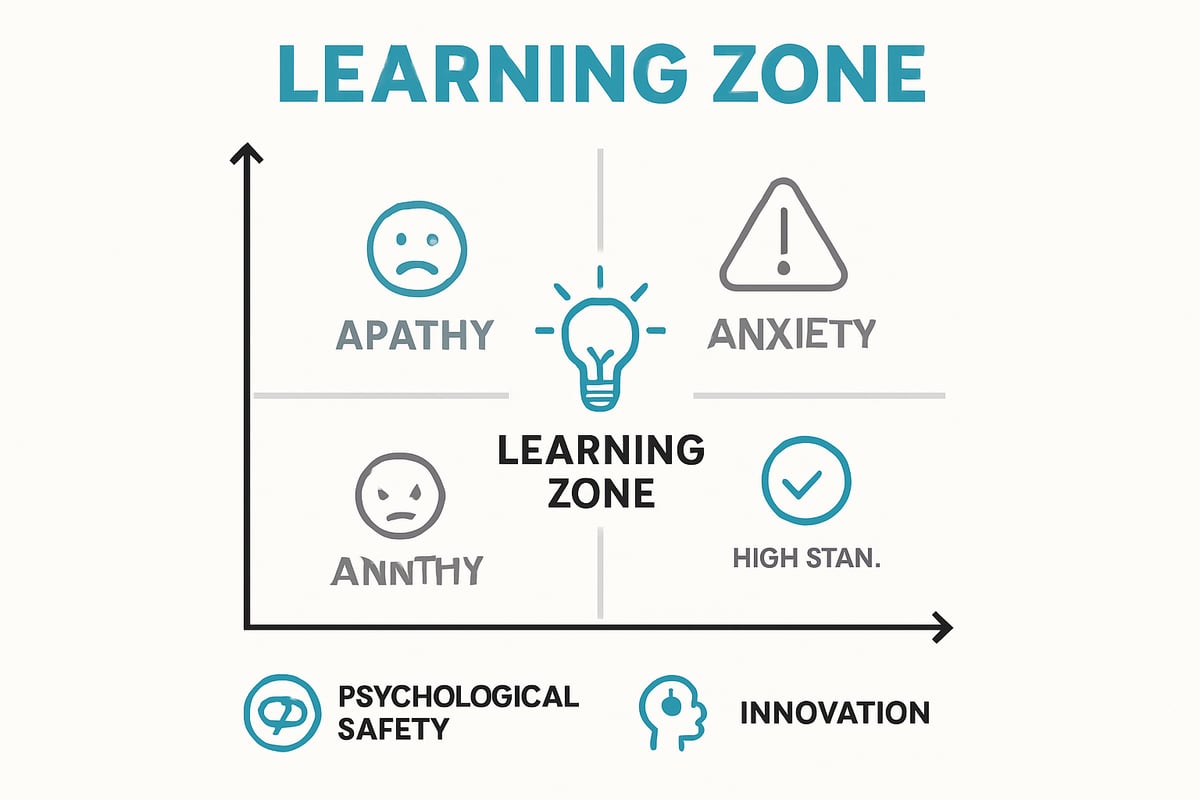
Vier-Quadranten-Matrix: Lernzone, Angstzone, Komfortzone und Apathiezone im Vergleich
Die Leistungsmatrix: Wo Sicherheit auf hohe Standards trifft.

Das Modell der Lernzone

Optimale Ergebnisse werden in der sogenannten “Lernzone” erzielt. Hier setzen Teams ambitionierte Ziele, kommunizieren aber offen über Hindernisse. Dies steht im Kontrast zu drei dysfunktionalen Zuständen:

Zone Sicherheitsniveau Verantwortlichkeit Organisatorische Folge
Lernzone Hoch Hoch Innovation, nachhaltiges Wachstum, Talentbindung
Angstzone Niedrig Hoch Burnout, Fluktuation, Informationsbunker
Komfortzone Hoch Niedrig Stagnation, verpasste Ziele, Selbstzufriedenheit
Apathiezone Niedrig Niedrig Dienst nach Vorschrift, Qualitätsverfall

In der Angstzone wird kurzfristig Leistung durch Furcht erzwungen, was langfristig die Substanz der Organisation aushöhlt. Die Komfortzone mag angenehm wirken, liefert aber nur mittelmäßige Ergebnisse. Nur die Lernzone sichert langfristigen Erfolg.

Diagnostische Tools zur Bestimmung Ihrer aktuellen Team-Position finden Sie in validierten Assessment-Frameworks.

Verantwortung einfordern ohne Angst zu schüren

Setzen Sie klare Erwartungen und nutzen Sie transparente Kennzahlen. Wenn Ziele verfehlt werden, begegnen Sie dem Delta mit Coaching statt Bestrafung. Die Frage lautet: “Welche Unterstützung benötigen Sie, um diese Lücke zu schließen?” So bleibt die Verantwortlichkeit gewahrt, ohne die Sicherheit zu gefährden.

Benchmark für die Praxis: Teams, die transparente Leistungs-Dashboards mit einem coaching-orientierten Führungsstil kombinieren, erreichen ihre Ziele mit 41 % höherer Wahrscheinlichkeit als Vergleichsgruppen.

Implementierung: Ein 6-Stufen-Plan für die Praxis

Der Aufbau psychologischer Sicherheit erfordert systematisches Vorgehen. Dieser evidenzbasierte Fahrplan hilft Ihnen, kulturelle Veränderungen nachhaltig zu verankern.
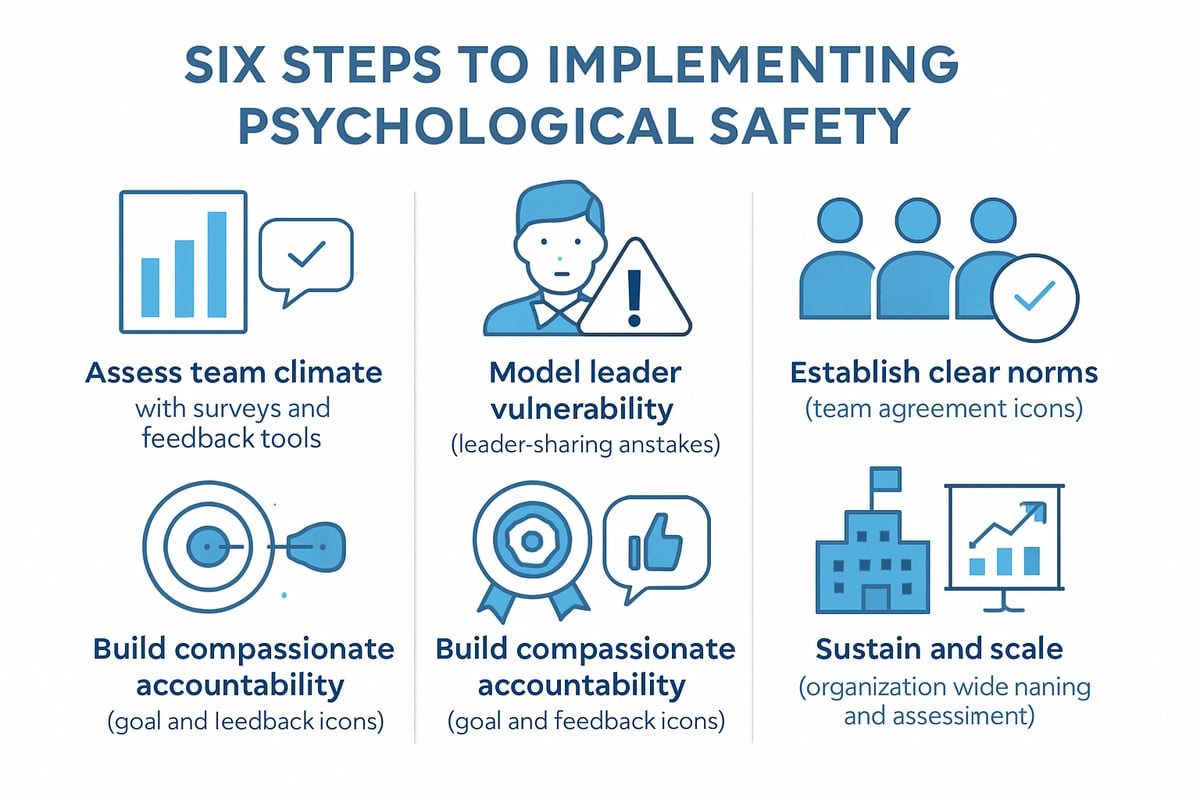
Roadmap zur Implementierung in 6 Schritten: Messung, Vorbildfunktion, Normen, Widerspruch, Verantwortlichkeit, Nachhaltigkeit
Die sechs Phasen zur Verankerung psychologischer Sicherheit in der Unternehmenskultur.

Schritt 1: Status Quo messen

Nutzen Sie validierte Umfragen, um den Ist-Zustand zu ermitteln. Die sieben Fragen von Amy Edmondson messen die Bereitschaft zur Risikoneigung im Team. Vergleichen Sie die Werte zwischen Abteilungen, um Handlungsfelder zu identifizieren, und wiederholen Sie die Messung quartalsweise.

Schritt 2: Vorbildfunktion der Führung (Role Modeling)

Führungskräfte müssen Verletzlichkeit vorleben. Teilen Sie eigene Fehler und Lernerfahrungen. Wenn der Chef Unsicherheit zugibt, wird dies auch für das Team “sicher”. Diese sichtbare Fehlbarkeit ist die mächtigste Intervention, die Ihnen zur Verfügung steht.

Schritt 3: Gesprächsnormen etablieren

Kodifizieren Sie Regeln für Meetings, die eine ausgewogene Beteiligung sichern. Nutzen Sie Moderationstechniken wie “1-2-Alle” (erst einzeln denken, dann zu zweit, dann im Plenum), um zu verhindern, dass Extrovertierte die Diskussion dominieren.

Schritt 4: Konstruktiven Widerspruch belohnen

Schaffen Sie Anerkennungssysteme für Mitarbeiter, die falsche Annahmen herausfordern. Amazons Prinzip “Disagree and Commit” validiert den Widerspruch, erhält aber die Entscheidungsfähigkeit. Machen Sie belohnten Widerspruch sichtbar, um das Verhalten zu verstärken.

Schritt 5: Empathische Verantwortlichkeit

Trennen Sie in der Personalentwicklung das Lernen von der Bewertung. Führen Sie Entwicklungsgespräche quartalsweise und formale Beurteilungen jährlich. Nutzen Sie in Entwicklungsdialogen eine Coaching-Sprache, um Defensivhaltungen zu minimieren.

Schritt 6: Nachhaltigkeit sichern

Integrieren Sie das Thema in Onboarding-Prozesse und Beförderungskriterien. Machen Sie Sicherheits-Metriken auf Executive-Dashboards sichtbar, gleichberechtigt neben finanziellen KPIs. Partner wie Accountability Now unterstützen bei der langfristigen Verankerung.

Strukturelle Hürden überwinden

Die Implementierung stößt oft auf vorhersehbare Hindernisse, die in der Organisationsstruktur verwurzelt sind.

Hierarchie und Machtdistanz

Statusunterschiede unterdrücken offene Worte, selbst in flachen Hierarchien. Rotierende Moderationsrollen können hier gegensteuern: Lassen Sie Junior-Mitarbeiter Meetings leiten. Nutzen Sie digitale Tools für anonymes Feedback vor Live-Diskussionen, um die Hürde der Wortmeldung zu senken.

In Kulturen mit hoher Machtdistanz sind angepasste Ansätze nötig. Bieten Sie schriftliche Kanäle und 1:1-Gespräche an, um kulturelle Kommunikationsbarrieren zu überbrücken.

Herausforderung Hybrides Arbeiten

In verteilten Teams fehlen die informellen Signale physischer Nähe. Kompensieren Sie dies durch intentionale virtuelle Check-ins. Fragen Sie gezielt: “Was läuft gut? Was müssen wir justieren?” Etablieren Sie “Virtual Office Hours” ohne Agenda, um die Türschwelle des physischen Büros digital nachzubilden.

Komplexität und Skalierung

Großunternehmen kämpfen oft damit, Sicherheit über alle Geschäftsbereiche hinweg zu gewährleisten. Ein “Kaskadenmodell” kann helfen: Jede Führungsebene wird geschult und führt anschließend Workshops mit den direkten Berichten durch. Nutzen Sie interne Kollaborationsplattformen, um hierarchieübergreifende “Communities of Practice” zu bilden.

Häufig gestellte Fragen (FAQ)

Was ist psychologische Sicherheit und warum ist sie 2026 so wichtig?

Es handelt sich um die Überzeugung, dass man im Team Risiken eingehen kann, ohne negative Konsequenzen fürchten zu müssen. Im Jahr 2026 ist dies essenziell, um KI-Integration, hybride Arbeit und Marktvolatilität zu meistern. Unternehmen mit hoher psychologischer Sicherheit passen sich 60 % schneller an Disruptionen an.

Wie hilft Amy Edmondsons Forschung bei modernen Führungsstrategien?

Edmondsons Forschung liefert den empirischen Beweis, dass Sicherheit direkt mit Lernverhalten und Leistung korreliert. Ihre Protokolle bieten keine graue Theorie, sondern validierte Handlungsanweisungen, um in unsicheren Zeiten resiliente Teams aufzubauen.

Warum ist das Thema gerade bei hybriden Teams kritisch?

Hybrides Arbeiten eliminiert den natürlichen Beziehungsaufbau im Büro. Ohne bewusste Gegenmaßnahmen fühlen sich Remote-Mitarbeiter oft abgehängt. Psychologische Sicherheit schafft hier strukturierte Möglichkeiten für Sichtbarkeit und Mitsprache, unabhängig vom Arbeitsort.

Wie können Führungskräfte KI zur Förderung der Sicherheit nutzen?

KI-Tools wie Puls-Befragungen oder Sentiment-Analysen liefern Echtzeitdaten zur Stimmung im Team. So können negative Trends früh erkannt werden. Wichtig ist jedoch, die Daten immer im persönlichen Gespräch zu verifizieren, um Fehlinterpretationen zu vermeiden.

Welcher Zusammenhang besteht zwischen psychologischer Sicherheit und DEI?

Sicherheit ist die Voraussetzung für echte Inklusion. Diverse Teams profitieren nur dann von ihrer Vielfalt, wenn sich alle Mitglieder trauen, ihre Perspektive einzubringen. Ohne Sicherheit passen sich Minderheiten oft der dominanten Kultur an, womit der Mehrwert der Diversität verloren geht.

Welche Führungskompetenzen sind 2026 entscheidend?

Empathie, digitale Fluenz, interkulturelle Kompetenz und sichtbare Verletzlichkeit sind die Schlüsselqualifikationen. Führungskräfte müssen Teamdynamiken digital lesen können und genau jene Risikobereitschaft vorleben, die sie von ihrem Team erwarten.
Über den Autor

Don Markland ist Gründer von Accountability Now, einem Beratungsunternehmen, das sich auf KI-gestützte Geschäftsoptimierung für professionelle Dienstleister spezialisiert hat. Mit seiner Expertise in Organisationsentwicklung und modernen Führungsmodellen unterstützt Don Unternehmen dabei, die Schnittstelle zwischen Technologie und menschlicher Leistung erfolgreich zu gestalten. Vernetzen Sie sich mit Don auf LinkedIn oder entdecken Sie weiterführende Ressourcen auf Accountability Now.

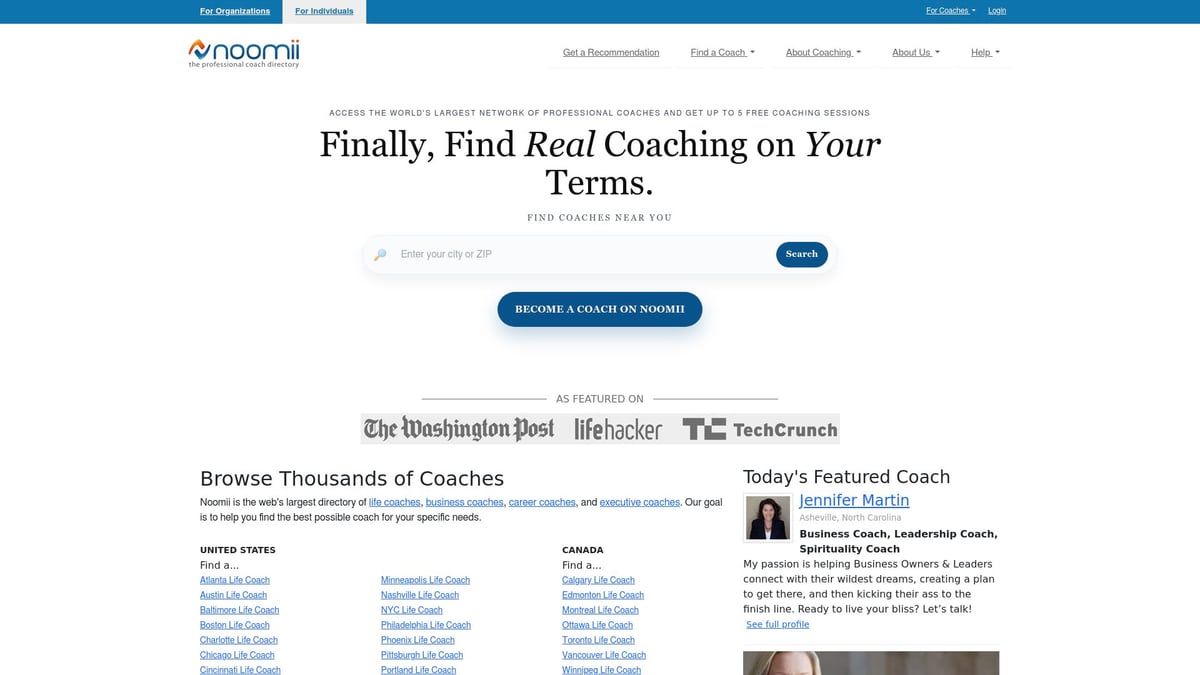
Captura de pantalla de la página de inicio de Noomii, el directorio de coaches profesionales, mostrando la barra de búsqueda para encontrar un coach y la sección de coaches destacados.

Top 7 Herramientas de IA para Coaching en 2025: Comparativa y Guía

La inteligencia artificial ha dejado de ser una simple promesa tecnológica para convertirse en el motor que está redefiniendo el sector del desarrollo personal. Hoy en día, las soluciones de IA más avanzadas permiten a los coaches profesionales ofrecer resultados mucho más personalizados, escalables y profundos, superando las barreras tradicionales de tiempo y gestión.

En este análisis exhaustivo, desglosamos las 7 herramientas de IA más destacadas para el coaching en 2025. Examinaremos sus estructuras de precios, funcionalidades clave y casos de uso real. Tanto si eres un veterano del sector como si estás lanzando tu primera consulta, estas plataformas son aliadas indispensables para alcanzar vuestros objetivos profesionales.

Si os interesa profundizar en temas de liderazgo y responsabilidad profesional, os recomendamos consultar la visión experta de Don Markland en Accountability Now como complemento a vuestra excelencia técnica.

¿Por qué la IA es el Nuevo Estándar en el Coaching de 2025?

La integración de la inteligencia artificial en el coaching de vida no trata de sustituir al humano, sino de amplificar sus capacidades. Se trata de crear nuevas vías de conexión y crecimiento tanto para el profesional como para el cliente.

La principal ventaja competitiva reside en la automatización inteligente. Tareas repetitivas como la programación de sesiones, recordatorios y la recopilación de datos previos se gestionan ahora de forma automática. Esto libera al coach para que pueda invertir su tiempo en lo que realmente aporta valor: la interacción humana y la estrategia. Además, el análisis de datos permite identificar patrones en el progreso del cliente que antes pasaban desapercibidos.

Otros beneficios clave incluyen:

  • Accesibilidad Global: Soporte 24/7 y capacidades multilingües que rompen fronteras geográficas.
  • Engagement Continuo: Chatbots interactivos que mantienen la motivación del cliente entre sesiones.
  • Adaptabilidad: Ajuste de estrategias en tiempo real basado en hitos cumplidos.

Según estadísticas recientes sobre el Impacto de la IA en la Industria del Coaching, el 68% de los profesionales del sector planean integrar herramientas de IA durante este año. Esta cifra subraya que la tecnología se ha convertido en un pilar de confianza para garantizar la calidad del servicio.

Análisis: Las 7 Mejores Herramientas de IA para Coaching

Elegir el software adecuado puede marcar un antes y un después en la eficiencia de vuestra práctica. A continuación, presentamos las plataformas líderes del mercado que están definiendo el estándar en 2025.

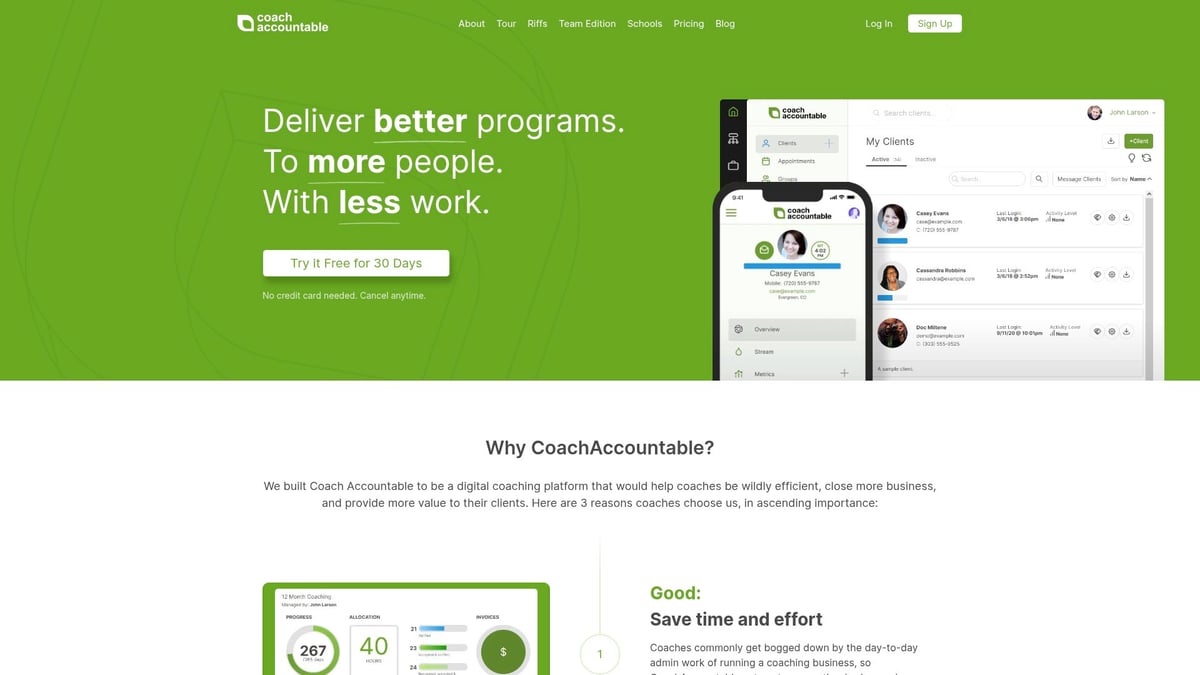
CoachAccountable

Con planes desde $20/mes, CoachAccountable se posiciona como una solución robusta para la gestión integral de clientes. Sus puntos fuertes son la automatización de recordatorios y la generación de insights basados en datos.

Interfaz de CoachAccountable - Herramienta de gestión para coaches

Permite personalizar flujos de trabajo y formularios, siendo ideal para quienes buscan centralizar toda su operativa en un solo lugar. Aunque requiere planes superiores para ciertas funciones avanzadas, su interfaz intuitiva facilita enormemente el seguimiento del progreso.

Noomii: El Mayor Directorio de Coaching

Noomii combina un vasto directorio profesional con un sistema de emparejamiento basado en IA. Ofrece opciones gratuitas de visibilidad y planes de pago para destacar.

Noomii - Directorio global de coaching con IA

Su algoritmo recomienda coaches personalizados a los usuarios, facilitando la captación de nuevos clientes. Es una herramienta esencial para ganar visibilidad en el mercado global. Podéis explorar su directorio impulsado por IA para descubrir nuevas oportunidades de negocio.

BetterUp

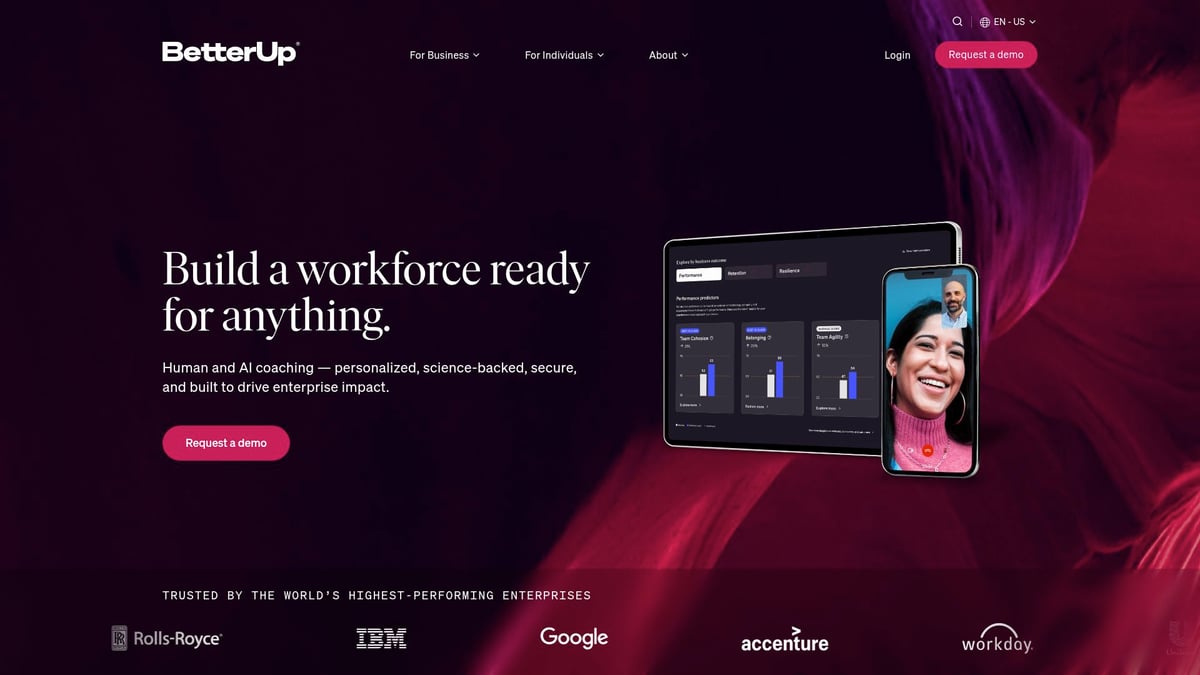
Enfocada en el entorno corporativo y grandes empresas, BetterUp ofrece planes individuales desde $240/mes. Destaca por sus evaluaciones de bienestar y analíticas profundas.

Plataforma BetterUp para coaching empresarial

Proporciona marcos de trabajo avalados científicamente y una app móvil excelente. Aunque su precio puede ser elevado para profesionales independientes, es la referencia en coaching ejecutivo y desarrollo organizacional.

Quenza

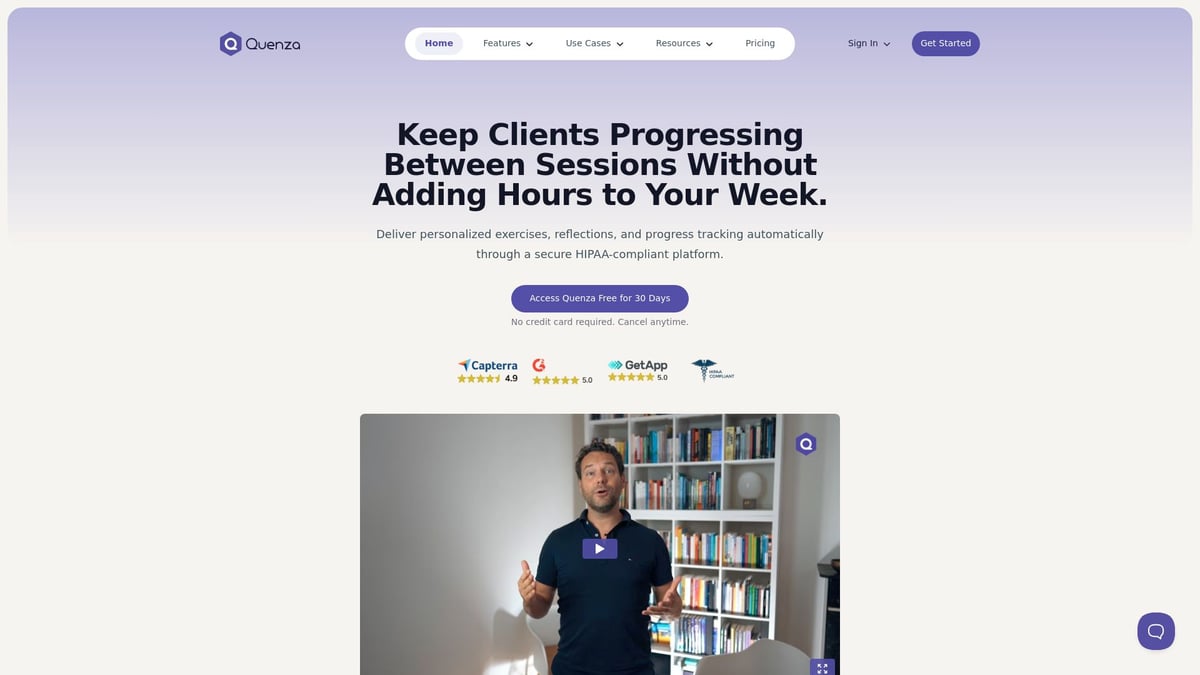
Desde $49/mes (con prueba gratuita de 7 días), Quenza se especializa en el compromiso del cliente (“client engagement”). Permite crear “caminos” automatizados de actividades y ejercicios.

Quenza - Aplicación para tareas y seguimiento de clientes

Es ideal para terapeutas y coaches de bienestar que necesitan asignar tareas entre sesiones. Su constructor de actividades “arrastrar y soltar” es muy versátil, aunque dominar todas sus funciones requiere algo de aprendizaje inicial.

CoachVantage

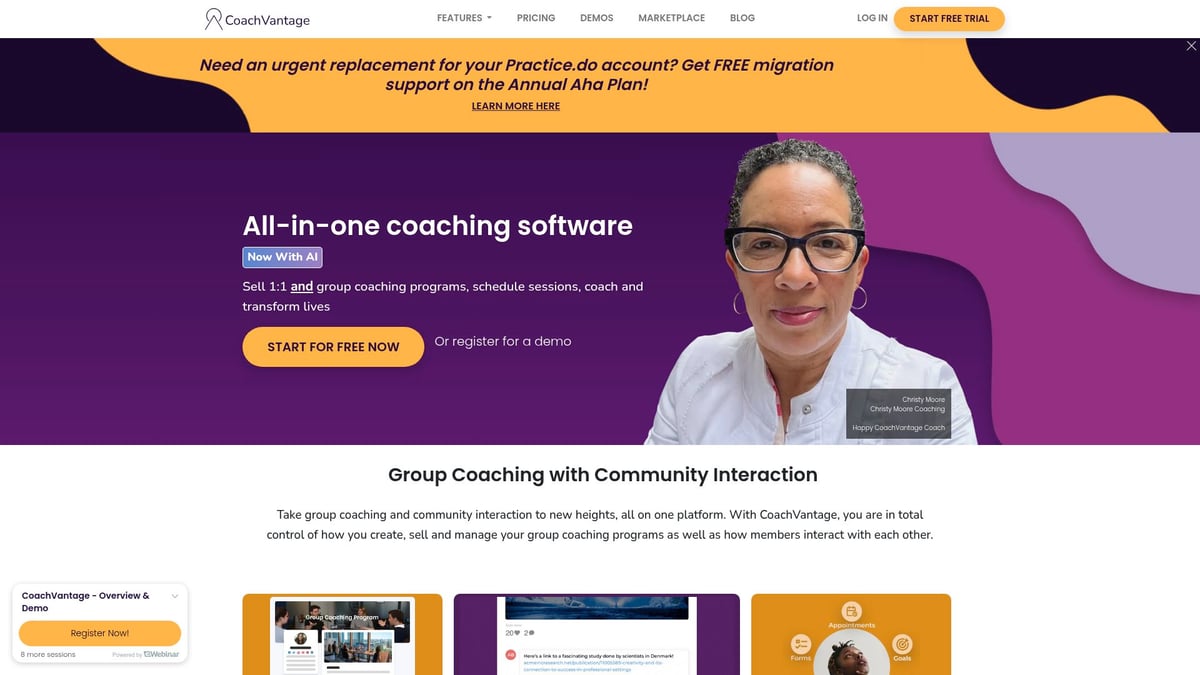
Con un precio de entrada de $29/mes, CoachVantage es perfecto para solopreneurs. Integra agenda, facturación y notas de sesión en una interfaz limpia.

Panel de control de CoachVantage

Destaca por su facilidad de uso y un soporte técnico sólido. Si bien las integraciones externas son algo limitadas comparadas con otros gigantes, cubre sobradamente las necesidades de la mayoría de consultas privadas.

Simply.Coach

Una opción muy accesible desde $9/mes. Simply.Coach se centra en la digitalización de herramientas de coaching, seguimiento de objetivos y cuadros de mando visuales.

Herramientas digitales de Simply.Coach

Permite automatizar los “check-ins” con los clientes y centralizar toda la información. Es una plataforma escalable y económica, ideal tanto para empezar como para gestionar volúmenes medios de clientes.

PocketConfidant AI

PocketConfidant ofrece un enfoque diferente: autocoaching conversacional mediante IA. Su precio es personalizado según el uso y el tamaño de la organización.

PocketConfidant AI - Chatbot de coaching personal

Funciona como un complemento excelente al coaching humano, ofreciendo soporte confidencial y multilingüe 24/7 para momentos en los que el coach no está disponible.

Tabla Comparativa Rápida

Plataforma Precio Inicial Características Destacadas Perfil Ideal
CoachAccountable $20+/mes Gestión total, insights IA Independientes y equipos
Noomii Freemium Directorio y matching IA Busca de visibilidad
BetterUp $240+/mes Coaching corporativo, App Empresas y RRHH
Quenza $49+/mes Ejercicios automatizados Terapeutas y Wellness
CoachVantage $29+/mes Agenda y facturación Pequeñas consultas
Simply.Coach $9+/mes Seguimiento de objetivos Todos los niveles
PocketConfidant AI A medida Chatbot 24/7 Autocoaching

Para aprender más sobre cómo estructurar vuestro negocio, figuras como Don Markland ofrecen recursos valiosos sobre responsabilidad y crecimiento empresarial.

Funcionalidades Críticas en un Software de Coaching

Ante la gran oferta disponible en 2025, es vital no dejarse deslumbrar por el “brillo” tecnológico y centrarse en la utilidad real. Las características que realmente impactan en el negocio son:

Funcionalidad Beneficio Directo
Análisis predictivo de clientes Personalización profunda de las sesiones.
Flujos de trabajo a medida Mejora la tasa de responsabilidad del cliente.
Sincronización de calendarios Reduce drásticamente el ausentismo (no-shows).
Cumplimiento RGPD/Privacidad Genera confianza y seguridad legal.
Integraciones (Zoom, Slack) Centraliza la comunicación.

La implementación de recordatorios automatizados puede incrementar la retención de clientes hasta un 30%. Si queréis diferenciaros, os sugerimos leer sobre estrategias de alto contacto en cómo una asociación cercana te hace indispensable.

Sinergia Humano-IA: El Futuro de la Relación con el Cliente

Lejos de enfriar la relación, la IA bien aplicada la fortalece. Las plataformas modernas actúan como un asistente silencioso que procesa la información para que el coach pueda centrarse en la empatía.

Gracias a la tecnología, los profesionales disfrutan de:

  • Soporte bajo demanda: Los clientes se sienten atendidos incluso fuera de hora gracias a los asistentes virtuales.
  • Datos reveladores: Descubrimiento de patrones de motivación que ayudan a afinar la estrategia.
  • Eficiencia administrativa: Menos burocracia, más conversaciones transformadoras.

Informes recientes de HR Tech indican que la satisfacción del cliente aumenta un 74% cuando el coaching se apoya en herramientas digitales eficientes. Podéis ver más experiencias reales en experiencias de usuarios con coaches de IA.

Tendencias Futuras: Hacia Dónde Va el Sector

El horizonte del coaching está marcado por el procesamiento del lenguaje natural (NLP) y la computación afectiva. Veremos un auge en el uso de wearables integrados con plataformas de coaching para monitorizar el estrés y el bienestar físico en tiempo real, un tema explorado en este artículo sobre coaches de salud IA y tecnología wearable.

Asimismo, el coaching grupal potenciado por IA facilitará la creación de comunidades más cohesivas, como se discute en las conclusiones sobre webinars de coaching grupal.

La ética y la transparencia serán fundamentales. Las herramientas del futuro no solo ayudarán a conseguir objetivos, sino que predecirán riesgos de “burnout” y sugerirán intervenciones proactivas, consolidando a la IA como el copiloto indispensable del coach moderno.


AI Is Breaking Coaching Engagement. Here Is What the Data Shows Works Now

Last Updated: January 9, 2026 | Reading Time: 12 minutes

AI Is Breaking Coaching Engagement. Here Is What the Data Shows Works Now

If you are building a coaching practice right now, the engagement drop is real. Industry data shows engagement falling across all coaching categories as AI content floods feeds and advice blurs together. Buyers are not reading more. They are filtering harder.

This shift changed how people find coaches, how they decide who to trust, and what signals matter most. The data explains why old tactics stopped working and what still attracts attention now.

What the Coaching Industry Study Reveals About the Engagement Drop

The study is clear on one point. Most coaches are not struggling because they lack skill, experience, or training. They struggle because buyers cannot tell them apart fast enough to make a decision.

In crowded markets, speed matters. Buyers make early judgments in seconds. When everything sounds similar, they move on.

The report frames this as a discovery problem, not a demand problem. Coaching demand still exists. People still want help. What disappeared is easy differentiation at the moment of search or scroll.

Key Finding:

Engagement dropped 40% across coaching categories between 2023 and 2025 as AI-generated content volume increased 300%, according to International Coaching Federation market research.

Coaches describe themselves one way. Buyers search another way.

The study shows a consistent mismatch between how coaches talk about their work and how buyers look for help. Coaches tend to describe what happens internally: confidence, growth, alignment, purpose.

These words feel accurate to coaches, but they do not match how buyers think when they feel stuck. Buyers search using problem language: work stress, leadership pressure, burnout, follow-through issues, career uncertainty.

These searches reflect urgency and discomfort, not aspiration. When a coach leads with internal language, buyers fail to recognize relevance. The coaching might fit well, but it does not register fast enough to earn attention.

The discovery gap creates friction before trust forms

This gap creates friction before a coach is ever evaluated. Buyers skip past profiles, posts, and pages that do not mirror their problem clearly. Even strong coaching gets ignored when the message does not meet the buyer where they are.

The study notes that buyers rarely spend time decoding meaning. They scan for recognition. If they do not see themselves reflected quickly, they leave. This explains why many coaches report traffic without conversion. Attention happens briefly. Connection does not.

More content did not fix the problem. It made it worse.

The study shows content volume increased across the industry while engagement declined. AI tools made posting easier and faster. They did not make messages more distinct.

As content volume rose, repetition increased. Buyers began seeing the same advice framed in slightly different ways. Over time, that repetition trained buyers to ignore it.

The study refers to this as a sameness effect

When everything sounds familiar, trust drops. Familiarity without clarity feels empty. Buyers stop assuming that advice equals capability.

Instead, buyers shift attention to coaches who explain outcomes clearly and show how their work actually runs. They look for specifics: process, boundaries, signals that something different will happen this time.

The study’s takeaway is simple. Visibility alone no longer creates trust. Clear differentiation does.

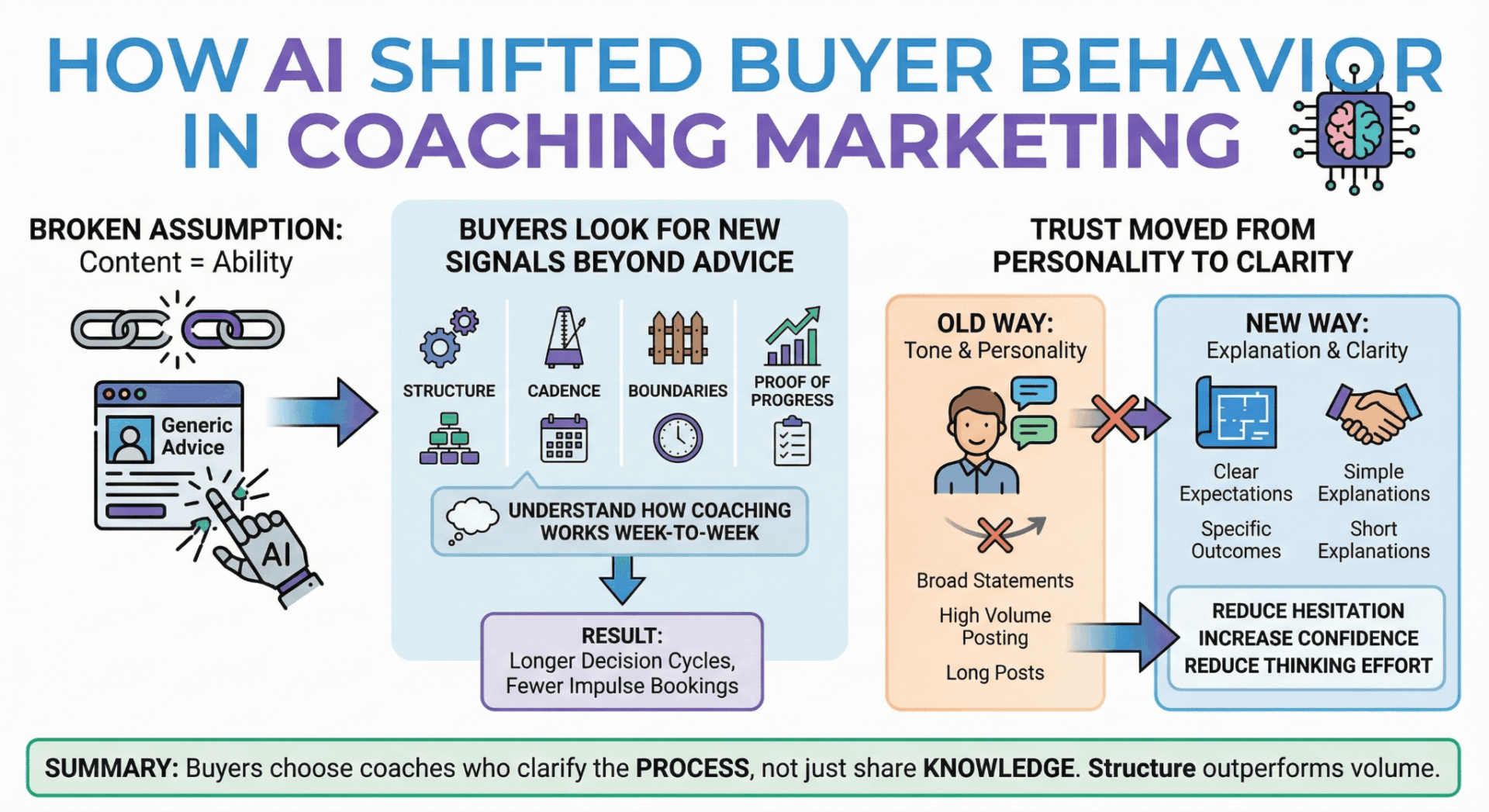
Infographic showing how AI changed buyer behavior in coaching marketing, illustrating shift from advice-seeking to structure-seeking behavior
Visual explanation of how AI changed what buyers look for when choosing a coach in 2026.

How AI Changed Buyer Behavior in Coaching Marketing

The study highlights a clear behavioral shift. Buyers no longer assume that useful content equals coaching ability. AI broke that assumption.

Buyers now look for signals beyond advice

Advice is everywhere now. Buyers know this. They can get tips, prompts, and explanations in seconds. That changed what advice is worth. It did not change what action is worth.

Because of that shift, buyers pay attention to different signals. They look for structure first: how often sessions happen, what happens between sessions, how progress gets checked, what happens when momentum drops.

What Buyers Look For Now (2026 Data):

  • Session cadence and frequency
  • Between-session support structure
  • Progress tracking methods
  • Clear boundaries and scope
  • Momentum maintenance systems
  • Specific checkpoints and milestones

Cadence matters more than inspiration. Boundaries matter more than tone. Buyers want to see how coaching fits into real life, not just how it sounds on a page.

They also want proof that progress is tracked. Not testimonials alone. Process proof. Clear steps. Clear checkpoints. A sense that someone is watching the work, not just talking about it.

This is why many buyers now spend more time deciding. They are not confused. They are filtering. Fewer impulse bookings happen because buyers want to understand how coaching works week to week before committing.

Trust moved from personality to clarity

The data shows a clear shift. Buyers respond less to how a coach sounds and more to how clearly they explain their work. Tone still matters, but it is no longer the deciding factor.

Clear expectations reduce hesitation. Buyers want to know what they are signing up for: how long it takes, what effort is required, what success looks like. Vague answers slow decisions.

Simple explanations increase confidence. When a coach explains their process in plain terms, buyers feel safer moving forward. They do not want mystery. They want orientation.

This is especially true for buyers who have tried coaching before. Many had unclear experiences. They are cautious now. Clarity rebuilds trust faster than enthusiasm.

Clear structure outperforms high-volume posting

Posting more often does not help buyers decide faster. It often does the opposite. Long posts require more thinking effort. Broad statements require interpretation. Buyers skip both when attention is limited.

Short explanations work better because they reduce friction. Clear structure helps buyers understand value without effort. Specific outcomes help them picture results without guessing.

Buyers choose coaches who make decisions easier. That means fewer words, not more. It means defined scope, not open-ended promises. It means showing how work happens instead of repeating ideas.

In crowded feeds, structure stands out because it saves time. Buyers notice that. And they respond to it.

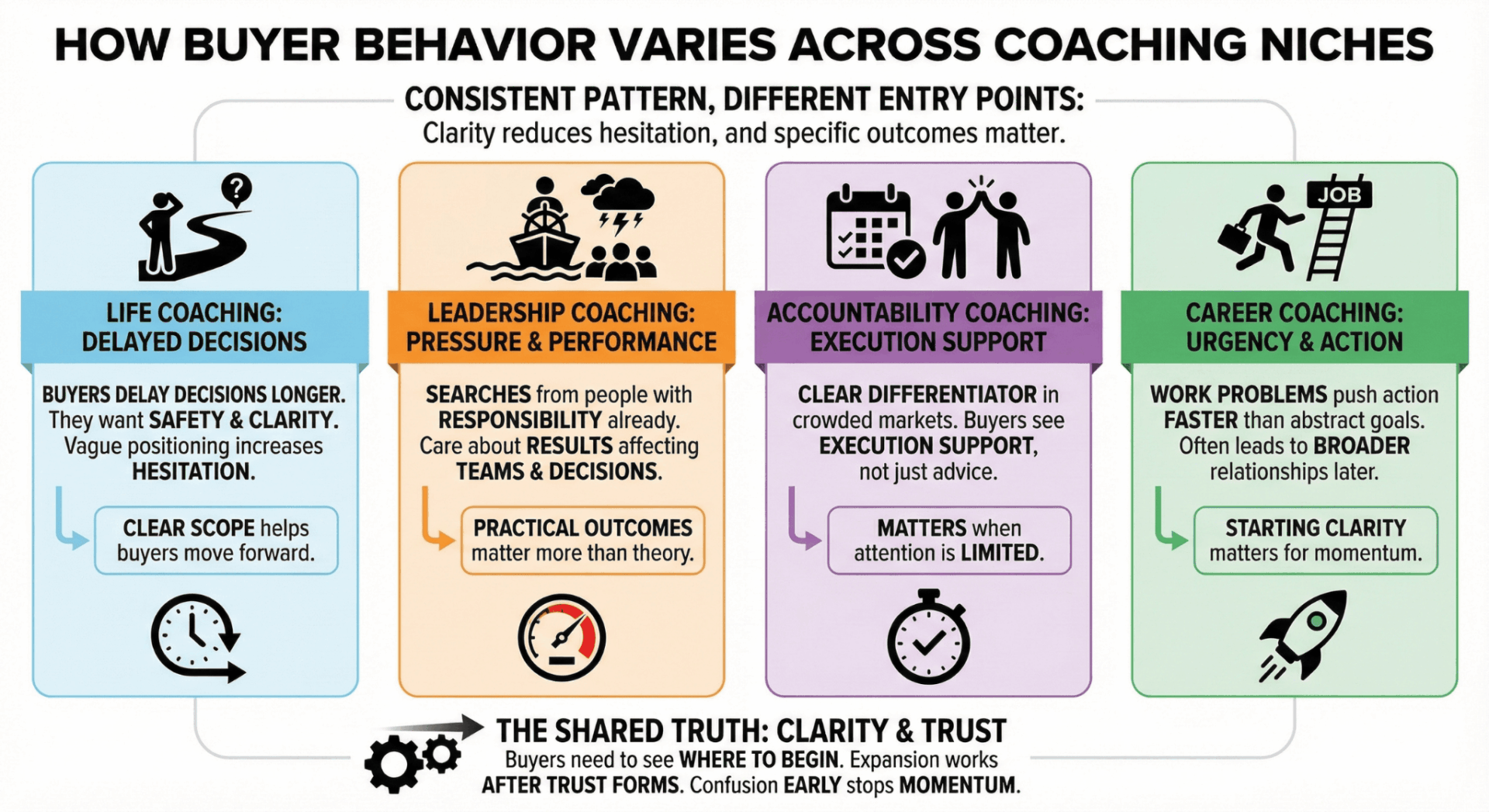
Chart comparing buyer behavior patterns across life coaching, leadership coaching, accountability coaching, and career coaching niches
Visual breakdown of how buyer behavior stays consistent across coaching niches while entry points differ.

What the Data Shows Across Different Coaching Niches

The study breaks down buyer behavior by coaching type. The pattern stays consistent, but the entry point changes.

Life coaching buyers delay decisions longer

Life coaching buyers often take more time before committing. They are not shopping quickly. They are evaluating risk. Many are dealing with uncertainty, stress, or personal change. That makes them cautious.

These buyers want safety and clarity before moving forward. They want to understand what coaching will look like in practice. Vague positioning slows them down. Broad promises increase hesitation.

Clear scope helps these buyers move forward. When a coach explains what is and is not included, how sessions work, and what progress looks like, trust builds faster. Without that clarity, life coaching buyers tend to delay or disengage.

Leadership coaching buyers focus on pressure and performance

Leadership coaching searches often come from people who already carry responsibility. They manage teams. They make decisions that affect others. Their pressure is real and ongoing.

These buyers care about results tied to performance. They want help that improves decision quality, communication, and leadership presence. Theory matters less than application.

Leadership coaching buyers respond to practical outcomes. They want to know how coaching will help them handle real situations at work. Clear examples and defined outcomes reduce hesitation and shorten decision cycles.

Average Decision Timeline by Coaching Type (2026 Study):

Coaching Type Average Decision Time Primary Trigger
Career Coaching 3-7 days Job stress, transition urgency
Leadership Coaching 7-14 days Performance pressure, team issues
Accountability Coaching 5-10 days Follow-through frustration
Life Coaching 14-30 days Uncertainty, life transitions

Accountability coaching stands out in crowded markets

The study highlights accountability as a strong differentiator. Buyers understand that knowing what to do is not the same as doing it consistently.

Accountability coaching signals execution support. Buyers see it as help with follow-through, not just advice. That distinction matters when attention is limited and options feel similar.

When accountability is positioned clearly, buyers recognize value faster. They understand what they are paying for. Structure, cadence, and progress tracking stand out in a crowded field.

Career-related searches still trigger urgency

Work problems push action faster than abstract goals. Career stress affects income, identity, and stability. That creates urgency.

Career-related searches often come from people who want movement now. They are more likely to book quickly when they see relevance. These buyers may start with a specific issue but often expand into broader coaching later.

This makes career-related entry points useful even for coaches who offer wider support.

Overlap exists, but starting clarity matters

Coaching niches often overlap in practice. Buyers may need support across several areas. That overlap is not a problem later.

Early on, clarity matters more than completeness. Buyers need to see where to begin. When that first step is clear, trust forms. Once trust exists, expansion feels natural.

Confusion early stops momentum. Clear starting points keep it moving.

Why Accountability Emerges as a Key Advantage in the Study

One of the strongest findings relates to follow-through. Buyers struggle less with knowing what to do and more with doing it consistently.

Accountability fills the gap AI cannot

AI can explain steps. It cannot observe behavior over time. It cannot apply pressure. It cannot adjust pacing. Accountability fills that gap.

According to research from Harvard Business Review, regular accountability check-ins increase goal completion rates by 42% compared to self-directed efforts.

Buyers associate accountability with results

The study shows buyers link accountability to progress, not motivation. They value consistency and feedback more than insight alone.

Cadence and visibility increase retention

Regular sessions matter. Clear milestones matter. Visible progress keeps clients engaged longer and improves referrals.

Accountability Impact Data:

  • Coaches offering structured accountability retain clients 3.2x longer than those focused solely on insight
  • Weekly check-ins increase goal completion by 65% vs. monthly sessions
  • Visible progress tracking reduces early dropout by 47%
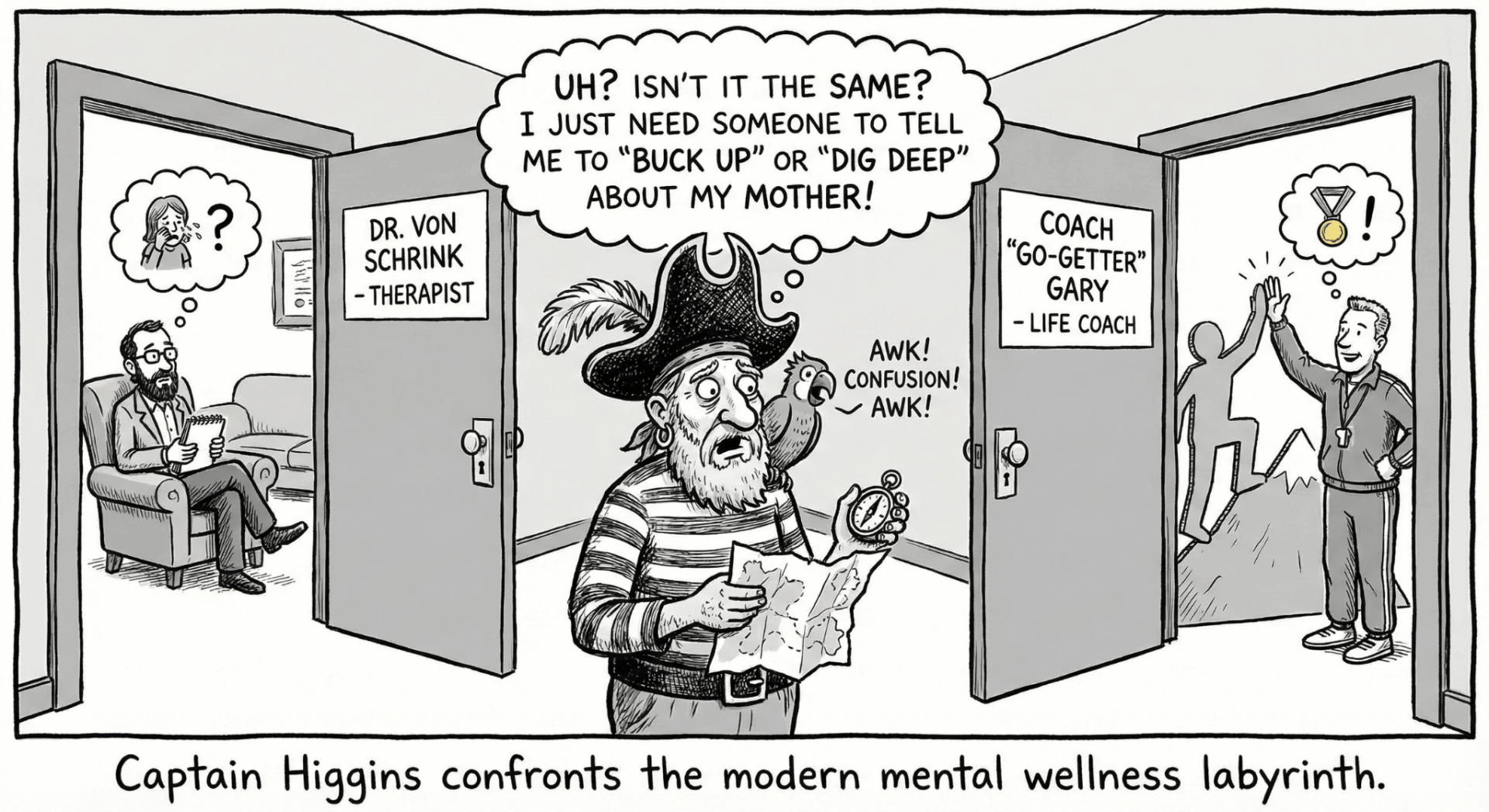
Cartoon illustration showing a confused person choosing between a therapist and life coach, highlighting common confusion about mental wellness roles
Simple illustration showing why people often confuse life coaching and therapy during their decision process.

Why Buyers Ask “Life Coach vs Therapist” Before They Decide

This question usually appears late in the buying process. The study shows it often signals hesitation, not curiosity. Buyers are close to deciding, but something is slowing them down.

Most buyers asking this question are not trying to debate definitions. They are trying to avoid making the wrong choice. Many worry about ending up with help that does not match their situation.

This hesitation is common among buyers who have tried support before and felt disappointed or confused.

Confusion slows decisions

Buyers worry about choosing the wrong type of help. They wonder if coaching is enough or if therapy is required. When answers feel unclear or defensive, they pause.

Confusion creates delay. Delay often turns into disengagement. Buyers do not want to risk time, money, or emotional energy on something that feels uncertain.

This is not about legal definitions. It is about confidence in the next step.

Simple explanations reduce friction

Clear explanations help buyers decide faster. Calm clarity builds trust. Buyers respond well when a coach explains what coaching focuses on, what it does not cover, and when therapy might be more appropriate.

They are not looking for long explanations. They want orientation. They want to know if this is the right door to walk through. When explanations feel grounded and direct, hesitation drops.

Scope clarity improves satisfaction

Clear boundaries protect both sides. Buyers know what to expect. Coaches avoid mismatched assumptions.

When scope is clear, buyers feel safer committing. Satisfaction increases because expectations match reality. Drop-off decreases because clients know what the work involves.

The study shows that clarity here does more than reduce confusion. It builds trust before the first session even happens.

What the Data Says About Certification and Client Demand

The report addresses certification directly. Credentials do not create demand. This is not implied. It is stated clearly in the data.

Even studies tied to the International Coaching Federation do not show that certifications increase client demand. They show that certifications can support trust after a buyer already shows interest. That is a very different claim.

Many coaches are sold the idea that certification will bring clients. The data does not support that belief. It never has.

Certification supports trust after discovery

Buyers value credentials once they are already considering a coach. Certification reassures them during evaluation. It helps answer the question of legitimacy. It does not answer the question of relevance.

This means certification works as a supporting signal, not a discovery driver. Buyers do not search for credentials first. They search for help with a problem.

Visibility comes first

Clear positioning matters earlier. Proof of process matters earlier. Discoverability matters earlier. These factors decide whether a coach is even seen.

Certification does not help if buyers never reach the evaluation stage. Many certified coaches remain invisible while uncertified coaches with clear positioning stay booked.

The certification promise is a myth the data does not support

The idea that certification increases demand persists because it is profitable to sell. Training organizations benefit when coaches believe credentials equal clients. The data does not back that claim.

Certification can improve skill. It can support confidence. It can help with trust later. It does not create demand on its own.

Positioning, proof, then credentials

That order repeats across coaching categories in the study. Buyers first need to recognize relevance. Then they look for proof that the work functions as promised. Credentials come last.

Coaches who reverse this order struggle longer than they need to.

What This Means for Coaches Trying to Grow Right Now

The study points to a simple finding. Coaching demand still exists. Discovery is the constraint.

Coaches who focus on clarity, structure, and accountability continue to grow. Coaches who rely on volume content struggle to regain traction. Buyers now prefer places where comparison is easier and expectations are clear.

Noomii fits into that shift. It helps people find coaches based on real needs rather than content volume. For coaches, it creates visibility without requiring nonstop posting.

As buyer behavior changes, that kind of structure matters more than it used to.

Want to Grow Your Coaching Practice Without Nonstop Content Creation?

Noomii helps coaches build AI-powered marketing systems that attract the right clients with clear positioning and structured discovery.

Grow Your Practice with Noomii

Frequently Asked Questions

Why has coaching engagement dropped since AI became widespread?

AI content flooded feeds with similar advice, making differentiation harder. Buyers now filter more aggressively because they can get tips and prompts instantly. Industry data shows engagement falling across all coaching categories as advice becomes commoditized. The core issue is not lower demand but harder discovery.

What signals do coaching buyers look for in 2026?

Buyers now prioritize structure over inspiration. They look for session cadence, progress tracking systems, clear boundaries, and process proof. They want to understand how coaching fits into real life week by week, not just how it sounds in marketing content. Clear expectations reduce hesitation more than personality or tone.

Does certification increase client demand for coaches?

No. Industry data shows certifications support trust after a buyer already shows interest, but they do not create demand. Buyers search for help with problems first, not credentials. Certification works as a supporting signal during evaluation, not a discovery driver. Clear positioning and proof of process matter earlier in the buyer journey.

Why do buyers ask about life coach vs therapist?

This question typically signals hesitation, not curiosity. Buyers worry about choosing the wrong type of help and want to avoid wasting time, money, or emotional energy. Clear scope explanations help them decide faster. When coaches explain what coaching focuses on, what it does not cover, and when therapy might be appropriate, hesitation drops.

What makes accountability coaching stand out in crowded markets?

Accountability coaching signals execution support, not just advice. Buyers understand that knowing what to do differs from doing it consistently. When accountability is positioned clearly with structure, cadence, and progress tracking, buyers recognize value faster. This distinction matters because AI can explain steps but cannot observe behavior over time or apply pressure.

About the Author

Don Markland is the founder and CEO of Accountability Now, a business coaching firm specializing in AI-powered marketing and operational systems for professional service businesses. With over a decade of experience helping coaches, consultants, and service professionals scale their practices, Don focuses on creating systematic, data-driven approaches to business growth. He specializes in the R.A.P.I.D. methodology for AI search optimization and helps businesses leverage emerging technologies for competitive advantage.

Connect on LinkedIn

Article Changelog: Originally published January 9, 2026. Content reflects current industry data and 2026 buyer behavior patterns. Sources include International Coaching Federation research, Harvard Business Review studies on accountability, and proprietary coaching industry engagement data.


Ilustración de un mando intermedio en una oficina revisando un plan estratégico con iconos flotantes de crecimiento, gestión y productividad, representando la autoevaluación profesional.

Reinventar tu Carrera en Montreal: Guía 2026 para Mandos Intermedios

Estrategias de Transición Laboral para Mandos Intermedios en Montreal ante el Horizonte 2026

El mercado de trabajo en Montreal para 2026 presenta un panorama vibrante, lleno de posibilidades pero también de desafíos singulares. A medida que las corporaciones integran nuevas tecnologías y se ajustan a las tendencias globales, los mandos intermedios que contemplan un cambio deben mantenerse muy atentos a dónde fluye la demanda. La orientación profesional en este contexto es vital, ya que las dinámicas locales dictan qué habilidades y sectores están en alza.

Panorama del mercado laboral de Montreal en 2026 para mandos intermedios

Sectores Clave y Motores de Crecimiento

Las previsiones económicas para Montreal en 2026 apuntan a una solidez continuada, con segmentos específicos liderando la contratación de perfiles gerenciales. Según el informe sobre las Perspectivas del Mercado Laboral de Montreal 2026, áreas como la tecnología, el sector sanitario, las energías renovables, las finanzas y las industrias creativas experimentarán un auge notable. Estos campos buscan activamente profesionales capaces de dirigir proyectos complejos, gestionar equipos multidisciplinares y fomentar la innovación.

El sector tecnológico, en particular, vive una expansión sin precedentes. Empresas dedicadas a la inteligencia artificial, el desarrollo de software y la ciberseguridad están escalando sus operaciones, lo que genera una demanda urgente de talento directivo. Por su parte, la sanidad sigue enfocándose en la eficiencia operativa y la atención al paciente, requiriendo líderes cualificados. La energía verde también gana terreno, con proyectos de sostenibilidad que atraen a gestores experimentados de diversos orígenes.

La irrupción de la IA y la automatización está redefiniendo los roles tradicionales, convirtiendo la alfabetización digital y la adaptabilidad en requisitos indispensables. Para los mandos intermedios que buscan reorientar su carrera en Montreal, las competencias más solicitadas incluyen la gestión de proyectos, el análisis de datos y el dominio bilingüe (inglés y francés). Los empleadores valoran enormemente las certificaciones especializadas y la experiencia práctica, otorgando una ventaja competitiva a quienes mantienen sus credenciales actualizadas.

La reciente expansión tecnológica ha demostrado cómo directivos provenientes de áreas como operaciones o finanzas pueden pivotar con éxito hacia nuevos roles. Un ejemplo claro es el de un gerente experto en mejora de procesos que, tras invertir en la formación adecuada, logra posicionarse como gestor de proyectos tecnológicos.

Retos y Oportunidades en el Cambio de Rumbo

A pesar del optimismo, el cambio de carrera para un mando intermedio en Montreal no está exento de obstáculos. El edadismo puede suponer una barrera, especialmente para mayores de 40 años, al igual que la falta de credenciales específicas o los requisitos lingüísticos. Superar estos escollos exige una estrategia inteligente, centrada en el reciclaje profesional (upskilling) y la puesta en valor de las habilidades de liderazgo transferibles.

No obstante, la consolidación del teletrabajo y la movilidad entre industrias abren nuevas vías. Muchas organizaciones valoran hoy la diversidad en la trayectoria de gestión, y las ofertas de empleo resaltan cada vez más la importancia de la capacidad de adaptación. Las estadísticas indican un interés creciente por habilidades probadas de liderazgo y ejecución de proyectos, a veces incluso por encima de la experiencia sectorial específica.

Montreal dispone de un amplio abanico de recursos para el desarrollo profesional y programas gubernamentales de apoyo. Universidades locales, asociaciones gremiales y centros de empleo ofrecen formación, networking y asistencia en la colocación laboral a medida para mandos intermedios.

Una guía efectiva para el cambio de carrera en Montreal debe basarse en la realidad local, enfocarse en las competencias demandadas y apoyarse en recursos accesibles. Entendiendo las tendencias sectoriales y abordando los desafíos con proactividad, los gestores pueden navegar con confianza este entorno laboral en evolución.

Autoevaluación: Identificando Habilidades Transferibles y Metas

Emprender un nuevo camino profesional exige una introspección honesta. Para los mandos intermedios en Montreal, el primer paso crucial es auditar sus capacidades actuales y clarificar el rumbo. Este proceso de autoevaluación sienta las bases para una transición exitosa, permitiendo apuntar a roles que resuenen tanto con tus fortalezas como con tus aspiraciones.

Autoevaluación de habilidades transferibles y objetivos profesionales

Inventario de Competencias y Experiencia

Comienza realizando un inventario detallado de tus aptitudes. Una guía efectiva para el cambio de carrera en Montreal debe partir del reconocimiento de tus habilidades transferibles, tales como:

  • Liderazgo y gestión de equipos.
  • Planificación estratégica y toma de decisiones.
  • Gestión de proyectos y mejora de procesos.
  • Comunicación (el bilingüismo es un gran activo).
  • Conocimientos técnicos específicos de la industria.

Utiliza herramientas de autoevaluación para obtener una perspectiva completa. Los test online pueden revelar fortalezas ocultas, mientras que el feedback de compañeros y las revisiones de desempeño recientes ofrecen una visión objetiva. Estos métodos ayudan a clarificar qué competencias son las más cotizadas en tus sectores objetivo.

Para alinear tus habilidades con nuevos sectores, compara tu experiencia actual con las descripciones de puestos en áreas como tecnología o energía verde. Por ejemplo, un gerente con experiencia en operaciones puede descubrir que su capacidad para optimizar procesos es muy demandada en el sector tecnológico de Montreal.

Identifica cualquier brecha que pueda frenar tu transición. Si necesitas mejorar tu alfabetización digital u obtener certificaciones específicas, elabora una lista de áreas de mejora. Este enfoque proactivo asegura que tu plan de cambio de carrera se base en pasos prácticos y realizables.

Establecimiento de Objetivos Realistas

La siguiente fase consiste en alinear tus valores personales con las nuevas posibilidades laborales. Pregúntate qué te motiva realmente: ¿Es la innovación, el equilibrio vida-trabajo o el impacto tangible? Definir objetivos claros te mantendrá enfocado durante el proceso.

Distingue entre metas a corto y largo plazo. A corto plazo, podrías plantearte completar una certificación en gestión de proyectos; a largo plazo, el objetivo podría ser asegurar un puesto de liderazgo en el ecosistema tecnológico de Montreal. Aplicar el marco SMART (Específico, Medible, Alcanzable, Relevante y Temporal) aportará estructura a tus ambiciones.

Imagina este escenario: eres gerente de operaciones y deseas pivotar hacia el liderazgo de proyectos tecnológicos. Divide tu viaje en hitos, como formarte en herramientas digitales, hacer networking en eventos tecnológicos locales y actualizar tu currículum para reflejar logros pertinentes.

En última instancia, la autorreflexión constante y el seguimiento de objetivos son esenciales.

Planificación Estratégica para una Transición Exitosa

Explorar una nueva dirección requiere algo más que ambición. Para los mandos intermedios en Montreal, un plan estratégico es fundamental. Trazar un curso con investigación, una hoja de ruta clara y apoyo profesional puede suavizar la transición y garantizar el éxito.

Investigación de Roles y Sectores Objetivo

Una orientación eficaz comienza con una investigación exhaustiva. Empieza mapeando roles y sectores objetivo utilizando plataformas como LinkedIn y Glassdoor. El panorama laboral de Montreal para 2026 está evolucionando, así que mantente al día con informes de la industria y previsiones económicas locales.

Revisa las descripciones de trabajo meticulosamente. Identifica las habilidades y cualificaciones que los empleadores priorizan para roles de nivel medio en tecnología, salud, energía verde y finanzas. Asiste a eventos de networking y ferias de empleo, como las organizadas por las asociaciones profesionales de Montreal, para obtener información de primera mano sobre las expectativas de los empleadores.

Explora portales de empleo específicos de Montreal, que a menudo destacan roles adaptados a candidatos bilingües. Por ejemplo, un gerente que se traslada de las finanzas al sector fintech puede aprovechar los conocimientos obtenidos en encuentros de la industria y entrevistas informativas. Estos pasos aseguran que tu estrategia esté informada por las necesidades reales del mercado.

Construyendo tu Hoja de Ruta

Una vez tengas una imagen clara de tu objetivo, crea un plan de transición detallado. Comienza estableciendo una línea de tiempo realista. Equilibra tu rol actual con actividades como formación, networking y solicitudes de empleo. Usa un calendario para programar objetivos semanales.

Desarrolla un plan de acción para el desarrollo de habilidades. Identifica lagunas y selecciona cursos o certificaciones que se alineen con tus roles objetivo. Busca mentoría a través de redes profesionales o servicios de coaching de carrera. Muchos gerentes en Montreal se benefician de estas conexiones, que proporcionan tanto orientación como responsabilidad.

El presupuesto es crucial. Estima los costos de educación, certificaciones y cualquier brecha potencial de ingresos durante la transición. Montreal ofrece programas de apoyo financiero y subvenciones para quienes cambian de carrera. Siguiendo una guía estructurada, aumentas tus posibilidades de una transición fluida.

Cómo el Coaching Ejecutivo Acelera el Cambio

El coaching profesional es una herramienta poderosa para los mandos intermedios en Montreal. El coaching de liderazgo corporativo ayuda a clarificar tu dirección, superar obstáculos y mantener la motivación a lo largo de la transición.

Coaching de liderazgo corporativo para acelerar el cambio de carrera en Montreal

Programas como el Coaching de Liderazgo Corporativo de Noomii conectan a los gerentes con coaches expertos que entienden el mercado local. Estos profesionales brindan asesoramiento a medida, te ayudan a refinar tu marca personal y te apoyan en la construcción de confianza. Las investigaciones muestran que el coaching conduce a transiciones más rápidas, mayor satisfacción laboral y mejor colocación en roles objetivo.

Considera la historia de un gerente de Montreal que utilizó el coaching para pasar de operaciones a liderazgo de proyectos tecnológicos. A través de sesiones regulares, planificación estratégica y responsabilidad, logró asegurar un puesto en un nuevo sector.

Networking, Marca Personal y Estrategias de Búsqueda de Empleo

El dinamismo del mercado laboral de Montreal en 2026 implica que la orientación para mandos intermedios debe ser práctica, local y con visión de futuro. El éxito no depende solo de lo que sabes, sino de quién te conoce y cómo te presentas. Desglosemos los tres pilares que impulsarán tu transición: construir tu red, refinar tu marca personal y dominar la búsqueda de empleo moderna.

Networking y Marca Personal en Montreal

Expandiendo tu Red Profesional

Una guía efectiva comienza con un networking estratégico. En una ciudad conocida por sus vibrantes comunidades profesionales, expandir tu red es esencial para descubrir oportunidades ocultas y obtener información del sector.

Empieza asistiendo a eventos específicos de la industria en Montreal. Organizaciones como la Cámara de Comercio, TechnoMontréal y grupos locales de Meetup organizan encuentros frecuentes. Únete a asociaciones profesionales relevantes para tu sector objetivo, ya sea tecnología, finanzas o salud. Las redes de antiguos alumnos de universidades montrealenses son otro recurso valioso.

Las entrevistas informativas son una herramienta poderosa. Contacta con gerentes en tu campo deseado y solicita conversaciones breves para aprender sobre sus roles. La mayoría de los profesionales aprecian compartir sus experiencias, y estas charlas a menudo conducen a referencias.

Considera el voluntariado o la participación en proyectos comunitarios. Estas actividades construyen relaciones y demuestran compromiso. En el entorno diverso y bilingüe de Montreal, cultivar conexiones tanto en círculos anglófonos como francófonos puede ampliar significativamente tu alcance.

Potenciando tu Marca Personal

La marca personal es la piedra angular del cambio de carrera. Tu presencia online y tu narrativa profesional deben reflejar tus objetivos en evolución y mostrar tus habilidades transferibles.

Comienza actualizando tu perfil de LinkedIn. Destaca la experiencia en liderazgo y resolución de problemas, y adapta tu extracto para alinearlo con tu nueva dirección. Usa una foto profesional y un titular que comunique tu propuesta de valor.

Renueva tu CV para enfocarte en resultados y adaptabilidad. Incluye métricas y logros relevantes para tu sector objetivo. Elabora un discurso de ascensor (elevator pitch) convincente que explique sucintamente tu experiencia y ambiciones; practícalo hasta que fluya natural.

Lleva tu marca personal más allá estableciendo una huella digital profesional. Un sitio web personal sencillo o un blog con análisis del sector pueden diferenciarte. Participa reflexivamente en redes sociales, compartiendo artículos y comentando tendencias.

En Montreal, la comunicación bilingüe marca la diferencia. Incorpora inglés y francés donde sea posible y referencia desarrollos locales. Si no eres totalmente bilingüe, considera clases de idiomas para aumentar tu empleabilidad.

Enfoques Efectivos de Búsqueda de Empleo

Buscar trabajo en 2026 exige un enfoque dirigido. Identifica empleadores y roles que coincidan estrechamente con tus habilidades y valores. Utiliza bolsas de trabajo centradas en Montreal como Jobboom, Emploi Québec y plataformas especializadas.

Adapta cada solicitud a la descripción del trabajo, enfatizando tus habilidades transferibles. Los reclutadores valoran cada vez más el liderazgo y la adaptabilidad. Considera trabajar con agencias especializadas en transiciones gerenciales; a menudo tienen acceso a oportunidades exclusivas.

Rastrea tus solicitudes y haz seguimiento con mensajes personalizados. La persistencia y la organización te diferenciarán. Para apoyo adicional, explora Servicios de Gestión y Transición de Carrera que atienden a ejecutivos y profesionales en Montreal.

Finalmente, busca historias de éxito reales para motivarte. Muchos gerentes de Montreal han aprovechado el networking y la marca personal para aterrizar en nuevos sectores.

Formación Continua y Desarrollo Profesional

Adaptarse al mercado laboral de Montreal requiere un enfoque proactivo hacia el crecimiento profesional. Para los mandos intermedios, la formación continua (upskilling) es la llave para desbloquear nuevas oportunidades. La economía diversa de la ciudad hace que el aprendizaje dirigido y la experiencia práctica sean esenciales para un pivote de carrera exitoso.

Identificando Brechas y Oportunidades de Aprendizaje

El primer paso es evaluar tu conjunto de habilidades actual frente a los requisitos de los roles objetivo. Montreal ofrece una riqueza de recursos, desde programas universitarios en McGill y la Université de Montréal hasta bootcamps especializados como Le Wagon y la Educación Continua de Concordia.

Plataformas online como Coursera, Udemy y LinkedIn Learning permiten obtener certificaciones en gestión de proyectos, competencias digitales o idiomas. Muchos empleadores de Montreal también ofrecen formación interna o patrocinan cursos externos.

Para asegurar que tu aprendizaje se alinea con tus metas, considera qué habilidades son más valoradas en tu sector deseado. Por ejemplo, los roles de gestión tecnológica a menudo requieren analítica de datos o certificaciones ágiles. Revisar descripciones de trabajo y hablar con pares puede clarificar qué cursos merecen la inversión.

Para un apoyo integral, explora Estrategias de Desarrollo Profesional. Esta colección de artículos te ayuda a mantenerte a la vanguardia en el cambiante mercado de Montreal.

Mapear tu viaje de aprendizaje es crucial. Usa una tabla simple para rastrear cursos completados y brechas de habilidades. Este enfoque estructurado mantiene tu guía de cambio de carrera medible y en camino.

Ganando Experiencia Práctica

Construir experiencia real es vital. El voluntariado con organizaciones sin fines de lucro locales, unirse a proyectos por contrato o solicitar pasantías a corto plazo puede ayudar a cerrar la brecha entre tu experiencia actual y tu nuevo sector.

Participar en hackatones, competiciones de casos de negocio o laboratorios de innovación comunitaria en Montreal puede darte experiencia práctica y expandir tu red. Organizaciones como PME MTL y Montréal International ofrecen programas diseñados para ayudar a profesionales a transicionar mediante aprendizaje basado en proyectos.

Crear un portafolio de proyectos relevantes demuestra tu compromiso y capacidades. Si es posible, documenta tus logros con resultados cuantificables o testimonios.

Historias de Éxito y Lecciones Aprendidas

Los ejemplos del mundo real ofrecen una guía inestimable. Veamos cómo profesionales radicados en Montreal convirtieron su ambición en acción, superaron reveses y descubrieron nuevas oportunidades en un mercado cambiante.

Casos de Estudio de Cambios Exitosos en Montreal

Considera a Sophie, quien pasó una década en gestión sanitaria antes de pivotar al liderazgo de proyectos tecnológicos. Su viaje comenzó mapeando sus habilidades y formándose en un bootcamp local. Utilizó la orientación profesional para identificar cualidades de liderazgo transferibles, lo que le ayudó a conseguir un puesto en una startup de IA en crecimiento.

Conoce a Karim, un gerente financiero que transicionó al sector de energía verde de Montreal. Al aprovechar sus habilidades analíticas y obtener una certificación especializada, demostró valor a los empleadores que buscaban experiencia en sostenibilidad. Atribuye su éxito a seguir consejos dirigidos y entender que las habilidades especializadas pueden impulsar una mayor compensación, como se destaca en Habilidades Especializadas que Impulsan la Compensación.

Por último, Lucie, gerente de industrias creativas, enfrentó el sesgo por edad. Se unió a una asociación profesional bilingüe y participó en programas de mentoría, lo que le dio acceso a oportunidades ocultas. La historia de Lucie es un testimonio de la resiliencia y el networking estratégico.

Consejos para Quienes Consideran un Camino Similar

¿Qué nos enseñan estas historias? Primero, la autoevaluación y la formación proactiva son cruciales. Los gerentes descubrieron que invertir en certificaciones y abrazar la transformación digital les hizo destacar. Segundo, construir una red de apoyo sólida acelera el éxito.

Las estrategias clave incluyen:

Los contratiempos son parte del viaje. Quienes tuvieron éxito los vieron como momentos de aprendizaje. Persiguieron constantemente el feedback, refinaron su marca personal y se mantuvieron abiertos a roles temporales para ganar nueva experiencia.

Two business professionals arguing in a meeting while a colleague looks on, highlighting toxic leadership in the workplace.

Toxic Leadership: The Ultimate Leader’s Self-Repair Hack to Rebuild Team Trust

Toxic leadership can break a team fast. Trust erodes. Motivation drops. Productivity takes a hit. But trust can be rebuilt. This blog will show how to repair that damage and rebuild a stronger team, even after a serious leadership misstep.


Leaders in growth mode feel this strain most. Pressure rises, choices get rushed, and small signals get missed. Teams then carry the weight: missed handoffs, low energy, and stalled projects. The fix starts with a clear reset. Say what went wrong, show what will change, and make the next right move. Keep it simple and visible. A short weekly plan, one clear owner per task, and honest check-ins can turn the mood. Your team does not need a hero, it needs steady actions that match your words.

How Toxic Leadership Erodes Trust and Team Performance

When a leader crosses a line, the impact is immediate. Teams question every decision. Gossip grows. People start to disengage.


The recent debate over toxic leadership in the military is a good example. It shows how one person at the top can create an environment where people feel unsafe, unheard, and unsupported. That kind of environment doesn’t just hurt morale, it cripples performance.
Toxic behavior isn’t always loud. It can show up as passive-aggressive emails, gaslighting during meetings, or constantly shifting expectations. Each action chips away at trust. Over time, teams stop giving honest feedback. They stop taking risks. And the organization suffers.
Leaders in small and mid-size companies face a second hit: wasted resources. Time moves to damage control, not customer work. Hiring stalls, cross-team projects slow, and key people check out mentally. Revenue then follows the culture. To stop the bleed, name the behaviors that caused harm, remove frictions that keep them alive, and invite your team to help shape guardrails. Clear conduct rules, simple feedback loops, and quick corrections create daylight again.

Qualities of a Great Leader: What Your Team Needs After a Misstep

The first step to repair is to reset the tone of leadership. Teams need to see clear, consistent actions that signal change.

Humility as a foundation

Leaders who own their mistakes show strength, not weakness. Saying “I was wrong, and here’s how I’m fixing it” rebuilds confidence faster than any speech.
Humility looks like listening without defending. It looks like taking the tough meeting with the person you frustrated. It looks like giving credit in public and feedback in private. Trust grows when people see that you care more about outcomes than ego. Share one real change you are making this week, then report back next week on how it went. That rhythm teaches the team that your apology has legs.

Open communication

Talk with your team, not at them. Share the reasons behind decisions. Be honest when you don’t have answers yet.
Teams do not expect perfection. They want clarity. Use simple formats: a one-page decision log, a weekly three-point update, and office hours for questions. Invite pushback. When someone raises a risk, thank them, write it down, and circle back with what you did. That loop proves their voice matters.

Consistency matters

A single good week won’t rebuild trust. Teams need to see steady, reliable actions. It’s the day-to-day follow-through that restores belief in leadership.
Set a few visible promises and keep them. Start meetings on time, publish notes the same day, and close the loop on action items. Miss one, then own it fast. People will forgive a slip when they see a pattern of honest effort and repair.

Adversity as a Turning Point: Using Setbacks to Rebuild Stronger

Setbacks are painful. But they can be turning points if handled the right way.

Treat failure as data

Every mistake has lessons hidden in it. Break the event down with your team. Ask what went wrong and how you can prevent it in the future.
Run a short, blameless review. What did we plan, what happened, what will we try now. Keep names out of it, focus on the system. When your team sees learning, not punishment, they will share signal sooner next time.

Create small wins

Repairing trust isn’t one big moment. It’s a series of small wins. Start with a single improvement, like better meeting structures or clearer reporting, and build from there.
Pick wins that matter to the people doing the work. Trim a recurring meeting by 15 minutes. Kill one report that no one reads. Cut approval steps on low-risk items. These easy gains free energy and show you are serious about better flow.

Stay present

Leaders who vanish during hard times signal that the team is on its own. Showing up consistently tells your team they aren’t abandoned.
Walk the floor, jump into support queues for an hour, or sit in on a customer call. Presence builds trust fast, and it gives you unfiltered input that dashboards miss.

Can Leaders Overcome Imposter Syndrome After Breaking Trust?

Imposter syndrome often creeps in after a major failure. Leaders wonder if they deserve their position or if they’re capable of turning things around.

Acknowledge the feeling

Don’t ignore the doubt. Talk about it with a coach or mentor. Owning those thoughts keeps them from controlling you.
Name the script in your head, then test it against facts. List three actions you took that helped the team this month. List three that hurt. Now write the next one action that would help the most. Action beats rumination.

Focus on actions, not titles

You don’t have to feel like a perfect leader to act like one. Show up for your team, make thoughtful decisions, and let results rebuild your confidence.
Shift your scorecard to behaviors you control. Did you listen fully. Did you make a clear call. Did you follow through. Confidence comes from repetitions that match your values.

Get coaching support

Professional coaching provides perspective and strategy. It helps you see the situation clearly and take steps that align with your values and the team’s needs.
A coach can hold the mirror and the calendar. That means honest feedback and steady cadence. Many leaders find that a 30-minute weekly session keeps the rebuild on track when the week gets noisy.

Tactics vs Strategy: A Smarter Way to Rebuild Team Alignment

When trust is broken, quick fixes are tempting. A team lunch, a new incentive program, or a motivational speech might buy temporary goodwill. But those tactics won’t repair the root problem.

Build a strategic plan

Start by setting a clear vision of what trust looks like in your team. Define what success means six months from now.
Write it down in plain words. What will people feel, see, and do when trust is healthy. Tie each goal to a simple measure. If you cannot measure it, it will fade.

Align words and actions

If you say transparency is the goal, share information. If you want collaboration, ask for input and use it. Strategy without follow-through is just another broken promise.
Map the top five trust behaviors to weekly rituals. For example, publish decision logs on Fridays, rotate meeting leads, and invite a customer into roadmap reviews once a month. Rituals make values visible.

Measure progress

Create simple markers to track progress: engagement in meetings, reduced turnover, or feedback surveys. Small data points show whether you’re moving in the right direction.
Keep the dashboard light: three signals is plenty. Share wins and misses in the same breath. That balance builds credibility and keeps the plan real.

Lessons from the Military: When Misallocated Resources Hurt Small Teams

Military spending debates highlight another lesson. When leadership focuses resources in the wrong places, small teams suffer.


In business, the same pattern shows up. Leaders may pour time and money into big, flashy projects while ignoring the small but vital parts of their organization. The result is frustration, burnout, and missed opportunities.

Keep focus where it counts

Strong leadership means directing resources where they have the biggest impact. That usually means empowering teams, improving systems, and building trust.
Big budgets can hide weak choices. Small teams feel it first. If your spend grows on overhead while frontline tools sit outdated, trust and speed drop. Rebalance funds toward customer touchpoints, training, and clean processes. That shift pays back fast.

Apply small-business agility

Think like a small business. Small teams need clarity, communication, and steady support. A few targeted changes in those areas often produce bigger gains than major overhauls.
Ask one question each quarter: what would a lean shop cut, keep, or double. Then act. Many leaders find that a modest investment in coaching, paired with clearer roles and lighter meetings, lifts output more than a new platform ever could.

Action Steps for Leaders Repairing Trust

Start with a public reset

Make it clear you know what went wrong and how you plan to fix it.
Share a short statement with three parts: what happened, what will change, and how the team can hold you accountable. Post it where everyone can see it. Revisit it in two weeks with an update.

Create space for feedback

Invite honest, anonymous feedback and share what you’re doing with that input.
Use one simple form and a weekly review. Publish themes and actions, not raw comments. Close the loop so people see their voice turning into change.

Build routines that show consistency

Simple habits, like regular check-ins, prove you’re committed to change.
Pick a day and stick with it. Keep the agenda tight: wins, blockers, next steps. End with one thing you will do differently before the next meeting.

Track the rebuild

Monitor engagement, turnover, or morale. Share progress updates with the team.
A tiny scoreboard helps. Green, yellow, red on three signals is enough. When a metric turns yellow, pick one action and time box it. Then report back.

Why This Matters for Businesses

Trust drives performance. When leaders repair broken trust, teams innovate faster, collaborate better, and stay longer. For companies like Noomii that coach leaders and teams, rebuilding trust isn’t just recovery, it’s a path to stronger performance than before.
Small businesses and mid-market teams feel resource shifts quickly. Spend pointed at the wrong goals pulls energy from customer work. A clear trust rebuild plan realigns money, time, and attention to the places that move results. That is how teams ship, retain talent, and grow steady.

If you want a quiet partner while you set that plan, Noomii can sit with your leaders and map the next few steps. No long pitch, just a working session, simple tools, and a cadence that fits your team. When you are ready, we are here.

Team Coaching

The purpose of team coaching is to drive the team towards accomplishing a goal, whether it be completing a particular project, starting a new business unit or meeting sales efforts.