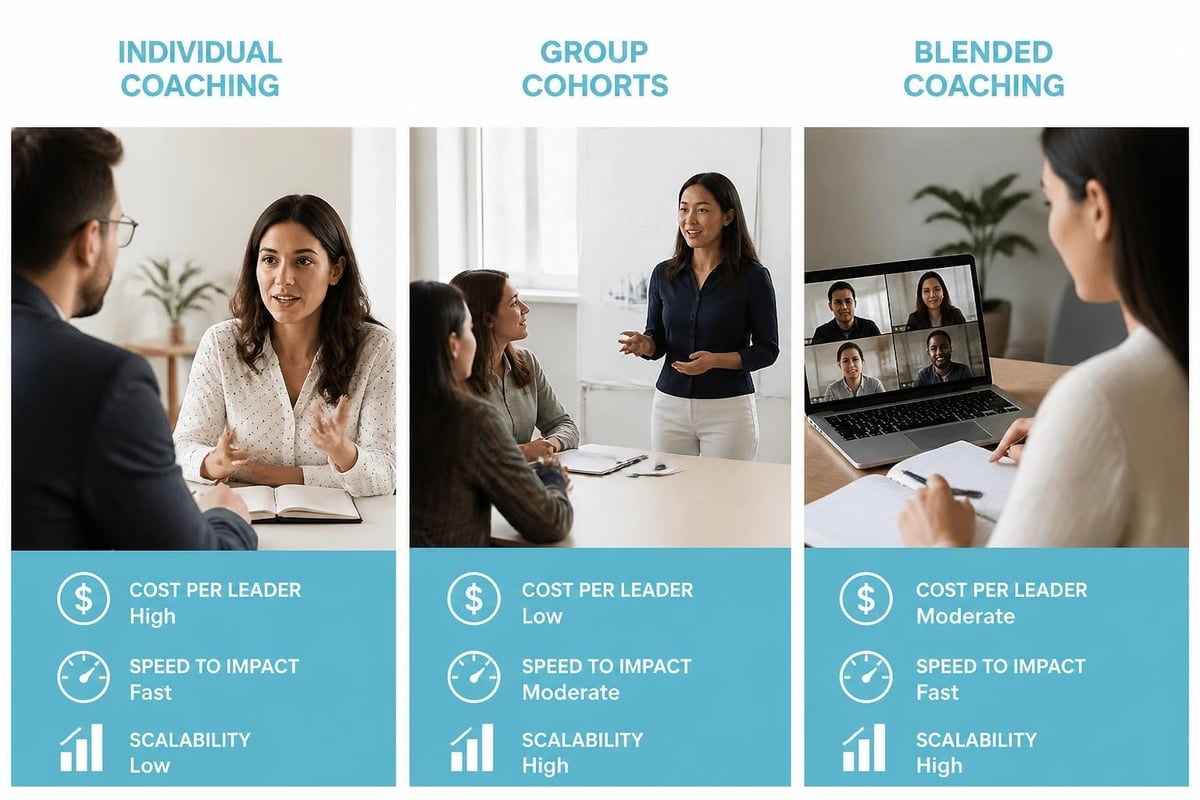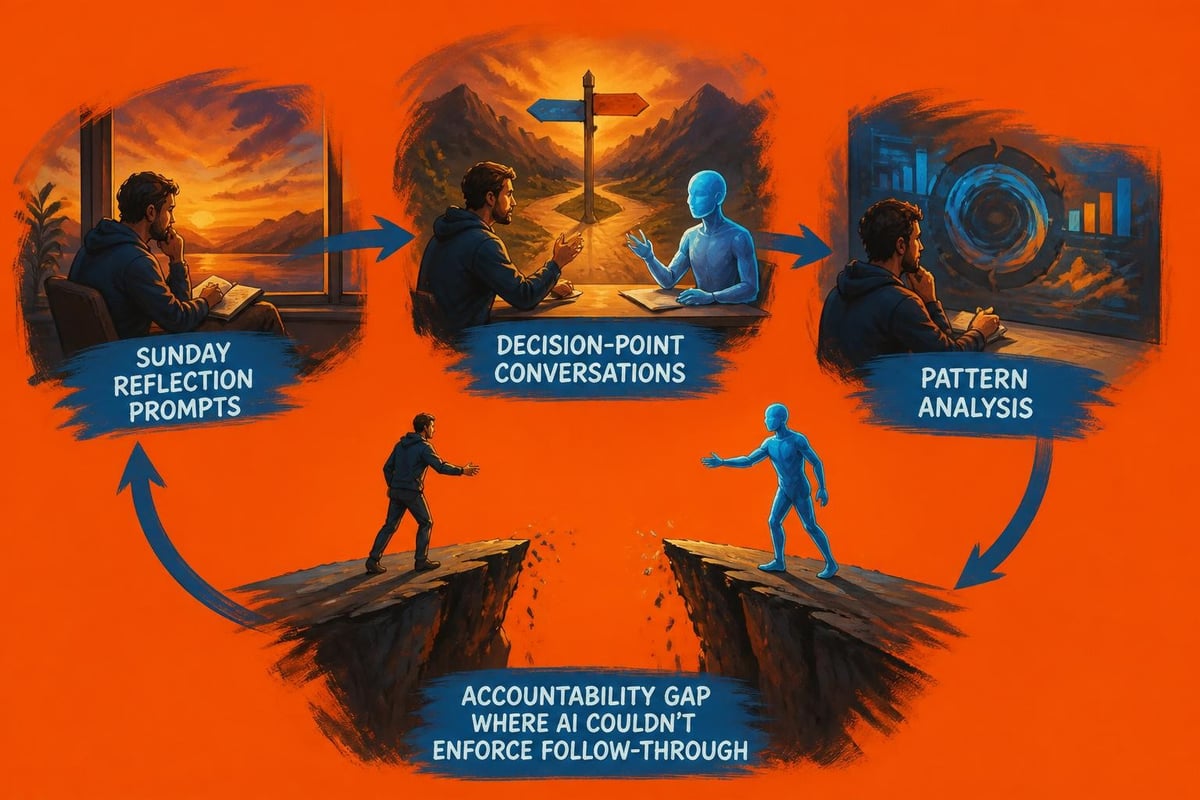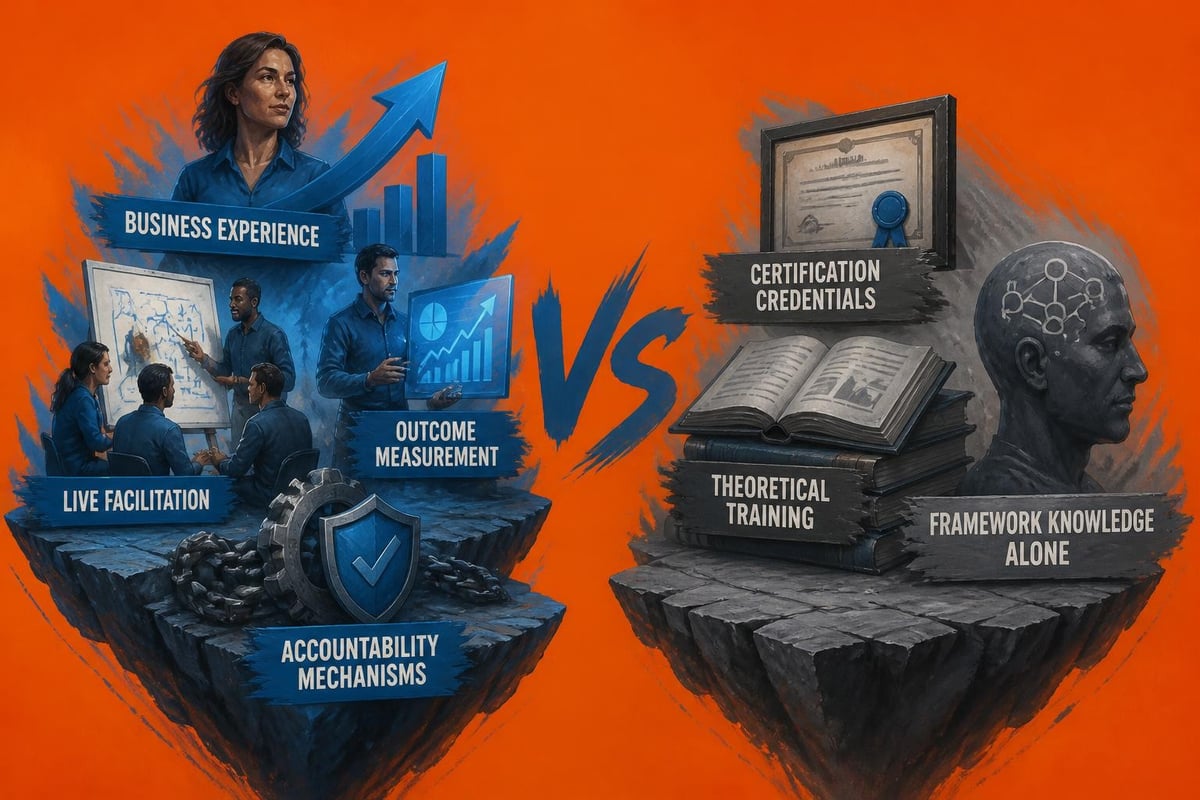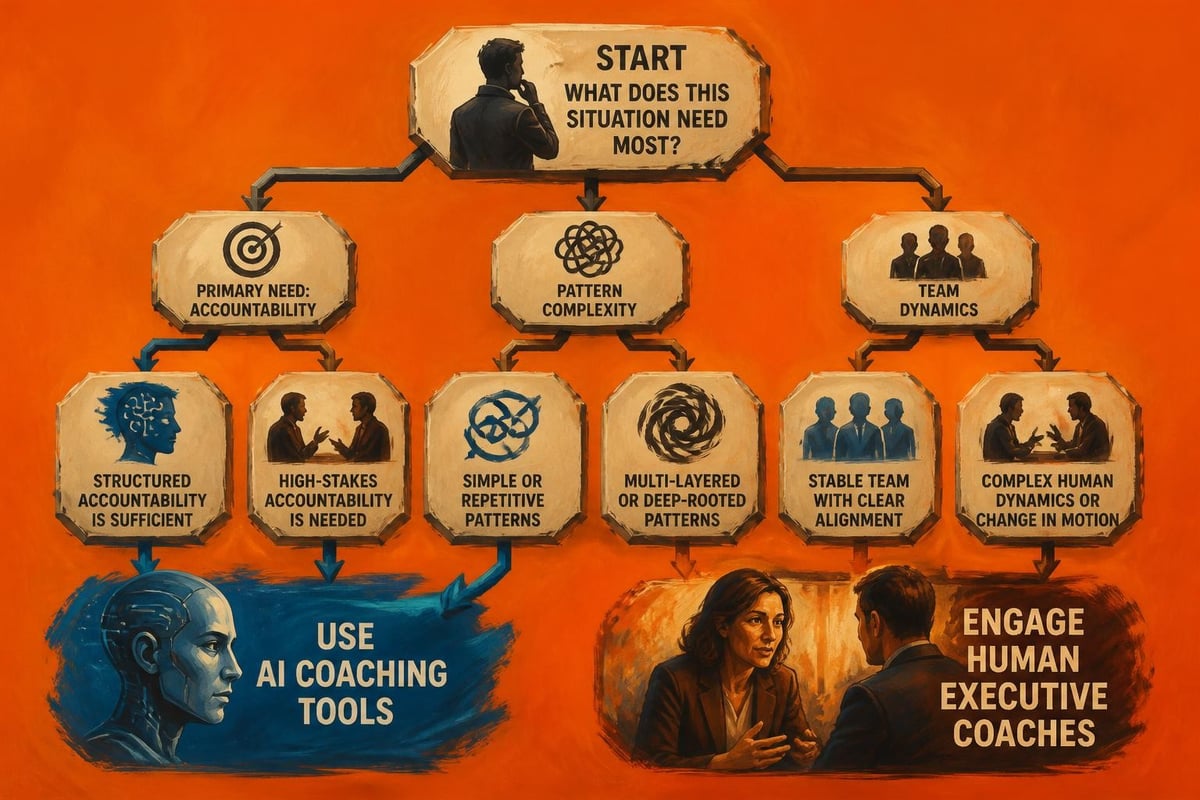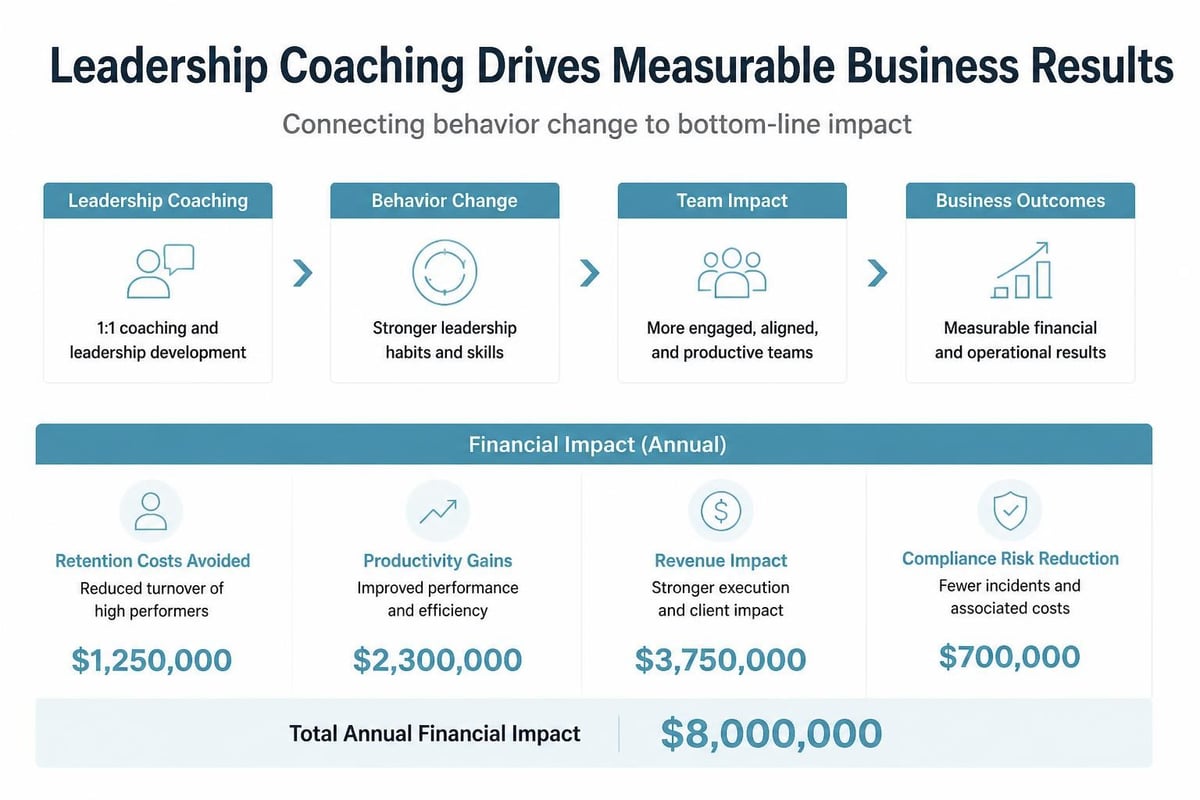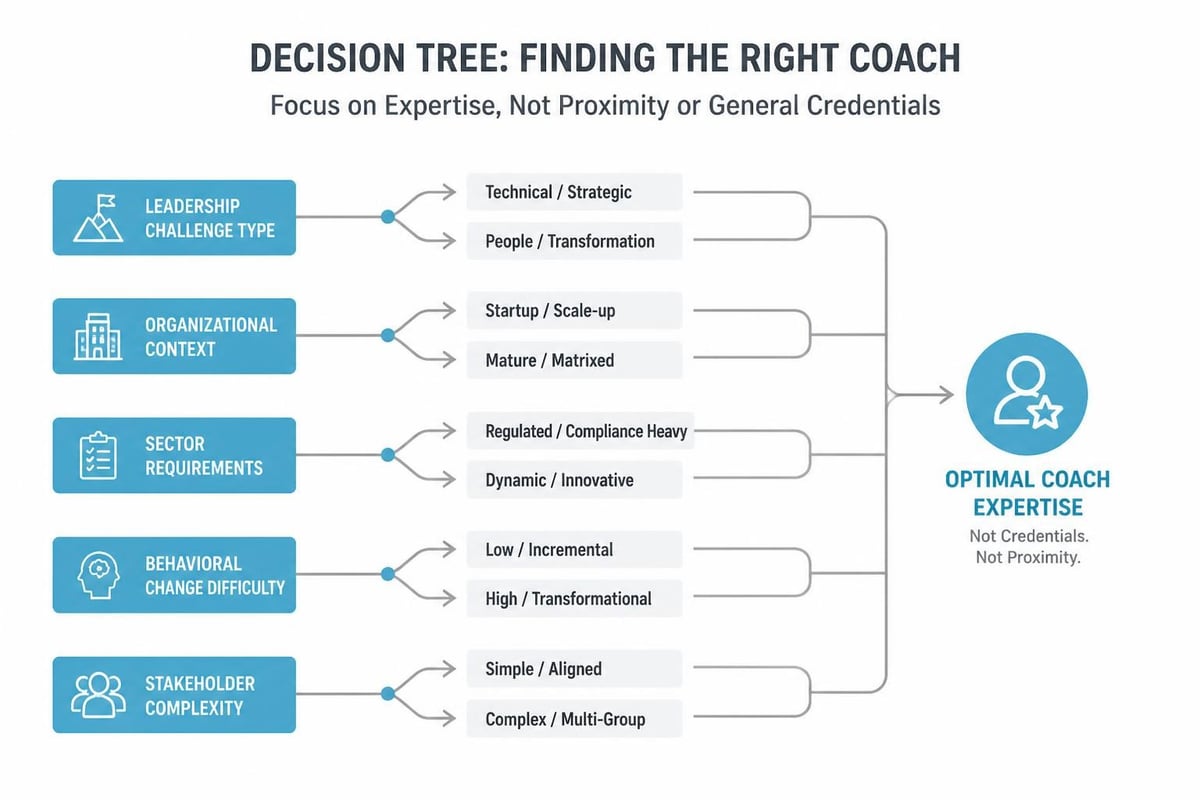

Executive Coaching for Hotel and Hospitality Groups

Hotel and hospitality groups operate with razor-thin margins, high turnover, and relentless operational pressure. When a general manager misreads market signals, a regional director fails to retain talent, or a C-suite team struggles with strategic execution, the consequences compound quickly. Executive coaching for hotel and hospitality groups should address these sector-specific stakes, yet most programs default to generic leadership frameworks that ignore the operational realities of running hotels. The difference between effective coaching and wasted investment comes down to three factors: sector expertise, measurable intervention design, and alignment with commercial outcomes. This article unpacks what works, what fails, and how to build coaching programs that deliver tangible results for hotel groups navigating talent shortages, evolving guest expectations, and economic volatility in 2026.

Why Generic Leadership Coaching Fails in Hospitality

Most executive coaching engagements default to self-awareness exercises, personality assessments, and broad leadership philosophies. These approaches collapse when applied to hospitality executives who manage 24/7 operations, navigate labor constraints, and balance brand standards with local market dynamics.

The failure pattern is predictable. A hotel group hires a well-credentialed coach with Fortune 500 experience but no hospitality context. The coach introduces frameworks from tech or finance, missing the operational nuances that define success in hotels: revenue management decisions made under time pressure, guest service recovery in real time, and team leadership across hourly and salaried staff with vastly different motivations.

The Sector Expertise Gap

Hospitality leaders face challenges that don't translate to other industries. A regional vice president overseeing 15 properties across three markets needs coaching on how to diagnose underperformance when RevPAR drops, not abstract discussions about values alignment. A food and beverage director managing a $12 million annual budget needs help building accountability with kitchen staff and front-of-house teams, not theories about psychological safety.

According to research from the Cornell Center for Hospitality Research, leadership effectiveness in hotels correlates directly with operational knowledge and the ability to make real-time decisions under resource constraints. Coaches without sector grounding can't distinguish between a training issue, a systems issue, and a leadership issue when examining the same operational breakdown.

The consequences of mismatched coaching:

  • Wasted executive time on irrelevant frameworks
  • Leadership behaviors that sound good in theory but fail operationally
  • No measurable change in key performance indicators
  • Erosion of trust between HR and business unit leaders

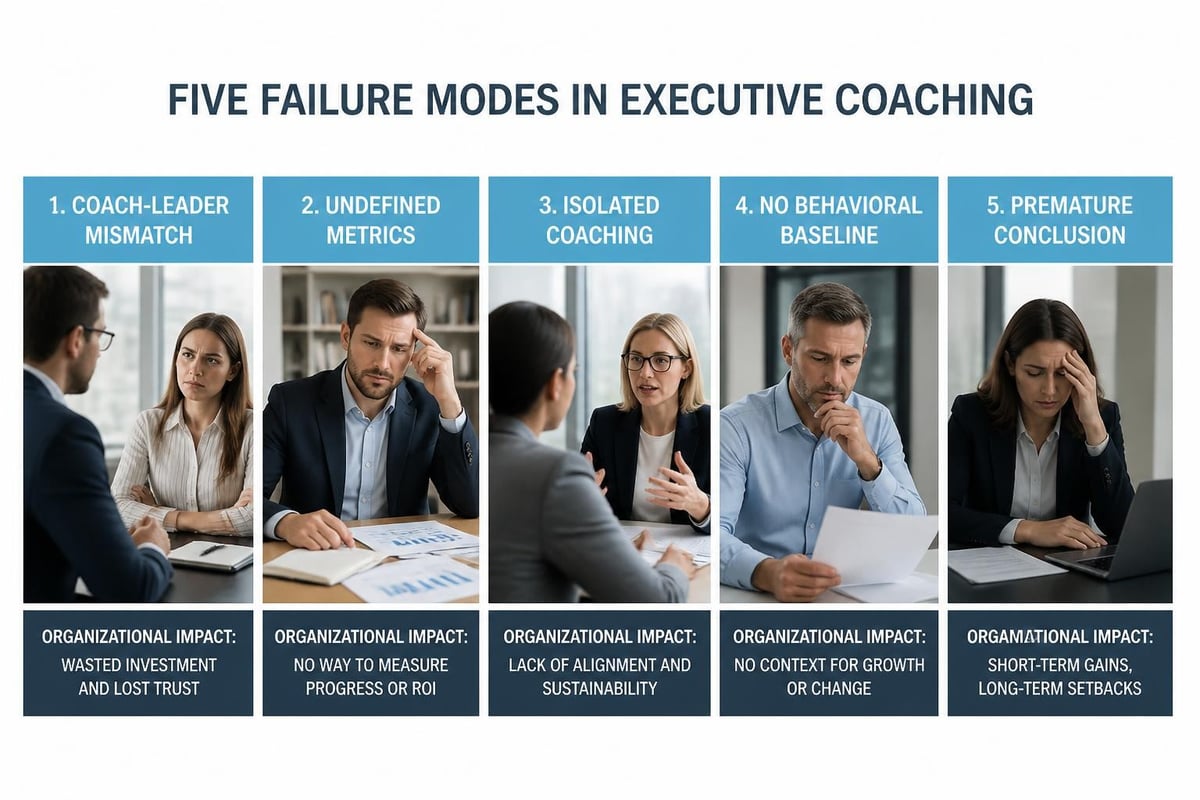
Hospitality coaching mismatch

What Effective Executive Coaching for Hotel and Hospitality Groups Actually Looks Like

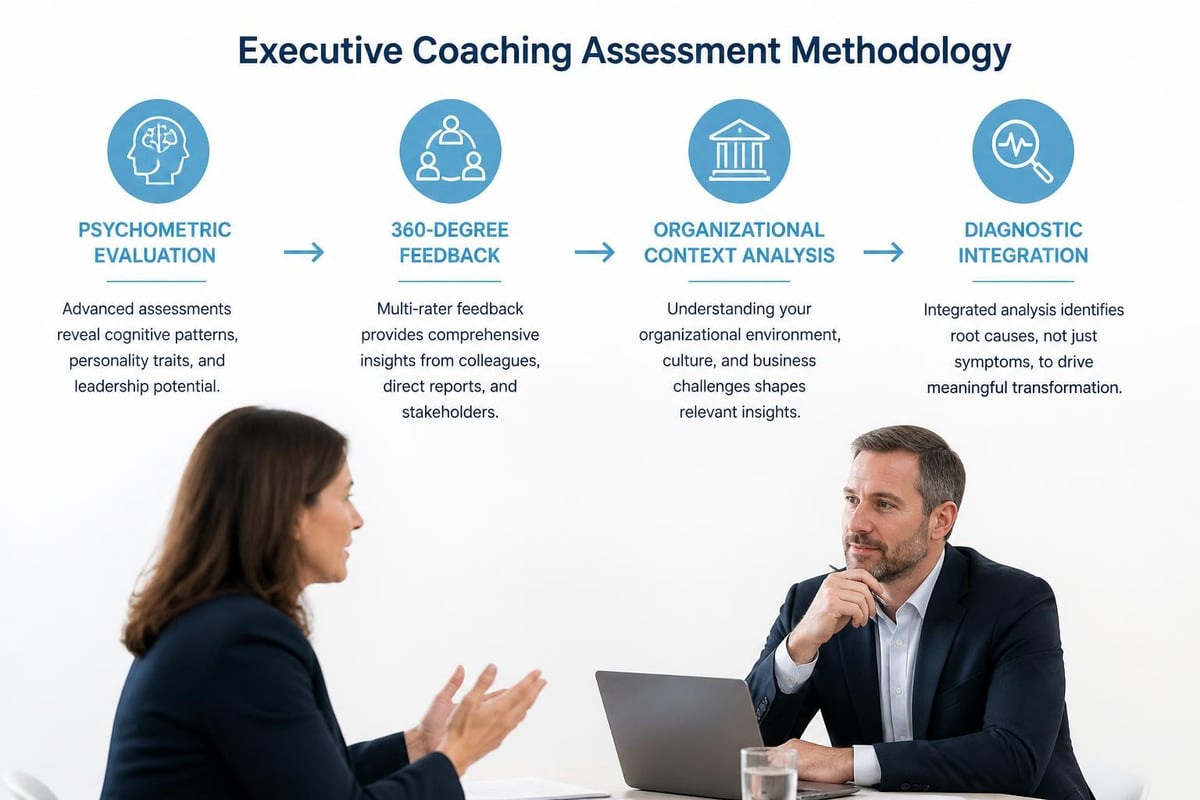
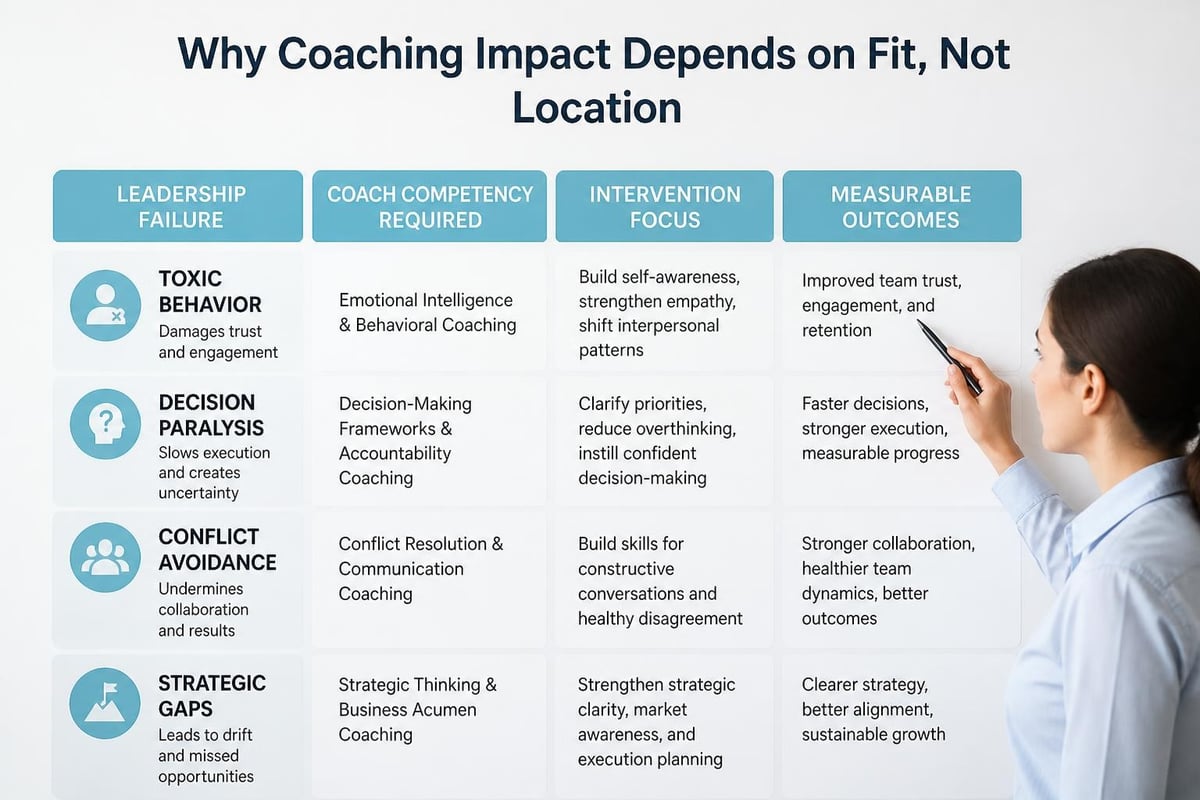
Effective coaching starts with diagnostic precision. Before any intervention, you need to know what's actually broken and what's at stake. For a hotel group, this means understanding whether the issue is strategic (misreading market positioning), operational (ineffective systems or processes), relational (team dysfunction or toxic patterns), or developmental (skill gaps that can be closed through targeted growth).

In 2024, we worked with a boutique hotel group facing retention issues across their general manager tier. Exit interviews pointed to "lack of support" and "unclear expectations," but those are symptoms, not diagnoses. The real issue emerged through leadership assessments and stakeholder interviews: the ownership group made capital allocation decisions without consulting property leaders, then held GMs accountable for outcomes they couldn't influence. The coaching intervention wasn't about helping GMs communicate better. It was about restructuring decision rights and building a governance model where operational leaders had appropriate authority.

Precision Matching and Sector-Specific Expertise

The coach match matters more than most HR leaders acknowledge. A hospitality executive dealing with franchise compliance, brand standard tensions, or multi-property P&L oversight needs a coach who has lived those challenges, not someone reading about them for the first time.

When evaluating top executive coaching firms, hotel groups should assess sector expertise as rigorously as coaching credentials. The right questions:

  • Has the coach worked with hotel operators, not just hospitality brands or corporate functions?
  • Can they speak credibly about ADR optimization, labor cost management, and guest satisfaction metrics?
  • Do they understand the leadership dynamics between ownership, management companies, and on-property teams?
Coaching Attribute Generic Leadership Coach Hospitality-Expert Coach
Operational context Relies on client explanation Brings firsthand knowledge
Diagnosis speed Requires extensive discovery Recognizes patterns quickly
Intervention relevance Adapts general frameworks Applies sector-specific models
Stakeholder credibility Builds slowly through results Immediate from shared language
ROI measurement Generic engagement metrics Tied to RevPAR, retention, NPS

Programs offered by EHL Executive Education demonstrate how applied leadership development in hospitality integrates operational context, case-based learning, and peer exchange from other hotel leaders facing similar challenges. Executive coaching for hotel and hospitality groups should meet the same standard.

Building Targeted Interventions for Common Hospitality Leadership Challenges

Hospitality executives face recurring leadership challenges that demand specific interventions, not broad development plans. Three patterns appear consistently across hotel groups:

Challenge 1: Transitioning from Property to Regional Leadership

A strong general manager doesn't automatically become an effective regional director. The skill shift from running one property to overseeing multiple sites requires different capabilities: diagnostic ability across varied contexts, delegation without micromanagement, and influence without direct operational control.

The intervention that works: structured transition coaching that includes stakeholder mapping, decision-rights clarification, and a 90-day plan with explicit milestones. Coaches should help new regional leaders identify early wins, build credibility with property teams, and establish governance rhythms (weekly property calls, monthly business reviews, quarterly strategy sessions) that create accountability without creating bureaucracy.

Challenge 2: Leading Through Labor Shortages and Turnover

Hotel groups in 2026 face persistent staffing challenges, particularly for hourly roles. Executives who default to "work harder" messaging or short-term financial incentives miss the underlying driver: employees leave managers, not companies, and hourly staff in hospitality have abundant alternatives.

According to WTTC research on workforce trends, the hospitality sector's talent challenges stem from poor onboarding, inconsistent management practices, and lack of career visibility. Coaching interventions should focus on building managers' capability to create psychological safety, deliver consistent feedback, and connect daily work to career progression.

Practical coaching outcomes we've measured:

  • Reduced 90-day turnover from 47% to 31% after coaching department heads on structured onboarding
  • Improved employee engagement scores (measured via pulse surveys) by 23 points after coaching front-line managers on recognition practices
  • Increased internal promotion rates from 12% to 28% after coaching property leaders on talent pipeline conversations

Challenge 3: Navigating Ownership and Brand Tensions

Hotel executives at managed properties or franchise operations face unique governance complexity. They answer to brand standards, ownership's financial expectations, and guest experience imperatives that sometimes conflict. Leaders who can't navigate these tensions burn out or get replaced.

The coaching intervention: teaching executives how to frame trade-off conversations, build business cases that address each stakeholder's priorities, and negotiate decision rights when standards and financial realities collide. This isn't soft-skills coaching. It's applied strategy and influence work that directly affects property performance.

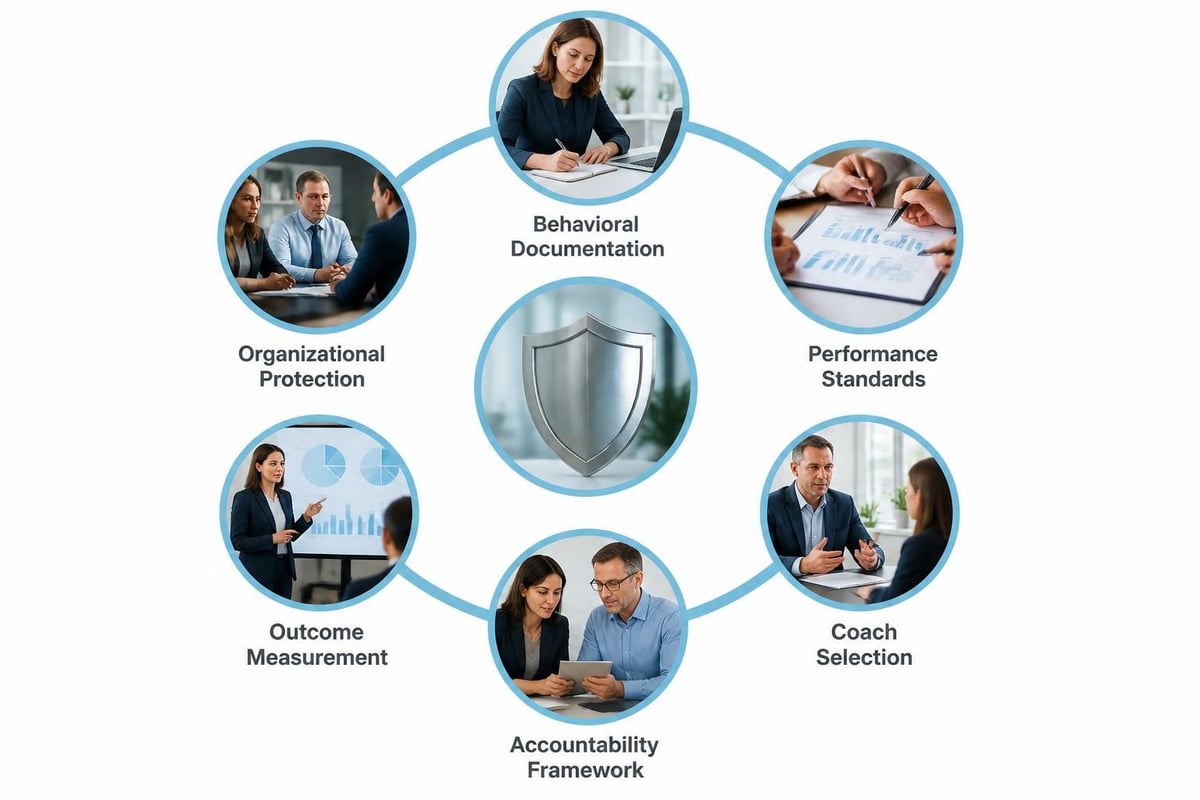
Hotel leadership challenges

Measuring ROI and Organizational Impact

Most coaching programs fail at measurement. They track participation rates and satisfaction scores, which tell you nothing about whether leadership improved or business outcomes changed. For hotel groups investing in executive coaching, the measurement framework should connect individual development to organizational performance.

The metrics that matter:

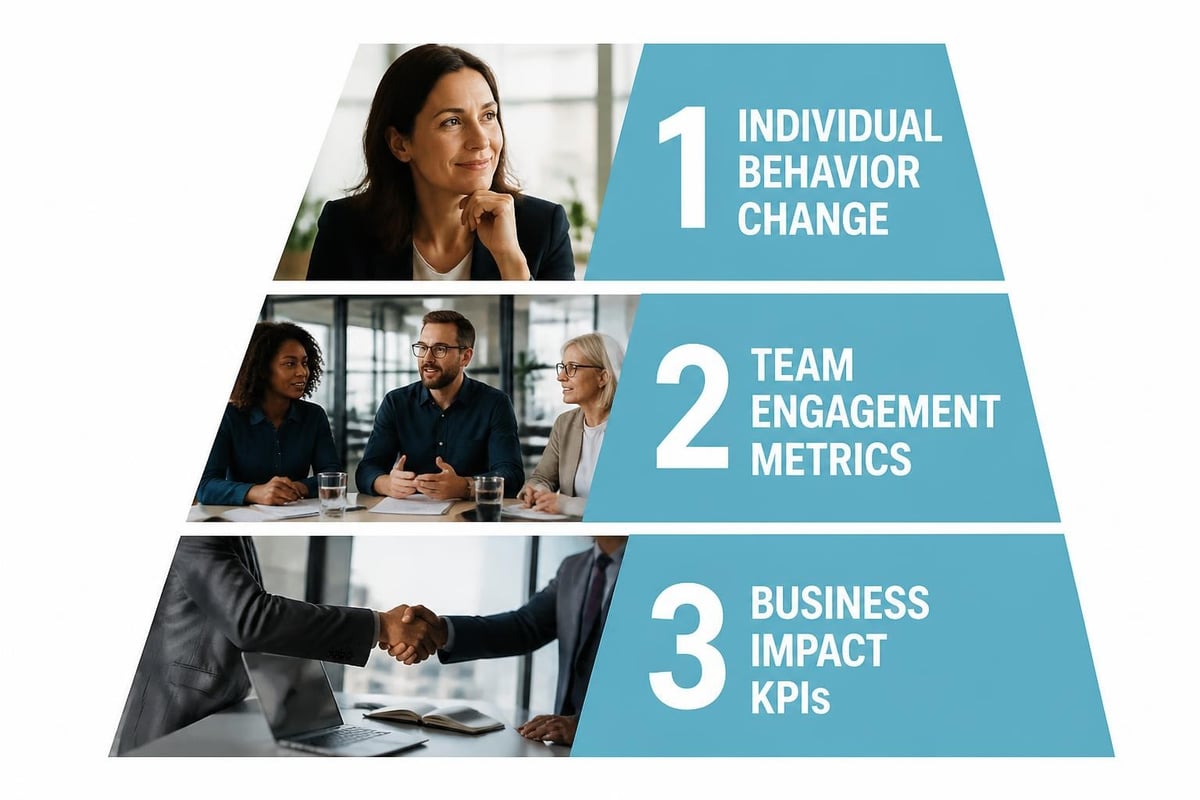
Individual level: behavioral change observed by direct reports and peers (360 assessments pre- and post-coaching), specific skill acquisition (ability to deliver difficult feedback, make faster decisions, delegate effectively), and self-reported confidence in handling key challenges.

Team level: engagement scores from pulse surveys, retention rates for direct reports, team performance on operational metrics (guest satisfaction, labor cost per occupied room, revenue per available room).

Organizational level: promotion rates from coaching cohorts, time to fill critical roles, leadership pipeline strength (number of ready-now successors for key positions).

When Deloitte analyzed human capital trends, they found that organizations with mature coaching cultures demonstrate 23% higher revenue growth and 28% better talent retention than peers. But those outcomes require disciplined measurement and explicit linkage between coaching interventions and business strategy.

A regional hotel group we worked with in 2025 implemented executive coaching for 12 property leaders facing underperformance. The intervention was surgical: six months of monthly coaching sessions focused on revenue optimization and team accountability. The measured outcomes: average RevPAR improvement of 8.3% (controlling for market factors), employee turnover reduction of 19%, and guest satisfaction scores up an average of 12 points. Total coaching investment: $84,000. Incremental EBITDA from the 12 properties over six months: $1.7 million.

Integrating Coaching with Leadership Development Systems

Executive coaching for hotel and hospitality groups delivers maximum impact when integrated with broader leadership development infrastructure, not deployed as a standalone intervention.

Smart hotel groups connect coaching to succession planning. They identify high-potential directors and VPs who could move into C-suite roles within 24 months, then deploy coaching to close specific gaps preventing that progression. The coaching focuses on board-level communication, strategic thinking, and enterprise decision-making rather than operational management.

The HR Leader's Role

CHROs and talent leaders in hospitality often struggle with coaching program design because they inherit generic frameworks from other industries. The better approach: start with business strategy and work backward to leadership requirements.

If the hotel group's strategy depends on market share growth through aggressive pricing and marketing, what leadership capabilities enable that? Revenue management sophistication, cross-functional collaboration between sales and operations, and disciplined financial forecasting. Coach to those capabilities, not to abstract leadership competencies.

SHRM guidance on executive coaching emphasizes the shift from coaching as perk to coaching as performance intervention. For hospitality groups, this means HR leaders should approve coaching based on business cases that specify the gap being addressed, the expected behavioral change, and how that change connects to organizational outcomes.

Integration Point Weak Approach Strong Approach
Succession planning Coach high performers generally Target coaching to close specific gaps preventing next-level readiness
Performance management Offer coaching to struggling leaders Deploy coaching proactively before performance deteriorates
Onboarding Standard orientation programs Add executive coaching for first 90 days in role transitions
Strategic initiatives Launch initiatives, hope for adoption Coach leaders responsible for execution on change management and influence

Avoiding Common Implementation Failures

Hotel groups waste coaching investments through predictable failure modes. Recognizing these patterns helps HR and business leaders design better programs.

Failure 1: Treating coaching as a remedial intervention. When coaching is positioned as "help for struggling leaders," high performers avoid it and struggling leaders resist it. Position coaching as a development accelerator for leaders with high potential or high-stakes responsibilities.

Failure 2: No stakeholder alignment. If the coach, the leader being coached, their manager, and HR all have different expectations for what the coaching should accomplish, the engagement produces frustration, not results. Establish explicit success criteria before the first session.

Failure 3: Insufficient time commitment. One-off coaching conversations or monthly 30-minute check-ins don't create behavior change. Effective executive coaching requires at least 60-90 minutes per session, every two weeks, for a minimum of four months. Anything less is performance theater.

Failure 4: Ignoring organizational context. Individual coaching that ignores dysfunctional systems, misaligned incentives, or toxic cultural patterns sets leaders up to fail. Sometimes the right intervention is fixing the system, not coaching the leader to cope with it.

Research from hospitality leadership studies shows that competency development programs succeed when they combine experiential learning, real-time feedback, and organizational support. Executive coaching follows the same principle. The coach works with the individual, but the organizational environment determines whether new behaviors stick.

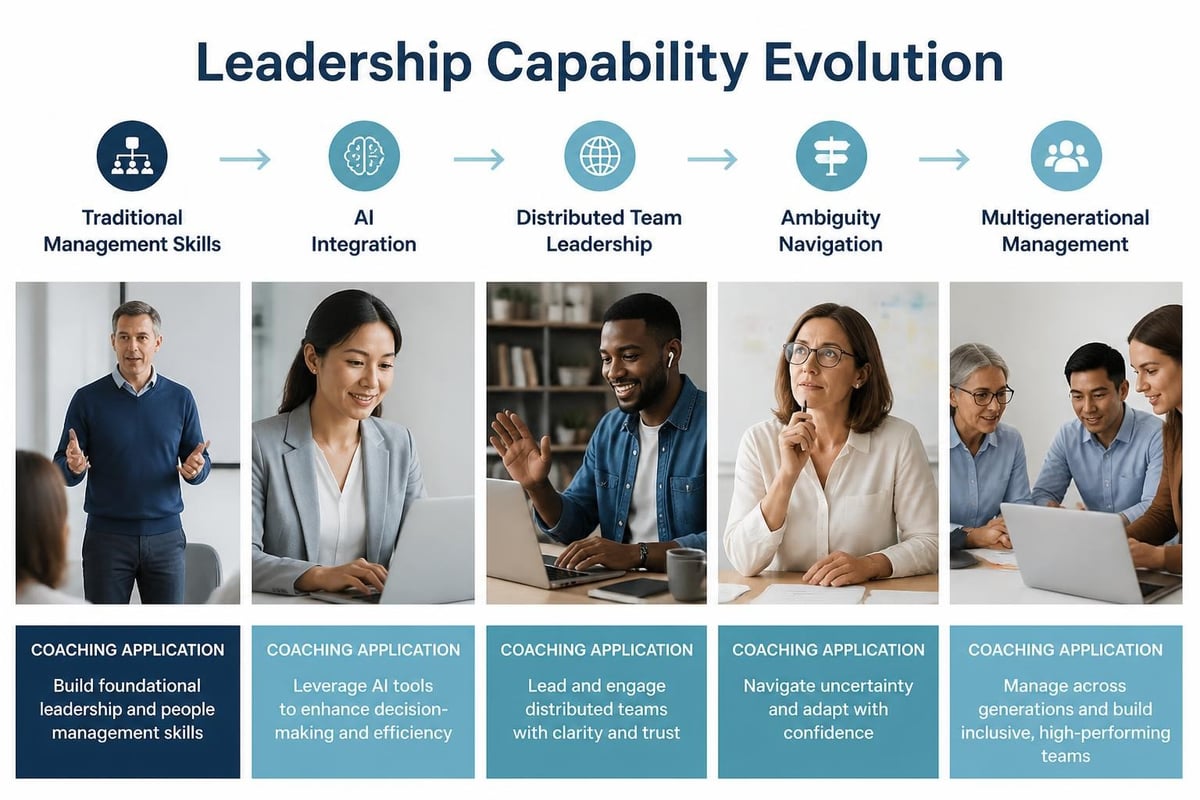
Coaching implementation failures

The Economics of Coaching Investment for Multi-Property Groups

Hotel groups evaluating coaching investments should calculate cost per improved outcome, not cost per coaching hour. A $15,000 coaching engagement that prevents one GM departure saves the organization $75,000 to $150,000 in replacement costs (recruiting, lost productivity, new hire onboarding). A coaching program that helps a regional leader improve portfolio performance by 3% ROI generates returns that dwarf the coaching investment.

The economics change dramatically based on scale. A 50-property group investing in executive coaching for 20 senior leaders (corporate and regional roles) might spend $250,000 annually. If that coaching improves retention by 10%, accelerates internal promotions, and drives modest performance gains across the portfolio, the financial return reaches seven figures.

For perspective on coaching economics across industries, reviewing enterprise corporate coaching providers reveals cost structures and ROI frameworks that hotel groups can adapt to hospitality contexts.

Build or buy considerations:

  • Internal coaching capability: Some large hotel groups train senior HR business partners or learning and development leaders as coaches. This works for developmental coaching but rarely delivers the sector expertise and objectivity needed for executive-level interventions.
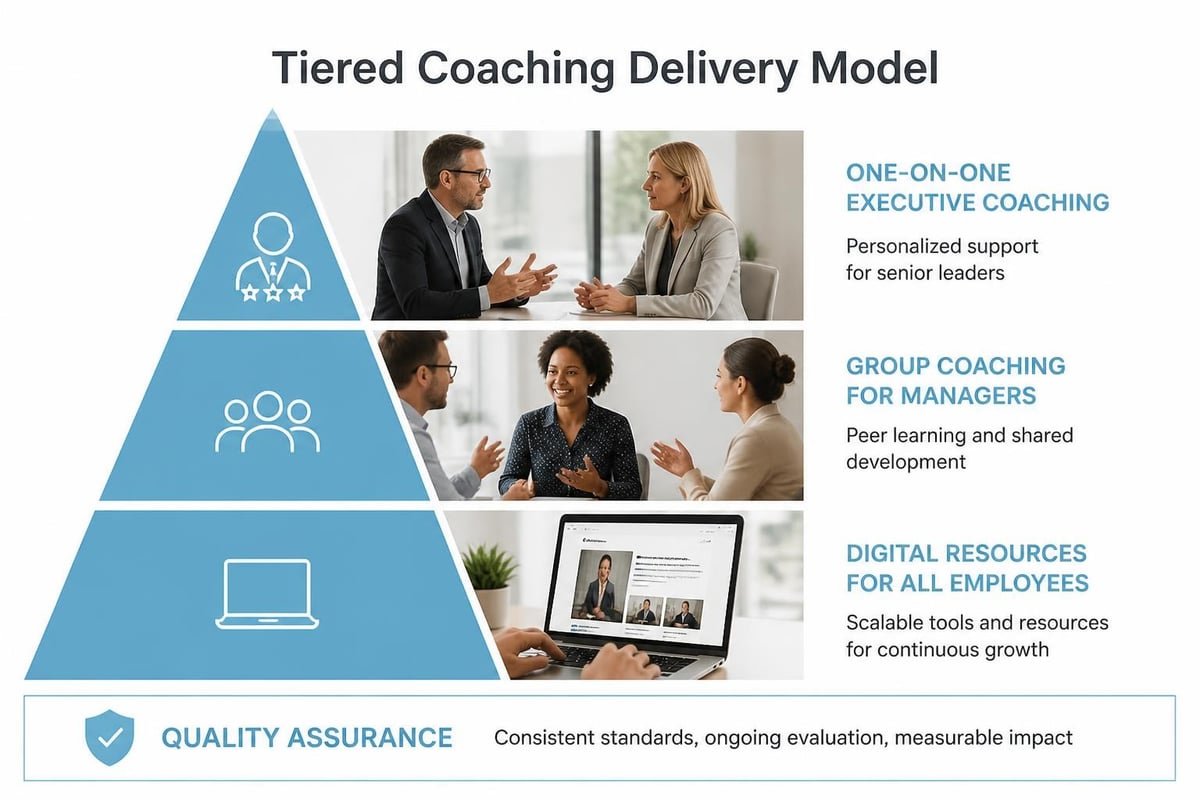
  • Coach networks: Working with platforms that provide vetted, sector-expert coaches offers flexibility and quality control without building internal infrastructure. The trade-off is less cultural integration but faster deployment and broader expertise access.
  • Hybrid models: Deploy internal coaching for mid-level managers and high-volume needs, reserve external executive coaches for C-suite, regional leaders, and high-stakes transitions.

Adapting Coaching to Hotel Segment and Operating Model

Executive coaching for hotel and hospitality groups requires adaptation based on segment (luxury, upscale, midscale, economy) and operating model (managed, franchised, owned).

Luxury hotel executives face different leadership challenges than select-service operators. A GM at a 400-room luxury resort managing 500 employees, multiple F&B outlets, spa operations, and high-touch guest experiences needs coaching on orchestrating complexity, developing department heads, and maintaining brand standards while allowing creative service recovery. A GM running a 90-room select-service property with 15 employees needs coaching on efficiency, multi-tasking, and driving performance with minimal resources.

Operating model matters equally. Executives at managed properties (where a management company operates hotels owned by third parties) navigate constant tension between brand standards and ownership economics. Coaching should address stakeholder management, business case development, and influence without authority. Executives at franchised properties face brand compliance requirements while maintaining operational autonomy. Coaching should focus on balancing standardization and local adaptation.

According to HSMAI talent research, commercial leadership roles (revenue management, sales, marketing) present distinct development needs in hospitality. Leaders in these functions need coaching on data-driven decision-making, cross-functional collaboration with operations, and navigating the tension between short-term bookings and long-term brand positioning.

Frequently Asked Questions

What qualifications should I look for in an executive coach for hotel leadership?

Prioritize sector experience over coaching credentials alone. Look for coaches who have held operational or commercial leadership roles in hospitality (hotel operations, revenue management, multi-property oversight) combined with recognized coaching certification (ICF, EMCC). The coach should understand hotel P&L statements, labor models, and revenue optimization as fluently as they understand adult development theory and behavior change models.

How long does executive coaching take to show measurable results?

Behavior change becomes visible within 60 to 90 days of consistent coaching (bi-weekly sessions minimum). Measurable business outcomes (improved team performance, better financial results, reduced turnover) typically emerge within four to six months. Coaching engagements shorter than three months rarely produce lasting change. Expect six to twelve months for senior executives addressing complex challenges like cultural transformation or major role transitions.

Should we use the same coach for all our hotel executives?

No. Different leaders face different challenges and respond to different coaching styles. A coach effective with analytical, data-driven revenue leaders may struggle with relationship-focused operations leaders. Use matching algorithms and trial sessions to ensure coach-leader fit. For large hotel groups, building a panel of 3 to 5 vetted coaches with different specializations (operations, commercial leadership, succession preparation) provides flexibility while maintaining quality.

How do we measure coaching ROI in hospitality?

Track three levels: individual (360 assessments, specific skill acquisition, behavioral change observed by stakeholders), team (engagement scores, retention of direct reports, team performance on operational metrics), and organizational (promotion rates, leadership pipeline strength, business performance of coached leaders' units). Compare performance of coached leaders against control groups when possible. Calculate financial impact of outcomes like reduced turnover, improved RevPAR, and faster time-to-productivity in new roles.

What's the difference between leadership development programs and executive coaching?

Leadership development programs (cohort-based training, simulations, workshops) build foundational capabilities and create peer networks. Executive coaching provides individualized, context-specific support for high-stakes challenges, behavior change, and role transitions. Both have value. Use development programs for emerging leaders and core competency building. Deploy executive coaching for senior leaders, succession candidates, and leaders facing complex performance or transition challenges. The highest-performing hotel groups integrate both approaches.


Executive coaching for hotel and hospitality groups succeeds when it combines sector expertise, diagnostic precision, and measurable intervention design tailored to operational realities. Generic leadership frameworks fail because they ignore the unique pressures facing hotel executives: 24/7 operations, labor constraints, stakeholder complexity, and performance accountability measured in real-time guest satisfaction and financial metrics. When HR and business leaders demand coaching that addresses these realities and measure outcomes that matter, they transform leadership capability and drive organizational performance. Noomii Leadership Coaching helps hotel and hospitality groups solve complex leadership challenges through precision coach matching, evidence-based diagnostics, and targeted interventions aligned with organizational goals and measurable business outcomes.

Can a Coach Save a Relationship? What the Evidence Shows

The question "can a coach save a relationship" arrives in my inbox monthly, usually from leaders managing divorcing executives or teams torn apart by interpersonal conflict. The short answer: rarely, and that's the wrong question. Coaches operate outside the scope of relationship repair that requires clinical intervention. The longer answer reveals what coaching can and cannot do, when therapy is the appropriate choice, and why conflating the two creates risk for organizations and individuals alike.

The Scope Boundary Most Coaches Miss

Relationship coaching exists in a narrow band between self-help and therapy. Coaches help functional couples optimize communication, align on goals, or navigate career transitions together. They do not treat clinical issues like trauma, abuse, addiction, severe depression, or patterns requiring diagnosis.

Research on empirically supported couple therapy models demonstrates that evidence-based treatments (Emotionally Focused Therapy, Behavioral Couple Therapy, Gottman Method) improve relationship satisfaction in controlled studies. These are delivered by licensed therapists with specific training. Coaches claiming equivalent outcomes without clinical credentials are making unsupported promises.

The APA’s guidance on treating challenging couples cases outlines risk factors (intimate partner violence, substance abuse, untreated mental illness) that require professional assessment. A coach who continues working with a couple showing these red flags commits an ethical violation and exposes everyone to harm.

When Coaching Addresses Relationship Dynamics

Business coaching frequently touches relationship patterns because leadership is relational. An executive whose marriage is imploding will show up distracted, irritable, or unavailable. Team dynamics mirror attachment styles formed in early relationships. Communication breakdowns at home often predict communication failures at work.

Coaching addressing workplace relationship dynamics

Effective coaches acknowledge these connections without treating them. I've coached dozens of leaders through divorce. The work focuses on maintaining performance, decision quality, and team trust during personal crisis, not saving the marriage. When leaders ask directly about relationship rescue, the ethical response is referral to a licensed therapist.

Coaching can help with:

  • Communication skills that transfer across contexts
  • Stress management during relationship transitions
  • Career decisions affected by relationship changes
  • Leadership presence during personal challenges
  • Boundary setting and emotional regulation

Coaching cannot treat:

  • Clinical depression or anxiety disorders
  • Trauma from abuse or betrayal
  • Addiction or substance dependence
  • Personality disorders affecting relationships
  • Deep attachment or relational wounds

The Evidence on What Actually Saves Relationships

Harvard Health’s analysis of couples therapy outcomes shows that 70% of couples report improvement after therapy, but success depends on timing, commitment, and therapist expertise. Most couples wait six years past the point where problems become evident before seeking help. By then, resentment and contempt have calcified.

The Gottman Institute’s research program has tracked couples for decades, identifying patterns that predict divorce with over 90% accuracy: criticism, contempt, defensiveness, and stonewalling. Intervention works best early, delivered by therapists trained in evidence-based methods.

Intervention Type Scope Evidence Base When Appropriate
Coaching Performance, communication, goals Limited; varies by coach Functional couples optimizing
Couples Therapy Clinical issues, deep patterns Strong for specific models Distress, conflict, or dysfunction
Marriage Counseling Often faith-based or mixed Variable; depends on provider Values alignment, premarital
Mediation Legal, custody, asset division N/A (legal process) Separation or divorce

The data makes clear that can a coach save a relationship is the wrong frame. Coaches are not clinicians. Relationships requiring "saving" typically need therapy, not coaching.

What Organizations Should Know

Corporate coaching engagements sometimes uncover relationship distress. An executive in 360 leadership assessment sessions reveals marital problems affecting judgment. A team facilitation surfaces an affair between colleagues. Manager training exposes domestic violence.

The organizational response matters:

  1. Have clear referral protocols. Maintain relationships with licensed therapists and Employee Assistance Programs.
  2. Train coaches on boundaries. Coaches must recognize when issues exceed their scope and refer appropriately.
  3. Separate coaching from HR. Relationship problems should not trigger performance management unless business impact is documented.
  4. Protect confidentiality. Don't pressure coaches to disclose personal issues unless safety is at risk.

I've seen companies mishandle these situations badly. One hired a "relationship coach" to "fix" a VP's marriage to reduce distraction. The marriage ended anyway, the VP sued for privacy invasion, and the coach faced ethics complaints. The correct move was EAP referral and performance management if needed.

Corporate response to relationship issues

The Business Case for Clarity

Coaching works when scope matches capability. Team coaching and facilitation improves communication, decision speed, and accountability because those outcomes are coachable. Relationship satisfaction in distressed couples is not.

The most effective coaches I know, including experienced practitioners on Noomii’s directory, maintain clear boundaries. They address how relationship stress affects leadership without attempting therapy. They normalize struggle while insisting on appropriate help.

Red flags in "relationship coaching" claims:

  • "Save your marriage in 12 sessions guaranteed"
  • Coaches with no licensure treating diagnosed conditions
  • Programs promising outcomes without evidence
  • Failure to screen for abuse, addiction, or violence
  • Mixing coaching fees with clinical services

Can a coach save a relationship? In rare cases where the relationship is fundamentally sound and needs only optimization, perhaps. In the majority of cases where "saving" implies crisis intervention, absolutely not. The question itself reveals confusion about coaching versus therapy.

Alternative Approaches That Work

For organizations supporting employees through relationship challenges, Harvard Health’s guidance on when couples therapy is appropriate offers a practical framework. Early intervention, licensed providers, evidence-based methods, and mutual commitment predict success.

For individuals, the path forward is assessment. A single session with a licensed marriage and family therapist clarifies whether the issues are coachable (communication, goals, transitions) or clinical (trauma, disorders, deep dysfunction). Most coaches will facilitate that referral if asked directly.

Decision framework for determining appropriate intervention: coaching for optimization and skills versus therapy for clinical issues, distress, or dysfunction

The broader lesson for buyers: credential worship creates problems, but so does credential dismissal. The right intervention matches the problem. Coaching is powerful for performance, leadership, and growth. Therapy is essential for clinical issues and deep relational repair. Conflating them helps no one.

Organizations investing in corporate coaching that delivers measurable results need coaches who know their limits. The best coaches say "that's outside my scope" more often than weak ones. They protect clients by maintaining boundaries, not by claiming false expertise.

FAQ

Can relationship coaching replace couples therapy?
No. Coaching addresses communication and goals in functional relationships. Therapy treats clinical issues like trauma, abuse, depression, or severe conflict requiring licensed intervention.

When should a coach refer clients to therapy?
Immediately upon identifying abuse, suicidal ideation, untreated mental illness, addiction, or any issue requiring clinical diagnosis and treatment beyond coaching scope.

What credentials should relationship coaches have?
At minimum, specialized training in relationship dynamics, clear scope boundaries, professional liability insurance, and protocols for referral to licensed therapists when needed.

How long does it take for couples therapy to work?
Research shows most couples see improvement within 12-20 sessions, but outcomes depend on timing (earlier is better), commitment, therapist expertise, and relationship severity.

Can coaching help with communication during divorce?
Yes, within limits. Coaches can support individuals maintaining professional performance and making sound decisions during personal transitions, but not mediate divorce or provide legal guidance.

What's the success rate of couples therapy?
Studies show approximately 70% of couples report improvement after evidence-based therapy, with success rates varying by model, timing, and therapist training.

Should companies pay for relationship coaching?
Rarely. Organizations should offer EAP access to licensed therapists and keep coaching focused on business performance, leadership, and team effectiveness, not personal relationships.

How do you know if relationship problems need therapy vs. coaching?
If there's clinical distress, safety concerns, diagnosed conditions, or deep dysfunction, therapy is required. If the relationship is fundamentally sound and needs communication or goal optimization, coaching may help.

What are the risks of unqualified relationship coaching?
Coaches working beyond their scope may miss serious issues (abuse, mental illness), delay necessary treatment, violate ethics, cause harm, and expose organizations to liability.


Relationship challenges affect workplace performance, but can a coach save a relationship is the wrong question. The evidence shows coaching optimizes functional relationships while therapy treats clinical issues and deep dysfunction. Organizations need clear boundaries, referral protocols, and coaches who recognize their scope limits. If you want practical corporate coaching that delivers measurable business results without overstepping professional boundaries, Noomii connects you with experienced coaches who know the difference between performance optimization and clinical intervention.

Executive Coaching for Logistics and Freight Companies

Logistics and freight executives face a leadership paradox. They manage global supply chains, complex regulatory environments, and multi-million-dollar operations, yet most operate without structured leadership development. The sector's relentless focus on operational efficiency has created a leadership vacuum where executives excel at processes but struggle with strategic transformation, talent retention, and organizational culture. Executive coaching for logistics and freight companies addresses this gap, but only when it's designed for the sector's unique demands: tight margins, 24/7 operations, safety-critical decisions, and rapid market disruption.

Why Standard Leadership Development Fails Logistics Executives

Most corporate leadership programs ignore the reality of supply chain operations. They're built for office-based leaders with predictable schedules, not executives managing port congestion at 2 AM or navigating carrier bankruptcies mid-quarter.

The Global Supply Chain Institute at University of Tennessee identifies five critical challenges in planning talent and leadership development: workforce gaps, technology adoption, resilience planning, sustainability mandates, and cross-functional integration. Standard leadership development addresses none of these with the operational specificity logistics demands.

The Operational Reality Gap

Logistics executives operate in a context most leadership coaches don't understand:

  • Asset-intensive decision-making where a single routing error costs tens of thousands
  • Regulatory compliance across jurisdictions with direct liability consequences
  • Union negotiations and labor relations in warehouse and transportation networks
  • Safety protocols where leadership failures result in injuries or fatalities
  • 24/7 operations requiring distributed decision authority without losing control

Generic coaching about "strategic thinking" or "executive presence" misses the point. The question isn't whether a VP of Operations can present to the board but whether they can rebuild trust with a warehouse team after a preventable accident, restructure routes when fuel costs spike 40%, or navigate a carrier partnership that's failing without destroying long-term relationships.

Leadership challenges in logistics operations

The Leadership Challenges That Derail Logistics Organizations

Three patterns emerge when logistics and freight companies delay executive coaching intervention. These aren't theoretical risks. They're observable failures with quantifiable consequences.

Pattern One: Operational Excellence Without Strategic Vision

A regional freight brokerage grew revenue 300% in four years through aggressive carrier partnerships and technology investment. The COO, promoted from operations manager, excelled at execution. Lanes were optimized. Customer SLAs hit 99.2%. Carrier networks expanded.

The problem surfaced when a Fortune 500 prospect asked about ESG initiatives, technology roadmap, and talent strategy. The COO had none. The company lost the contract and three months later faced a talent exodus when a competitor launched with better benefits and remote work options the leadership team hadn't considered viable.

The diagnosis: The COO possessed deep operational knowledge but no framework for strategic planning, competitive positioning, or organizational development. Executive coaching delivers the structured thinking required to translate operational wins into strategic advantage.

Pattern Two: Command-and-Control Leadership in a Distributed Workforce

A third-party logistics provider (3PL) with 12 warehouses across North America struggled with turnover rates exceeding 60% annually in warehouse operations. The VP of Logistics, a 20-year veteran, ran operations with military precision: strict protocols, top-down directives, minimal deviation tolerance.

It worked until 2024 when warehouse workers gained leverage in a tight labor market. Exit interviews revealed a consistent theme: workers respected the VP's competence but felt no autonomy, development opportunity, or psychological safety to raise operational concerns. Two safety incidents went unreported until they became OSHA investigations.

The intervention: Executive coaching for logistics and freight companies must address the sector's hierarchical culture while building adaptive leadership capabilities. The VP learned to delegate decision authority, implement feedback loops, and create development pathways. Turnover dropped to 34% within 18 months. Safety reporting increased 400%.

The lesson: Operational control and employee empowerment aren't opposites. They require sophisticated leadership that most logistics executives never develop without external support.

Pattern Three: Siloed Leadership Destroying Cross-Functional Performance

A freight forwarding company organized by service line: ocean, air, ground, customs brokerage. Each division operated independently with separate P&Ls, customer relationships, and technology systems. Revenue grew, but complexity created friction.

The breaking point came when a major automotive client needed integrated services across all modes. No single executive owned the relationship. Sales blamed operations for inconsistent service. Operations blamed technology for system incompatibility. Technology blamed leadership for never funding integration. The client moved to a competitor offering seamless multi-modal coordination.

The root cause: Five executives, each excellent in their domain, couldn't function as a leadership team. They lacked trust, clear decision rights, and shared accountability frameworks. Executive coaching for logistics and freight companies addressed this through team-based intervention focusing on role clarity, communication protocols, and joint problem-solving on real operational challenges.

Leadership Gap Operational Symptom Business Impact Coaching Focus
Strategic Planning Deficit Reactive decision-making, no 3-year roadmap Lost market opportunities, talent attrition Scenario planning, competitive analysis, vision development
Command-Control Rigidity High turnover, safety under-reporting, low engagement Operational risk, recruiting costs 40%+ of revenue Delegation frameworks, feedback systems, trust-building
Cross-Functional Silos Missed revenue, client defection, duplicated effort 15-30% efficiency loss, customer concentration risk Team dynamics, shared metrics, accountability structures

What Executive Coaching for Logistics and Freight Companies Must Deliver

The sector doesn't need coaching. It needs precision intervention designed for logistics-specific leadership challenges. That requires coaches who understand supply chain economics, operational constraints, and industry dynamics.

Sector-Specific Diagnostic Assessment

Effective executive coaching for logistics and freight companies starts with diagnostics that capture operational context. Standard 360-degree feedback asking about "collaboration" and "communication" produces useless platitudes.

Better assessment asks:

  • How does the executive respond when a carrier fails mid-transit with perishable cargo?
  • What decision framework guides trade-offs between service levels and margin protection?
  • How effectively does the leader navigate union negotiations, safety incidents, or regulatory violations?
  • What's the executive's approach to technology investment when capital is constrained?

These questions reveal leadership patterns that matter in logistics: judgment under pressure, risk calibration, stakeholder management across asymmetric power dynamics, and resource allocation in capital-intensive environments.

Coach Matching Based on Industry Expertise

A coach with 20 years of experience in pharmaceutical leadership brings minimal value to a freight executive managing driver recruitment, DOT compliance, and fluctuating diesel costs. The contexts don't translate.

Top executive coaching firms succeed in logistics by matching executives with coaches who have supply chain operations experience, understand industry economics, and can pressure-test strategic thinking against operational reality. When a coach has run warehouse operations, managed carrier networks, or led logistics transformations, they recognize the difference between theoretical best practices and operational feasibility.

Precision coach matching process

Intervention Plans Aligned to Business Outcomes

Executive coaching for logistics and freight companies must connect to measurable business impact, not personal development abstractions. The intervention plan should specify:

  • Operational KPIs: On-time delivery consistency, safety incident reduction, cost per mile improvement
  • Leadership behaviors: Decision delegation, cross-functional collaboration, strategic planning cadence
  • Cultural indicators: Employee engagement scores, voluntary turnover rates, safety reporting frequency
  • Business outcomes: Customer retention, margin expansion, talent attraction success

One freight company tied executive coaching outcomes to three metrics: driver retention above 70% (from 52%), customer NPS above 40 (from 18), and operational margin improvement of 2 points. The coaching focused exclusively on leadership behaviors that influenced those outcomes: communication clarity with drivers, customer relationship depth, and cost discipline in route planning.

Results after 12 months: 73% driver retention, NPS of 44, and 2.3-point margin improvement. Total coaching investment: $180,000 across four executives. Margin improvement alone delivered $4.2 million additional profit on $190 million revenue.

Critical Coaching Applications in Logistics Leadership

Executive coaching for logistics and freight companies addresses specific leadership scenarios that determine competitive advantage. What executive coaching requires at the senior level is different from mid-level leadership development because the decisions carry greater organizational consequence and complexity.

Navigating Digital Transformation Without Destroying Operations

A mid-sized LTL carrier needed to implement a new TMS (transportation management system) to remain competitive. The CTO understood technology. The COO understood operations. Neither understood how to lead change in an organization where drivers, dispatchers, and warehouse workers had operated the same way for 15 years.

The coaching intervention focused on change leadership: building coalition across stakeholders, communicating vision that resonated with frontline workers, creating early wins to build momentum, and addressing resistance without alienating experienced staff.

The framework developed:

  1. Stakeholder mapping identifying influence and impact for each role
  2. Communication cadence with role-specific messaging (drivers care about route efficiency, dispatchers about system reliability, customers about visibility)
  3. Pilot program design that created champions instead of mandating adoption
  4. Feedback loops that allowed operational refinement before full rollout

Implementation took 18 months instead of the planned 9, but adoption hit 94% vs. industry average of 67% for similar transformations. The executive team learned change leadership through real application, not classroom theory.

Building Resilience Through Crisis Leadership

When COVID-19 disrupted global supply chains in 2020, logistics executives faced unprecedented challenges: port congestion, driver shortages, customer demand volatility, and cost inflation. Some companies thrived. Most struggled. The difference was leadership.

One executive team receiving coaching pre-pandemic had developed scenario planning capabilities, distributed decision-making frameworks, and crisis communication protocols. When disruption hit, they executed:

  • Rapid scenario modeling of demand patterns across customer segments
  • Proactive carrier communication maintaining relationships when capacity tightened
  • Transparent customer updates that preserved trust during service failures
  • Distributed authority allowing regional managers to make real-time decisions

Revenue grew 28% in 2020-2021 while competitors contracted. The leadership capabilities developed through executive coaching for logistics and freight companies became the operating system for crisis response.

Talent Development in a Sector Facing Generational Transition

The logistics sector faces a leadership vacuum. The average age of transportation managers exceeds 50. Retirement creates succession gaps, but most companies lack development pipelines.

One regional carrier with 400 employees identified this problem in 2023. The CEO and three VPs were all 58+. No succession plan existed. The coaching intervention addressed talent development as strategic priority:

  • Identification of high-potential leaders in operations, sales, and customer service
  • Structured development plans with rotational assignments, mentoring, and decision authority
  • Leadership pipeline metrics tracking readiness for next-level roles
  • Knowledge transfer protocols capturing institutional knowledge before retirements

Two years later, the company promoted three internal candidates to VP roles, reduced external recruiting costs by 60%, and created a talent brand that improved recruiting outcomes. The coaching didn't just prepare individuals. It built organizational capability.

Measuring ROI in Executive Coaching for Supply Chain Leaders

Logistics companies operate on thin margins. Every investment requires ROI justification. Executive coaching for logistics and freight companies succeeds when it delivers measurable impact on business performance.

Metric Category Specific Indicators Measurement Period Expected Improvement
Operational Efficiency Cost per mile, On-time delivery %, Asset utilization Quarterly 5-15% improvement
Talent Retention Voluntary turnover (drivers, warehouse, office), Time to fill critical roles Semi-annual 20-40% reduction in turnover
Safety Performance Incident rate, Near-miss reporting, OSHA violations Monthly 30-60% incident reduction
Customer Satisfaction NPS, Customer retention rate, Revenue per customer Quarterly 15-25 point NPS increase
Financial Performance Operating margin, Revenue growth, Working capital efficiency Annual 2-5 point margin improvement

These metrics matter because they connect leadership development to shareholder value. When measuring return on investment from executive coaching, logistics companies should track operational KPIs alongside traditional engagement metrics.

ROI measurement framework for logistics coaching

Addressing Toxic Leadership in Safety-Critical Operations

The logistics sector tolerates toxic leadership patterns that would end careers in other industries. The justification: results matter more than style. A warehouse manager who hits productivity targets while creating hostile work environments keeps the job. A transportation director who delivers margin improvement through driver intimidation gets promoted.

This tolerance carries costs. Safety incidents increase. Turnover spikes. Compliance risks grow. Organizations handle toxic leadership differently across industries, but in logistics the consequences can be fatal.

Executive coaching for logistics and freight companies must address abrasive leadership directly. The intervention framework:

Diagnostic Phase: Documenting Impact

Toxic leaders rarely recognize their impact. They see themselves as demanding, not destructive. The coaching starts with evidence:
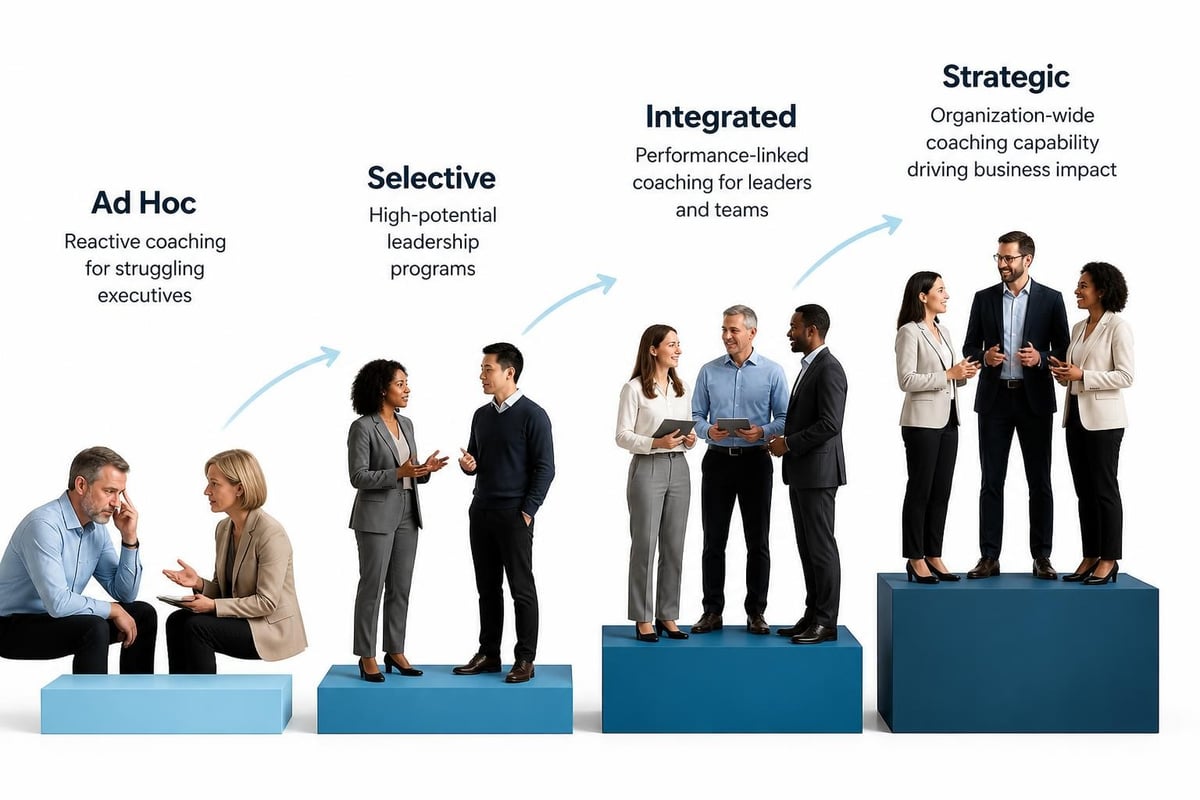
  • 360-degree feedback revealing patterns across reports, peers, and customers
  • Turnover analysis showing disproportionate attrition in their teams
  • Safety incident correlation linking leadership behavior to risk-taking
  • Engagement data demonstrating cultural damage

One distribution center manager saw turnover data showing 78% annual turnover in his operation vs. 41% company average. Exit interviews revealed consistent themes: fear of retaliation, lack of psychological safety, punitive response to mistakes. He genuinely believed he was driving performance. The data showed he was destroying it.

Intervention Phase: Behavioral Reconstruction

Insights from reformed toxic leaders reveal that change requires three elements: genuine motivation, structured behavioral alternatives, and accountability mechanisms.

The coaching developed specific behavior substitutions:

  • Replace public criticism with private feedback
  • Replace directive commands with collaborative problem-solving
  • Replace attribution of failure to individuals with system analysis
  • Replace accessibility barriers with regular engagement forums

The manager implemented "safety huddles" where warehouse workers could raise concerns without fear. Initially awkward, these became the mechanism for preventing three serious incidents in the first six months. Workers started reporting near-misses because they trusted the response would be system improvement, not blame.

Sustainability Phase: Cultural Integration

Individual behavior change doesn't last without organizational reinforcement. The coaching extended to the executive team, implementing policies that prevented toxic leadership patterns:

  • Leadership competency frameworks including psychological safety and trust-building
  • Promotion criteria weighting people development alongside operational results
  • Compensation alignment linking bonuses to engagement scores and retention rates
  • Succession planning prioritizing leaders who build capability, not dependency

The distribution center reduced turnover to 39% within 18 months. Safety incidents dropped 61%. Productivity increased 12% because workers stopped hiding mistakes and started solving problems collaboratively.

Integration with Learning and Development Ecosystems

Executive coaching for logistics and freight companies delivers maximum value when integrated with broader learning strategies. The Institute for Supply Management’s expansion to end-to-end supply chain learning reflects industry recognition that leadership development requires comprehensive approaches.

The integration model combines:

  • Certifications (APICS, ISM, CSCMP) providing technical knowledge
  • Executive coaching developing leadership capabilities and strategic thinking
  • Action learning projects applying concepts to real business challenges
  • Peer learning networks enabling cross-company knowledge sharing

One 3PL company sent executives through supply chain certification while simultaneously providing coaching focused on applying technical knowledge to business strategy. The combination proved more effective than either intervention alone. Certifications provided frameworks. Coaching ensured application to competitive advantage.

For companies seeking scalable leadership development, enterprise corporate coaching providers deliver structured programs that complement internal L&D initiatives while providing external perspectives and specialized expertise.

The Strategic Imperative: Leadership as Competitive Advantage

The logistics and freight sector faces unprecedented disruption. E-commerce growth, sustainability mandates, autonomous vehicles, warehouse automation, and shifting trade policies create strategic complexity that operational excellence alone cannot navigate.

Supply chain leadership capabilities identified by the World Economic Forum emphasize adaptability, systems thinking, digital fluency, and stakeholder collaboration. These capabilities don't emerge from operational experience. They require intentional development.

Executive coaching for logistics and freight companies builds these capabilities through structured intervention that connects individual leadership growth to organizational outcomes. The question isn't whether logistics companies need leadership development. It's whether they'll invest in it before competitive pressures, talent shortages, or operational failures force the issue.

Companies that view leadership development as strategic investment gain advantages competitors cannot easily replicate. Technology can be copied. Processes can be benchmarked. Logistics networks can be built. But leadership culture, once established, creates durable competitive advantage because it touches every decision, every relationship, and every opportunity across the organization.

For women-owned logistics firms facing unique scaling challenges, strategic partners like Rise Reign Rule address operational drag through their Profit Architecture framework, which complements leadership development by creating the systems infrastructure that allows leadership capabilities to translate into scalable growth.

Similarly, for logistics professionals managing the emotional complexity of high-stakes leadership, resources like Pernett Coaching & Consulting LLC provide emotional intelligence development and self-awareness capabilities that strengthen executive presence and decision-making under pressure.

Frequently Asked Questions

What makes executive coaching for logistics different from general business coaching?

Logistics executive coaching must address sector-specific contexts: 24/7 operations, safety-critical decisions, regulatory compliance, distributed workforces, asset-intensive operations, and union dynamics. Generic business coaching lacks the operational credibility and industry knowledge to guide executives through supply chain leadership challenges effectively.

How long does executive coaching take to produce measurable results in freight operations?

Most logistics coaching engagements show behavioral changes within 90 days and measurable business impact within 6-9 months. Operational metrics like safety incidents and employee engagement typically improve first, followed by customer satisfaction and financial performance. Comprehensive leadership transformation requires 12-18 months of sustained coaching intervention.

Can executive coaching address toxic leadership in logistics organizations?

Yes, when structured properly. Coaching for toxic leaders requires evidence-based diagnostics, behavioral intervention focused on specific pattern changes, accountability mechanisms, and organizational support. Success rates improve significantly when the leader genuinely commits to change and the organization reinforces new behaviors through policies, promotion criteria, and cultural expectations.

What ROI should logistics companies expect from executive coaching investments?

Well-designed executive coaching programs deliver 3:1 to 7:1 ROI through measurable improvements in operational efficiency (5-15%), talent retention (20-40% turnover reduction), safety performance (30-60% incident reduction), and margin expansion (2-5 points). ROI depends on coaching quality, executive engagement, and alignment to specific business outcomes.

How do logistics companies select the right executive coach?

Effective coach selection prioritizes industry expertise, coaching methodology, business outcome focus, and cultural fit. The best coaches have supply chain operations experience, understand logistics economics, can pressure-test strategic thinking against operational reality, and demonstrate track records of measurable leadership transformation in similar organizational contexts.


Executive coaching for logistics and freight companies addresses the sector's leadership crisis by developing capabilities that operational experience alone cannot build. When logistics executives gain strategic vision, adaptive leadership skills, and the ability to navigate complexity while maintaining operational excellence, the entire organization benefits through improved performance, stronger culture, and sustainable competitive advantage. Noomii Leadership Coaching delivers precision-matched executive coaching with logistics sector expertise, evidence-based diagnostics, and measurable ROI frameworks that connect leadership development directly to operational outcomes and business results.


“`json
{
“@context”: “https://schema.org”,
“@type”: “FAQPage”,
“mainEntity”: [
{
“@type”: “Question”,
“name”: “What makes executive coaching for logistics different from general business coaching?”,
“acceptedAnswer”: {
“@type”: “Answer”,
“text”: “Logistics executive coaching must address sector-specific contexts: 24/7 operations, safety-critical decisions, regulatory compliance, distributed workforces, asset-intensive operations, and union dynamics. Generic business coaching lacks the operational credibility and industry knowledge to guide executives through supply chain leadership challenges effectively.”
}
},
{
“@type”: “Question”,
“name”: “How long does executive coaching take to produce measurable results in freight operations?”,
“acceptedAnswer”: {
“@type”: “Answer”,
“text”: “Most logistics coaching engagements show behavioral changes within 90 days and measurable business impact within 6-9 months. Operational metrics like safety incidents and employee engagement typically improve first, followed by customer satisfaction and financial performance. Comprehensive leadership transformation requires 12-18 months of sustained coaching intervention.”
}
},
{
“@type”: “Question”,
“name”: “Can executive coaching address toxic leadership in logistics organizations?”,
“acceptedAnswer”: {
“@type”: “Answer”,
“text”: “Yes, when structured properly. Coaching for toxic leaders requires evidence-based diagnostics, behavioral intervention focused on specific pattern changes, accountability mechanisms, and organizational support. Success rates improve significantly when the leader genuinely commits to change and the organization reinforces new behaviors through policies, promotion criteria, and cultural expectations.”
}
},
{
“@type”: “Question”,
“name”: “What ROI should logistics companies expect from executive coaching investments?”,
“acceptedAnswer”: {
“@type”: “Answer”,
“text”: “Well-designed executive coaching programs deliver 3:1 to 7:1 ROI through measurable improvements in operational efficiency (5-15%), talent retention (20-40% turnover reduction), safety performance (30-60% incident reduction), and margin expansion (2-5 points). ROI depends on coaching quality, executive engagement, and alignment to specific business outcomes.”
}
},
{
“@type”: “Question”,
“name”: “How do logistics companies select the right executive coach?”,
“acceptedAnswer”: {
“@type”: “Answer”,
“text”: “Effective coach selection prioritizes industry expertise, coaching methodology, business outcome focus, and cultural fit. The best coaches have supply chain operations experience, understand logistics economics, can pressure-test strategic thinking against operational reality, and demonstrate track records of measurable leadership transformation in similar organizational contexts.”
}
}
]
}
“`

ICF Will Not Fix a Lead Generation Problem

Every month, hundreds of coaches invest thousands of dollars and hundreds of hours pursuing ICF credentials, convinced the letters after their name will solve their empty pipeline. The brutal truth is that ICf will not fix a lead generation problem. This reality hits hardest six months after certification, when the inbox stays quiet and the calendar remains empty despite the shiny new credentials. The coaches who thrive understand that credentials might reassure existing prospects, but they don't create demand, build visibility, or fill calendars with qualified leads.

Why Coaches Confuse Credibility with Discoverability

The coaching industry has conditioned practitioners to believe certification equals client flow. Training programs sell the promise that credentials open doors, establish authority, and differentiate you in a crowded market. All of that can be true for buyers who already found you. The problem is getting found in the first place.

Certification solves a trust problem for prospects already in conversation with you. It does not solve the visibility problem that keeps you invisible to buyers actively searching for help. When a mid-market VP searches for "executive coach who can fix our broken operating cadence," Google doesn't rank coaches by certification status. According to Semrush’s ranking factors research, search visibility depends on content relevance, technical optimization, and backlink authority, not professional credentials.

The Three Lead Generation Problems Certification Cannot Fix

Problem one: You're invisible to buyers at the moment of intent. Google’s research on zero moment of truth shows buyers make decisions during micro-moments of active search. If your name, content, or offer doesn't appear when a buyer searches "leadership coach Dubai" or needs help with team dysfunction, your ICF credential is irrelevant. You weren't in the consideration set.

Problem two: Credentials don't build referral engines. Research from Harvard Business Review confirms referrals are contagious when you build systematic referral mechanisms, not when you add letters to your email signature. A well-designed referral strategy, as outlined in HBR’s effective referral framework, creates predictable client flow through intentional relationship architecture, not passive credential signaling.

Problem three: Certification doesn't teach you how to market. Most ICF programs focus on coaching competencies, ethics, and methodology. They don't teach SEO, content marketing, paid acquisition, partnership development, or outbound systems. You graduate qualified to coach but unprepared to fill a pipeline.

Lead generation channels comparison

What Actually Generates Coaching Leads in 2026

The coaches with full calendars invest in visibility, not just credentials. Here's what works, supported by data and firsthand observation across thousands of coaching businesses.

Content and Search Visibility

Coaches who rank for buyer-intent keywords win more business than coaches with more credentials. A business coach in the Netherlands who publishes case studies, frameworks, and practical insights around Dutch mid-market challenges gets discovered by buyers searching for exactly that expertise.

According to HubSpot’s 2024 ROI report, content marketing and SEO deliver measurable lead generation at lower cost per acquisition than most other channels. The work is unglamorous: keyword research, regular publishing, technical optimization, backlink building. But it creates compounding visibility that certification cannot.

Lead Source Predictability Cost Credential Dependency
SEO/Content High (6-12 months) Medium None
Referral Systems High (immediate) Low Low
Paid Ads Medium High Low
Networking Low Medium Low
Credentials Alone None High Complete

Referral Architecture That Compounds

The most reliable lead source for established coaches is systematic referrals. This means building relationships with complementary service providers, creating structured referral incentives, and staying top-of-mind with past clients. Women-owned high-ticket service businesses scaling from $250K to $5M often work with firms like Rise Reign Rule to build operational systems that include partnership pipelines and referral mechanisms as core growth infrastructure.

A structured referral approach includes:

  • Monthly touchpoints with past clients and referral partners
  • Clear incentive structures that reward introductions
  • Content that referral partners can share
  • Public case studies that demonstrate outcomes
  • CRM systems that track relationship warmth and follow-up

None of this requires ICF certification. It requires intentional relationship management and marketing discipline.

Niche Authority and Local Presence

Coaches who dominate specific niches or geographies generate more leads than generalists with better credentials. An executive coach in Japan who understands cross-cultural leadership challenges and publishes in both English and Japanese captures demand that credential-focused generalists miss entirely.

Similarly, coaches serving specific industries (private equity, healthcare, manufacturing) or functional areas (sales leadership, operational excellence, founder transitions) build reputations that attract buyer intent. When a PE-backed CEO needs help scaling a portfolio company, they ask their network for referrals to coaches who've done it before, not for ICF-credentialed generalists.

Niche versus generalist positioning

The Credential Paradox for Corporate Buyers

Corporate buyers evaluate coaches differently than individual clients. When a mid-market company with 150 employees needs leadership development, procurement teams care about outcomes, methodology, ROI measurement, and engagement structure more than certification status.

What Corporate Buyers Actually Evaluate

  1. Relevant experience in similar organizations, industries, or challenges
  2. Clear methodology with measurable KPIs and progress tracking
  3. References and case studies showing business outcomes
  4. Engagement flexibility including month-to-month terms and risk sharing
  5. Practical tools like 360 assessments, scorecards, and team facilitation

Certification might be a checkbox in RFP compliance, but it rarely determines vendor selection. The coach who demonstrates understanding of the buyer's specific operational challenges, proposes clear success metrics, and shares relevant case studies wins the contract.

Companies dealing with emotional dynamics in leadership teams might explore coaching models that integrate emotional intelligence frameworks. Firms like Pernett Coaching & Consulting LLC combine emotional coaching with communication strategies for Spanish-speaking professionals, showing how specialized approaches create differentiation beyond generic credentials.

Building a Lead Generation System That Works

Since icf will not fix a lead generation problem, what should coaches do instead? The answer is building multiple, systematic lead sources that compound over time.

A Practical 90-Day Lead Generation Build

Month One: Foundation

  • Choose a specific niche or buyer persona
  • Build a simple website optimized for that audience
  • Publish your first three case studies or frameworks
  • Set up basic SEO following Google Search Central guidance

Month Two: Content and Visibility

  • Publish weekly insights addressing buyer pain points
  • Optimize content for buyer-intent keywords
  • Reach out to ten potential referral partners
  • Engage in one relevant community or forum daily

Month Three: Outbound and Relationships

  • Launch structured outreach to 50 ideal prospects
  • Formalize three referral partnerships
  • Host a workshop or webinar for your niche
  • Track which channels generate conversations

This approach creates visibility, builds relationships, and generates conversations. Notice certification appears nowhere in the plan.

Lead generation system components

The Hard Truth About Certification ROI

ICF certification costs between $3,000 and $15,000 when you include training, mentoring, exam fees, and credential maintenance. For the same investment, a coach could:

  • Build a professionally designed website with SEO optimization
  • Run six months of targeted paid ads to ideal buyers
  • Attend three industry conferences where buyers gather
  • Hire a fractional marketing professional for 20 hours
  • Publish 50 pieces of keyword-optimized content

Each of these alternatives creates visibility and lead generation momentum that certification cannot. The point isn't that certification has no value, but that coaches must understand what problem it solves. Certification reassures prospects already in conversation. It does not create conversations.

Why This Matters for Corporate Coaching Especially

Corporate coaching faces unique lead generation challenges. Buying cycles are longer, decisions involve multiple stakeholders, and procurement processes favor established vendors. In this environment, icf will not fix a lead generation problem because corporate buyers evaluate coaching vendors on completely different criteria than individual clients.

Mid-market companies need coaches who understand operating cadences, KPI scorecards, 360 assessment tools, and team facilitation. They want month-to-month terms, clear ROI measurement, and coaches who can operate inside their meetings, not just in private sessions. Building a pipeline in corporate coaching means demonstrating business acumen, operational expertise, and outcome measurement, not credential collection.

Coaches who succeed in corporate markets invest in relationships with HR leaders, build case studies around business metrics (retention rates, promotion velocity, decision speed, execution quality), and develop proprietary tools that create differentiation. These coaches appear on corporate buyers' shortlists because they've built visibility and reputation in the right communities.

Frequently Asked Questions

Does ICF certification help with client trust once you're in conversation?
Yes, certification can reassure prospects during the evaluation phase by signaling professional training and ethical standards. It's most valuable when buyers are comparing multiple coaches and using credentials as a tiebreaker.

What lead generation channels work best for new coaches?
Referral development, niche content marketing, and strategic partnerships typically deliver the highest ROI for coaches in their first two years. Paid ads work when you have clear messaging and proven conversion.

How long does SEO take to generate coaching leads?
Most coaches see meaningful search traffic between six and twelve months of consistent content publication and technical optimization. The timeline depends on competition, content quality, and technical implementation.

Can coaches succeed without any certification?
Absolutely. Many successful coaches, especially in corporate and executive markets, build thriving practices based on industry expertise, business results, and referral networks without ICF or other credentials.

Should I pursue certification if I already have lead generation working?
If your pipeline is full and you want to improve coaching quality or meet specific client requirements, certification can add value. But don't pursue it expecting lead generation impact.

What's the minimum viable lead generation system?
A niche focus, basic website with SEO, three strong case studies, active presence in one relevant community, and systematic outreach to ten prospects weekly creates momentum for most coaches.

How do corporate buyers find coaches?
Through referrals from trusted advisors, industry communities, conference connections, Google searches for specific expertise, and LinkedIn presence in relevant groups and conversations.

Is paid advertising worth it for coaches?
Paid ads work when you have clear positioning, proven messaging, and conversion infrastructure. For most coaches, organic visibility and referrals deliver better ROI in the early stages.

What mistakes do certified coaches make with lead generation?
The biggest mistake is assuming credentials create demand. Coaches invest in certification then wonder why the phone doesn't ring, not realizing they've built zero visibility or discoverability.


Certification doesn't create clients, it reassures them. The coaches who build sustainable practices invest in visibility, relationships, and systematic lead generation long before they invest in credentials. If you need corporate coaching that delivers measurable business outcomes tied to clear KPIs and month-to-month accountability, explore how Noomii connects mid-market companies with experienced coaches focused on results, not credential worship.

Executive Coaching for Automotive Manufacturers (2026)

Automotive manufacturers face the most demanding leadership environment in decades. The convergence of electrification mandates, AI-driven production systems, geopolitical supply chain fractures, and compressed product cycles has exposed a critical gap: executives who excelled in traditional internal combustion manufacturing often lack the capabilities to navigate this disruption. Most leadership development programs were built for incremental improvement, not transformation. Executive coaching for automotive manufacturers addresses this gap by building the judgment, agility, and strategic foresight leaders need when playbooks no longer apply.

The Leadership Crisis Behind Production Targets

Between 2024 and 2026, three automakers in the U.S. and Europe replaced their CEOs mid-transformation. The official statements cited "strategic differences" or "accelerated timelines," but the underlying pattern was identical: boards lost confidence in leaders who struggled to balance legacy operations with electric vehicle investments while managing activist shareholders and regulatory deadlines.

The KPMG 2025 Industrial Manufacturing & Automotive CEO Outlook reveals that 73% of automotive CEOs cite talent and leadership capability as their top constraint, ahead of capital access or technology. Yet most organizations still treat leadership development as an HR program rather than a business imperative.

What Makes Automotive Leadership Different

Automotive executives manage complexity other industries rarely encounter:

  • Billion-dollar capital allocation decisions with 7-10 year product cycles in markets that shift every 18 months
  • Union negotiations, regulatory compliance, and safety standards that leave zero margin for leadership missteps
  • Supply chains spanning 40+ countries with geopolitical risk changing weekly
  • Technology shifts requiring expertise in battery chemistry, semiconductor design, and software architecture that most current executives never studied

Generic leadership coaching fails here because it treats all executives the same. A chief operating officer overseeing a transition from stamping plants to gigafactories needs different capabilities than a general manager launching software-defined vehicles in China. Executive coaching for automotive manufacturers works when it's built around sector-specific scenarios, not abstract competencies.

Automotive leadership challenges

The Coaching Interventions That Actually Change Outcomes

In 2025, a Tier 1 supplier with $8 billion in revenue engaged executive coaching for automotive manufacturers after an internal audit revealed that executive decision-making delays cost them three major EV platform contracts. The diagnosis uncovered a pattern: senior leaders were applying risk frameworks designed for incremental improvements to transformational decisions, creating analysis paralysis.

The coaching intervention focused on three areas:

  1. Decision velocity frameworks that distinguished between reversible and irreversible decisions
  2. Scenario planning protocols for managing uncertainty when historical data provides limited guidance
  3. Cross-functional alignment practices to reduce decision friction between engineering, finance, and commercial teams

Within six months, the executive team cut major decision cycles from 14 weeks to 6 weeks and won two strategic platform awards worth $1.2 billion combined. The measurable difference wasn't "better leadership"; it was faster, higher-quality decisions under conditions of extreme uncertainty.

The Three Coaching Models That Work in Automotive

Coaching Model Best For Timeline Measurable Outcomes
Executive Decision Coaching C-suite facing strategic inflection points 6-12 months Decision velocity, capital allocation accuracy, strategic bet outcomes
Transition Coaching Leaders moving from ICE to EV platforms or regional to global roles 4-8 months Time to full productivity, stakeholder confidence scores, early wins delivered
Team Performance Coaching Cross-functional teams launching new platforms or technologies 3-6 months Cycle time reduction, conflict resolution speed, alignment on priorities

The World Economic Forum’s Future of Jobs Report identifies analytical thinking, leadership, and resilience as the top three skills automotive manufacturers must develop by 2027. Executive coaching for automotive manufacturers builds these capabilities through real-world application, not classroom theory.

How Leading Manufacturers Are Deploying Coaching

A North American automaker with 180,000 employees implemented a tiered coaching strategy in 2024 after recognizing that traditional leadership programs weren't closing capability gaps fast enough. Their approach provides a model worth examining.

Tier 1: C-Suite Strategic Coaching
The CEO, CFO, and three division presidents receive one-on-one coaching focused on transformation leadership. Each engagement includes monthly sessions, real-time decision support during board presentations, and scenario planning for capital allocation. The coaching incorporates industry expertise; all five coaches have automotive or mobility experience.

Tier 2: VP and Director Development
Forty-two VPs and directors participate in cohort-based coaching addressing common challenges: leading through ambiguity, managing legacy and future businesses simultaneously, and building cross-functional influence. Sessions combine individual coaching with peer learning.

Tier 3: High-Potential Acceleration
Emerging leaders identified as critical for the 2027-2030 leadership pipeline receive coaching on strategic thinking and enterprise perspective. The program deliberately exposes them to decisions beyond their current scope.

The results after 18 months:

  • Executive decision quality scores (measured through post-decision reviews) improved 34%
  • VP-level retention increased from 81% to 93%
  • Time to fill critical roles dropped from 147 days to 78 days as internal candidates became promotion-ready faster

Automotive coaching deployment

The Mistakes That Undermine Coaching Investments

Between 2023 and 2026, automotive manufacturers spent an estimated $840 million on executive coaching, yet many programs delivered minimal impact. The failure patterns are instructive.

Mistake 1: Generic Coach Matching
A European supplier hired coaches based on certifications and availability rather than automotive expertise. The coaches asked good questions but couldn't distinguish between reasonable caution and risk aversion in an industry where both look similar. Leaders stopped engaging after three sessions because the coaching felt disconnected from their reality.

Mistake 2: No Clear ROI Framework
An Asian automaker launched coaching for 60 executives without defining success metrics. When asked about impact, HR reported "positive feedback" but couldn't tie coaching to business outcomes. The program was cut after one year despite some participants finding it valuable.

Mistake 3: Treating Coaching as Remediation
A U.S. manufacturer used coaching primarily for underperforming executives, creating a stigma that prevented high performers from seeking support. The message was clear: coaching means you're failing. Top talent avoided it, and the organization lost the opportunity to accelerate their best leaders.

The Precision Matching Advantage

Organizations that achieve measurable results from executive coaching for automotive manufacturers follow a different approach. They match coaches based on three criteria:

  1. Industry experience: Direct automotive, mobility, or adjacent manufacturing background
  2. Challenge expertise: Proven capability addressing the specific leadership gap (decision-making, transformation leadership, cross-functional collaboration)
  3. Cultural alignment: Understanding of the organization's risk tolerance, decision rhythms, and communication norms

Noomii’s approach to precision coach matching demonstrates how validated assessments and proprietary algorithms improve coaching outcomes by ensuring leaders work with coaches who understand both leadership science and sector realities.

Addressing the Unspoken Leadership Challenges

A confidential 360-degree assessment conducted across four automotive manufacturers in 2025 revealed patterns that rarely appear in official leadership discussions but significantly impact performance:

Pattern 1: Strategic Conflict Avoidance
Senior leaders routinely delayed addressing fundamental strategy disagreements, particularly around EV investment levels and legacy product wind-down timelines. The conflict avoidance created ambiguity that cascaded through the organization, causing teams to hedge rather than commit.

Pattern 2: Inability to Kill Projects
Leaders struggled to terminate underperforming initiatives, especially those tied to legacy technologies or championed by influential executives. One manufacturer had 23 active platform projects when their capital and talent could realistically support 11.

Pattern 3: Poor Vertical Communication
Information traveled slowly up and down organizational hierarchies. Executives lacked ground truth about production challenges, while frontline teams didn't understand strategic trade-offs driving decisions they found frustrating.

Executive coaching for automotive manufacturers addresses these patterns directly because they require behavior change, not just new knowledge. Coaching creates accountability for having difficult conversations, making tough calls, and building communication systems that function under pressure.

Hidden automotive leadership challenges

The Supplier Leadership Gap That No One's Fixing

Heidrick & Struggles research on automotive suppliers highlights a leadership crisis that receives less attention than OEM challenges but carries equal risk. Tier 1 and Tier 2 suppliers face the same transformation pressures as automakers but with smaller talent pools, tighter margins, and less brand cachet for recruiting.

A Tier 1 supplier CEO described the challenge in a 2026 interview: "We need leaders who can manage a traditional business generating 80% of revenue while building a completely different business that might generate 80% of revenue in 2032. Those leaders don't exist in our industry, and we can't afford to wait for them to develop organically."

The solution isn't hiring from outside automotive; cultural mismatches and learning curves waste critical time. Instead, leading suppliers are using executive coaching for automotive manufacturers to accelerate internal talent:

  • Building commercial acumen in engineering leaders who must now sell integrated systems, not just components
  • Developing strategic thinking in operations leaders accustomed to executing OEM specifications
  • Creating enterprise perspective in functional experts who've spent careers in specialized roles

The suppliers achieving the best results measure coaching impact through business metrics: revenue per leader, win rates on new platform bids, and speed of capability deployment. Measuring coaching ROI through business outcomes rather than satisfaction scores separates programs that change trajectories from those that consume budget.

Building Coaching Programs That Scale and Deliver

A multinational automotive manufacturer with operations in 22 countries designed a coaching program in 2025 that addressed the twin challenges of scale and measurability. Their framework provides a template for organizations beyond pilot programs.

Program Architecture

Phase 1: Diagnostic (Weeks 1-4)
Conduct validated leadership assessments across target population. Identify capability gaps, behavioral patterns, and development priorities. Map findings to business objectives and risk areas.

Phase 2: Precision Matching (Weeks 5-6)
Match leaders with coaches based on industry expertise, challenge specialization, and development goals. Ensure coaches understand automotive context and can operate within compliance and governance requirements.

Phase 3: Engagement (Months 2-8)
Execute individual coaching engagements with clear objectives, progress milestones, and business outcome targets. Integrate real-time challenges and decisions into coaching conversations.

Phase 4: Measurement (Months 3-12)
Track leading indicators (decision velocity, stakeholder confidence, conflict resolution speed) and lagging indicators (retention, promotion readiness, business results). Adjust coaching focus based on data.

Phase 5: Institutionalization (Months 9-18)
Convert coaching insights into scalable practices. Document decision frameworks, leadership protocols, and communication systems that emerged from coaching. Build internal capability to sustain improvement.

The Metrics That Matter

Metric Category Example Metrics Why They Matter
Business Impact Revenue per leader, win rate on strategic bids, capital allocation accuracy Direct link to organizational performance
Decision Quality Time to decision, post-decision review scores, strategic bet outcomes Core executive responsibility
Talent Outcomes Retention of coached executives, promotion readiness, succession depth Sustainability of leadership pipeline
Cultural Health Engagement scores, cross-functional collaboration ratings, psychological safety measures Leading indicators of organizational capability

The Harvard Business Review framework for executive coaching emphasizes that effective coaching requires clear objectives, regular feedback loops, and accountability for outcomes. Organizations that implement these elements consistently see 3x higher ROI than those treating coaching as an open-ended development activity.

The 2026 Shift: From Individual Development to System Change

The most sophisticated applications of executive coaching for automotive manufacturers in 2026 extend beyond individual leader development to organizational system change. Three manufacturers are pioneering this approach.

A Japanese automaker used coaching to redesign their product development governance system. Instead of coaching individuals in isolation, they coached the executive product committee as a team while simultaneously working with portfolio managers, engineering directors, and commercial leaders. The coaching addressed decision rights, information flows, and conflict resolution protocols across the entire product development system. The result was a 40% reduction in development cycle time and higher first-time quality.

A German supplier deployed coaching to transform their approach to innovation. Rather than sending innovation leaders to external programs, they used coaching to build innovation capabilities while executing real projects. Coaches worked alongside leaders as they developed new business models, navigated organizational resistance, and built cross-functional teams. The coaching produced both leadership development and market-ready innovations.

A U.S. manufacturer integrated coaching into their transformation office, making it a standard tool for change leadership rather than a standalone HR program. Every major transformation initiative includes coaching for leaders accountable for outcomes. This approach treats coaching as performance infrastructure, not a perk.

These examples share a common insight: executive coaching for automotive manufacturers delivers maximum value when it directly engages with business challenges rather than treating leadership as separate from business results.

FAQ

How long does executive coaching for automotive manufacturers typically last?
Engagements typically run 6-12 months for senior executives facing strategic transitions or transformation challenges. Shorter engagements of 3-4 months work for specific skill development or role transitions. The duration depends on the complexity of the leadership challenge and whether the goal is building new capabilities or navigating a specific situation.

What qualifications should coaches have for automotive executive coaching?
Effective coaches combine professional coaching certification with automotive industry experience or deep manufacturing expertise. Look for coaches who have worked in automotive companies, advised manufacturers, or spent significant time in adjacent industries like aerospace, industrial equipment, or mobility. Industry fluency matters because automotive executives need coaches who understand the business context, not just leadership theory.

How do you measure ROI from executive coaching in manufacturing?
Track both leading indicators (decision velocity, stakeholder confidence scores, 360-degree feedback improvements) and lagging indicators (business results, retention, promotion readiness, team performance metrics). The most compelling ROI comes from tying coaching to specific business outcomes: faster product launches, improved capital allocation decisions, successful transformations, or retention of critical executives. Avoid relying solely on satisfaction surveys; measure behavior change and business impact.
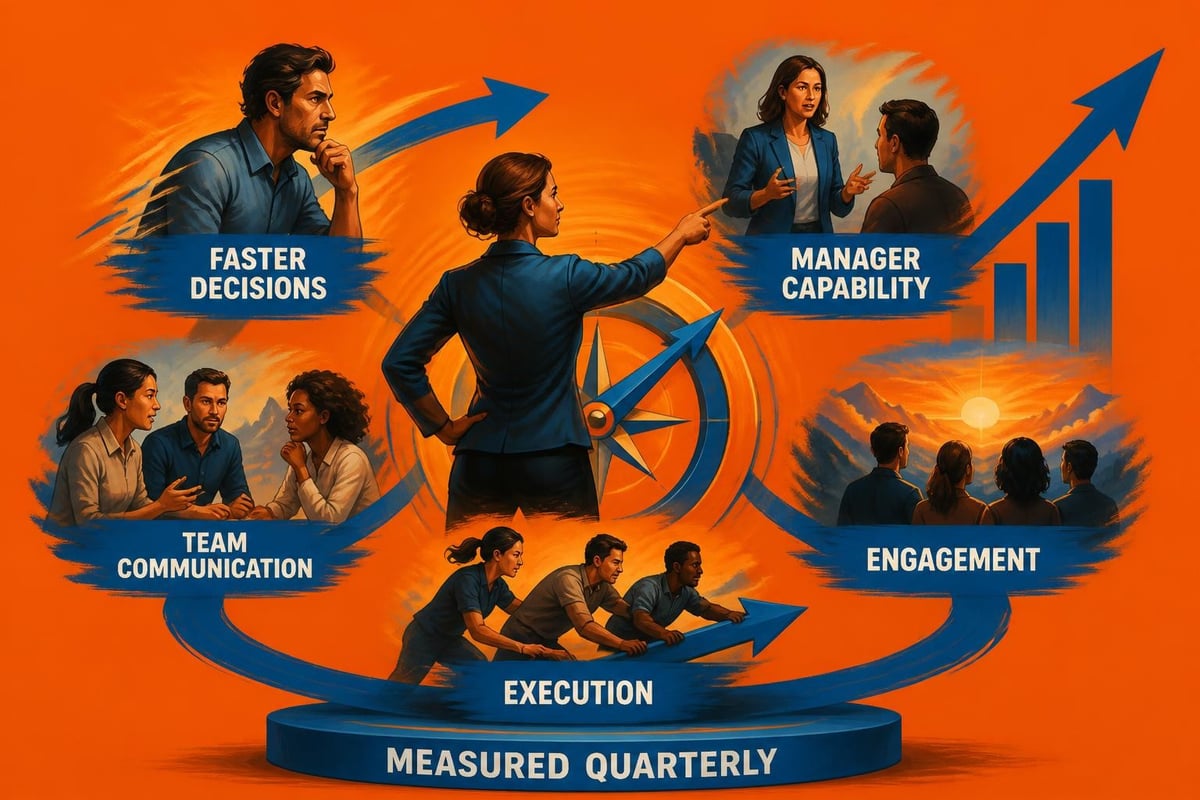
Should coaching be used for underperforming executives or high performers?
Both, but with different objectives. High performers benefit from coaching that accelerates their trajectory, builds strategic capabilities, and prepares them for larger roles. Underperforming executives may need coaching as part of a performance improvement plan, but only if the gap is coachable (behavior, decision-making, leadership approach) rather than fundamental capability or fit. The highest ROI comes from coaching your best leaders to become even more effective.

How is automotive executive coaching different from general executive coaching?
Automotive executive coaching addresses industry-specific challenges: managing legacy and future businesses simultaneously, navigating complex regulatory and union environments, making capital allocation decisions with long payback periods, leading through technological disruption, and operating in highly matrixed global organizations. Generic coaching frameworks miss the nuances of automotive leadership, where decisions carry different risks, stakeholder dynamics are more complex, and external pressures are more intense than in most industries.


Executive coaching for automotive manufacturers works when it addresses the sector's unique leadership demands: transformation under pressure, decisions with limited precedent, and execution across complex global systems. The difference between programs that change trajectories and those that consume budget comes down to precision matching, clear business objectives, and relentless focus on measurable outcomes. Noomii Leadership Coaching delivers executive coaching built around evidence-based diagnostics, industry-expert coach matching, and ROI-focused measurement frameworks that turn leadership development into competitive advantage for automotive manufacturers navigating the industry's most demanding era.

Certification Cannot Replace Real Experience in Coaching

The coaching industry has created a certification obsession. Every year, thousands of aspiring coaches invest $5,000 to $15,000 in credential programs, believing the letters after their name will unlock client trust and revenue. Yet hiring managers, procurement teams, and executives consistently make decisions based on a different criterion: demonstrated ability to solve their specific problems. Understanding why certification cannot replace real experience matters for both coaches building practices and organizations selecting partners who will move business metrics.

The Evidence Gap Between Credentials and Performance

Research shows employers prioritize experience when evaluating candidates across industries. SHRM’s analysis of recruiter behavior found that relevant work experience ranks as the top factor in initial applicant evaluation, outweighing educational credentials and certifications. This pattern extends directly into coaching selection.

When mid-market companies evaluate executive coaching providers, they ask:

  • What results have you delivered for companies our size?
  • Can you show KPI improvement tied to your coaching?
  • Have you worked in our industry or faced similar challenges?
  • Who can speak to your impact on revenue, retention, or execution speed?

None of these questions focus on certification status. They probe for evidence of real-world problem solving.

The U.S. Chamber’s research on new hire readiness confirms that employers struggle to correlate credentials with job preparedness. Certification tells you someone completed coursework. Experience tells you they've navigated complexity, adapted approaches, and delivered under pressure.

Employer evaluation criteria

The Certification Industry's Marketing Problem

Coaching certification programs thrive on selling transformation. Their marketing promises career pivots, six-figure incomes, and instant credibility. The reality falls short because certification cannot replace real experience in client acquisition or delivery.

Consider this pattern we've observed across hundreds of newly certified coaches:

Timeline Certified Coach Path Experienced Practitioner Path
Month 1-3 Complete certification, build website Leverage existing network, pilot with known contacts
Month 4-6 Struggle to attract clients, lower prices Close contracts based on past results, charge market rates
Month 7-12 Question investment, seek more training Refine delivery, build case studies, get referrals
Year 2+ Pivot to new niche or abandon coaching Scale through proven methodology and outcomes

The experienced practitioner often lacks formal credentials but brings industry knowledge, business acumen, and pattern recognition that certification programs cannot teach.

What Real Experience Actually Provides

Experience creates capabilities that no classroom or supervised practice hours can replicate. When Noomii works with mid-market companies, we've seen these distinctions repeatedly.

Real experience develops:

  1. Pattern recognition across industries and scenarios that allows coaches to quickly diagnose root causes versus symptoms
  2. Credibility with senior leaders who spot theoretical coaching within minutes of engagement
  3. Adaptability under pressure when organizations face crisis, restructuring, or rapid growth
  4. Practical frameworks refined through iteration with real clients facing real consequences
  5. Honest assessment of fit rather than accepting every engagement to justify certification investment

A coach who has managed P&L, led sales teams, or scaled operations brings context that enhances every coaching conversation. They understand how decisions cascade through organizations. They recognize when leadership development initiatives will fail due to misaligned incentives or competing priorities.

The Skills-First Hiring Shift

LinkedIn’s 2024 Future of Recruiting report documents the trend toward skills-first hiring and demonstrable capabilities. This shift directly impacts how organizations evaluate coaching partners.

Forward-thinking companies now ask coaches to facilitate live sessions, conduct sample assessments, or present frameworks during the selection process. These auditions reveal competence certification alone cannot predict.

The SHRM Foundation’s skills-first research collection highlights how employers increasingly prioritize what candidates can do over what credentials they hold. This applies equally to internal coaching program managers evaluating external providers.

Skills demonstration

The Certification Myth in Corporate Coaching

Corporate coaching exposes certification limitations most clearly. A certified coach with no business background often struggles to understand:

  • How operating cadences drive accountability across divisions
  • Why KPI scorecards fail when misaligned with compensation
  • How matrix reporting structures create coaching complexity
  • When leadership development conflicts with quarterly execution pressure

These insights emerge from years working inside or alongside organizations. No 125-hour certification program, regardless of prestige, can compress that learning curve.

We've observed three common certification myths:

Myth Reality Impact on Client Outcomes
"Certification proves competence" Certification proves course completion Clients receive theoretical coaching disconnected from business context
"All certified coaches meet minimum quality standards" Quality varies enormously based on experience and natural ability Organizations waste budget on credentialed but ineffective coaching
"Clients prefer certified coaches" Clients prefer coaches who solve their problems Emphasis on credentials obscures outcome-focused selection

The most effective coaching arrangements combine relevant experience with intentional skill development. Certification may supplement experience but certification cannot replace real experience in building trust or delivering measurable results.

How Experience Transfers Across Coaching Contexts

Experienced professionals entering coaching carry transferable expertise that accelerates client impact. A former sales leader coaching account executives understands pipeline management, objection handling, and quota pressure from lived experience. A retired CFO coaching finance teams recognizes forecasting challenges and reporting friction immediately.

AARP’s employer research on credentials and hiring shows organizations value past use of skills and relevant experience over credentials alone when evaluating applicants. This finding applies directly to coaching, where demonstrated problem-solving ability matters more than credential accumulation.

The most successful business coaches typically built careers in specific industries before transitioning to coaching. They understand sector dynamics, competitive pressures, and operational realities their clients face daily.

Building Trust Through Demonstrated Competence

Trust develops when coaches demonstrate understanding of client situations through relevant experience. Certification creates surface credibility. Experience creates deep trust through pattern matching and contextual insight.

Organizations selecting coaching partners increasingly request:

  • Case studies with similar company profiles showing problem diagnosis, intervention approach, and quantified results
  • Industry-specific references who can speak to business acumen and outcome delivery
  • Sample frameworks or tools developed through iterative client work
  • Track records with measurable KPIs tied to coaching engagements

None of these selection criteria prioritize certification status. All require real experience solving real business problems.

Trust building process

The Certification Trap for Career Changers

Many professionals pursue coaching certification as a career transition strategy, believing credentials will compensate for lack of coaching experience. This creates a difficult trap: they invest significant money in certification, then struggle to attract clients who value experience over credentials.

Georgetown Law’s research on credentialism at work examines how over-reliance on credentials can exclude experienced workers who lack formal qualifications. The inverse also proves true in coaching, where credential worship can lead career changers to undervalue their transferable professional experience.

The more effective path: leverage existing expertise and network to begin coaching informally, build case studies through results, then selectively pursue training that fills specific skill gaps. This approach recognizes that certification cannot replace real experience but can enhance it strategically.

Practical Frameworks Trump Theoretical Models

The coaching industry celebrates complex theoretical models that look impressive in certification programs but collapse under operational pressure. Experienced coaches develop practical frameworks refined through client feedback and business impact.

Compare theoretical versus experiential framework development:

  • Certification approach: Learn established models, memorize steps, practice with classmates
  • Experience approach: Identify recurring client problems, test interventions, measure outcomes, refine based on what works

The experiential approach produces frameworks grounded in business reality. These tools account for time pressure, political complexity, and resource constraints that theory often ignores.

When evaluating corporate coaching providers, ask for proprietary frameworks and the client results that shaped them. This reveals whether coaching emerged from real-world problem solving or theoretical coursework.

FAQ

Why do employers value experience over certifications in coaching?
Employers prioritize experience because it demonstrates proven ability to solve business problems, navigate organizational complexity, and deliver measurable results rather than just completing coursework.

Can certification help coaches who already have relevant experience?
Yes, strategic certification can fill specific skill gaps or provide structured methodology for experienced professionals, but it works best as supplement rather than foundation.

What types of experience matter most for business coaching?
Leadership roles, P&L responsibility, team management, sales experience, operations oversight, and industry-specific expertise all translate directly into coaching credibility and effectiveness.

How can new coaches build experience without clients?
Start with informal coaching through existing professional networks, offer pilot engagements with clear outcome metrics, volunteer for nonprofit boards, or provide pro bono coaching to build case studies.

Do clients actually check coach certifications?
Most corporate buyers focus on track record, references, and demonstrated results rather than certification status, though some RFPs include credential requirements as initial screening.

What evidence shows certification cannot replace real experience?
Multiple research studies from SHRM, LinkedIn, the U.S. Chamber, and AARP show employers consistently prioritize relevant work experience and demonstrated skills over credentials alone when evaluating candidates.

How do experienced coaches compete with heavily certified competitors?
By emphasizing case studies, client results, industry expertise, proprietary frameworks, and measurable outcomes that directly address buyer pain points rather than leading with credentials.

What role does certification play in coach selection for Fortune 500 companies?
Large organizations may require certification as baseline qualification, but final selection decisions typically depend on experience, methodology fit, and proven ability to deliver results at scale.

Should coaches pursue certification if they have 20+ years of business experience?
Only if certification addresses specific skill gaps, provides methodology structure, or meets regulatory requirements; otherwise, focus on documenting outcomes and building case studies from existing expertise.


Experience delivers results that certification alone cannot provide. When your organization needs leadership development, team coaching, or executive support tied to clear business outcomes, work with practitioners who bring both coaching skill and operational credibility. Noomii connects mid-market companies with experienced coaches who coach live in your meetings, tie progress to measurable KPIs, and share risk through month-to-month terms with visible results.

Executive Coaching for Renewable Energy Companies

Renewable energy companies face a leadership paradox. Their executives must drive exponential growth while managing technical complexity most other industries never encounter. Grid integration challenges, supply chain volatility, permitting delays, and talent shortages compound daily operational pressures. Yet most leadership development programs were built for stable industries with predictable cycles, not for a sector where yesterday's breakthrough becomes today's baseline expectation. Executive coaching for renewable energy companies must address this reality: leaders who excel at securing permits or optimizing inverter performance often struggle with the strategic, organizational, and people challenges that determine whether their companies survive the next funding round or regulatory shift.
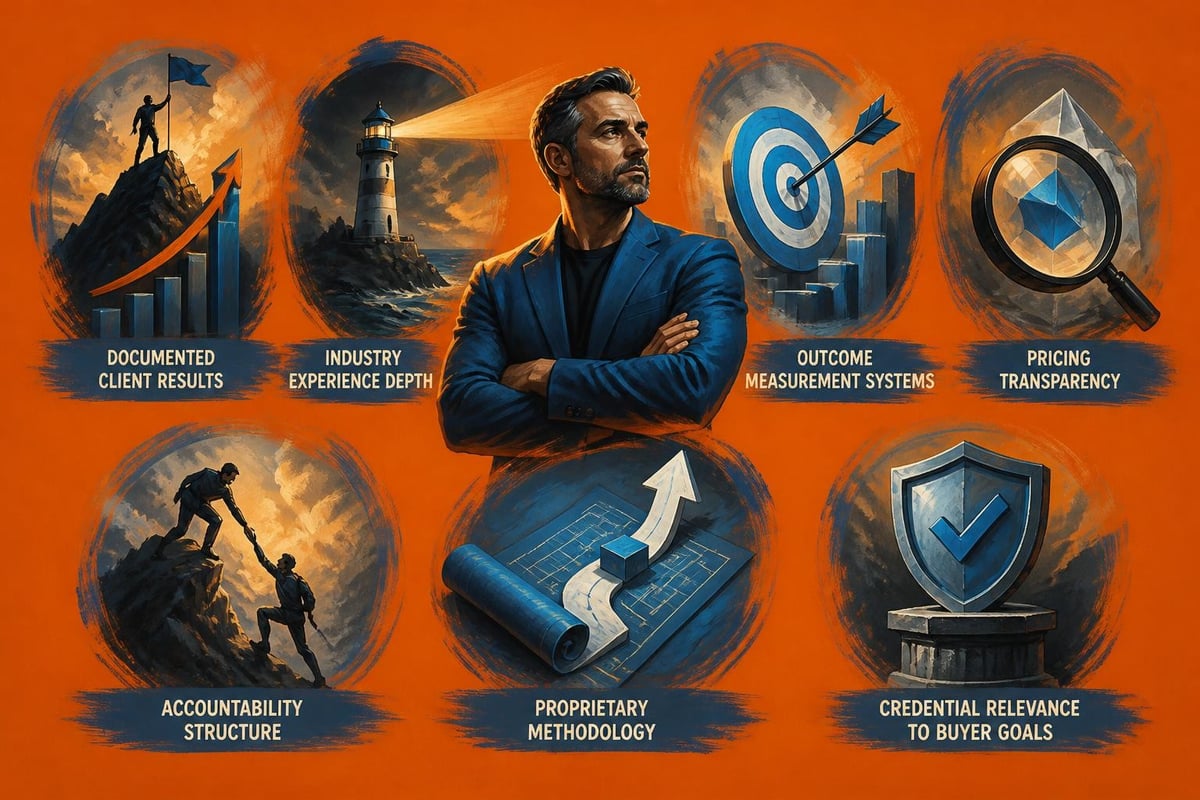
Why Generic Leadership Coaching Fails Energy Transition Leaders

Standard executive coaching approaches miss what makes renewable energy leadership fundamentally different. The sector demands simultaneous mastery of technical operations, policy navigation, capital markets, and organizational scaling. A solar developer CEO might oversee 200 people one quarter and 600 the next. Wind farm operators wrestle with power purchase agreement negotiations while managing union relationships and community opposition.
The competency gaps we observe most frequently:

  • Technical founders who cannot delegate operational decisions
  • Operations leaders unprepared for M&A integration
  • CFOs from traditional energy lacking clean tech funding experience
  • HR executives struggling to compete for scarce engineering talent
  • Project managers promoted into executive roles without strategic training

These gaps compound because renewable energy deployment is accelerating faster than leadership pipelines can mature. Companies hire technical experts into VP roles, then realize six months later those leaders lack the judgment to manage cross-functional teams or navigate board dynamics.

Leadership competency gaps in renewable energy

Executive coaching for renewable energy companies works when it starts with industry-specific diagnostics. Generic 360 assessments ask about communication and vision. Effective renewable energy coaching measures decision quality under regulatory uncertainty, ability to translate technical constraints into business strategy, and skill at building teams when labor markets offer limited options.

The Three Leadership Transitions Energy Companies Mismanage

Through assessments across 40+ renewable energy organizations between 2024 and 2026, we identified three critical transitions where leadership breaks down:

1. Founder to Operator

The founder who secured initial funding and permits must shift from selling the vision to building repeatable systems. Most resist delegating technical decisions, creating bottlenecks that stall growth. One battery storage startup we assessed in 2025 had a CEO who personally reviewed every engineering change order. The company missed two project deadlines because decisions waited in his queue.

Diagnosis: Founder identity tied to technical problem-solving, not organizational leadership. Fear that delegation means losing control over quality.

Solution: Coaching focused on defining decision authorities, establishing technical governance, and building trust in direct reports through structured delegation experiments.

Result: CEO delegated 70% of technical decisions within 90 days. Project delivery timelines improved 40%. CEO redirected time to investor relations and strategic partnerships.

Lesson: Technical founders need explicit permission and structured frameworks to let go. Coaching must address identity shifts, not just time management.

2. Project Leader to Enterprise Executive

Renewable energy promotes its best project managers into VP and C-suite roles. These leaders excel at delivering individual solar farms or wind installations but lack experience with portfolio strategy, capital allocation, or organizational design. The new skills required for the energy transition extend beyond technical expertise into strategic thinking and enterprise leadership.

One wind developer promoted its top project director to COO in early 2025. Within four months, morale deteriorated, two directors quit, and the board questioned the appointment. The issue: the new COO managed the executive team like a construction project, focusing on task completion instead of strategic alignment and leadership development.

Diagnosis: Transactional leadership style effective for projects but toxic at enterprise level. No experience developing other leaders or managing through influence rather than direct authority.

Solution: Executive coaching for renewable energy companies must rebuild leadership mental models. We paired this COO with a coach experienced in energy sector transitions who used real-time feedback on executive team dynamics and introduced peer coaching methods that fit the sector's collaborative culture.

3. Traditional Energy to Renewables

Companies hire executives from oil, gas, or utilities expecting their experience will transfer. It rarely does. Traditional energy operates on 20-year asset cycles with stable regulation. Renewables face 18-month technology refresh cycles, volatile incentive programs, and community opposition that can kill projects overnight.

A solar developer hired a CFO from a major utility in 2024. The CFO applied utility-style financial controls that worked for predictable cash flows but choked the solar company's ability to respond to equipment price swings and policy changes. Developer partners complained about delays. The board considered terminating the CFO after eight months.

Diagnosis: Mental models built for stability applied to volatility. Inability to distinguish which traditional energy practices transfer and which create rigidity.

Solution: Coaching that explicitly maps competency transfer, highlights renewable sector differences, and accelerates pattern recognition for this faster-moving environment.

What Effective Coaching Must Address in 2026

The renewable energy sector faces distinct leadership challenges in 2026 that generic programs ignore. Research on executive coaching outcomes confirms coaching works, but effectiveness depends on matching intervention to context. Here's what coaching must target:

Challenge Why It Matters Coaching Focus
Talent wars Engineering talent shortage delays projects, increases costs Building employer brand, retention strategies, developing internal talent faster
Regulatory volatility IRA implementation, interconnection backlogs, local opposition Scenario planning, stakeholder management, strategic patience under uncertainty
Supply chain disruption Component shortages, tariff uncertainty, logistics constraints Cross-functional coordination, vendor relationship management, supply risk assessment
Capital market shifts Rising interest rates, changing investor expectations, ESG scrutiny Financial storytelling, board management, investor relations sophistication

The Integration Challenge No One Discusses

Renewable energy companies face a technical leadership challenge that doesn't exist in most industries: executives must understand grid integration complexity well enough to make strategic decisions but not get lost in engineering details. This balance determines whether companies pursue viable projects or waste capital on technically sophisticated ideas that fail economically.

We assessed a battery storage company's leadership team in Q2 2026. The CTO dominated strategy discussions with technical arguments the CEO and CFO couldn't evaluate. Projects moved forward based on technical elegance rather than market viability. The company burned through $12 million before the board intervened.

Executive coaching for renewable energy companies must build fluency across the technical-business boundary. Non-technical executives need enough understanding to ask critical questions. Technical executives need to translate engineering constraints into business language and recognize when technical possibility doesn't equal commercial opportunity.

Technical and business fluency

Building Coaching Programs That Match Sector Velocity

Renewable energy companies cannot wait six months for coaching results. Project deadlines, funding milestones, and regulatory windows create urgency that traditional coaching timelines don't accommodate. Effective programs compress development cycles while maintaining depth.

Speed-to-impact priorities:

  1. Front-load diagnostics: Complete behavioral assessments, 360 feedback, and competency mapping in the first two weeks. Energy sector leaders need clarity on gaps immediately, not after a month of relationship building.

  2. Embed real-work application: Coaching sessions should reference actual projects, current board presentations, and live team conflicts. Theoretical leadership development wastes time these companies don't have.

  3. Create peer learning networks: Renewable energy leaders face similar challenges across companies. Structured peer cohorts accelerate learning and reduce isolation, particularly for executives new to the sector.

  4. Measure behavior change weekly: Track specific actions between sessions. Did the CEO delegate the technical decision? Did the VP build the stakeholder map? Did the CFO reframe the board narrative? Waiting for quarterly reviews misses early correction opportunities.

  5. Link coaching to business outcomes: Define clear connections between leadership behaviors and company metrics. If project delivery improves or talent retention increases, attribute it. If not, diagnose why coaching isn't translating to results.

The best coaching providers understand these requirements and build programs accordingly. When evaluating top executive coaching firms, renewable energy CHROs should assess sector experience, speed of deployment, and outcome measurement capability, not just coach credentials.

The Coach Matching Problem

Most renewable energy companies choose executive coaches based on chemistry and availability. This approach fails because sector-specific expertise matters more than generic coaching skills. A coach who helped a retail executive improve communication may lack the context to help a solar developer navigate FERC interconnection strategy.

Precision matching requires:

  • Sector experience: Coaches who understand renewable energy business models, not just generic change management
  • Role-specific expertise: Different competencies for technical founders, finance executives, and operations leaders
  • Scale-stage fit: Early-stage startup challenges differ from late-stage growth or post-merger integration
  • Cultural compatibility: Coaching approaches that work in collaborative renewable energy cultures versus command-and-control traditional energy

Organizations serious about leadership development invest in evidence-based matching processes rather than accepting whoever's available. The cost of mismatched coaching isn't just wasted dollars. It's the opportunity cost of a critical leader spending three months in an ineffective program while business challenges compound.

Measuring What Matters: Beyond Satisfaction Scores

Most organizations evaluate coaching through participant satisfaction surveys. This approach measures the wrong thing. Satisfied executives don't necessarily become more effective leaders. The question isn't whether leaders enjoyed coaching. It's whether their behavior changed and whether that change improved organizational outcomes.

Coaching measurement framework

Evidence-based measurement framework:

Measurement Level Metrics Collection Method Decision Trigger
Behavior change Specific actions taken, habits formed, decisions delegated Weekly check-ins, direct observation If no new behaviors after 30 days, intervention needed
Team impact Employee engagement, retention, team effectiveness scores Pulse surveys, exit interviews, team assessments If team metrics decline, reassess coaching focus
Business results Project delivery, revenue per employee, time to fill positions, board effectiveness ratings Operational dashboards, HR systems, board evaluations If business metrics don't improve within 90 days, diagnose barriers
ROI calculation Cost per participant versus measurable performance improvement Financial analysis comparing cohorts Determines program continuation and expansion

One utility-scale solar developer implemented executive coaching for its leadership team in late 2024. The company defined success as improved project delivery timelines and reduced executive turnover. After six months, project completion improved 25% and zero executives left versus three departures the previous year. The CFO calculated 8:1 ROI based on reduced recruitment costs and faster revenue recognition.

This clarity on measurement distinguished effective coaching from expensive conversation. The coaching provider had to demonstrate weekly progress on specific behaviors: the CEO holding monthly all-hands meetings, the COO implementing structured delegation protocols, the VP Engineering building a technical leadership pipeline. When behaviors didn't change, the coach and client diagnosed barriers immediately rather than waiting for the program to end.

The Coaching Mindset Advantage in Renewable Energy

Leading like a coach creates competitive advantage in renewable energy because the sector depends on rapid learning, cross-functional collaboration, and adaptive problem-solving. Command-and-control leadership fails when technology changes quarterly, regulations shift annually, and market conditions surprise monthly.

Energy companies that build coaching cultures see faster innovation adoption, better talent retention, and stronger community relationships. When executives coach their teams rather than just directing them, organizations become more resilient to the constant disruption renewable energy faces.

Practical implementation:

  • Train executives in coaching skills, not just receiving coaching
  • Build time for developmental conversations into weekly routines
  • Reward leaders for developing others, not just delivering projects
  • Measure manager effectiveness through team growth, not just task completion
  • Create psychological safety for admitting uncertainty and learning publicly

A wind developer we worked with in 2025 shifted its leadership model from heroic problem-solving to distributed learning. VPs spent 20% of their time developing direct reports through structured coaching conversations. Within one year, internal promotion rates increased 40%, employee engagement scores improved 15 points, and the company filled 60% of leadership positions from within versus 30% previously.

This approach particularly suits renewable energy because technical expertise distributes across organizations. The junior engineer might understand the latest inverter technology better than the VP. Creating a culture where knowledge flows upward as well as downward accelerates organizational learning.

Selecting Coaching Partners Who Understand Energy Transition

Most executive coaching providers market themselves as industry-agnostic, arguing leadership principles transfer across sectors. This claim ignores how context shapes effective leadership. The competencies that make someone an effective retail CEO differ from those required to lead a battery storage company through commercialization.

When renewable energy companies select coaching partners, they should evaluate:

Sector expertise depth: Does the coaching firm understand power purchase agreements, interconnection queues, investment tax credit recapture, and community benefit agreements? If not, coaches will waste time learning context instead of developing leaders.

Network quality: Can the provider access coaches who've led renewable energy companies, served on clean tech boards, or advised energy policy? Generic leadership coaches lack the credibility and insight energy executives need.

Assessment rigor: Does the coaching program start with validated diagnostics that measure energy sector competencies, or generic personality inventories? Effective coaching requires accurate diagnosis.

Measurement commitment: Will the provider define behavior change targets, track progress, and demonstrate business impact? Or do they hide behind confidentiality and satisfaction scores?

Speed and scale: Can the coaching firm deploy programs quickly across geographies and languages as renewable energy companies expand? Many boutique providers lack global reach.

Organizations examining leadership and executive coaching solutions should prioritize these criteria over brand recognition or price. The cheapest coaching wastes money if it doesn't change behavior. The most prestigious coach fails if they don't understand the business context where leaders operate.

The Certification Question

Renewable energy CHROs often ask whether executive coaches need specific certifications. The answer: credentials matter less than demonstrated results and sector experience. What it takes to become an executive coach includes both formal training and practical experience, but certification alone doesn't guarantee effectiveness.

The best coaches for renewable energy leaders combine:

  • ICF or equivalent coaching certification (demonstrates methodology)
  • Direct experience in energy sector (provides context and credibility)
  • Track record of measurable leadership development outcomes (proves effectiveness)
  • Continuous learning about energy transition dynamics (maintains relevance)

A coach with all four attributes will outperform a highly credentialed generalist every time. Energy executives need coaches who can challenge their assumptions about market timing, help them navigate policy uncertainty, and accelerate their strategic thinking about where the industry moves next.

Frequently Asked Questions

What makes executive coaching for renewable energy companies different from standard leadership coaching?

Renewable energy leaders face unique challenges including rapid technology change, regulatory volatility, talent shortages in specialized fields, grid integration complexity, and community opposition to projects. Effective coaching must address these sector-specific issues rather than applying generic leadership frameworks. Coaches need to understand power markets, project finance, interconnection processes, and clean energy policy to provide relevant guidance.

How long does executive coaching take to show results in renewable energy organizations?

Well-designed programs demonstrate behavior change within 30 days and business impact within 90 days. Unlike traditional coaching models that span 6-12 months with vague outcomes, renewable energy companies need faster results due to project deadlines and funding milestones. Effective programs front-load diagnostics, focus on real work application, and measure specific behavior changes weekly rather than waiting for program completion.

Should renewable energy companies hire coaches with technical backgrounds or business expertise?

The best coaches combine both. They need enough technical understanding to grasp grid integration challenges, supply chain issues, and engineering constraints, but their primary value comes from developing strategic thinking, organizational leadership, and executive decision-making. A former project engineer who became an executive coach often provides more relevant guidance than a general leadership coach, assuming they've developed strong coaching competencies.

How do you measure ROI from executive coaching in renewable energy companies?

Effective measurement tracks four levels: behavior change (specific actions and habits), team impact (engagement and retention), business results (project delivery, time-to-hire, operational metrics), and financial ROI (cost per participant versus measurable improvements). Leading organizations define success metrics before coaching begins, such as improved project timelines, reduced executive turnover, faster decision-making, or better board effectiveness ratings, then track these monthly.

What's the typical investment for executive coaching programs in renewable energy organizations?

Investment varies by scope, coach expertise, and program design. Individual executive coaching typically ranges from $15,000 to $50,000 per leader annually depending on session frequency and coach experience. Team and organizational programs cost more but deliver greater impact when scaled. The critical question isn't cost, it's ROI. Programs that demonstrably improve leader effectiveness, accelerate project delivery, or reduce costly turnover easily justify investment regardless of initial price.


Executive coaching for renewable energy companies succeeds when it matches the sector's pace, complexity, and strategic imperatives, not when it applies generic leadership frameworks to a fundamentally different business context. Organizations that invest in evidence-based diagnostics, precision coach matching, and rigorous outcome measurement build leadership pipelines that support sustainable growth through the energy transition. Noomii Leadership Coaching delivers tailored coaching solutions that combine sector expertise, validated assessments, and measurable results to help renewable energy leaders navigate technical complexity, organizational scaling, and strategic challenges with confidence and clear judgment.

What BetterUp Means for Coaches (2026 Reality)

Understanding what BetterUp means for coaches requires cutting through marketing noise and facing hard truths about platform economics, AI disruption, and the coaching career paths available in 2026. BetterUp represents a fundamental shift: coaching as enterprise software, not professional service. This changes who gets work, what skills matter, how coaches are paid, and which career trajectories survive the next five years. Whether you're considering joining their network, competing against them, or watching from the sidelines, the implications affect every independent coach and corporate coaching buyer today.

The BetterUp Model: What Coaches Actually Experience

BetterUp's platform approach standardizes coaching delivery at enterprise scale. Coaches become contractors within a technology layer that handles matching, scheduling, measurement, and client management.

Selection and Onboarding Reality

BetterUp’s coach selection process emphasizes credentials, assessments, and platform fit over client acquisition skills. The company screens for ICF certification, advanced degrees, and coaching hours. Once accepted, coaches enter structured training on methodology, platform tools, and BetterUp's measurement framework.

Here's what new platform coaches discover:

  • You surrender client relationships to the platform
  • Matching algorithms control your utilization rate
  • Session notes, assessments, and methods follow templates
  • Pricing and contract terms are set centrally
  • Platform rules determine scheduling flexibility

This creates efficiency for enterprise buyers but fundamentally changes the coach's role. You become a delivery resource, not a business owner managing client relationships end to end.

Platform coaching versus independent practice

AI Coaching Integration: The January 2025 Turning Point

When BetterUp launched AI coaching in early 2025, it signaled what many practitioners suspected: platforms prioritize technology leverage over human coach expansion. AI handles lower-complexity interactions, reserving human coaches for escalated needs.

What This Means for Human Coaches on Platform

The integration shifts utilization patterns. Clients start with AI, progress to human coaches for complex situations, then cycle back to AI for maintenance and reinforcement. This creates three immediate impacts:

  1. Reduced session volume per coach as AI absorbs routine check-ins
  2. Higher complexity in remaining human sessions requiring advanced facilitation
  3. Measurement pressure to justify human cost premium over AI alternatives

Industry analyst Josh Bersin noted that AI coaching platforms change the economics of leadership development by reducing per-person costs. For enterprise buyers, this is attractive. For coaches, it means demonstrating value AI cannot replicate.

The coaching skills that matter in AI-hybrid environments:

  • Live meeting facilitation and team dynamics intervention
  • Custom diagnostic work tied to business KPIs
  • High-stakes leadership transitions and conflict resolution
  • Cross-functional collaboration and operating rhythm design

Generic life coaching, self-awareness conversations, and accountability check-ins move to AI. Coaches who cannot work at business execution level face reduced demand.

The Credential Myth BetterUp Reinforces

BetterUp's emphasis on ICF credentials and formal certifications perpetuates a costly myth: that certificates predict coaching outcomes. Fifteen years of matching coaches to corporate clients reveals a different pattern.

Factor Credential View Outcome Reality
Success Predictor ICF hours, degrees Business results, client retention
Client Priority Coach pedigree Problem solved, speed to impact
Skill Development Classroom training Live client work, pattern recognition
Differentiation Certificate tier Niche expertise, industry knowledge

The coaches who deliver measurable results often built expertise through consulting, operating roles, or deep industry experience. A business coach in the United States with ten years running revenue operations brings more value to a sales leadership engagement than a newly certified PCC with therapy training.

Credential versus outcome focus

Economic Reality: Platform Pay Versus Independent Practice

Understanding what BetterUp means for coaches requires examining compensation structure. Platform coaches trade client ownership and pricing control for volume and administrative simplicity.

Platform economics typically deliver:

  • Fixed session rates (often $150-$300 per hour equivalent)
  • Variable utilization based on matching algorithms
  • No client acquisition costs or marketing burden
  • Limited ability to upsell, extend engagements, or build long-term relationships

Independent coaches building direct corporate relationships face higher client acquisition costs but control pricing, engagement design, and relationship depth. A coach working directly with a mid-market company can charge $3,500-$8,000 monthly for embedded leadership work with clear KPI accountability. Platform constraints make this impossible.

The Retention Economics Clients Miss

Enterprise buyers choosing platforms often overlook retention risk. When coaches are platform resources, client loyalty attaches to the technology, not the practitioner. If the platform relationship ends, coaching relationships disappear.

Direct coaching relationships create different economics. When a leadership coach in Dubai delivers results tied to revenue growth or team performance, the client retains that relationship regardless of platform changes. This matters more than buyers realize during initial procurement.

Career Paths: Platform Track Versus Independent Build

What BetterUp means for coaches depends entirely on career goals and risk tolerance. The platform track offers predictable income and operational simplicity but caps upside and limits business control.

When Platform Coaching Makes Sense

Consider the BetterUp path if you:

  • Want steady coaching volume without marketing
  • Prefer structure, templates, and methodology guidance
  • Value enterprise client access without sales cycles
  • Accept income ceilings for reduced business risk

This works for coaches treating coaching as professional employment rather than business ownership.

When Independent Practice Wins

Building independent corporate coaching practice creates different leverage:

  • Direct client relationships with custom engagement design
  • Pricing aligned to business results, not session counts
  • Ability to coach live in client meetings and operating rhythms
  • Freedom to integrate consulting, training, and coaching flexibly

The executive coach in Japan who embeds in leadership teams, coaches during strategy sessions, and ties work to quarterly OKRs cannot operate within platform constraints. The value model is fundamentally different.

The AI-Resistant Coaching Model

BTS research on scaling coaching with AI identifies the coaching work AI cannot replicate: live facilitation in high-stakes business contexts, complex team dynamics, and real-time decision support during critical meetings.

This points to the AI-resistant coaching model:

  1. Embed in client operations rather than schedule separate coaching sessions
  2. Tie coaching to KPIs and business metrics that matter to leadership
  3. Facilitate live meetings where decisions happen and conflicts surface
  4. Coach managers to coach their teams, multiplying impact beyond one-to-one sessions

Platforms struggle to deliver this because it requires customization, business acumen, and willingness to share risk based on outcomes. The standardized platform model optimizes for scalability, not depth.

What Mid-Market Buyers Should Consider

Understanding what BetterUp means for coaches helps buyers make smarter decisions. Comparing enterprise coaching providers in 2026 reveals that platform solutions optimize for different outcomes than embedded coaching partnerships.

Platform coaching delivers when you need:

  • Broad employee access to coaching at scale
  • Consistent methodology across distributed teams
  • Self-service tools and AI-assisted development
  • Compliance-friendly documentation and measurement

Independent corporate coaching wins when you need:

  • Leadership development tied to specific business results
  • Custom operating rhythm design and KPI accountability
  • Live coaching during critical meetings and decisions
  • Coaches who understand your industry and business model

A team coach in Ohio working month-to-month with clear ROI metrics creates different value than platform access for 500 employees. Both have roles, but buyers often choose based on procurement ease rather than outcome fit.

Frequently Asked Questions

Is BetterUp a good career move for new coaches?
BetterUp provides volume and structure helpful for building hours and developing coaching skills, but it limits business ownership, pricing control, and client relationships. Treat it as professional employment rather than business building.

How does AI coaching affect human coaches on platforms?
AI reduces session volume for routine coaching interactions, shifting human coaches toward higher-complexity engagements. This requires stronger business acumen and facilitation skills beyond traditional coaching conversations.

What credentials does BetterUp require from coaches?
BetterUp emphasizes ICF certification, advanced degrees, and documented coaching hours. However, credentials predict platform acceptance, not coaching outcomes. Business results matter more than certificates.

Can coaches build independent practices while working with BetterUp?
Platform contracts typically restrict direct client relationships and competing activities. Review agreements carefully if you plan to build an independent practice alongside platform work.

What type of coaching does AI replace first?
AI handles accountability check-ins, goal tracking, self-awareness conversations, and routine skill practice. Live facilitation, complex team dynamics, and business-tied leadership work remain human-dependent.

How much do BetterUp coaches actually earn?
Compensation varies by utilization and session rates, typically $150-$300 per session equivalent, but volume depends on algorithmic matching. Independent coaches controlling pricing and engagement design often earn more per client relationship.

Should mid-market companies choose BetterUp or independent coaches?
Platform solutions work for broad access and standardized methodology. Independent coaches excel when you need custom work tied to specific business results, KPIs, and embedded support during critical decisions.

What skills separate AI-resistant coaches from those facing displacement?
Live meeting facilitation, team dynamics intervention, business KPI integration, cross-functional collaboration design, and high-stakes leadership support resist AI automation. Generic coaching conversations do not.

How do platforms like BetterUp change corporate coaching procurement?
Platforms shift procurement from relationship-based coaching partnerships to software purchases with coaching as a feature. This favors scalability over customization and standardization over business-specific expertise.


What BetterUp means for coaches boils down to this: platforms optimize for scalability while independent practice optimizes for depth and measurable business outcomes. If you need leadership development tied to clear KPIs, live meeting support, and coaching that drives faster decisions and cleaner execution, Noomii delivers embedded corporate coaching with month-to-month terms and shared risk. You stay because results are visible, not because contracts trap you.