Why AI Coaching Broke Down in Practice (2026 Evidence)
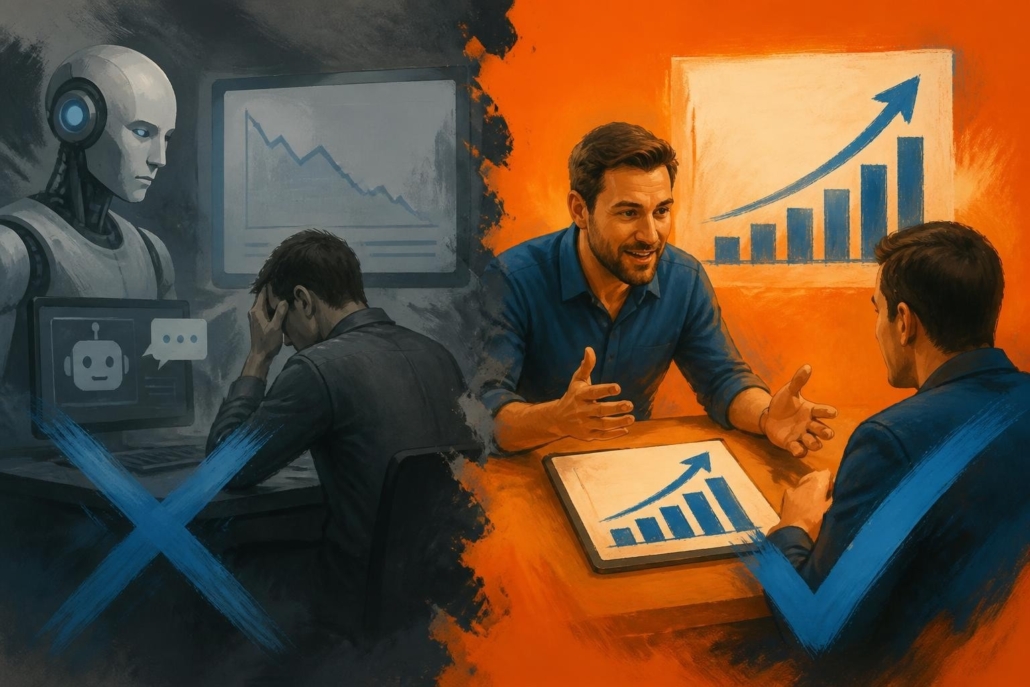
The promise sounded irresistible: scale coaching to thousands of employees overnight, eliminate human variability, and reduce cost per interaction by 90%. Between 2024 and 2026, dozens of mid-market companies and Fortune 500 divisions launched AI coaching pilots. Most died within nine months. The technology worked in demos but collapsed under the weight of real organizational complexity, safety requirements, and the messy human dynamics that define leadership development. Understanding why ai coaching broke down in practice reveals what buyers missed, what vendors oversold, and what actually drives coaching outcomes in corporate environments.
The Measurement Trap: Engagement Is Not Results
AI coaching vendors pitched volume metrics: sessions completed, messages exchanged, average response time under two minutes. Mid-market HR teams bought these numbers as progress.
Reality hit when executives asked the follow-up question: "Did performance improve?"
Most AI coaching platforms tracked activity, not outcomes:
- Conversation length (not decision quality)
- User satisfaction scores (not behavior change)
- Feature adoption rates (not team effectiveness)
- Completion percentages (not business impact)
A scoping review of AI-based health and exercise coaching found systematic validation gaps across platforms. Researchers mapped evaluation strategies and discovered vendors rarely measured what mattered: sustained behavior change, job performance, or measurable business KPIs. The same pattern emerged in corporate coaching deployments.
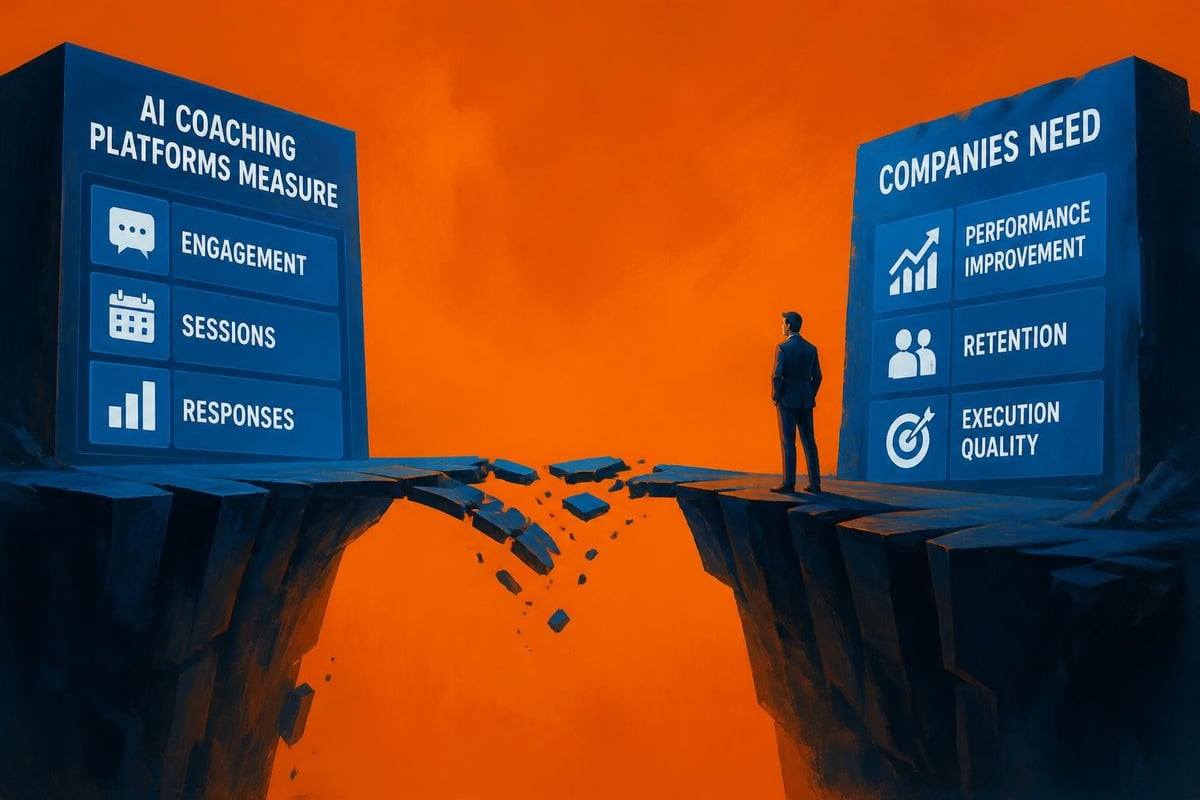
One director of leadership development at a 280-person SaaS company told us their AI pilot logged 4,200 coaching interactions in Q2 2025. Engagement looked strong. But when they ran their quarterly 360 assessments, manager effectiveness scores hadn't moved. Team velocity stayed flat. The AI talked a lot but changed nothing.
Why Volume Metrics Fail
| What AI Coaches Measure | What Actually Matters |
|---|---|
| Sessions per user | Decisions made faster |
| Response satisfaction | Communication clarity |
| Feature clicks | Team retention rates |
| Completion rates | Revenue per manager |
| Bot uptime | Execution on priorities |
The measurement gap explains why ai coaching broke down in practice faster than expected. Without outcome validation, companies funded experiments that felt productive but delivered no ROI.
The Context Collapse: Generic Advice Meets Specific Problems
AI coaching systems trained on broad datasets produced plausible-sounding recommendations. They recognized patterns from millions of coaching conversations but couldn't navigate the specific operating context that defines mid-market leadership challenges.
Real coaching problems require organizational context:
- A VP of Sales needs to coach a regional manager whose team culture clashes with new CRM adoption timelines
- A finance director must address conflict between controllers in two recently merged divisions
- An operations lead struggles to hold weekly accountability meetings when three team leads work across time zones
Generic AI responses ("focus on active listening," "establish clear expectations," "practice empathy") sound correct but collapse when applied. They ignore power dynamics, legacy systems, competing KPIs, budget constraints, and the specific personalities involved.
Harvard Business Publishing research on leadership development warns that scaling AI coaching risks "loss of intellectual diversity and contextual nuance." Companies that prioritized automation over customization found their managers received advice disconnected from actual business constraints.
The Safety and Ethics Ceiling: When Scale Meets Liability
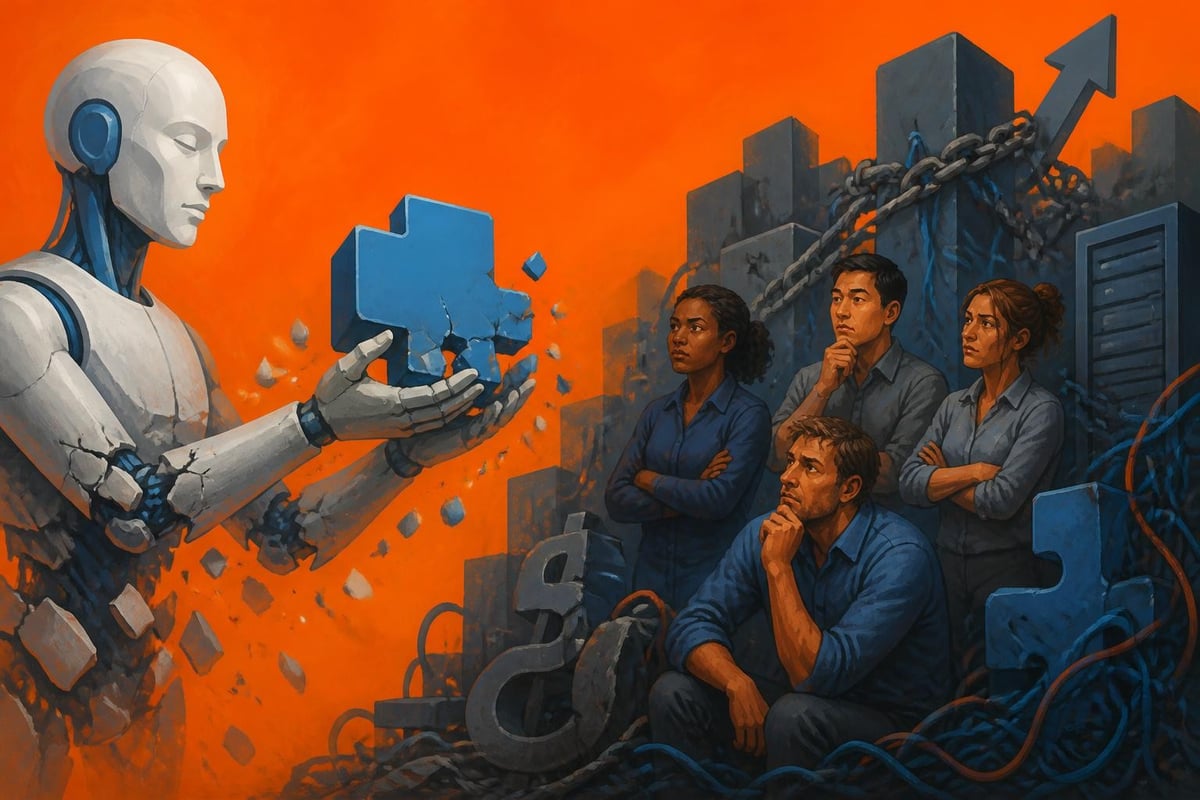
The operational reality of why ai coaching broke down in practice becomes stark when examining safety failures at scale. A deployment study analyzing 350,000+ AI coaching conversations documented oversight failures that forced platform redesigns.
Critical Safety Gaps Discovered
- Missed escalation signals (mental health crises, harassment reports)
- Bias amplification in performance feedback
- Privacy breaches through data retention policies
- Inappropriate responses to sensitive disclosures
- Lack of qualified human review at scale
One Fortune 500 division's pilot ended abruptly when their AI coach advised a manager to "document performance issues more aggressively" for an employee experiencing a medical crisis. The manager followed the advice. Legal got involved. The pilot shut down within 72 hours.
Research on ethical problems in AI coaching identifies responsibility gaps that become liability exposure. Who owns the coaching relationship? Who ensures advice quality? Who intervenes when automated systems give harmful guidance? Most vendors couldn't answer clearly.
The Human-in-the-Loop Reality: Required Oversight Destroys Economics
AI coaching economics depend on minimal human intervention. But ETS research on human-in-the-loop design demonstrates that purely automated coaching systems require extensive human oversight to maintain safety and effectiveness.
Required oversight activities that broke AI coaching ROI:
- Clinical review of flagged conversations (15-20 minutes each)
- Quality audits of AI recommendations (sample 10% minimum)
- Escalation management and human handoffs
- Custom prompt engineering for organizational context
- Regular model retraining on company-specific data
When companies added necessary human oversight, cost per coaching interaction rose 400-600%. The economic advantage evaporated. They were paying for both technology and humans, getting worse outcomes than dedicated executive coaching that focused on results from day one.
The Accountability Vacuum: Nobody Owns the Outcome
Traditional coaching creates clear accountability. A coach works with a manager, sets specific goals tied to KPIs, meets regularly, and owns the outcome. Progress is visible. Stalls are obvious.
AI coaching dispersed accountability until it disappeared. The platform vendor blamed implementation. HR blamed user adoption. Managers blamed the advice quality. Nobody owned results.
| Traditional Coaching | AI Coaching Reality |
|---|---|
| Coach accountable for outcomes | Vendor accountable for uptime |
| Regular progress reviews against KPIs | Analytics dashboards without context |
| Direct feedback loops | Opaque recommendation engines |
| Relationship-based trust | Algorithm-based suggestions |
| Clear success criteria | Vague engagement metrics |
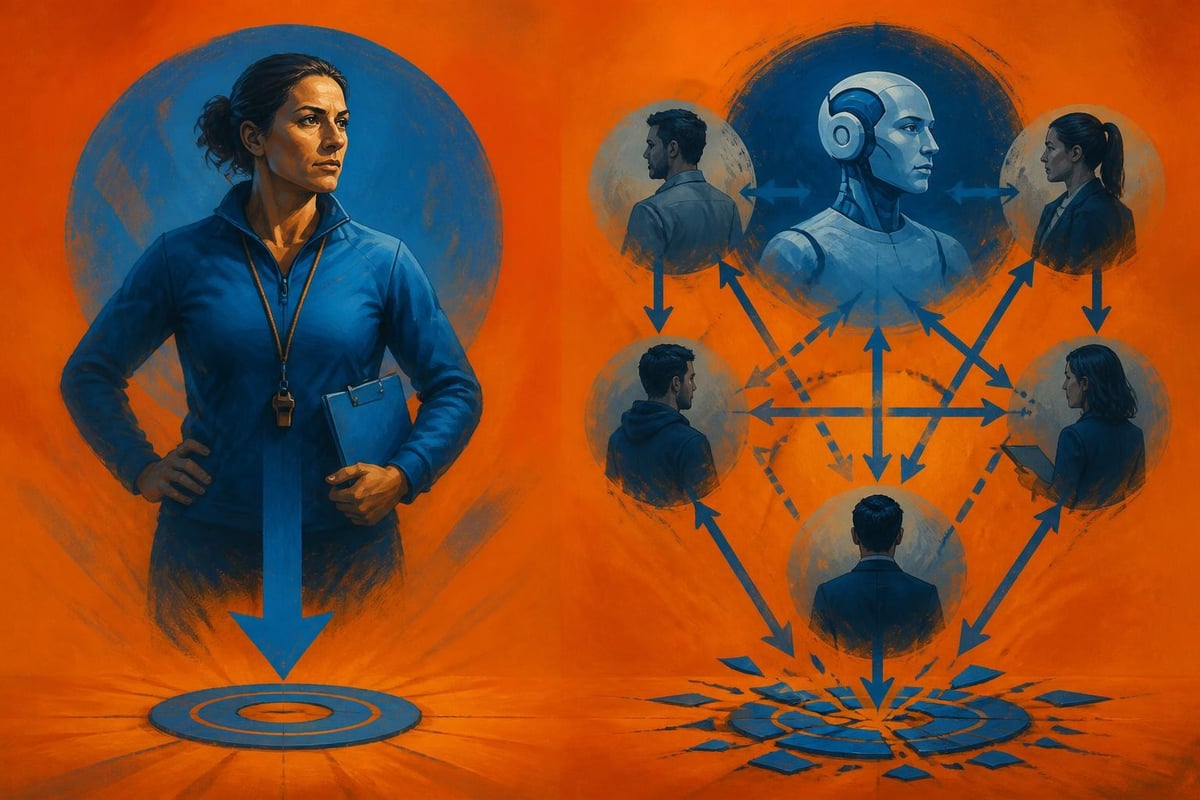
When we interview mid-market executives about why ai coaching broke down in practice, the accountability gap surfaces repeatedly. One COO put it directly: "We paid $180K for a year of AI coaching. Engagement looked good on paper. But when I asked who was responsible for improving our manager retention rate, nobody could answer. With our leadership development coach, I know exactly who owns that number."
What Actually Works: Hybrid Models With Human Primacy
The small percentage of AI coaching deployments that survived past 12 months shared a common structure: human coaches primary, AI tools secondary. Technology supported scheduling, note-taking, resource delivery, and progress tracking. But humans owned the coaching relationship and outcomes.
Successful hybrid coaching elements:
- Live human coaching tied to specific KPIs
- AI handles administrative tasks (scheduling, reminders, documentation)
- Clear escalation paths for complex issues
- Human review of all AI-generated recommendations
- Outcome measurement focused on business results
This model works but eliminates the cost advantage AI coaching promised. You're still paying for skilled human expertise. The technology just makes that expertise more efficient, not replaceable.
For companies seeking practical results rather than technological novelty, traditional coaching with modern tools delivers better ROI than automated systems pretending to be coaches.
Lessons for 2026 and Beyond
The evidence from failed AI coaching pilots reveals what companies should have asked before buying:
- Who owns the outcome? If the answer isn't a specific person accountable for results, don't deploy.
- How do you measure success? Engagement metrics are vanity. Business outcomes are reality.
- What happens when the AI gives bad advice? Without clear liability and oversight, you're exposed.
- Can it handle your specific context? Generic advice scales but rarely applies.
- What human oversight is required? Add those costs to the real ROI calculation.
Why ai coaching broke down in practice comes down to mismatched expectations. Vendors sold automation that eliminated human involvement. Buyers wanted coaching outcomes that require human judgment, context, accountability, and relationship. The technology couldn't bridge that gap, and overselling made the collision worse.
Companies that want measurable coaching results in 2026 focus on skilled human practitioners who coach live, tie their work to clear KPIs, and own outcomes. Technology supports that work but doesn't replace it. The difference shows up in retention rates, execution quality, and revenue per manager; the metrics that actually matter.
Frequently Asked Questions
Why did AI coaching fail in most corporate deployments?
AI coaching broke down because it measured engagement instead of outcomes, provided generic advice that ignored specific organizational context, lacked necessary safety oversight, and created accountability vacuums where nobody owned results. When companies required human oversight to manage risks, the cost advantage disappeared.
Can AI coaching tools work alongside human coaches?
Yes, when AI handles administrative tasks (scheduling, documentation, resource delivery) while human coaches own the coaching relationship and outcomes. This hybrid model works but eliminates the cost savings AI-only platforms promised.
What metrics should companies use to evaluate coaching effectiveness?
Focus on business outcomes: manager retention rates, team velocity, decision speed, communication effectiveness scores from 360 assessments, revenue per manager, and execution against priorities. Engagement metrics (sessions completed, satisfaction scores) don't predict performance improvement.
How much human oversight do AI coaching systems require?
Research shows effective AI coaching requires clinical review of flagged conversations (15-20 minutes each), quality audits of 10% minimum recommendations, escalation management, custom prompt engineering, and regular retraining. This oversight typically increases costs 400-600% over pure automation.
What are the main safety risks in AI coaching?
Key risks include missed mental health crisis signals, bias amplification in feedback, privacy breaches, inappropriate responses to sensitive disclosures, liability from harmful advice, and lack of qualified intervention when automated systems fail.
Why don't generic AI coaching recommendations work?
Corporate leadership challenges require specific organizational context: power dynamics, legacy systems, competing KPIs, budget constraints, team personalities, and operational realities. Generic advice ignores these factors and collapses when applied to real situations.
What's the difference between coaching volume and coaching outcomes?
Volume measures activity (sessions, messages, clicks) while outcomes measure business results (performance improvement, retention, execution quality). AI platforms excel at volume but struggle to deliver measurable outcomes.
How should companies evaluate AI coaching vendors?
Demand evidence of outcome validation (not just engagement metrics), clear accountability for results, transparent safety oversight processes, liability coverage for harmful advice, and honest cost projections including required human supervision.
What works better than AI-only coaching in 2026?
Human coaches who work live in meetings, tie coaching to specific KPIs, own outcomes through clear accountability, and use technology for administrative support deliver better ROI than automated systems. Results show up in measurable business metrics, not engagement dashboards.
AI coaching promised scale but delivered activity without outcomes, advice without context, and engagement without accountability. When companies need measurable leadership development tied to real business results, human expertise with clear KPIs beats automation every time. Noomii connects mid-market companies with experienced coaches who coach live, measure what matters, and own outcomes through month-to-month accountability, no long contracts required.



Leave a Reply
Want to join the discussion?Feel free to contribute!