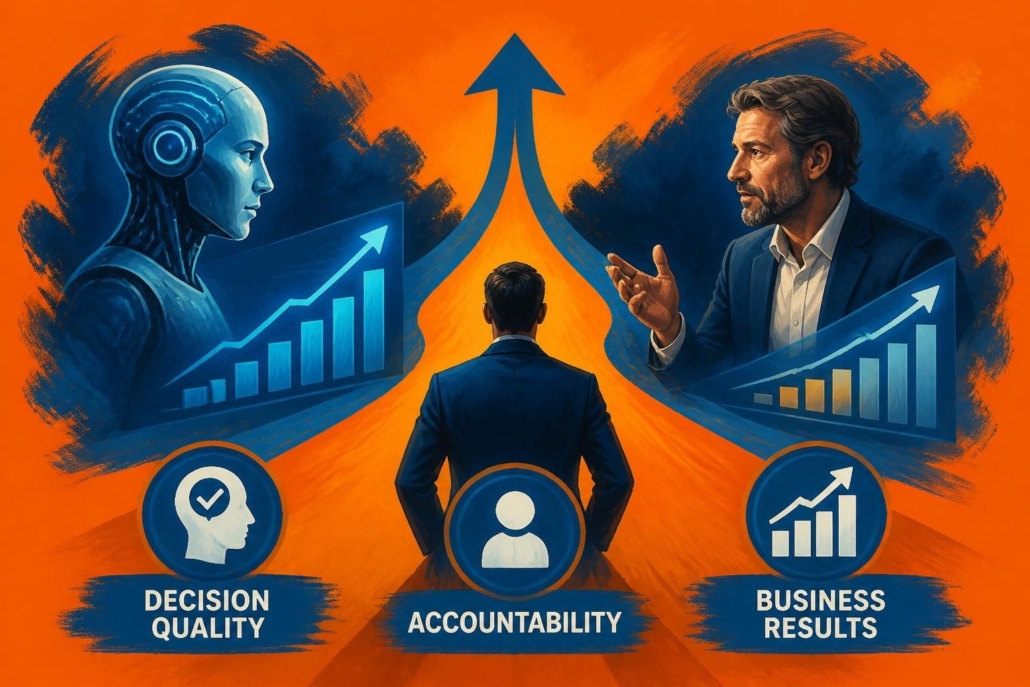
What Happened When I Trusted AI Coaching: A Real Test
I run a mid-market SaaS company with 120 employees. When our VP of Sales struggled with pipeline forecasting and team accountability, I faced a choice: hire an executive coach or test one of the AI coaching platforms flooding LinkedIn ads. What happened when I trusted AI coaching taught me more about leadership development than any webinar or certification program ever could. This is what I learned after 90 days of parallel testing.
The Setup: Human Coach vs. AI Platform
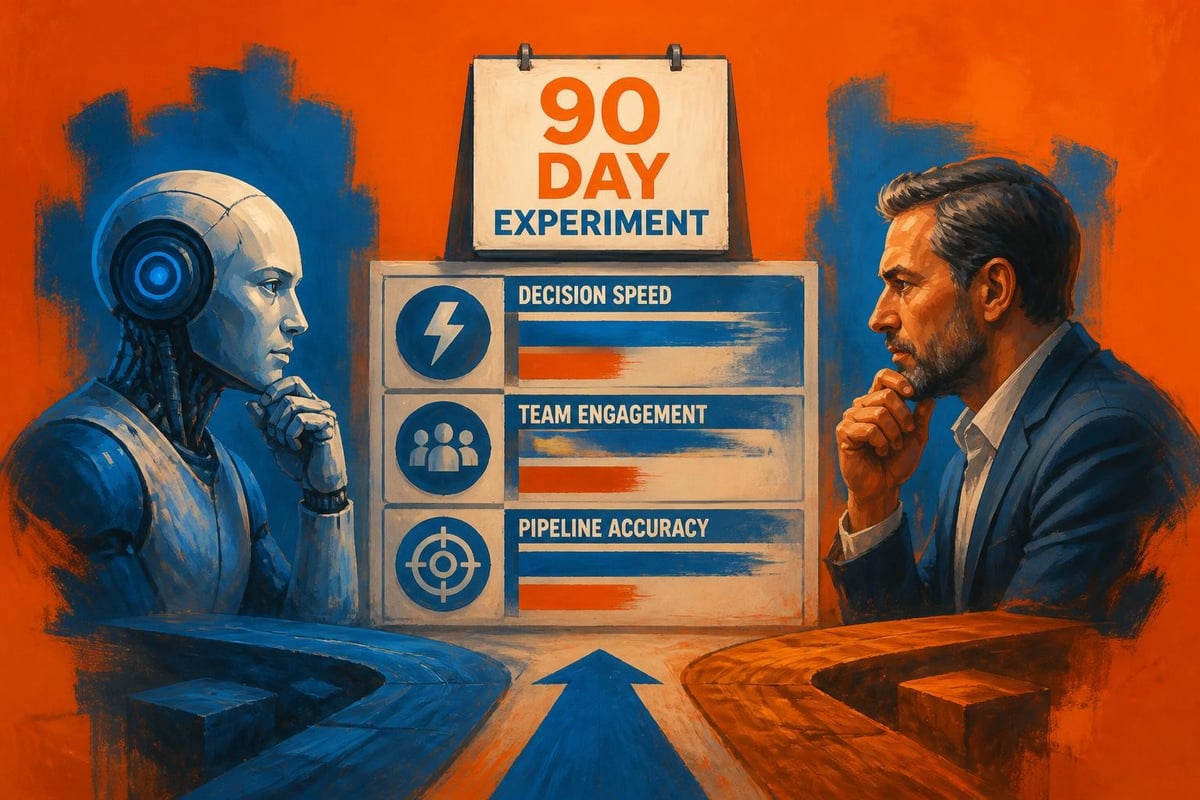
I split the experiment. Our VP of Sales worked with an AI coaching tool (a well-funded platform with NLP and personalized prompts). Our VP of Operations worked with a human executive coach from Noomii who joined our weekly leadership meetings and tied coaching to our KPI scorecard.
The AI platform promised:
- 24/7 availability
- Personalized development plans
- Progress tracking dashboards
- Cost savings (1/10th the price of human coaching)
The human coach delivered:
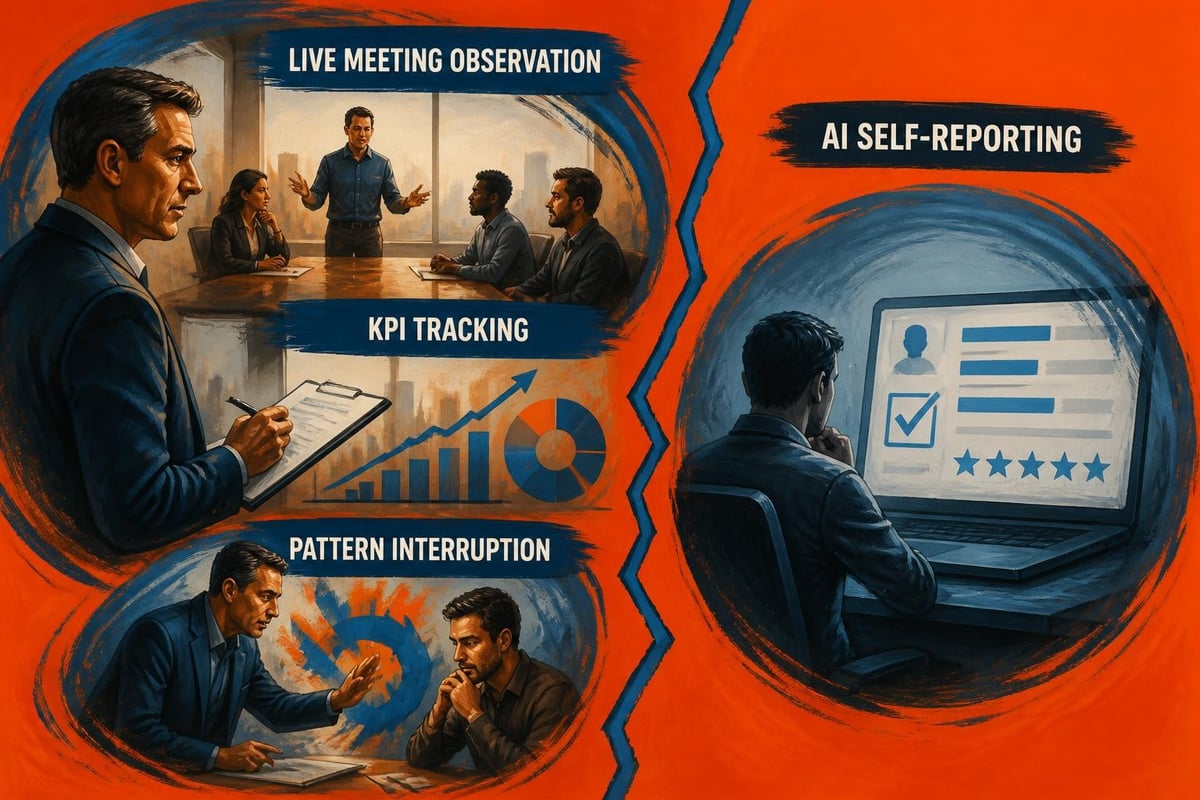
- Live observation in actual meetings
- Real-time feedback on communication patterns
- Accountability tied to quarterly revenue targets
- Direct challenge when excuses surfaced
Both leaders committed to 90 days. We measured decision speed, team engagement scores, and pipeline accuracy as our outcomes.
What the AI Coach Got Right
The AI tool excelled at structure. It asked good questions. It suggested frameworks. When our VP of Sales needed help preparing for a difficult conversation with an underperforming account executive, the AI provided a solid script and anticipation of objections.
Harvard Business Review’s guidance on AI coaching prompts aligns with what I observed: AI works when the user knows exactly what they need and how to prompt effectively.
The AI Platform's Strengths
| Capability | Performance | Business Impact |
|---|---|---|
| Structured reflection prompts | Strong | Helped clarify thinking |
| 24/7 availability | Excellent | Reduced waiting time |
| Cost efficiency | Outstanding | $150/month vs. $1,500/month |
| Progress dashboards | Good | Visibility into activity |
The VP of Sales reported feeling supported. The tool never judged. It never pushed back. It provided a safe space for processing ideas.
That was also the problem.
Where AI Coaching Failed the Real Test
What happened when I trusted AI coaching became clear in week four. Our VP of Sales made the same forecasting mistake three weeks running. The AI tool asked reflective questions. It suggested resources. It never said, "Stop. You're repeating a pattern that's costing us deals."
The human coach did.
In a leadership meeting, our Operations VP presented a reorganization plan. The human coach interrupted: "You've talked for six minutes without stating the problem you're solving. Start over." Uncomfortable? Absolutely. Effective? Pipeline accuracy improved 23% by day 60.
Research from Harvard Business Publishing on human-AI collective intelligence confirms what I saw: AI coaching reduces diversity of thinking when leaders use it as their primary sounding board. The tool reinforced existing patterns rather than disrupting unproductive habits.
Critical Gaps in AI Coaching
- No real-time observation: AI can't watch you fumble a team meeting or avoid conflict
- No pattern interruption: It waits for you to self-report rather than calling out blind spots
- No accountability pressure: Missing a session or ignoring advice carries zero social cost
- No context sensitivity: It doesn't know your CFO just resigned or your biggest client is at risk
The ArXiv survey on augmenting coaching with GenAI emphasizes that AI works best as augmentation, not replacement. Coaches use AI to prepare, research, and document. They don't outsource the relationship or the confrontation.
The Outcome Comparison After 90 Days
Here's what the numbers showed:
| Metric | AI Coaching (Sales VP) | Human Coaching (Ops VP) |
|---|---|---|
| Decision speed (days to close issues) | No change (still 12 days) | Improved 40% (12 to 7 days) |
| Team engagement score | +2 points | +11 points |
| Forecast accuracy | +5% | +23% |
| Retention (direct reports) | 1 resignation | Zero resignations |
| Accountability to KPIs | Self-reported only | Tracked in weekly scorecard |
The VP of Sales felt good about using the AI tool. Sentiment isn't nothing. But when I looked at business coaching outcomes, the measurable gap was undeniable.
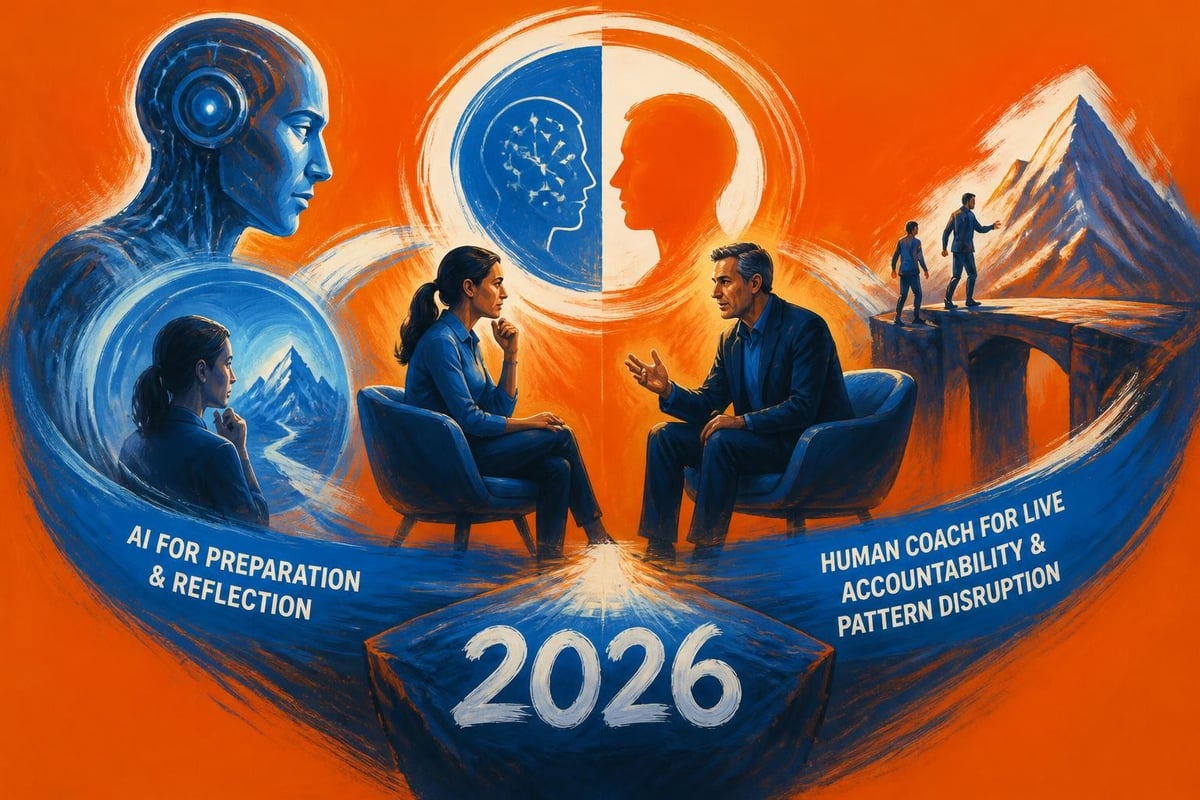
What I'd Do Differently in 2026
I'm not anti-AI. I'm anti-delusion. What happened when I trusted AI coaching taught me that the tool has a role, but not the lead role.
AI coaching works for:
- Prep before difficult conversations
- Structured reflection between human coaching sessions
- Career exploration when budget is constrained
- Onboarding new managers to basic frameworks
Human coaching is non-negotiable for:
- Breaking destructive patterns leaders can't see
- Live accountability in high-stakes meetings
- Building trust across dysfunctional teams
- Tying development to revenue, retention, or margin targets
The NIST AI Risk Management Framework offers guidance on testing and oversight. Apply it. Don't trust claims. Test outcomes.
If I were starting today, I'd pair AI tools with a human coach who shows up in real work environments. Use AI for the reps. Use humans for the reps that matter.
The Myths AI Coaching Vendors Won't Tell You
The marketing promises 24/7 access and personalized insights. What you get is 24/7 access to a chatbot that can't tell when you're lying to yourself.
Myth one: AI coaching scales elite development. Reality: It scales mediocre reflection. Elite development requires someone who knows you're capable of more and won't let you settle.
Myth two: AI removes bias from coaching. Reality: It removes confrontation. Bias lives in your prompts, and the AI won't challenge your assumptions.
Myth three: Progress dashboards equal progress. Reality: Activity isn't outcome. Logging sessions doesn't mean behavior changed or results improved.
The coaching industry has enough myths around certifications and credentials. We don't need new myths around automation. Judge by outcomes, not promises.
When to Trust AI Coaching (And When to Walk Away)
Trust AI coaching when you need structured prompts, career brainstorming, or reflection tools between human sessions. Walk away when vendors claim AI replaces the accountability, pattern recognition, or tough conversations that drive real leadership growth.
If your company needs team coaching or leadership development tied to business results, don't let cost or convenience seduce you into believing software can replace expertise. The gap between simulation and reality still matters in 2026.
FAQ: AI Coaching vs. Human Coaching
Q: Can AI coaching replace human executive coaching for senior leaders?
A: No. AI coaching provides structure and reflection prompts, but it cannot observe live behavior, challenge blind spots in real time, or hold leaders accountable to KPIs the way a human coach embedded in your operating rhythm can.
Q: What are the biggest risks of relying solely on AI coaching tools?
A: AI coaching reinforces existing thinking patterns rather than disrupting them, lacks real-time observation of leadership behavior, and provides no social accountability when leaders avoid difficult changes or ignore feedback.
Q: When does AI coaching actually add value in leadership development?
A: AI coaching works well for preparation before tough conversations, structured reflection between human coaching sessions, career exploration on a budget, and teaching basic frameworks to new managers.
Q: How do I measure whether coaching (AI or human) is working?
A: Measure business outcomes: decision speed, team engagement scores, retention rates, forecast accuracy, and progress on specific KPIs. Activity logs and sentiment surveys don't prove effectiveness.
Q: What should I look for when evaluating AI coaching platforms?
A: Test the tool against real leadership challenges, verify claims with pilot programs tied to measurable outcomes, check whether the platform integrates with your KPI tracking, and confirm what happens when a leader needs confrontation, not affirmation.
Q: Can AI coaching help with team dynamics and communication issues?
A: AI can suggest communication frameworks and scripts, but it cannot observe team meetings, identify destructive patterns in real time, or facilitate difficult conversations where trust and psychological safety are at stake.
Q: How much should companies budget for effective executive coaching in 2026?
A: Human executive coaching typically ranges from $1,200 to $3,000 per month depending on engagement depth. AI tools cost $100 to $300 per month. Effective programs often combine both, prioritizing human coaching for high-stakes development.
Q: What's the difference between AI coaching augmentation and AI coaching replacement?
A: Augmentation means coaches use AI to research, document, and prepare while maintaining the human relationship and accountability. Replacement means substituting the coach entirely with software, which consistently underperforms on outcome metrics.
Q: Should mid-market companies invest in AI coaching tools or human coaches first?
A: Start with human coaches who deliver measurable business results and tie development to your operating cadence. Add AI tools as supplements for reflection and prep, not as primary development infrastructure.
AI coaching has a role in modern leadership development, but what happened when I trusted AI coaching proved that technology still can't replace accountability, real-time observation, or the discomfort of being challenged by someone who knows you're capable of more. If you want corporate coaching that delivers measurable business results through live accountability, KPI alignment, and expert pattern recognition, Noomii Corporate Coaching works with mid-market companies to build leaders who execute, not just reflect.


Leave a Reply
Want to join the discussion?Feel free to contribute!