
Your Certification Will Not Get Clients
I've watched thousands of coaches spend $5,000 to $25,000 on certifications, then wonder why their phones aren't ringing. The uncomfortable truth: your certification will not get clients. Not in leadership development, not in executive coaching, and especially not in mid-market corporate contracts. The coaching industry has sold you a myth that credentials equal clients, but fifteen years of market observation tells a different story.
The Certification Trap Most Coaches Fall Into
Corporate buyers don't browse ICF directories looking for the shiniest credentials. They want business outcomes. When a VP of Operations needs team performance improved by Q3, your 200-hour certification from a prestigious school means nothing without proof you've solved similar problems.
Here's what actually happens when corporate buyers evaluate coaches:
- They ask for case studies and measurable results
- They want references from similar-sized companies
- They test whether you understand their specific industry challenges
- They evaluate your diagnostic process and measurement framework
- They check if you can tie coaching to revenue, retention, or margin
Your certification will not get clients because it proves you completed coursework, not that you deliver results. The distinction between certification and competency is critical here. Certification indicates training completion; competency proves you can apply skills to produce business outcomes.

The ROI Disconnect Between Credentials and Client Acquisition
I've analyzed pricing and close rates across hundreds of corporate coaching engagements. Coaches with identical certifications show win rates ranging from 12% to 67%. The differentiator? Business acumen, industry pattern recognition, and demonstrated results.
One coach we work with landed a $240,000 contract with a manufacturing company despite having no formal certification. His edge: ten years running operations teams, a proprietary diagnostic process, and three case studies showing 30%+ improvements in decision velocity. Meanwhile, his ICF-credentialed competitor with no corporate experience didn't make the shortlist.
What Corporate Buyers Actually Purchase
Mid-market companies purchasing executive coaching or leadership development aren't buying credentials. They're buying confidence that you'll move specific business metrics.
| What Buyers Care About | What Coaches Emphasize |
|---|---|
| KPI improvement proof | Certification hours |
| Industry pattern recognition | Coaching models learned |
| Diagnostic frameworks | Credential letters (PCC, MCC) |
| Client references | School pedigree |
| Risk-sharing terms | Philosophical approach |
| Implementation support | Coaching presence |
This misalignment explains why certifications don’t directly lead to client acquisition across coaching disciplines. The skills that win clients are business diagnosis, clear communication of value, and proof of past results.
The Three Elements That Actually Win Corporate Contracts
After watching successful corporate coaching practices build seven-figure revenues, I've identified three repeatable patterns that matter more than any certification.
1. Proprietary diagnostic frameworks
Corporate buyers want structure and measurement. When you enter with a named assessment process, clear KPIs, and a scorecard methodology, you communicate business discipline. Certification programs teach listening and presence; corporate buyers need project management and metric accountability.
2. Industry-specific pattern recognition
A coach who's worked with fifteen SaaS companies can diagnose typical growth-stage leadership gaps in the first conversation. That expertise comes from repetition and real-world experience, not certification coursework. When you can name the exact challenges a manufacturing operations leader faces scaling from 150 to 300 employees, you've demonstrated competency that credentials can't provide.
3. Results documentation and case study discipline
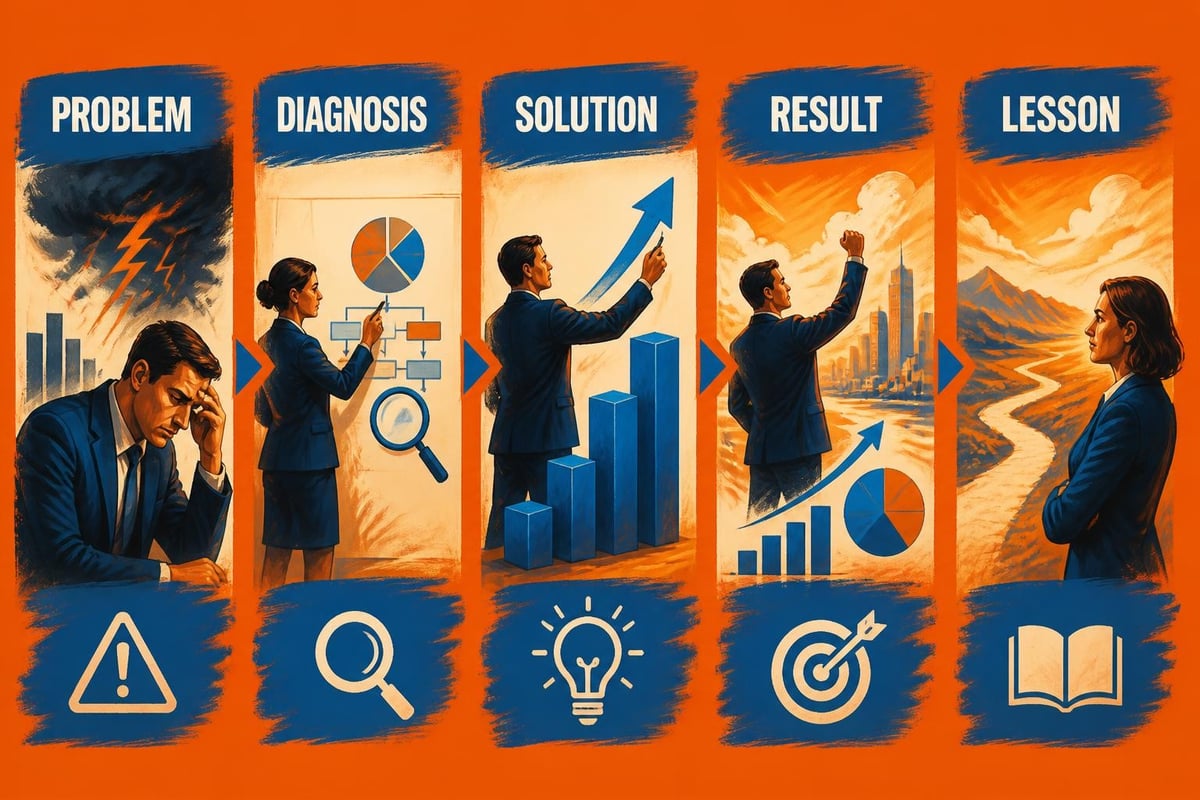
Your certification will not get clients, but documented results will. Build every engagement around Problem, Diagnosis, Solution, Result, and Lesson. When a prospect asks what you've achieved, you should have:
- Three case studies with quantified outcomes
- Client references who speak to business impact
- Before/after metrics for team performance, retention, or revenue
- Industry-specific examples matching their challenges
Why the Certification-First Model Fails in Corporate Settings
Certification programs optimize for coaching elegance, not business results. They teach presence, powerful questions, and non-directive approaches. Corporate coaching often requires directive expertise, implementation support, and accountability mechanisms that certification programs barely address.
I've seen this play out repeatedly with performance coaches entering corporate markets. Those who succeed pivot from pure coaching to business consulting blended with coaching methods. They attend client meetings, review scorecards, challenge strategic assumptions, and hold leaders accountable to commitments. That's not taught in certification programs, but it's what corporate buyers actually purchase.
The marketplace reality around certification value shows enhanced credibility doesn't automatically translate to client acquisition or revenue growth. Credibility is table stakes; business impact wins contracts.
The AI Coaching Disruption Amplifies This Reality
2026's corporate coaching landscape includes AI coaching platforms offering scalable, consistent, measurement-rich coaching experiences. These tools don't have certifications, but they deliver:
- Real-time performance tracking
- Consistent methodology application
- Integration with existing business systems
- Cost predictability and ROI transparency
Your certification will not get clients when you're competing against AI tools unless you offer something AI cannot: contextual business judgment, relationship capital, and senior executive credibility. None of those come from certification programs.
Building Client Acquisition Systems That Actually Work
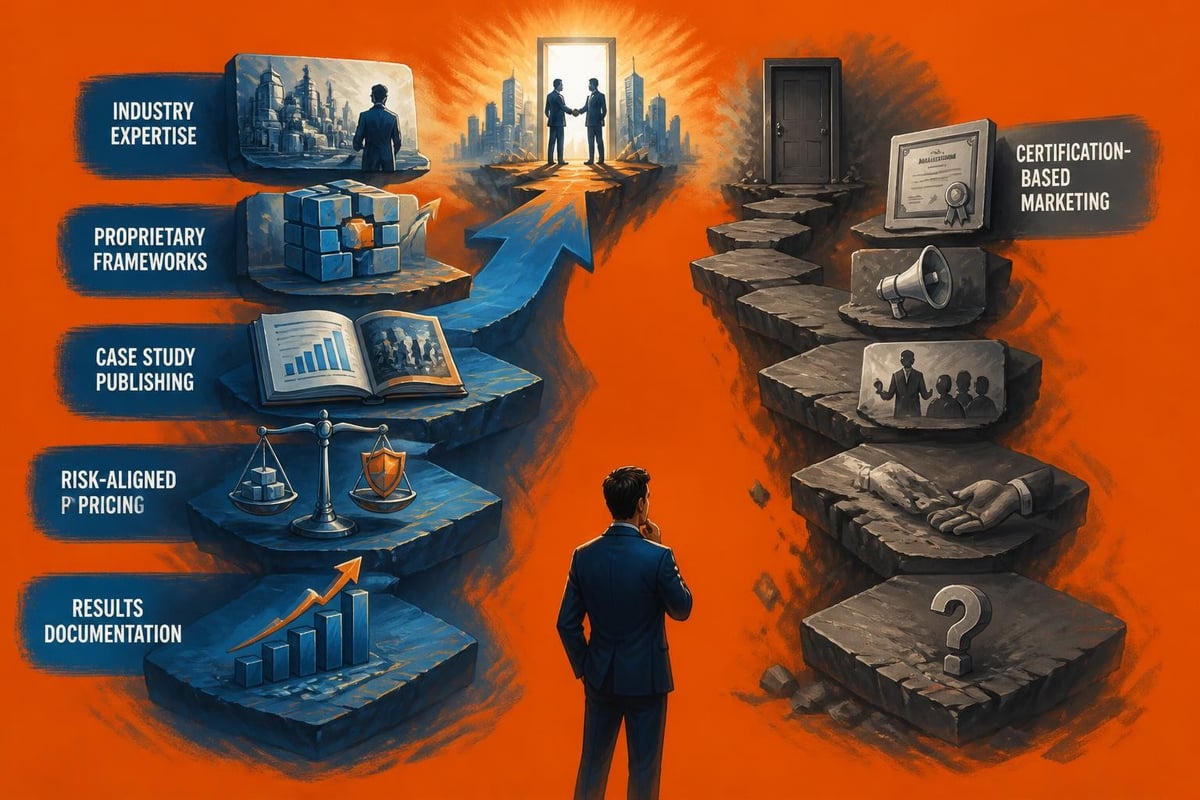
Successful corporate coaching practices in 2026 build marketing systems around proof, not credentials. Here's the repeatable approach:
- Document every engagement with metrics – Track KPIs before, during, and after every coaching relationship
- Build industry vertical expertise – Become known for solving specific problems in defined industries
- Create proprietary frameworks – Name your diagnostic process, assessment methodology, or scorecard system
- Publish case studies and lessons – Share anonymized results that demonstrate pattern recognition
- Offer risk-aligned pricing – Month-to-month terms or performance incentives show confidence in outcomes
Notice certification doesn't appear in that list. Coaching effectiveness isn't guaranteed by credentials; it's proven through results and client success.
The Contrarian Truth About Corporate Coaching Success
The coaches earning $300,000+ annually in corporate markets often aren't the most certified. They're the most business-savvy, industry-connected, and results-focused. They understand psychological safety frameworks, operating cadence design, and KPI scoreboard methodology because they've lived in business roles, not because they took certification courses.
Your certification will not get clients, but fifteen years running sales teams will. Your PCC credential won't win the contract, but three case studies showing 40% improvement in manager effectiveness will. This isn't to say certifications are worthless, they're just not client acquisition tools. They're professional development investments that may improve your coaching quality but won't fill your pipeline.
The corporate buyers I work with care about one question: "Can you help us achieve specific business outcomes within our timeline and budget?" Certification doesn't answer that question. Industry expertise, proprietary processes, documented results, and risk-sharing terms do.
FAQ
Does this mean I shouldn't get certified as a coach?
Not at all. Certification provides valuable training in coaching fundamentals, ethics, and methodology. It's professional development, not marketing. Get certified to improve your craft, but don't expect it to generate client inquiries or corporate contracts.
What should I focus on instead of pursuing more credentials?
Build industry expertise, document client results with specific KPIs, create proprietary diagnostic frameworks, and develop case studies. Focus on business outcomes and measurement systems that corporate buyers value.
How do I compete against certified coaches when pitching corporate clients?
Emphasize business experience, industry pattern recognition, and documented results. Share case studies, offer risk-aligned pricing, and demonstrate understanding of their specific operational challenges. Corporate buyers prioritize outcomes over credentials.
Can I win corporate contracts without any business experience?
It's significantly harder. Consider partnering with experienced business operators, focusing on smaller companies where you can build case studies, or working within corporate platforms to gain experience before pursuing direct contracts.
How long does it take to build a credible corporate coaching practice?
With focused effort on a specific industry vertical and disciplined results documentation, 18-24 months to establish credibility and generate consistent inbound leads. Without that focus, many coaches struggle for years.
What metrics should I track to demonstrate coaching ROI?
Track decision velocity, employee engagement scores, retention rates, revenue per employee, manager effectiveness ratings, and goal achievement percentages. Choose metrics that align with the business priorities of your target clients.
Do corporate buyers ever ask about certifications?
Occasionally, especially in regulated industries or when working through HR departments. When they do, it's usually a checkbox question, not a primary decision factor. Business results still drive the final decision.
Should I display my certifications on my website and marketing materials?
Yes, but position them as supporting credentials, not primary value propositions. Lead with results, industry expertise, and proprietary methodologies. Certifications can appear in your bio or credentials section.
What's the biggest mistake coaches make when pursuing corporate clients?
Leading with coaching philosophy and credentials instead of business diagnosis and measurable outcomes. Corporate buyers need to see you understand their operational challenges and can deliver specific KPI improvements within defined timeframes.
Your certification proves you completed training, but corporate buyers purchase business results. The coaches who succeed in mid-market and enterprise environments focus on industry expertise, proprietary frameworks, and documented outcomes rather than collecting credentials. If you want corporate coaching work that delivers measurable impact tied to revenue, retention, and execution, Noomii connects you with performance-focused coaches who prioritize business results over certification pedigree. We work month-to-month with clear KPIs because visible results should drive the relationship, not long contracts and credential worship.



Leave a Reply
Want to join the discussion?Feel free to contribute!