

When You Need Therapy Not Coaching: A Decision Guide
The coaching industry has spent two decades expanding its reach, often blurring lines that shouldn't be blurred. I've watched countless coaches step into territory they're not equipped to handle and seen executives delay critical mental health support because they thought coaching was enough. Understanding when you need therapy not coaching isn't about credentials or certifications. It's about matching the right intervention to the actual problem.
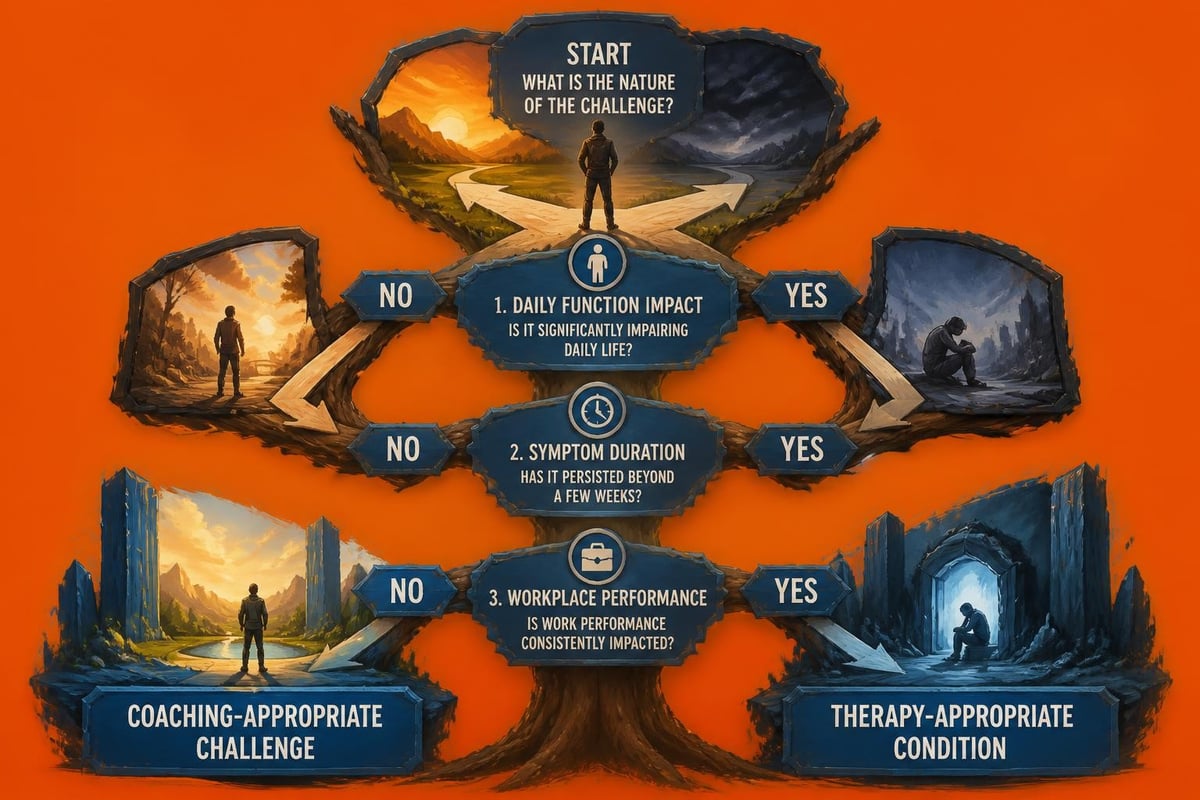
The Functional Impairment Test
Here's the clearest indicator: if your challenges prevent you from executing basic professional or personal responsibilities, you're likely past the coaching threshold. Coaching addresses performance gaps, skill development, and goal achievement. Therapy treats conditions that disrupt fundamental functioning.
Performance Patterns That Signal Clinical Need
Watch for these specific patterns in workplace behavior:
- Persistent inability to focus despite removing distractions and implementing productivity systems
- Repeated emotional reactions disproportionate to workplace triggers
- Sleep disruption affecting decision quality for more than two weeks
- Physical symptoms like chest tightness, digestive issues, or chronic fatigue without medical cause
- Withdrawal from relationships that previously provided energy and connection
A 2025 study across mid-market companies found that 34% of managers seeking coaching actually met diagnostic criteria for anxiety or depression. These conditions require clinical intervention, not accountability frameworks or goal-setting sessions.
What Coaching Can and Cannot Address
I've run leadership development programs in 40+ organizations. The best outcomes happen when we're clear about scope. Coaching works brilliantly for developing management capability, improving communication patterns, building strategic thinking, and accelerating goal achievement. It fails when applied to trauma, clinical anxiety, depression, or unresolved grief.
The Two-Question Clarity Check
Ask yourself these questions:
- Am I struggling to do things I know how to do, or do I need to learn new capabilities?
- Are my challenges primarily about past wounds, or am I focused on future performance?
If your answer points to execution failure on known skills or unresolved past experiences, you likely need therapy not coaching. If you're building new capabilities or clarifying future direction, coaching is the right path.
| Coaching Territory | Therapy Territory | Gray Zone (Needs Assessment) |
|---|---|---|
| Building team communication skills | Processing childhood trauma | Persistent relationship conflicts |
| Developing strategic planning habits | Treating panic attacks | Recurring self-sabotage patterns |
| Improving delegation frameworks | Managing clinical depression | Chronic stress with physical symptoms |
| Accelerating career transitions | Healing from abuse or neglect | Difficulty trusting colleagues |
| Clarifying values and priorities | Addressing substance dependency | Overwhelming perfectionism |
The Six-Week Observation Method
When evaluating whether you need therapy not coaching, run this practical test. Track three specific metrics for six weeks:
- Sleep quality on a 1-10 scale each morning
- Daily functioning across work, relationships, and self-care
- Emotional baseline noting significant mood shifts or intrusive thoughts
If two or more metrics show consistent decline or stay below functional thresholds despite implementing coaching frameworks, that's your signal. Clinical support is indicated when self-directed improvement attempts fail repeatedly.
Real Pattern Recognition From 400+ Leadership Engagements
In our work with Fortune 500 division leaders and mid-market executives, certain patterns reliably indicate clinical need:
- The Sunday anxiety spike that disrupts sleep and persists despite role clarity or workload adjustments
- Meeting avoidance rooted in fear rather than schedule conflicts
- Decision paralysis on routine choices, not just complex strategic calls
- Irritability patterns that damage key relationships despite awareness and intention to change
These aren't coaching opportunities. They're signs that professional mental health support provides the appropriate intervention level.

The Dual-Track Approach That Actually Works
Here's what the certification-obsessed coaching industry won't tell you: therapy and coaching aren't mutually exclusive. The most effective leadership development often runs both tracks simultaneously. A VP I worked with in 2025 combined weekly therapy for anxiety management with bi-weekly coaching focused on executive presence and strategic communication. Six months in, both interventions reinforced each other.
The key is clarity about which professional addresses what. Your therapist works on emotional regulation, trauma processing, or clinical symptoms. Your leadership coach builds capabilities, accountability systems, and performance frameworks. When boundaries blur, outcomes suffer.
Warning Signs Coaches Miss
Most coaches lack training to recognize these indicators:
- Trauma responses triggered by routine workplace situations
- Dissociation during stressful conversations
- Intrusive thoughts that interfere with concentration
- Suicidal ideation, even passive thoughts about not existing
- Substance use that's escalating to manage stress
If you're experiencing any of these, the distinction between therapy and coaching becomes critical. A well-meaning coach who attempts to address clinical symptoms can actually delay appropriate care and worsen outcomes.
The ROI Calculation Nobody Discusses
Organizations lose an average of $4,700 per employee annually when mental health conditions go untreated, according to 2026 workplace health data. That's not counting the leadership multiplier effect where one struggling executive impacts entire teams. Yet companies continue routing people toward coaching when therapy would deliver faster, more complete results.
I've seen this pattern repeatedly: a manager enters coaching for "performance issues," struggles for three months with minimal progress, then finally seeks therapy and resolves the underlying anxiety disorder within eight weeks. The initial misdiagnosis cost time, money, and often retention.

The Immediate Action Protocol
When you recognize you need therapy not coaching, take these specific steps:
- Contact your employee assistance program (EAP) if available for immediate assessment
- Schedule with a licensed therapist rather than waiting for symptoms to worsen
- Inform your coach if you're currently working with one, so they can adjust scope appropriately
- Communicate boundaries with your manager about what you're addressing without oversharing clinical details
- Track progress weekly using the same metrics that identified the need
Most mid-market companies have resources available but utilization remains below 8% because employees don't recognize when to access them.
The Boundary Question Every Leader Should Ask
Before engaging any coach or therapist, ask them directly: "What situations would cause you to refer me to the other profession?" A competent coach will have a clear answer listing clinical symptoms, trauma indicators, or functional impairment thresholds. A responsible therapist will explain when goal-focused coaching becomes more appropriate than ongoing therapy.
If either professional hesitates, considers the question irrelevant, or suggests they can handle everything, that's a red flag. Effective practitioners know their limits and prioritize client outcomes over engagement hours.
The reality after watching thousands of coaching engagements: understanding when you need therapy not coaching is one of the most valuable skills for modern leaders. It accelerates recovery, improves outcomes, and often costs less than extended coaching that never addresses root causes.
FAQ
What's the main difference between therapy and coaching?
Therapy treats mental health conditions, processes trauma, and addresses emotional dysfunction, while coaching develops skills, builds accountability, and accelerates goal achievement in functional individuals.
Can I do both therapy and coaching at the same time?
Yes, many professionals benefit from simultaneous therapy addressing clinical symptoms and coaching building leadership capabilities, as long as both practitioners coordinate and maintain clear boundaries.
How do I know if my workplace stress requires therapy or just coaching?
If stress disrupts sleep, relationships, or daily functioning for more than two weeks despite removing triggers or implementing coping strategies, therapy is indicated; if you need new skills to manage known stressors, coaching works.
Will my employer know if I choose therapy over coaching?
Therapy through EAP or personal insurance remains confidential; coaching arranged through work may involve progress updates, so clarify privacy expectations before beginning either engagement.
What if my coach suggests I need therapy?
A responsible coach making this recommendation is prioritizing your wellbeing over billable hours; take the referral seriously and schedule a therapy assessment within one week.
How long should I try coaching before considering therapy?
If you're not seeing measurable progress within four to six weeks on clearly defined coaching goals, or if symptoms worsen during coaching, seek a clinical assessment immediately.
Do therapists cost more than coaches?
Therapy often costs less because insurance coverage, EAP benefits, or sliding scale options reduce out-of-pocket expense, while coaching is typically self-pay at $150 to $500 per session.
Can online coaching or AI tools replace therapy?
No, clinical conditions require licensed professionals trained in evidence-based therapeutic interventions; AI tools and online coaching serve different purposes and lack diagnostic capability or crisis intervention training.
What happens if I ignore signs I need therapy and keep coaching instead?
Untreated mental health conditions typically worsen over time, leading to decreased performance, damaged relationships, physical health decline, and potential job loss or safety risks that far exceed therapy costs.
Knowing when you need therapy not coaching protects your health, accelerates your development, and improves outcomes for you and your team. When you're ready for leadership development grounded in clear boundaries and measurable results, Noomii connects you with experienced coaches who prioritize appropriate referrals and deliver practical frameworks that move business metrics. We focus on results you can track, not credentials you can't verify.



Leave a Reply
Want to join the discussion?Feel free to contribute!