

What Makes a Coach Legitimate in 2026
The coaching industry operates without unified regulation, creating a landscape where anyone can claim expertise without demonstrating competence. Understanding what makes a coach legitimate requires looking beyond marketing claims and surface-level credentials to focus on experience, methodology, outcomes, and accountability. The most legitimate coaches tie their work directly to measurable client results rather than hiding behind certificates and theories that sound impressive but deliver little practical value.
The Credential Myth: Why Certifications Don't Guarantee Legitimacy
Most buyers assume certifications from organizations like ICF or EMCC automatically signal quality. This assumption ignores a fundamental truth: certification measures training completion, not coaching effectiveness.
The reality of coaching certifications:
- Programs often emphasize theory over live client work
- Many certified coaches have never produced measurable business outcomes
- Certification renewal focuses on continuing education hours, not client results
- No certification body tracks graduate employment rates or client satisfaction
A coach with 15 years helping companies improve retention by 30% carries more legitimacy than someone with three alphabet soup credentials and zero documented outcomes. Identifying professional coaches requires examining what they've built and transformed, not what courses they've attended.

The Experience Signal: What Track Records Reveal
Legitimate coaches demonstrate firsthand experience solving the exact problems you face. When evaluating executive coaches, examine their work history before they became coaches. Did they lead teams? Manage P&L? Navigate mergers? Build sales organizations?
Pattern recognition matters more than credentials. A coach who has worked with 50 mid-market companies understands common failure points, political dynamics, and what actually drives behavioral change. They can diagnose issues faster and recommend interventions based on what worked in similar contexts.
The Seven Authority Signals of Legitimate Coaching
Understanding what makes a coach legitimate means evaluating multiple proof points simultaneously. Here's the framework that separates credible practitioners from certificate collectors:
| Authority Signal | What to Look For | Red Flag |
|---|---|---|
| Firsthand Results | Documented outcomes with metrics | Vague testimonials without numbers |
| Case Studies | Problem-diagnosis-solution-result format | Generic success stories |
| Proprietary Methods | Named frameworks tied to outcomes | Borrowed theory repackaged |
| Industry Commentary | Original insights on trends | Recycled advice from others |
| Contrarian Positions | Challenges common myths with evidence | Agreement with all industry norms |
| Practical Comparisons | Tool/approach evaluations based on use | No comparative experience |
| Niche Expertise | Deep knowledge of specific contexts | Generalist claiming universal fit |
The verification checklist approach many recommend focuses too heavily on credentials and too little on demonstrated expertise. Smart buyers flip this ratio.
Methodology Transparency: How Legitimate Coaches Work
Legitimate coaches explain their process clearly before engagement. They describe how they diagnose issues, what interventions they use, and how they measure progress.
Questions that reveal methodology legitimacy:
- How do you diagnose what's actually broken versus symptoms?
- What's your typical 90-day roadmap for this situation?
- How do you measure whether coaching is working?
- What happens when progress stalls?
- When do you recommend ending or pivoting the engagement?
Coaches who struggle answering these questions lack systematic approaches. They're winging it, which explains why so many coaching engagements produce disappointing results despite impressive credentials.
The Outcome Accountability Test
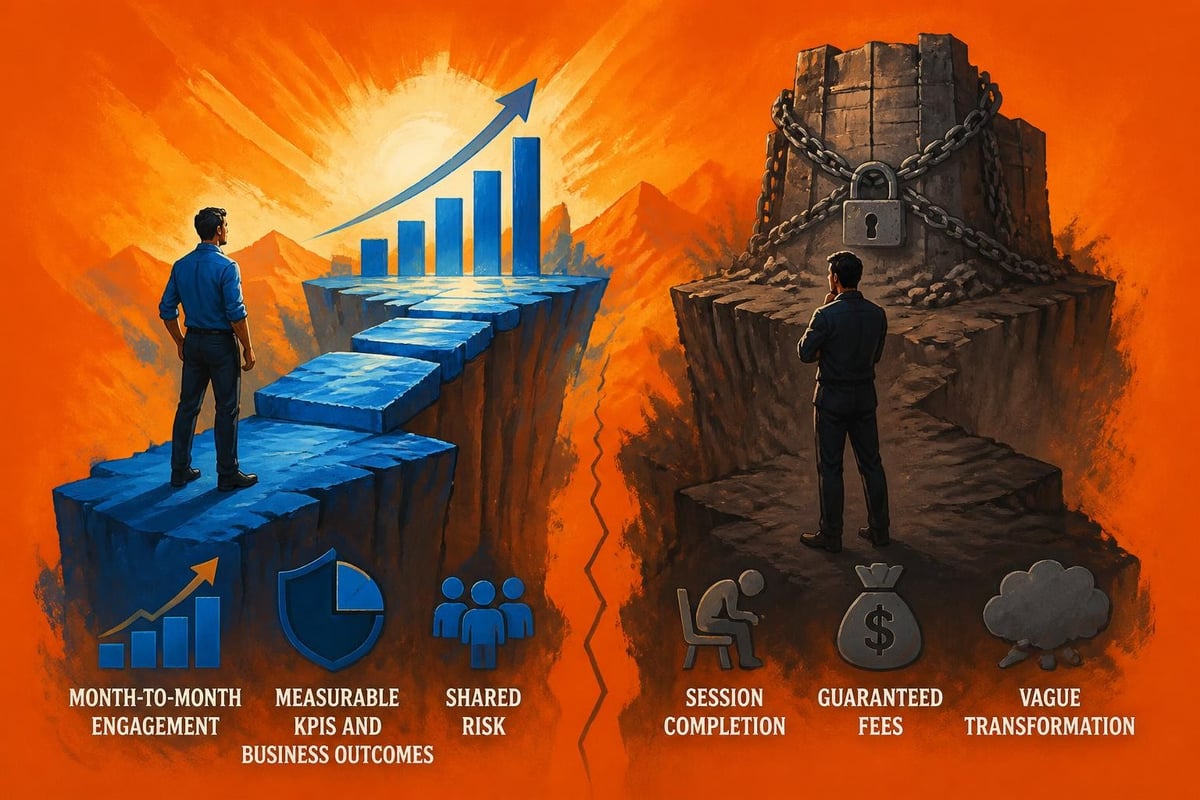
What makes a coach legitimate centers on one question: will they tie their work to your success metrics? The best practitioners share risk by connecting fees to outcomes or offering month-to-month terms that force continuous value demonstration.
Contrast these approaches:
- Credential-focused coaching: Six-month contract, fixed fee, focus on sessions completed
- Results-focused coaching: Month-to-month terms, KPI scorecards, progress tied to business metrics
Avoiding coaching scams requires recognizing that legitimate practitioners welcome accountability while frauds hide behind guaranteed contracts and upfront payments.
The Live Work Distinction
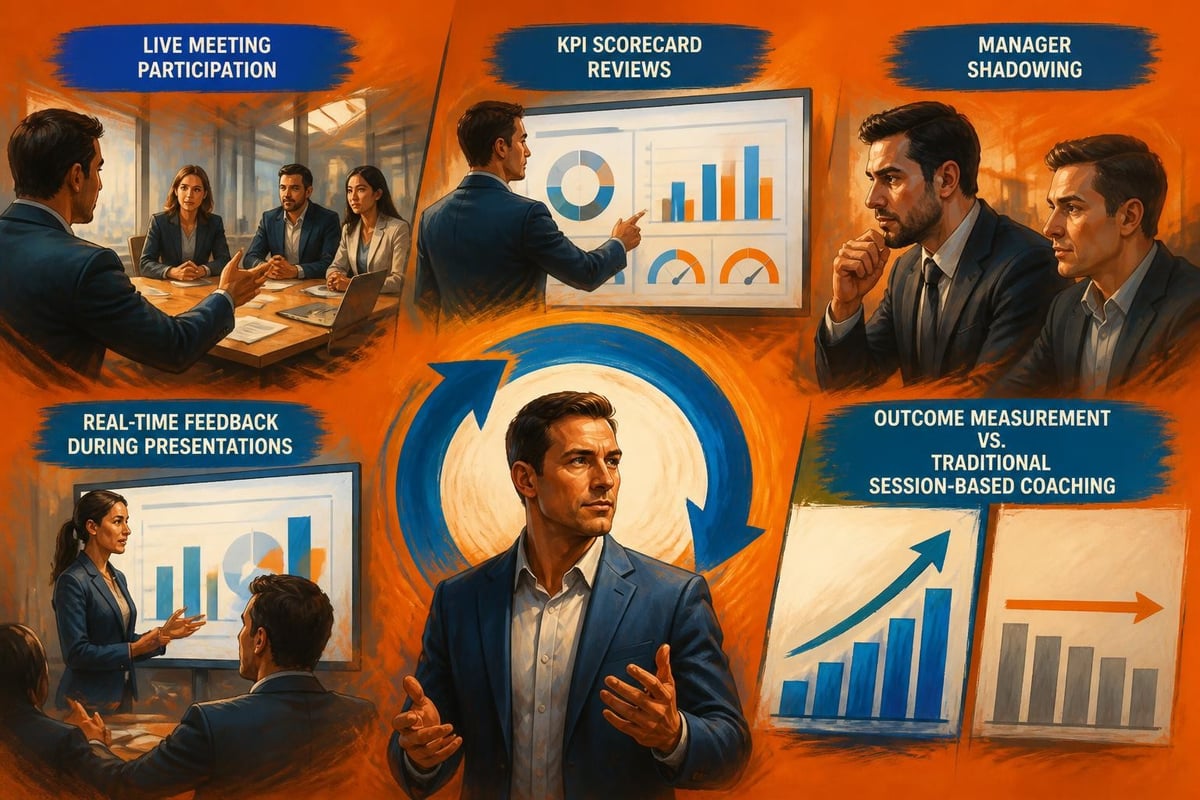
Most coaching happens in private sessions where coaches ask questions and provide feedback. This model works for personal development but fails for organizational challenges requiring real-time intervention.
Legitimate business coaches roll up their sleeves. They:
- Attend your leadership meetings and coach in real situations
- Review actual KPI scorecards and operating cadences
- Shadow managers during difficult conversations
- Facilitate team sessions where conflict surfaces
This live work approach reveals competence immediately. There's nowhere to hide when you're coaching during an actual board presentation or helping a manager navigate a retention crisis.
The Anti-Pattern: Red Flags That Signal Illegitimacy
Recognizing red flags helps avoid costly mistakes. Here's what illegitimate coaches consistently demonstrate:
- Guaranteed outcomes without knowing your situation: No competent coach promises specific results before diagnosis
- Resistance to pilot programs or short engagements: Legitimate coaches prove value quickly
- Credential emphasis over client results: When someone leads with certifications, they lack better proof
- Vague methodology explanations: "I meet clients where they are" means "I have no systematic approach"
- No unflattering case studies: Real practitioners discuss failures and pivots, not just wins
The characteristics of good coaches articles often miss the most important trait: willingness to be measured against business outcomes.
The Corporate Coaching Context
For companies hiring coaches for leadership development or team performance, what makes a coach legitimate includes understanding business operations. Coaches without P&L experience, board exposure, or cross-functional leadership struggle to connect behavioral change to business results.
When evaluating corporate coaching options, examine whether coaches understand:
- Operating cadences and KPI framework design
- How compensation and incentives drive behavior
- The politics of mid-market and enterprise organizations
- Sales and retention levers that impact revenue
Surface-level emotional intelligence training feels good but rarely moves metrics. Legitimate corporate coaching ties leadership behavior directly to execution quality, decision speed, and team retention.
The Market Evolution: AI and Coaching Legitimacy
The 2026 coaching landscape includes AI tools handling routine guidance and accountability. This shift raises the legitimacy bar for human coaches. Why pay premium rates for generic advice available through AI?
Legitimate human coaches now differentiate through:
- Complex diagnosis requiring business context and political awareness
- Live facilitation during high-stakes situations
- Custom framework development for unique organizational challenges
- Nuanced feedback on leadership presence and communication
AI’s impact on coaching means credentials matter even less than before. Coaches must demonstrate value AI cannot replicate, which returns us to experience, outcomes, and accountability.
The Pricing Signal
Legitimate coaches charge based on value delivered, not hours consumed. They understand ROI calculation and can articulate expected returns. When discussing coaching costs, credible practitioners explain pricing in business terms: retention savings, revenue impact, decision quality improvements.
Beware coaches who cannot explain their pricing rationale or who charge dramatically different rates for identical work depending on client budgets. Legitimate pricing reflects expertise, demand, and expected outcomes.
The Due Diligence Process for Buyers
Understanding what makes a coach legitimate requires systematic evaluation. Use this approach:
- Request case studies with problem-diagnosis-solution-result-lesson format
- Verify claimed outcomes through reference calls focused on metrics
- Test methodology by asking how they'd approach your specific situation
- Evaluate risk-sharing through contract terms and accountability mechanisms
- Assess business fluency in your industry, company stage, or functional area
The Forbes guidance on evaluating coaches provides additional screening criteria, though it overemphasizes credentials relative to demonstrated results.
What makes a coach legitimate ultimately comes down to whether they can produce measurable outcomes in your specific context and whether they're willing to share accountability for results. If you're seeking corporate coaching that ties leadership development directly to business KPIs with month-to-month terms and visible progress, Noomii connects you with practitioners who coach live in your meetings and measure success through faster decisions, stronger execution, and improved retention. Skip the credential worship and find coaches who deliver measurable business results.
Frequently Asked Questions
What credentials should I look for when hiring a legitimate coach?
While certifications from ICF or EMCC indicate training completion, legitimate coaches demonstrate value through documented outcomes, case studies, and willingness to tie their work to your success metrics rather than credentials alone.
How can I verify a coach's claimed results?
Request specific case studies with measurable outcomes, ask for reference calls with former clients who faced similar challenges, and examine whether the coach can articulate their methodology for producing those results in your context.
Do legitimate coaches offer guarantees?
Legitimate coaches avoid guaranteed specific outcomes before diagnosis but demonstrate confidence through month-to-month terms, pilot programs, or risk-sharing arrangements that tie fees to measurable progress.
What's the difference between life coaches and executive coaches in terms of legitimacy?
Executive coaches typically bring business experience and tie coaching to organizational metrics, while life coaches focus on personal development. Legitimacy in both areas depends on demonstrated outcomes and systematic methodology rather than coaching category.
How long should it take to see results from legitimate coaching?
Legitimate business coaches produce visible progress within 30-90 days through faster decisions, improved communication, or measurable KPI movement. Coaches who claim transformation requires years without interim milestones lack accountability.
Should a legitimate coach work in my industry?
Industry experience helps but matters less than understanding your organizational context, business model, and specific challenges. Pattern recognition across similar company stages often proves more valuable than narrow industry focus.
What red flags indicate a coaching scam?
Major red flags include guaranteed income or outcomes without diagnosis, resistance to short pilot engagements, inability to explain methodology clearly, emphasis on credentials over results, and required long-term contracts with upfront payment.
Can AI coaching tools replace legitimate human coaches?
AI handles routine guidance and accountability but cannot replicate complex diagnosis, live facilitation during high-stakes situations, nuanced political navigation, or custom framework development requiring deep business context.
How much should legitimate coaching cost?
Legitimate coaches price based on expected value and ROI rather than arbitrary hourly rates. Corporate coaching for mid-market companies typically ranges from $3,000 to $15,000 monthly depending on scope, with pricing tied to business impact.



Leave a Reply
Want to join the discussion?Feel free to contribute!