
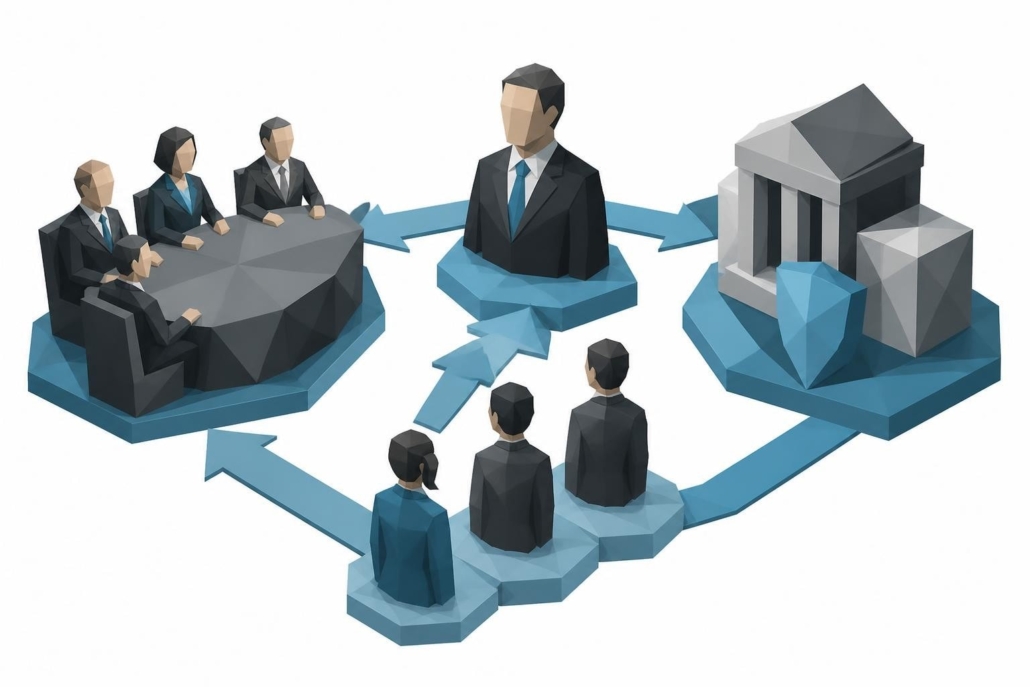
What Disney Leadership Turmoil Reveals About Succession
The boardroom drama at Disney over the past several years has become a masterclass in what not to do when planning executive succession. What Disney leadership turmoil reveals goes far beyond one company's internal challenges. It exposes systemic failures that plague organizations across industries: inadequate succession planning, unclear decision-making frameworks, and the dangerous tendency to conflate operational competence with strategic leadership capability. For CHROs and senior executives watching this unfold, the lesson is unmistakable: succession planning is not an HR project. It's a strategic imperative that requires clear governance, brutal honesty about internal capabilities, and the courage to make difficult choices years before they become urgent.
The Pattern That Should Alarm Every Board
Disney's succession struggles didn't emerge overnight. The timeline of Disney’s CEO succession reveals a pattern of delayed decisions, reversed commitments, and repeated failures to develop ready-now successors. Bob Iger announced his retirement multiple times starting in 2011. Each announcement was followed by extensions, creating a cycle that sent contradictory signals to internal candidates and the broader organization.
This pattern matters because it reflects a fundamental governance failure. Boards that cannot execute succession planning effectively are boards that struggle with strategic oversight more broadly. The inability to make and stick with succession decisions often indicates:
- Lack of confidence in leadership pipeline depth
- Insufficient board-level expertise in assessing executive capability
- Over-reliance on a single leader's judgment
- Fear of market reaction to leadership change
The Bob Chapek Experiment and Its Fallout
The appointment of Bob Chapek as CEO in February 2020 represented Disney's attempt to promote from within. Chapek had operational success leading Disney Parks, but what Disney leadership turmoil reveals is that operational excellence doesn't automatically translate to enterprise-level strategic leadership.
Within months, Chapek faced challenges that exposed capability gaps:
- Stakeholder management failures with creative talent and executives
- Communication missteps during the pandemic and subsequent reopening
- Strategic misalignment on streaming economics and content investment
- Cultural tone-deafness in handling sensitive political and social issues
The board's decision to bring Iger back in November 2022 was an admission of failure. Not just Chapek's failure, but the board's failure to properly assess readiness, provide adequate support during transition, or set clear success metrics.

What Went Wrong: A Diagnostic Framework
Organizations studying what Disney leadership turmoil reveals should apply a structured diagnostic to their own succession processes. The failures cluster into three categories: assessment, preparation, and governance.
| Failure Category | Disney's Mistake | Organizational Impact |
|---|---|---|
| Assessment | Promoted operational strength without validating strategic capability | Wrong leader in role; cultural disruption |
| Preparation | No structured external exposure or board-level apprenticeship | Leader unprepared for stakeholder complexity |
| Governance | Board delayed decisions; lacked independent succession oversight | Lost credibility; market uncertainty |
Assessment Failures Start Years Earlier
The most consequential error in succession planning happens during the assessment phase. Disney's board appeared to evaluate internal candidates primarily on divisional performance metrics. Parks revenue, streaming subscriber growth, and studio box office became proxies for CEO readiness.
This is a trap many organizations fall into. Stanford’s analysis of Disney’s CEO succession notes that divisional success requires different capabilities than enterprise leadership. A leader who excels at executing a defined strategy within clear boundaries may struggle with the ambiguity, stakeholder complexity, and strategic choices that define the CEO role.
Effective assessment requires testing candidates against CEO-specific demands:
- Cross-functional strategic thinking beyond their home division
- Board-level communication and governance understanding
- Crisis decision-making under public scrutiny
- Stakeholder management across competing interests
- Cultural stewardship and values alignment
The Preparation Gap That Costs Organizations
What Disney leadership turmoil reveals most clearly is the preparation gap. Internal candidates need deliberate development experiences that simulate CEO-level challenges. Disney appears to have assumed that strong divisional leadership would naturally translate upward.
In practice, organizations that successfully promote from within invest in structured preparation that includes:
Controlled Exposure to Enterprise Complexity
Top candidates rotate through assignments that force them outside their comfort zone. This might include leading cross-divisional strategic initiatives, representing the company in complex negotiations, or managing high-stakes external relationships. These experiences surface capability gaps before they become public failures.
Board-Level Apprenticeship
Future CEOs benefit from exposure to board dynamics, governance processes, and the different decision-making frameworks boards use. Leading through organizational disruption requires understanding how boards think about risk, stakeholder interests, and long-term value creation.
Some organizations create advisory roles where succession candidates attend portions of board meetings, participate in strategy sessions, or work directly with board committees. This demystifies the CEO-board relationship and helps candidates understand the governance context they'll operate within.
External Credibility Building
CEO succession often fails because internal candidates lack external credibility with key stakeholders. Investors, regulators, major customers, and the media form judgments about leadership capability based on direct interaction and public presence. Organizations should deliberately create opportunities for succession candidates to build these relationships years before transition.

The Governance Vacuum Behind Succession Chaos
HR leaders studying Disney’s experience point to governance failures as the root cause. Effective succession requires clear accountability, independent oversight, and the discipline to make decisions on schedule regardless of external pressure.
Disney's board appears to have lacked:
- Independent succession committee with real authority
- Clear decision criteria documented and agreed in advance
- Structured candidate evaluation process with external validation
- Commitment to timeline regardless of incumbent preference
The Iger Dependency Problem
The repeated returns to Bob Iger highlight a dangerous dynamic: boards that become dependent on a single leader's judgment often struggle with succession because they've outsourced strategic thinking to the CEO. When it's time to replace that CEO, they lack confidence in their own assessment capability.
This creates a vicious cycle. The board extends the incumbent because they're uncomfortable making the call independently. The extension signals lack of confidence in internal candidates. Strong internal candidates leave for CEO roles elsewhere. The pipeline weakens further, reinforcing the board's dependence on the incumbent.
Breaking this cycle requires boards to develop independent strategic judgment and assessment capability. This often means engaging external expertise, conducting rigorous candidate evaluations, and making succession decisions based on organizational needs rather than incumbent preferences.
What This Means for Your Organization
What Disney leadership turmoil reveals applies directly to organizations of all sizes. The specific dynamics change, but the underlying failures remain constant. Most organizations discover succession problems too late because they treat succession as an episodic event rather than a continuous strategic process.
Start With Brutal Honesty About Pipeline Depth
Conduct an objective assessment of your internal succession pipeline. Not the optimistic version you present to the board, but a realistic evaluation of whether you have ready-now successors for critical roles. The assessment should ask:
- Can this candidate operate effectively at the next level today?
- Have they demonstrated the specific capabilities required, not just general competence?
- Do they have credibility with the stakeholders they'll need to influence?
- Have they been tested under conditions that simulate the target role?
Many organizations confuse potential with readiness. A leader with high potential may be three to five years away from CEO readiness. If your succession plan assumes potential equals readiness, you're setting up for a Disney-style failure.
Build Development Into Operating Rhythm
Succession preparation cannot be delegated to HR or treated as a separate program. It must be embedded in how the organization operates. This means:
- Strategic initiatives led by succession candidates to develop enterprise thinking
- Regular exposure to board-level strategic discussions to understand governance context
- Structured feedback from multiple stakeholder groups to surface blind spots
- Crisis simulations and high-stakes scenarios to test decision-making under pressure
Addressing toxic leadership patterns early in a leader's development prevents the cultural damage that occurs when unprepared leaders reach executive levels.

The Coach-Matching Failure Nobody Discusses
One overlooked lesson from what Disney leadership turmoil reveals is the importance of matching leaders with the right developmental support. Organizations often assign executive coaches based on availability or cost rather than specific capability needs and coaching expertise.
When Bob Chapek struggled with stakeholder management and communication, he needed a coach with deep expertise in navigating complex political environments and managing relationships with powerful creative leaders. Generic executive coaching doesn't address these specific capability gaps.
Effective succession preparation requires precision matching between leader development needs and coach expertise. This includes:
| Leadership Challenge | Required Coach Expertise | Development Approach |
|---|---|---|
| Stakeholder complexity | Track record with multi-stakeholder environments | Simulations, stakeholder mapping, communication strategy |
| Strategic ambiguity | Experience with enterprise strategy | Scenario planning, strategic frameworks, decision architecture |
| Cultural stewardship | Understanding of organizational culture dynamics | Culture assessment, values alignment, change leadership |
| Crisis management | Background in high-stakes situations | Case studies, crisis simulations, decision-making under pressure |
Organizations that treat coaching as a generic service miss the opportunity to address specific capability gaps that will determine succession success or failure.
The Board's Accountability Problem
What Disney leadership turmoil reveals most starkly is that boards must own succession outcomes. When succession fails, it's primarily a board failure, not a CEO failure or HR failure. Boards that delegate succession planning without maintaining oversight abdicate their most important governance responsibility.
Effective board oversight of succession includes:
Regular Pipeline Reviews With Honest Assessment
Boards should conduct detailed succession reviews at least twice annually. These reviews must go beyond polished presentations to include direct interaction with succession candidates, independent assessment data, and frank discussion of readiness gaps.
The review should explicitly address: ready now, ready in 18-24 months, and ready in 3-5 years categories. If you don't have ready-now successors for critical roles, you have a strategic vulnerability that requires immediate attention.
Independent Succession Committee Authority
The importance of business succession planning cannot be left to the full board working in ad-hoc fashion. A dedicated succession committee with independent authority and clear accountability changes the dynamic.
This committee should:
- Meet separately from the full board to develop deep expertise
- Engage external assessment resources for objective candidate evaluation
- Own the succession timeline and decision process
- Report directly to the full board with clear recommendations
Commitment to Timeline Over Comfort
Perhaps the most important governance discipline is commitment to making succession decisions on schedule, regardless of how uncomfortable the choice feels. Boards that repeatedly extend timelines because they're not confident in their decision are boards that will eventually face a crisis.
Set decision deadlines years in advance. Communicate them clearly to all stakeholders. Make the decision on schedule. If the decision is to extend the current leader, acknowledge that as a failure of pipeline development and commit to addressing the root cause.
The Market and Talent Costs of Visible Turmoil
Beyond the strategic and governance failures, what Disney leadership turmoil reveals are significant market and talent costs. Media coverage of Disney’s CEO challenges created uncertainty that affected stock performance, employee morale, and competitive positioning.
When succession becomes a public drama, organizations experience:
- Stock price volatility as markets price in leadership uncertainty
- Talent flight as high performers seek stability elsewhere
- Competitor advantage as rivals exploit leadership transition periods
- Strategic paralysis as major decisions wait for new leadership
- Customer and partner uncertainty about company direction
These costs compound over time. A succession process that drags on for years creates cumulative damage that takes additional years to repair. The opportunity cost of strategic initiatives delayed or avoided during leadership uncertainty can exceed billions in market value.
Moving From Reactive to Proactive Succession
The final lesson from what Disney leadership turmoil reveals is the difference between reactive and proactive succession planning. Disney operated reactively, making decisions under pressure when circumstances forced action. Proactive succession planning operates on a different model entirely.
Proactive succession planning characteristics:
- Leadership pipeline development starts 5-10 years before anticipated transitions
- Candidate assessment uses multiple methods and external validation
- Development plans address specific capability gaps with measurable milestones
- Board maintains ongoing oversight with regular candidate interaction
- Decision timelines are set and communicated years in advance
- External search is always a considered option, not a last resort
Organizations with mature succession processes treat every leadership transition as an opportunity to upgrade capability and refresh strategic thinking. They maintain relationships with external search firms, conduct periodic benchmarking against external talent, and view internal development through a realistic lens.
Working with executive coaches who understand these dynamics accelerates development and surfaces capability gaps early enough to address them.
Frequently Asked Questions
How far in advance should organizations begin CEO succession planning?
Effective CEO succession planning should start 7-10 years before anticipated transition. This timeline allows for identifying high-potential leaders, providing diverse development experiences, testing candidates under realistic conditions, and addressing capability gaps before they become critical. Organizations that wait until 2-3 years before transition typically discover their internal candidates aren't ready, forcing rushed external searches or premature promotions.
What's the most common mistake boards make in succession planning?
The most common mistake is confusing strong operational performance with CEO readiness. Boards see a leader excelling in their division and assume those capabilities will translate to enterprise leadership. In reality, divisional success requires different skills than enterprise-level strategic leadership, stakeholder management, and board dynamics. Effective boards test candidates against CEO-specific demands before making succession decisions.
Should organizations always promote from within or look externally?
Neither approach should be automatic. The best practice is to develop strong internal candidates while maintaining realistic external benchmarking. If internal candidates can operate at the level required and have credibility with key stakeholders, internal promotion preserves continuity and cultural alignment. If internal candidates aren't ready or the organization needs strategic reset, external search may be appropriate. The mistake is deciding the approach before assessing capability against requirements.
How do you know if a succession candidate is truly ready?
True readiness requires demonstration of CEO-specific capabilities under realistic conditions. This includes managing complex stakeholder relationships, making strategic decisions under ambiguity, navigating crisis situations, understanding board governance, and earning credibility with external constituencies. Paper qualifications and potential aren't enough. Candidates should be tested through assignments that simulate actual CEO challenges before being promoted into the role.
What role should the current CEO play in succession planning?
The current CEO should participate in candidate development and provide input on readiness assessment, but should not control the succession decision. Boards that defer entirely to the outgoing CEO's judgment often make poor succession choices because CEOs have biases, may favor candidates who mirror their style, and sometimes have conflicted interests. The board must maintain independent judgment and final decision authority.
Disney's succession turmoil demonstrates that leadership transitions represent the highest-stakes decisions boards make. Organizations cannot afford reactive approaches or optimistic assumptions about internal readiness. The Noomii Corporate Leadership Program helps organizations build robust succession pipelines through precision coach matching, evidence-based leadership diagnostics, and targeted development that addresses specific capability gaps. Whether you're preparing the next generation of leaders or navigating a current transition, structured coaching solutions deliver the measurable results that ensure succession success rather than public failure.



Leave a Reply
Want to join the discussion?Feel free to contribute!