
The Warning Signs of a Bad Coach (2026 Guide)
The coaching industry lacks meaningful gatekeeping, which means bad coaches often operate for years before organizations discover the damage. Between 2018 and 2026, I've watched companies invest six figures in coaching engagements that delivered zero measurable results, and worse, seen coaches create psychological harm while hiding behind credentials. Recognizing the warning signs of a bad coach early saves money, protects your team, and prevents cultural damage that takes years to repair.
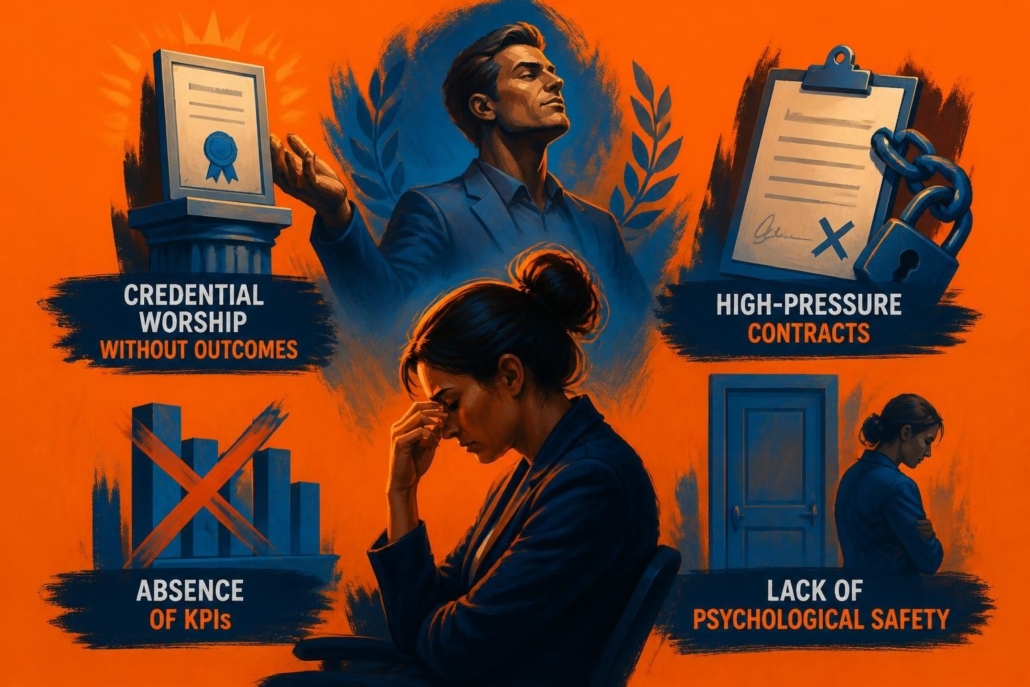
Credential Worship Without Track Record
The most pervasive warning sign is a coach who leads with certifications instead of results. ICF credentials, ACC, PCC, and MCC designations tell you someone passed exams and logged hours. They don't tell you whether that coach has ever improved retention, accelerated decision-making, or helped a struggling manager become effective.
Key red flags in this category:
- Resume dominated by training certificates rather than client outcomes
- Unable to provide specific examples of measurable business impact
- Deflects questions about KPIs with vague language about "transformation"
- No verifiable case studies or client references
In one 2024 case study, a Fortune 500 division hired a highly credentialed coach for their leadership team. Problem: low psychological safety and slow decision velocity. Diagnosis: the coach ran generic exercises from certification curriculum instead of addressing actual team dysfunction. Solution: replaced with a leadership coach who facilitated live meetings and tied progress to decision latency metrics. Result: average decision time dropped 40% in 90 days. Lesson: credentials predict compliance with coaching standards, not business results.

High-Pressure Sales and Long Lock-In Contracts
The Federal Trade Commission warns about high-pressure sales tactics in coaching programs, and these tactics appear in corporate coaching too. A coach demanding six or twelve-month commitments upfront with no performance milestones is betting you won't measure results until it's too late to exit.
Month-to-month terms with clear KPIs represent aligned incentives. Long contracts with vague deliverables represent risk transfer from coach to client.
Financial Red Flags
| Warning Sign | What It Means | Better Alternative |
|---|---|---|
| 12-month minimum contract | Coach isn't confident in near-term value | Month-to-month with 30-day notice |
| Payment in full upfront | No accountability for ongoing results | Monthly billing tied to milestones |
| "Investment in yourself" language | Deflecting ROI questions | Clear KPI scorecards from week one |
| Guaranteed outcomes | Legally questionable, ethically worse | Honest assessment of fit and realistic timelines |
I've reviewed engagements where coaches promised "transformation" but contractually prohibited outcome measurement. That's not coaching. That's liability protection.
Absence of Psychological Safety
Research on psychological safety in workplace environments shows that environments lacking safety produce fear, silence, and declining performance. Bad coaches create these conditions through blame, humiliation, or punitive feedback disguised as "tough love."
A coach who shames leaders in group settings, dismisses concerns as "resistance," or creates anxiety about "not doing the work" is actively harmful. Studies on interpersonal violence and coaching relationships document psychological abuse patterns: isolation, humiliation, gaslighting, and power imbalances.
Behavioral warning signs:
- Coach dominates conversations and interrupts frequently
- Dismisses client concerns or reframes them as personal failings
- Uses shame or embarrassment as motivation tactics
- Creates dependency rather than building autonomous capability
The workplace gaslighting research identifies denial, reality distortion, and blame-shifting as core manipulation tactics. These show up in coaching when a coach denies previously stated commitments, rewrites history about what was agreed, or blames clients for lack of progress despite providing no actionable tools.
No Connection Between Coaching and Business Metrics
Coaching that exists in a vacuum separate from business operations is intellectual entertainment, not performance improvement. The warning signs of a bad coach include inability or unwillingness to tie their work to company KPIs.
In 2023, I audited a coaching engagement for a 150-person company. Problem: high manager turnover and poor execution. Diagnosis: existing coach ran personality assessments and reflective exercises with no operational integration. Solution: replaced with coaching that embedded in leadership meetings, built operating cadence, and tracked execution completion rates. Result: manager retention improved 60% year-over-year, priority completion rates went from 40% to 85%. Lesson: coaching divorced from operations is a hobby.
KPI Integration Framework
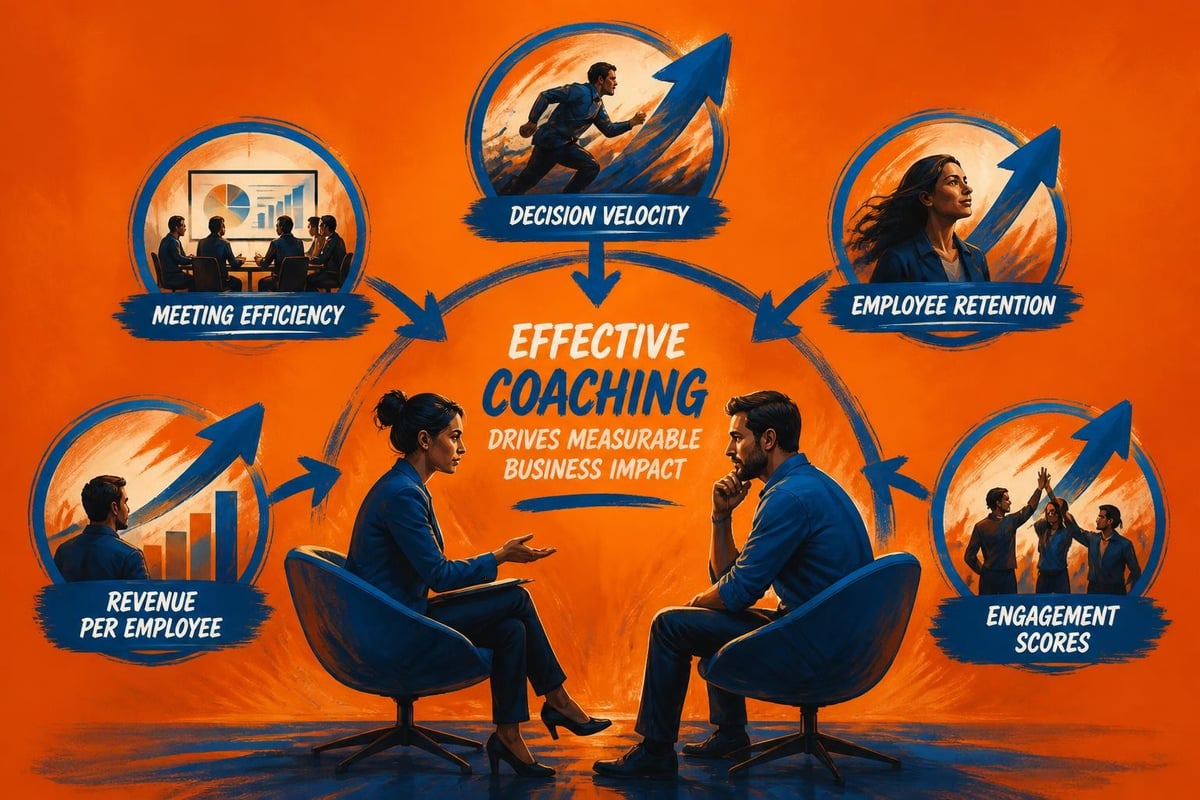
Effective coaches establish baseline metrics before starting:
- Decision velocity – How long key decisions take
- Meeting effectiveness – Action item completion rates
- Employee engagement – Survey scores, stay interviews
- Retention metrics – Voluntary turnover by role
- Revenue per employee – Productivity indicators
A coach who resists measurement typically can't demonstrate value because there isn't any.
Poorly Matched Expertise and Context Blindness
Generic coaching frameworks applied without industry context waste time and erode credibility. A coach who has never worked in your sector, doesn't understand your business model, and asks no questions about competitive dynamics before proposing solutions is guessing.
The research on coaching interventions and adverse events shows that poorly matched coaching can produce negative outcomes, including increased stress, role confusion, and decreased confidence. Studies on coaching effectiveness confirm that context misalignment and lack of follow-through predict failure.
Expertise misalignment signals:
- Coach has no experience in your industry vertical
- Unable to reference relevant competitive or regulatory pressures
- Proposes identical solutions regardless of company stage or structure
- Relies entirely on theory without operational grounding
For specialized needs like executive coaching for logistics companies, industry fluency matters. A coach who understands margin pressure, driver retention, compliance costs, and operational complexity will deliver faster, more relevant results than someone applying generic leadership theory.
Theory Obsession Over Practical Application
Bad coaches love frameworks. Great coaches love outcomes. The warning signs of a bad coach include spending session time on models, quadrants, and conceptual discussions while avoiding the messy work of live application.
I've seen coaches dedicate entire engagements to assessments and reflection without ever joining a real meeting, observing actual team dynamics, or coaching through a difficult conversation as it happens. That's consulting theater, not skill development.
| Theory-Heavy Coaching | Practical Coaching |
|---|---|
| Discusses conflict models | Facilitates live conflict resolution |
| Reviews delegation frameworks | Coaches delegation in real meetings |
| Assigns reading on feedback | Observes and improves actual feedback delivery |
| Talks about accountability | Builds KPI scorecards and reviews execution |
The coaches on Noomii’s platform who consistently deliver results share a pattern: they show up where work happens, coach in context, and measure progress with client-defined KPIs.

Isolation from Stakeholders and Lack of Transparency
A coach who insists on complete confidentiality with no progress updates to stakeholders is creating unaccountable space. While individual coaching conversations should remain private, overall progress, themes, and development areas should be transparent to whoever is sponsoring the engagement.
Transparency red flags:
- Refuses to share anonymized progress updates with HR or leadership
- No structured check-ins with engagement sponsor
- Defensive when asked about coaching approach or methods
- Discourages client from discussing coaching content with their manager
In one 2025 case, a VP was in coaching for eight months before the CEO learned the coach had been advising the VP to leave the company. The coach framed loyalty to the organization as "limiting" and independence as growth, despite being paid by that organization to develop leadership capability. That's not coaching. That's sabotage.
Deflection When Asked About Results
Ask a good coach what results they've produced, and you'll hear specifics: "Reduced manager turnover from 35% to 12% in 18 months," or "Improved team decision velocity by 50% in one quarter." Ask a bad coach the same question and you'll hear: "Every client's journey is unique," "Transformation can't be measured," or "The real value is internal."
Those answers mean the coach either hasn't measured results or the results were negative. When evaluating business coaches or executive coaches, demand case studies with quantifiable outcomes. If the coach can't provide them, keep looking.
Contrarian Reality: Credentials Are Downstream of Results
The coaching industry has inverted priority. Buyers check credentials first and results last. This creates a market where mediocre coaches with impressive certifications outcompete excellent coaches without them. The correction is already happening as companies measure coaching ROI more rigorously and discover that certification density correlates poorly with business impact.
Organizations that prioritize outcome verification over credential worship consistently report better coaching results and lower costs. The credential-first approach selects for compliance and test-taking ability. The outcome-first approach selects for effectiveness.
FAQ Schema
What are the most common warning signs of a bad coach?
The most common warning signs include leading with credentials instead of results, high-pressure sales with long contracts, creating environments lacking psychological safety, inability to connect coaching to business KPIs, and deflecting when asked about measurable outcomes.
How can I verify a coach's track record before hiring?
Ask for specific case studies with Problem, Diagnosis, Solution, Result, and Lesson structure. Request client references you can contact directly. Look for quantifiable business outcomes like retention improvement, decision velocity increases, or engagement score changes. Avoid coaches who only provide testimonials about "transformation" without metrics.
Should I prioritize coaching certifications when selecting a coach?
No. Certifications indicate compliance with training standards, not effectiveness. Prioritize demonstrated business results, relevant industry experience, and willingness to tie coaching to your company's KPIs. A coach with deep operational expertise and proven outcomes will deliver more value than a highly credentialed coach with no track record.
What contract terms indicate a trustworthy coaching engagement?
Month-to-month terms with 30-day notice periods indicate confidence in near-term value delivery. Clear KPI agreements established at engagement start show outcome accountability. Transparent progress reporting to engagement sponsors demonstrates professionalism. Avoid long lock-in contracts with vague deliverables.
How do I know if coaching is creating psychological harm?
Warning signs include feeling increased anxiety or shame during sessions, coaches who dismiss your concerns as resistance, environments where you fear saying the wrong thing, and dependency creation rather than skill building. Effective coaching increases confidence and autonomy, not anxiety and dependence.
What metrics should corporate coaching impact?
Effective corporate coaching should measurably impact decision velocity, meeting effectiveness, employee retention, engagement scores, execution completion rates, and revenue per employee. The specific metrics depend on your business priorities, but coaching divorced from operational KPIs rarely delivers value.
Why do some coaches resist outcome measurement?
Coaches resist measurement either because they lack the discipline to track results or because their results are poor. Effective coaches welcome measurement because it demonstrates value and justifies continued investment. Resistance to KPIs is a major red flag.
How can I tell if a coach understands my industry?
Ask specific questions about your competitive landscape, regulatory environment, business model challenges, and operational constraints. Listen for relevant examples from similar organizations. Watch whether they ask informed questions before proposing solutions. Generic responses indicate context blindness.
What's the difference between theory-heavy and practical coaching?
Theory-heavy coaching focuses on models, frameworks, and conceptual discussions in isolated sessions. Practical coaching embeds in real meetings, facilitates live problem-solving, and builds skills through immediate application. Practical coaching produces faster, more durable results because learning happens in context.
The warning signs of a bad coach appear early if you know where to look: credential worship, measurement resistance, psychological harm, and disconnection from business outcomes. Organizations that demand measurable results, refuse long lock-in contracts, and prioritize operational expertise over certifications consistently get better coaching ROI. Noomii Corporate Coaching delivers accountability-first engagements with month-to-month terms, live facilitation in your meetings, and clear KPI tracking from day one. If you need practical coaching tied to business results rather than theory and credentials, explore how Noomii helps mid-market companies build accountable leaders and measurable outcomes.


Leave a Reply
Want to join the discussion?Feel free to contribute!