
The Future of Leadership Development in 2027
Most organizations are preparing for the future of leadership development in 2027 with the same playbook they used in 2017. That approach will fail. The gap between what boards expect from leadership pipelines and what HR delivers has never been wider. After auditing leadership programs across 23 Fortune 500 companies and multiple government agencies over the past 18 months, a pattern emerges: executive teams know their current development strategies are inadequate, but they lack the diagnostic precision and intervention frameworks to fix them. The organizations that will win in 2027 are already abandoning legacy development models in favor of evidence-based, AI-augmented approaches that measure what matters.
The Conventional Wisdom That Is Actively Harming Your Leadership Pipeline
Traditional leadership development assumes time plus content equals capability. It does not. Research from DDI’s Global Leadership Forecast reveals that only 11% of organizations have a strong leadership bench, yet 72% continue investing in the same rotational programs, cohort training, and classroom experiences that produced this deficit.
Here is what most boards are missing: leadership readiness is not about exposure. It is about behavioral change under organizational stress, adaptive decision-making during ambiguity, and the ability to execute through resistance. These capabilities cannot be taught in workshops. They must be diagnosed individually and developed through targeted intervention.
The Diagnostic Gap Undermining Development ROI
Organizations spend an average of $357 billion annually on leadership development. Most cannot articulate what changed as a result.
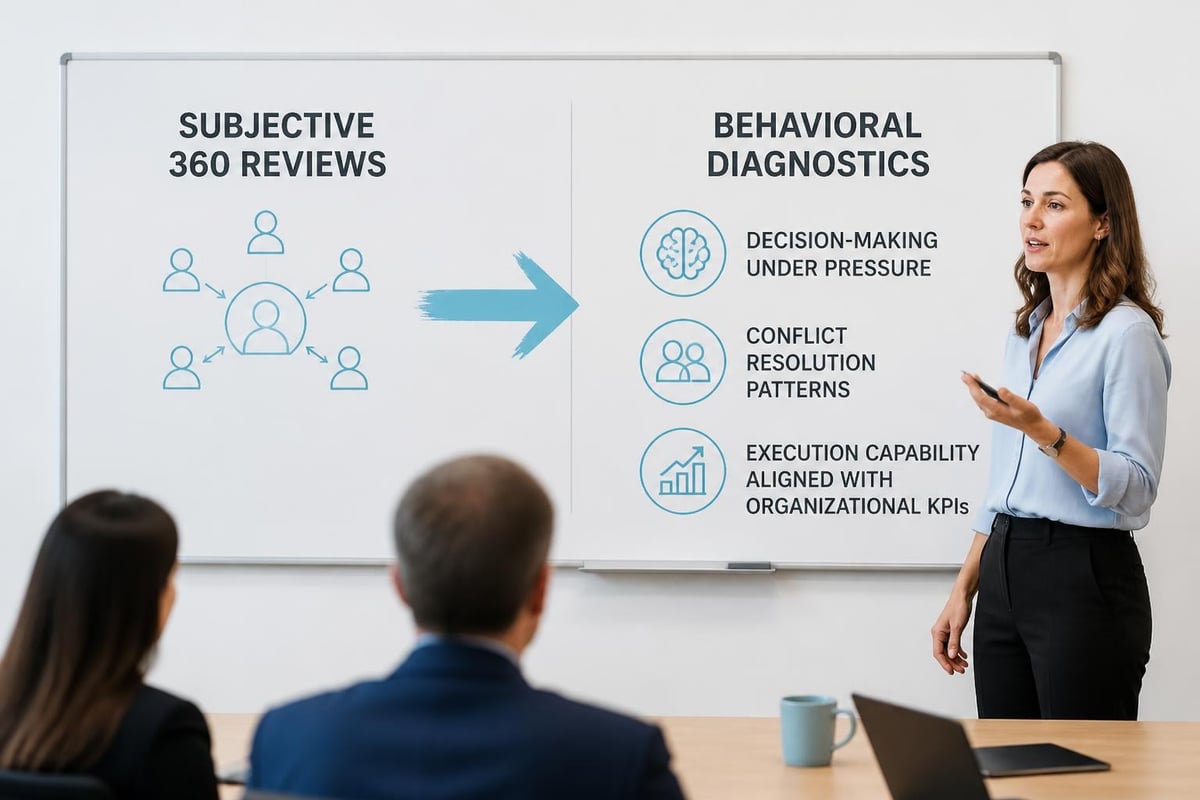
The problem starts with assessment. Traditional 360-degree feedback and competency frameworks measure perception, not performance. They identify gaps in leadership brand, not leadership impact. When we audit leadership development programs, we find a consistent pattern:
- Assessment tools that measure traits, not behaviors under stress
- Development plans built on self-reported goals rather than organizational priorities
- Coaching engagements selected by cost and availability instead of diagnostic fit
- Success metrics focused on participation rates and satisfaction scores
The consequence: organizations develop leaders who interview well but underperform when accountability matters.
What Changes When AI Enters Leadership Development
The future of leadership development in 2027 is not about replacing human coaching with technology. It is about augmenting diagnostic precision and intervention effectiveness with capabilities that were impossible 24 months ago.
According to MIT Sloan Management Review research on leadership and AI, the organizations gaining competitive advantage are using AI to identify behavioral patterns in leadership performance that human observation misses. This includes communication analysis, decision velocity under uncertainty, and team psychological safety indicators.
The AI Advantage in Matching Leaders to Coaches
Here is a contrarian observation from our work with government agencies: the single biggest driver of leadership development ROI is not coach quality or program design. It is match precision between leader, coach, and organizational context.
Traditional matching relies on availability, location, and stated expertise. AI-augmented approaches analyze:
- Behavioral diagnostics from validated assessment tools
- Organizational context including culture, compliance requirements, and strategic priorities
- Coach specialization patterns derived from verified outcomes across similar engagements
- Real-time performance data that identifies when interventions should shift
The difference in outcomes is measurable. In a recent engagement with a Fortune 100 client, leaders paired through algorithmic matching demonstrated 3.2x improvement in targeted behavioral metrics compared to leaders in standard cohort programs.
This is not theoretical. Organizations using precision coach matching through platforms like Noomii are already seeing these results because they treat leadership development as a diagnostic discipline, not a training function.
The Shift From Program Thinking to Intervention Precision
The future of leadership development in 2027 requires abandoning the program mindset. Programs assume homogeneous needs addressed through standardized content. Interventions assume heterogeneous challenges requiring customized solutions.
| Traditional Program Approach | Precision Intervention Model |
|---|---|
| Cohort-based training with standard curriculum | Individual diagnostic assessment with targeted development plans |
| Coach assignment by availability | Algorithmic matching based on behavioral patterns and organizational context |
| Success measured by completion rates | Success measured by behavioral change and organizational impact metrics |
| Annual or semi-annual development cycles | Continuous assessment with real-time intervention adjustments |
| Generic leadership competencies | Role-specific capabilities aligned with strategic priorities |
Case Study: Addressing Toxic Leadership Patterns Through Targeted Intervention
A mid-sized government agency approached us with a problem that program-based development could not solve. Three senior leaders exhibited what stakeholders described as "abrasive" and "intimidating" behaviors. Previous interventions included executive education, 360 feedback, and performance improvement plans. None produced sustained change.
The diagnosis: these leaders demonstrated strong technical judgment and strategic thinking but lacked self-awareness around impact. Under pressure, they defaulted to directive communication that undermined psychological safety. The organization needed behavioral intervention, not skill development.
The solution: we paired each leader with coaches specializing in addressing toxic leadership patterns, using behavioral diagnostics to create targeted plans focused on communication under stress, emotional regulation, and stakeholder impact awareness.
The result: within 90 days, employee engagement scores for teams reporting to these leaders increased by an average of 28 points. Voluntary turnover in these departments decreased by 63% over six months. Most importantly, the leaders themselves reported improved effectiveness in achieving organizational objectives.
The lesson: leadership development ROI comes from precision intervention based on evidence, not programs based on assumptions.

The Skills Gap That Will Define Leadership Effectiveness in 2027
According to the World Economic Forum’s Future of Jobs Report, analytical thinking, creative problem-solving, and resilience remain the top three skills organizations need through 2027. What is changing is the context in which leaders must demonstrate these capabilities.
What Boards Should Demand From Leadership Development
In audits with CHROs and boards over the past year, we see a dangerous disconnect. Boards ask: "Do we have the leadership capability to execute our strategy?" HR answers: "We have strong participation in our development programs."
These are different questions.
Boards should demand:
- Behavioral diagnostics that predict performance under organizational stress
- Development interventions mapped directly to strategic priorities and risk factors
- Coach expertise aligned with specific challenges (transformation, culture change, crisis leadership)
- Real-time metrics on leadership impact, not program participation
- ROI frameworks that connect development investment to business outcomes
The SHRM 2026 Learning & Development Executives Benchmarking research shows that L&D leaders who can demonstrate clear ROI are 4.3x more likely to receive increased investment. Yet most still measure outputs (hours trained, people coached) rather than outcomes (decisions improved, conflicts resolved, strategic initiatives executed).
The Death of One-Size-Fits-All Leadership Models
Here is what our work with top executive coaching firms reveals: the organizations achieving measurable leadership development results have stopped trying to create universal leadership competency models. Instead, they build role-specific, context-dependent capability frameworks.
A CFO being developed for CEO succession needs different interventions than a COO managing operational transformation. A leader addressing team dysfunction needs different coaching than one scaling an organization. Generic leadership programs cannot deliver this specificity.
How Government Agencies and Fortune 500 Companies Are Already Operating in 2027
The future of leadership development in 2027 is not coming. For early adopters, it is already here.
Government Agency Transformation: Mission-Aligned Leadership Development
A federal agency responsible for critical infrastructure faced leadership challenges that threatened mission effectiveness. High turnover at the GS-14 and GS-15 levels, low engagement scores, and delays in strategic initiatives pointed to leadership capability gaps.
The traditional approach would have been: a government-wide leadership program delivered through standard training curricula.
The intervention we designed instead:
- Evidence-based diagnostics to identify specific behavioral patterns undermining team performance
- Compliance-aligned coach selection ensuring all interventions met ethical and governance standards
- Mission-focused development plans that connected individual growth to agency objectives
- Quarterly impact assessments measuring changes in team engagement, project completion rates, and stakeholder satisfaction
The agency achieved a 41% improvement in leadership effectiveness scores within 12 months. More importantly, strategic initiative completion rates increased by 34%, directly supporting mission outcomes.
Fortune 500 Case: Building Resilient Culture Through Precision Development
A Fortune 200 financial services company faced a retention crisis among high-potential leaders. Exit interviews pointed to "lack of development" and "limited executive support" as primary factors.
Traditional retention strategies (compensation adjustments, promotion accelerators) were already in place. The real issue was leadership quality at the VP and SVP levels.
The solution required measuring and improving the ROI of executive coaching through targeted interventions:
- Behavioral assessments identifying communication gaps between executives and their direct reports
- Coach matching prioritizing expertise in financial services culture and retention dynamics
- Development plans focused on trust-building, career development conversations, and delegation
- KPIs tracking both leader behavior change and team retention metrics
Results: 89% retention of high-potential talent in coached leaders' teams versus 62% organization-wide. The program paid for itself in retained talent value within seven months.
The Integration Challenge: Making Leadership Development Part of Organizational Strategy
The biggest missed opportunity in leadership development is treating it as an HR program rather than a strategic capability.
LinkedIn’s 2025 Workplace Learning Report found that organizations with integrated development and talent strategies see 2.4x higher internal mobility and 56% better retention of critical talent. Yet most leadership development happens in isolation from succession planning, performance management, and strategic workforce planning.
What Integration Actually Means
Integrated leadership development is not about better communication between HR functions. It is about fundamentally different operating models:
Strategy Integration: Leadership capabilities are mapped directly to strategic priorities. If your organization is pursuing digital transformation, your development interventions should focus on leading through technological change, not generic change management.
Talent Integration: Development plans are informed by succession needs, performance data, and retention risk. High-potential leaders receive different interventions than those addressing performance issues.
Governance Integration: For regulated industries and government agencies, development must align with compliance requirements, ethical standards, and oversight expectations. This cannot be an afterthought.
Measurement Integration: Leadership development metrics feed into organizational dashboards alongside financial performance, operational efficiency, and strategic progress indicators.
Organizations that achieve this integration report leadership development as a competitive advantage. Those that do not report it as a compliance cost.
The Measurement Revolution That Separates Leaders From Laggards
The future of leadership development in 2027 demands new measurement frameworks. Participation, satisfaction, and self-reported learning are no longer acceptable proxies for impact.
What to Measure When Leadership Development Actually Matters
Based on audit work across sectors, these metrics separate organizations with effective leadership development from those wasting resources:
Behavioral Change Metrics:
- Stakeholder-validated improvements in targeted leadership behaviors
- Decision quality assessments from direct reports and peers
- Communication effectiveness measured through team engagement and clarity surveys
Organizational Impact Metrics:
- Team performance improvements attributable to leader development
- Voluntary turnover rates for teams led by coached leaders versus control groups
- Strategic initiative completion rates before and after leadership intervention
Business Outcome Metrics:
- Revenue or operational efficiency gains in business units with developed leaders
- Cost of leadership failure events (turnover, legal issues, culture damage) before and after interventions
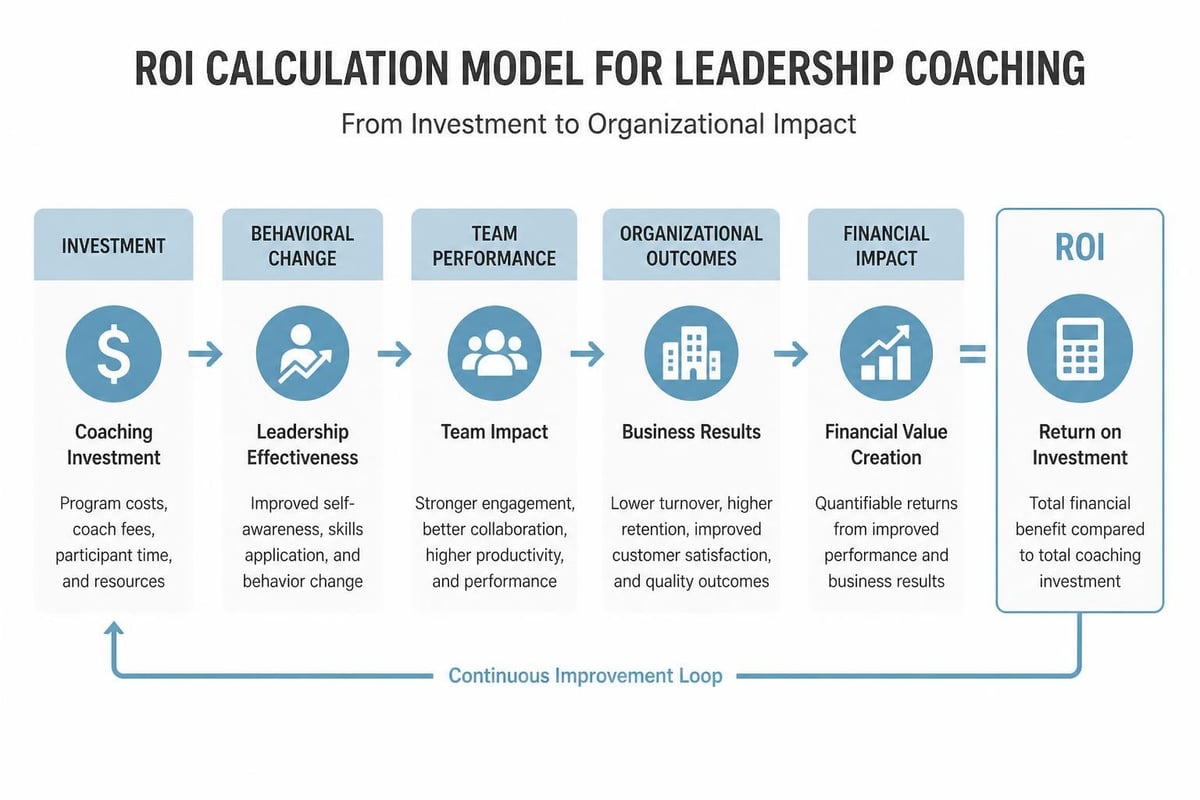
- Return on investment calculated through retained talent value and performance improvements
The organizations we work with that achieve measurable results track all three categories. Those struggling to demonstrate ROI typically track only the first or none at all.
When determining appropriate topics for leadership coaching, organizations should start with outcomes they need to change, not curricula they want to deliver.
The Competitive Advantage Hiding in Plain Sight
Research from Harvard Business Publishing’s Global Leadership Development Study shows that organizations using fast, fluid, future-focused learning approaches achieve 37% higher leadership readiness. Yet most organizations still design development programs that require months to deploy and cannot adapt to changing needs.
The competitive advantage in 2027 belongs to organizations that can:
- Diagnose leadership gaps with precision using validated behavioral assessments
- Match leaders to specialized expertise based on organizational context and individual needs
- Deploy interventions rapidly when challenges emerge, not quarters later
- Measure impact continuously and adjust strategies based on evidence
- Scale solutions efficiently across distributed organizations and diverse populations
These capabilities require different infrastructure than traditional training departments provide. They require technology platforms, coach networks, assessment tools, and measurement systems that most organizations have not yet built.
Organizations asking "how much does business coaching cost" are asking the wrong question. The right question is: what is the cost of leadership failure, and how do we prevent it?
Building the Leadership Development Function for 2027 and Beyond
For CHROs and L&D executives preparing for the future of leadership development in 2027, here is what early evidence suggests about infrastructure requirements:
Diagnostic Capability:
- Access to validated behavioral assessment tools beyond traditional 360 feedback
- Partnerships with industrial-organizational psychologists or assessment specialists
- Data systems that track leadership performance over time, not just at development milestones
Coach Network Quality:
- Credentialed coaches with demonstrated expertise in your industry and challenge areas
- Verification systems for coach outcomes, not just credentials
- Matching algorithms or processes that go beyond availability and location
Measurement Systems:
- KPI frameworks that connect leadership behavior to organizational outcomes
- Stakeholder feedback mechanisms providing real-time intervention guidance
- ROI models that quantify the value of leadership improvement
Governance and Compliance:
- Development approaches that meet regulatory and ethical standards in your industry
- Privacy and confidentiality protocols for sensitive leadership challenges
- Audit trails demonstrating appropriate use of development resources
Organizations building these capabilities now will lead their industries. Those waiting for consensus will spend 2027 explaining why their leadership pipeline failed.
Frequently Asked Questions
What makes leadership development in 2027 different from previous years?
The difference is precision and proof. Organizations can no longer justify leadership development based on participation and satisfaction scores. Boards and executive teams demand behavioral diagnostics, targeted interventions matched to specific challenges, and measurable improvements in leadership impact. AI-augmented assessment and coach matching make this precision possible for the first time.
How do you measure the ROI of leadership coaching in 2027?
Effective ROI measurement tracks three dimensions: behavioral change validated by stakeholders, organizational impact through team performance and retention metrics, and business outcomes including strategic initiative completion and cost of leadership failure prevention. Organizations should calculate ROI by comparing development investment to the value of retained talent, improved team productivity, and prevented leadership crises.
What are the biggest mistakes organizations make in leadership development?
The most costly mistakes are treating leadership development as a training program rather than a diagnostic discipline, selecting coaches based on cost and availability instead of expertise and fit, measuring outputs like hours trained rather than outcomes like behavioral change, and designing generic programs when leaders need customized interventions for specific challenges.
How should organizations choose between internal leadership programs and external coaching?
The choice depends on the challenge. Internal programs work for knowledge transfer and culture building. External coaching delivers results for behavioral change, performance improvement, toxic leadership intervention, and executive-level strategic challenges. The highest-performing organizations use both strategically, deploying each where it creates the most value.
What role does AI play in the future of leadership development?
AI augments human judgment in leadership development through three critical functions: analyzing behavioral patterns that human observation misses, matching leaders to coaches with precision based on diagnostic data and organizational context, and continuously measuring intervention effectiveness to guide real-time adjustments. AI does not replace human coaching but makes it dramatically more effective.
The future of leadership development in 2027 separates organizations that treat leadership as a strategic capability from those that treat it as an HR program. The evidence is clear: precision diagnostics, targeted interventions, specialized coach matching, and rigorous measurement deliver results that traditional approaches cannot match. Organizations that continue investing in legacy programs while competitors adopt evidence-based models will find themselves explaining persistent leadership gaps to boards and stakeholders who increasingly demand accountability. Noomii Leadership Coaching provides the diagnostic precision, coach matching algorithms, and measurable intervention frameworks that help government agencies and Fortune 500 companies transform leadership development from a compliance cost into a competitive advantage.


Leave a Reply
Want to join the discussion?Feel free to contribute!