Mastermind Coach: What Works Beyond Hype in 2026
The mastermind coach market has exploded since 2020, but most groups dissolve within six months. Why? Because running a high-performing peer group requires more than scheduling calls and collecting checks. The best mastermind coaches build structured frameworks, enforce accountability, and tie outcomes to business KPIs-not just facilitated conversation and emotional support. If you're evaluating a mastermind coach for your leadership team or considering running groups yourself, understanding what separates effective facilitation from expensive networking matters more than ever.
What a Mastermind Coach Actually Does
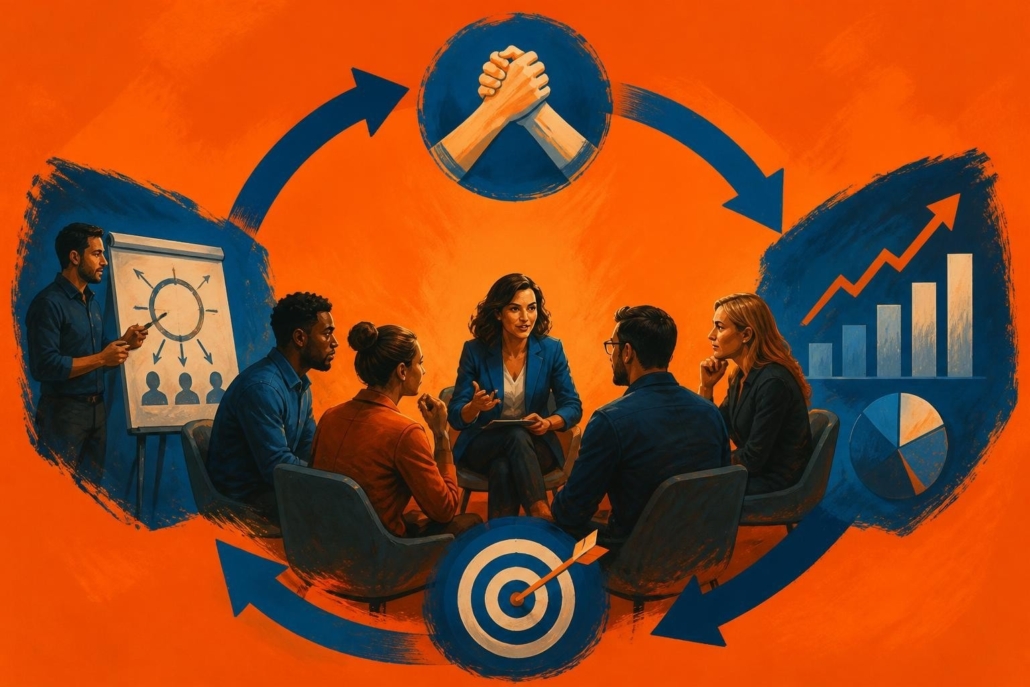
A mastermind coach facilitates structured peer groups where leaders solve real problems, share insights, and hold each other accountable to measurable outcomes. Unlike traditional executive coaching, which focuses on one-on-one development, the mastermind format leverages collective intelligence and peer pressure.
The role breaks down into three core functions:
- Curating the right mix of participants based on experience, industry, challenge type, and psychological safety needs
- Designing frameworks for problem-solving, decision-making, and progress tracking across sessions
- Holding accountability through structured check-ins, KPI reviews, and consequence mechanisms when members don't follow through
The best mastermind coaches don't just moderate discussion. They diagnose stuck patterns, redirect unproductive conversations, and push members toward actionable commitments with clear metrics.
The Hidden Risk Most Groups Miss
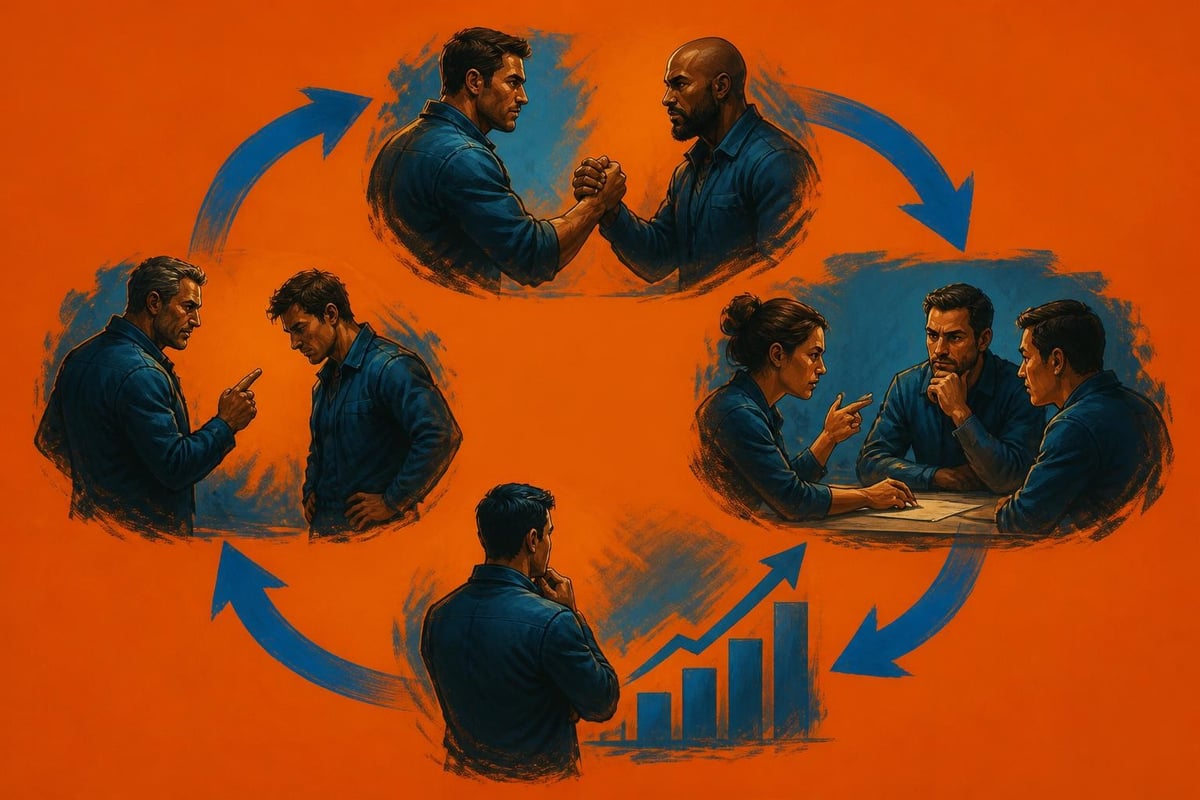
Here's what certification programs and marketing materials won't tell you: peer influence in group mentoring can propagate both positive behaviors and negative patterns. Research shows that poorly designed groups create peer contagion, where low accountability, excuse-making, and analysis paralysis spread across members.
I've watched leadership teams pay $15,000 per person annually for mastermind groups that became expensive therapy sessions. No KPIs. No execution tracking. Just endless storytelling and commiseration.
The difference? Structure, diagnosis, and facilitation skill-not the coach's credential count.
How Effective Mastermind Coaches Build Groups That Last
Most mastermind groups fail because facilitators confuse community building with performance improvement. Harvard Business Review's research on peer groups confirms what experienced coaches already know: structure, norms, and clear outcomes determine success more than participant enthusiasm or network size.
The Framework That Works
| Component | What Fails | What Works |
|---|---|---|
| Member selection | Open enrollment, anyone who pays | Screened criteria: revenue stage, challenge type, commitment level |
| Meeting cadence | Monthly or inconsistent | Bi-weekly with strict attendance policy and pre-work |
| Accountability | Self-reported progress | KPI scorecards reviewed by peers with consequences for missed commitments |
| Facilitation | Rotating leadership or minimal intervention | Trained facilitator who diagnoses patterns and redirects |
| Duration | Open-ended or 12-month minimum | 6-month pilot with clear exit criteria and renewal based on results |
Effective leadership coaches running mastermind groups use operating cadences similar to EOS or Scaling Up: same day, same time, same agenda format. They track leading indicators (actions taken) and lagging indicators (revenue, retention, team engagement) across every cycle.
The goal isn't connection. It's measurable behavior change that shows up in business outcomes.
Mastermind Coach vs. Traditional Executive Coaching
The choice between a mastermind coach and individual executive coaching depends on the problem you're solving and the leader's readiness for peer accountability.
Mastermind coaching works best when:
- Leaders need diverse perspectives from peers facing similar challenges
- The organization wants to build internal peer accountability systems
- Budget constraints make one-on-one coaching cost-prohibitive for multiple leaders
- Problems require pattern recognition across industries or functions
- Isolation at the top creates blind spots that peers can expose
Traditional executive coaching works better when:
- The leader needs confidential space for sensitive issues (board conflicts, performance management, career transitions)
- Deep behavioral change requires sustained one-on-one diagnosis and practice
- The problem is highly technical or role-specific rather than broadly strategic
- The executive's schedule or geography makes consistent group participation impossible
I've seen companies waste money on mastermind programs when leaders actually needed intensive executive coaching to address core competency gaps. Conversely, I've watched expensive one-on-one engagements drag on for years when a well-run peer group would have accelerated progress through accountability and diverse input.

What Buyers Miss When Evaluating Mastermind Coaches
Most organizations select mastermind coaches based on personality, network size, or credentials. Here's what actually predicts success:
- Track record of measurable outcomes in groups they've run (revenue growth, retention improvement, promotion rates, not testimonials)
- Proprietary diagnostic frameworks for member selection, problem categorization, and progress measurement
- Accountability mechanisms with teeth (financial consequences, public commitments, group exit criteria)
- Facilitation training specific to group dynamics, not just general coaching certification
- Privacy and confidentiality protocols, especially critical as adaptive peer-group assignment methods become more sophisticated in digital coaching platforms
Ask prospective coaches for their retention data, not their credential alphabet soup. A mastermind coach with 80% annual retention and documented KPI improvements beats an ICF Master Certified Coach with beautiful marketing and vague transformation stories.
Running Your Own Mastermind Groups: What Actually Matters
If you're a coach or internal leadership developer considering launching mastermind groups, understand that running effective mastermind groups requires different skills than one-on-one coaching or training delivery.
Critical Success Factors
Start small and prove value. Launch with 6-8 carefully selected participants, run a 6-month pilot, and track specific KPIs. Don't scale until you've refined your process and can point to measurable outcomes.
Build real consequences into your accountability system. Financial deposits forfeited for missed commitments. Public progress reviews. Clear exit criteria for members who don't execute. Without consequences, accountability becomes suggestion.
Invest in facilitation skill, not just content expertise. Learn to diagnose group dysfunction, redirect status-seeking behavior, manage dominant personalities, and draw out quiet high-performers. These skills matter more than your resume.
Track both leading and lagging indicators. Weekly actions completed (leading). Quarterly revenue, retention, engagement scores (lagging). Share aggregate data with the group monthly to maintain focus on outcomes.
Organizations building internal peer coaching or mastermind programs often underestimate the facilitation training required. Your high-performing VP who's great at running team meetings probably lacks the diagnostic skill to manage peer group dynamics effectively. Business coaches with group facilitation experience can accelerate your internal capability development.

When Mastermind Coaching Becomes Expensive Networking
Here's the uncomfortable truth: many mastermind programs deliver networking value but minimal performance improvement. Members enjoy the community, make connections, and feel supported. But their businesses don't materially improve.
Red flags that signal low-value mastermind coaching:
- No pre-work or preparation required for sessions
- Facilitator rarely interrupts or redirects conversation
- Members share updates but don't commit to specific actions with deadlines
- No tracking of commitments or follow-up on missed actions
- Group size exceeds 10 (impossible to maintain real accountability)
- Sessions focus on strategy discussion rather than execution gaps
- No measurement of business outcomes tied to participation
The best mastermind coaches run tight ships. They're not universally loved because they push harder than members expect. They call out patterns. They enforce commitments. They exit members who don't execute.
If you want a supportive professional community, networking groups and peer circles serve that purpose beautifully. If you want business results, hire a mastermind coach who measures outcomes and holds real accountability.
Frequently Asked Questions
What qualifications should a mastermind coach have?
Focus on facilitation track record and measurable outcomes from previous groups, not coaching certifications. Look for evidence of structured frameworks, accountability mechanisms, and business results (revenue growth, retention improvement, promotion rates). Ask for retention data and references from past participants who can speak to specific KPI improvements, not general satisfaction.
How much does mastermind coaching typically cost?
Prices range from $500 to $5,000+ per person monthly, depending on facilitator experience, group size, meeting frequency, and support between sessions. High-end programs often include one-on-one coaching, custom diagnostics, and unlimited access between group calls. Evaluate cost against measurable outcomes expected and accountability mechanisms in place, not just meeting frequency or facilitator credentials. For budget planning, our guide to mastermind coach pricing breaks down what the monthly rates actually cover.
How is a mastermind coach different from a facilitator?
A mastermind coach combines facilitation skill with diagnostic ability and accountability enforcement. They don't just manage airtime and agenda-they identify stuck patterns, redirect unproductive discussion, push members toward specific commitments, and track outcomes across cycles. Facilitators keep conversation flowing; coaches drive behavior change tied to business results.
What's the ideal size for a mastermind group?
Six to eight members works best for real accountability and deep discussion. Below six, you lose diverse perspectives and group energy. Above ten, individual airtime and accountability collapse. If a coach runs groups larger than twelve, question whether genuine peer coaching is possible or if it's primarily networking and content delivery.
How long should I commit to a mastermind group?
Start with a six-month pilot if the coach allows it. Avoid programs requiring twelve-month minimum commitments upfront. Month-to-month or quarterly renewals tied to demonstrated progress protect you from low-value programs. The best coaches earn renewal through visible results, not contractual lock-in.
Can mastermind coaching work for remote teams?
Yes, when structured properly. Virtual groups require stricter accountability mechanisms, pre-work requirements, and between-session communication to maintain engagement. Look for coaches experienced in virtual facilitation who use collaborative tools, async updates, and KPI tracking platforms. Geography matters less than structure and accountability.
What problems are best solved in mastermind groups versus one-on-one coaching?
Mastermind groups excel at strategic challenges, cross-functional leadership, scaling issues, and problems requiring diverse perspectives. One-on-one coaching works better for behavioral gaps, sensitive personnel issues, technical skill development, and situations requiring confidentiality. If the problem benefits from pattern recognition across industries, choose group. If it requires intensive practice and feedback, choose individual.
How do I measure ROI from mastermind coaching?
Track specific KPIs before and during participation: revenue growth, client retention, employee engagement scores, time to decision, manager coaching frequency, priority execution rates. Compare against baseline and control groups when possible. Avoid relying solely on satisfaction scores or self-reported transformation. Demand business metrics that matter to your organization.
What should happen in the first mastermind session?
Effective coaches use session one for norms, commitments, baseline assessment, and initial problem diagnosis-not networking and introductions. Members should leave with specific actions, deadlines, and accountability partners assigned. If the first session feels like a social event rather than a working session, reconsider the coach's approach.
Mastermind coaching delivers results when structure, accountability, and outcome measurement replace facilitated conversation and credential worship. The best coaches enforce commitments, track KPIs, and build groups that drive measurable business improvement-not just connection. If your leadership team needs practical peer accountability tied to clear outcomes, Noomii connects you with experienced coaches who coach live in your context and measure progress against business results, not just satisfaction scores.



Leave a Reply
Want to join the discussion?Feel free to contribute!