
Professional Personal Trainer Skills for Leaders
The connection between a professional personal trainer and effective corporate leadership runs deeper than most executives realize. Both disciplines share fundamental principles: structured accountability, measurable progress, customized approaches, and relentless focus on outcomes. When mid-market companies examine what makes fitness professionals successful, they discover transferable frameworks that transform managers into coaches who drive real business results. Understanding these parallels helps organizations build stronger teams and more accountable leaders in 2026.
The Certification Foundation Every Professional Personal Trainer Masters
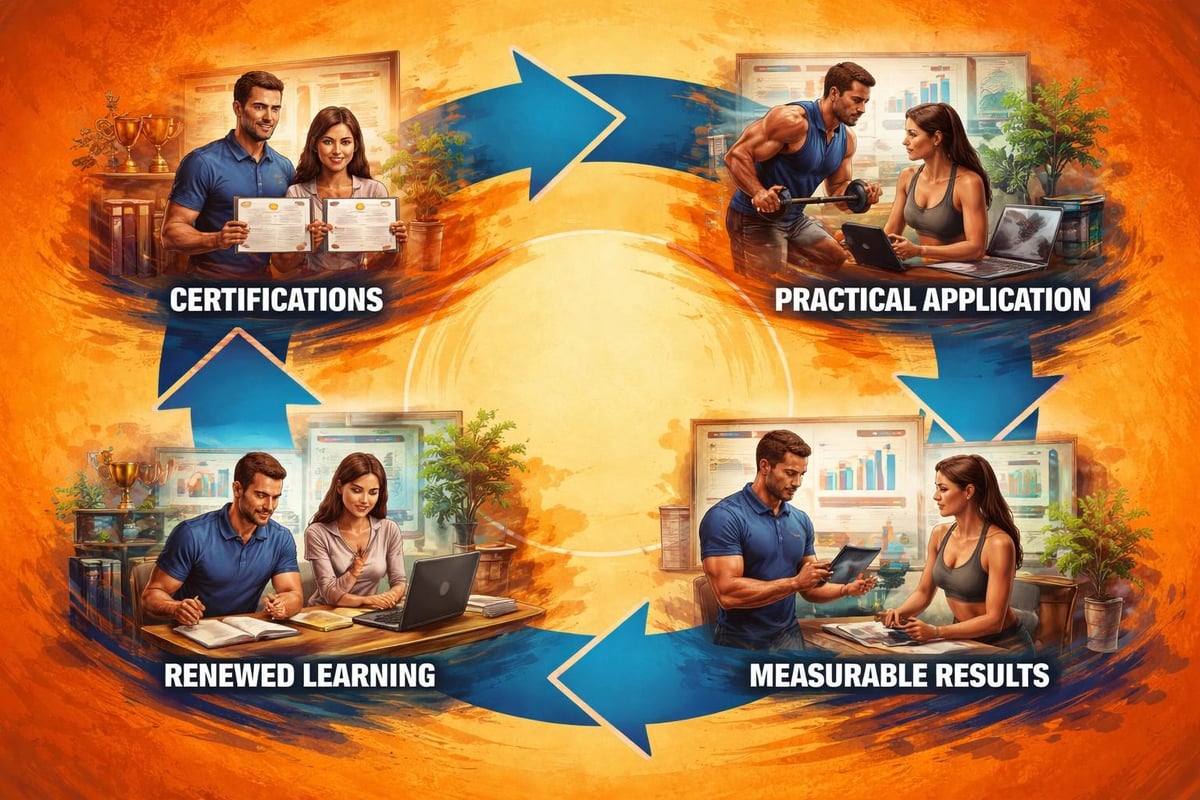
A professional personal trainer invests significant time earning credentials from recognized organizations. The journey to becoming a certified fitness professional involves rigorous certification requirements that test both theoretical knowledge and practical application. Similarly, effective corporate coaches need structured preparation, though business leadership demands different validation.
While fitness trainers pursue credentials from institutions like NASM or NSCA, business leaders benefit from frameworks that prove competence through results rather than certificates alone. The prerequisites for certification exams in fitness include CPR/AED training and foundational education, yet corporate coaching requires real-world experience driving KPIs, leading difficult conversations, and executing strategy.
Building Competence Through Continuous Development
Professional development never stops for serious fitness professionals. The personal trainer recertification process mandates continuing education units to maintain credentials. This commitment to growth mirrors what exceptional business coaches embrace throughout their careers.
Key development areas include:
- Assessment methodologies that reveal true starting points
- Progressive programming that builds capability systematically
- Communication techniques that motivate without manipulation
- Measurement systems that prove ROI and justify investment
- Adaptive strategies when clients plateau or resist change
Organizations seeking leadership coaching services should prioritize coaches who demonstrate this same commitment to evolution. The best corporate coaches combine theory with hands-on execution, showing up in meetings and coaching managers through real decisions rather than delivering abstract frameworks.
What Makes Professional Personal Trainers Effective With Clients
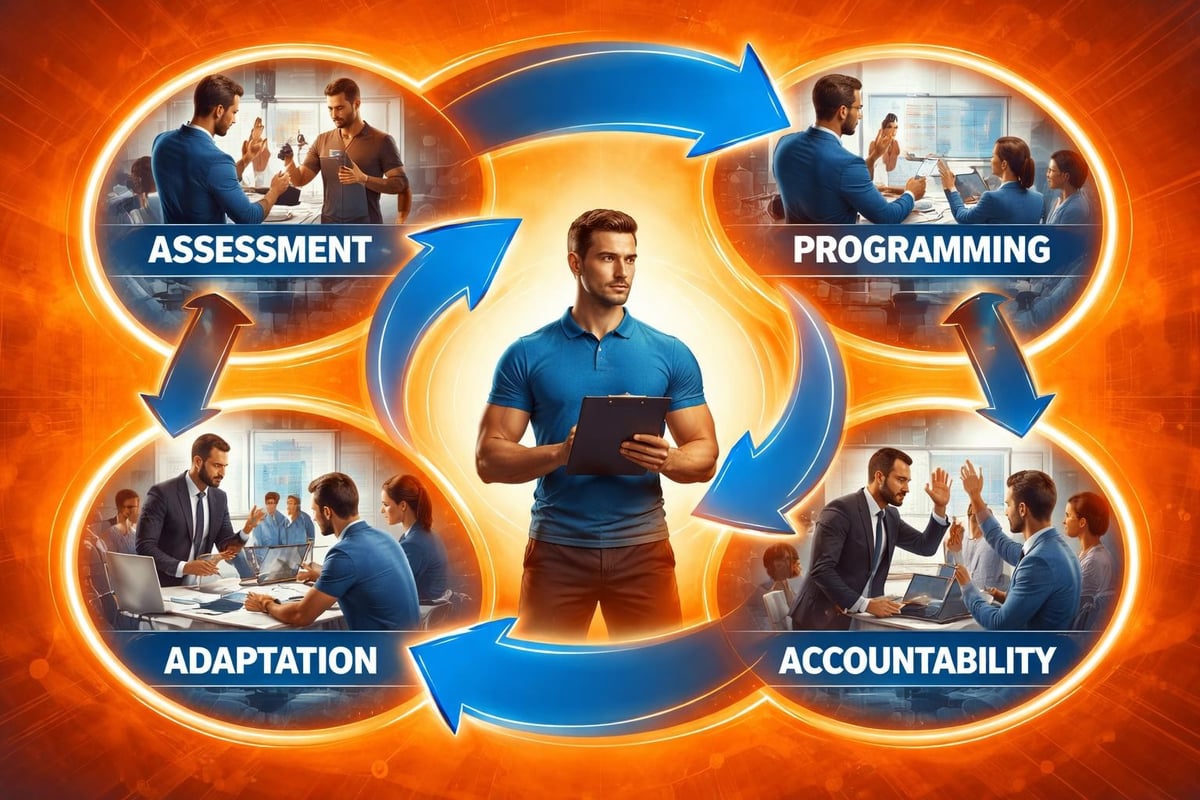
The most successful professional personal trainer knows that credentials mean nothing without client results. They master personalized assessment, create accountability structures, track progress obsessively, and adjust approaches based on data. These same principles separate transformational corporate coaching from expensive talking sessions.
Assessment Before Action
Fitness professionals begin with comprehensive evaluations of strength, mobility, goals, and limitations. Corporate coaches must conduct similar diagnostics through 360 leadership assessments that reveal blind spots, team perceptions, and capability gaps. This foundation prevents wasted effort on wrong priorities.
| Fitness Assessment | Corporate Leadership Assessment |
|---|---|
| Body composition analysis | Team engagement scores |
| Movement screening | Communication effectiveness ratings |
| Goal clarification | KPI performance baseline |
| Medical history review | Organizational context mapping |
| Fitness level testing | Decision-making speed evaluation |
The parallel extends to customization. Just as a professional personal trainer would never prescribe identical programs for a marathon runner and a powerlifter, effective corporate coaches tailor approaches based on company stage, industry dynamics, and specific business challenges facing mid-market teams.
Creating Accountability That Drives Action
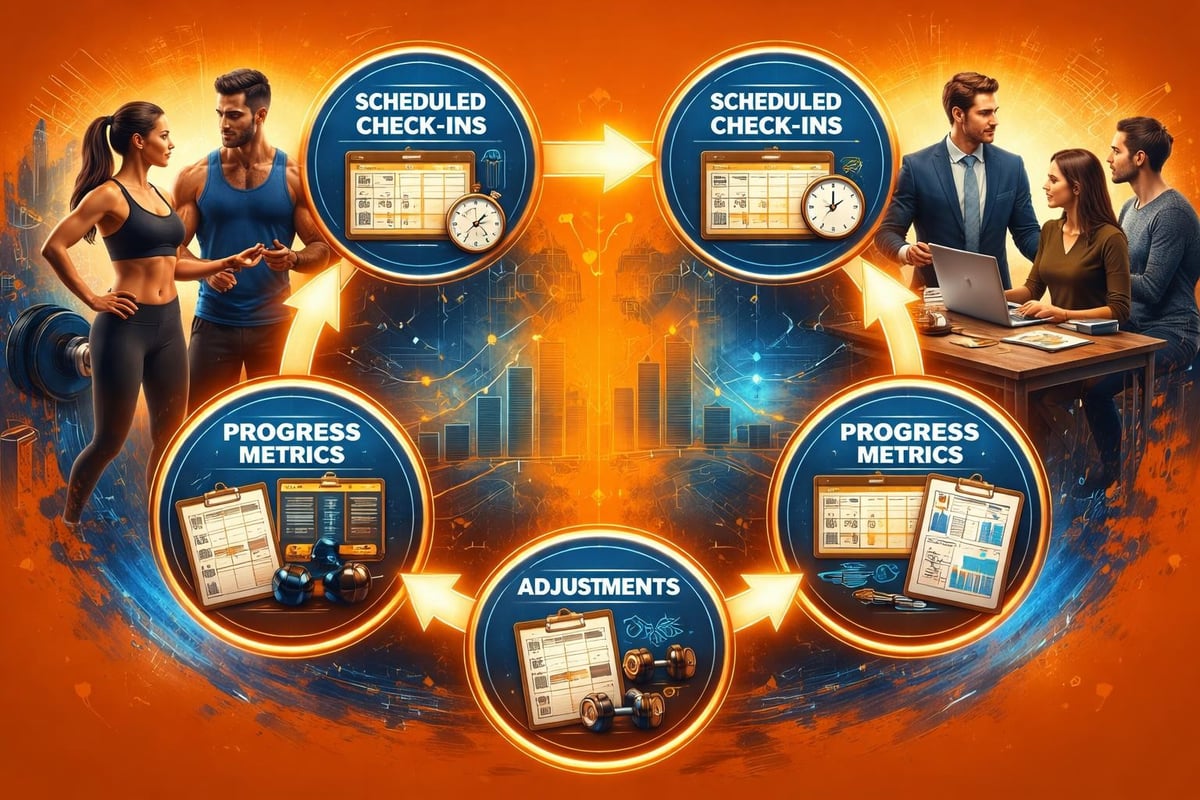
Every professional personal trainer understands that clients need external accountability to overcome inertia. They schedule sessions, track attendance, measure progress, and create consequences for missed commitments. Corporate leaders require the same structure to maintain focus amid competing demands.
Accountability mechanisms that work:
- Weekly coaching sessions tied to specific business outcomes
- KPI scorecards reviewed in every meeting
- Clear ownership assignments with deadline tracking
- Regular team check-ins with transparent progress sharing
- Consequences and rewards aligned to measurable results
Organizations working with team coaching providers should expect this same rigor. Month-to-month engagements with visible progress milestones ensure coaches earn continued partnership rather than coast on long contracts.
The Continuous Education Mindset Separating Good From Great
Continuing education for personal trainers keeps professionals current with evolving research, techniques, and client needs. The fitness industry constantly produces new studies on nutrition, recovery, training methodologies, and injury prevention. Trainers who ignore these advances become obsolete.
Corporate coaches face identical pressure. Business environments shift faster than ever in 2026. Remote work evolution, AI integration, generational workforce changes, and economic volatility demand coaches who stay ahead of trends rather than recycle decade-old frameworks.
Why Professional Development Matters More Now
The importance of ongoing education extends beyond maintaining credentials. It builds credibility with sophisticated clients who spot outdated thinking immediately. When executives evaluate potential coaching partners, they look for evidence of current expertise and fresh approaches.
Smart coaches invest in learning the same way a professional personal trainer pursues specialized certifications. They study emerging leadership research, experiment with new facilitation techniques, and bring tested innovations to client engagements. This commitment shows up in results when executive coaching transforms stalled teams into execution machines.
Translating Fitness Principles Into Business Leadership
The qualifications needed to become a personal trainer provide a template for developing corporate coaches. Both roles require understanding human motivation, creating behavior change, measuring progress objectively, and adapting when approaches fail.
Building Your Internal Coaching Capability
Mid-market companies often ask whether they should hire external coaches or develop internal talent. The answer mirrors fitness: serious athletes hire professional personal trainers for expertise and accountability, while also building personal discipline for daily execution.
Internal development priorities:
- Train managers to coach conversations rather than dictate solutions
- Install operating rhythms with weekly team huddles and monthly reviews
- Create scorecard discipline tracking leading and lagging indicators
- Build feedback cultures where truth flows upward without political filtering
- Develop facilitation skills so leaders run meetings that drive decisions
Companies can explore resources like Accountability Now to strengthen internal systems while partnering with experienced coaches for complex challenges. The combination accelerates capability building faster than either approach alone.
Measuring What Matters
A professional personal trainer tracks body composition, strength gains, endurance improvements, and functional movement quality. Corporate coaches must pursue equal measurement rigor through engagement scores, retention rates, revenue per employee, decision cycle time, and goal completion percentages.
| Fitness Metrics | Corporate Performance Metrics |
|---|---|
| Weight and body fat percentage | Revenue growth and profit margin |
| Strength test results | Employee engagement scores |
| Workout completion rate | Project delivery on time/budget |
| Injury prevention success | Turnover and retention rates |
| Client satisfaction scores | Customer NPS and satisfaction |
The comprehensive guide on becoming a personal trainer emphasizes measurement discipline as non-negotiable. Business leaders should demand identical standards from corporate coaches, refusing vague promises in favor of concrete KPIs tied to coaching interventions.
Avoiding Common Pitfalls That Derail Progress
Professional personal trainers encounter predictable challenges: clients who skip sessions, ignore nutrition guidance, overtrain, or quit when progress slows. Corporate coaching faces parallel obstacles when leaders resist feedback, teams avoid difficult conversations, or organizations expect transformation without changing behavior.
The certification policies and procedures for fitness professionals emphasize standards that prevent these failures. Corporate coaching needs similar guardrails. Month-to-month terms create healthy pressure for coaches to deliver visible value continuously rather than lock clients into long contracts with minimal accountability.
Red flags indicating coaching will fail:
- Focus on theory and frameworks rather than live application
- No clear KPIs defining success before engagement starts
- Unwillingness to coach in real meetings where decisions happen
- Long-term contracts without performance milestones
- Resistance to measuring ROI or business impact
Organizations seeking performance coaching should screen providers for these warning signs. The best coaches welcome accountability, tie compensation to results when possible, and prove value quickly enough that clients choose to continue rather than feel trapped by contracts.
Professional personal trainers succeed by combining certified expertise with relentless accountability and measurable results, the exact formula that transforms corporate teams. When mid-market companies apply these fitness principles to leadership development, they build managers who coach effectively, teams that execute cleanly, and cultures where accountability drives continuous improvement. Noomii delivers this practical approach to corporate coaching, working month-to-month with no long contracts, coaching live in your meetings, and tying every intervention to clear KPIs that prove ROI. If you want leadership development that produces visible business results rather than theoretical frameworks, explore how Noomii's hands-on coaching transforms teams into execution engines.


Leave a Reply
Want to join the discussion?Feel free to contribute!