

ICF Will Not Fix a Lead Generation Problem
Every month, hundreds of coaches invest thousands of dollars and hundreds of hours pursuing ICF credentials, convinced the letters after their name will solve their empty pipeline. The brutal truth is that ICf will not fix a lead generation problem. This reality hits hardest six months after certification, when the inbox stays quiet and the calendar remains empty despite the shiny new credentials. The coaches who thrive understand that credentials might reassure existing prospects, but they don't create demand, build visibility, or fill calendars with qualified leads.
Why Coaches Confuse Credibility with Discoverability
The coaching industry has conditioned practitioners to believe certification equals client flow. Training programs sell the promise that credentials open doors, establish authority, and differentiate you in a crowded market. All of that can be true for buyers who already found you. The problem is getting found in the first place.
Certification solves a trust problem for prospects already in conversation with you. It does not solve the visibility problem that keeps you invisible to buyers actively searching for help. When a mid-market VP searches for "executive coach who can fix our broken operating cadence," Google doesn't rank coaches by certification status. According to Semrush’s ranking factors research, search visibility depends on content relevance, technical optimization, and backlink authority, not professional credentials.
The Three Lead Generation Problems Certification Cannot Fix
Problem one: You're invisible to buyers at the moment of intent. Google’s research on zero moment of truth shows buyers make decisions during micro-moments of active search. If your name, content, or offer doesn't appear when a buyer searches "leadership coach Dubai" or needs help with team dysfunction, your ICF credential is irrelevant. You weren't in the consideration set.
Problem two: Credentials don't build referral engines. Research from Harvard Business Review confirms referrals are contagious when you build systematic referral mechanisms, not when you add letters to your email signature. A well-designed referral strategy, as outlined in HBR’s effective referral framework, creates predictable client flow through intentional relationship architecture, not passive credential signaling.
Problem three: Certification doesn't teach you how to market. Most ICF programs focus on coaching competencies, ethics, and methodology. They don't teach SEO, content marketing, paid acquisition, partnership development, or outbound systems. You graduate qualified to coach but unprepared to fill a pipeline.
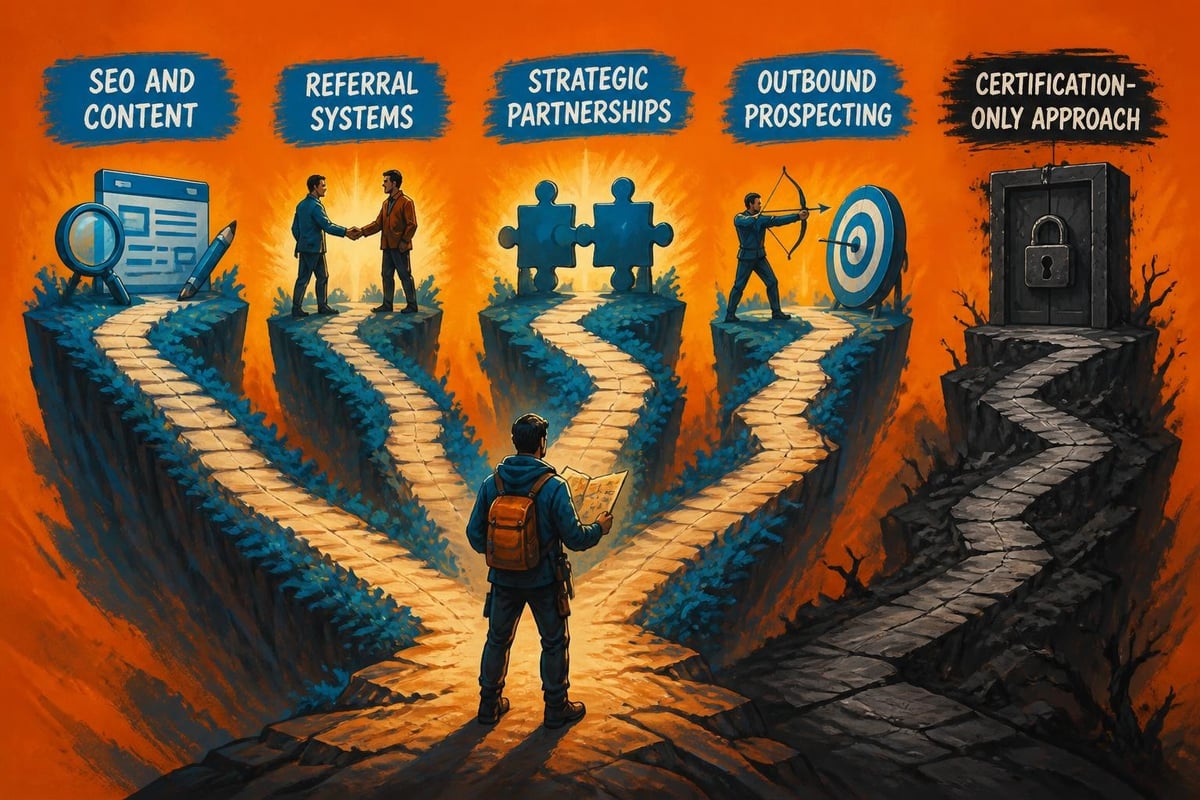
What Actually Generates Coaching Leads in 2026
The coaches with full calendars invest in visibility, not just credentials. Here's what works, supported by data and firsthand observation across thousands of coaching businesses.
Content and Search Visibility
Coaches who rank for buyer-intent keywords win more business than coaches with more credentials. A business coach in the Netherlands who publishes case studies, frameworks, and practical insights around Dutch mid-market challenges gets discovered by buyers searching for exactly that expertise.
According to HubSpot’s 2024 ROI report, content marketing and SEO deliver measurable lead generation at lower cost per acquisition than most other channels. The work is unglamorous: keyword research, regular publishing, technical optimization, backlink building. But it creates compounding visibility that certification cannot.
| Lead Source | Predictability | Cost | Credential Dependency |
|---|---|---|---|
| SEO/Content | High (6-12 months) | Medium | None |
| Referral Systems | High (immediate) | Low | Low |
| Paid Ads | Medium | High | Low |
| Networking | Low | Medium | Low |
| Credentials Alone | None | High | Complete |
Referral Architecture That Compounds
The most reliable lead source for established coaches is systematic referrals. This means building relationships with complementary service providers, creating structured referral incentives, and staying top-of-mind with past clients. Women-owned high-ticket service businesses scaling from $250K to $5M often work with firms like Rise Reign Rule to build operational systems that include partnership pipelines and referral mechanisms as core growth infrastructure.
A structured referral approach includes:
- Monthly touchpoints with past clients and referral partners
- Clear incentive structures that reward introductions
- Content that referral partners can share
- Public case studies that demonstrate outcomes
- CRM systems that track relationship warmth and follow-up
None of this requires ICF certification. It requires intentional relationship management and marketing discipline.
Niche Authority and Local Presence
Coaches who dominate specific niches or geographies generate more leads than generalists with better credentials. An executive coach in Japan who understands cross-cultural leadership challenges and publishes in both English and Japanese captures demand that credential-focused generalists miss entirely.
Similarly, coaches serving specific industries (private equity, healthcare, manufacturing) or functional areas (sales leadership, operational excellence, founder transitions) build reputations that attract buyer intent. When a PE-backed CEO needs help scaling a portfolio company, they ask their network for referrals to coaches who've done it before, not for ICF-credentialed generalists.

The Credential Paradox for Corporate Buyers
Corporate buyers evaluate coaches differently than individual clients. When a mid-market company with 150 employees needs leadership development, procurement teams care about outcomes, methodology, ROI measurement, and engagement structure more than certification status.
What Corporate Buyers Actually Evaluate
- Relevant experience in similar organizations, industries, or challenges
- Clear methodology with measurable KPIs and progress tracking
- References and case studies showing business outcomes
- Engagement flexibility including month-to-month terms and risk sharing
- Practical tools like 360 assessments, scorecards, and team facilitation
Certification might be a checkbox in RFP compliance, but it rarely determines vendor selection. The coach who demonstrates understanding of the buyer's specific operational challenges, proposes clear success metrics, and shares relevant case studies wins the contract.
Companies dealing with emotional dynamics in leadership teams might explore coaching models that integrate emotional intelligence frameworks. Firms like Pernett Coaching & Consulting LLC combine emotional coaching with communication strategies for Spanish-speaking professionals, showing how specialized approaches create differentiation beyond generic credentials.
Building a Lead Generation System That Works
Since icf will not fix a lead generation problem, what should coaches do instead? The answer is building multiple, systematic lead sources that compound over time.
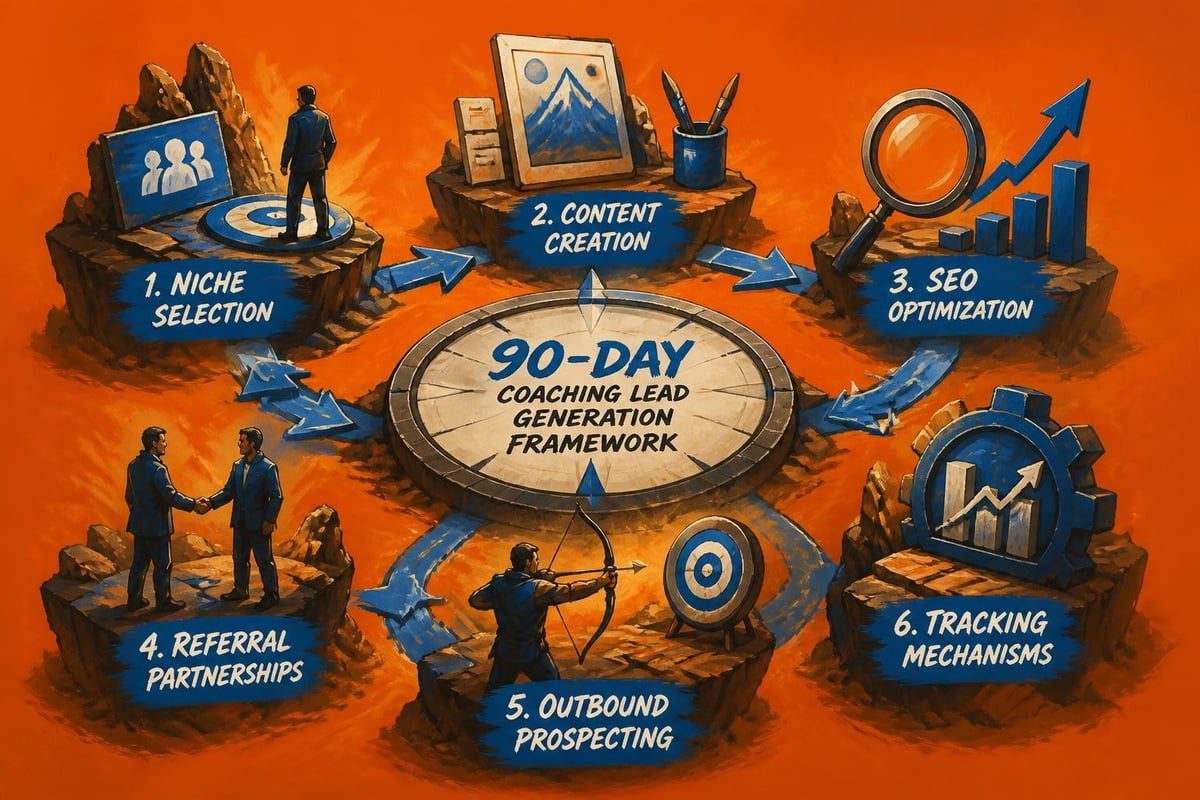
A Practical 90-Day Lead Generation Build
Month One: Foundation
- Choose a specific niche or buyer persona
- Build a simple website optimized for that audience
- Publish your first three case studies or frameworks
- Set up basic SEO following Google Search Central guidance
Month Two: Content and Visibility
- Publish weekly insights addressing buyer pain points
- Optimize content for buyer-intent keywords
- Reach out to ten potential referral partners
- Engage in one relevant community or forum daily
Month Three: Outbound and Relationships
- Launch structured outreach to 50 ideal prospects
- Formalize three referral partnerships
- Host a workshop or webinar for your niche
- Track which channels generate conversations
This approach creates visibility, builds relationships, and generates conversations. Notice certification appears nowhere in the plan.
The Hard Truth About Certification ROI
ICF certification costs between $3,000 and $15,000 when you include training, mentoring, exam fees, and credential maintenance. For the same investment, a coach could:
- Build a professionally designed website with SEO optimization
- Run six months of targeted paid ads to ideal buyers
- Attend three industry conferences where buyers gather
- Hire a fractional marketing professional for 20 hours
- Publish 50 pieces of keyword-optimized content
Each of these alternatives creates visibility and lead generation momentum that certification cannot. The point isn't that certification has no value, but that coaches must understand what problem it solves. Certification reassures prospects already in conversation. It does not create conversations.
Why This Matters for Corporate Coaching Especially
Corporate coaching faces unique lead generation challenges. Buying cycles are longer, decisions involve multiple stakeholders, and procurement processes favor established vendors. In this environment, icf will not fix a lead generation problem because corporate buyers evaluate coaching vendors on completely different criteria than individual clients.
Mid-market companies need coaches who understand operating cadences, KPI scorecards, 360 assessment tools, and team facilitation. They want month-to-month terms, clear ROI measurement, and coaches who can operate inside their meetings, not just in private sessions. Building a pipeline in corporate coaching means demonstrating business acumen, operational expertise, and outcome measurement, not credential collection.
Coaches who succeed in corporate markets invest in relationships with HR leaders, build case studies around business metrics (retention rates, promotion velocity, decision speed, execution quality), and develop proprietary tools that create differentiation. These coaches appear on corporate buyers' shortlists because they've built visibility and reputation in the right communities.
Frequently Asked Questions
Does ICF certification help with client trust once you're in conversation?
Yes, certification can reassure prospects during the evaluation phase by signaling professional training and ethical standards. It's most valuable when buyers are comparing multiple coaches and using credentials as a tiebreaker.
What lead generation channels work best for new coaches?
Referral development, niche content marketing, and strategic partnerships typically deliver the highest ROI for coaches in their first two years. Paid ads work when you have clear messaging and proven conversion.
How long does SEO take to generate coaching leads?
Most coaches see meaningful search traffic between six and twelve months of consistent content publication and technical optimization. The timeline depends on competition, content quality, and technical implementation.
Can coaches succeed without any certification?
Absolutely. Many successful coaches, especially in corporate and executive markets, build thriving practices based on industry expertise, business results, and referral networks without ICF or other credentials.
Should I pursue certification if I already have lead generation working?
If your pipeline is full and you want to improve coaching quality or meet specific client requirements, certification can add value. But don't pursue it expecting lead generation impact.
What's the minimum viable lead generation system?
A niche focus, basic website with SEO, three strong case studies, active presence in one relevant community, and systematic outreach to ten prospects weekly creates momentum for most coaches.
How do corporate buyers find coaches?
Through referrals from trusted advisors, industry communities, conference connections, Google searches for specific expertise, and LinkedIn presence in relevant groups and conversations.
Is paid advertising worth it for coaches?
Paid ads work when you have clear positioning, proven messaging, and conversion infrastructure. For most coaches, organic visibility and referrals deliver better ROI in the early stages.
What mistakes do certified coaches make with lead generation?
The biggest mistake is assuming credentials create demand. Coaches invest in certification then wonder why the phone doesn't ring, not realizing they've built zero visibility or discoverability.
Certification doesn't create clients, it reassures them. The coaches who build sustainable practices invest in visibility, relationships, and systematic lead generation long before they invest in credentials. If you need corporate coaching that delivers measurable business outcomes tied to clear KPIs and month-to-month accountability, explore how Noomii connects mid-market companies with experienced coaches focused on results, not credential worship.


Leave a Reply
Want to join the discussion?Feel free to contribute!