

Executive Leadership Coaching in Montreal: 2026 Guide
Montreal's corporate landscape demands leaders who can navigate bilingual markets, multicultural teams, and complex regulatory environments while driving measurable business results. Executive leadership and communication coaching in Montreal has become essential for organizations seeking to develop confident, adaptive leaders capable of addressing these unique challenges. The city's position as a major financial, technology, and aerospace hub creates specific leadership demands that generic development programs simply cannot address.
The Montreal Leadership Context: Why Communication Coaching Matters
Montreal presents distinctive leadership challenges that set it apart from other North American markets. Executives must communicate effectively across French and English-speaking stakeholders, navigate provincial regulations alongside federal requirements, and build cohesion across culturally diverse teams.
Key communication challenges for Montreal executives include:
- Bilingual stakeholder management requiring nuanced cultural awareness
- Cross-functional team leadership in highly regulated industries
- Executive presence in both Canadian and international contexts
- Board-level communication across government, private, and institutional sectors
Organizations investing in executive leadership and communication coaching in Montreal recognize these challenges demand specialized expertise. Generic leadership programs fail to address the linguistic subtleties and cultural dynamics that define successful executive communication in this market.
How Effective Communication Drives Executive Performance
Communication failures represent the primary cause of leadership derailment across organizations. Executives who cannot articulate vision, provide clear direction, or build trust through transparent dialogue create bottlenecks that cascade throughout their organizations.
Research on executive communication challenges demonstrates that targeted coaching interventions produce measurable improvements in stakeholder confidence, team alignment, and decision-making speed. These outcomes directly impact organizational performance metrics including employee engagement, retention, and revenue growth.

Evidence-Based Approaches to Executive Development
Effective executive leadership and communication coaching in Montreal begins with comprehensive diagnostic assessment. Organizations that skip this foundational step invest resources in solving the wrong problems or applying generic solutions to specific challenges.
Leadership Assessment Framework
| Assessment Type | Purpose | Measurable Outcomes |
|---|---|---|
| Behavioral Analysis | Identify communication patterns and leadership tendencies | Baseline scores on key competencies |
| 360-Degree Feedback | Gather stakeholder perspectives on executive effectiveness | Gap analysis between self-perception and team experience |
| Cultural Intelligence | Measure cross-cultural communication capabilities | Readiness scores for diverse team leadership |
| Strategic Communication | Evaluate clarity, consistency, and impact of messaging | Stakeholder alignment metrics |
These diagnostic tools provide the foundation for precision coach matching. The most effective executive coaching platforms leverage assessment data to pair executives with coaches who possess relevant sector expertise, cultural competencies, and proven track records addressing specific leadership challenges.
Organizations working with Noomii benefit from proprietary matching algorithms that analyze executive needs against a global network of certified coaches, ensuring optimal alignment between leader, coach, and organizational objectives.
Targeted Intervention Strategies
Generic leadership development fails because it addresses hypothetical challenges rather than actual performance gaps. Effective executive leadership and communication coaching in Montreal creates customized intervention plans based on diagnostic findings and organizational priorities.
Common intervention areas include:
- Strategic Communication Development – Building clarity and confidence in board presentations, investor communications, and public speaking
- Conflict Resolution Skills – Addressing team dysfunction, managing difficult conversations, and rebuilding trust after organizational change
- Cross-Cultural Leadership – Developing bilingual communication effectiveness and cultural intelligence for Montreal's unique market
- Executive Presence – Strengthening authority, credibility, and influence across diverse stakeholder groups
These targeted interventions integrate seamlessly with organizational systems. Rather than extracting leaders for isolated training sessions, effective coaching embeds development into real work contexts, allowing executives to apply new capabilities immediately and measure impact against business metrics.
Communication Coaching Methodologies That Deliver Results
Executive communication coaching encompasses multiple methodologies, each suited to specific leadership challenges. Understanding these approaches helps organizations select interventions aligned with their development objectives and cultural context.
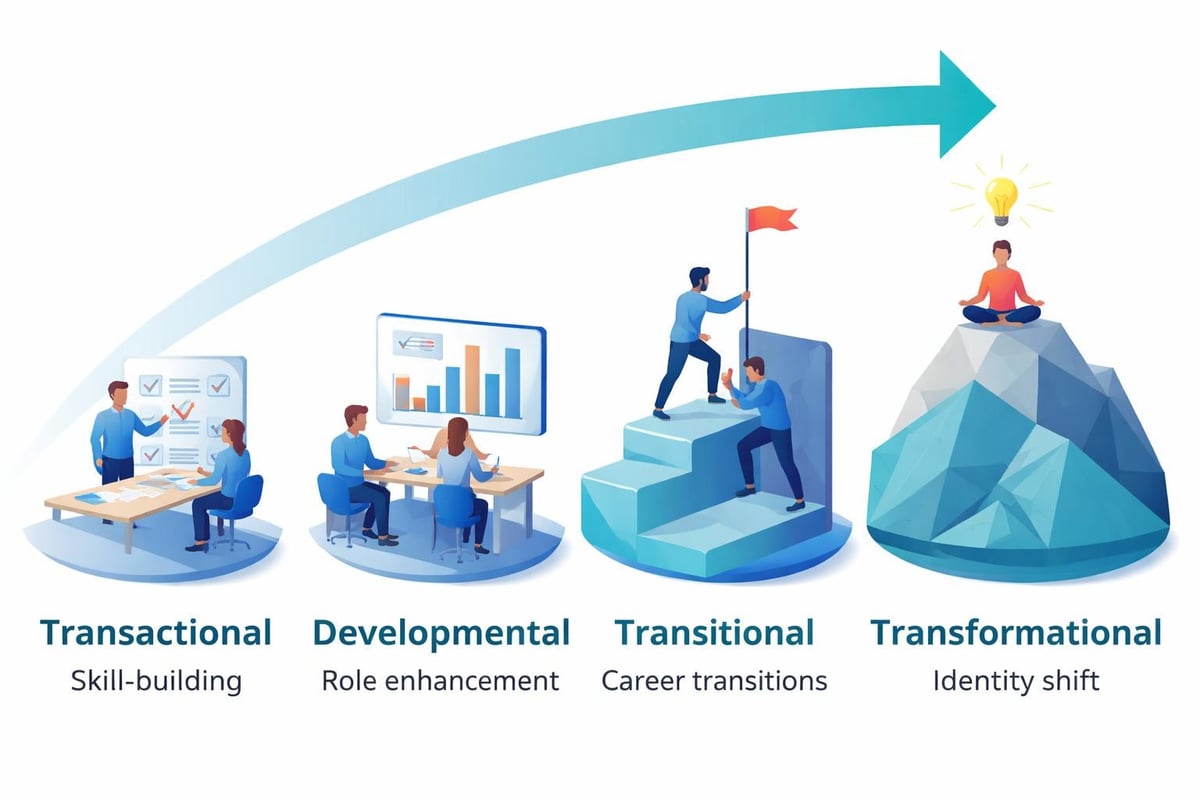
Transformational vs. Transactional Coaching
Transformational coaching addresses root causes of communication challenges, examining underlying beliefs, emotional patterns, and leadership identity. This approach suits executives experiencing significant role transitions, managing toxic leadership patterns, or rebuilding credibility after organizational setbacks.
Transactional coaching focuses on specific skill development and behavior modification. This methodology delivers results for executives requiring targeted improvements in presentation skills, meeting facilitation, or stakeholder management without requiring deep personal transformation.
The most effective programs combine both approaches. Best practices in executive coaching demonstrate that sustainable behavior change requires both skill development and deeper examination of leadership mindset and emotional intelligence.
Structured Communication Frameworks
Effective executive communication coaching provides structured frameworks that transform abstract concepts into actionable practices. These frameworks create shared language across leadership teams and enable consistent communication standards throughout organizations.
| Framework Component | Application | Business Impact |
|---|---|---|
| Message Architecture | Structuring complex information for different audiences | Reduced misalignment and rework |
| Stakeholder Mapping | Identifying communication needs across constituencies | Improved engagement and buy-in |
| Feedback Protocols | Delivering clear, actionable performance guidance | Accelerated team development |
| Crisis Communication | Managing high-stakes situations with clarity and confidence | Protected reputation and stakeholder trust |
Organizations implementing these frameworks through executive leadership and communication coaching in Montreal report measurable improvements in meeting effectiveness, decision velocity, and cross-functional collaboration. The key lies in customizing frameworks to organizational culture and industry context rather than applying generic templates.
Measuring Impact: KPIs for Executive Communication Development
Accountability separates effective coaching from feel-good exercises that waste organizational resources. Executive leadership and communication coaching in Montreal must demonstrate measurable impact through clearly defined key performance indicators aligned with business objectives.
Individual Executive Metrics
Tracking individual progress requires both quantitative and qualitative measures. Effective programs establish baseline measurements during assessment, set specific development targets, and track progress through regular check-ins and stakeholder feedback.
Individual KPIs include:
- 360-degree feedback score improvements in communication effectiveness
- Stakeholder confidence ratings measured quarterly
- Meeting effectiveness scores (clarity, decision-making, participation)
- Presentation impact assessments from board members and investors
- Direct report engagement scores correlated with communication practices
These metrics provide executives with concrete evidence of development progress and help organizations justify coaching investments through documented performance improvements.
Organizational Impact Indicators
Individual development means nothing if it fails to drive organizational results. The most sophisticated approaches to executive leadership and communication coaching in Montreal connect individual progress to broader organizational health metrics.
Consider these organizational indicators:
- Employee engagement scores within coached executives' divisions
- Retention rates for high-potential talent reporting to coached leaders
- Project completion rates and timeline adherence for coached executives' initiatives
- Cross-functional collaboration scores in areas where coached executives lead
- Customer satisfaction metrics influenced by executive-level relationships
Leadership coaching services that integrate these multilevel metrics demonstrate clear return on investment and build sustainable organizational commitment to leadership development.
The Montreal Advantage: Bilingual Leadership Development
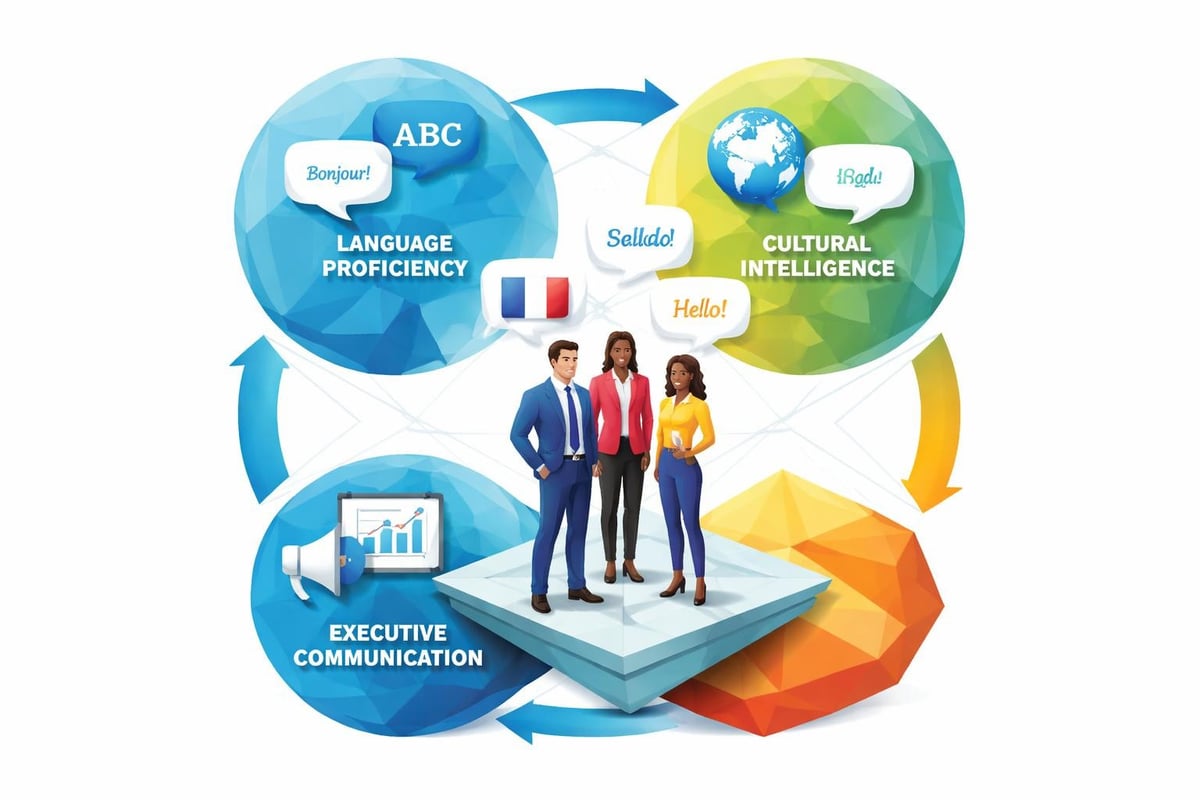
Executive leadership and communication coaching in Montreal addresses unique bilingual challenges that distinguish this market from other North American centers. Successful executives must navigate not just language translation but cultural nuance, regulatory differences, and stakeholder expectations that vary significantly between anglophone and francophone contexts.
Cultural Intelligence for Montreal Markets
Language fluency does not equal cultural competence. Executives require sophisticated understanding of how communication styles, decision-making norms, and relationship-building practices differ across linguistic communities within Montreal's corporate ecosystem.
Effective coaching develops this cultural intelligence through:
- Context-specific scenario practice – Role-playing stakeholder interactions across both linguistic communities
- Cultural dimension analysis – Understanding how power distance, uncertainty avoidance, and communication directness vary
- Regulatory navigation – Developing communication strategies that address Quebec-specific compliance requirements
- Stakeholder mapping – Identifying cultural considerations in board compositions, customer relationships, and government interactions
Organizations that invest in culturally-informed executive leadership and communication coaching in Montreal build leadership teams capable of leveraging the city's bilingual nature as competitive advantage rather than treating it as compliance burden.
Communication Strategies for Quebec's Regulatory Environment
Quebec's distinct regulatory framework creates specific communication requirements for executives. From language laws to industry-specific regulations, leaders must communicate compliance initiatives clearly while maintaining operational efficiency and employee engagement.
Executive communication strategy best practices emphasize clarity, brevity, and specificity. These principles become even more critical in Montreal's regulatory context, where miscommunication can trigger compliance violations, damage stakeholder relationships, or create public relations challenges.
Effective coaching helps executives develop communication protocols that:
- Ensure regulatory messaging reaches all stakeholder groups in appropriate languages
- Build transparency around compliance initiatives without creating unnecessary anxiety
- Position regulatory requirements as opportunities for operational excellence
- Develop crisis communication capabilities specific to Quebec's media and political landscape
Selecting the Right Executive Coach for Montreal Leaders
Coach selection represents the most critical decision in any executive development initiative. The wrong match wastes resources, damages executive confidence, and potentially reinforces counterproductive patterns. Montreal organizations require coaches who understand not just leadership principles but the specific market dynamics, cultural context, and regulatory environment that shape executive effectiveness.
Essential Coach Qualifications
Minimum qualifications for executive coaches include:
- Certified coaching credentials from recognized bodies (ICF, EMCC, or equivalent)
- Demonstrated executive-level business experience in relevant sectors
- Bilingual capabilities (French/English) for Montreal market
- Track record of measurable client outcomes documented through case studies
- Understanding of Quebec regulatory environment and cultural dynamics
Beyond these baseline requirements, the most effective coaches bring sector-specific expertise. An aerospace executive requires different coaching than a financial services leader, even when both face communication challenges. Industry knowledge enables coaches to provide contextually relevant guidance and credible challenge to executive thinking.
The precision matching approach used by team coaches ensures alignment between executive needs, coach capabilities, and organizational culture. This matching precision dramatically increases coaching effectiveness and return on investment.
Red Flags in Coach Selection
Organizations must watch for warning signs that indicate poor coach fit or questionable coaching practices. These red flags waste resources and potentially damage executive confidence.
Avoid coaches who:
- Promise specific outcomes without diagnostic assessment
- Rely primarily on generic frameworks rather than customized approaches
- Lack recent executive-level business experience
- Cannot provide documented case studies with measurable results
- Focus exclusively on mindset or motivation without addressing skill development
- Demonstrate limited understanding of Montreal's bilingual business context
The coaching industry contains numerous practitioners offering services based on certification alone rather than proven results. Organizations investing in executive leadership and communication coaching in Montreal deserve coaches with track records demonstrating measurable impact on executive performance and organizational outcomes.
Integration with Organizational Development Systems
Isolated coaching interventions produce limited impact. Executive leadership and communication coaching in Montreal delivers maximum value when integrated with broader organizational development systems, performance management processes, and strategic initiatives.
Alignment with Performance Management
Coaching objectives must align with formal performance expectations and organizational priorities. This alignment ensures executives apply coaching insights directly to business challenges while maintaining clear accountability for results.
| Integration Point | Coaching Contribution | Business Outcome |
|---|---|---|
| Annual Goal Setting | Communication objectives tied to strategic priorities | Clear expectations for executive impact |
| Quarterly Reviews | Progress assessment on development metrics | Real-time adjustment of coaching focus |
| Succession Planning | Leadership capability gaps addressed through targeted development | Stronger internal talent pipeline |
| 360 Feedback | Structured input integrated into coaching conversations | Stakeholder perspectives drive development priorities |
This systematic integration transforms coaching from nice-to-have development activity into strategic capability building that directly supports organizational performance.
Scalability Across Leadership Levels
Executive leadership and communication coaching in Montreal cannot remain confined to C-suite leaders. Organizations achieve greatest impact when coaching cascades throughout leadership levels, creating consistent communication standards and leadership practices across the enterprise.
Scalable approaches include:
- Executive cohort coaching – Group programs for senior leaders addressing shared challenges
- Manager development programs – Extending communication frameworks to middle management
- High-potential acceleration – Preparing emerging leaders for executive-level communication demands
- Board development – Coaching directors on governance communication and stakeholder engagement
Business development coaches working within this scalable framework create organizational cultures where effective communication and leadership excellence become embedded capabilities rather than individual competencies dependent on specific personalities.
ROI and Business Case Development
Finance leaders and boards demand clear return on investment before approving executive coaching budgets. Organizations must build compelling business cases that connect coaching investments to measurable business outcomes and competitive advantage.
Calculating Coaching ROI
ROI calculation framework:
- Define baseline metrics – Current performance on relevant KPIs before coaching intervention
- Establish intervention costs – Total investment including coach fees, executive time, and program management
- Track performance changes – Measure movement on defined metrics throughout coaching engagement
- Calculate impact value – Translate performance improvements into financial terms
- Compute ROI percentage – (Value of improvements – investment costs) / investment costs × 100
Organizations often struggle with step four, translating performance improvements into financial value. Consider these approaches:
Retention value: Calculate replacement costs for high-performing executives and multiply by retention rate improvements attributable to coaching
Productivity gains: Measure time savings from improved meeting effectiveness and decision velocity, converting hours saved into dollar value based on executive compensation
Revenue impact: Track revenue changes in business units led by coached executives, isolating coaching contribution from other variables
Engagement outcomes: Calculate cost reductions from lower turnover among teams led by coached executives, based on documented engagement score improvements
These calculations demonstrate that effective executive leadership and communication coaching in Montreal generates returns significantly exceeding investment costs, typically ranging from 3:1 to 7:1 for well-designed programs.
Building Internal Support
ROI calculations mean nothing without organizational champions who understand coaching value and advocate for sustained investment. Building this internal support requires strategic communication and stakeholder engagement throughout program design and implementation.
Key stakeholder groups include:
- Finance leaders – Require data-driven ROI demonstrations and cost containment strategies
- HR leadership – Need integration with existing development frameworks and succession planning
- Executive team – Want assurance that coaching aligns with strategic priorities and cultural values
- Board members – Expect governance oversight and risk mitigation in leadership development
Effective programs engage these stakeholders early, incorporate their input into program design, and provide regular progress updates demonstrating both individual development and organizational impact. This ongoing communication builds sustainable commitment to coaching as strategic capability investment rather than discretionary expense.
Government and Public Sector Applications
Executive leadership and communication coaching in Montreal serves not just private sector organizations but government agencies, crown corporations, and public institutions facing unique leadership challenges. These organizations operate under intense public scrutiny, complex stakeholder dynamics, and mission-driven mandates requiring specialized coaching approaches.
Public Sector Leadership Challenges
Government executives face communication demands distinct from private sector counterparts. They must balance political sensitivities with operational effectiveness, manage media relations under constant scrutiny, and build employee engagement despite budget constraints and bureaucratic complexity.
Critical development areas for public sector leaders include:
- Crisis communication during policy controversies or service disruptions
- Stakeholder management across elected officials, civil servants, and citizens
- Change leadership through restructuring and digital transformation initiatives
- Employee engagement in environments with limited financial incentives
- Transparency requirements balancing disclosure with strategic confidentiality
Top executive coaching firms serving government clients understand these unique dynamics and customize approaches accordingly. Generic private sector coaching methodologies often fail in public sector contexts due to fundamental differences in accountability structures and success metrics.
Compliance and Governance Standards
Public sector coaching programs must align with government procurement requirements, ethics standards, and governance protocols. Montreal organizations selecting coaches for government executives should verify:
- Security clearance capabilities – Ability to obtain required clearances for sensitive engagements
- Procurement compliance – Experience navigating government RFP processes and contract requirements
- Ethics standards – Understanding of conflict of interest rules and public service values
- Bilingual service delivery – Capacity to provide coaching in both official languages as required
- Documentation protocols – Familiarity with record-keeping requirements for public accountability
These compliance considerations add complexity but ensure coaching programs meet governance standards while delivering measurable leadership development outcomes.
Fortune 500 and Enterprise Applications
Large corporations operating in Montreal require executive leadership and communication coaching in Montreal that scales across global operations while addressing local market dynamics. These organizations invest significant resources in leadership development and demand sophisticated approaches demonstrating clear business impact.
Enterprise Coaching at Scale
Fortune 500 companies cannot provide individualized coaching to every executive. They require scalable models that maintain quality while reaching hundreds of leaders across multiple geographies and business units.
Scalable enterprise models include:
- Tiered coaching programs – Different intervention levels based on executive seniority and development needs
- Virtual coaching platforms – Technology-enabled delivery reducing travel costs and scheduling constraints
- Group coaching cohorts – Peer learning experiences supplementing individual sessions
- Internal coach certification – Building organizational coaching capability through HR and talent development teams
- On-demand coaching resources – Digital libraries, micro-learning modules, and AI-enabled practice tools
These scaled approaches maintain coaching effectiveness while managing program costs and enabling broader leadership impact. The key lies in strategic deployment, ensuring highest-touch coaching reaches executives with greatest organizational influence while providing appropriate support throughout leadership levels.
Retention and Succession Planning
Executive turnover costs Fortune 500 companies millions in recruitment fees, productivity losses, and competitive disadvantage. Communication skills that demonstrate clarity and confidence become critical retention factors, as executives leave organizations where they lack tools to succeed or feel unsupported in leadership challenges.
Coaching interventions reduce executive turnover through:
- Role transition support – Accelerating onboarding and capability development during promotions
- Performance rescue – Addressing struggling executives before termination becomes necessary
- Career pathing – Providing development clarity that increases internal mobility and reduces external recruitment
- Leadership bench strength – Preparing high-potentials for succession reducing external hire dependency
Organizations tracking these retention metrics demonstrate how executive leadership and communication coaching in Montreal protects talent investments while building sustainable leadership pipelines supporting long-term growth.
Emerging Trends in Executive Communication Coaching
The executive coaching landscape continues evolving as new technologies, changing workforce expectations, and global business dynamics reshape leadership requirements. Montreal organizations investing in coaching must understand these trends to ensure programs remain relevant and effective.
Technology-Enabled Coaching Delivery
Virtual coaching platforms expanded dramatically during recent years, creating new possibilities for flexible, cost-effective executive development. These platforms enable:
- Real-time feedback – Recording and analyzing executive presentations with AI-enhanced insights
- Practice environments – Virtual reality simulations for high-stakes communication scenarios
- Progress tracking – Dashboard analytics demonstrating development trajectory and ROI metrics
- Global coach access – Connecting Montreal executives with specialized coaches regardless of geography
Technology enhances rather than replaces human coaching relationships. The most effective programs blend virtual tools with live coaching sessions, leveraging technology for practice and feedback while maintaining human connection for reflection and strategic guidance.
Hybrid Work Communication Challenges
Remote and hybrid work environments create new executive communication challenges requiring adapted coaching approaches. Leaders must build presence and influence through screens, manage distributed teams effectively, and maintain organizational culture without physical proximity.
Hybrid-era coaching addresses:
- Virtual presentation skills optimized for video platforms
- Asynchronous communication strategies ensuring clarity without real-time interaction
- Remote team engagement techniques building connection across distances
- Digital body language awareness and screen presence development
These capabilities represent permanent additions to executive communication requirements. Even organizations returning to office environments maintain virtual stakeholder interactions requiring distinct communication competencies.
Choosing Between Internal and External Coaching Resources
Organizations face strategic decisions about building internal coaching capabilities versus engaging external coaches. Each approach offers distinct advantages and limitations affecting program effectiveness and return on investment.
Internal Coaching Programs
Advantages of internal coaching include:
- Deep organizational context and culture understanding
- Lower per-session costs after initial certification investment
- Immediate availability without procurement delays
- Integration with existing HR systems and processes
Limitations include:
- Potential confidentiality concerns limiting executive openness
- Limited fresh perspectives from external business contexts
- Restricted specialist expertise for complex leadership challenges
- Capacity constraints when balancing coaching with other responsibilities
Organizations with mature talent development functions and large executive populations often build hybrid models, deploying internal coaches for standard development needs while engaging external specialists for senior executives, complex interventions, or situations requiring complete confidentiality.
External Coach Engagement
External coaches bring objectivity, specialized expertise, and fresh perspectives that internal resources cannot replicate. They provide executives with confidential thinking partners unconstrained by organizational politics or internal relationships.
Executive communication coaching providers emphasize the value of external objectivity in helping leaders examine blind spots, challenge assumptions, and explore alternatives they might not consider with internal coaches aware of organizational sensitivities.
The decision between internal and external coaching depends on organizational size, leadership development maturity, budget parameters, and specific executive needs. Most sophisticated programs leverage both approaches strategically.
Executive leadership and communication coaching in Montreal delivers measurable organizational impact when designed with precision, aligned with strategic priorities, and executed by qualified professionals who understand both leadership principles and local market dynamics. Organizations that invest strategically in evidence-based coaching programs build competitive advantage through stronger leadership capabilities, improved communication effectiveness, and sustainable talent development. If you're ready to transform leadership performance across your organization, Noomii Leadership Coaching provides precision coach matching, evidence-based diagnostics, and measurable results that align with your strategic objectives. For businesses seeking practical accountability and execution-focused guidance without long-term contracts, explore proven coaching approaches at Accountability Now that deliver tangible business outcomes.



Leave a Reply
Want to join the discussion?Feel free to contribute!