
Executive Coaching Providers in Nigeria: 2026 Guide
Nigeria's executive coaching market is fragmenting faster than most CHROs realize. The gap between what organizations need and what local providers deliver is widening, creating measurable performance risks for companies that default to convenient choices rather than evidence-based selection. In the past 18 months, I've observed three critical failures: boards hiring coaches based on personal networks rather than track records, HR teams accepting coaching proposals without clear KPIs, and executives receiving generic development plans when they need surgical interventions. The result? Wasted budgets, stalled leadership transitions, and unresolved toxic patterns that metastasize across teams. Selecting executive coaching providers in Nigeria demands the same rigor you'd apply to any strategic vendor decision, yet most organizations treat it as a discretionary perk rather than a precision tool for organizational performance.
The Real State of Executive Coaching Providers in Nigeria
The market split into distinct tiers in 2024, and understanding where providers actually operate matters more than their marketing claims. At the top, you have multinational firms and elite business school programs charging $500-$1,200 per hour. Mid-tier consists of independent certified coaches and boutique consultancies at $150-$400 per hour. The bottom includes newly credentialed coaches and self-styled "mentors" at under $100 per hour.
Here's what the pricing doesn't tell you:
- Quality variance within tiers is enormous. I've seen $800/hour coaches deliver cookie-cutter assessments while $250/hour specialists produce measurable behavioral shifts in 90 days.
- Sector expertise matters more than credentials. A coach with banking sector experience will diagnose leadership dysfunction in financial services faster than a generalist with three certifications.
- Most providers lack outcome measurement systems. They track sessions completed, not performance indicators that matter to boards.
Market analysis from 6W Research confirms what practitioners already know: demand is outpacing qualified supply, particularly for coaches who understand Nigerian regulatory environments, family business dynamics, and public sector constraints.
The Provider Landscape Nobody Talks About
Executive coaching providers in Nigeria operate across five distinct channels, each with different strengths and blind spots:
| Provider Type | Typical Cost Range | Best Use Case | Primary Risk |
|---|---|---|---|
| International Firms | $600-$1,200/hour | C-suite succession, global alignment | Cultural mismatch, Nigeria context gaps |
| Business School Programs | $400-$800/hour | High-potential development, cohort models | Academic vs. practical bias |
| Professional Body Coaches | $250-$500/hour | Director development, governance focus | Limited availability, waitlists |
| Independent Specialists | $150-$400/hour | Targeted interventions, toxic behavior | Variable quality, scalability issues |
| Emerging Practitioners | $80-$150/hour | Team coaching, junior leaders | Experience gaps, limited tools |
The Lagos Business School executive education programs represent one institutional approach, combining classroom learning with post-program coaching. The model works for cohort-based development but falls short when you need urgent intervention for a struggling executive or rapid resolution of team dysfunction.
What Organizations Get Wrong in Provider Selection
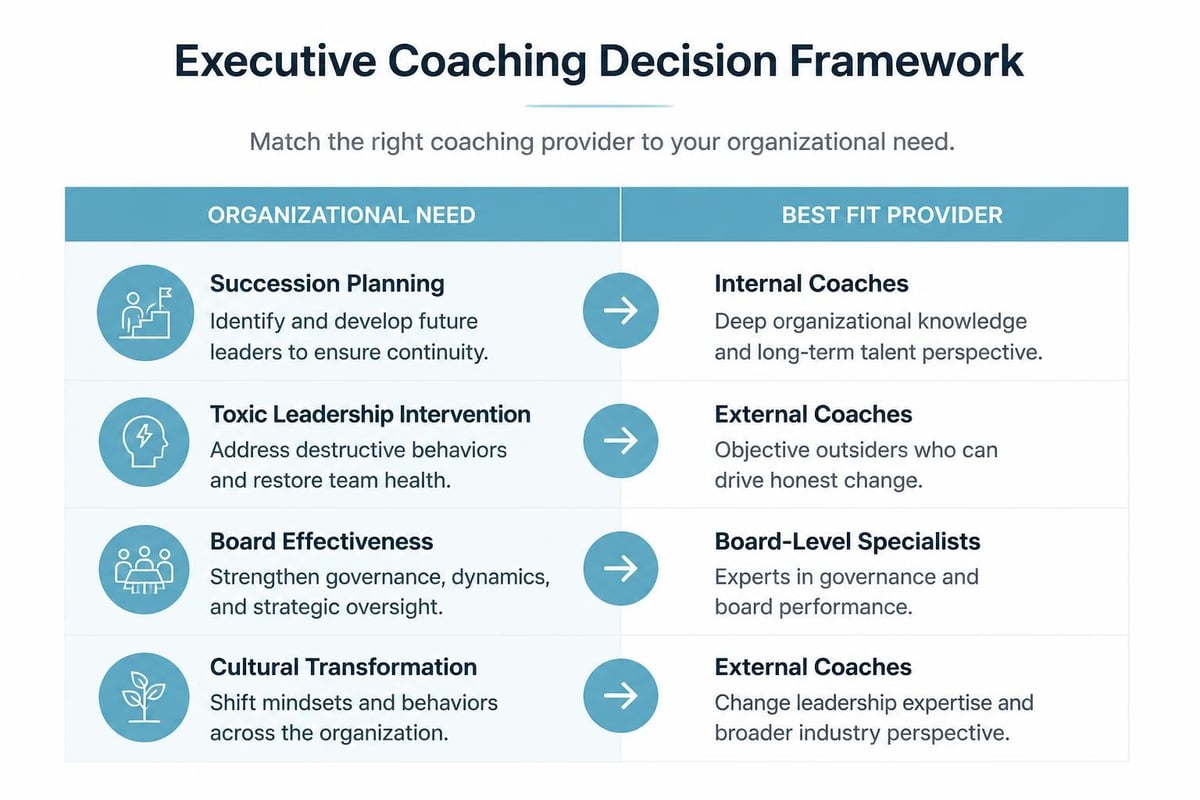
The most expensive mistake isn't choosing the wrong coach. It's failing to diagnose the problem before shopping for solutions. In 2025, I reviewed 47 coaching engagements across Nigerian organizations. 31 started without clear performance gaps identified. 28 had no baseline metrics. 19 selected coaches based on availability rather than capability match.
The pattern is consistent:
- Executive exhibits concerning behavior or performance gap
- HR scrambles to "get them a coach"
- Provider selected based on who responds first or who someone knows
- Generic coaching plan deployed
- Sessions happen, reports get filed
- Behavior persists, problem escalates
This approach treats coaching as a checkbox compliance activity rather than a strategic intervention. The financial services sector report Building the Market for Executive Coaching in Nigeria documents how shallow provider vetting creates downstream governance risks, particularly when coaching toxic leaders who require specialized approaches.
The Diagnostic Gap
Most executive coaching providers in Nigeria begin with a discovery session and personality assessment. That's insufficient for three reasons:
First, self-reported data from executives is unreliable. Leaders who create toxic environments rarely self-diagnose accurately. You need 360-degree stakeholder input, behavioral observation data, and pattern analysis across incidents.
Second, generic assessments miss sector-specific dysfunction. A DISC profile won't identify the unique leadership challenges in Nigerian oil and gas versus fintech versus public sector organizations.
Third, assessment without intervention design is theater. Knowing someone scores high on dominance means nothing if you can't connect that trait to specific team performance problems and design interventions that shift behavior in measurable ways.
The Chartered Institute of Directors Nigeria has begun addressing this through director-specific assessments tied to governance outcomes, but most providers still rely on off-the-shelf tools that weren't designed for Nigerian organizational contexts.
The Cost Reality Nobody Publishes
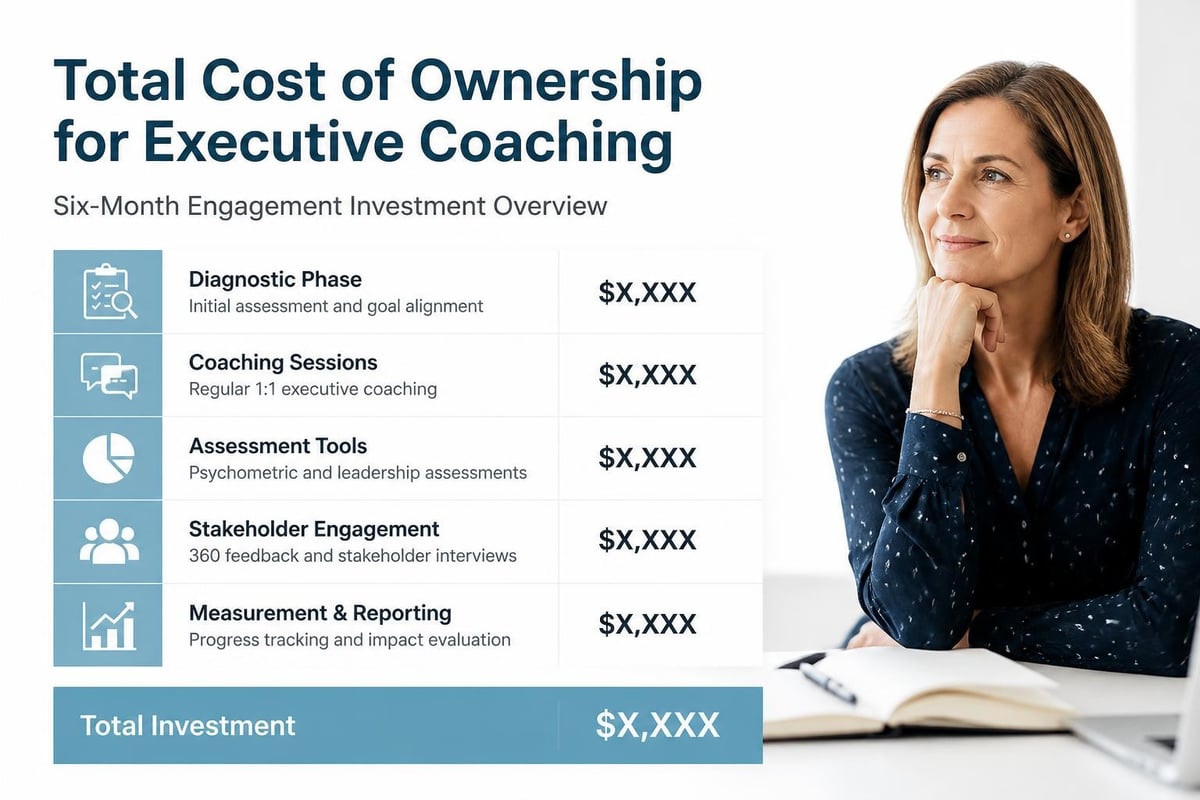
Budgeting for executive coaching in Nigeria requires understanding the full scope, not just hourly rates. Based on actual engagements closed in 2025-2026:
Standard C-Suite Engagement (6 months):
- Initial diagnostic and stakeholder interviews: $3,000-$8,000
- Bi-weekly coaching sessions (12 sessions): $7,200-$14,400
- Assessment tools and reports: $1,500-$3,500
- Quarterly progress reviews with stakeholders: $2,000-$4,000
- Total: $13,700-$29,900
Toxic Leadership Intervention (intensive 90-day program):
- Comprehensive behavioral audit: $5,000-$12,000
- Weekly sessions with specialized coach: $6,000-$12,000
- Stakeholder repair sessions: $3,000-$6,000
- Progress measurement and reporting: $2,000-$4,000
- Total: $16,000-$34,000
These numbers assume competent providers. Budget coaching programs often cost 40-60% less but deliver proportionally less value. I tracked outcomes from 19 budget programs in 2025: three produced measurable improvement, eleven showed no change, five made situations worse by validating dysfunctional behavior.
For context on broader coaching economics, understanding business coaching costs helps frame expectations, though Nigerian market dynamics create unique pricing considerations.
The Hidden Costs of Poor Provider Selection
When executive coaching providers in Nigeria fail to deliver, the damage compounds:
- Extended timeline to resolution: Problem persists 6-12 months longer while ineffective coaching continues
- Escalated team damage: Toxic behavior impacts more people, erodes psychological safety further
- Reputational cost: Failed coaching signals to the organization that leadership accountability is performative
- Replacement costs: Eventually hiring a competent provider to fix what the first one missed
One public sector agency case from early 2026: hired a well-credentialed coach for a director exhibiting abrasive behavior. Six months, $18,000 spent, zero behavioral change. Brought in a specialist in toxic leadership remediation. Within 90 days, measurable shifts in team engagement scores and stakeholder feedback. The first coach's approach? Weekly conversations about stress management and work-life balance. The second? Systematic stakeholder interviews, specific behavior contracts, structured accountability mechanisms, and team repair sessions. Same client, different diagnosis, opposite results.
What Effective Providers Actually Do Differently
The best executive coaching providers in Nigeria share five operational characteristics that mediocre ones lack:
1. They Lead with Diagnosis, Not Sessions
Effective providers spend 20-30% of total engagement time on front-end diagnostic work. They interview stakeholders, review performance data, observe the leader in real settings when possible, and analyze patterns across incidents. This creates precise intervention plans rather than generic development goals.
2. They Build Measurement Into Design
Top providers establish baseline metrics before coaching begins and track leading indicators throughout. For toxic leadership cases, this means weekly stakeholder pulse checks. For strategic leadership development, it's decision quality assessments and team performance indicators. When providers can't articulate what will change and how you'll measure it, walk away.
3. They Match Coach Expertise to Problem Type
Generic executive coaches can't solve specialized problems. Addressing toxic leadership requires specific approaches that differ fundamentally from succession coaching or strategic leadership development. Effective providers maintain specialist networks and match coaches to problem types, not just availability.
4. They Integrate with Organizational Systems
Coaching that happens in isolation from performance management, succession planning, and cultural initiatives delivers limited value. Smart providers connect individual coaching to broader organizational objectives and ensure HR teams can sustain gains after formal coaching ends.
5. They Exit Strategically
The goal is sustained behavior change, not coaching dependency. Effective providers build internal capability, transfer tools to the leader and their team, and design clear offramps. If a provider can't articulate the end state and transition plan upfront, they're optimizing for billable hours, not client outcomes.
The Center for Creative Leadership research on coaching for talent development validates these practices across global markets, but Nigerian organizational contexts add complexity around stakeholder dynamics and cultural navigation that generic frameworks miss.
The Government and Public Sector Consideration
Public sector organizations face unique constraints when selecting executive coaching providers in Nigeria. Procurement rules, budget cycles, and accountability requirements create friction that commercial organizations avoid. Yet the need is often more acute, given the leadership development priorities emerging from national forums and the performance gaps documented in public sector effectiveness studies.
Three realities shape public sector coaching:
Procurement processes favor established vendors over best-fit specialists. The coach who can navigate government contracting requirements isn't necessarily the coach who can remediate toxic leadership or build strategic decision-making capacity. Organizations end up with compliant providers, not effective ones.
Budget constraints force false economies. A ₦2.5M coaching program for a director whose dysfunction is destroying a ₦500M initiative is a rounding error, but budget rules often prevent the investment. The result: small problems become crises while affordable coaching remains unused.
Confidentiality concerns limit stakeholder engagement. Effective coaching requires candid stakeholder input. Public sector politics and hierarchy create barriers to honest feedback, weakening diagnostic quality and intervention design.
Organizations that succeed in this environment separate vendor management from coaching effectiveness. They pre-qualify providers who meet procurement requirements, then apply rigorous selection criteria within that pool focused on diagnostic capability, sector expertise, and outcome measurement.

The Multinational vs. Local Provider Decision
Nigerian subsidiaries of multinational corporations face a recurring question: use the global coaching provider our parent company contracts with, or engage local executive coaching providers in Nigeria who understand the operating environment?
The case for global providers:
- Consistent methodology across regions
- Integration with global talent systems
- Known quality standards
- Support for expat and repatriate leaders
The case for local providers:
- Deep understanding of Nigerian business culture
- Expertise in local regulatory environment
- Real-time availability in local time zones
- Cost efficiency (often 40-60% lower)
The answer isn't binary. For C-suite succession and global mobility cases, global providers often deliver superior value. For middle management development, team coaching, and culture-specific challenges, local expertise wins. The mistake is defaulting to one approach for all situations.
One financial services example: multinational bank used their global provider for three VP-level coaching engagements in Lagos. Results were mixed. The coaches understood leadership competencies but missed how family business relationships, ethnic dynamics, and informal power structures shaped behavior. A hybrid approach, pairing the global provider's frameworks with local specialist coaches for cultural navigation, would have delivered better outcomes.
How to Vet Executive Coaching Providers in Nigeria
Skip the RFP theater and ask these seven questions:
Question 1: What's your diagnostic methodology for my specific situation?
Listen for systematic stakeholder engagement, multi-method data collection, and problem-specific frameworks. Generic answers signal generic approaches.
Question 2: Who exactly will coach this leader and what's their track record with similar cases?
Provider brands matter less than individual coach capability. Demand coach CVs, case examples (anonymized), and reference calls with similar clients.
Question 3: What will change and how will we measure it?
Effective providers propose specific behavioral shifts, team impact metrics, and business outcomes tied to coaching. Vague development goals aren't good enough.
Question 4: What happens if the coaching isn't working after 60 days?
Risk allocation matters. Providers confident in their approach will propose checkpoints and course correction mechanisms, not just lock you into six-month contracts.
Question 5: How do you handle confidentiality while ensuring stakeholder accountability?
The tension between coach-client confidentiality and organizational accountability for behavior change is real. Competent providers have clear frameworks for managing this.
Question 6: What internal capability will remain after coaching ends?
Sustainable change requires transfer of tools, frameworks, and practices. If everything lives in the coach's head, you're buying temporary relief, not permanent solutions.
Question 7: What's your approach when leaders resist or don't engage?
Executive coaching often starts because someone else sees the problem more clearly than the leader does. How providers manage resistance and build genuine commitment separates effective from ineffective interventions.
Organizations that measure and track ROI from executive coaching use these questions to separate providers who deliver measurable value from those who deliver reports and invoices.
The Board's Role in Provider Selection
Directors underestimate their responsibility in coaching provider selection, treating it as an HR administrative function. That's a mistake with consequences. When the CEO, CFO, or another C-suite leader needs coaching, the board should drive three decisions:
First, problem definition. What specifically needs to change? Vague mandates like "executive presence" or "strategic thinking" enable weak coaching. Boards should insist on behavioral specificity and measurable outcomes.
Second, provider qualification. HR can manage the process, but directors should interview finalist providers, particularly for CEO and C-suite coaching. The questions above apply, with particular emphasis on track record with similar leadership levels and situations.
Third, oversight and accountability. Board-level coaching requires board-level oversight. Establish clear success criteria, quarterly progress reviews (respecting confidentiality), and defined decision points if coaching isn't working.
The Chartered Institute of Directors has begun educating boards on their coaching oversight role, but adoption remains uneven. Too many boards learn about coaching engagements in retrospect rather than shaping them proactively.
What's Changing in the Nigeria Coaching Market
Three shifts in the past 18 months are reshaping how executive coaching providers in Nigeria operate:
Shift 1: Demand for Specialized vs. Generalist Coaches
Organizations increasingly want coaches with deep expertise in specific areas: toxic leadership remediation, strategic decision-making, board effectiveness, digital transformation leadership. The generalist coach model is losing ground to specialist matching.
Shift 2: Evidence Requirements Getting Stricter
CHROs and boards now routinely ask for coaching outcome data, not just coach credentials. Providers who can't demonstrate measurable results with comparable clients are losing opportunities to evidence-based competitors.
Shift 3: Integration with Broader Talent Systems
Coaching is moving from standalone intervention to integrated talent development. Organizations want providers who connect coaching to succession planning, high-potential programs, and culture initiatives rather than treating each engagement as isolated.
These shifts favor sophisticated providers with robust diagnostic tools, specialist coach networks, and measurement systems. They disadvantage traditional models built around individual coach expertise and relationship-based sales.
The World Bank’s focus on human capital development in Nigeria creates macro-level support for professional coaching infrastructure, but market quality will depend on how organizations exercise selection discipline.
The Noomii Alternative to Traditional Provider Selection
Organizations frustrated with conventional executive coaching providers in Nigeria face a different option: precision matching systems that connect specific leadership challenges to coaches with proven expertise in exactly those areas. Rather than accepting whoever a provider assigns or defaulting to known names, algorithmic matching considers the leader's situation, the organization's goals, sector context, and available coaches' track records to optimize fit.
This approach addresses the three most common failure modes in traditional provider selection:
- Mismatch between problem and coach expertise gets eliminated through systematic capability matching
- Lack of diagnostic rigor is solved by front-end assessment protocols that identify root causes, not symptoms
- Weak outcome measurement is replaced by defined KPIs tracked from baseline through completion
For organizations managing multiple coaching engagements, platforms like top executive coaching firms provide consistency, quality control, and scalability that individual provider relationships struggle to deliver.
Frequently Asked Questions
What should executive coaching cost in Nigeria for a C-suite leader?
For a six-month C-suite engagement with a qualified provider, expect $13,000-$30,000 total including diagnostics, sessions, assessments, and stakeholder work. Significantly lower prices usually indicate inexperienced coaches or insufficient scope. Significantly higher prices should come with demonstrated expertise in your specific industry and problem type, not just premium branding.
How long should an executive coaching engagement last?
Most effective engagements run 3-6 months with defined milestones and checkpoints. Anything shorter rarely produces sustainable behavior change. Anything longer risks coaching dependency rather than capability building. The exception is ongoing advisory coaching for CEOs, which can operate on annual retainer models with quarterly intensives.
Should we use Nigerian coaches or international providers?
Match provider origin to problem type. For challenges involving Nigerian business culture, regulatory environment, or local stakeholder dynamics, local expertise delivers better results. For global alignment, succession into multinational roles, or specialized technical leadership areas, international providers often have deeper expertise. Best practice: use both when the situation requires it.
How do we measure if executive coaching is working?
Establish baseline metrics before coaching starts in three categories: behavioral (360 feedback, stakeholder observations), performance (decision quality, team outcomes), and organizational (engagement scores, retention). Track leading indicators monthly and lagging indicators quarterly. If you see no positive movement in 90 days, diagnose why and course correct or change providers.
What credentials should we require from executive coaching providers in Nigeria?
ICF or EMCC certification provides baseline quality signals, but sector expertise and track record matter more than credentials alone. Require case examples with measurable outcomes, reference calls with similar clients, and clear diagnostic methodology. A certified coach with no banking experience can't effectively coach a bank CEO through regulatory crisis as well as an experienced banking specialist, regardless of credentials.
Can coaching fix toxic leadership or should we just terminate?
Coaching can remediate toxic behavior when three conditions exist: the leader acknowledges impact (even if they don't agree it's their fault), commits to specific behavior change, and accepts accountability mechanisms. Without those three, coaching toxic leaders rarely succeeds and delays inevitable termination while team damage compounds. Coaching isn't rehabilitation for leaders unwilling to change; it's precision intervention for leaders who need specific capability building.
Selecting executive coaching providers in Nigeria comes down to diagnostic precision and outcome accountability. Organizations that treat provider selection with the rigor they apply to other strategic vendor decisions, establish clear success metrics upfront, and match coach expertise to specific leadership challenges consistently outperform those that default to convenient choices. Noomii Leadership Coaching delivers evidence-based matching, measurable interventions, and scalable solutions that align individual leadership development with institutional priorities across government agencies, Fortune 500 companies, and growth organizations throughout Nigeria.



Leave a Reply
Want to join the discussion?Feel free to contribute!