

AI Coaching Was Helpful Until It Wasn’t | Noomii
The promise sounded irresistible: instant feedback, 24/7 availability, scalable guidance for every manager without the cost or scheduling friction of human coaches. Mid-market leaders invested in AI coaching platforms throughout 2024 and 2025, deploying them across leadership teams and emerging managers. The tools performed exactly as advertised for about six weeks. Then the pattern emerged. AI coaching was helpful until it wasnt, and the breaking point arrived faster and more consistently than anyone expected.
The Initial Wins That Made AI Coaching Attractive
AI coaching platforms delivered genuine early value. Managers received immediate responses to common scenarios. New supervisors practiced difficult conversations without judgment. Leadership teams accessed frameworks and prompts on demand.
The benefits looked compelling on paper:
- Instant availability across time zones and schedules
- Consistent messaging aligned with company values
- Scalable deployment without hiring constraints
- Lower cost per interaction than human coaching
- Data capture on usage and engagement
Companies saw adoption rates climb. Managers logged sessions. HR teams celebrated engagement metrics. The American Psychological Association raised concerns about AI wellness applications in early 2025, but corporate buyers assumed business coaching operated under different rules.

The problem wasn't the technology. It was the assumption that leadership development follows predictable patterns that algorithms can solve.
Where AI Coaching Hits the Wall
The breaking point arrived when managers faced situations requiring context, nuance, and accountability. AI coaching was helpful until it wasnt became the quiet refrain in leadership meetings when teams realized the tools couldn't bridge the gap between theory and execution.
The Five Failure Modes
- Context collapse: AI cannot understand organizational politics, team history, or the unspoken dynamics that shape every leadership decision
- Accountability void: Nobody follows up, challenges excuses, or holds managers to commitments made during AI coaching sessions
- Generic frameworks: Algorithms offer textbook responses when managers need specific guidance tied to their company's priorities and KPIs
- No live coaching: Real leadership development happens in the moment, during actual meetings and decisions, not in simulated scenarios
- Missing ROI connection: AI tools track engagement but cannot tie coaching to business outcomes like retention, execution speed, or revenue impact
| What AI Coaching Does Well | What It Cannot Replace |
|---|---|
| Provide frameworks on demand | Read room dynamics during conflict |
| Answer common questions | Challenge weak thinking in real time |
| Track usage data | Follow up on commitments made last month |
| Scale across organization | Adapt to shifting business priorities |
| Offer 24/7 availability | Hold leaders accountable to results |
A VP at a 250-person manufacturing company deployed AI coaching across her management team in early 2025. Engagement hit 87% in month one. By month three, managers were politely ignoring the tool while struggling with the same communication breakdowns, missed KPIs, and retention issues that prompted the investment. The AI delivered advice. It didn't change behavior or improve outcomes.
The Real Coaching Gap in Mid-Market Companies
Mid-market organizations face a specific challenge: they're too large for informal leadership development but too lean for enterprise coaching budgets. AI coaching promised to fill this gap efficiently.
The reality proved more complex. Companies with 25 to 500 employees need coaching that connects directly to business execution. Managers must run better meetings, communicate priorities clearly, coach their direct reports, and drive accountability across functions. Generic leadership frameworks don't translate into faster decisions or cleaner execution.
What actually changes manager behavior:
- Live coaching during real meetings, not simulated practice
- Direct connection between coaching and measurable KPIs
- Accountability mechanisms that survive beyond the coaching session
- Coaches who understand the company's operating cadence and priorities
- Visible ROI that justifies continued investment
Finding the right business coach requires evaluating outcomes, not just credentials or platform features. The coaching industry's focus on certifications obscures a more important question: does this coaching change how work gets done?
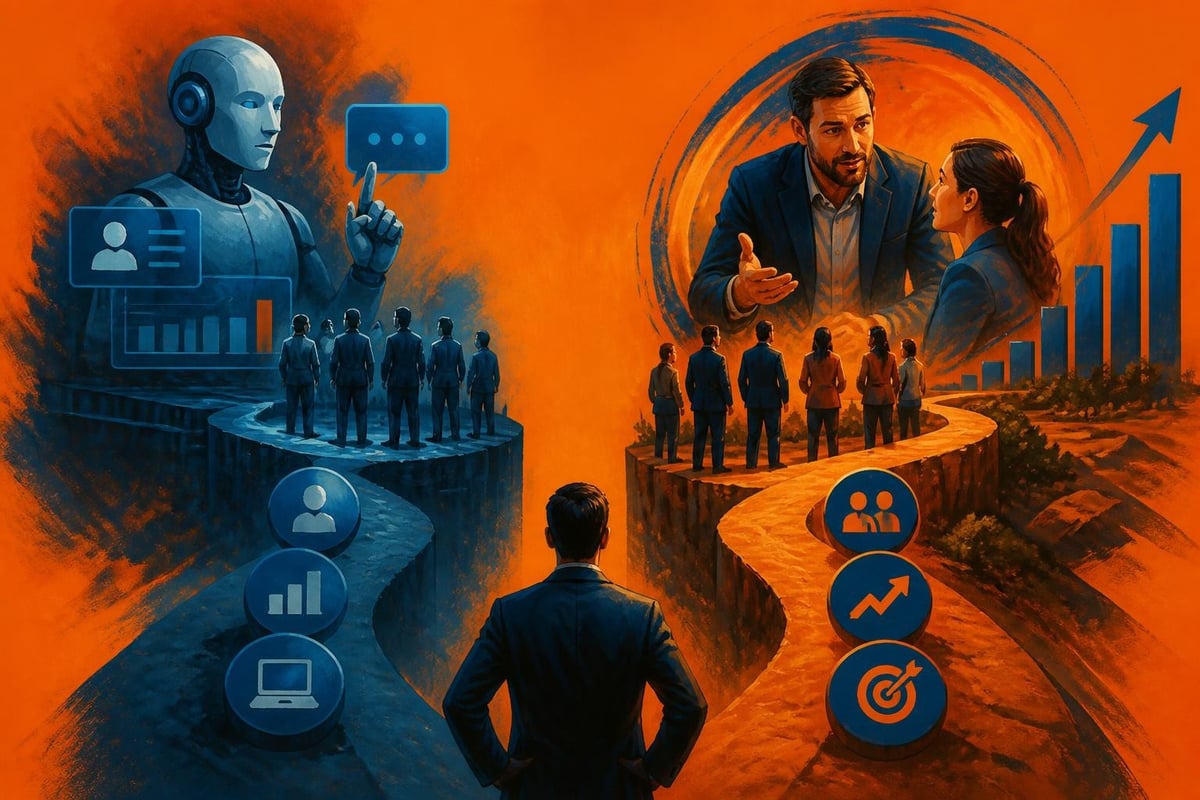
What Actually Works After AI Coaching Falls Short
Companies discovering that AI coaching was helpful until it wasnt face a choice: accept the limitations or invest in coaching that delivers measurable business results.
The Human Coaching Advantage
Effective coaches for mid-market companies operate differently than the certification-obsessed industry standard. They focus on outcomes over credentials, results over theory.
Key differentiators of outcome-focused coaching:
- Coaches participate in actual leadership meetings, not just debrief them later
- Coaching connects directly to company KPIs and operating rhythms
- Accountability extends beyond sessions through follow-up tied to business metrics
- Flexibility in engagement terms (month-to-month) keeps coaches focused on delivering visible value
- ROI becomes measurable through retention rates, execution speed, and decision quality
The shift from AI tools to human coaches isn't about rejecting technology. It's about recognizing that leadership development requires human judgment, context awareness, and accountability that algorithms cannot replicate in 2026.
Lessons from Companies That Made the Transition
Three mid-market companies that moved from AI coaching to human coaching tied to business outcomes share common patterns:
Case Study Framework: Manufacturing Company, 180 Employees
- Problem: High manager turnover, missed production targets, weak cross-functional communication
- Initial Diagnosis: Leadership skills gap across middle management
- AI Coaching Phase: Deployed platform, saw engagement, no behavior change after 90 days
- Human Coaching Solution: Executive coaching with live meeting facilitation, 360 assessments, KPI scorecards
- Results: Manager retention improved 40%, production target achievement rose from 67% to 89%, cross-functional conflict resolution time dropped by half
- Lesson: Generic frameworks don't change behavior; contextual coaching tied to specific business outcomes does
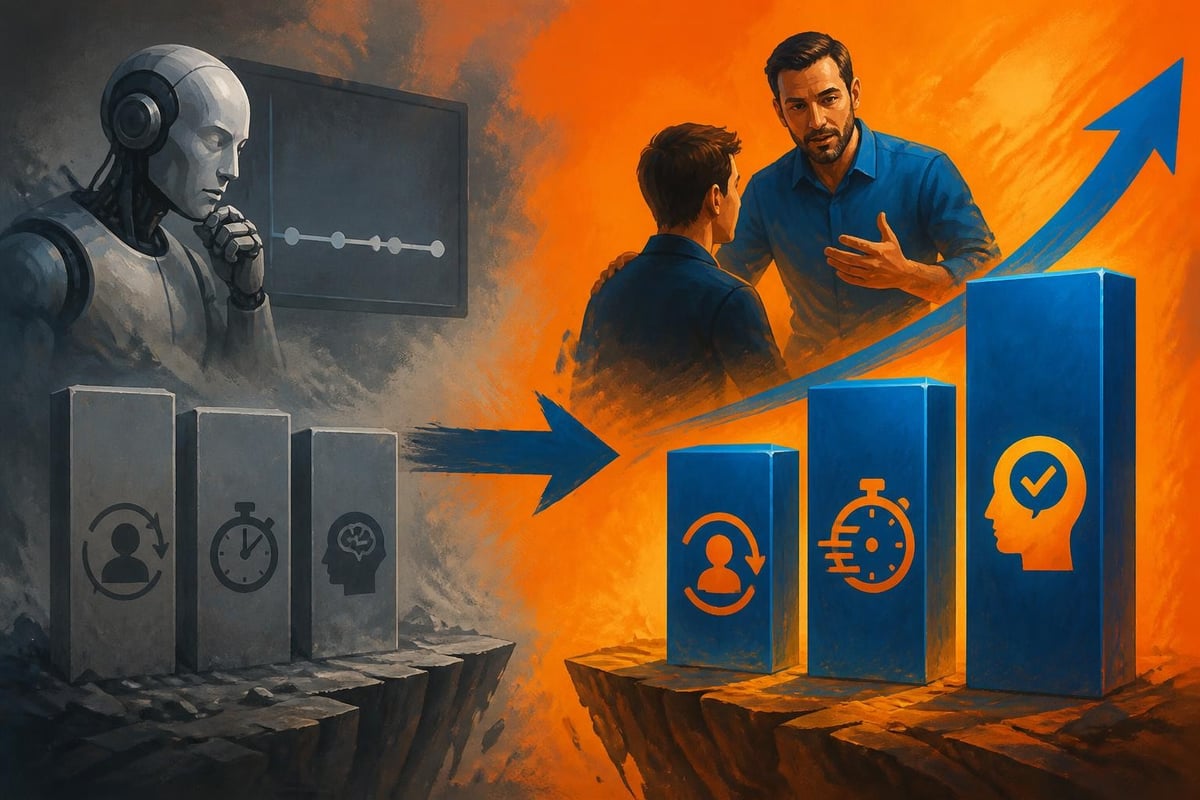
The pattern repeats: AI coaching was helpful until it wasnt, companies invested in human coaches who work inside the business, outcomes improved measurably, and leadership teams gained skills that compound over time.
The Myth of Scalable Leadership Development
The coaching industry's obsession with scale creates a false choice: either affordable AI coaching that doesn't work or expensive human coaching reserved for executives. Mid-market companies need a third option.
Practical corporate coaching at scale means:
- Coaches who share risk through aligned incentives and flexible terms
- Focus on team coaching and manager development, not just executive support
- Integration with existing operating cadences rather than separate "development" time
- Clear connection between coaching investment and business metrics
- Month-to-month engagement that keeps everyone accountable to results
The Noomii coach directory includes professionals who prioritize outcomes over credentials, but finding them requires asking different questions than the industry teaches buyers to ask.
FAQ
Q: How long should we try AI coaching before deciding it's not working?
A: Most companies see the limitations within 60-90 days. If managers aren't changing behavior or business metrics aren't improving, the tool isn't solving the actual problem.
Q: Can AI coaching work as a supplement to human coaching?
A: Yes, for basic frameworks and just-in-time resources. But don't expect AI to drive accountability or behavior change. Those require human judgment and follow-up.
Q: What's the typical ROI timeline for human coaching tied to business outcomes?
A: Mid-market companies typically see measurable improvements in retention, decision speed, or execution within 90-120 days when coaching connects to specific KPIs.
Q: How do we evaluate coaches beyond certifications?
A: Ask for case studies with measurable outcomes, references from similar-sized companies, and examples of coaching tied directly to business results rather than personal development.
Q: Should we focus on executive coaching or manager development?
A: For companies under 500 employees, manager coaching delivers higher ROI because it affects more teams and builds coaching capacity throughout the organization.
Q: What engagement terms reduce risk when testing new coaching approaches?
A: Month-to-month agreements with clear KPI targets let you evaluate results before committing long-term. Avoid multi-year contracts until outcomes are proven.
Q: How does live meeting facilitation differ from traditional coaching?
A: Coaches observe and guide real decisions in actual meetings, addressing problems as they happen rather than discussing them after the fact. This accelerates behavior change.
Q: What business metrics should we track to measure coaching effectiveness?
A: Focus on retention rates, time to decision, execution against priorities, manager promotion readiness, and employee engagement scores tied to direct managers.
Q: Is the coaching industry shifting away from credential worship?
A: Slowly. Buyers are getting smarter about demanding proof of outcomes, but many coaches and platforms still emphasize certifications over results. Choose carefully.
AI coaching tools serve a purpose for basic frameworks and on-demand resources, but they cannot replace the context, accountability, and live guidance that change leadership behavior in mid-market companies. If your organization has discovered that ai coaching was helpful until it wasnt, Noomii connects you with coaches who work inside your business, tie progress to clear KPIs, and deliver measurable results without long-term contracts or certification theatrics.



Leave a Reply
Want to join the discussion?Feel free to contribute!