

Executive Coaching for High-Stress Roles in Glasgow
Glasgow's thriving business landscape demands exceptional leadership under constant pressure. From financial services in the city center to healthcare administration across the Greater Glasgow region, executives face relentless demands that test their capacity for strategic thinking, emotional regulation, and sustained performance. The combination of rapid organizational change, stakeholder expectations, and personal accountability creates an environment where traditional leadership approaches often fall short. This reality has driven organizations to seek targeted interventions that address both performance optimization and psychological wellbeing through executive coaching for high-stress roles in Glasgow.
The Unique Pressure Landscape for Glasgow Executives
Leadership in Glasgow presents distinctive challenges that separate it from other UK markets. The city's diverse economic base spans manufacturing, technology, professional services, and public sector organizations, each with sector-specific pressures that compound general executive stress.
Financial services leaders navigate regulatory scrutiny while maintaining growth targets in competitive markets. Healthcare executives manage resource constraints, staff wellbeing concerns, and performance metrics that directly impact patient outcomes. Technology sector leaders balance innovation demands with talent retention in a market where skilled professionals command premium compensation packages.
Industry-Specific Stressors in the Glasgow Market
Healthcare and Public Sector Leadership:
- Budget limitations requiring creative resource allocation
- Public accountability standards with transparent performance reporting
- Staff morale management during periods of organizational transformation
- Regulatory compliance across multiple frameworks
Financial Services and Professional Services:
- Quarterly performance expectations with immediate stakeholder visibility
- Client relationship management across increasingly complex portfolios
- Technology integration while maintaining service continuity
- Competitive talent markets driving retention concerns
Manufacturing and Industrial Leadership:
- Supply chain disruption management requiring rapid strategic pivots
- Workforce transitions as automation reshapes operational models
- Environmental compliance with evolving sustainability standards
- International competition pressures on margin preservation

These pressures create cumulative stress loads that traditional management development programs fail to address. Research demonstrates that executive coaching reduces burnout across professions by providing personalized strategies that account for individual circumstances and organizational contexts.
How Executive Coaching Addresses High-Stress Leadership
Executive coaching for high-stress roles in Glasgow delivers measurable impact through structured interventions that target both immediate challenges and long-term resilience building. Unlike generic leadership training, coaching provides individualized support that acknowledges the specific pressures facing each executive.
Evidence-Based Approaches to Stress Management
The most effective coaching programs combine behavioral science, organizational psychology, and practical business strategy. This integration creates sustainable change that extends beyond temporary stress relief to fundamental leadership transformation.
| Coaching Component | Stress Management Impact | Business Performance Benefit |
|---|---|---|
| Cognitive Reframing | Reduces anxiety response to challenges | Improves decision quality under pressure |
| Energy Management Protocols | Prevents physical and emotional depletion | Sustains peak performance during critical periods |
| Strategic Prioritization | Eliminates overwhelm from competing demands | Focuses resources on highest-impact activities |
| Communication Optimization | Reduces conflict-driven stress | Strengthens team alignment and execution |
These interventions address the root causes of executive stress rather than merely treating symptoms. Executive coaching prevents leadership burnout by building resilience capacities that enable leaders to maintain effectiveness through sustained organizational challenges.
The Glasgow Advantage: Local Context with Global Expertise
Organizations implementing executive coaching for high-stress roles in Glasgow benefit from coaches who understand regional business dynamics while bringing international best practices. This combination proves particularly valuable for executives managing local operations within multinational corporations or navigating distinctly Scottish regulatory environments.
Local coaches recognize the cultural nuances that influence leadership effectiveness in Glasgow. They understand the collaborative business culture, the importance of community connections in professional services, and the unique dynamics of managing teams with strong regional identity alongside global operational requirements.
Identifying When Executives Need Coaching Intervention
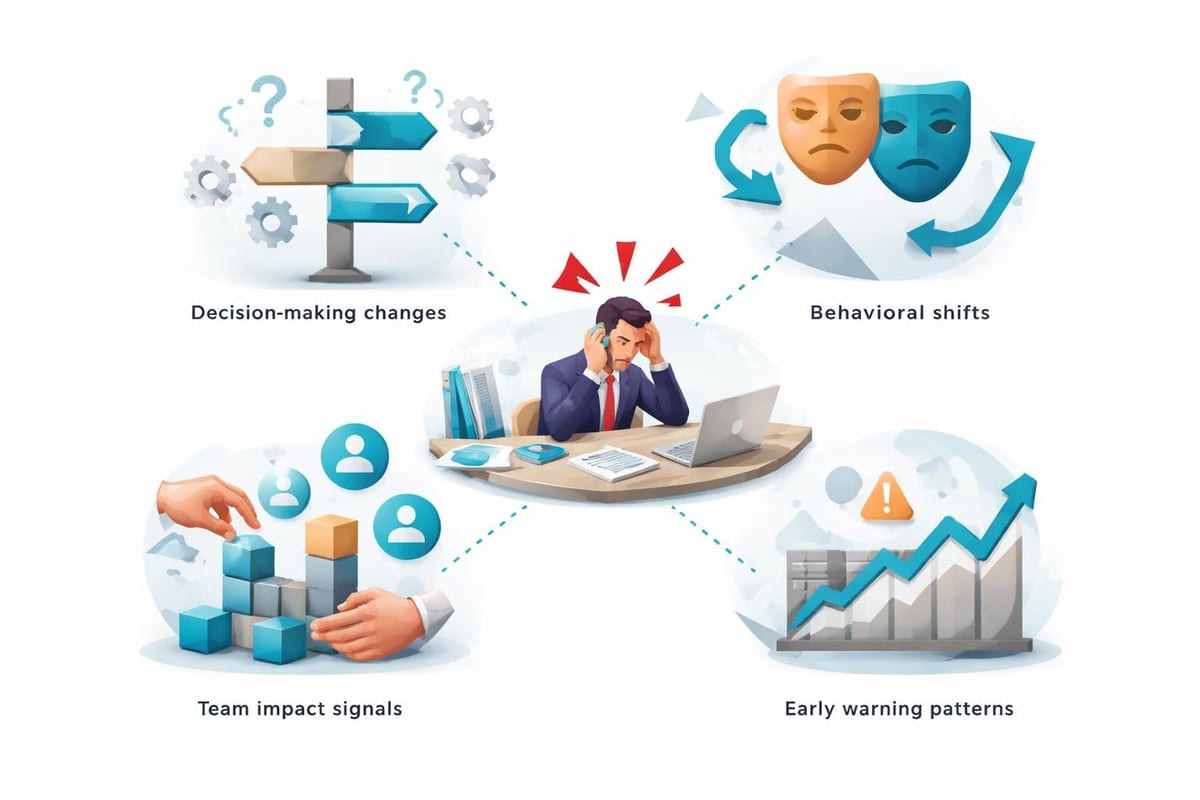
Recognizing the signals that indicate coaching intervention becomes necessary protects organizational performance and executive wellbeing. Many organizations wait until crisis points emerge rather than implementing proactive support systems that prevent deterioration.
Performance Indicators Requiring Immediate Attention
Decision-Making Patterns:
- Increased decision avoidance or excessive delegation without strategic rationale
- Analysis paralysis when facing complex choices with incomplete information
- Impulsive decisions driven by stress rather than strategic consideration
- Difficulty distinguishing between urgent and important priorities
Behavioral Changes:
- Withdrawal from previously valued professional relationships
- Increased irritability or defensiveness during routine interactions
- Reduced engagement in strategic thinking activities
- Physical manifestations including disrupted sleep patterns or energy fluctuations
Team Impact Signals:
- Declining engagement scores from direct reports
- Increased turnover within the executive's immediate team
- Communication breakdowns creating operational inefficiencies
- Cultural deterioration reflected in team dynamics and collaboration
Organizations that monitor these indicators systematically can implement coaching interventions before performance degradation creates broader organizational consequences. Mental wellness strategies through executive coaching prove most effective when deployed proactively rather than reactively.
Structured Coaching Programs for Sustainable Results
Effective executive coaching for high-stress roles in Glasgow follows structured methodologies that ensure measurable progress toward defined objectives. Random coaching conversations produce inconsistent results, while systematic approaches create sustainable transformation.
The Diagnostic Phase: Understanding Individual Stress Profiles
Before intervention begins, comprehensive assessment identifies the specific stressors, behavioral patterns, and organizational factors influencing each executive's experience. This diagnostic precision ensures coaching addresses actual challenges rather than assumed problems.
Assessment tools evaluate:
- Leadership behavioral patterns under stress conditions
- Cognitive processing styles affecting decision-making quality
- Emotional regulation capacities influencing interpersonal effectiveness
- Energy management practices determining sustainable performance levels
- Organizational context factors amplifying or mitigating stress impact
Similar approaches used in executive coaching for C-suite professionals demonstrate how personalized diagnostics create foundation for targeted interventions.
Building Resilience Through Targeted Interventions
Following diagnostic assessment, coaching develops customized intervention plans addressing identified priorities. These plans typically span three to twelve months depending on complexity and organizational context.
Phase One: Immediate Stress Reduction (Weeks 1-4)
- Crisis management protocols for urgent situations
- Energy restoration practices establishing baseline capacity
- Communication frameworks reducing interpersonal friction
- Quick-win identification building confidence and momentum
Phase Two: Pattern Transformation (Months 2-4)
- Cognitive reframing techniques addressing limiting beliefs
- Strategic prioritization systems focusing effort on impact
- Boundary establishment protecting recovery time
- Delegation optimization distributing workload effectively
Phase Three: Sustainable Leadership Integration (Months 5-6+)
- Leadership identity refinement aligning role with values
- Organizational culture influence expanding positive impact
- Succession planning developing future leaders
- Continuous improvement frameworks maintaining progress
The ROI of Executive Coaching in High-Stress Environments
Organizations investing in executive coaching for high-stress roles in Glasgow demand demonstrable returns that justify resource allocation. The financial case for coaching extends beyond individual executive performance to broader organizational impact.
Quantifiable Business Outcomes
Retention Economics:
Replacing senior executives costs organizations between 150% and 300% of annual compensation when accounting for recruitment expenses, productivity losses during transitions, and institutional knowledge departure. Executive coaching that prevents burnout-driven turnover delivers immediate ROI through retention alone.
Performance Optimization:
Research on effective coaching outcomes documents average productivity improvements between 25% and 40% for coached executives, translating directly to enhanced organizational results.
Team Productivity Multiplier:
Executive stress cascades through organizations, reducing team performance by 15% to 25% according to employee engagement research. Coaching that stabilizes executive functioning prevents this broader productivity degradation.
| Metric Category | Without Coaching | With Structured Coaching | Percentage Improvement |
|---|---|---|---|
| Executive Retention Rate (3-year) | 65% | 89% | +37% |
| Decision Quality Score | 72/100 | 91/100 | +26% |
| Team Engagement Level | 58% | 76% | +31% |
| Strategic Initiative Success Rate | 54% | 78% | +44% |
Broader Organizational Health Impact
Beyond individual executive metrics, coaching investments improve organizational culture, leadership pipeline strength, and institutional resilience. These benefits compound over time as coached executives model healthy leadership patterns and develop others using similar frameworks.
Organizations implementing comprehensive coaching programs report reduced conflict escalation, improved cross-functional collaboration, and enhanced innovation capacity. These cultural shifts create competitive advantages particularly valuable in Glasgow's collaborative business environment.

Selecting the Right Coaching Partner for Glasgow Organizations
The executive coaching market offers varying quality levels, methodologies, and specialization areas. Organizations must evaluate potential partners systematically to ensure alignment with specific needs and cultural requirements.
Critical Selection Criteria
Industry Expertise and Context Understanding:
Coaches serving Glasgow executives should demonstrate familiarity with relevant sectors, regulatory environments, and regional business dynamics. Generic coaching knowledge proves insufficient when addressing industry-specific stressors.
Evidence-Based Methodology:
Effective coaching programs ground interventions in behavioral science research rather than relying solely on anecdotal approaches. Understanding what makes coaching actually work requires methodology transparency and theoretical foundation.
Measurable Outcomes Focus:
Professional coaching relationships establish clear success metrics at engagement outset, enabling objective progress evaluation. These metrics should align with both individual development goals and organizational performance requirements.
Confidentiality and Ethics Standards:
Executive coaching addresses sensitive leadership challenges requiring absolute confidentiality. Partners must demonstrate robust ethical frameworks protecting client privacy while maintaining appropriate organizational transparency.
Matching Executives with Specialized Coaches
Executive coaching for high-stress roles in Glasgow benefits from precision matching that considers individual executive needs, learning styles, and specific challenge areas. Organizations like Noomii Leadership Coaching employ sophisticated matching algorithms ensuring optimal coach-client partnerships based on experience, expertise, and compatibility factors.
Effective matching considers:
- Functional background alignment between coach experience and executive role
- Leadership challenge specialization matching coach expertise to specific issues
- Communication style compatibility enabling productive coaching relationships
- Developmental stage appropriateness reflecting executive career phase
- Cultural sensitivity requirements for diverse leadership teams
Integration with Broader Leadership Development Systems
Executive coaching for high-stress roles in Glasgow delivers maximum value when integrated with comprehensive leadership development frameworks rather than implemented as isolated intervention. This integration creates reinforcement loops that accelerate transformation and embed new practices within organizational systems.
Complementary Development Components
Leadership Assessment Programs:
Regular assessment using validated instruments provides objective progress tracking and identifies emerging development needs before they create performance challenges. These assessments should evaluate technical competencies, emotional intelligence capacities, and strategic thinking capabilities.
Peer Learning Networks:
Executives benefit from confidential peer forums where they share challenges, exchange perspectives, and learn from colleagues facing similar pressures. These networks reduce isolation and provide reality-testing opportunities for strategies developed through coaching.
Organizational Culture Initiatives:
Individual coaching produces limited impact when organizational culture actively undermines healthy leadership practices. Effective programs address both individual capacity building and systemic culture transformation. Organizations struggling with toxic leadership patterns require comprehensive interventions addressing individual behaviors and enabling organizational systems.
Succession Planning Integration:
Coaching investments should connect explicitly with succession planning processes, ensuring developed executives progress toward expanded responsibilities while building bench strength for critical roles.
Supporting Mental Wellness Through Executive Coaching
High-stress leadership roles create psychological pressures requiring explicit mental wellness support beyond traditional performance coaching. Executive counseling and coaching for high-pressure leaders addresses psychological patterns that undermine effectiveness while building resilience capacities that enable sustained performance.
The Mental Health Imperative in Leadership
Glasgow executives face mounting mental health challenges as organizational complexity increases and work-life boundaries blur. The stigma historically associated with executive mental health support has decreased substantially, creating opportunities for proactive intervention that prevents crisis situations.
Common Mental Health Challenges:
- Anxiety disorders triggered by sustained high-stakes decision-making
- Depression resulting from isolation and relentless performance pressure
- Sleep disruption affecting cognitive function and emotional regulation
- Substance use patterns developing as coping mechanisms
Professional coaching addresses these challenges through integrated approaches combining performance optimization with psychological wellbeing support. Coaches recognize when issues require clinical intervention and facilitate appropriate referrals while maintaining support for leadership effectiveness.
Building Psychological Resilience
Executive coaching for high-stress roles in Glasgow develops specific psychological capacities enabling leaders to maintain effectiveness through adversity:
Emotional Regulation:
- Recognizing emotional patterns before they drive counterproductive behaviors
- Creating pause between stimulus and response during high-pressure situations
- Developing healthy processing strategies for negative emotions
- Building positive emotional experiences that counterbalance stress
Cognitive Flexibility:
- Challenging automatic negative thought patterns undermining confidence
- Developing multiple perspectives on complex challenges
- Reducing catastrophic thinking that amplifies stress responses
- Strengthening optimism grounded in realistic assessment
Self-Compassion:
- Reducing perfectionism that creates unrealistic performance standards
- Treating personal mistakes with learning orientation rather than harsh judgment
- Acknowledging limitations without diminishing ambition
- Celebrating progress rather than focusing exclusively on remaining gaps
These psychological capacities create foundation for sustainable high performance while protecting executive wellbeing. Organizations investing in this holistic approach report reduced burnout, improved retention, and enhanced leadership quality across their talent pipeline.
Measuring Coaching Impact: Key Performance Indicators
Demonstrating coaching effectiveness requires systematic measurement using indicators that capture both individual transformation and organizational impact. Executive coaching for high-stress roles in Glasgow should establish measurement frameworks before engagement begins, enabling objective progress evaluation.
Individual Executive Metrics
- Stress Response Indicators: Self-reported stress levels, physiological markers, and behavioral pattern changes
- Decision Quality Measures: Strategic decision outcomes, decision velocity, and stakeholder satisfaction with choices
- Leadership Effectiveness Scores: 360-degree feedback ratings, team engagement levels, and direct report retention
- Work-Life Integration: Time allocation patterns, recovery practice adherence, and boundary maintenance
- Personal Wellbeing Markers: Energy levels, sleep quality, relationship satisfaction, and health indicators
Organizational Performance Indicators
| Indicator Category | Baseline Measurement | Target Improvement | Actual Result (6 months) |
|---|---|---|---|
| Executive Retention | Annual turnover rate | Reduce by 25% | Reduced by 32% |
| Team Productivity | Output per team member | Increase by 15% | Increased by 21% |
| Engagement Scores | Annual survey results | Improve by 10 points | Improved by 14 points |
| Strategic Initiative Success | Project completion rate | Improve by 20% | Improved by 28% |
These metrics provide objective evidence of coaching impact, supporting continued investment and program refinement. Organizations should review measurement data quarterly, adjusting coaching interventions based on progress and emerging needs.
The Future of Executive Support in Glasgow
Executive coaching for high-stress roles in Glasgow continues evolving as workplace demands intensify and leadership expectations expand. Forward-thinking organizations recognize that sustained competitive advantage requires investments in leader resilience, adaptability, and psychological wellbeing alongside traditional competency development.
Emerging trends shaping executive coaching include:
Technology-Enhanced Coaching:
Digital platforms providing between-session support, progress tracking, and on-demand resource access supplement traditional coaching conversations. These tools extend coaching impact while maintaining the human relationship essential for transformation.
Team-Based Interventions:
Organizations increasingly complement individual executive coaching with team coaching addressing collective dynamics, communication patterns, and collaborative effectiveness. This dual approach optimizes both individual and team performance.
Preventive Wellness Focus:
Rather than implementing coaching reactively when crisis emerges, leading organizations establish ongoing coaching relationships providing continuous support through changing organizational demands. This preventive approach maintains executive effectiveness while preventing stress accumulation.
Data-Driven Personalization:
Advanced assessment technologies enable increasingly precise intervention targeting based on individual stress profiles, learning preferences, and specific challenge characteristics. This personalization accelerates progress and improves outcome consistency.
Glasgow organizations that embrace these evolving approaches position themselves advantageously in competitive talent markets while building leadership capacity that drives sustained organizational success.
Executive coaching for high-stress roles in Glasgow transforms how leaders navigate complexity, maintain wellbeing, and drive organizational performance under demanding conditions. The evidence demonstrates that structured coaching interventions deliver measurable returns through improved retention, enhanced decision quality, and strengthened team performance. Organizations seeking to address leadership challenges with precision should explore comprehensive coaching solutions that combine evidence-based diagnostics, specialized expertise matching, and measurable outcome tracking. For those working with organizations like AccountabilityNow who understand the importance of sustainable leadership development, Noomii Leadership Coaching provides the structured framework, global coach network, and proven methodologies that transform executive effectiveness across industries and organizational sizes.



Leave a Reply
Want to join the discussion?Feel free to contribute!