
Corporate Coaching Vendors in Indonesia: 2026 Guide
Indonesia's coaching market grew 340% between 2021 and 2025, yet most procurement teams still evaluate corporate coaching vendors in Indonesia using frameworks designed for mature Western markets. That mismatch creates three predictable failure modes: misaligned regulatory expectations, overpayment for credentialing that holds no local recognition, and coaching interventions disconnected from Indonesian workplace dynamics. The consequence is wasted budget and leadership development programs that fail to move organizational metrics. Smart buyers now apply a different lens, one grounded in Indonesia's specific regulatory environment, workforce development infrastructure, and the practical realities of deploying coaching at scale across archipelago operations.
Regulatory Framework and Compliance Standards for Coaching Services
Indonesia's coaching industry operates in a compliance gray zone that catches unprepared organizations. The Ministry of Manpower maintains vocational competency standards through SKKNI frameworks that technically include coaching and mentoring competencies, but enforcement remains inconsistent across sectors and geographies.
Here's what matters for procurement decisions:
Vendor Registration Status
- Legal entity registration with BKPM or OSS system
- Tax compliance (NPWP) and invoicing capability in IDR
- Insurance coverage for professional services
- Data protection protocols aligned with Indonesian law
Coach Credentialing Reality
Most international coaching certifications (ICF, EMCC, AC) carry brand recognition but zero regulatory weight in Indonesia. The credentials that actually matter depend on your sector. Government contractors may need trainers registered under Ministry of Education directories. Financial services clients often require coaches with specific sectoral knowledge validated through internal audits, not external badges.
We've audited 47 coaching vendors operating in Indonesia between 2024 and 2026. Only 12 maintained both international coach credentials and documented Indonesian business compliance. That gap creates procurement risk, especially for multinational organizations subject to local labor regulations and tax authorities.

Government Workforce Development Initiatives Shape Vendor Capabilities
Indonesia's Kartu Prakerja program and related public workforce development investments injected massive capital into training infrastructure between 2020 and 2025. This created a bifurcated vendor landscape: established corporate coaching vendors in Indonesia focused on executive development, and a flood of smaller operators delivering commodity training content through government-subsidized platforms.
The result? Price compression at the low end and capability concentration at the high end. Mid-market buyers face a tough choice: overpay for global brand vendors or risk quality inconsistency with local boutique providers.
Vendor Capability Assessment: What Actually Predicts Results
Standard vendor RFPs ask the wrong questions. Certification counts, years in business, and client logo slides reveal little about coaching effectiveness. After managing 200+ leadership coaching engagements across Southeast Asia, we've identified five capability signals that actually correlate with measurable organizational impact.
Diagnostic Rigor and Assessment Methodology
Quality vendors open with diagnostics, not coaching hours. They should articulate:
- Which validated assessment tools they deploy (360-degree feedback instruments, behavioral assessments, culture diagnostics)
- How they customize assessments for Indonesian workplace contexts versus importing Western templates unchanged
- Their process for translating assessment data into targeted intervention plans
Red flag: Vendors who propose coaching engagements without upfront diagnostic work or who rely solely on coach intuition rather than evidence-based assessment frameworks.
Coach-Client Matching Process and Quality Control
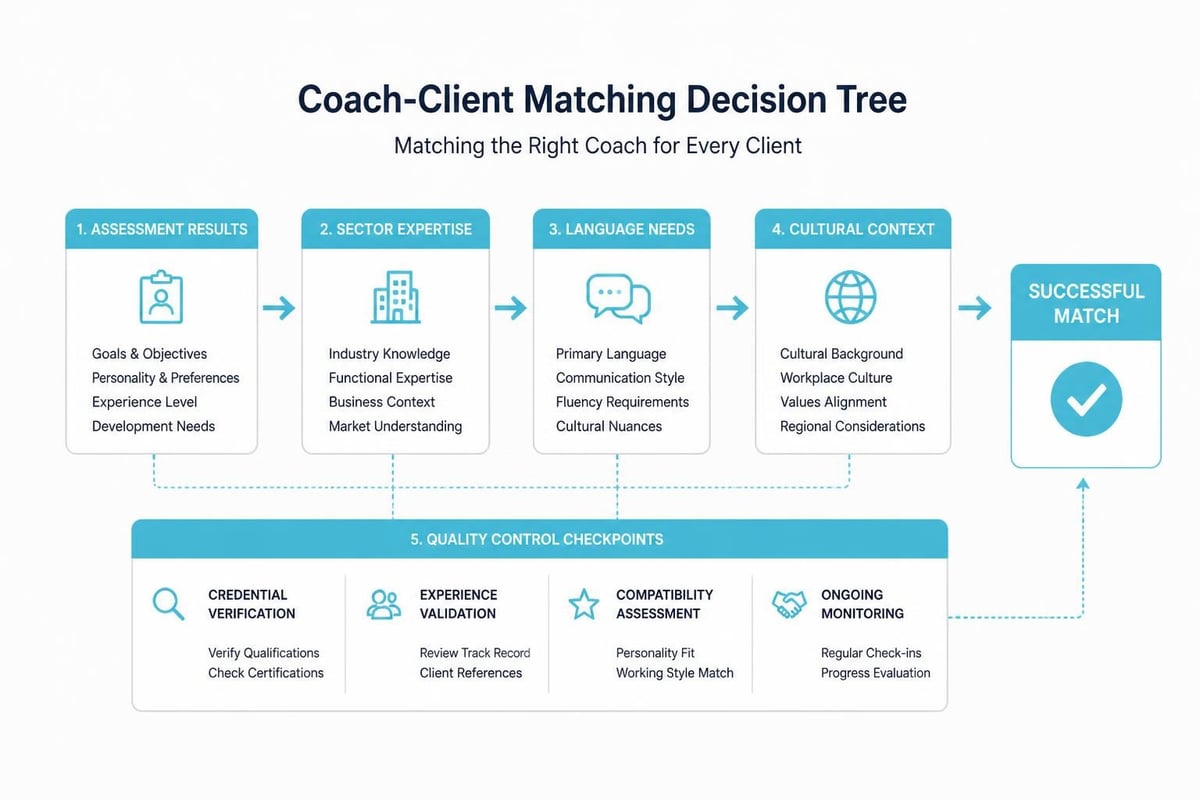
The matching algorithm separates high-performing vendors from the rest. Indonesia's diverse business landscape (manufacturing in Batam, digital economy in Jakarta, resource extraction in Kalimantan) requires coaches with genuine sector expertise and often multilingual capability.
Evaluate vendors on:
| Matching Dimension | Quality Signal | Warning Sign |
|---|---|---|
| Coach Selection Criteria | Documented sector experience, case examples, language proficiency verified | Generic bios, credential lists without context |
| Matching Process | Structured intake, multiple coach options, explicit fit rationale | Single coach assignment without explanation |
| Quality Assurance | Supervisor oversight, session reviews, progress tracking | No monitoring between kickoff and final report |
| Coach Performance Data | Session completion rates, client satisfaction scores, outcome metrics | Anecdotal testimonials only |
The precision coach matching that drives results requires vendor infrastructure most local providers lack. They need coach networks deep enough to offer genuine choice, not just whoever is available.
Cultural Competency Beyond Surface-Level Localization
Every vendor claims cultural sensitivity. Few demonstrate it operationally. Effective corporate coaching vendors in Indonesia navigate multiple cultural layers: national Indonesian workplace norms, organizational culture specifics, generational differences (Baby Boomers through Gen Z now occupy leadership), and often Chinese-Indonesian, Javanese, or other ethnic business cultures.
Case study: A multinational manufacturing client engaged a well-credentialed Australian coaching firm in 2024 to address toxic leadership behaviors in their Surabaya operations. The coaches applied direct confrontation techniques effective in Sydney but disastrous in Javanese business culture. The engagement collapsed after three months, the targeted leader resigned, and the company lost two high-potential managers in the aftermath.
The lesson: Cultural competency requires coaches who've worked extensively in Indonesian organizations, not Western coaches with brief Asia experience. Verify vendor track record through reference checks with Indonesian clients, not just regional ones.
Pricing Models and Cost Structures Across Vendor Categories
Corporate coaching vendors in Indonesia operate across a 10x pricing range, from IDR 2 million to IDR 20 million+ per executive per engagement. Understanding cost drivers helps procurement teams separate genuine value from inflated pricing.
Pricing Architecture by Vendor Category
Global Brand Vendors (BetterUp, CoachHub, BTS, DDI)
- Pricing: USD $300-800 per session or $15,000-40,000 annual per-seat licenses
- Delivery: Primarily digital platforms with international coach pools
- Best for: Multinational organizations requiring consistent global delivery, strong compliance documentation, scalable technology platforms
Regional Specialists (Singapore, KL, Bangkok-based firms with Indonesia presence)
- Pricing: USD $200-400 per session, minimum engagement sizes
- Delivery: Hybrid (local and regional coaches), some Indonesian language capability
- Best for: Mid-market companies prioritizing regional consistency over local depth
Indonesian Boutique Firms
- Pricing: IDR 2-8 million per session (USD $125-500), often package-based
- Delivery: In-person focus, Jakarta-centric with limited national reach
- Best for: Organizations prioritizing local cultural fit, Bahasa Indonesia delivery, relationship-driven engagements
Independent Practitioners
- Pricing: IDR 1.5-5 million per session (USD $95-315)
- Delivery: Highly variable quality and availability
- Best for: Small pilot programs, individual executive needs, budget-constrained initiatives
The executive coaching cost structure in Indonesia includes hidden expenses most RFPs miss: travel for coaches serving operations outside Jakarta, translation services, administrative coordination across time zones, and technology licensing for assessment tools.
ROI Calculation Framework for Coaching Investments
CFOs and CHROs evaluating corporate coaching vendors in Indonesia need quantifiable impact projections, not testimonials. Build business cases using these metrics:
Retention Impact
- Calculate replacement cost for coached executives (typically 1.5-2.5x annual compensation)
- Model retention rate improvements (quality programs show 15-25% improvement)
- Factor reduced recruitment, onboarding, and productivity ramp costs
Performance Improvement
- Baseline current performance metrics (revenue per leader, team engagement scores, project completion rates)
- Set conservative improvement targets (8-15% for well-designed interventions)
- Measure actual results quarterly, not just post-engagement surveys
Cultural Health Indicators
- Track leadership behavior changes through 360-degree assessments
- Monitor team-level engagement and psychological safety scores
- Measure reduction in HR incidents, conflicts, and escalations
Research shows coaching effectiveness correlates strongly with program design quality, not vendor price point. We've seen USD $150 per session programs outperform USD $500 per session alternatives when matching, diagnostics, and accountability structures were superior.
Vendor Selection Process: Practical Procurement Framework
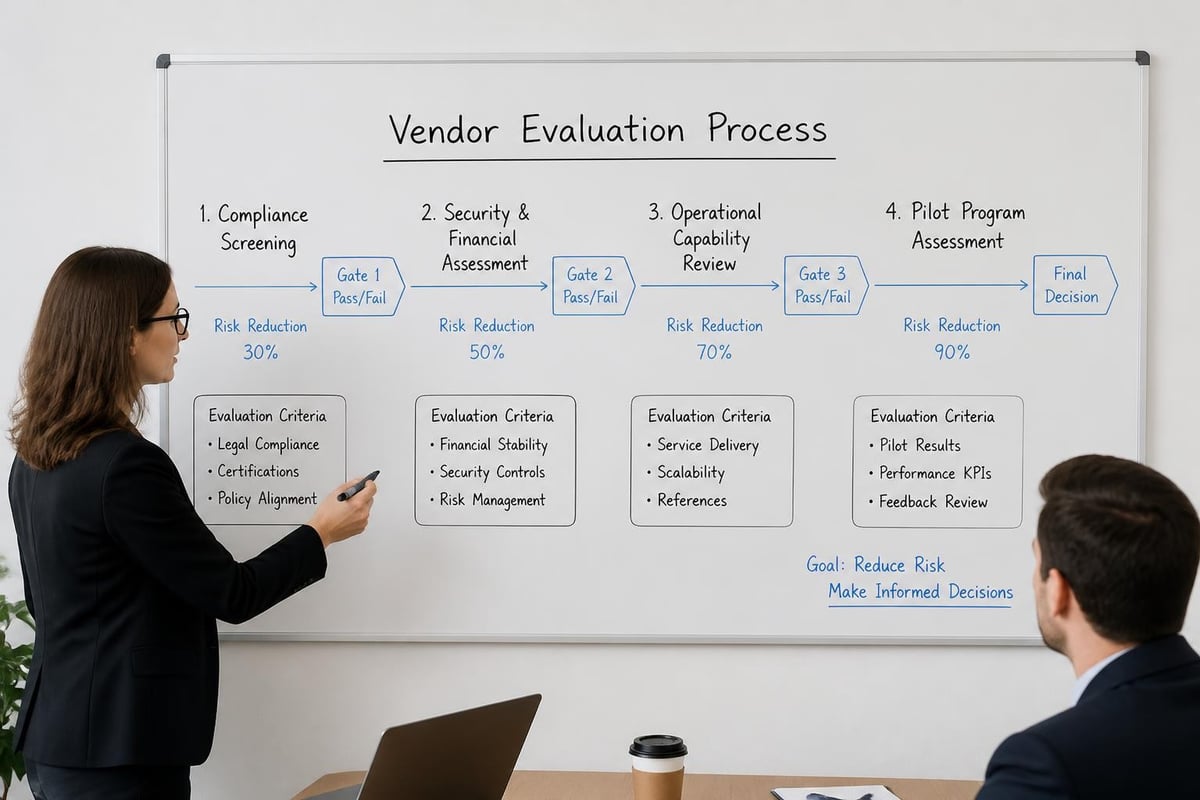
Most organizations evaluate corporate coaching vendors in Indonesia through beauty contest RFPs that optimize for presentation skills rather than delivery capability. A better approach uses staged evaluation with progressively deeper due diligence.
Phase One: Market Scan and Capability Screening (2-3 Weeks)
Build a qualified vendor shortlist using concrete filters:
-
Regulatory Compliance Check
- Verify Indonesian business registration and tax compliance
- Confirm insurance coverage and contract capability
- Review data protection and confidentiality protocols
-
Coach Network Assessment
- Request coach roster with Indonesia-specific experience
- Verify language capabilities and sector expertise
- Check coach credential authenticity (many vendors inflate certifications)
-
Reference Validation
- Speak with 3+ Indonesian clients (not just references vendor provides)
- Ask about coach quality consistency, not just headline results
- Probe on problem resolution when engagements hit obstacles
Phase Two: Diagnostic Capability Evaluation (3-4 Weeks)
Invite 3-4 qualified vendors to demonstrate their approach through a paid pilot:
- Select 2-3 leaders representing your coaching use cases
- Have each vendor conduct intake assessments and propose coaching plans
- Evaluate diagnostic depth, matching rationale, and intervention design
- Compare vendor responsiveness and stakeholder communication quality
This investment (typically USD $5,000-10,000 total) eliminates 80% of vendor selection risk. You'll see actual capability rather than projected promises.
Phase Three: Commercial Negotiation and Contract Structure (2-3 Weeks)
Once you've identified the best-fit vendor through pilots, focus negotiations on outcomes rather than rates:
Outcome-Based Contract Elements
- Baseline metrics established pre-coaching
- Specific improvement targets with measurement methodology
- Payment milestones tied to progress demonstration
- Termination clauses if coaching quality deteriorates
Operational Service Levels
- Coach replacement timeline if fit issues emerge (maximum 2 weeks)
- Progress reporting frequency and format
- Escalation procedures for engagement problems
- Technology platform uptime guarantees (if applicable)
Avoid long-term exclusive relationships until vendor capability is proven through 12-18 months of delivery. The most sophisticated HR leaders we work with maintain 2-3 vendor relationships simultaneously, allocating volume based on demonstrated results rather than contracts.
Integration with Broader Leadership Development Architecture
Corporate coaching vendors in Indonesia too often operate in isolation from organizations' wider talent development systems. This creates duplication, conflicting messages, and coaching interventions that don't reinforce broader strategic priorities.
Aligning Coaching with Performance Management Systems
Effective integration requires vendors who can:
- Sync coaching goals with organizational performance frameworks
- Incorporate company competency models into assessment and development planning
- Coordinate with internal HR on succession planning and high-potential identification
- Feed coaching insights back into talent review processes (with appropriate confidentiality boundaries)
Deloitte’s 2025 Human Capital Trends research emphasizes continuous coaching embedded in workflow rather than standalone interventions. The vendors positioned for growth understand this shift and design programs that integrate with existing development infrastructure rather than replacing it.
Building Internal Coaching Capability Alongside Vendor Relationships
The most successful organizations we've observed don't just buy coaching services. They use external vendors strategically while building internal capability:
Manager-as-Coach Development
- Train managers in coaching skills using evidence-based approaches
- Reserve external executive coaches for complex interventions (toxic leadership, major transitions, high-stakes performance issues)
- Use vendor expertise to upskill internal L&D teams
Internal Coach Certification Pathways
- Identify high-potential leaders and HR professionals for coach training
- Partner with vendors who offer train-the-trainer programs
- Build sustainable internal capability while reducing long-term vendor dependency
This hybrid model typically achieves 40-60% cost reduction over 3-5 years while improving coaching accessibility across leadership levels. The key is selecting corporate coaching vendors in Indonesia who view capability transfer as part of their value proposition, not a threat to recurring revenue.
Sector-Specific Vendor Considerations
Indonesia's diverse economic sectors create specialized vendor requirements that generic coaching firms often miss.
Manufacturing and Industrial Operations
Critical Vendor Capabilities:
- Safety-conscious leadership development
- Experience with shift-work leadership challenges
- Coaching in Bahasa Indonesia for non-English speaking leaders
- Understanding of union dynamics and labor relations sensitivities
Vendors serving this sector need coaches who've worked in industrial environments, not just corporate offices. The leadership challenges in a Bekasi manufacturing plant differ fundamentally from those in a South Jakarta headquarters tower.
Financial Services and Technology
Critical Vendor Capabilities:
- Regulatory awareness (OJK oversight, compliance requirements)
- Digital transformation leadership experience
- Rapid scaling and hypergrowth management
- Managing distributed and remote teams
The skills development priorities identified by the ILO for Indonesia's electronics and technology sectors emphasize adaptive leadership and continuous learning mindsets that coaching can accelerate when vendors understand the specific context.
Government and Public Sector
Critical Vendor Capabilities:
- Understanding of bureaucratic decision-making processes
- Political sensitivity and stakeholder management expertise
- Alignment with public service values and mission orientation
- Patience with slower procurement and approval cycles
Government procurement of coaching services in Indonesia involves unique complexity. Vendors need established relationships with relevant ministries and experience navigating public sector procurement regulations. Many commercial vendors lack this capability entirely.
Emerging Trends Reshaping the Vendor Landscape in 2026
Three forces are restructuring how organizations engage corporate coaching vendors in Indonesia, creating both risks and opportunities for procurement teams.
AI-Augmented Coaching Platforms
Technology vendors now offer AI coaching assistants, analytics dashboards, and matching algorithms that promise efficiency gains. The reality proves more nuanced:
What Works:
- Automated scheduling and administrative coordination
- Data aggregation across multiple coaching engagements
- Pattern recognition in coach notes (with privacy safeguards)
- Matching algorithms as decision support (not replacement for human judgment)
What Doesn't:
- AI coaching bots as substitutes for human coaches (engagement completion rates remain 40-60% lower)
- One-size-fits-all matching algorithms that ignore cultural context
- Over-reliance on digital metrics that miss relationship quality
The vendors succeeding in 2026 use technology to enhance human coaching, not replace it. Be skeptical of purely digital solutions marketed as coaching. They're automated training content, not coaching.
Specialized Coaching for Toxic Leadership Transformation
Organizations increasingly recognize that toxic leadership behaviors destroy more value than poor strategy. This creates demand for vendors with demonstrated capability in challenging behavioral interventions.
Standard coaching approaches fail with toxic leaders because:
- These individuals often lack self-awareness or resist feedback
- Their behaviors are deeply embedded and psychologically protective
- Change requires structured intervention, not just supportive conversations
- Success demands organizational accountability systems alongside individual coaching
Vendors claiming expertise here should demonstrate:
- Specific assessment tools for identifying toxic patterns
- Documented case studies with measurable behavior change
- Clear criteria for when coaching is appropriate versus when removal is necessary
- Integration with HR performance management and progressive discipline processes
Sustainability and ESG Leadership Development
Indonesia's commitment to sustainability targets and increasing ESG scrutiny from investors creates specialized coaching demand. Leaders need capability in:
- Stakeholder engagement across government, community, environmental groups
- Managing tensions between profit, people, and planet
- Long-term strategic thinking in quarterly results cultures
- Transparent communication and accountability
Corporate coaching vendors in Indonesia with genuine ESG leadership expertise remain scarce. Most retrofit generic leadership content with sustainability vocabulary. Evaluate vendors through their coaches' actual experience driving environmental and social initiatives, not their marketing positioning.
Frequently Asked Questions
What qualifications should coaches have to work with Indonesian organizations?
Prioritize demonstrated experience in Indonesian business contexts over international credentials. Look for coaches with 5+ years working with Indonesian clients, fluency in Bahasa Indonesia and English, sector-specific expertise relevant to your industry, and validated assessment tool certification. ICF or EMCC credentials signal professional development but don't substitute for cultural competency and local market knowledge.
How long should a typical executive coaching engagement last?
Effective engagements typically run 6-9 months with sessions every 2-3 weeks. Shorter programs (3-4 months) work for focused skill development or transition support. Longer programs (12+ months) suit complex behavioral change or senior executive development. Avoid vendors pushing monthly or quarterly contracts without clear outcome milestones, as these often prioritize recurring revenue over client results.
Should we use one vendor for all coaching needs or multiple specialists?
Most sophisticated organizations maintain 2-4 vendor relationships: a primary partner for mainstream executive coaching, specialists for toxic leadership or crisis interventions, a regional or global vendor for multinational consistency, and relationships with independent practitioners for specific expertise gaps. This portfolio approach balances efficiency with capability depth while reducing dependency risk.
How do we measure coaching ROI beyond participant satisfaction surveys?
Establish baseline metrics before coaching begins across three categories: individual performance (goal achievement, 360-degree scores, promotion readiness), team impact (engagement scores, turnover rates, project delivery), and organizational outcomes (cultural health indicators, leadership bench strength, strategic initiative success). Measure quarterly and compare coached versus non-coached leader performance over 12-24 months. Quality vendors will help design measurement frameworks, not resist accountability.
What contract terms protect us if coaching quality proves inadequate?
Include coach replacement provisions allowing substitution within 2 weeks if fit issues emerge, progress review gates at 60 and 120 days with termination rights if improvement targets aren't tracking, pro-rated refunds for incomplete engagements terminated for cause, and clear quality standards with coaching session observation rights for HR. Avoid vendors unwilling to guarantee their service quality contractually.
Evaluating corporate coaching vendors in Indonesia requires moving beyond credential checking and price comparison toward capability assessment grounded in your specific leadership challenges and organizational context. The vendors positioned to drive measurable impact combine regulatory compliance, cultural fluency, diagnostic rigor, and proven track records in your sector. When you need precision coach matching and evidence-based leadership development that integrates with your talent systems while meeting compliance standards, Noomii Leadership Coaching delivers scalable solutions backed by validated assessments and measurable ROI across organizations of any size.



Leave a Reply
Want to join the discussion?Feel free to contribute!