
AI Helped Me Think But Not Change: Leadership Insights
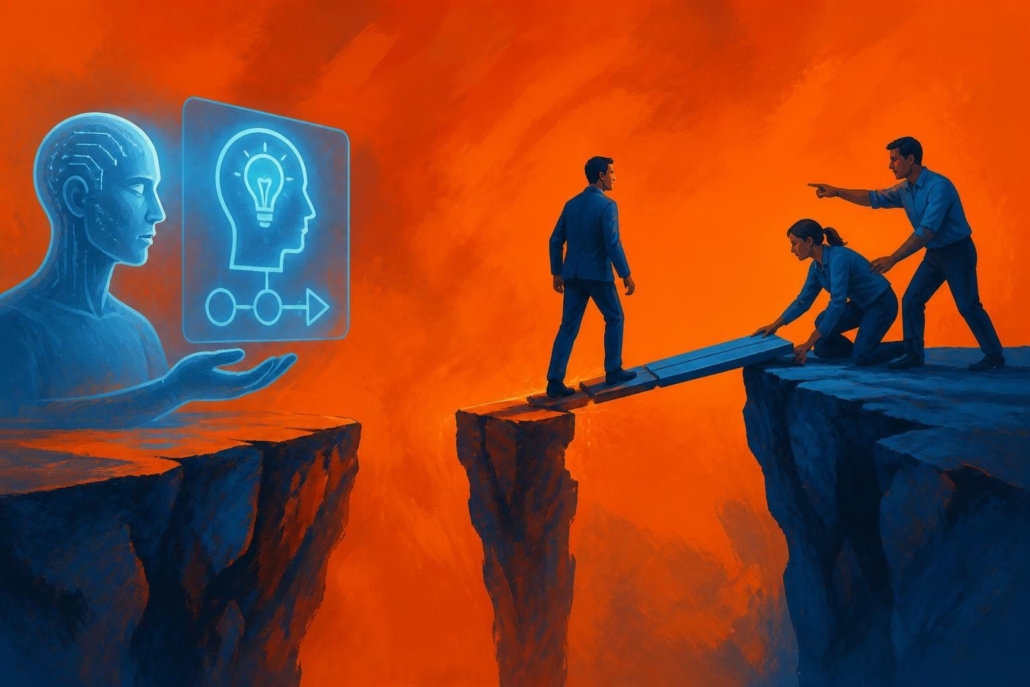
Every manager I've worked with in the past eighteen months has experimented with AI. ChatGPT drafts their emails. Perplexity researches competitors. Claude outlines their strategy decks. The tools deliver insight faster than any consultant ever could. Yet when I sit in their Monday meetings, I see the same avoidance, the same vague priorities, the same failure to hold direct reports accountable. AI helped me think but not change, one VP told me after six months of prompt engineering. She had clarity. She lacked follow-through. That gap is where leadership development actually happens.
Why Insight Alone Never Moved the Needle
I've coached executives who can articulate their blind spots with surgical precision. They know they interrupt. They recognize they avoid conflict. They understand their team needs more autonomy. Research on human–AI collaboration confirms that AI can surface patterns and recommend next steps, but behavioral change requires sustained human accountability. Knowing what to do is table stakes. Doing it under pressure, consistently, with witnesses, is the work.
Why clarity without change is the norm:
- Self-awareness feels like progress, so the brain stops there
- AI delivers answers without imposing consequences for inaction
- Thinking is private; changing behavior requires public risk
- Tools don't coach you live when you default to old habits
The coaching industry has always battled this illusion. Clients leave a workshop energized, then revert to type by Thursday. AI accelerates insight but doesn't solve the execution gap. If anything, it widens it, because leaders now believe understanding equals transformation.

The Automation Complacency Problem in Leadership
One pattern I've observed across mid-market companies: managers use AI to draft performance reviews, prepare for one-on-ones, and analyze team sentiment. The output is often better than what they'd write themselves. So they copy, paste, send. Over time, they stop thinking critically about the feedback. They trust the tool more than their own judgment. The European Commission warns about automation complacency, where overreliance on AI erodes the human's ability to intervene when the system gets it wrong.
In coaching, this shows up as:
- Leaders who accept AI-generated action plans without testing them against real constraints
- Managers who outsource difficult conversations to templates instead of learning the skill
- Teams that mistake well-phrased summaries for actual alignment
The phrase "AI helped me think but not change" captures this perfectly. The tool did half the job. It diagnosed the problem, suggested the fix, and formatted the message. But it didn't make the manager sit across from their underperformer and deliver hard truth. It didn't coach them through the discomfort when the conversation went sideways. Practical corporate coaching fills that gap by coaching live, in real meetings, where behavior actually shifts.
What Thinking Versus Changing Looks Like in Practice
| Scenario | AI-Assisted Thinking | Behavior Change (Coaching) |
|---|---|---|
| Underperformer on team | AI drafts performance improvement plan | Manager delivers feedback face-to-face, adjusts tone in real time, follows up weekly |
| Missed revenue target | AI analyzes pipeline gaps, recommends focus areas | Leader reallocates resources, has difficult trade-off conversations, updates scorecards |
| Low engagement scores | AI suggests communication tactics | Executive changes meeting cadence, listens more, responds to dissent without defensiveness |
The left column is valuable. The right column is what moves KPIs. Studies on AI productivity and trust show that people often accept AI suggestions without modification when they're plausible, even when direct experience would reveal flaws. Coaching interrupts that pattern by forcing the leader to test the idea against reality and adapt.
Why People Transform Slowly Even With Perfect Insight
The world changes fast; people transform slowly. That's not pessimism. It's neuroscience and habit formation. AI can rewrite your strategy in thirty seconds. Rewiring how you respond when challenged takes thirty reps, minimum. I've watched brilliant leaders nod along to every coaching insight, then freeze the moment their CFO questions their proposal. The insight didn't fail them. Their nervous system did.
What blocks change even when thinking is sharp:
- Emotional triggers override cognitive understanding
- Old habits are faster and less effortful under stress
- Organizational systems reward the old behavior
- No one is watching when the moment of choice arrives
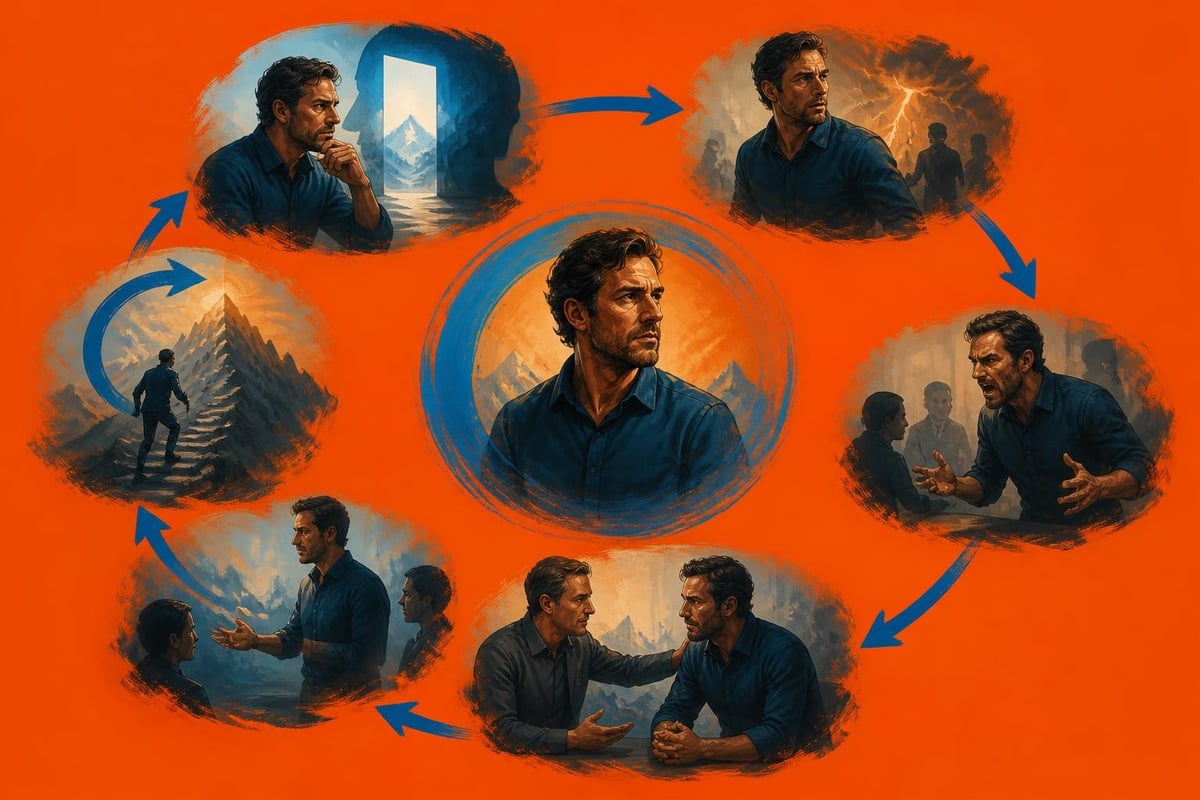
AI helped me think but not change because thinking happens in calm retrospect. Change happens in the meeting when your peer interrupts you for the third time and you have to choose between your new communication framework and your old reflex to talk louder. Effective leadership coaching sits in that moment with you, before and after, until the new reflex becomes default.
When AI Shapes Choices Without Changing Behavior
Some leaders worry AI is too persuasive. They read about AI as a choice architect and fear it nudges them toward decisions that serve the algorithm, not the business. In practice, I see the opposite risk more often: AI provides options, the leader picks one, then nothing happens. The architecture of choice doesn't guarantee execution. A VP once showed me an AI-generated roadmap for improving manager effectiveness. It was excellent, evidence-based, prioritized. Six months later, none of it was implemented. AI helped me think but not change, he said. The gap wasn't insight. It was accountability, follow-through, and someone asking why he hadn't started.
This is where coaching diverges from consulting and tools. We don't just hand you the answer. We coach you through the resistance, the trade-offs, the politics, and the discomfort of disappointing people when you reallocate resources. Executive coaching tied to KPIs keeps the roadmap from becoming shelfware.
Proof That Explainability Alone Doesn't Drive Execution
Research shows explainable AI improves collaboration and task performance, especially when humans understand why the system recommends a specific action. But collaboration on a task isn't the same as behavior change. Knowing why you should delegate more doesn't make delegation comfortable. Understanding that you micromanage under deadline pressure doesn't stop you from doing it again Tuesday.
I've coached dozens of managers who use AI to audit their calendars, analyze their communication patterns, and benchmark their leadership style. The insights are valid. The follow-through is inconsistent. Why? Because thinking ahead and creating goal plans is a different skill than executing under constraint. AI accelerates the former. Coaching develops the latter.
How to Turn AI-Assisted Insight Into Measurable Change
- Tie every insight to a KPI you review weekly. If delegation is the goal, track how many decisions you made versus delegated.
- Coach in the moment, not after. Tools like Noomii’s live meeting coaching intervene when the old habit appears, not three days later.
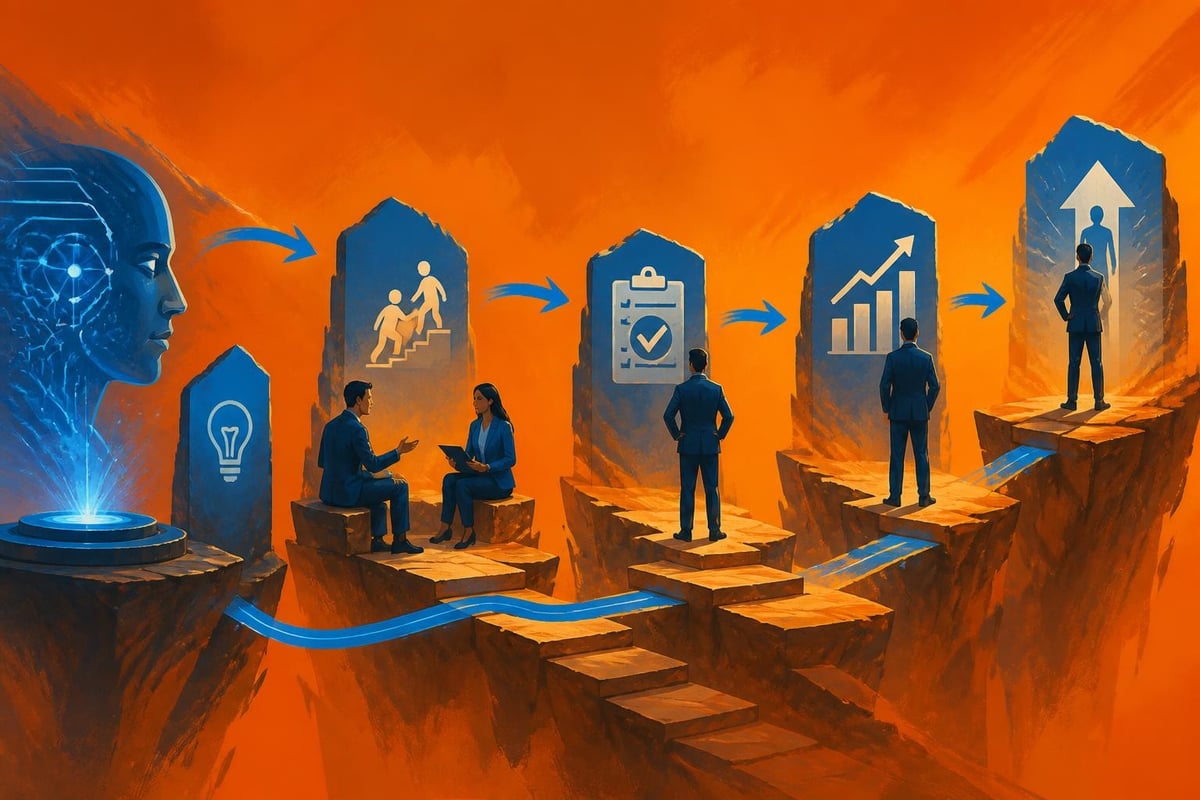
- Build accountability loops. AI gives you a plan. A human asks why you didn't execute it.
- Test insights against real constraints. Does the AI recommendation survive budget cuts, team turnover, and competing priorities?
- Measure behavior, not understanding. Engagement scores, retention, decision speed, pipeline velocity-those prove change.
The Certification Myth and AI-Enhanced Coaching
One contrarian observation: the coaching industry's obsession with certifications mirrors the AI hype cycle. Both promise that the right credential or the right tool will transform outcomes. Neither addresses the execution gap. I've seen ICF-certified coaches deliver theory-heavy sessions that change nothing, and I've seen business coaches with no letters after their name drive double-digit retention improvements because they coached live, tracked KPIs, and held leaders accountable.
AI helped me think but not change applies to coaching credentials, too. A coach can know every model, every framework, every AI-enhanced assessment. If they're not in your meetings, challenging your decisions, and tying progress to measurable outcomes, you're paying for insight, not transformation. The market is waking up to this. Buyers want results, not pedigree. How much does career coaching cost matters less than whether the coach delivers ROI.
What Mid-Market Leaders Miss About AI and Behavior Change
Most leaders I work with underestimate how much structure change requires. They believe self-awareness plus willpower equals new habits. It doesn't. Research on personalized nudging and personality insights shows that tailored recommendations can influence behavior, but only when paired with environmental design, social accountability, and repeated practice. AI can personalize the nudge. It can't sit next to you in the budget meeting and remind you to pause before interrupting your CFO.
The gap between AI-assisted thinking and actual leadership transformation is not a technology problem. It's a coaching problem. The leaders who close that gap fastest work with coaches who:
- Roll up their sleeves and join real meetings, not just debrief afterward
- Tie coaching to KPIs, so progress is visible and accountable
- Challenge decisions in real time, when old habits threaten new priorities
- Operate month-to-month, so results justify the investment continuously
AI will keep getting better at diagnosing problems and suggesting solutions. It won't replace the human work of changing behavior under pressure, in public, with consequences. That's where leadership development earns its keep.
FAQ: AI, Thinking, and Leadership Behavior Change
Q: Why does AI help me think clearly but not change my behavior?
A: AI accelerates insight by analyzing patterns and recommending actions, but behavior change requires sustained practice, accountability, and coaching through discomfort. Thinking happens in calm reflection; change happens under pressure when old habits compete with new intentions.
Q: Can AI replace executive coaching for leadership development?
A: No. AI provides analysis, frameworks, and suggestions, but it doesn't coach you live in difficult conversations, hold you accountable to KPIs, or help you navigate the emotional and political complexity of organizational change.
Q: What is automation complacency, and how does it affect managers?
A: Automation complacency occurs when leaders over-rely on AI-generated recommendations without critical evaluation. This erodes judgment and reduces the ability to intervene when AI suggestions don't fit real constraints or team dynamics.
Q: How do I turn AI-generated leadership insights into measurable results?
A: Tie every insight to a specific KPI you track weekly, build accountability loops with a coach or peer, test recommendations against real constraints, and measure behavior change (decision speed, retention, engagement) rather than just understanding.
Q: Why do smart leaders fail to execute even when they know what to do?
A: Emotional triggers, ingrained habits, organizational inertia, and lack of real-time accountability all block execution. Knowing the right action is easier than performing it under stress, especially when no one is watching.
Q: Does explainable AI improve leadership behavior change?
A: Explainable AI improves understanding and collaboration on tasks, but it doesn't directly drive behavior change. Leaders need coaching to translate insight into consistent action, especially when new behaviors feel uncomfortable or risky.
Q: What's the difference between AI-assisted thinking and coaching for behavior change?
A: AI-assisted thinking delivers clarity, analysis, and recommendations quickly. Coaching for behavior change involves live intervention during high-pressure moments, accountability for execution, and sustained practice until new habits replace old reflexes.
Q: How can coaching help when AI already provides all the answers?
A: Coaching bridges the gap between knowing and doing. It holds leaders accountable, challenges decisions in real time, coaches through resistance, and ties progress to measurable outcomes. AI provides the roadmap; coaching ensures you actually travel it.
Q: Why do mid-market companies struggle with leadership development despite using AI tools?
A: AI tools deliver insights but don't address execution gaps, organizational politics, or the discomfort of changing entrenched behaviors. Mid-market leaders need coaching that operates live in their meetings, ties development to KPIs, and provides accountability when AI suggestions stall.
AI helped me think but not change because insight without accountability rarely shifts behavior. Leaders who recognize this gap are investing in coaching that shows up live, tracks measurable outcomes, and holds them accountable when old habits resurface. Noomii Corporate Coaching works with mid-market companies and Fortune 500 divisions to build leaders who execute, not just understand, by coaching in real meetings and tying progress to clear KPIs. If you want leadership development that delivers visible business results month over month, explore Noomii.



Leave a Reply
Want to join the discussion?Feel free to contribute!