

Corporate Buyers Care About Results Not ICF Certification
When procurement teams evaluate coaching vendors for mid-market companies and Fortune 500 divisions, they don't lead with questions about ICF credentials or certification levels. They ask about measurable outcomes, track records with similar challenges, and how quickly they'll see movement on retention, pipeline velocity, or manager effectiveness. The gap between what coaches emphasize in their marketing and what corporate buyers care about results not ICF badges reveals a fundamental misunderstanding of enterprise purchasing behavior.
What Corporate Procurement Actually Evaluates
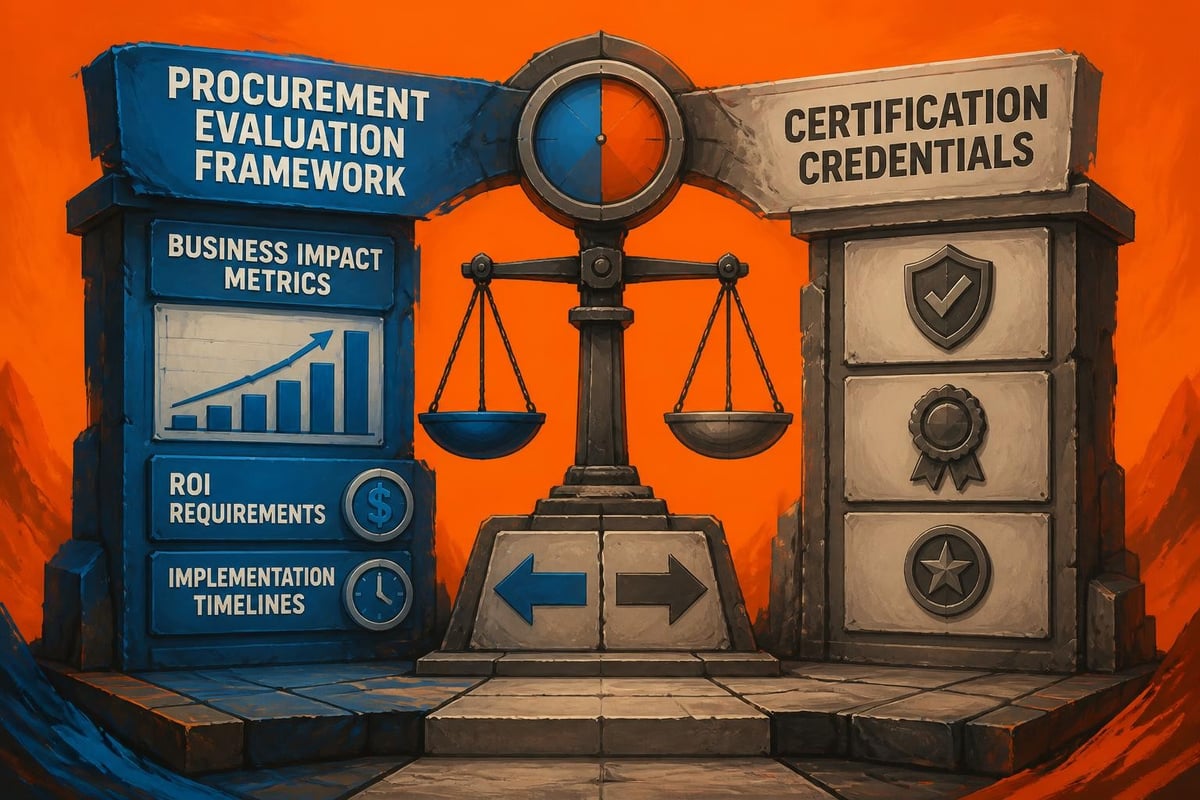
Corporate buyers follow structured vendor evaluation frameworks. Those frameworks prioritize business impact over coaching pedigree.
Key evaluation criteria include:
- Demonstrated ROI from previous engagements with quantified results
- Relevant industry experience addressing similar organizational challenges
- Clear engagement structure with defined milestones and accountability
- Alignment with existing leadership frameworks and KPI scorecards
- Flexible contracting terms that share risk and allow performance assessment
When evaluating coaching programs, procurement teams often bring HR, finance, and operational leaders into the conversation. Each stakeholder asks outcome focused questions. Finance wants to see executive coaching cost structures tied to value delivery. Operations leaders want faster decisions and cleaner execution. HR needs retention improvements they can measure.
The Certification Worship Problem
The coaching industry has created an echo chamber where credentials matter more to coaches than to the clients writing checks. Corporate buyers care about results not ICF membership levels because they've seen certified coaches fail and uncertified practitioners deliver transformative outcomes.
Consider a 2025 engagement with a 180 employee manufacturing company. They hired a PCC certified coach who conducted elegant discovery sessions, used sophisticated assessments, and held monthly reflective conversations with their VP of Operations. Six months in, the executive loved the sessions. Turnover in his division hadn't budged. Project delays continued. The coaching felt valuable but produced no measurable business change.
They switched to a former operations executive with 20 years of P&L responsibility and no coaching certification. Within 90 days, the new coach was sitting in weekly leadership meetings, calling out decision bottlenecks in real time, and restructuring their operating cadence. Turnover dropped 22% in the following quarter. Project completion rates improved by 31%.
Why Experience Trumps Credentials
The pattern repeats across industries. According to research on how corporate coaching budgets really get allocated, buyers consistently choose proven business experience over coaching certification when forced to prioritize.
| Buyer Priority | Weight in Decision | Typical Evidence Required |
|---|---|---|
| Measurable past results | 38% | Case studies with metrics |
| Relevant industry experience | 27% | Direct domain knowledge |
| Engagement flexibility | 18% | Month to month terms |
| Certification level | 11% | Listed credentials |
| Coaching methodology | 6% | Framework overview |
Corporate buyers care about results not ICF badges because they've learned that certification predicts coaching skill, not business impact. A coach can masterfully reflect, ask powerful questions, and maintain presence while a team continues missing targets and bleeding talent.
What Measurable Outcomes Actually Look Like
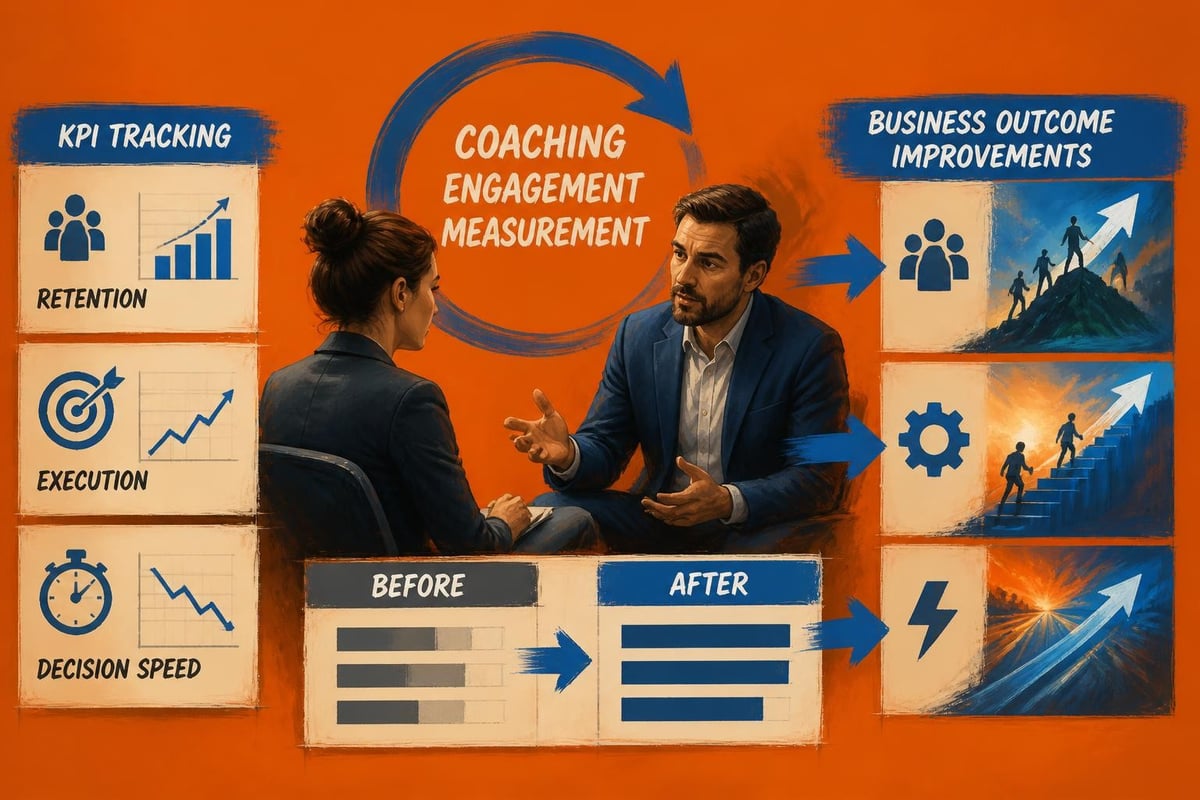
Smart buyers define success before engagement begins. They want coaches who can translate soft skill development into hard business metrics.
Effective coaching engagements track:
- Manager retention rates in coached versus non-coached divisions
- Time to decision on strategic initiatives before and after intervention
- Direct report engagement scores from coached managers' teams
- Pipeline velocity changes for coached sales leaders
- Project completion rates and deadline adherence improvements
When corporate buyers evaluate vendors, they request case studies showing this progression. A technology company with 340 employees wanted to improve their leadership team's execution. Generic leadership development proposals focused on emotional intelligence assessments and monthly coaching sessions. The winning proposal outlined a 90 day engagement with live meeting facilitation, weekly KPI reviews, and monthly measurement against four specific outcomes: decision cycle time, cross functional project completion, leadership team meeting effectiveness scores, and voluntary turnover among high performers.
The Risk Sharing Model Buyers Prefer
Corporate buyers care about results not ICF credentials partly because they're tired of paying for potential instead of performance. Traditional coaching contracts lock companies into 6 or 12 month commitments with payment regardless of outcome.
Progressive coaching providers offer month to month terms with aligned incentives. One structure gaining traction: base fees cover core coaching delivery while performance bonuses tie to agreed KPIs. If manager retention improves by the target percentage, the coach earns additional compensation. If decision velocity increases as measured, both parties win.
This model only works when coaches possess genuine business expertise. Certification teaches coaching methodology. It doesn't prepare practitioners to design KPI scorecards, restructure operating cadences, or diagnose why a leadership team stalls on strategic decisions. Those capabilities come from operational experience.
What Buyers Get Wrong and How to Correct It
Even sophisticated procurement teams make predictable mistakes when selecting coaching partners. Common errors when choosing training providers include overweighting brand recognition, accepting vague outcome definitions, and failing to test coaches against their specific challenges.
Red Flags in Vendor Proposals
- Extensive credential lists with minimal outcome examples
- Generic case studies lacking specific metrics or context
- Resistance to performance based compensation models
- Coaching methodology emphasis over business diagnostic capability
- Long term contract requirements without interim assessment gates
Better buyers conduct working interviews. They bring coaches into a real leadership challenge, observe how they diagnose the issue, and evaluate whether their recommended approach addresses root causes or symptoms. A coach focused on individual development when the problem is structural misalignment reveals their limitations quickly.
Building Coaching Programs That Deliver
Organizations developing internal coaching initiatives should consider several strategic factors beyond coach selection. Program design, measurement frameworks, and integration with existing development systems matter as much as individual coach quality.
Effective program elements:
- Clear linkage between coaching focus areas and strategic priorities
- Manager accountability for applying coaching insights to team performance
- Regular measurement checkpoints tied to business metrics
- Integration with performance coach directories and vendor management systems
- Flexibility to adjust coach assignments based on early results
The most successful implementations embed coaches in actual work. Rather than separating coaching sessions from operational reality, coaches attend leadership meetings, participate in planning sessions, and observe team dynamics firsthand. This approach requires coaches with credibility to operate in business environments, not just coaching credentials.

The Future of Corporate Coaching Purchasing
As companies face AI disruption, talent scarcity, and pressure for faster adaptation, procurement criteria will continue shifting toward outcome proof. Corporate buyers care about results not ICF certification because certification doesn't predict a coach's ability to improve business performance under pressure.
Expect to see more hybrid roles where coaches possess both coaching capability and deep operational expertise. Former executives who've developed coaching skills prove more valuable than professional coaches attempting to understand business dynamics. The credential obsession that dominated 2010 through 2020 is giving way to evidence-based vendor selection.
Organizations building psychological safety at work or developing stronger leadership teams increasingly want coaches who can measure progress, adjust tactics based on data, and tie soft skill development to retention, execution, and financial outcomes. Month to month engagements replace annual contracts. Performance incentives replace fixed fees. Practical business impact replaces theoretical frameworks.
Frequently Asked Questions
Do ICF credentials have any value for corporate buyers?
ICF credentials signal that a coach has completed training and demonstrated baseline competency. However, corporate buyers prioritize measurable results, relevant industry experience, and proven ability to improve business metrics over certification levels when making hiring decisions.
What questions should procurement teams ask when evaluating coaching vendors?
Ask for specific case studies with quantified outcomes, request references from similar sized organizations in your industry, inquire about measurement frameworks and KPI tracking, understand their approach to embedding with teams versus isolated sessions, and explore flexible contracting options that share performance risk.
How long should corporate coaching engagements last?
Month to month terms with 90 day initial commitments allow organizations to assess fit and early results before extended engagement. Six to twelve month contracts make sense only after demonstrating measurable progress against defined business outcomes.
What's more valuable: coaching certification or industry experience?
For corporate environments, relevant industry experience typically delivers better results. A former sales executive coaching sales leaders or an operations veteran working with manufacturing managers brings contextual understanding that pure coaching training cannot replicate.
How can companies measure coaching ROI effectively?
Define specific KPIs before engagement begins, including retention rates, decision cycle times, employee engagement scores, project completion metrics, and revenue per employee. Track baseline measurements, set improvement targets, and measure progress monthly against those specific outcomes.
Should coaching focus on individual development or team performance?
Both matter, but corporate buyers increasingly value team and organizational impact over individual transformation. Coaching that improves how managers lead their teams, how leadership groups make decisions, and how cross functional initiatives execute delivers more visible business value.
What distinguishes effective executive coaching from ineffective approaches?
Effective executive coaching ties directly to business challenges, includes real time observation and feedback in work settings, measures progress through business metrics, adjusts tactics based on results, and maintains accountability for both coach and client around agreed outcomes.
Are long term coaching contracts worth the commitment?
Long term contracts carry risk when outcomes remain undefined or unmeasured. Progressive vendors offer month to month terms that keep both parties accountable. Stay for results, not contractual obligation. Initial commitments should be 90 days with clear success criteria.
What role should HR play versus procurement in coaching vendor selection?
HR understands development needs and culture fit, while procurement evaluates vendor credibility, contract terms, and risk management. Best results come from collaboration where HR defines outcome requirements and procurement ensures vendors can deliver and measure those outcomes effectively.
Corporate procurement teams have learned that coaching credentials don't predict business results. Companies need coaches who can diagnose organizational challenges, work inside operational reality, and drive measurable improvements in retention, execution, and leadership effectiveness. Noomii connects mid-market companies with experienced coaches who prioritize outcomes over credentials, offer month to month flexibility, and tie their work directly to your KPIs and business goals.



Leave a Reply
Want to join the discussion?Feel free to contribute!