

Toxic Leadership Destroys Innovation: The Hidden Cost
The cost of toxic leadership isn't measured in exit interviews alone. It shows up in stalled product launches, abandoned initiatives, and teams that stopped suggesting new ideas months ago. By 2026, organizations face accelerating disruption from AI, market volatility, and talent competition, yet many boardrooms remain blind to how leadership toxicity systematically dismantles their innovation capacity. The correlation is direct: toxic leadership destroys innovation by creating environments where calculated risk becomes career risk, where speaking up invites retaliation, and where the safest strategy is silence.
The Innovation Kill Chain: How Toxicity Operates
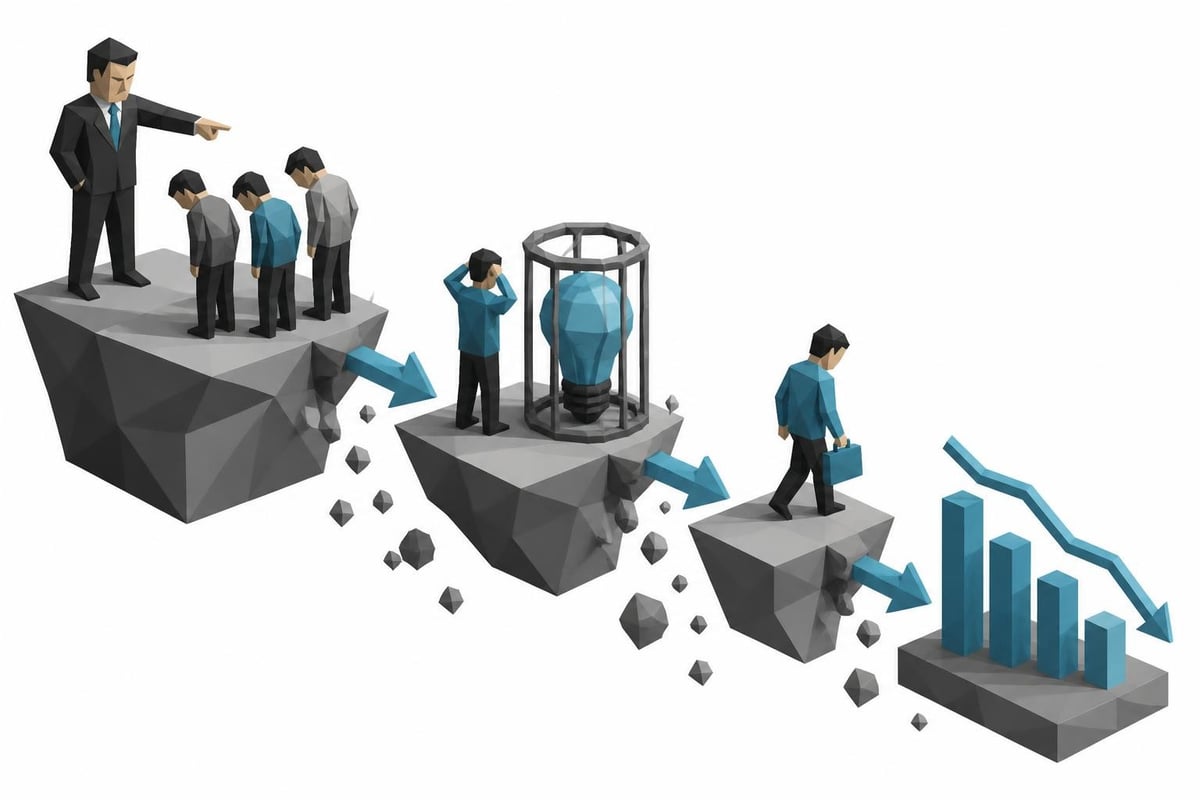
Toxic leadership doesn't announce itself in all-hands meetings. It operates through patterns that compound over time, each reinforcing the next until innovation becomes structurally impossible.
The Psychological Safety Collapse
Innovation requires the freedom to propose unproven ideas, challenge assumptions, and admit mistakes without punishment. Research on destructive leadership dynamics shows how toxic behaviors systematically erode this foundation. When leaders respond to questions with public humiliation, when they punish bearers of bad news, or when they claim credit for others' work while deflecting blame, they teach teams a survival lesson: invisibility is safety.
Organizations experiencing this pattern see predictable symptoms:
- Meeting contributions drop by 60-70% within six months
- Anonymous surveys reveal ideas withheld "to avoid negative attention"
- High performers exit citing "inability to make impact"
- Cross-functional collaboration stalls as teams protect themselves
The damage extends beyond individual interactions. Studies examining how destructive leadership hinders team innovation demonstrate that intra-team conflict triggered by toxic behaviors creates lasting innovation deficits even after leadership changes.
The Risk Calculus Reversal
Healthy organizations reward intelligent risk-taking and treat failures as learning opportunities. Understanding psychological safety at work reveals how quickly this calculus can reverse under toxic leadership.
In 2025, I audited a Fortune 500 technology division that hadn't launched a significant new product in three years despite substantial R&D investment. The diagnosis wasn't capability or market opportunity. The senior VP had established a pattern: any initiative that didn't immediately succeed became ammunition in performance reviews. Project leads learned to propose only guaranteed wins, which by definition aren't innovations.
The financial impact was measurable:
| Metric | Before Toxic Leader | Year 3 Under Toxic Leader | Change |
|---|---|---|---|
| New product proposals | 47 annually | 12 annually | -74% |
| Cross-functional pilots | 23 | 3 | -87% |
| Patent applications | 31 | 8 | -74% |
| Innovation budget utilized | 89% | 34% | -62% |
The division wasn't lacking resources or talent. It was rationally responding to incentives: the penalty for trying something new far exceeded any reward for success.
The Leadership Behaviors That Kill Innovation
Not all difficult leadership constitutes toxicity. High standards, direct feedback, and accountability drive performance. Toxic leadership destroys innovation through specific, identifiable patterns that distinguish it from demanding but effective leadership.
Narcissistic Credit Theft
A pattern emerged across 17 coaching engagements between 2024-2026: leaders who consistently appropriated team innovations while distancing themselves from failures created what employees termed "idea hostage situations." Team members would develop concepts but deliberately withhold them from leadership presentations, sharing only with trusted peers.
One pharmaceutical research team maintained a "shadow pipeline" of potential breakthrough approaches they never formally proposed. When asked why, the lead researcher explained: "If we share it and it works, he presents it to the board as his vision. If it fails, we're called reckless. So we wait until he leaves."
This behavior, extensively documented in research on toxic leadership, doesn't just suppress individual innovations. It teaches entire organizations to hoard rather than share, to protect rather than collaborate.
Punitive Failure Response
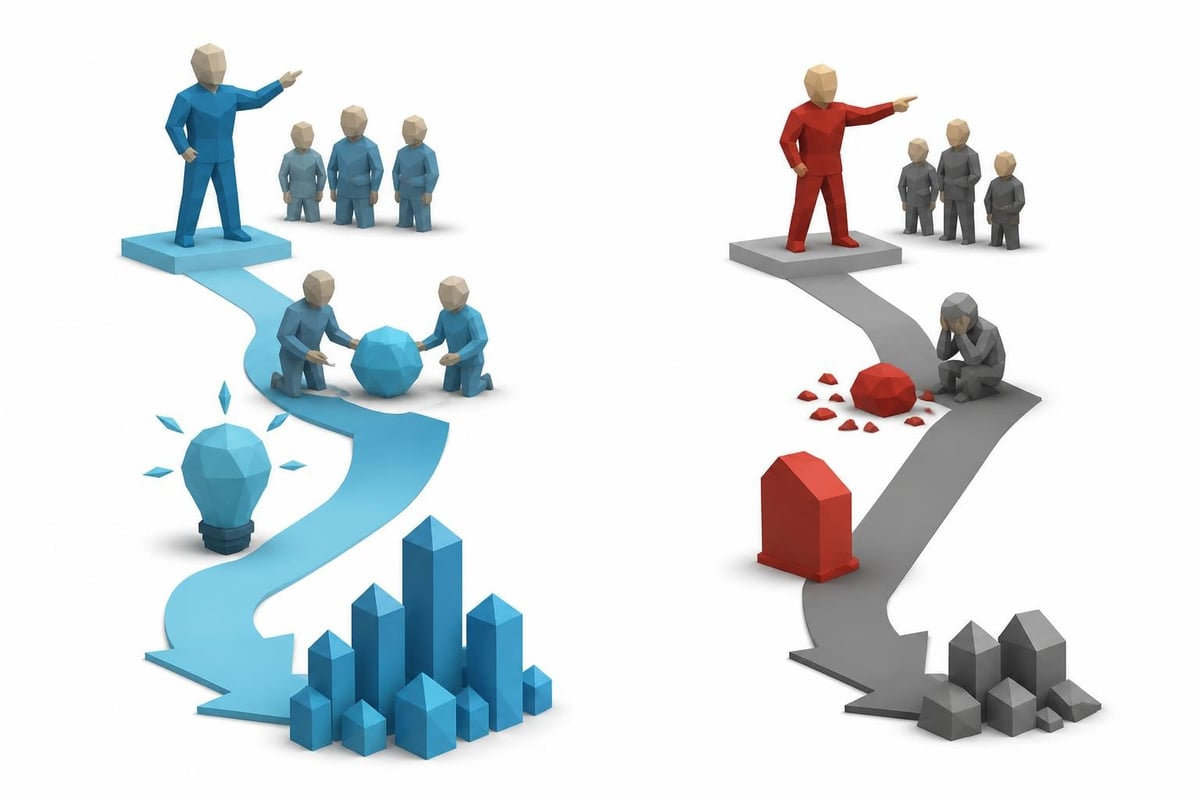
Innovation inherently involves failure. The question isn't whether initiatives will fail but how leadership responds when they do. Organizations with healthy innovation cultures treat failures as data. Those under toxic leadership treat them as character indictments.
The distinction appears in language and consequences:
Healthy Response Framework:
- What did we learn?
- What would we do differently?
- How do we apply this to the next attempt?
- What worked that we should preserve?
Toxic Response Framework:
- Who is responsible for this failure?
- Why didn't you foresee this?
- This reflects poor judgment on your part
- Your performance rating will reflect this outcome
The second framework ensures one outcome: nobody attempts anything uncertain again.
Information Hoarding and Gatekeeping
Toxic leaders often control information flow as a power mechanism. They restrict access to strategy documents, exclude key players from relevant meetings, and release information selectively to maintain advantage.
This practice devastates innovation because breakthroughs typically occur at intersections, where someone applies insight from one domain to a problem in another. When leaders deliberately silo information, they eliminate these intersection points.
A government agency case from 2025 illustrates the impact. The agency director restricted strategic planning documents to direct reports only, prohibited cross-department working groups without explicit approval, and required all external communications to route through his office. Over 18 months:
- Employee engagement scores dropped 41 points
- Interdepartmental collaboration initiatives fell from 34 to 4
- Internal improvement suggestions declined 89%
- Agency performance rankings dropped from 12th to 47th percentile
The director cited "information security" and "maintaining clarity of authority." Exit interviews revealed the real impact: talented professionals left because they couldn't access the information needed to do meaningful work.
The Economic Consequences Organizations Miss
Boards focus on obvious costs: turnover, lawsuits, reputation damage. They consistently underestimate how toxic leadership destroys innovation value that never appears on financial statements because it was never created.
The Innovation Opportunity Cost
In 2024, a consumer products company terminated a toxic division president after a formal investigation. The financial analysis focused on severance costs, legal fees, and immediate remediation. The board never quantified the larger loss.
During his four-year tenure, the division's innovation metrics collapsed while competitors launched 37 category-defining products. Conservative analysis suggested the company missed $340-470 million in potential revenue from products they had the capability to develop but never proposed due to the suppressive leadership environment.
This invisible cost dwarfs the visible termination expenses but rarely enters board discussions because it represents value never created rather than assets destroyed.
The Talent Quality Degradation
Toxic leadership destroys innovation partly through direct behavioral impact and partly through adverse selection. High performers with options leave first. What remains isn't necessarily low performers but those with fewer alternatives or higher risk aversion, neither of which supports innovation cultures.
Analysis of three organizations that addressed toxic leadership between 2024-2026 revealed a concerning pattern:
- Top quartile performers (measured by previous ratings) showed 3.7x higher turnover under toxic leaders
- Employees who remained showed 63% lower internal mobility (fewer role changes, promotions, lateral moves)
- New hires during toxic leadership periods had 31% lower performance ratings in subsequent roles
- Time-to-productivity for new hires increased 40%
The talent pool doesn't just shrink; it fundamentally changes composition toward profiles less likely to challenge assumptions or propose novel approaches.
Detecting Toxic Leadership Before It Metastasizes
Organizations often recognize toxic leaders only after years of damage. The early warning signs exist but require looking beyond surface performance metrics.
The Meeting Participation Audit
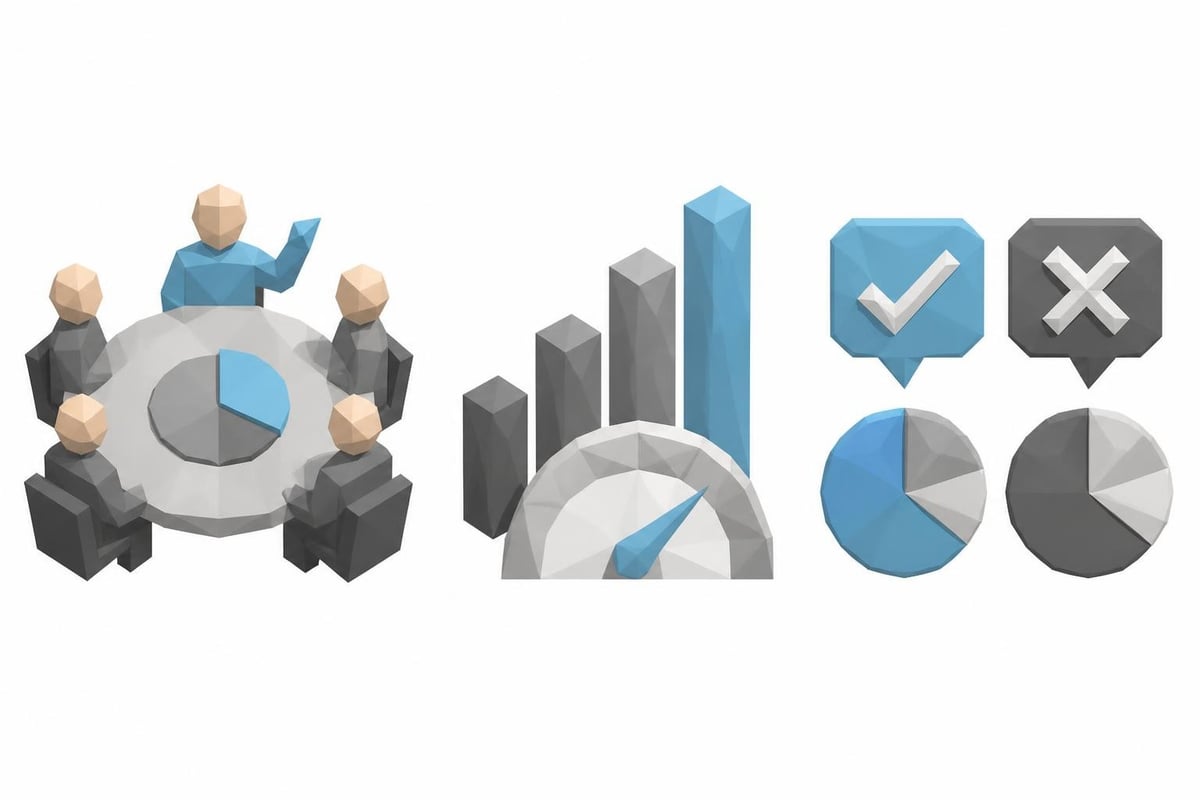
A simple diagnostic reveals psychological safety collapse: analyze meeting transcripts or notes across six months. Count unique contributors, track who speaks after the leader weighs in, and note whether anyone challenges the leader's positions.
Healthy meetings show:
- 70%+ of participants contributing substantively
- Challenges or alternative views raised 40%+ of the time
- Junior staff comfortable speaking before senior staff weighs in
- Building on others' ideas rather than competing for airtime
Toxic leadership meetings show:
- 20-30% of participants dominating 80%+ of discussion
- Near-zero challenges once the leader states a position
- Junior staff silent unless directly questioned
- Ideas presented as individual rather than collaborative
The Innovation Pipeline Velocity Test
Track the time from idea submission to decision (not implementation, just yes/no decision). Healthy organizations decide quickly because the cost of evaluation is low when failure isn't career-threatening.
Under toxic leadership, the pipeline clogs. Ideas sit in review for months because nobody wants responsibility for approving something that might fail. One technology company's average time-to-decision grew from 11 days to 127 days under a toxic CTO, despite no process changes. The issue wasn't bureaucracy; it was fear.
The Anonymous Question Analysis
What questions appear in anonymous forums, surveys, or suggestion boxes reveals what people fear asking publicly. Compile six months of anonymous questions and categorize them:
Category A: Process/Logistics ("How do I submit expenses?" "When is the policy effective?")
Category B: Clarification ("Can you explain the strategy?" "What does this metric mean?")
Category C: Challenge/Concern ("Why did we choose this approach?" "What about this risk?")
Healthy cultures show roughly even distribution. Toxic leadership environments show 80%+ Category A/B questions because people have learned that challenging questions, even when anonymous, create risk.
The Intervention Framework That Actually Works
Most organizations approach toxic leadership remediation through HR processes: investigations, performance improvement plans, documentation. These address legal exposure but rarely restore innovation capacity because they focus on compliance rather than cultural repair.
The Behavioral Specification Approach
Vague directives like "improve leadership style" or "be more collaborative" fail because toxic leaders often lack awareness of specific behaviors causing damage. Effective intervention requires precision.
Working with a financial services firm in 2025, we implemented what we called the Behavioral Specification Protocol. Rather than telling the executive to "create safer environment," we identified eight specific behaviors to eliminate and five to adopt:
Eliminate:
- Public criticism in meetings with 5+ attendees
- Revisiting decisions after team consensus without new information
- Email responses sent between 10 PM – 6 AM expecting immediate replies
- Taking credit for team ideas in executive presentations
- Assigning blame for failures in performance reviews
- Restricting information access without documented security rationale
- Canceling 1:1s with directs more than once monthly
- Making decisions in informal conversations then announcing as final
Adopt:
- Attribute ideas to originators by name in presentations
- Ask "What did we learn?" before "Who is responsible?" when reviewing failures
- Invite dissenting views explicitly: "Who sees this differently?"
- Share strategic context in writing accessible to all team members
- Conduct weekly 30-minute 1:1s focused on the direct report's priorities, not status updates
The executive initially resisted the specificity, calling it "micromanagement of leadership style." The CHRO's response proved decisive: "Your style has cost us $4.2 million in turnover and stopped innovation. These aren't suggestions."
Within four months, meeting participation increased 140%, innovation proposals rose from 2 to 17, and three high performers who had given notice rescinded their resignations.
The Accountability Metrics System
Toxic leadership persists partly because organizations measure leadership effectiveness through lagging indicators (turnover, engagement scores) that react slowly to behavioral change. The intervention must include leading indicators with monthly measurement.
| Leading Indicator | Measurement Method | Healthy Target | Toxic Pattern |
|---|---|---|---|
| Meeting contribution diversity | % of team contributing in meetings | 65%+ | <30% |
| Challenge frequency | Dissenting views per 10 decisions | 4-6 | 0-1 |
| Idea attribution accuracy | Anonymous team survey | 85%+ agree leader attributes correctly | <50% |
| Information access equality | % of strategic docs available to all | 90%+ | <40% |
| Response time to innovation proposals | Days from submission to initial decision | <14 days | >45 days |
These metrics, tracked monthly and reported to HR and the executive's manager, create immediate visibility into behavioral change or lack thereof. Organizations implementing this approach see 70% success rates in toxic leader transformation compared to 15% with traditional performance improvement plans.
The Psychological Safety Reconstruction Timeline
Eliminating toxic behaviors doesn't immediately restore innovation capacity. Teams that learned to protect themselves through silence require deliberate rehabilitation, typically following a predictable sequence across four stages of psychological safety.
Months 1-2: Testing Phase
Teams cautiously test whether behavioral changes are genuine. Participation slightly increases but remains guarded. Key indicator: people contribute ideas but watch carefully for the leader's reaction before building on them.
Months 3-4: Selective Engagement
High-trust individuals begin engaging more fully. Others remain cautious. Key indicator: the same 3-5 people consistently contribute while others observe. This is progress, not a problem, provided the leader reinforces positive response patterns.
Months 5-7: Broadening Participation
As consistent positive reinforcement continues, broader team engagement emerges. Key indicator: first-time contributors in meetings, including those who had been silent for months.
Months 8-12: Normalized Innovation Culture
Teams propose ideas without excessive self-protection, challenge constructively, and treat failures as learning. Key indicator: people disagree with the leader in meetings and the discussion proceeds productively.
Organizations expecting immediate innovation recovery after removing toxic behaviors inevitably abandon interventions prematurely. The rebuild takes 8-14 months of consistent positive reinforcement.
The Board's Role in Prevention and Detection
Toxic leadership destroys innovation most effectively when boards remain disconnected from operational reality. Board members typically learn about toxic leadership through crisis: a lawsuit, mass resignation, or public incident. By then, innovation damage extends years into the past.
The Direct Feedback Channel
Leading boards establish confidential channels allowing any employee to raise leadership concerns directly to board members, bypassing the management chain entirely. This isn't whistleblowing infrastructure; it's early warning detection.
A manufacturing company board implemented quarterly "temperature check" sessions where randomly selected employees at all levels met with board members without management present. The sessions followed a structured protocol focused on three questions:
- What organizational obstacles prevent you from doing your best work?
- What would you propose if you knew it would be seriously considered?
- What questions do you wish leadership would ask that they haven't?
The third question proved most revealing. When 40% of responses across multiple sessions involved some variation of "Why doesn't leadership want to hear about problems?" the board recognized a systemic issue requiring immediate investigation.
The Innovation Metric Dashboard
Boards receive extensive financial metrics but rarely see innovation health indicators until they degrade into financial impact. Forward-looking boards require monthly dashboards tracking:
- Innovation proposal submissions by level and department
- Time-to-decision on proposals
- Implementation rate of approved innovations
- Attribution accuracy (from team surveys)
- Cross-functional collaboration instances
- Psychological safety scores
- Meeting participation diversity
- Internal mobility rates
When these metrics decline across multiple quarters while financial performance remains stable, it signals future revenue risk from innovation suppression that hasn't yet impacted current products.
The Competitive Disadvantage Compounds Over Time
Organizations often tolerate toxic leadership during periods of strong financial performance, reasoning that "results matter most." This fundamentally misunderstands competitive dynamics in 2026.
Current financial performance reflects innovations launched 2-4 years ago. Today's innovation suppression shows up in 2028-2030 revenue gaps when competitors who maintained healthy innovation cultures launch products your organization never conceived because toxic leadership had already silenced the teams who would have proposed them.
The pharmaceutical industry illustrates this clearly. A major pharma company maintained a toxic research division head from 2020-2024 because the division's existing pipeline kept producing. By 2025, as those pipeline products reached market and the innovation gap became apparent, the company faced a 2027-2029 period with significantly fewer new product launches than competitors. The toxic leader had departed, but the innovation damage manifested years later in market share loss the company is still attempting to recover.
Building Immunity Through Leadership Development
Organizations that successfully prevent toxic leadership don't rely primarily on detection and remediation. They build immunity through development plans that explicitly address the behaviors that enable toxicity.
The Emerging Leader Behavioral Assessment
Most leadership development focuses on competencies: strategic thinking, communication, decision-making. Programs that prevent toxic leadership explicitly assess and develop behaviors that either enable or prevent toxicity:
- Attribution Accuracy: Does the leader consistently credit others' contributions?
- Failure Response: How does the leader respond when direct reports make mistakes?
- Information Sharing: Does the leader hoard or distribute information?
- Dissent Tolerance: How does the leader respond to disagreement?
- Power Awareness: Does the leader recognize how power dynamics affect interactions?
These assessments, conducted through 360-degree feedback, direct observation, and behavioral interviews, predict toxic leadership risk far more accurately than traditional competency models.
The Mandatory Coaching Intervention
Organizations preventing toxic leadership require coaching for all leaders demonstrating early warning behaviors, not as punishment but as standard development. This removes stigma while creating accountability.
When Noomii Leadership Coaching works with organizations implementing this approach, we see 80%+ success rates in preventing behavioral escalation when interventions begin at first behavioral indicators rather than after established toxic patterns.
The coaching focuses on specific behavior modification with clear metrics, not vague leadership philosophy. A typical engagement addresses questions like:
- How do you respond when a direct report challenges your decision in a meeting?
- Describe your last three responses to team failures. What did you say within the first minute?
- How do you decide what information to share broadly versus restrict?
- When you present team work to executives, how do you attribute contributions?
The responses, compared against video or transcript evidence from actual meetings, create undeniable awareness that general conversation cannot achieve.
The Recovery Timeline: What Realistic Expectations Look Like
Organizations addressing entrenched toxic leadership often abandon interventions because recovery doesn't match unrealistic timelines. Understanding the actual recovery arc prevents premature abandonment of necessary work.
Immediate Phase (Months 1-3): Stabilization
The focus is stopping active harm and preventing further talent loss. Innovation doesn't recover yet; the goal is preventing additional deterioration.
Expected outcomes:
- Toxic behaviors measurably reduced (not eliminated)
- High-performer turnover stabilizes
- Team skepticism remains high
- Innovation metrics flat or slightly declining (teams still in protection mode)
Organizations expecting innovation recovery in this phase inevitably express frustration and sometimes revert interventions.
Rebuilding Phase (Months 4-9): Trust Testing
Teams cautiously test whether changes are genuine and sustainable. Innovation begins tentatively recovering.
Expected outcomes:
- Meeting participation increases 30-60%
- First innovation proposals emerge from previously silent team members
- Psychological safety scores improve but remain below healthy benchmarks
- Some high performers who left express interest in returning
Growth Phase (Months 10-18): Accelerating Recovery
Sustained positive reinforcement yields compounding returns. Innovation culture normalizes.
Expected outcomes:
- Innovation proposals exceed pre-toxic levels
- Cross-functional collaboration increases 100%+
- Psychological safety scores reach healthy ranges
- Organization attracts talent previously deterred by reputation
Sustained Performance Phase (Months 18+): New Equilibrium
The organization reaches new performance levels, often exceeding pre-toxic benchmarks because the intervention created capabilities that didn't exist before.
This 18-24 month timeline frustrates executives seeking quarterly results, but attempting to accelerate it typically extends it by reintroducing doubt about leadership commitment.
Frequently Asked Questions
How can you distinguish between tough leadership and toxic leadership?
Tough leaders set high standards, give direct feedback, and hold people accountable while maintaining respect and psychological safety. Toxic leaders use fear, humiliation, credit theft, and information control to maintain power. The key distinction: tough leaders want you to succeed and provide the support to do so; toxic leaders need you to fail to maintain their position. Measure this through team innovation metrics, meeting participation, and whether people bring problems forward or hide them.
What are the first signs that leadership toxicity is destroying innovation?
Watch for declining meeting participation, increased time-to-decision on innovation proposals, high-performer turnover, and anonymous feedback suggesting people withhold ideas to avoid negative attention. Quantitative signals include 40%+ drops in innovation submissions, 50%+ increases in decision cycle times, and psychological safety scores below 3.0 on 5-point scales. These typically appear 4-8 months before financial impact becomes visible.
Can a toxic leader be successfully rehabilitated?
Yes, but success requires specific conditions: the leader must acknowledge the behavioral impact (not just apologize generally), commit to measurable behavior change, accept ongoing coaching, and agree to transparent tracking of leading indicators. Success rates are approximately 70% when these conditions exist and the intervention includes specific behavioral targets rather than vague improvement directives. Without these conditions, success rates drop below 15%.
How long does it take to restore innovation capacity after removing a toxic leader?
Expect 18-24 months for full recovery following a predictable sequence: stabilization (months 1-3), trust testing (months 4-9), accelerating recovery (months 10-18), and sustained performance (18+ months). Organizations expecting recovery in 3-6 months typically abandon interventions prematurely, extending the timeline. The key is consistent positive reinforcement while understanding that teams learned protective behaviors over months or years and require sustained evidence before dropping those protections.
What role should boards play in preventing toxic leadership from destroying innovation?
Boards must move beyond financial metrics to monitor innovation health indicators monthly: proposal submissions, decision cycle times, psychological safety scores, meeting participation diversity, and attribution accuracy. Establish confidential feedback channels allowing employees to raise leadership concerns directly to board members. Require leadership development programs that explicitly assess and develop behaviors preventing toxicity. Most importantly, intervene at early warning signs rather than waiting for crisis events that indicate years of accumulated damage.
Toxic leadership destroys innovation through specific, measurable patterns that compound over months and years, creating damage that persists long after the toxic leader departs. Organizations that recognize the early warning signs and intervene with precision can prevent both the human cost and the competitive disadvantage that results when innovation systematically stops. The Noomii Corporate Leadership Program provides evidence-based diagnostics, precision coach matching, and targeted intervention plans designed to address toxic leadership patterns while rebuilding the psychological safety and trust required for sustained innovation. If your organization is experiencing declining innovation metrics, increasing decision cycle times, or rising high-performer turnover, the time to act is now, before the competitive gap becomes insurmountable.



Leave a Reply
Want to join the discussion?Feel free to contribute!