

Can Coaching Help Your Marriage? Evidence and Limits
The question "can coaching help your marriage" appears frequently in search bars and coaching directories, but the answer depends entirely on what's broken, what you expect, and whether your coach understands the difference between performance coaching and clinical intervention. Most relationship coaches overestimate their training and underestimate the complexity of marital distress. The truth is messier: coaching works for certain relationship challenges and fails spectacularly for others, and knowing which bucket you're in determines whether you waste time and money or build real traction.
What Coaching Can and Cannot Do for Marriages
Coaching excels when couples face execution problems, not pathology.
If you and your partner need to align goals, improve communication about logistics, coordinate parenting or career decisions, or rebuild partnership habits after a transition, structured coaching conversations can clarify priorities and create accountability. These are performance issues. You have the tools; you need systems and focus.
Coaching fails when the problem is trauma, infidelity, addiction, clinical depression, or deep-seated attachment wounds. Coaches are not licensed therapists. They lack diagnostic training, cannot ethically treat mental health conditions, and have no business working with couples in crisis. Harvard Health’s guidance on couples therapy draws a clear line: therapy addresses distress, dysfunction, and pathology, while coaching builds skills and execution.
When coaching fits:
- Coordinating dual careers or relocation decisions
- Building shared financial planning habits
- Aligning parenting styles and schedules
- Improving meeting rhythms and communication cadence
- Reconnecting after life transitions (new baby, empty nest, career change)
When therapy is required:
- Affairs, betrayal, or broken trust
- Substance abuse or addiction
- Ongoing emotional or verbal abuse
- Clinical anxiety, depression, or trauma
- Repeated conflict without resolution despite effort

The credentialing landscape adds confusion. Most relationship coaches have no regulated training. Some hold credentials from organizations like the National Board for Health & Wellness Coaching, but those certifications focus on wellness, not couples work or mental health. Therapy licenses (LMFT, LCSW, psychologist) require thousands of supervised hours and regulated exams. Coaching credentials require far less. Buyers often miss this gap.
Evidence for Coaching in Relationship Contexts
Can coaching help your marriage when evidence is limited?
The research base for coaching in marital contexts is thin. Most studies evaluate therapy, not coaching. A systematic review of couple interventions found moderate evidence for structured programs (like Gottman Method or Emotionally Focused Therapy), but these are delivered by licensed clinicians, not coaches. Coaching lacks comparable data.
That doesn't mean coaching provides zero value. It means buyers should adjust expectations. If you hire a coach for relationship work, you're betting on their judgment, frameworks, and experience, not a validated evidence base.
What We Know From Adjacent Fields
Performance coaching in business contexts shows clear outcomes when tied to specific behaviors, feedback loops, and accountability. The same principles apply to relationships:
- Regular check-ins increase follow-through on agreements
- Structured frameworks (communication templates, decision matrices) reduce ambiguity
- Third-party accountability breaks stalemates when partners avoid hard conversations alone
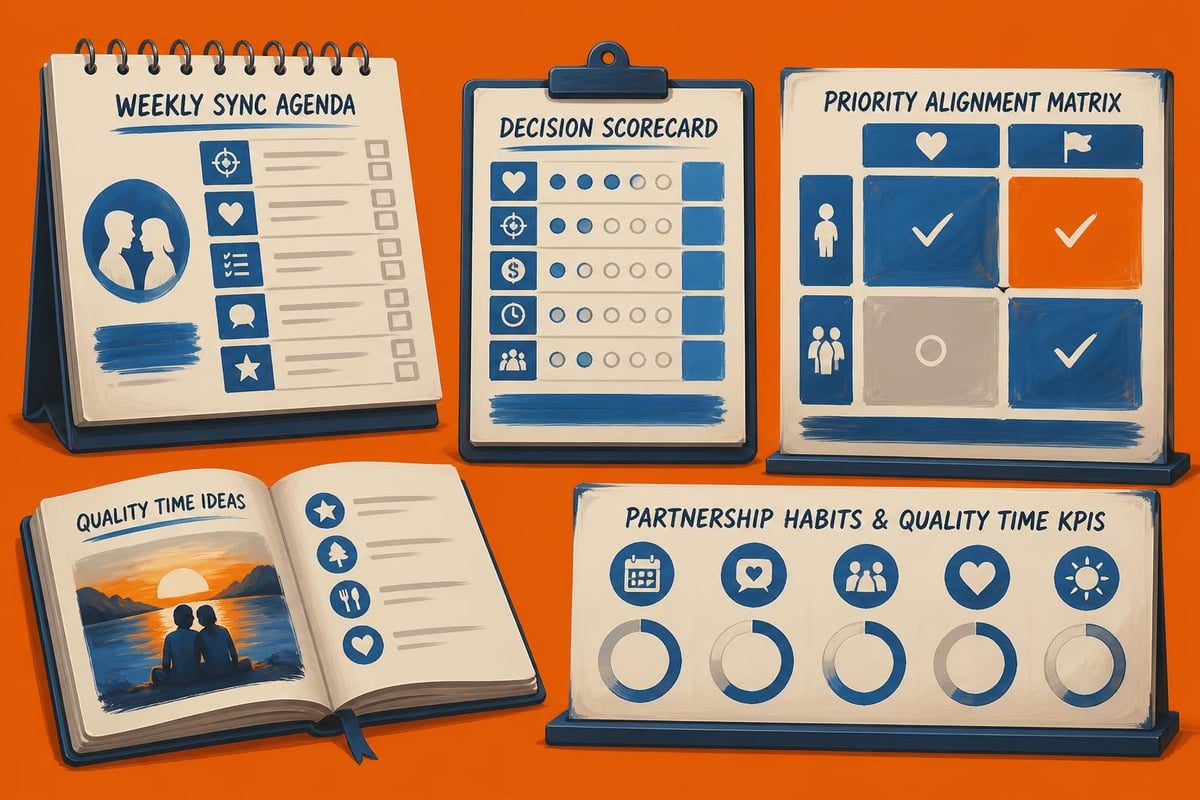
One couple I observed worked with a coach to navigate a cross-country move and dual-career negotiation. The coach built a shared decision scorecard, facilitated weekly planning sessions, and held each partner accountable for researching schools, job markets, and housing. No therapy. Just execution. Six months later, the move succeeded, and the relationship strengthened because they had a system.
That's coaching at its best: building infrastructure around decisions and habits.
How Relationship Coaching Compares to Therapy and Structured Programs
| Approach | Credentials | Focus | Evidence Base | Cost | Best For |
|---|---|---|---|---|---|
| Licensed Therapy (LMFT, LCSW) | State-regulated, 3,000+ supervised hours | Diagnosis, trauma, dysfunction | Strong for specific modalities (EFT, Gottman) | $150–$300/session | Clinical issues, distress, repair after crisis |
| Relationship Coaching | Varies widely, often unregulated | Goal alignment, communication habits, logistics | Weak; mostly anecdotal | $100–$250/session | Performance, transitions, co-parenting logistics |
| Structured Programs (Gottman workshops, etc.) | Delivered by trained facilitators | Skill-building, psychoeducation | Moderate to strong for specific curricula | $200–$2,000 (workshop) | Prevention, skill gaps, engaged couples |
The American Psychological Association’s relationship resources and research summaries make clear that structured, evidence-informed interventions outperform generic talk sessions. Coaching rarely offers that rigor unless the coach borrows from validated frameworks like Gottman’s practitioner tools or similar research-backed models.
Most relationship coaches invent their own frameworks. Some are thoughtful. Many are repackaged common sense.
Four Scenarios Where Coaching Adds Value (and One Where It Doesn't)
Scenario 1: The Execution Gap
A couple earning $200K+ combined struggles to align on financial goals despite shared values. They need a coach to facilitate monthly money meetings, build a priority matrix, and hold them accountable. No pathology. Just poor systems. Coaching works.
Scenario 2: The Transition
Partners navigate a job change, relocation, or new baby and lose connection. A coach structures weekly alignment conversations, tracks shared priorities, and ensures neither partner disappears into solo mode. Coaching adds value.
Scenario 3: The Performance Partnership
Two high-achieving professionals treat their marriage like a neglected project. A coach introduces operating rhythms (weekly syncs, quarterly reviews), communication templates, and KPIs (date nights, family time, individual goals). Coaching fits.
Scenario 4: The Co-Parenting Team
Divorced or separated parents need neutral facilitation to coordinate schedules, align discipline approaches, and communicate without conflict. Coaching provides structure when therapy isn't required. Value depends on the coach's facilitation skill.
Scenario 5: The Broken Trust (Coaching Fails Here)
One partner had an affair. The couple needs healing, rebuilding safety, and processing trauma. Coaching is inappropriate. Therapy with a trained trauma-informed clinician is required. Coaches who accept this engagement cross ethical lines.
What Buyers Miss When Hiring Relationship Coaches
Most people searching "can coaching help your marriage" don't ask:
- What's your training in couples work specifically? Generic coach training doesn't cover relationship dynamics, attachment theory, or conflict patterns.
- What frameworks or models do you use? If the coach can't name a structured approach (Gottman-inspired tools, Imago dialogue, etc.), they're improvising.
- What are your ethical boundaries? Good coaches refer to therapy when issues exceed coaching scope. Bad coaches claim they can handle everything.
- What outcomes have past clients achieved? Testimonials matter less than specific results: decisions made, communication improved, transitions navigated.
Organizations like Noomii vet coaches across specialties, but buyers still need to ask hard questions. For business-focused coaching tied to team performance or leadership, credentialing and outcomes are clearer. Relationship coaching remains looser.
When to Choose Therapy Over Coaching
If any of the following apply, skip coaching and find a licensed therapist:
- You've tried to resolve the same conflict for months without progress
- One or both partners feel unsafe, dismissed, or controlled
- Infidelity, substance abuse, or dishonesty is present
- You're considering separation or divorce
- Mental health symptoms (depression, anxiety, PTSD) affect the relationship
The AHRQ’s topic brief on couples therapy outlines where research supports intervention. Coaching doesn't appear in those summaries because it isn't studied as a clinical tool.
Therapy also offers insurance coverage in many cases. Coaching never does.
Coaching Marriage: A Practical Comparison
Can coaching help your marriage more than self-help books, workshops, or doing nothing?
| Option | Cost | Time Commitment | Personalization | Accountability | Evidence |
|---|---|---|---|---|---|
| Do Nothing | $0 | Zero | N/A | None | Poor outcomes in research |
| Self-Help Books | $15–$30 | Self-paced | Low | None | Mixed; depends on application |
| Structured Workshop | $200–$2,000 | 1–3 days | Moderate (group setting) | Low to moderate | Good for prevention and skills |
| Coaching | $100–$250/session | Weekly or biweekly | High | High | Limited research; anecdotal success |
| Therapy | $150–$300/session (often covered by insurance) | Weekly | High | High | Strong for distress and dysfunction |
Coaching's advantage is customization and accountability without the clinical overhead. Its weakness is lack of evidence and uneven practitioner quality.
Red Flags When Evaluating Marriage Coaches
Avoid coaches who:
- Claim to "heal trauma" or treat mental health conditions. They're not licensed to do so.
- Promise guaranteed outcomes ("Save any marriage in 90 days"). Relationship dynamics don't work that way.
- Refuse to refer to therapy when issues exceed coaching scope. Ethical coaches know their limits.
- Rely exclusively on their own marriage as proof of expertise. One anecdote isn't transferable skill.
- Offer vague frameworks with trendy language but no structure or tools.
Good coaches name their limits, use clear frameworks, track progress against goals, and refer when appropriate.
FAQ: Can Coaching Help Your Marriage?
1. Can coaching help your marriage if you're already in therapy?
Yes, if roles are clear. Therapy addresses emotional wounds and dysfunction; coaching can support execution (coordinating schedules, aligning goals, building new habits). Ensure both professionals communicate and agree on scope.
2. How is marriage coaching different from couples therapy?
Coaching focuses on performance, goals, communication systems, and logistics. Therapy addresses mental health, trauma, attachment wounds, and clinical distress. Therapists hold licenses; most coaches don't. Therapy is evidence-based; coaching is less regulated.
3. What credentials should a marriage coach have?
No universal standard exists. Look for training in couples dynamics (Gottman, Imago, or similar frameworks), experience with relationship work specifically, clear ethical boundaries, and willingness to refer to therapy when needed. Generic coaching credentials aren't enough.
4. How much does marriage coaching cost?
Most relationship coaches charge $100 to $250 per session. Packages may offer slight discounts. Therapy often costs more ($150–$300/session) but may be covered by insurance. Coaching is never covered.
5. How long does marriage coaching take?
It depends on goals. Simple execution challenges (aligning on a decision, building a communication rhythm) may resolve in 4–8 sessions. Deeper habit change or ongoing partnership support can extend to months. Avoid coaches who demand long contracts.
6. Can coaching save a marriage on the brink of divorce?
Rarely. If trust is broken, communication has collapsed, or one partner has disengaged emotionally, therapy is needed. Coaching works best for motivated couples facing execution gaps, not existential crises.
7. What results can you expect from marriage coaching?
Clear communication systems, better decision-making processes, aligned priorities, accountability for agreements, and structured check-ins. Don't expect healing from affairs, trauma recovery, or resolution of deep emotional wounds. Those require therapy.
8. Should both partners participate in coaching sessions?
Usually, yes. Relationship coaching is most effective when both partners attend, engage, and commit to action. One-on-one coaching for relationship issues risks imbalance and lacks the joint accountability that drives results.
9. What questions should you ask before hiring a marriage coach?
Ask about their training in couples work specifically, frameworks or models they use, how they handle issues beyond coaching scope, what outcomes past clients achieved, and how they measure progress. Request references and clarify fees upfront.
Marriage coaching works when the problem is execution, not pathology, and when both partners commit to structured conversations, clear goals, and accountability. If you're a leader navigating dual careers, co-parenting, or partnership decisions alongside business demands, the same focus on systems, KPIs, and outcomes that drives organizational results can strengthen your relationship. Noomii connects you with vetted coaches who bring clarity, structure, and accountability to both professional and personal challenges, delivering measurable progress without long contracts or empty promises.



Leave a Reply
Want to join the discussion?Feel free to contribute!