
Career Coaching vs Mentoring: 7 Key Differences
Most mid-market companies waste budget confusing career coaching versus mentoring, expecting the same outcomes from fundamentally different interventions. The confusion costs time, engagement, and measurable progress. After working with dozens of organizations between 25 and 500 employees, the pattern is clear: companies that understand the distinction deploy both strategically and see stronger retention, faster skill development, and cleaner execution.
What Career Coaching Actually Delivers
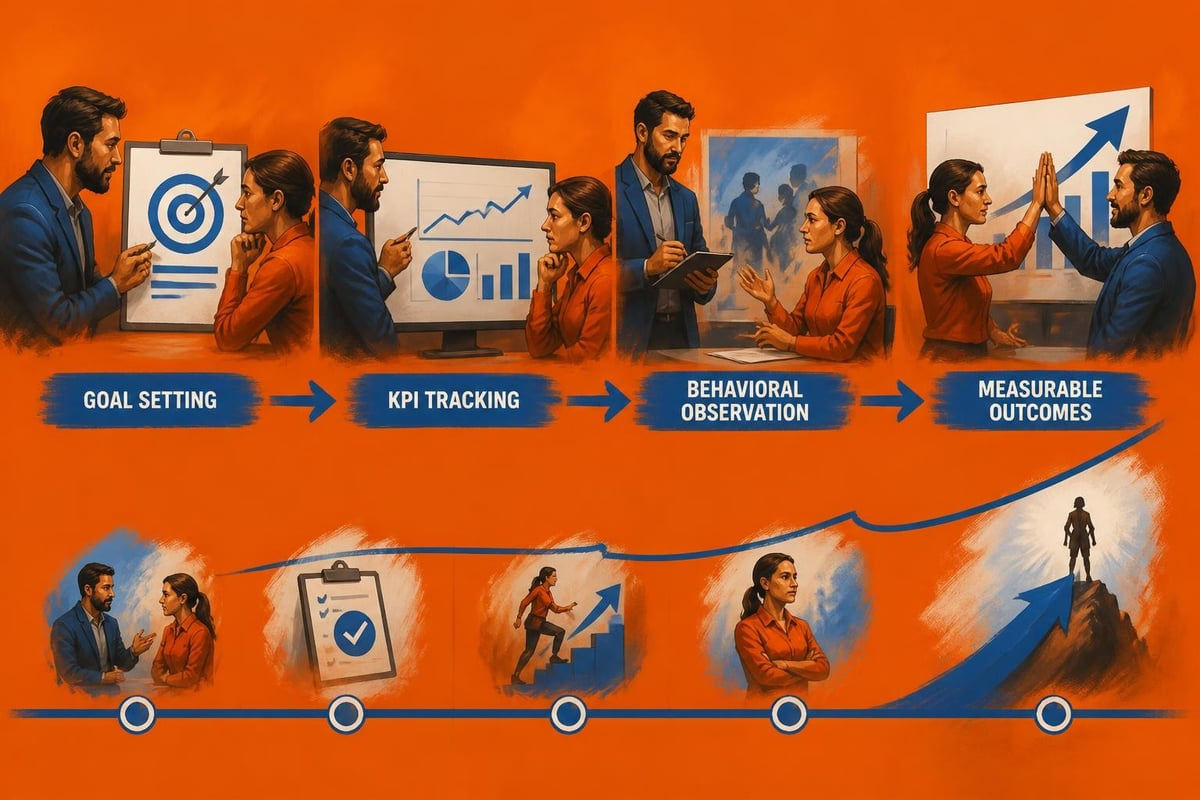
Career coaching is a structured, goal-oriented engagement with clear KPIs, timelines, and accountability mechanisms. A business coach focuses on skill development, behavior change, and measurable performance improvement tied to organizational priorities.
Key characteristics of effective career coaching:
- Defined scope with specific outcomes (promotion readiness, leadership competency, communication effectiveness)
- Regular progress tracking through 360 assessments, scorecards, or behavioral observations
- Time-bound engagements (typically 3-12 months)
- Focus on the coachee's current role and next career move
- Professional relationship with clear boundaries
In one 2026 engagement, a manufacturing company brought in coaching for 12 mid-level managers struggling with delegation. We established baseline metrics: decision speed, team autonomy scores, and manager time allocation. After four months of structured coaching with live observation in team meetings, delegation improved 34%, managers reclaimed 8 hours weekly, and team engagement scores rose 22 points.
The Certification Myth in Career Coaching
Many buyers fixate on coaching certifications rather than proven results. The organizational consulting research shows outcomes depend more on business acumen, pattern recognition, and accountability structures than credential count. A coach who understands your industry, asks hard questions about ROI, and ties progress to business metrics outperforms a credentialed coach using generic frameworks.
When evaluating career coaches, ask about specific client outcomes, industries served, and measurement approaches. Credentials matter less than demonstrated expertise in your context.
How Mentoring Works Differently
Mentoring is an informal, relationship-driven exchange where an experienced professional shares knowledge, networks, and career insights with someone earlier in their journey. The mentor provides guidance based on their own path, industry wisdom, and organizational knowledge.
| Aspect | Career Coaching | Mentoring |
|---|---|---|
| Structure | Formal, contracted, time-bound | Informal, voluntary, ongoing |
| Focus | Performance, skills, specific goals | Career wisdom, networks, long-term development |
| Accountability | High, with KPIs and tracking | Low, relationship-dependent |
| Expertise | Coaching methodology, business results | Industry experience, organizational knowledge |
| ROI Measurement | Direct, tied to business metrics | Indirect, based on career progression |
Recent research on mentorship and coaching confirms distinct outcomes: coaching drives immediate behavioral change and performance improvement, while mentoring builds long-term career capital and organizational savvy.
When Companies Need Coaching Instead of Mentoring
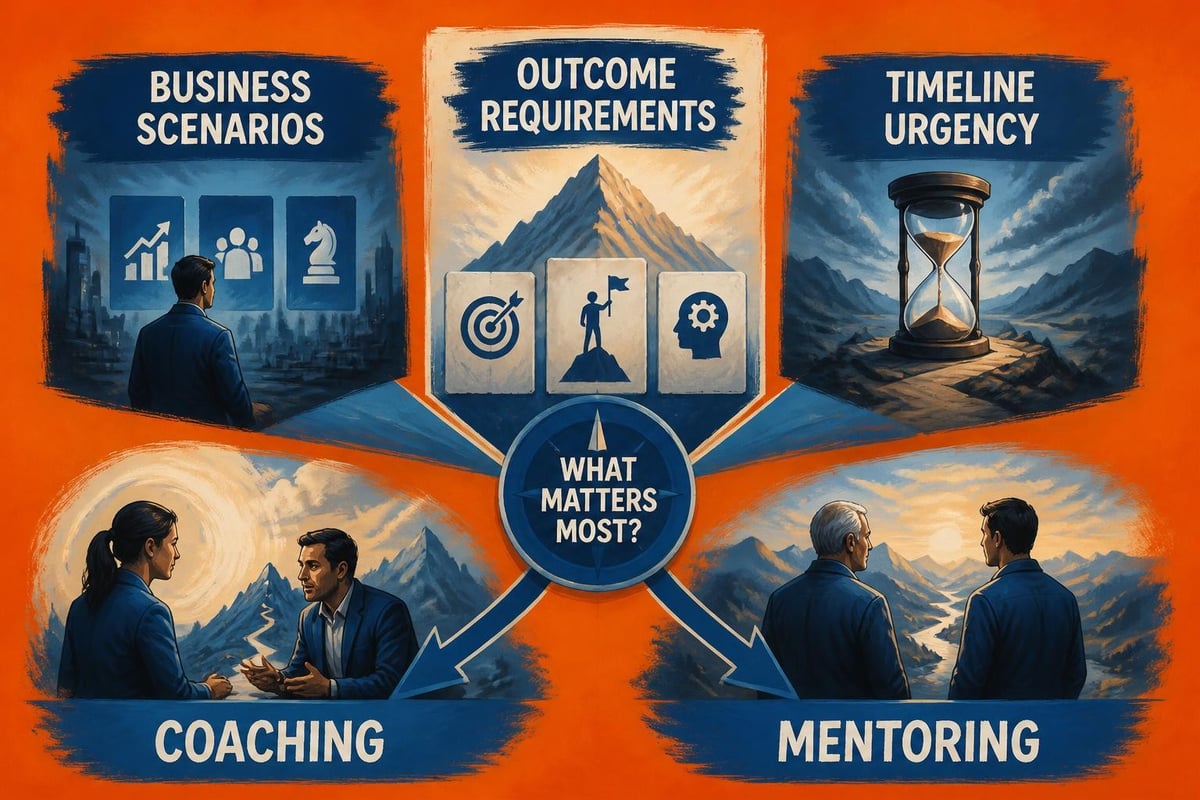
Career coaching versus mentoring becomes critical when speed, accountability, and measurable outcomes matter. If your organization faces any of these scenarios, coaching delivers faster results:
-
New managers struggling with delegation, feedback, or priority setting need structured skill development, not war stories from someone who figured it out fifteen years ago.
-
High-potential employees preparing for promotion require targeted competency building against clear leadership criteria, not general career advice.
-
Teams missing execution targets benefit from facilitated coaching that addresses communication breakdowns, decision bottlenecks, and accountability gaps in real time.
-
Retention risks among key talent respond better to coaching that addresses specific frustrations, skill gaps, or career clarity than informal mentoring relationships.
-
Sales or client-facing roles underperforming need coaching tied to revenue metrics, conversion rates, and repeatable processes.
In contrast, mentoring works when employees need organizational navigation, long-term career perspective, or access to senior networks. Both have value, but the benefits of career coaching become measurable within weeks when properly structured.
The ROI Difference Between Coaching and Mentoring
Mid-market companies operating on tight budgets need clear ROI before investing in development. Career coaching produces trackable returns through improved performance, faster decisions, and reduced turnover costs. Mentoring delivers value over years through career progression, succession planning, and knowledge transfer.
Coaching ROI appears in:
- Reduced time-to-productivity for promoted managers (30-50% faster in our experience)
- Measurable behavior changes (communication effectiveness, delegation frequency, decision speed)
- Team engagement and retention improvements (15-25% typical range)
- Revenue impact from sales or client coaching (directly tied to conversion or retention rates)
The ROI of coaching becomes visible within 90 days when you tie engagements to clear business metrics rather than vague "development goals."
Mentoring ROI shows up as:
- Improved retention of high-potential employees (they stay because they see a path)
- Faster organizational learning curves (mistakes avoided through shared wisdom)
- Stronger succession pipelines (mentees prepared for future roles)
- Cultural transmission and institutional knowledge preservation
Common Mistakes When Deploying Both
Organizations waste resources by mismatching the intervention to the need. Here's what fails repeatedly:
Calling mentoring "coaching" dilutes accountability. If there's no clear goal, timeline, or measurement, it's mentoring. Don't expect coaching outcomes from mentoring relationships.
Expecting coaches to be mentors confuses roles. A skilled coach focuses on your performance and development, not on sharing their career journey or opening their network. That's a mentor's job.
Making mentoring mandatory kills the relationship dynamic that makes mentoring work. Force it and you get checkbox conversations, not genuine knowledge transfer.
Choosing coaches based on credentials alone ignores what actually drives results: business understanding, pattern recognition from working across multiple companies, and accountability discipline. A less-credentialed practitioner who has coached 50 managers in your industry outperforms a highly credentialed generalist every time.
Skipping measurement for coaching engagements turns coaching into expensive conversations. Without baseline metrics and progress tracking, you can't prove value or improve approach.

How AI Changes the Career Coaching Versus Mentoring Landscape
AI coaching tools emerged in 2024-2026 promising scalable, affordable development. They deliver value for information access, practice scenarios, and 24/7 availability. What they cannot replace: reading a room, navigating organizational politics, building genuine accountability, or delivering tough feedback that lands because the relationship has earned it.
Where AI coaching tools work:
- Basic skill practice (presentation rehearsal, interview prep, framework learning)
- Asynchronous development for geographically distributed teams
- Supplement to human coaching for practice between sessions
Where they fail:
- Complex organizational dynamics requiring nuanced judgment
- High-stakes leadership transitions needing experienced pattern recognition
- Team facilitation where live intervention changes trajectory
- Building accountability that sticks when motivation flags
Human coaches who integrate AI tools for practice and tracking while maintaining the relationship and judgment elements see the best outcomes. Pure AI coaching for critical roles remains wishful thinking in 2026.
Practical Framework for Deployment
Deploy career coaching versus mentoring using this decision framework:
| Situation | Use Coaching | Use Mentoring | Use Both |
|---|---|---|---|
| New manager struggling | Yes, for skills and accountability | Optional, for organizational wisdom | Ideal combination |
| High-potential employee | Yes, for promotion readiness | Yes, for long-term career guidance | Best approach |
| Retention risk | Yes, if skill or role clarity issues | Yes, if career path uncertainty | Deploy simultaneously |
| Team underperformance | Yes, structured team coaching | No, mentoring won't fix execution | Coaching only |
| Succession planning | Optional, for specific gaps | Yes, for knowledge transfer | Both over time |
When budget is limited, prioritize coaching for immediate business impact and performance needs. Add mentoring as a low-cost, high-value retention and development layer that requires minimal formal investment.
Understanding career coaching versus mentoring helps you deploy the right intervention at the right time for measurable results. If you need practical corporate coaching tied to clear KPIs and business outcomes, month-to-month terms, and coaches who work live in your organization rather than from the sidelines, explore how Noomii delivers accountable coaching that drives faster decisions, stronger execution, and visible ROI for mid-market companies.
Frequently Asked Questions
What is the main difference between career coaching and mentoring?
Career coaching is a structured, goal-oriented engagement with clear KPIs, timelines, and accountability focused on immediate performance improvement and skill development. Mentoring is an informal, relationship-driven exchange where an experienced professional shares long-term career wisdom, organizational knowledge, and networks with someone earlier in their journey.
How long does career coaching typically last?
Effective career coaching engagements typically run 3-12 months with clear milestones and progress tracking. The duration depends on the goal complexity: basic skill development may take 3-4 months, while leadership transitions or significant behavior change often requires 6-12 months with ongoing accountability.
Can someone have both a coach and a mentor?
Yes, and this combination often produces the best outcomes. A coach provides structured skill development and accountability for immediate performance goals, while a mentor offers long-term career perspective, organizational navigation, and network access. They serve complementary purposes.
How do you measure ROI from career coaching?
Measure coaching ROI through baseline and progress metrics tied to business outcomes: decision speed improvements, delegation frequency, team engagement scores, retention rates, revenue impact for client-facing roles, and time-to-productivity for promoted managers. Track changes at 30, 60, and 90 days against clear KPIs established at engagement start.
What credentials should I look for in a career coach?
Focus on demonstrated expertise over credentials. Look for coaches with proven outcomes in your industry, clear measurement approaches, business acumen, and pattern recognition from working across multiple organizations. Ask about specific client results, industries served, and how they track progress rather than credential count.
When should a company use mentoring instead of coaching?
Use mentoring when employees need long-term career guidance, organizational navigation, succession planning support, or access to senior networks rather than immediate performance improvement. Mentoring works best when time horizons are measured in years and the goal is knowledge transfer and career capital building.
What are common mistakes when implementing career coaching?
Common mistakes include choosing coaches based solely on certifications, skipping baseline measurement and progress tracking, confusing mentoring relationships with coaching engagements, deploying coaching without clear business goals, and expecting results without accountability structures or regular check-ins.
How does AI coaching compare to human career coaching?
AI coaching tools work well for basic skill practice, information access, and asynchronous development but fail at complex organizational dynamics, high-stakes leadership transitions, team facilitation requiring live intervention, and building genuine accountability. Human coaches who integrate AI tools for practice while maintaining relationship and judgment elements see the best outcomes.
What outcomes can mid-market companies expect from career coaching?
Mid-market companies typically see 30-50% faster time-to-productivity for promoted managers, measurable behavior changes in delegation and decision speed, 15-25% improvements in team engagement and retention, reduced turnover costs, and direct revenue impact when coaching addresses sales or client-facing roles, all visible within 90 days when tied to clear metrics.



Leave a Reply
Want to join the discussion?Feel free to contribute!