
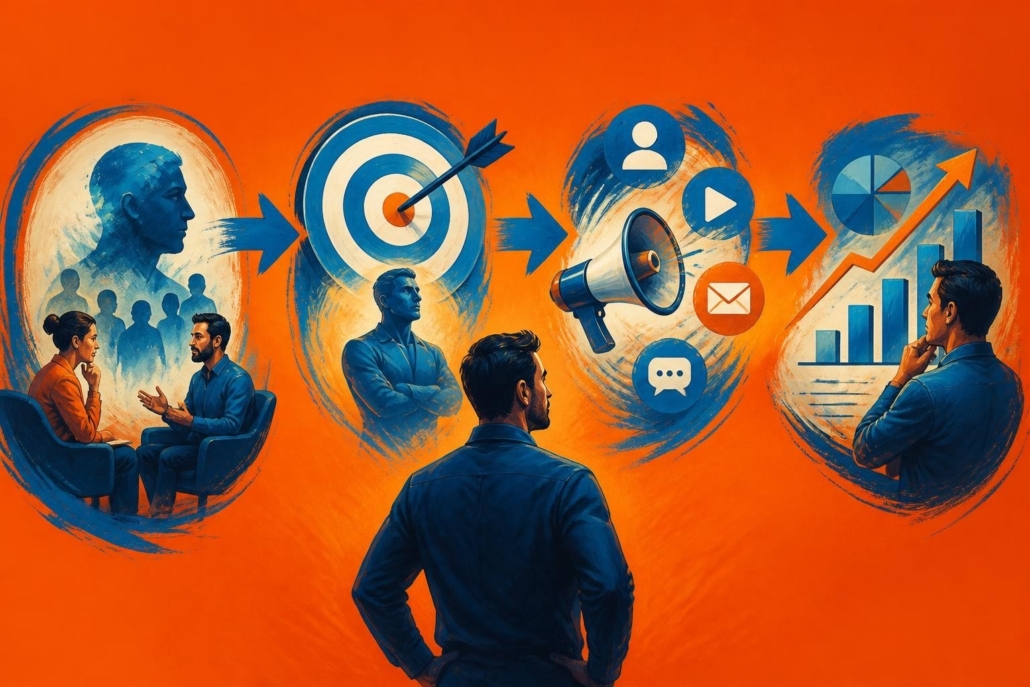
Marketing Plan for Life Coaching Business: Results First
Most life coaches build marketing plans backward. They start with channels, tactics, and visibility before defining what makes their work valuable. A proper marketing plan for life coaching business starts with outcomes, proof, and the specific problems you solve better than anyone else. After observing hundreds of coaching practices across individual practitioners and corporate programs, the pattern is clear: coaches who anchor marketing in client results consistently outperform those who market credentials, certifications, or generic transformation promises.
Why Most Life Coaching Marketing Plans Fail
The coaching industry saturated rapidly between 2019 and 2026. New certifications launched monthly, directories became crowded, and social media filled with indistinguishable messaging about breakthroughs and empowerment. When everyone claims transformation, nobody stands out.
Three structural problems plague typical marketing plans:
- Credential worship replacing proof of skill
- Channel obsession without message clarity
- Vanity metrics (followers, likes) instead of conversion tracking
The coaches winning new business in 2026 differentiate through specificity. They serve defined markets, solve concrete problems, and demonstrate results through case evidence. A detailed sample business plan for life coaches should include target market analysis and financial projections, but execution depends on marketing tied to outcomes.
Building Your Marketing Foundation Before Tactics
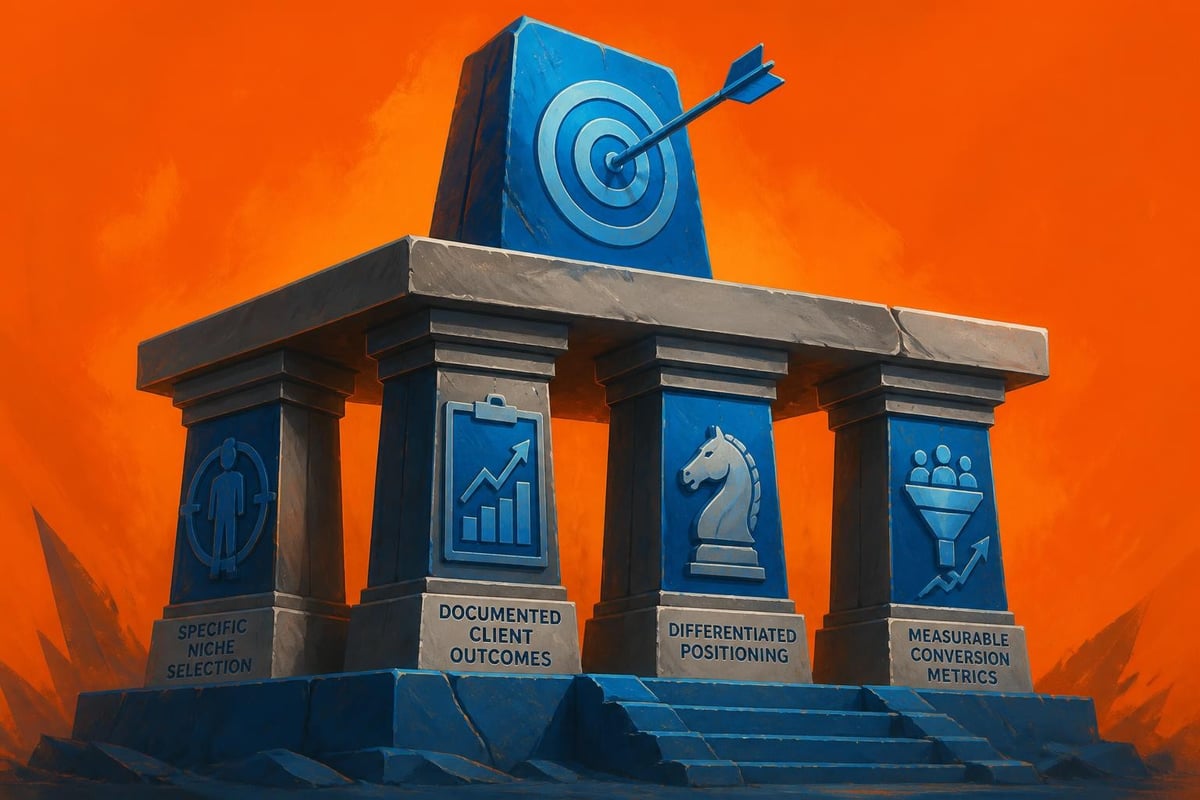
Your marketing plan for life coaching business needs structural integrity before promotional activity. Start with three foundational elements:
Positioning Based on Results
Define the transformation you create with precision. Vague promises of "living your best life" compete with thousands of identical claims. Specific outcomes with measurable markers separate serious practitioners from hobbyists.
For corporate coaching contexts, this means tying engagements to business KPIs. When we work with mid-market companies, marketing effectiveness correlates directly with how clearly we articulate outcomes: faster decision cycles, improved retention rates, revenue per manager, or promotion readiness.
Audience Segmentation Beyond Demographics
Age, income, and location matter less than situation and urgency. Segment by:
- Problem severity (crisis vs. optimization)
- Buying authority (self-funded vs. corporate budget)
- Decision timeline (immediate need vs. exploring)
- Prior coaching experience (first-timer vs. veteran buyer)
This segmentation informs everything from content topics to sales conversation structure. Common pitfalls in life coach marketing often stem from treating all prospects identically despite radically different contexts.
Proof Architecture
Build systematic evidence collection from day one:
- Client outcome tracking with permission for anonymized sharing
- Before/after measurements on relevant metrics
- Testimonials with specific results, not generic praise
- Case studies following Problem-Diagnosis-Solution-Result-Lesson format
One corporate client came to us after three failed coaching engagements. Their previous providers focused on personality assessments and leadership theory. We implemented live meeting coaching, built KPI scorecards, and established operating cadence. Within 90 days, decision speed improved 40%, and two underperforming managers began delivering consistent results. That single case study generated more qualified leads than six months of generic LinkedIn content.
Channel Selection and Content Strategy
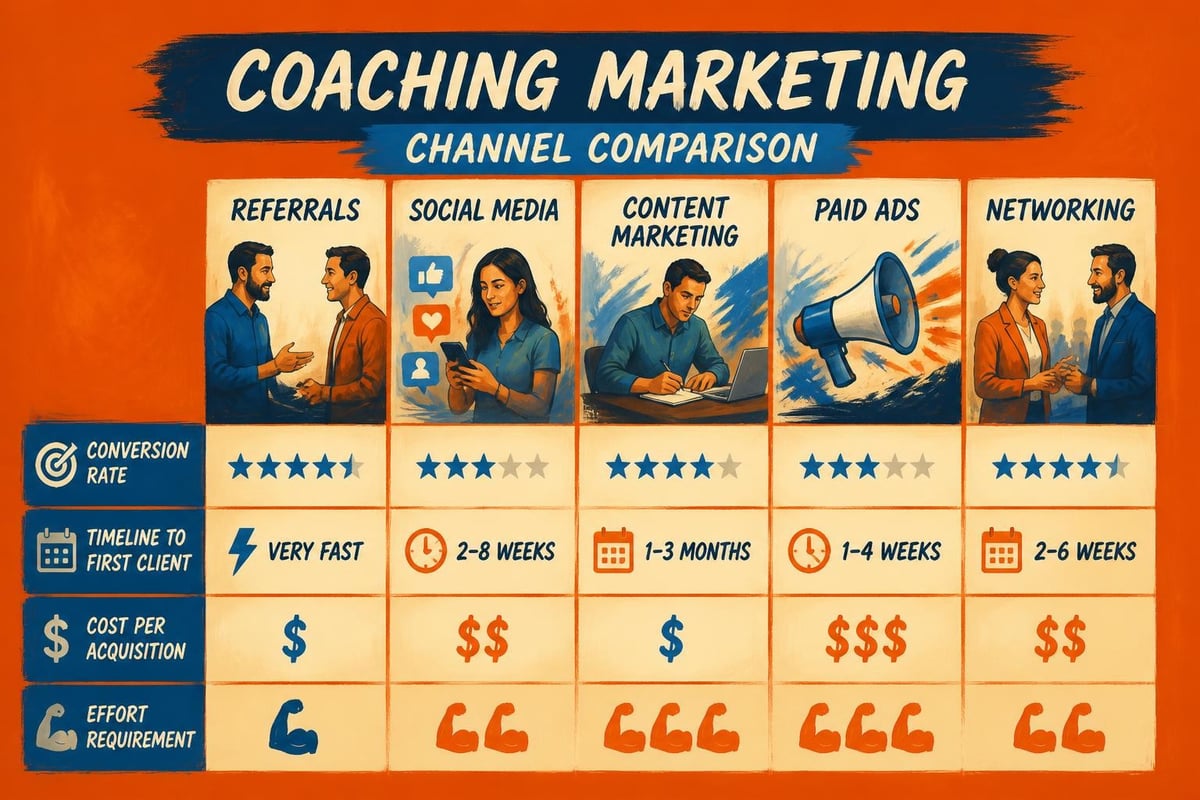
Choose marketing channels based on where your specific audience makes buying decisions, not where coaching influencers suggest you should be visible.
| Channel Type | Best For | Conversion Timeline | Resource Intensity |
|---|---|---|---|
| Referral Networks | Corporate coaching, executive work | 3-6 months | Low (relationship dependent) |
| Search/SEO | Self-funded individuals researching | 6-12 months | High (content creation) |
| B2B coaching, leadership development | 4-8 months | Medium (consistent posting) | |
| Speaking/Workshops | Local market, specific niches | Immediate to 3 months | Medium (event preparation) |
| Directories | Individual life coaching clients | 1-3 months | Low (profile optimization) |
For individual life coaches, platforms like Noomii provide qualified traffic from buyers actively seeking coaches. Unlike social media where you interrupt, directories connect you with people in active search mode.
Content That Demonstrates Expertise
Stop creating motivational quotes and generic tips. Instead, publish content showing pattern recognition and diagnostic skill:
- Client situation breakdowns (anonymized) with your analysis
- Framework explanations you use in actual sessions
- Industry trend commentary relevant to your niche
- Contrarian takes challenging popular coaching advice
- Comparison guides helping buyers evaluate options
When developing effective marketing strategies for life coaches, focus on demonstrating how you think, not just what you believe. Prospective clients buy your ability to diagnose their situation and chart a path forward.
Pricing and Packaging Strategy
Your pricing structure is marketing. It signals positioning, communicates confidence, and filters for ideal clients.
Avoid these pricing mistakes:
- Hourly billing for outcomes-based work
- Long-term contracts before proving value
- Certification-justified rates without result evidence
- Discount dependency for new client acquisition
Better approaches tested across multiple coaching models:
- Initial diagnostic engagement (fixed price, clear deliverable)
- Month-to-month continuation based on visible progress
- Performance incentives where feasible and ethical
- Tiered packages addressing different urgency levels
The most successful coaches we've observed price based on value created, not time invested. A three-hour intervention that solves a six-month problem is worth more than twelve hours of meandering conversation.
Measurement and Iteration
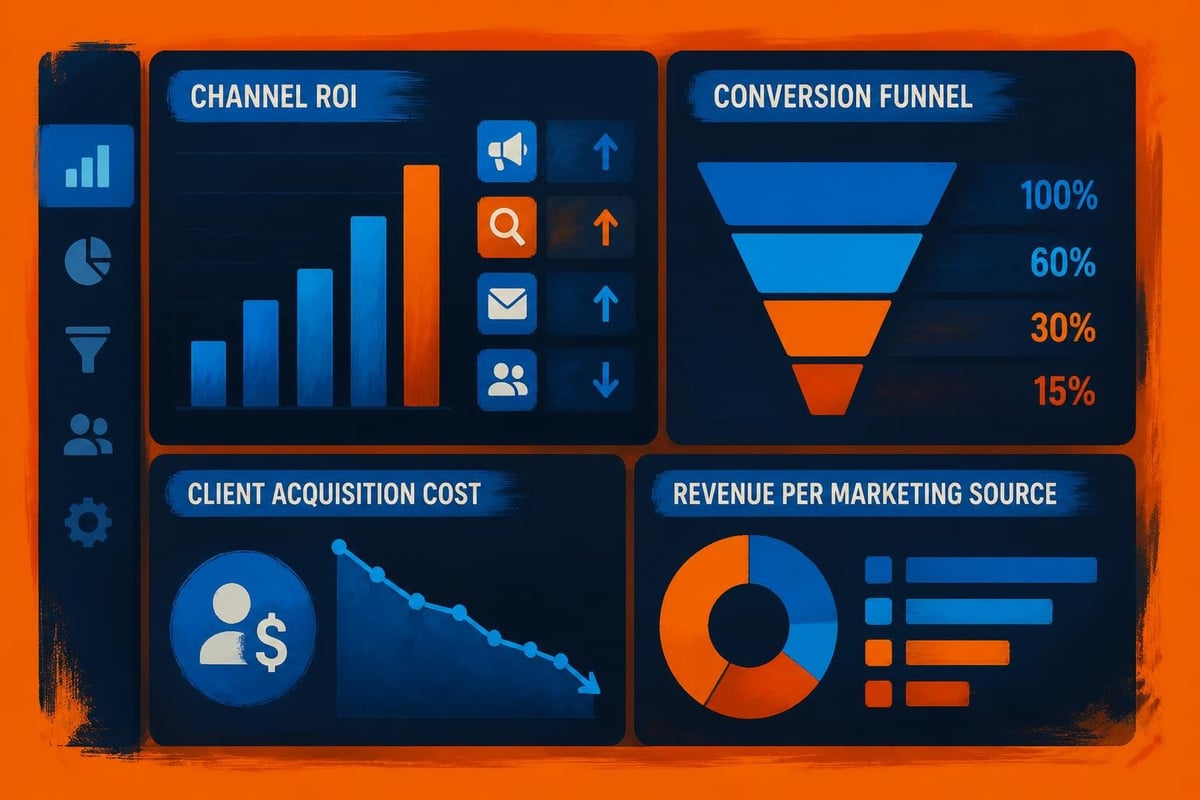
A marketing plan for life coaching business requires ruthless metric tracking. Measure what matters for business sustainability, not ego validation.
Essential metrics:
- Inquiry source (which channel drove contact)
- Conversion rate (inquiry to paid client)
- Client acquisition cost per channel
- Lifetime client value including referrals
- Time to first paying client from each initiative
Track these monthly. Most marketing advice for coaches ignores financial reality. Beautiful Instagram feeds mean nothing if inquiry-to-client conversion sits at 5% while your business model requires 30% to survive.
Build quarterly reviews into your plan:
- What generated actual paying clients (not just visibility)
- Which content topics drove qualified inquiries
- Where time investment exceeded return
- What pricing adjustments improved close rates
Resources like the life coaching marketing plan checklist provide tactical steps, but effectiveness depends on continuous measurement and adjustment based on your specific market response.
The AI Disruption Factor
Any 2026 marketing plan for life coaching business must address AI coaching tools. Platforms offering 24/7 AI coaching conversations, personalized goal tracking, and fraction-of-human-cost pricing entered the market aggressively in 2024-2025.
This isn't a threat to skilled practitioners. It's a filter that eliminates low-value coaching and raises the bar for human coaches.
What AI coaching handles well:
- Accountability check-ins
- Goal tracking and reminders
- Basic CBT techniques
- Information delivery
- Structured reflection prompts
What human coaches still own:
- Nuanced diagnosis in complex situations
- Reading between the lines
- Adapting approach based on subtle cues
- Navigating organizational politics
- Building trust in high-stakes contexts
Your marketing must clearly articulate why human expertise matters for the problems you solve. Generic life coaching competes directly with AI. Specialized expertise addressing complex human challenges does not. Understanding human skills AI cannot replace helps position your services effectively.
Common Questions About Life Coaching Marketing Plans
How much should I budget for marketing as a new life coach?
Allocate 20-30% of revenue in year one, decreasing to 10-15% as referrals build. Prioritize low-cost, high-effort channels initially: content creation, networking, and directory profiles before paid advertising.
How long until my marketing plan generates paying clients?
Realistic timeline: 3-6 months for first clients through content and SEO, 1-3 months through directories and networking, 6-12 months for speaking and authority-building channels to produce consistent flow.
Should I hire a marketing agency as a life coach?
Only after you've generated clients yourself and understand what works. Most agencies lack coaching industry knowledge and will waste budget on generic tactics. Build proof of concept first.
What's the best marketing channel for life coaches in 2026?
Depends entirely on your niche and ideal client. Corporate coaching buyers respond to LinkedIn and referrals. Individual clients often find coaches through search and directories. Test multiple channels with tracked results.
How do I compete with certified coaches when I lack credentials?
Focus marketing on outcomes, experience, and specialized expertise. Clients care about results, not wall certificates. Document case studies, build testimonials, and demonstrate diagnostic skill through content.
Is social media necessary for life coaching marketing?
Not if your ideal clients don't make buying decisions there. Many successful coaches build entire practices through referrals, speaking, and search without social media presence. Choose channels matching buyer behavior.
How often should I update my marketing plan?
Review metrics monthly, adjust tactics quarterly, and revise overall strategy annually. Markets shift, especially in coaching. Rigid annual plans fail when buyer behavior changes mid-year.
Should I niche down or market broadly as a life coach?
Specificity wins in saturated markets. "Life coach for executives in healthcare" outperforms "life coach" in conversion rates and pricing power. Broad positioning made sense in 2010, not 2026.
What marketing mistakes do most life coaches make?
Leading with credentials instead of outcomes, treating all prospects identically, prioritizing visibility over conversion, neglecting measurement, and copying tactics without testing relevance to their specific audience.
Building a marketing plan for life coaching business in 2026 requires focusing on outcomes over credentials, proof over promises, and measurement over vanity metrics. The coaches who thrive demonstrate specialized expertise, document results, and market to specific audiences with precision. For organizations seeking corporate coaching that delivers measurable business results, Noomii works month-to-month with mid-market companies to build accountable leaders through live meeting coaching, clear KPIs, and visible ROI. No long contracts, just results that keep you engaged.



Leave a Reply
Want to join the discussion?Feel free to contribute!