

ICF Does Not Guarantee Coaching Success – What Does
The coaching industry has built an altar to credentials, and the International Coach Federation (ICF) sits at its center. Companies shopping for coaches assume the three letters signal competence. New coaches pursue accreditation believing it unlocks success. Yet after twenty years observing this market, the evidence tells a different story. ICF does not guarantee coaching success because certification measures adherence to process, not the delivery of business results. The gap between credentialed and effective has never been wider, and mid-market companies pay the price when they conflate the two.
The Credential Trap: What ICF Actually Measures
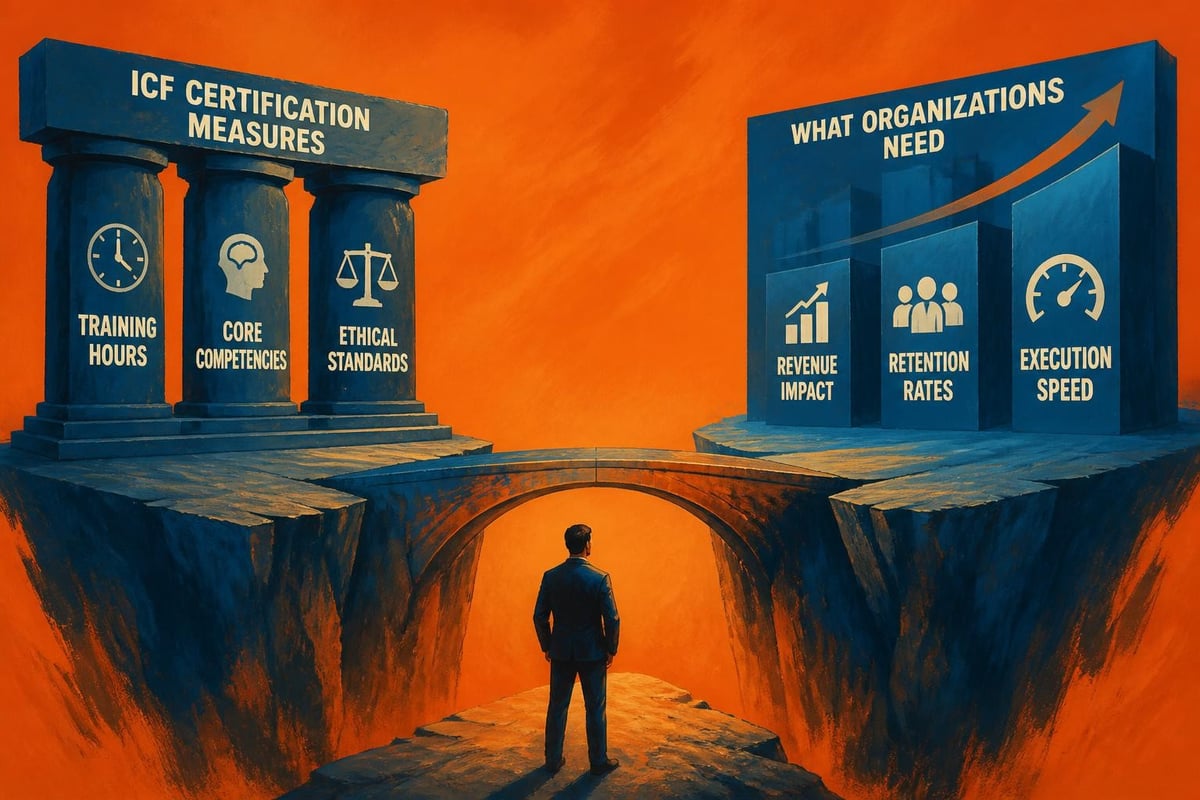
ICF certification validates that a coach completed specific training hours, logged practice sessions, passed an exam, and follows ethical guidelines. It confirms process competency. What it doesn't measure is business acumen, industry expertise, or the ability to drive measurable outcomes in your organization.
The certification framework evaluates:
- Completion of accredited training programs
- Minimum coaching hours logged
- Knowledge of ICF core competencies
- Adherence to coaching ethics
- Ability to demonstrate specific coaching behaviors
None of these criteria assess whether a coach can help your sales team hit quota, reduce manager turnover, or accelerate decision-making across departments. Understanding what ICF certification actually validates helps buyers set realistic expectations about what the credential signals.
The Pattern in Failed Engagements
Over fifteen years working with mid-market companies, we've diagnosed why coaching engagements fail. The pattern repeats: an organization hires a highly credentialed coach who conducts beautiful sessions, asks powerful questions, and follows ICF protocols perfectly. Six months later, nothing has changed. Managers still avoid difficult conversations. Strategic priorities remain fuzzy. Execution stalls.
The diagnosis is simple. The coach excelled at coaching conversations but lacked the business context to connect those conversations to operational reality. They couldn't read a P&L, didn't understand sales pipeline mechanics, and had never managed a team. ICF does not guarantee coaching success because certification programs focus on coaching methodology, not business impact.
| What ICF Validates | What Organizations Need |
|---|---|
| Coaching conversation skills | Business acumen and industry knowledge |
| Ethical standards | Ability to tie coaching to KPIs |
| Core competencies | Experience managing similar challenges |
| Training completion | Track record of measurable results |
| Process adherence | Flexibility to coach in real situations |
What Actually Drives Coaching Success
Real coaching success in corporate settings requires five elements that no certification can provide. These emerge from experience, market knowledge, and a willingness to share risk in outcomes.
Business Literacy and Industry Context
The most effective coaches we've observed understand financial statements, operational metrics, and industry dynamics. When coaching a sales leader, they know pipeline stages, conversion metrics, and revenue recognition. When developing managers, they connect coaching conversations to retention data, engagement scores, and team performance indicators.
This knowledge doesn't come from ICF-accredited training programs. It comes from years working inside businesses, making decisions under pressure, and learning what moves organizational needles.
Results-Oriented Frameworks
Proprietary methods that connect coaching to measurable outcomes separate effective coaches from credentialed facilitators. Our approach at Noomii Corporate includes:
- Operating Cadence Design – Structuring meeting rhythms and decision forums that force clarity and accountability
- KPI Scorecards – Defining metrics that make progress visible and coaching impact measurable
- Live Meeting Coaching – Coaching leaders and teams during actual business meetings, not in isolated sessions
- Aligned Incentives – Sharing risk by tying our success to your outcomes when feasible
These frameworks didn't emerge from certification coursework. They evolved from pattern recognition across hundreds of engagements where we tracked what worked and what failed.
Willingness to Challenge and Diagnose
ICF competencies emphasize listening, presence, and powerful questions. These matter. But they're insufficient when a leadership team needs someone to call out dysfunction, diagnose root causes, and prescribe tough solutions.
Effective corporate coaching requires the confidence to say: "Your strategic planning process is theater. Your KPIs measure activity, not outcomes. Your top performers are leaving because your managers don't coach." This directness comes from experience and market knowledge, not credential worship.

The Economics of Certification Dependency
The coaching industry generates approximately $3 billion annually in certification and training programs. This creates obvious incentives to promote credentials as essential. Many coaches believe ICF certification is necessary for success, but the data suggests otherwise.
Market realities in 2026:
- The coaching market is saturated with credentialed coaches competing on similar messaging
- Buyers increasingly prioritize proven results and industry expertise over credentials
- Long-term contracts and vague success metrics face growing skepticism
- Companies want coaches who understand their specific challenges, not generic frameworks
- Month-to-month terms signal confidence in delivering visible progress
Organizations willing to pay premium rates for coaching care about one thing: measurable improvement in business outcomes. Whether their coach has ACC, PCC, or MCC credentials becomes irrelevant if leadership development initiatives don't translate to better decisions, stronger retention, and cleaner execution.
Choosing Coaches Based on Evidence
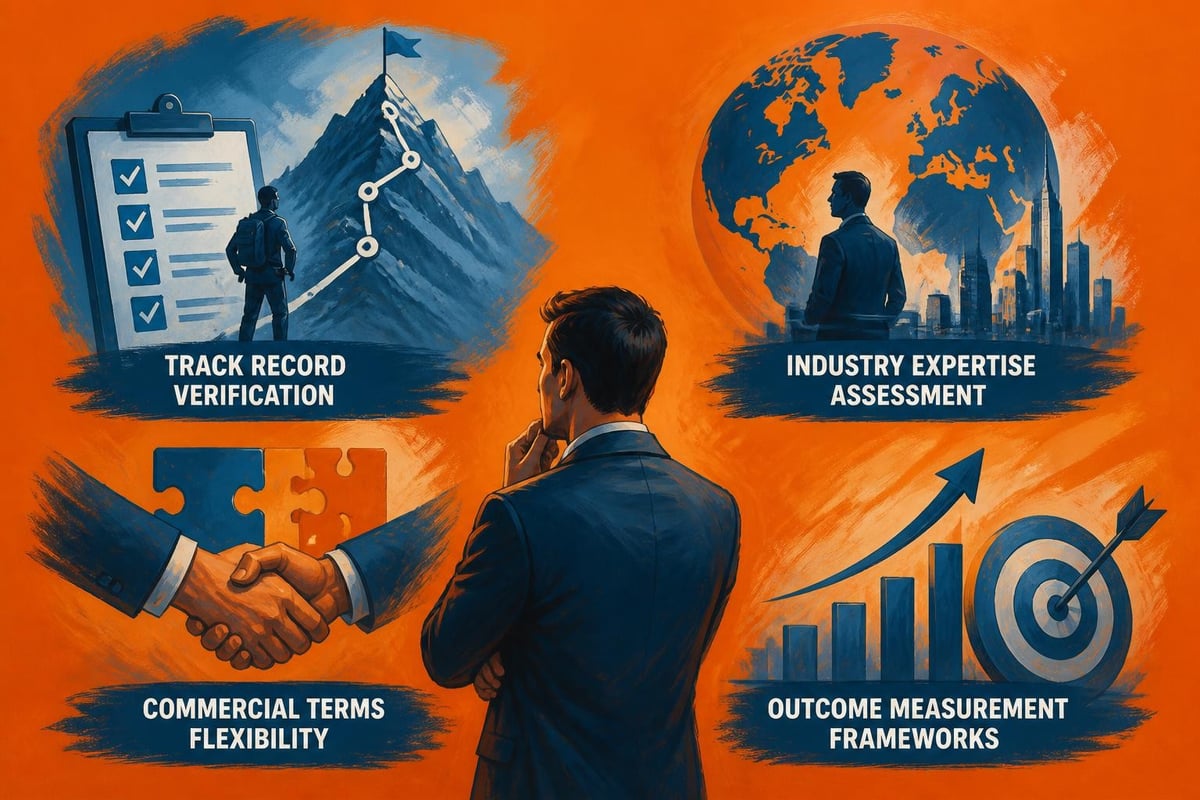
Smart buyers evaluate coaching candidates using criteria that predict success better than certifications:
Track Record and References
Ask for specific examples where coaching drove measurable outcomes. Request contact information for previous clients in similar industries or facing comparable challenges. Strong coaches provide detailed case studies with Problem, Diagnosis, Solution, Result, and Lesson frameworks.
Industry and Functional Expertise
A coach who has managed teams, driven sales, or led operational transformations brings context that accelerates impact. They understand the pressures your leaders face because they've lived them. Business coaches with relevant experience diagnose challenges faster and prescribe solutions that fit your reality.
Flexible Commercial Terms
The best coaches offer month-to-month agreements because they're confident you'll see progress quickly. Long contracts protect coaches who can't demonstrate visible results. Risk-sharing structures where coaching fees align with outcome achievement signal genuine commitment to impact.
Red flags that predict disappointing engagements:
- Heavy emphasis on credentials with little discussion of specific results
- Vague success metrics like "increased awareness" or "leadership presence"
- Resistance to connecting coaching to business KPIs
- Inability to explain how they've solved challenges similar to yours
- One-size-fits-all approaches that ignore your specific context
The AI Disruption Factor
Artificial intelligence is transforming coaching delivery in ways that further diminish the value of traditional credentials. AI coaching platforms now provide 24/7 availability, instant feedback, and personalized development paths at fraction of traditional costs. While AI integration in business coaching creates new opportunities, it also exposes a truth: if your coaching value comes primarily from asking questions and providing accountability, technology can replace you.
Human coaches who survive and thrive in this environment bring what AI cannot: business judgment forged through experience, real-time diagnosis in complex situations, credibility to challenge senior leaders, and the ability to coach live in high-stakes moments. None of these advantages flow from ICF certification.
Frequently Asked Questions
Does ICF certification help coaches get hired?
ICF certification can help coaches appear in certain directories and meet procurement requirements at large organizations. However, most mid-market companies prioritize proven results and relevant experience over credentials when selecting coaches. The certification may open some doors but doesn't predict coaching effectiveness or business impact.
What matters more than ICF credentials when hiring a coach?
Track record of measurable outcomes, industry expertise, functional experience, ability to connect coaching to KPIs, commercial terms that share risk, references from similar organizations, and diagnostic frameworks that fit your specific challenges all predict coaching success better than certification status.
Can uncertified coaches be effective in corporate settings?
Yes. Many of the most effective corporate coaches never pursued ICF certification because they came from business backgrounds rather than coaching training programs. Their value comes from operational experience, business acumen, and proven ability to drive results, not adherence to coaching process standards.
Why do companies still request ICF-certified coaches?
Procurement departments use certifications as easy filtering criteria when they lack expertise to evaluate coaching quality. HR teams default to credentials because they provide perceived risk mitigation. However, companies that measure coaching ROI quickly learn that credentials don't correlate with results.
What should coaching success metrics include?
Effective metrics tie coaching directly to business outcomes: retention rates for coached managers, decision velocity improvements, engagement score changes, revenue per employee growth, promotion readiness timelines, and specific KPI movements in areas being coached. Avoid vague measures like "leadership presence" or "increased awareness."
How long should it take to see coaching results?
With experienced coaches focused on business outcomes, you should see behavioral changes within 30 days and measurable improvements in team metrics within 60-90 days. If coaches claim results take six months or longer to materialize, they're likely delivering theory rather than practical application.
What's the alternative to ICF-certified coaches?
Look for coaches with direct operational experience in your industry, proven track records with measurable outcomes, willingness to work month-to-month, and frameworks that connect coaching to your specific KPIs. Executive coaches who've managed teams and driven business results often deliver more value than credentialed facilitators.
Do coaching certifications predict client satisfaction?
No clear correlation exists between ICF certification level and client satisfaction or business results. What predicts satisfaction is alignment between coach expertise and client needs, visible progress on agreed metrics, and flexibility to adapt approaches based on what's working.
Should new coaches pursue ICF certification?
For coaches building a practice, certification may provide structure and networking opportunities. However, investing equivalent time in developing industry expertise, building a track record with pro bono or low-cost clients, and creating measurable outcome frameworks often generates better returns. The certification is optional, not essential.
ICF does not guarantee coaching success because credentials measure process compliance, not business impact. The most effective corporate coaching connects directly to organizational KPIs, emerges from operational experience, and demonstrates value quickly enough to justify month-to-month terms. If you want practical corporate coaching that delivers measurable results rather than credential theater, choose coaches who share risk, coach live in your meetings, and tie their success to yours.



Leave a Reply
Want to join the discussion?Feel free to contribute!