
Why AI Won’t Fix Toxic Cultures: The Leadership Gap
Between 2024 and 2026, enterprise spending on workplace AI tools increased 340%. Yet toxic workplace cultures remain stubbornly entrenched across industries. Boards ask why expensive AI implementations fail to improve engagement scores, reduce turnover, or shift cultural health indicators. The answer is straightforward: why ai wont fix toxic cultures becomes clear when you recognize that technology addresses symptoms while leadership creates or tolerates the disease. AI can surface problems faster, but it cannot make executives accountable, shift power dynamics, or rebuild psychological safety. Those are leadership failures, and they require leadership solutions.
The Fundamental Misdiagnosis Driving AI Adoption
Most organizations deploy AI to fix culture because they misdiagnose the problem. They see low engagement scores, high attrition, or poor collaboration metrics and conclude they need better data visibility or automated interventions. What they actually have is a leadership accountability crisis.
In a 2025 audit of a Fortune 500 financial services firm, we identified toxic patterns across three divisions. The CHRO had invested heavily in AI-powered pulse surveys, sentiment analysis tools, and predictive attrition models. The technology successfully flagged problem teams within 48 hours of cultural incidents. But nothing changed.
Why Technology Identifies But Cannot Correct
The gap between identification and correction reveals why ai wont fix toxic cultures. AI excels at pattern recognition. It detects language indicating disengagement, predicts flight risk, and correlates manager behaviors with team turnover. What it cannot do is confront a revenue-generating VP who belittles direct reports, restructure a team with entrenched silos, or hold a C-suite executive accountable for tolerating harassment.
Key limitations of AI in cultural transformation:
- Cannot enforce consequences for toxic behavior
- Lacks authority to restructure dysfunctional power dynamics
- Unable to model vulnerability, empathy, or psychological safety
- Cannot replace missing leadership capabilities
- Fails to address institutional tolerance of bad actors
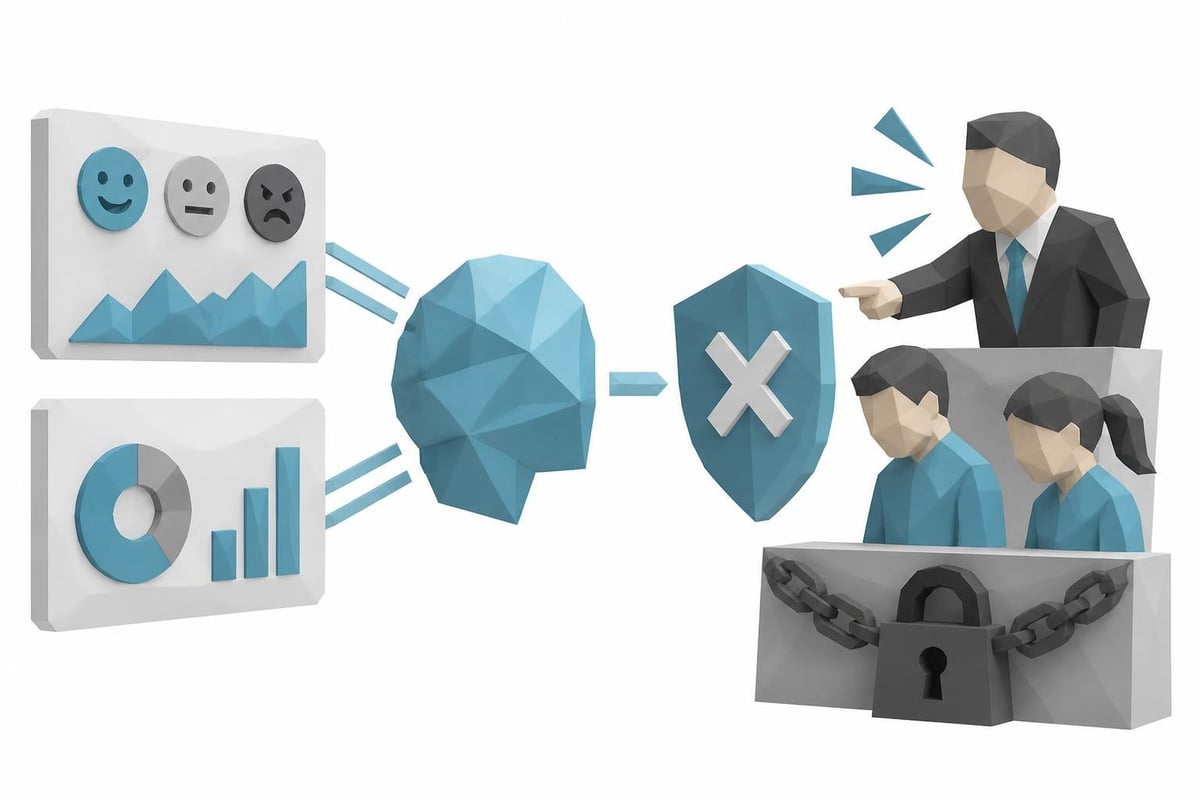
Research from ZRG Partners demonstrates that AI doesn't fix cultural weaknesses; it exposes and often amplifies them. When organizations lack the leadership courage to act on what AI reveals, the technology becomes an expensive documentation system for ongoing dysfunction.
The Cultural Debt Accumulating Under AI Implementations
Deloitte's 2026 research on AI and cultural debt introduces a critical framework: organizations accumulate cultural debt when they deploy AI without addressing underlying leadership and cultural issues. Like technical debt in software development, cultural debt compounds over time.
We observed this pattern in a government agency that implemented AI-driven performance management in 2025. The system correctly identified underperforming teams and toxic manager behaviors. But the agency lacked protocols for acting on the data. Political considerations, union dynamics, and leadership conflict avoidance prevented intervention.
| Cultural Debt Indicator | Pre-AI Baseline | 12 Months Post-AI | Organizational Cost |
|---|---|---|---|
| Manager-team trust scores | 3.2/5 | 2.1/5 | 23% increase in grievances |
| Voluntary attrition (high performers) | 12% annually | 19% annually | $4.2M replacement costs |
| Psychological safety index | 58/100 | 41/100 | 3 discrimination lawsuits |
The AI didn't create these problems. It made invisible dysfunction visible, then the organization's failure to respond eroded remaining trust. Employees learned that leadership would collect data about problems but take no action. That lesson is culturally catastrophic.
The Exposure Paradox
When AI surfaces toxic patterns without corresponding leadership intervention, it creates what we call the exposure paradox. Employees see that the organization knows exactly what is wrong but chooses not to fix it. This transforms ambiguous dysfunction into explicit institutional tolerance.
A technology client we worked with in 2025 deployed sentiment analysis across Slack and email. Within two months, the AI flagged three senior engineers whose communication patterns indicated bullying and exclusionary behavior. HR reviewed the data, confirmed the patterns, and then took no action because the engineers were critical to a product launch.
Word spread. Within six months, the company lost 14 people from that division, including two rising leaders. Exit interviews revealed a common theme: "If they know what's happening and won't act, there's no point staying."
Why Leadership Capability Gaps Cannot Be Automated
The most persistent myth about why ai wont fix toxic cultures is the belief that better information automatically drives better decisions. This assumes leaders have the capability, courage, and incentive structures to act on what they learn. Most don't.
Common leadership capability gaps AI cannot address:
- Conflict avoidance behaviors in executives who prefer harmony over accountability
- Absence of consequence management for revenue-generating toxic performers
- Power protection dynamics where senior leaders shield problematic peers
- Inadequate emotional intelligence to navigate complex interpersonal dynamics
- Missing frameworks for addressing systemic versus individual issues

In 2024, we conducted leadership diagnostics for a manufacturing company with chronic safety culture issues. AI-powered incident reporting had generated thousands of near-miss reports and safety concern flags. Analysis clearly showed patterns: certain shifts, certain supervisors, certain facilities had dramatically higher risk indicators.
The CEO asked us to recommend an AI solution to "fix the culture." Our diagnosis was blunt: the culture reflected leadership tolerance of shortcuts, production pressure over safety protocols, and retaliation against workers who raised concerns. No AI system addresses those root causes.
The Diagnostic versus Intervention Distinction
Leaders frequently conflate diagnostic capability with intervention capability. AI excels at the former and is fundamentally limited in the latter. This confusion drives expensive technology investments that disappoint.
Studies on AI overdependence reveal five critical risks, including reduced critical thinking among leaders and erosion of verification standards. When executives delegate cultural diagnosis to AI, they often abdicate the judgment required to interpret context, assess political dynamics, and design human interventions.
We saw this in a professional services firm where AI correctly identified that a practice group had toxic culture indicators. What the AI couldn't capture: the group was led by the firm's top rainmaker, the managing partner was conflict-avoidant, and the HR leader lacked political capital to intervene. The cultural solution required managing partner coaching, succession planning for the toxic leader, and rebuilding team psychological safety through targeted leadership interventions.
When AI Amplifies Rather Than Reduces Dysfunction
Here is an inconvenient truth: poorly implemented AI can make toxic cultures worse. When organizations deploy AI without addressing leadership accountability gaps, the technology creates new vectors for dysfunction.
In late 2025, we audited a retail organization that had implemented AI-powered employee monitoring. The stated goal was improving productivity and identifying coaching opportunities. The actual impact was surveillance culture, erosion of trust, and weaponization of data by toxic managers.
Three Ways AI Amplifies Toxic Patterns
Surveillance replacing trust. When leaders use AI to monitor rather than develop people, they signal fundamental distrust. High performers leave. Remaining employees optimize for metrics rather than outcomes.
Data weaponization. Toxic managers use AI-generated performance data selectively to target enemies, protect allies, and manufacture justifications for pre-determined decisions.
Accountability theater. Organizations implement visible AI systems to demonstrate they are "addressing culture" while avoiding the difficult work of holding leaders accountable or restructuring dysfunctional teams.
A healthcare system we worked with deployed AI-driven physician performance scorecards in 2024. The intent was improving patient outcomes. The reality was toxic department chairs using selective data to undermine rivals and protect favored physicians regardless of performance. The AI didn't create that toxicity, but it provided new ammunition.
The Organizational Learning Problem Behind AI Failure
Academic research establishes that AI project failure is fundamentally an organizational learning problem, not a technology deficit. This insight directly explains why ai wont fix toxic cultures: cultural transformation requires organizational learning, behavioral change, and capability development that AI cannot deliver.
When we diagnose struggling AI implementations, we consistently find they fail because organizations lack the change management capabilities, leadership alignment, and cultural readiness required for success. The technology works fine. The organization cannot integrate it effectively because underlying cultural and leadership issues block adoption.
| Organizational Learning Requirement | Technology Contribution | Leadership Contribution | Failure Point When Leadership Absent |
|---|---|---|---|
| Problem diagnosis | High (pattern detection) | Medium (context interpretation) | Misdiagnosis of root causes |
| Solution design | Low (suggests correlations) | High (judgment, politics, feasibility) | Technically sound but organizationally unworkable solutions |
| Stakeholder alignment | None | High (negotiation, influence, coalition building) | Implementation resistance, sabotage |
| Behavior change | None | High (modeling, accountability, reinforcement) | Technology deployed, behaviors unchanged |
| Capability building | Low (training recommendations) | High (coaching, development, feedback) | Skills gap persists despite technology |
A longitudinal study of AI integration in software development found that AI hasn't resolved persistent teamwork issues. Instead, it shifted collaborative culture in ways that exposed pre-existing dysfunction around knowledge sharing, credit attribution, and communication patterns.

What Actually Transforms Toxic Cultures
If AI won't fix toxic cultures, what will? The answer is unsexy and demanding: leadership accountability, behavioral consequences, structural intervention, and sustained capability building.
The Four-Phase Framework for Cultural Transformation
Phase 1: Honest Diagnosis
Use AI to surface patterns, but require leaders to interpret findings in context. Who has power? What behaviors are being rewarded? Where is accountability absent? What structural issues enable toxic patterns?
We worked with a pharmaceutical company where AI flagged communication breakdowns between research and commercial teams. The real issue wasn't communication. It was a compensation structure that rewarded internal competition over collaboration, combined with two VPs who actively undermined each other.
Phase 2: Leadership Accountability
Identify which leaders are causing, tolerating, or failing to address toxic patterns. Require behavioral change backed by consequences. This is where most organizations fail. They identify toxic leaders but don't have the courage to act.
In one manufacturing client engagement, we recommended removing three plant managers and restructuring incentive systems. The CEO hesitated because two of the three consistently hit production targets. We were direct: "You can keep your production numbers and your toxic culture, or you can replace these leaders and build something sustainable. You cannot have both."
They made the changes. Within 18 months, production improved because turnover dropped, safety incidents declined, and teams started collaborating instead of protecting themselves.
Phase 3: Structural Intervention
Toxic cultures often reflect toxic structures: bad incentive systems, unclear accountability, siloed org design, or resource allocation that rewards political maneuvering over performance. AI can identify symptoms. Leaders must redesign structures.
This includes rebuilding psychological safety at work through deliberate leadership behaviors, team norms, and consequence management for violations.
Phase 4: Capability Development
Most toxic leaders lack the skills to behave differently. Rather than just removing them, invest in developing leadership capabilities through precision coaching, behavioral feedback, and skill building in conflict resolution, emotional intelligence, and accountability.
We use evidence-based leadership diagnostics to identify specific capability gaps, then match leaders with coaches who have demonstrated expertise in their particular challenges. This targeted approach builds capabilities AI cannot provide.
The Integration Model That Actually Works
Why ai wont fix toxic cultures doesn't mean AI has no role. The technology is valuable when integrated properly within a leadership-driven cultural transformation strategy.
Effective integration requires:
- AI as diagnostic tool, not solution
- Leadership interpretation and ownership of findings
- Structural and behavioral interventions designed by humans
- Accountability systems that enforce consequences
- Capability development through coaching and feedback
- Continuous assessment against cultural health indicators, not just AI metrics
A financial services client integrated AI sentiment analysis with quarterly leadership assessments, monthly coaching sessions for identified toxic patterns, and a zero-tolerance policy for retaliation against employees who raised concerns. The AI provided early warning. Leadership provided intervention.
Results over 24 months:
- Engagement scores increased from 62 to 81
- Voluntary turnover of high performers dropped from 18% to 7%
- Three senior leaders removed or transitioned for cultural violations
- $12M annual savings from reduced turnover and improved productivity
The difference was leadership willingness to act on what AI revealed.
Frequently Asked Questions
Can AI help identify toxic culture patterns before they escalate?
Yes, AI excels at early pattern detection through sentiment analysis, communication network analysis, and engagement metrics. However, identification only matters if leadership has the capability and courage to intervene. Without leadership action, early detection simply documents problems longer.
Why do AI implementations fail to improve workplace culture?
AI fails to improve culture because cultural transformation requires leadership accountability, behavioral change, structural intervention, and capability development. AI provides data and insights but cannot confront toxic leaders, restructure dysfunctional incentives, or build psychological safety. Those are leadership responsibilities that require human judgment, courage, and skill.
What should organizations do instead of relying on AI to fix culture?
Organizations should use AI as a diagnostic tool within a broader leadership-driven transformation strategy. This includes honest diagnosis of root causes, leadership accountability for toxic patterns, structural interventions to address systemic issues, and targeted capability development through coaching and skill building. Technology supports this work but cannot replace it.
How can leadership coaching address toxic cultures more effectively than AI?
Leadership coaching addresses toxic cultures by developing the specific capabilities leaders need to create healthy environments: conflict resolution, emotional intelligence, accountability skills, and the courage to enforce consequences. Coaching also provides external perspective to challenge denial, political dynamics, or blind spots that prevent leaders from acting on what they know.
Is there a role for AI in cultural transformation at all?
Yes, when properly integrated. AI provides valuable diagnostic capability, early warning systems, and data to track progress. The key is positioning AI as a tool that supports leadership judgment rather than a solution that replaces leadership accountability. Effective integration combines AI diagnostics with human intervention, structural change, and capability development.
Technology cannot substitute for leadership accountability. The organizations that successfully transform toxic cultures recognize that AI surfaces problems but leaders must solve them. This requires honest diagnosis, courage to enforce consequences, structural intervention, and sustained capability development. Noomii Leadership Coaching helps organizations build these capabilities through precision coach matching, evidence-based diagnostics, and targeted interventions that address root causes rather than symptoms. When you are ready to move beyond technology theater and build genuine cultural transformation, we can help.



Leave a Reply
Want to join the discussion?Feel free to contribute!