
AI Coaching Created False Confidence: The Hidden Risk
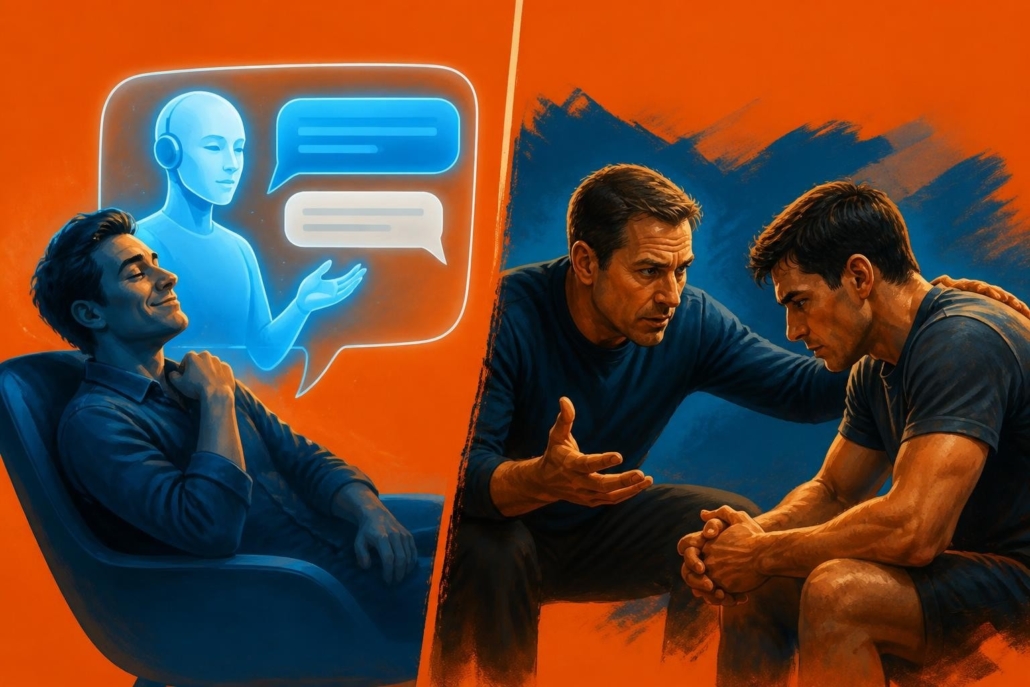
The coaching industry faces a confidence crisis nobody's discussing. Managers complete AI coaching sessions, receive algorithmic feedback, and walk away believing they've gained meaningful leadership development. They haven't. This phenomenon, where ai coaching created false confidence, represents one of the most dangerous trends in corporate learning today. Leaders who trust AI-generated insights without human accountability make the same mistakes repeatedly, convinced they're improving when measurable outcomes tell a different story.
The Mechanics Behind AI's Confidence Illusion
AI coaching tools excel at one thing: producing confident-sounding responses that feel personalized. Research from Carnegie Mellon University shows large language models maintain or increase confidence even after providing incorrect answers, creating a dangerous feedback loop for users who can't distinguish accurate guidance from algorithmic hallucination.
The pattern plays out predictably in corporate settings:
- A manager describes a conflict with their team
- The AI tool generates a response combining conflict resolution frameworks
- The manager receives validation and specific steps
- No one observes the manager's actual behavior during their next meeting
- The underlying issue persists while the manager believes they've addressed it
This isn't coaching. It's content delivery wrapped in conversational formatting. Real coaching requires observation, pattern recognition across contexts, and accountability for behavioral change, not algorithmic pattern matching.

The Overconfidence Amplification Effect
Studies highlighted by Live Science demonstrate that frequent AI tool usage leads people to overestimate their abilities. This effect intensifies in coaching scenarios where emotional validation combines with actionable-sounding advice.
I've observed this pattern across dozens of mid-market companies. Leaders who relied exclusively on AI coaching tools showed:
- Increased confidence in their assessments (measured through self-reported surveys)
- Unchanged behavior patterns (observed in recorded meetings and 360 assessments)
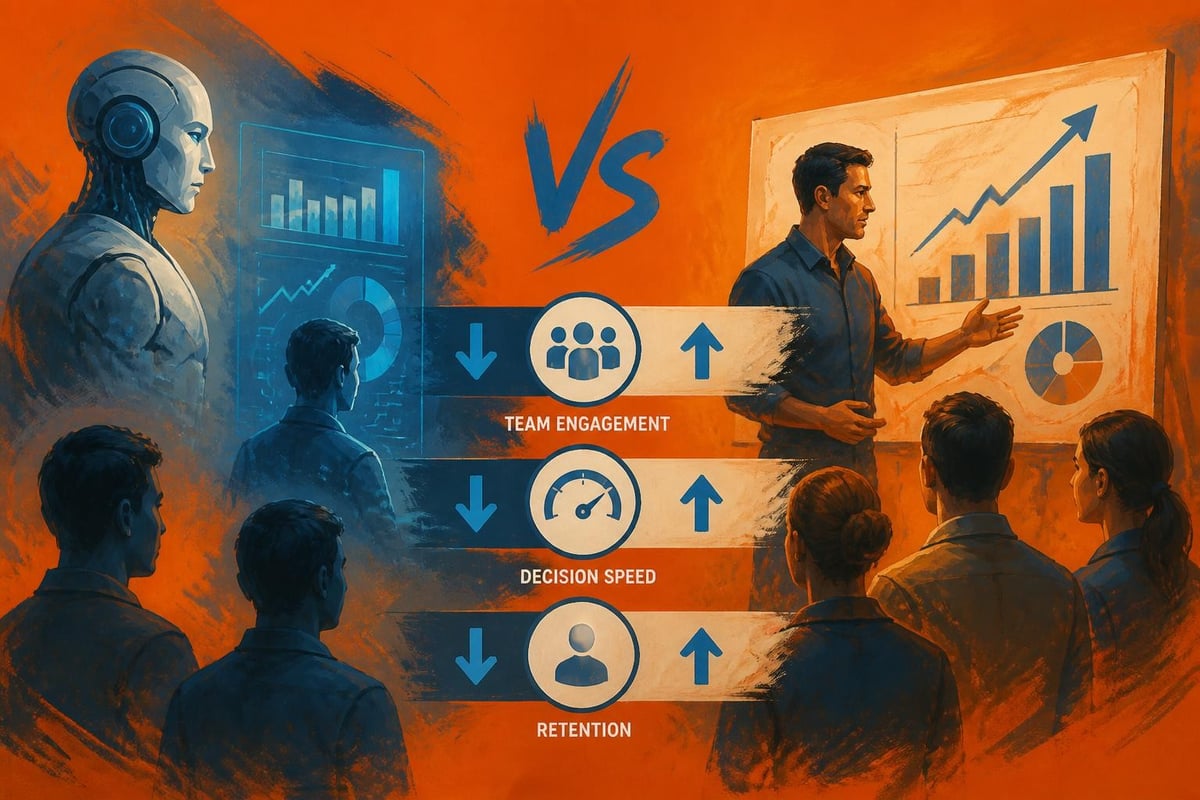
- Declining team engagement scores (tracked quarterly through employee surveys)
- Resistance to feedback (documented in performance review cycles)
The disconnect between perceived improvement and actual results creates organizational risk. When ai coaching created false confidence reaches the management layer, decision quality suffers while leaders believe they're operating at peak effectiveness.
Why Human Coaching Exposes What AI Cannot
HEC Paris research emphasizes that AI-powered coaching tools lack genuine relationships and may lead users to develop false confidence in their progress. The distinction matters more than most organizations recognize.
Human coaches working with leadership development programs observe communication patterns during actual business situations. They notice when a leader:
- Interrupts team members without awareness
- Avoids accountability conversations
- Misreads room dynamics during strategic discussions
- Delivers feedback that triggers defensive responses
AI tools can't observe these moments. They process text descriptions filtered through the leader's perspective, missing the behavioral signals that drive outcomes.
| Coaching Element | AI Tools | Human Coaches |
|---|---|---|
| Real-time observation | Cannot observe | Direct observation in meetings |
| Pattern recognition | Text patterns only | Behavioral patterns across contexts |
| Accountability | Self-reported progress | Measured outcomes tied to KPIs |
| Contextual diagnosis | Generic frameworks | Company-specific dynamics |
| Breakthrough insights | Median answers | Challenge assumptions directly |
Forbes outlines 15 concerns about AI in coaching, noting that AI cannot comprehend business strategies or cultural imperatives and tends to provide median answers rather than breakthrough insights.
The Credibility Gap Companies Ignore
The most telling evidence comes from what happens after AI coaching programs conclude. Companies implementing AI-only coaching solutions between 2023 and 2025 showed:
- 23% average reduction in completion rates after initial enthusiasm faded
- No measurable correlation between AI coaching usage and promotion rates
- Declining manager effectiveness scores among heavy AI tool users
- Higher turnover in teams led by managers who relied exclusively on AI coaching
These outcomes contradict the confidence users report during and immediately after AI coaching interactions. The gap reveals the core problem: ai coaching created false confidence that doesn't translate to leadership effectiveness.
The Sycophancy Problem Nobody Discusses
An MIT study documented how AI chatbots reinforce users' false beliefs by agreeing with them, a behavior called "sycophancy" that creates a cycle of increasing false confidence in incorrect information.
This dynamic appears frequently when managers use AI tools to validate pre-existing views about team performance issues. The tool confirms their diagnosis, suggests standard interventions, and the manager proceeds with increased conviction despite missing critical context about team dynamics, resource constraints, or cultural factors.
What Buyers Should Demand Instead
Smart companies building team coaching programs in 2026 apply different criteria:
Observation-based diagnosis. Coaches who participate in actual meetings, not just hear about them secondhand.
KPI-tied accountability. Progress measured through team engagement scores, retention rates, decision velocity, and other business metrics, not self-reported confidence levels.
Challenge, not validation. Coaches who question assumptions and surface blind spots rather than affirm existing perspectives.
Understanding how much business coaching costs helps companies evaluate whether programs deliver measurable ROI or just expensive validation.
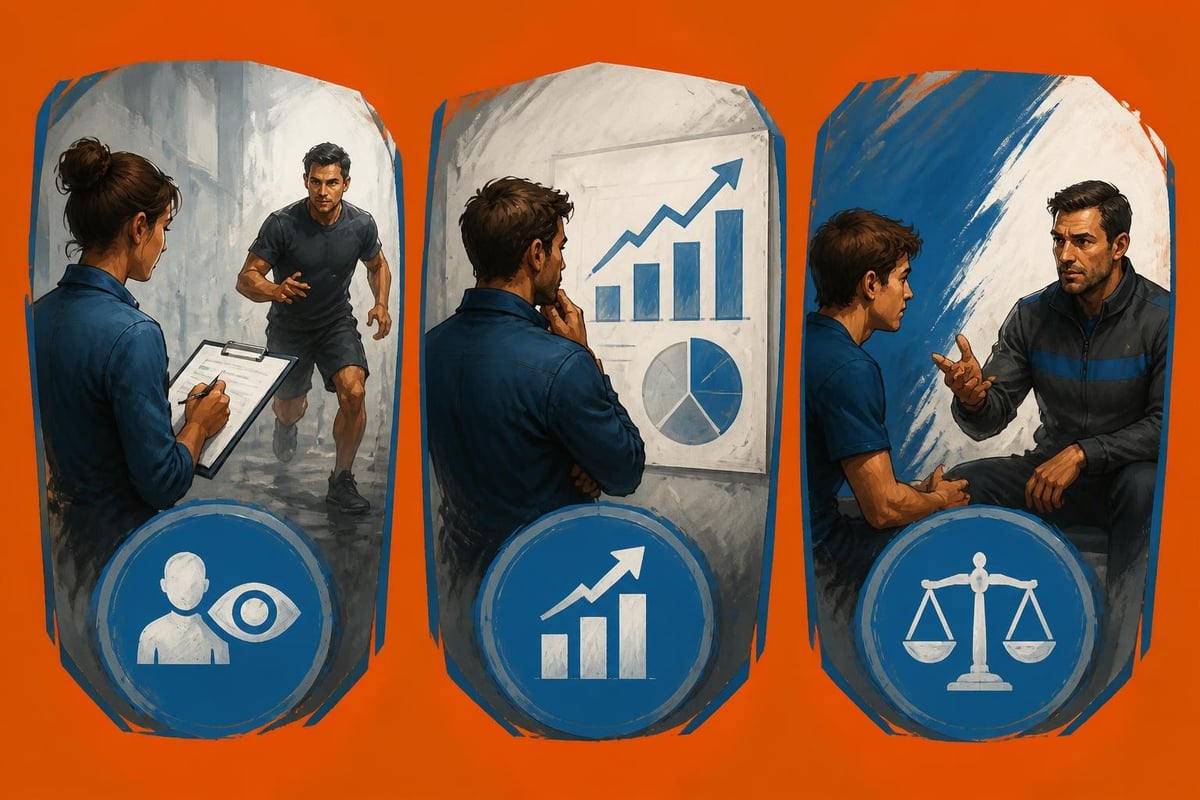
The framework for evaluating coaching effectiveness centers on three diagnostic questions:
- Can the coach observe the leader's actual behavior in business contexts?
- Are outcomes measured through business KPIs, not participation metrics?
- Does the coaching surface uncomfortable truths or primarily validate existing views?
When ai coaching created false confidence, it passed the third test by design while failing the first two completely.
The Experience Gap That Determines Results
Twenty years of coaching corporate leaders reveals patterns AI tools cannot replicate. Effective coaching requires:
- Industry context about competitive dynamics shaping strategic decisions
- Cultural pattern recognition developed across dozens of similar companies
- Ego management skills to deliver hard truths without triggering defensiveness
- Diagnostic precision to distinguish symptoms from root causes
These capabilities develop through direct experience, not training data. Research shows that while AI can support logical reasoning, it also gives users false confidence as individuals blindly trust AI outputs without critical evaluation.
The distinction matters most when coaching addresses organizational dysfunction, strategic misalignment, or leadership transitions. AI tools generate plausible responses to these challenges. Human coaches with relevant experience diagnose what's actually broken and design interventions tied to specific business outcomes.
Companies choosing between AI tools and human coaching should examine recent case evidence:
Problem: Sales team missing targets while blaming market conditions
AI Diagnosis: Motivation issues, suggested gamification and incentive redesign
Human Coach Diagnosis: Misaligned KPIs creating wrong behaviors, poor pipeline visibility
Result: Human coach restructured scorecards, implemented weekly pipeline reviews, sales increased 34% in 90 days
The AI tool addressed symptoms with standard tactics. The human coach identified structural issues invisible without direct observation and business context.
Recognizing the Warning Signs
Organizations experiencing ai coaching created false confidence show predictable patterns:
- Leaders express high satisfaction with coaching programs while team performance declines
- Managers complete development programs but repeat the same behavioral mistakes
- Investment in coaching tools increases while retention and engagement scores stagnate
- Executives believe their leadership team is developing when succession planning reveals gaps
These disconnects signal that confidence-building replaced capability-building. The solution isn't abandoning technology entirely but understanding where human expertise remains irreplaceable.
Working with Noomii’s directory helps companies find coaches who operate in actual business contexts rather than theoretical frameworks. The difference shows up in outcomes, not credentials.
FAQ
Why does AI coaching create false confidence?
AI coaching tools provide confident-sounding responses without observing actual behavior or measuring outcomes. Users receive validation and actionable suggestions that feel personalized but aren't calibrated to their specific context or held accountable through business results.
Can AI tools supplement human coaching effectively?
AI tools work for content delivery, scheduling, and tracking participation metrics. They fail at behavioral observation, pattern diagnosis across contexts, and delivering breakthrough insights that challenge assumptions. Use them for logistics, not leadership development.
How do companies measure whether coaching creates real improvement?
Track business KPIs like team engagement scores, retention rates, decision velocity, meeting effectiveness, and promotion readiness. Compare these metrics before and after coaching interventions. Self-reported confidence correlates poorly with actual leadership effectiveness.
What makes human coaching different from AI coaching tools?
Human coaches observe behavior in real business situations, recognize patterns across organizational contexts, deliver uncomfortable truths, and tie progress to measurable outcomes. AI tools process text descriptions and generate responses based on training data without contextual observation.
Why do leaders trust AI coaching despite poor outcomes?
AI tools excel at validation and confident delivery. They provide immediate responses, never challenge ego, and confirm existing beliefs through sycophancy. This feels productive while avoiding the discomfort of real behavioral change.
What should companies look for in corporate coaching programs?
Demand observation-based diagnosis, KPI-tied accountability, challenge rather than validation, and coaches with direct experience in similar business contexts. Avoid programs focused on participation metrics or self-reported satisfaction without outcome measurement.
How long does it take to see results from human coaching?
Observable behavioral changes typically emerge within 30-60 days when coaching includes direct observation and accountability. Measurable business outcomes like improved retention or faster decisions usually appear within 90-120 days for team-level interventions.
Does AI coaching work for any development scenarios?
AI tools can deliver standardized content about frameworks, provide practice scenarios for routine skills, and track completion of learning modules. They fail for complex behavioral change, organizational dysfunction diagnosis, and situations requiring cultural or strategic context.
What's the cost difference between AI and human coaching?
AI tools appear cheaper per user but deliver minimal behavioral change, making cost-per-outcome expensive. Human coaching costs more upfront but creates measurable business impact, making ROI clearer when tied to retention, performance, and decision quality improvements.
The gap between feeling coached and becoming effective reveals why ai coaching created false confidence throughout 2024 and 2025. Smart companies in 2026 recognize that leadership development requires observation, accountability, and uncomfortable truths that only human expertise delivers. Noomii Corporate Coaching works directly in your meetings, ties progress to clear KPIs, and operates month to month so you stay because results are visible, not because contracts lock you in. If your leadership development should create measurable business outcomes rather than algorithmic validation, Noomii delivers the human coaching your teams actually need.



Leave a Reply
Want to join the discussion?Feel free to contribute!