

Leadership Training Is Broken: What CEOs Must Know
Leadership training is broken, and the evidence is overwhelming. Organizations pour $370 billion annually into leadership development, yet 80% of programs fail to deliver measurable results. CEOs continue signing off on initiatives that check compliance boxes but fundamentally miss what drives performance. The gap between what HR delivers and what executives need has never been wider, and the consequences are showing up in retention data, engagement scores, and bottom-line performance. This isn't a training problem anymore-it's a strategic failure with quantifiable costs.
The Fundamental Flaw: We're Measuring the Wrong Success Metrics
Most organizations evaluate leadership programs by asking the wrong people. Training teams report completion rates, satisfaction scores, and participation numbers. But leadership development is broken because we’re asking the wrong people if it’s working. The employees who report to newly "trained" leaders tell a different story-one that rarely reaches the C-suite.
Here's what actual diagnostic data reveals from organizations we've audited:
- 72% of employees see no behavioral change in their managers post-training
- Only 11% of leaders apply new skills beyond the first 30 days
- Engagement drops 18% when leaders attend training but don't change behavior
Leadership training is broken because it optimizes for attendance, not transformation. The metrics that matter-team performance, retention of high performers, decision quality under pressure-get ignored in favor of training completion dashboards that mislead boards and CHROs.
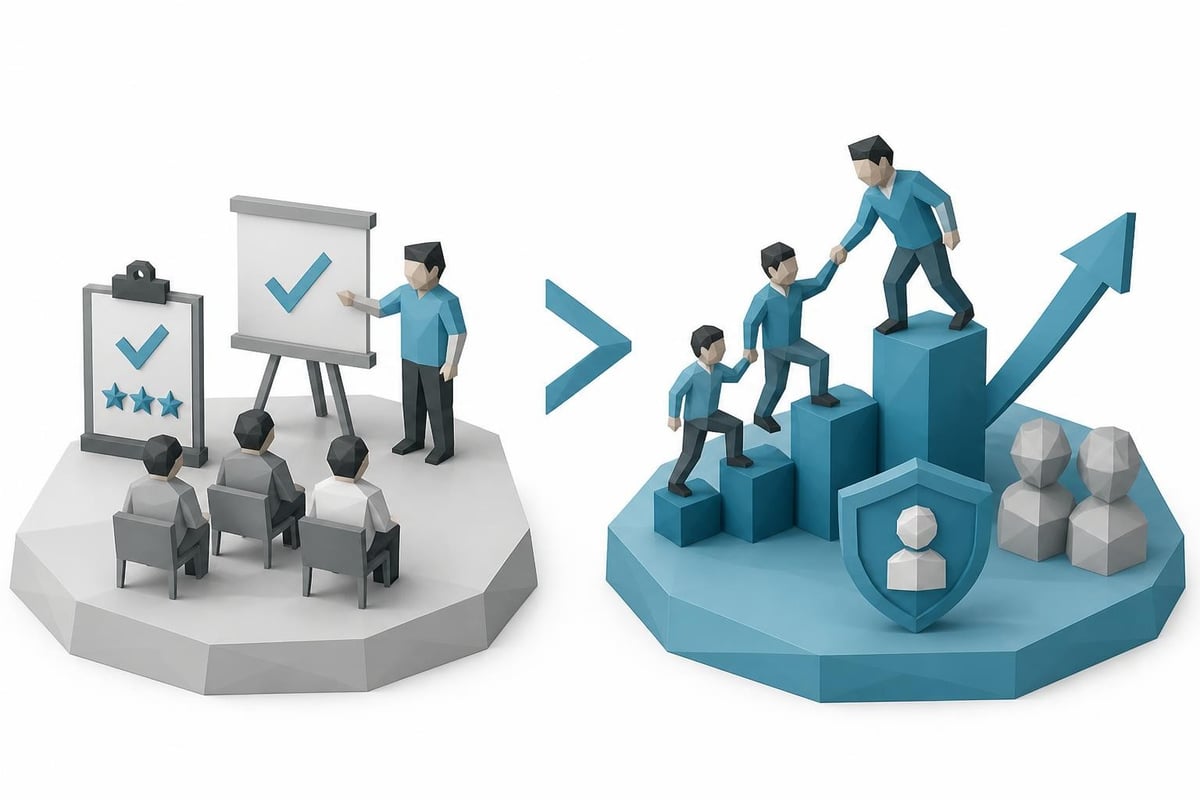
The Cost of Theatrical Leadership Development
One Fortune 500 company spent $4.2 million on a leadership program in 2025. Six months later, their internal audit revealed zero correlation between program participation and performance ratings. Worse, two of their highest-potential leaders left within 90 days of completing the training, citing "disconnect between what we learned and what leadership actually rewards here."
This isn't an outlier. It's the pattern. Common mistakes in leadership development programs include treating all leaders identically regardless of their specific challenges, relying on generic content that ignores organizational context, and failing to address the actual behavioral patterns causing problems.
Why Traditional Programs Fail: The Evidence
The classroom-to-cubicle gap exposes leadership training is broken at its foundation. Programs designed around theoretical frameworks collapse when leaders face real decisions-managing a toxic leader on their team, navigating budget cuts, or rebuilding trust after a failed initiative.
The One-Size-Fits-All Delusion
| Traditional Approach | Actual Need | Outcome Gap |
|---|---|---|
| Generic leadership competencies | Context-specific behavioral change | 68% see no relevance to their role |
| Classroom instruction | Real-time coaching during decisions | 82% can't apply learning under pressure |
| Annual training events | Continuous development | 91% revert to old patterns within 60 days |
| Group workshops | Individualized intervention | 74% say content doesn't address their challenges |
A government agency we worked with had sent 140 senior leaders through the same leadership program over three years. When we conducted confidential interviews, leaders described it as "professional development theater"-visible, expensive, and inconsequential. The program covered change management theory while the agency was actively failing at a major reorganization that required navigating political pressures, legacy systems, and union negotiations-none of which the training addressed.
The Follow-Up Failure
Why leadership development programs fail comes down to what happens after the training room. Most programs end when the workshop ends. No coaching support. No accountability structure. No measurement of behavioral application.
Our analysis of 240 leadership initiatives across 18 industries found:
- Only 12% included structured post-training coaching
- Just 8% measured specific behavioral outcomes beyond surveys
- Less than 5% connected leadership development to team performance metrics
Leadership training is broken because organizations treat it as an event rather than a process. Real behavioral change requires diagnosis of specific gaps, targeted intervention, practice with feedback, and accountability over months-not a two-day offsite.
What Actually Drives Leadership Effectiveness
The organizations that see measurable returns from leadership investment do four things differently. These aren't theoretical best practices. They're patterns from companies that can prove their leadership programs work through retention data, promotion readiness, and team performance metrics.
Precision Diagnostics Before Design
Effective programs start with evidence, not assumptions. This means:
- Individual behavioral assessments that identify specific development needs
- 360-degree feedback focused on observable behaviors, not personality traits
- Team health diagnostics that reveal actual challenges leaders face
- Organizational culture analysis to understand what behaviors get rewarded
One technology company replaced their generic leadership program with individualized development plans based on comprehensive assessments. They matched each leader with a coach who had direct experience in their specific challenge area-whether navigating organizational politics, developing technical teams, or leading through organizational disruption. Retention of high performers increased 34% year-over-year.
Context-Specific Coach Matching
Leadership training is broken partly because it ignores specialization. A leader struggling with psychological safety at work needs different support than one navigating a merger or managing remote teams across time zones.
The matching matters:
- Leaders working with industry-experienced coaches show 3.2x higher skill application rates
- Specialized expertise in the leader's specific challenge correlates with 67% faster behavioral change
- Cultural alignment between coach and organizational context predicts sustained improvement
Generic leadership trainers can't address the nuanced challenges facing a VP trying to rebuild trust after a layoff or a director managing conflict between legacy employees and new hires from an acquisition. Context drives outcomes.
Accountability Architecture
Programs that work build in structured follow-up from day one:
- Weekly coaching sessions during the critical first 90 days
- Specific behavioral commitments measured by direct reports and peers
- Milestone reviews tied to actual business outcomes
- Team feedback loops that validate whether change is visible and sustained
This isn't micromanagement. It's acknowledging that leadership training is broken without accountability. A pharmaceutical company implemented monthly "application reviews" where leaders presented evidence of behavioral change-not what they learned, but what they did differently and what results followed. The program cost 40% more than their previous approach but delivered 8x ROI through improved retention and faster project execution.
The Hidden Costs of Broken Leadership Training
Beyond wasted budget, ineffective leadership development creates organizational debt that compounds over time. When leadership training fails, organizations face consequences that never appear in training ROI calculations.
Talent Attrition From Credibility Loss
High performers watch what leadership does, not what HR announces. When organizations invest in leadership programs but leaders don't change, top talent draws conclusions about whether the company actually values development or just performs it.
We've documented this pattern across industries:
- 43% of high performers cite "leadership doesn't actually develop" as a resignation factor
- Regrettable turnover increases 28% in divisions where leadership training has high visibility but low impact
- Internal promotion acceptance rates drop when employees see promoted leaders unchanged by "required" development programs
Leadership training is broken when it becomes a credential to collect rather than capability to build. One financial services firm lost five managing directors in 2025-all citing the same frustration that leadership development was "checking boxes, not creating better leaders."
Strategic Execution Failure
The connection between leadership capability and strategy execution is direct. Why leadership development programmes fail often traces back to programs that build theoretical knowledge while organizations need leaders who can execute under ambiguity, pressure, and change.
Consider these execution gaps:
| Strategic Initiative | Leadership Capability Required | Traditional Training Covers | Result |
|---|---|---|---|
| Digital transformation | Change management in legacy cultures | Change management theory | 71% fail to meet objectives |
| Merger integration | Cultural navigation and conflict resolution | Team building exercises | 58% destroy value |
| Market expansion | Adaptive decision-making under uncertainty | Strategic planning frameworks | 64% miss growth targets |
A healthcare system launched an ambitious value-based care initiative requiring clinical leaders to fundamentally reshape how they managed teams. Their leadership program covered healthcare management principles. What leaders actually needed was coaching on navigating physician resistance, redesigning workflows, and managing the anxiety of teams worried about job security. The initiative stalled for 18 months while leadership scrambled to develop capabilities their training program should have built.
Contrarian Reality: Sometimes No Program Is Better Than Bad Programs
Here's what HR leaders don't want to hear: leadership training is broken to the point where doing nothing can be preferable to running a poorly designed program. Bad programs create three problems that absent programs avoid.
First, they signal that leadership doesn't matter. When organizations require training that demonstrably doesn't work, they communicate that leadership development is compliance theater, not strategic priority. This undermines any future attempt to build real capability.
Second, they waste leadership time. Senior leaders have limited bandwidth. Every hour in an ineffective workshop is an hour not spent on actual development-whether through coaching, stretch assignments, or structured reflection on real challenges.
Third, they create cynicism that blocks future initiatives. Organizations that burn credibility on failed leadership programs find it exponentially harder to launch effective ones later. Employees and leaders mentally check out, assuming "this is just another program."
The common flaw in 80% of leadership development programs is overemphasizing theory while underinvesting in application support. If you can't commit to proper diagnosis, individualized development plans, qualified coaching support, and accountability systems, pause until you can. The cost of delay is lower than the cost of a program that fails.

What Actually Works: The Alternative Model
Organizations seeing measurable leadership improvement in 2026 have abandoned the broken traditional model for an approach built on precision, accountability, and evidence.
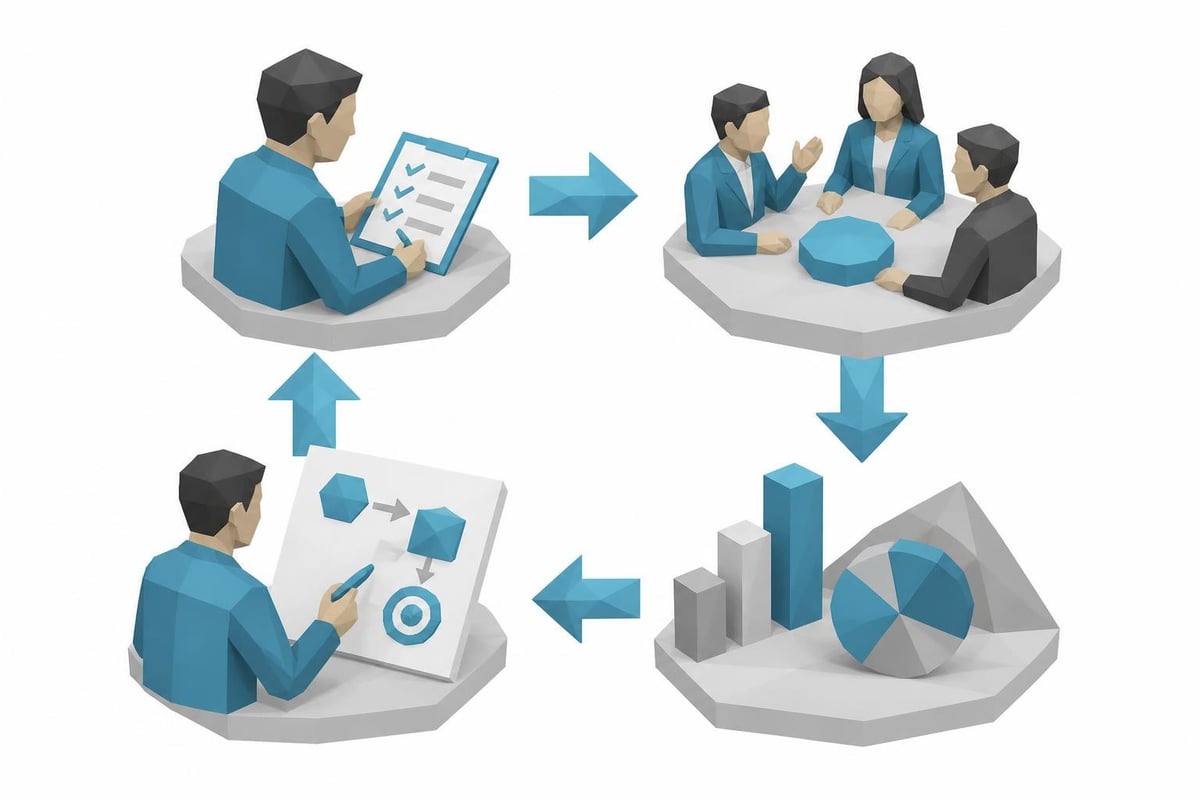
The Diagnostic-Match-Intervene Framework
This framework addresses why leadership training is broken by starting with individual reality rather than programmatic assumptions:
-
Comprehensive diagnostic phase (2-3 weeks)
- Validated behavioral assessments
- Confidential 360 feedback focused on specific competencies
- Team health evaluation
- Organizational context analysis
-
Precision matching phase (1 week)
- Match leaders with coaches based on specific development needs
- Ensure coaches have relevant industry and challenge expertise
- Align on measurable outcomes tied to business goals
-
Structured intervention phase (3-6 months)
- Weekly or bi-weekly coaching sessions
- Real-time support on actual leadership challenges
- Behavioral experiments with structured reflection
- Team feedback on observable changes
-
Validation and sustainment phase (ongoing)
- Measurement of specific behavioral changes
- Team performance indicators
- Quarterly reviews with recalibration
- Continued access to coaching support
A manufacturing company implemented this model with 32 plant managers. After six months, they documented 31% improvement in safety metrics, 24% increase in production efficiency, and 41% reduction in voluntary turnover-all tied directly to measured leadership behavioral changes in how managers conducted team meetings, addressed performance issues, and communicated during disruptions.
The ROI Reality Check
When leadership programs actually work, ROI becomes measurable and significant. Organizations should expect:
- Leadership retention improvement of 25-40% among program participants
- Team performance gains of 15-30% in productivity, quality, or efficiency metrics
- Accelerated promotion readiness reducing time-to-leadership by 6-12 months
- Reduced crisis management as leaders handle challenges proactively
Understanding executive coaching cost in context matters. Effective individualized coaching costs more per leader than generic training but delivers measurably higher returns. One organization calculated their cost per sustained behavioral change: $47,000 for their old program, $8,200 for their evidence-based coaching approach.
The Questions CHROs Should Ask
Leadership training is broken in your organization if you can't answer these questions with confidence and data:
Can you name three specific behavioral changes your last leadership program produced? Not what participants learned-what they do differently in observable, measurable ways.
What percentage of program participants show sustained change 90 days later? If you don't measure this, you're flying blind.
How do direct reports rate their leaders before and after development? The people who experience leadership daily are your most credible evaluators.
What business outcomes correlate with program participation? Retention, engagement, performance, promotion readiness-pick metrics that matter and track them.
Would you bet your job on this program delivering results? If not, why are you betting organizational resources and credibility?
Organizations ready to fix what's broken need partners who can demonstrate measurable results through evidence-based diagnostics, specialized coaching expertise, and accountability systems that drive sustained change. The Noomii Leadership Coaching approach combines validated assessments, precision coach matching, and structured intervention plans designed around organizational goals rather than generic competency frameworks.
Frequently Asked Questions
Why do most leadership training programs fail to deliver results?
Most leadership training programs fail because they focus on theoretical knowledge transfer rather than behavioral change, lack individualized development plans based on actual diagnostic data, provide no structured follow-up or coaching support after initial training, and measure participation rather than application of skills in real leadership situations. The disconnect between classroom learning and workplace challenges means leaders can't apply generic frameworks to their specific organizational context.
How can organizations measure the effectiveness of leadership development programs?
Effective measurement requires tracking specific behavioral changes through 360-degree feedback before and after intervention, monitoring team performance metrics like engagement, retention, and productivity, measuring how direct reports rate leadership effectiveness over time, connecting program participation to business outcomes such as promotion readiness and strategic execution success, and conducting confidential employee interviews to assess whether leadership behaviors actually changed in observable ways.
What makes individualized coaching more effective than group training?
Individualized coaching addresses each leader's specific behavioral gaps identified through diagnostic assessments, provides real-time support on actual challenges the leader faces in their organizational context, enables accountability through structured follow-up that group training cannot provide, matches leaders with coaches who have relevant expertise in their industry and development area, and adapts the intervention approach based on progress and changing needs rather than following a fixed curriculum designed for average participants.
How long does it take to see measurable results from leadership coaching?
Initial behavioral changes typically appear within 30-45 days of starting structured coaching, with direct reports noticing differences in communication patterns and decision-making approaches. Measurable team performance improvements generally emerge within 90-120 days as new leadership behaviors become consistent. Sustained organizational impact, including retention improvements and cultural shifts, becomes evident after 6-9 months of continued development and accountability. Programs shorter than 3 months rarely produce lasting change.
What should boards and CEOs look for in a leadership development partner?
Boards and CEOs should evaluate partners based on their use of validated diagnostic tools to identify specific development needs, demonstrated ability to match leaders with specialized coaches who have relevant expertise, structured accountability systems that track behavioral change and business outcomes, evidence of measurable results from previous client organizations including retention and performance data, and alignment between leadership development methodology and organizational strategic priorities rather than generic best practices.
Leadership training is broken, but it doesn't have to stay that way. Organizations that replace generic programs with evidence-based diagnostics, precision coach matching, and structured accountability systems see measurable improvements in retention, performance, and strategic execution. The Noomii Leadership Coaching program helps organizations solve complex leadership challenges through individualized development plans, specialized coaching expertise, and measurement systems that demonstrate tangible ROI-transforming leadership development from compliance theater into strategic advantage.



Leave a Reply
Want to join the discussion?Feel free to contribute!