

AI Cannot Replace Executive Judgment in Leadership
The rush to implement AI across executive functions has created a dangerous assumption: that machine learning can eventually replicate the judgment that separates exceptional leaders from mediocre ones. Boards are asking CHROs whether AI tools can reduce dependence on expensive executive talent. HR leaders are evaluating whether algorithms can handle performance decisions, succession planning, or crisis response. The answer matters because getting this wrong doesn't just waste technology budgets-it erodes the judgment capacity organizations need most when stakes are highest.
The Pattern Recognition Fallacy
AI excels at identifying patterns in historical data. It fails catastrophically when the pattern breaks.
During the 2026 supply chain disruptions following the Eastern European energy crisis, multiple Fortune 500 manufacturers relied on AI-powered procurement systems to optimize supplier relationships. The algorithms recommended maintaining existing vendor contracts based on five years of performance data. Human executives at three competitors ignored the AI recommendations, recognizing geopolitical signals the models couldn't process. They diversified suppliers two months before the crisis peaked.
The companies that followed AI guidance:
- Experienced 34-47% production delays
- Lost major customer contracts
- Spent 8-12 weeks in emergency supplier sourcing
- Damaged long-term market position
The companies led by executive judgment:
- Maintained 92-96% production capacity
- Captured competitor market share
- Strengthened customer relationships through reliability
- Positioned for post-crisis growth
This isn't an argument against AI. It's evidence that AI cannot replace executive judgment when context shifts faster than training data.

What Algorithms Miss in High-Stakes Decisions
Most executive decisions involve incomplete information, competing stakeholder interests, and consequences that extend beyond quarterly metrics. AI processes inputs and generates outputs. Executive judgment weighs trade-offs humans care about.
Consider the decision to address toxic leadership in a high-performing division. An AI system analyzing productivity metrics, revenue contribution, and team output would likely recommend retention. The numbers look strong. A seasoned executive recognizes warning signs the algorithm cannot process:
- Increased HR complaints filed outside normal channels
- Top performers quietly updating LinkedIn profiles
- Unusual patterns in PTO requests before major deadlines
- Declining participation in voluntary company initiatives
- Subtle changes in how other executives reference the division
These signals require interpretation, not calculation. They demand understanding organizational culture, reading interpersonal dynamics, and projecting second and third-order effects. The executive knows that retaining a toxic high-performer creates permission structures that damage the broader organization, even if immediate productivity metrics don't reflect the cost.
The Judgment Gap in Leadership Development
Organizations investing heavily in AI tools for talent management are discovering a critical limitation: algorithms can identify skill gaps but cannot develop judgment capacity.
A global technology company recently implemented an AI-driven leadership assessment system across 2,400 managers. The system generated detailed competency reports, identified development needs, and recommended training modules. Compliance with AI recommendations was high-78% completion rate over six months.
Results after six months:
- Technical competency scores improved 12-18%
- Managerial confidence increased (self-reported)
- Judgment quality in complex situations: no measurable improvement
- Executive readiness for senior roles: declined 9%
The problem wasn't the AI. The problem was treating leadership development as a competency checklist rather than judgment cultivation. When the same organization supplemented AI assessments with precision executive coaching, outcomes shifted:
| Metric | AI-Only Approach | AI + Executive Coaching |
|---|---|---|
| Competency improvement | 12-18% | 15-22% |
| Complex decision quality | No change | 34% improvement |
| Stakeholder satisfaction | 6% increase | 28% increase |
| Executive promotion readiness | -9% | +41% |
| Leadership presence score | Flat | +52% |
Executive coaches address what AI cannot: how to make decisions when data conflicts, how to navigate political complexity, how to maintain judgment under pressure, and how to develop the pattern recognition that comes from processed experience, not processed data.
Where AI Actually Undermines Executive Development
The most dangerous AI implementations aren't the ones that fail-they're the ones that appear to succeed while eroding judgment capacity.
The Decision Automation Trap
A financial services firm deployed an AI system to handle routine executive decisions: budget variance approvals, project prioritization, resource allocation for initiatives under $500K. The system worked efficiently. Decisions were faster and more consistent.
Eighteen months later, the firm faced a strategic crisis requiring rapid executive judgment. The leadership team struggled. Their decision-making muscles had atrophied. They had outsourced routine judgment calls that previously served as daily practice for more complex decisions. When stakes escalated, they lacked the reflexes needed.
The degradation pattern:
- AI handles "low-stakes" decisions effectively
- Executives appreciate time savings and consistency
- Judgment practice occurs less frequently
- Decision-making confidence declines subtly
- When major decisions arise, executives second-guess themselves
- Organizations lose trust in leadership presence
This creates a vicious cycle. As AI tools become more sophisticated, the temptation to automate more decisions increases. As automation expands, executive judgment capacity contracts. When crises demand human wisdom, organizations discover they've traded efficiency for capability.
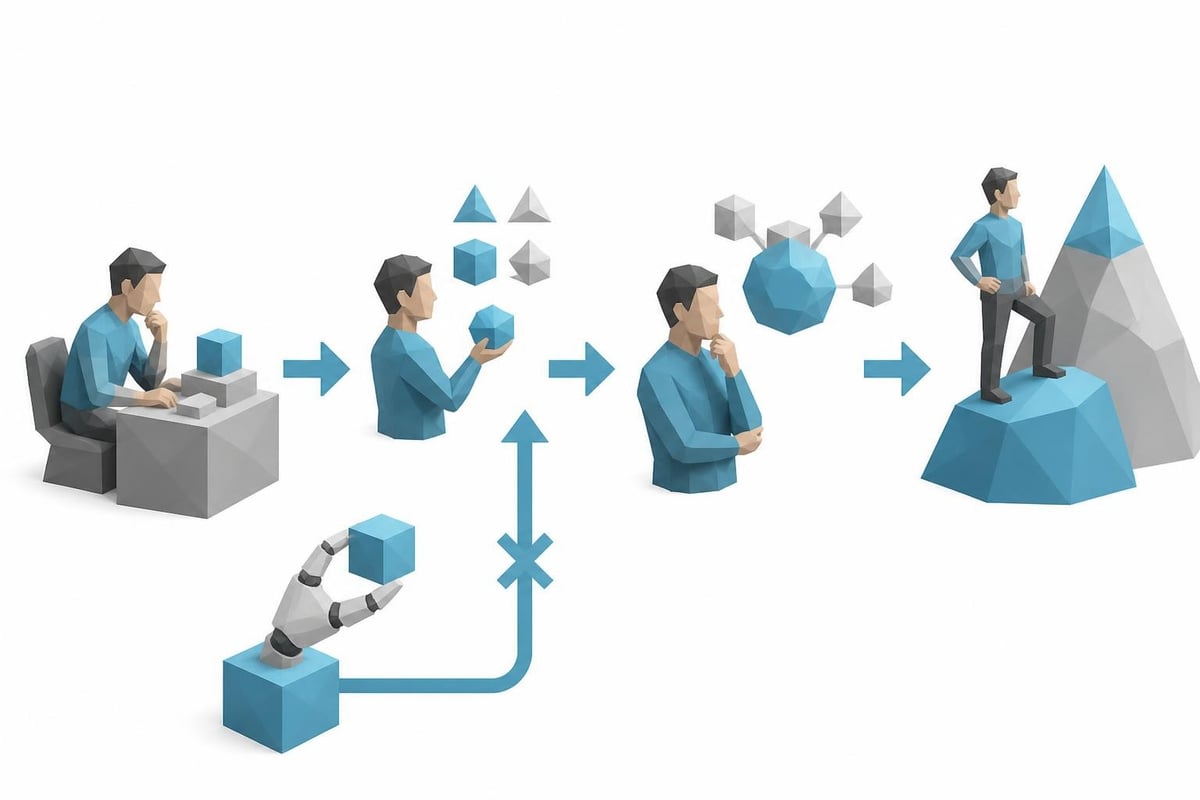
The Irreplaceable Elements of Executive Judgment
What specifically makes ai cannot replace executive judgment? The answer lies in four capabilities that remain fundamentally human.
Ethical Reasoning Under Ambiguity
A pharmaceutical executive faces a decision about drug pricing. AI can optimize for:
- Maximum shareholder return
- Market penetration targets
- Competitive positioning
- Regulatory compliance thresholds
AI cannot weigh:
- Long-term reputation cost versus short-term profit
- Societal obligation alongside fiduciary duty
- Impact on patient trust in the healthcare system
- Precedent-setting implications for industry norms
The executive must make a judgment call that balances legitimate but competing values. There is no "optimal solution" that satisfies all stakeholders. There is only the decision the leader can defend to themselves, the board, patients, and their own conscience.
Contextual Intelligence in Stakeholder Management
An executive evaluates two identical proposals from different divisions. The projects have matching ROI projections, resource requirements, and strategic alignment scores. AI recommends approving both.
Executive judgment recognizes:
- Division A just absorbed a major setback and needs a confidence-building win
- Division B has credibility to bank for future higher-stakes requests
- The executive who submitted Proposal A is being recruited by competitors
- Division B's leader is positioning for a lateral move and this isn't their priority
- Approving Division A strengthens succession planning for a critical role
- The political capital from these decisions affects three upcoming initiatives
None of this appears in the AI analysis. All of it matters to the actual outcome.
Pattern Recognition From Processed Experience
A CEO recognizes signals of organizational drift that don't show up in performance metrics. Revenue is growing. Engagement scores are stable. Customer satisfaction remains strong. Yet something feels wrong.
The CEO has seen this pattern before-fifteen years earlier, at a different company, in a different industry, where everything looked fine until it didn't. The specifics differ. The underlying dynamic is identical. The executive pushes for a cultural audit over objections from the CFO citing strong numbers.
The audit reveals early-stage trust erosion between product and sales teams, misalignment on strategic priorities across the leadership team, and growing cynicism about company values among middle managers. None of these issues had materialized in quantifiable problems yet. All were accelerating toward crisis.
This is processed experience, not data analysis. It's judgment developed through pattern recognition across diverse contexts, refined through reflection on past outcomes, and applied through intuition informed by expertise. As research indicates, AI cannot replicate this nuanced understanding that comes from lived leadership experience.
Presence and Credibility in Crisis
When a major product failure affects customer safety, the executive team must decide how to respond. AI can model scenarios:
- Financial impact of various recall options
- Legal liability under different communication strategies
- Regulatory compliance requirements by jurisdiction
- Media sentiment prediction based on messaging variants
AI cannot provide what matters most: a leader who can stand in front of cameras, own the failure, articulate values that guide response, and restore stakeholder confidence through authentic presence.
The decision about what to say, when to say it, and how to embody organizational accountability requires judgment that earns trust. Algorithms generate recommendations. Leaders carry consequences.
The Coaching Imperative in the AI Era
Organizations that understand ai cannot replace executive judgment are making a counterintuitive investment: they're increasing spending on executive coaching precisely as AI capabilities expand.
A Fortune 500 manufacturing company recently restructured its leadership development budget. Instead of reducing coaching investments to fund AI tools, they increased coaching by 34% while implementing AI-powered analytics. Their reasoning: AI creates more need for judgment development, not less.
Their framework:
| AI Handles | Executive Coaching Develops |
|---|---|
| Data aggregation and pattern detection | Interpretation of conflicting signals |
| Scenario modeling and projections | Wisdom about which scenarios matter |
| Compliance and policy checking | Ethical reasoning in gray areas |
| Performance tracking and reporting | Judgment about performance context |
| Communication template optimization | Authentic leadership presence |
The investment paid off during a major restructuring. AI tools identified operational redundancies and optimization opportunities. Executive coaches helped leaders navigate the human complexity: how to make difficult decisions with compassion, how to maintain trust during uncertainty, how to communicate hard truths while preserving dignity, and how to lead through loss while building toward the future.
Understanding executive coaching investment means recognizing that coaching addresses precisely what AI cannot: the development of judgment, presence, and wisdom that define exceptional leadership.

The Measurement Problem
Boards and CHROs rightfully ask: if we invest in developing executive judgment, how do we measure ROI?
This question reveals why many organizations default to AI solutions. Algorithms produce quantifiable outputs. Judgment development resists simple metrics. But difficult to measure doesn't mean impossible to assess or unimportant to pursue.
A government agency partnered with Noomii to develop judgment capacity across 120 senior leaders. Rather than tracking traditional training metrics, they measured:
- Decision quality retrospectives: Structured reviews of major decisions six months post-implementation, evaluating whether initial judgment proved sound
- Stakeholder confidence indices: Quarterly surveys of internal and external stakeholders rating trust in leadership decisions
- Crisis response effectiveness: Time to decision, stakeholder satisfaction, and outcome quality during unplanned situations
- Leadership bench strength: Promotion readiness and succession pipeline depth for roles requiring high judgment capacity
- Cultural health indicators: Measures of psychological safety, trust in leadership, and willingness to surface difficult truths
Results after 18 months:
- Decision quality retrospectives showed 67% of major decisions rated "sound judgment under uncertainty"
- Stakeholder confidence in leadership increased 43%
- Crisis response time decreased 31% while stakeholder satisfaction improved 28%
- Executive promotion readiness increased 52%
- Cultural health indicators improved across all dimensions, with psychological safety increasing 38%
These metrics don't fit neatly into an AI optimization model. They capture what matters: whether leaders demonstrate judgment that earns trust, navigates complexity, and drives sustainable results.
What Leaders Are Missing
The critical insight most executives overlook: AI makes judgment more valuable, not less.
As automation handles routine decisions, the decisions that remain for human executives become more complex, more ambiguous, and more consequential. The judgment bar rises. Organizations that treat AI as a replacement for executive capability are preparing for a past that won't return. Organizations that use AI to surface judgment opportunities are building capacity for a future that demands more wisdom, not less.
The strategic question isn't whether to implement AI. The strategic question is whether you're developing leaders who can exercise judgment at the level your AI-augmented organization will require.
According to recent analysis, AI exposes leadership weaknesses rather than replacing them, making judgment development even more critical as technology advances.
The Framework Forward
Organizations that successfully integrate AI while strengthening executive judgment follow a clear pattern:
Define AI Boundaries Explicitly
Identify which decisions require human judgment and protect that territory. A technology company established clear decision categories:
AI-Driven Decisions:
- Resource allocation under $250K
- Routine policy compliance checks
- Initial candidate screening
- Performance data aggregation
- Standard vendor evaluations
AI-Informed, Human-Decided:
- Strategic initiative prioritization
- Leadership promotions and succession
- Cultural intervention decisions
- Crisis response strategies
- Major stakeholder communications
- Ethical questions with competing values
Human Judgment, AI Support Prohibited:
- Executive termination decisions
- Whistleblower response
- Major reputation risk scenarios
- Cultural values clarification
- Leadership presence in public crisis
This framework prevents the gradual erosion of judgment through automation creep.
Invest in Judgment Development Systems
Build deliberate practices that strengthen executive judgment:
- Decision debriefs: Structured reviews of major decisions, examining what information was considered, what was missed, how judgment was exercised, and what outcomes teach
- Judgment cohorts: Small groups of executives who review each other's complex decisions, providing perspective and challenging assumptions
- Executive coaching relationships: Ongoing partnerships with experienced coaches who develop judgment through case analysis and real-time decision support
- Scenario planning exercises: Regular practice making decisions under uncertainty, ambiguity, and incomplete information
- Ethics labs: Facilitated discussions of actual organizational dilemmas requiring values-based judgment
Create Feedback Loops That Improve Judgment
The only way to develop judgment is through cycles of decision, outcome, reflection, and learning. Organizations must build systems that close these loops:
- Document the reasoning behind major decisions when made
- Evaluate outcomes against initial judgment after sufficient time
- Analyze what signals were accurate predictors versus noise
- Identify patterns in judgment errors and strengths
- Apply lessons to upcoming decisions
- Share learning across leadership teams
Frequently Asked Questions
Can AI help improve executive decision-making?
Yes, AI significantly enhances executive decision-making by processing vast amounts of data, identifying patterns, and modeling scenarios faster than humans can. However, AI provides inputs for judgment rather than replacing it. The most effective approach uses AI to surface insights, flag risks, and present options while executives apply judgment to interpret findings, weigh trade-offs, consider stakeholder impacts, and make final decisions. Organizations that position AI as a decision support tool rather than a decision replacement achieve better outcomes.
What specific aspects of leadership require human judgment that AI cannot provide?
Several leadership dimensions remain exclusively human: ethical reasoning when values conflict, contextual intelligence about organizational politics and stakeholder relationships, authentic presence during crisis, intuition based on processed experience across diverse situations, and wisdom about which problems matter most. AI excels at optimization within defined parameters but cannot exercise judgment about which parameters matter, how to balance competing legitimate interests, or what the right thing to do is when "right" depends on values rather than metrics.
How should organizations balance AI implementation with executive judgment development?
Organizations should treat AI and judgment development as complementary investments rather than competing priorities. Implement AI for data processing, pattern detection, scenario modeling, and routine decisions while simultaneously increasing investment in executive coaching, judgment development programs, and decision-making practice for leaders. The framework should explicitly define which decisions require human judgment and protect that space from automation. As AI handles more routine work, the remaining decisions become more complex and consequential, requiring stronger judgment capacity, not less.
Why are companies increasing coaching budgets despite AI advances?
Forward-thinking organizations recognize that AI creates greater need for executive judgment, not less. As algorithms handle routine decisions, the choices that reach executives become more ambiguous, more politically complex, and more consequential. This increases the value of coaching that develops judgment capacity, leadership presence, and wisdom. Additionally, AI tools expose leadership weaknesses more quickly, making judgment development more urgent. Companies that understand this dynamic are increasing coaching investments to ensure their leaders can exercise judgment at the level their AI-augmented organizations require.
What happens to organizations that over-rely on AI for executive decisions?
Organizations that automate too many executive decisions experience judgment atrophy across their leadership teams. Leaders lose practice making complex calls, become dependent on algorithmic recommendations, and struggle when facing novel situations that AI hasn't been trained to handle. During crises or strategic inflection points, these organizations discover their executives lack the judgment reflexes needed for high-stakes decisions. The result is slower response times, poor stakeholder communication, erosion of leadership credibility, and vulnerability during unexpected challenges. Recovery requires rebuilding judgment capacity that was allowed to deteriorate.
AI will continue advancing, but it will never carry the weight of consequence that defines executive responsibility. Organizations that recognize this truth invest in developing the judgment capacity that separates adequate leadership from exceptional results. The Noomii Corporate Leadership Program helps organizations strengthen executive judgment through precision coaching that addresses real leadership challenges with measurable outcomes, ensuring your leaders can exercise the wisdom your AI-enhanced organization demands.



Leave a Reply
Want to join the discussion?Feel free to contribute!