

Why Employees Stop Trusting Leadership: The Real Cost
Trust doesn't collapse in a single moment. It erodes through patterns most executives miss until the damage is done. In 2026, organizations face a trust crisis that's costing them their best talent, operational efficiency, and competitive advantage. The gap between what leaders believe about their trustworthiness and what employees actually experience has never been wider. Understanding why employees stop trusting leadership isn't an HR exercise; it's a strategic imperative that directly impacts retention, productivity, and organizational performance.
The Trust Gap: What Leaders Miss
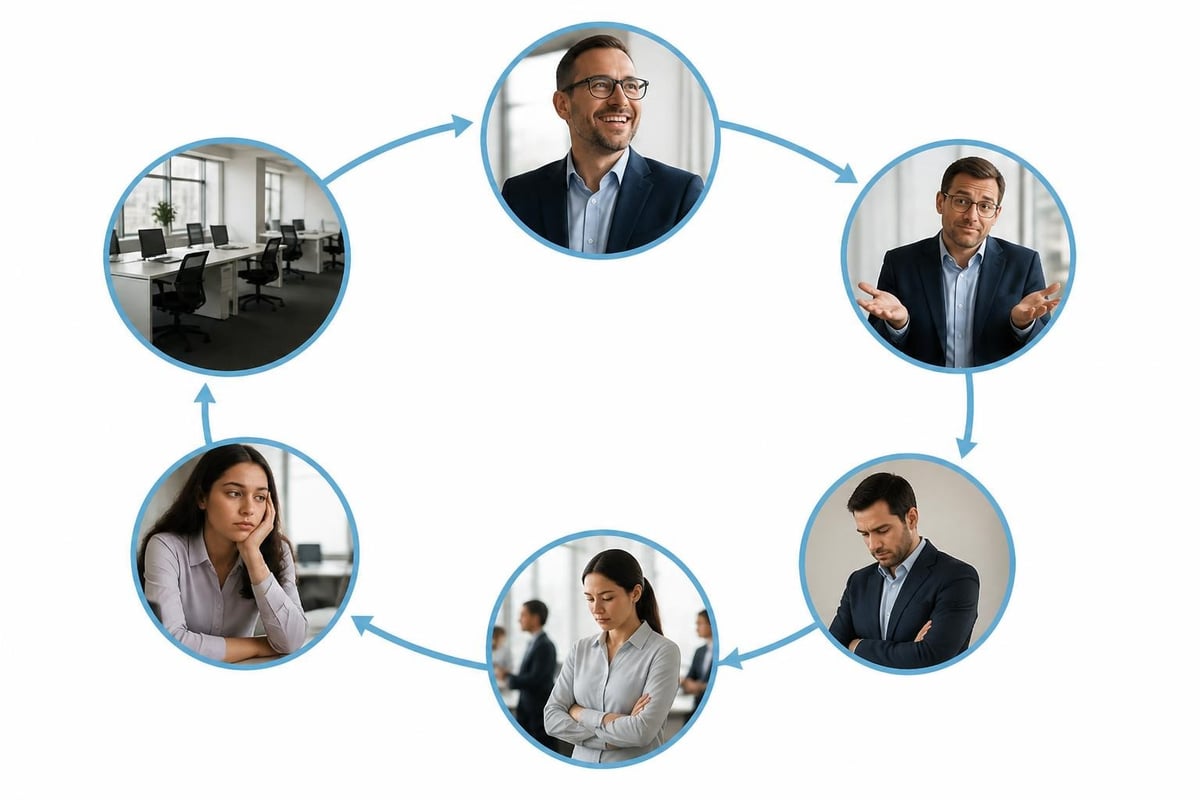
Recent analysis reveals a striking disconnect. Executives consistently overestimate how much their employees trust them, often by margins exceeding 40%. This isn't a perception problem. It's an evidence problem.
Leaders operate with incomplete data. They see engagement survey scores that tell them what people are willing to say, not what they actually think. They attend town halls where questions are filtered. They receive updates from direct reports who have learned what gets rewarded and what gets punished.
The patterns that emerge from this gap:
- Executives believe their communication is transparent when employees experience it as carefully managed messaging
- Leaders think they're accessible while employees describe elaborate barriers to reaching decision-makers
- Management assumes their explanations are sufficient when teams see rationalization for predetermined outcomes
The Measurement Problem
Most organizations track engagement but not trust. These aren't the same thing. An employee can be engaged with their work while fundamentally distrusting leadership's intentions or competence. This distinction matters because the interventions differ completely.
When leadership and executive coaching programs focus only on engagement metrics, they optimize for the wrong outcome. Trust requires different diagnostics, different frameworks, and different accountability measures.
Why Employees Stop Trusting Leadership: The Core Patterns
After analyzing leadership effectiveness across multiple Fortune 500 implementations and government agency transformations, five consistent patterns emerge. These aren't theoretical concerns. They're observable, measurable behaviors that predict trust decline with remarkable accuracy.
Pattern One: Selective Transparency
Leaders share information when it's convenient and withhold it when it's not. Employees recognize this immediately, even when executives believe they're being strategic.
Observable indicators:
- Financial results shared only when favorable
- Reorganization rumors circulating weeks before official announcements
- Different explanations for the same decision depending on the audience
- Information asymmetry between leadership levels and frontline teams
The defense is always the same: "We shared what we could when we could." The reality employees experience: "They share what serves them and hide what doesn't."
Pattern Two: Inconsistent Accountability
Rules apply differently depending on hierarchy. This pattern destroys trust faster than almost any other leadership failure because it reveals the actual operating system of the organization versus the stated values.
| Leadership Level | Accountability Standard | Employee Observation |
|---|---|---|
| Executive | Private coaching, retained position | Protected from consequences |
| Middle Management | Performance improvement plan | Visible discipline |
| Frontline | Immediate consequences | Unequal treatment |
When toxic workplace behaviors go unaddressed at senior levels while junior employees face swift consequences for minor infractions, the message is clear: principles are negotiable based on power.
Pattern Three: Decision Reversals Without Explanation
Leaders change direction frequently in response to market conditions, board pressure, or new information. That's appropriate. What destroys trust is the absence of honest explanation for the reversal.
Employees don't expect perfection. They expect honesty about why directions change. When leaders pretend the new direction was always the plan or offer obviously incomplete explanations, employees stop trusting leadership to level with them about anything substantive.
Common scenarios:
- Strategic priorities announced with conviction, quietly abandoned within quarters
- Commitments made to teams, rescinded without acknowledgment
- Cultural initiatives launched with fanfare, defunded when budgets tighten
- Organizational values proclaimed, contradicted by actual decisions
The pattern isn't the change itself. It's the refusal to acknowledge the change honestly or explain the genuine reasoning.
Pattern Four: Manufactured Participation
Leaders solicit input they have no intention of using. This might be the most corrosive pattern because it combines dishonesty with the pretense of inclusion.
Research on psychological safety demonstrates that false consultation is worse than no consultation. It signals that leadership values the appearance of collaboration more than actual input. Employees learn quickly when their participation is theater.
Evidence of manufactured participation:
- Focus groups conducted after decisions are already made
- Feedback sessions where concerns are noted but never addressed
- Surveys that generate reports but no action
- Town halls with predetermined talking points masquerading as dialogue
Pattern Five: Competence Gaps Leadership Won't Address
Employees lose trust when they observe leadership making consequential decisions without adequate understanding. The specific issue isn't that leaders don't know everything. It's that they won't acknowledge gaps or seek genuine expertise before deciding.
This pattern accelerates in organizations experiencing rapid technological change, regulatory shifts, or market disruption. Leaders who built careers on past expertise face new challenges requiring different knowledge. Those who acknowledge this reality and build appropriate advisory structures maintain trust. Those who pretend their existing mental models still apply destroy it.

The Early Warning Signals Organizations Ignore
Trust erosion follows predictable stages. Organizations that intervene early can reverse the damage. Those that wait until trust has collapsed face years of rebuilding with no guarantee of success.
Stage One: Increased Clarification Requests
When employees start asking for written confirmation of verbal commitments, they're signaling doubt. This isn't about having records. It's about protecting themselves from future reversals or misrepresentations.
Stage Two: Formal Communication Replaces Informal Exchange
Teams that previously resolved issues through quick conversations start requiring email trails and meeting documentation. The shift from trust-based efficiency to CYA bureaucracy indicates employees no longer believe leadership operates in good faith.
Stage Three: Talent Retention Becomes Dependent on Individual Managers
When employees stay because of their direct supervisor despite organizational leadership, you're seeing a localized trust bubble in a broader trust desert. High performers leave despite liking their immediate team because they don't trust the broader organization's direction or integrity.
Stage Four: Selective Communication
Information stops flowing upward. Leaders receive sanitized versions of reality. Problems are hidden until they become crises. This stage indicates employees have concluded that transparency puts them at risk.
What Rebuilding Actually Requires
The conventional advice about rebuilding trust is mostly useless. "Be more transparent" and "communicate better" aren't wrong, but they're insufficient because they don't address why employees stop trusting leadership in the first place.
Rebuilding requires specific, observable changes in leadership behavior, not better messaging about existing behavior.
Acknowledge Specific Failures
Generic apologies accomplish nothing. "We need to do better at communication" means nothing to employees who can list ten specific instances where leadership was dishonest or incompetent.
Effective acknowledgment includes:
- Specific decisions or behaviors that broke trust
- Honest explanation of why those failures occurred
- Clear statement of what will change
- Accountability for whether those changes actually happen
Create Genuine Accountability Mechanisms
Trust rebuilds when employees see consequences for leadership failures, not just frontline mistakes. This requires mechanisms that actually function, not HR policies that exist only on paper.
Organizations working with evidence-based leadership diagnostics implement accountability frameworks that apply consistently across all levels. The frameworks include specific behaviors, observable indicators, and predetermined consequences that can't be negotiated away when the person involved has organizational power.
Fix Decision-Making Processes
If decisions are made through opaque processes that exclude relevant expertise, better communication about those decisions won't rebuild trust. The process itself needs to change.
Elements of trust-building decision processes:
- Clear criteria for who provides input on what types of decisions
- Visible incorporation of that input or honest explanation of why it wasn't used
- Post-decision reviews that assess quality and adherence to stated values
- Willingness to reverse decisions when implementation reveals flaws
Invest in Leadership Capability Development
Many trust failures stem from genuine competence gaps. Leaders promoted for technical expertise or past performance often lack the capabilities required for current challenges. Hoping they'll figure it out destroys trust twice: once through their ineffective decisions and again through the organizational unwillingness to address the gap.
Programs like the future of executive coaching focus on developing specific leadership capabilities through targeted intervention, not generic development. The difference matters. Generic training signals "we're doing something." Targeted coaching based on actual gaps signals "we're fixing this."

The Cost of Getting This Wrong
Organizations often underestimate the financial impact of trust erosion because the costs are distributed and indirect. But they're measurable and substantial.
Productivity Loss
Teams operating in low-trust environments spend enormous time on verification, documentation, and political navigation. Conservative estimates put this productivity tax at 15-20% of working time. In a 1,000-person organization, that's 150-200 full-time equivalents producing no value.
Talent Exodus
High performers have options. When they lose trust in leadership, they exercise those options. The decline in manager engagement compounds this problem because managers who have checked out can't retain their teams even if they wanted to.
Replacement costs for skilled employees range from 150-400% of annual salary depending on role and industry. Leadership trust failures that drive unnecessary turnover can cost organizations millions annually.
Innovation Shutdown
Innovation requires risk-taking. Risk-taking requires trust that failure won't be punished arbitrarily. In low-trust environments, employees optimize for safety, not innovation. They propose ideas they know will be accepted rather than ideas that might actually work.
Organizations wondering why their innovation initiatives generate incremental improvements rather than breakthroughs should examine whether employees trust leadership enough to propose genuinely novel approaches.
Regulatory and Compliance Risk
When employees don't trust leadership to respond appropriately to problems, they stop reporting problems. Issues that should be caught and addressed internally become regulatory violations, lawsuits, or public crises.
The pattern is consistent: organizations with major compliance failures almost always had employees who knew about the problems but didn't trust leadership to fix them without shooting the messenger.
What Different Stakeholders Need to Know
For CEOs and Board Members
Trust erosion typically reaches the C-suite and board level after irreversible damage has occurred. By the time you're seeing it in retention data or engagement scores, you're looking at 18-24 months of deterioration.
Early detection requires:
- Direct access to employee feedback mechanisms that bypass management filtering
- Regular pulse checks on specific trust indicators, not just general engagement
- Outside perspective from advisors who will tell you what you need to hear rather than what you want to hear
- Willingness to act on early warnings even when they implicate senior leaders
For CHROs and Talent Leaders
You can't HR-program your way out of leadership trust failures. Training, team-building, and communication campaigns don't address root causes when the actual problem is leadership behavior or competence.
Your leverage comes from providing executives with accurate data about trust levels, specific evidence about which leadership behaviors are driving erosion, and access to interventions that actually work. When you present the business case in terms executives care about (retention costs, productivity impact, competitive disadvantage), you create space for real change.
For Executive Coaches and Development Professionals
Generic leadership development doesn't rebuild trust because it doesn't address the specific behaviors that broke it. Your impact depends on working with leaders to identify their actual trust-breaking patterns, not the behaviors they think they should improve.
Coaching interventions that drive trust recovery focus on observable behavior change with accountability measures. Leaders need to demonstrate different decision-making, different communication patterns, and different responses to challenges, not just understand why trust matters.
Frequently Asked Questions
How long does it take to rebuild trust after it's been broken?
Rebuilding organizational trust typically requires 12-24 months of consistent, observable leadership behavior change. The timeline depends on severity of the trust breach, consistency of new behaviors, and whether employees see genuine accountability for past failures. Superficial efforts or inconsistent application extend this timeline indefinitely.
Can you measure trust quantitatively?
Yes. Effective trust measurement focuses on specific behavioral indicators rather than general sentiment. These include: percentage of employees who believe leadership acts with integrity, willingness to raise concerns without fear of retaliation, confidence that decisions consider employee input, and perception that accountability applies equally across levels. Track these metrics quarterly with validated instruments designed for trust assessment specifically.
What's the difference between trust and psychological safety?
Trust relates to belief in leadership's integrity, competence, and intentions. Psychological safety involves feeling safe to take interpersonal risks within teams. You can have psychological safety within a team while distrusting organizational leadership. Both matter, but they require different interventions and serve different functions.
Should leaders acknowledge past trust-breaking behaviors publicly?
Yes, when those behaviors were visible to the organization. Generic acknowledgments ("we could have communicated better") accomplish nothing. Specific acknowledgment of particular decisions or behaviors that broke trust, combined with clear explanation of what will change, demonstrates genuine accountability. Avoid this only when legal counsel advises otherwise.
How do you rebuild trust when the leaders who broke it are still in place?
This is the most challenging scenario and often requires external intervention. Those leaders must demonstrate genuine behavior change through specific, observable actions over sustained periods. Many organizations find this impossible without structured coaching, accountability frameworks, and board-level oversight. In some cases, leadership changes prove necessary when behavioral change doesn't occur.
Trust erosion follows predictable patterns that most organizations recognize too late. The leaders who address these patterns early, with genuine accountability and sustained behavior change, protect their competitive advantage and retain their best talent. Noomii Leadership Coaching helps organizations diagnose specific trust failures, match leaders with expert coaches who address root causes, and implement accountability frameworks that ensure lasting change.



Leave a Reply
Want to join the discussion?Feel free to contribute!