

Why Couples Hire Coaches: Results, Tools, and Trust
Most relationship advice focuses on why couples need help, but few sources explain why couples hire coaches specifically or what drives that decision instead of therapy, apps, or self-help books. After observing hundreds of coaching engagements across different relationship stages, income brackets, and conflict types, clear patterns emerge. Couples choose coaching when they want practical tools, forward momentum, and measurable change rather than extended exploration of past trauma. Understanding why couples hire coaches reveals not just their pain points but also their expectations for speed, structure, and accountability that traditional approaches often miss.
The Speed and Structure Gap That Therapy Leaves Open
Therapy often explores underlying patterns over months or years. Coaching builds skills immediately.
When couples research their options, couples therapy creates communication breakthroughs, but many partners want faster progress on specific challenges like decision-making frameworks, conflict de-escalation techniques, or shared goal alignment. This explains why couples hire coaches after trying therapy or alongside it.
Key differences couples notice:
- Coaches assign homework between sessions with clear deliverables
- Sessions focus on future goals rather than past wounds
- Progress ties to observable behavior changes within weeks
- Accountability structures keep both partners engaged

One couple I observed came to coaching after eight months of therapy. They valued the emotional processing but needed concrete communication tools for parenting disagreements. Their coach introduced a decision matrix they still use three years later. That practical outcome represents why couples hire coaches when they need implementable systems.
The Certification Myth in Relationship Coaching
Couples rarely ask about coaching certifications because they focus on outcomes, not credentials.
The coaching industry promotes certifications heavily, yet clients select coaches based on referrals, demonstrated expertise, and specific experience with their relationship challenge. A coach with ten years helping couples navigate career transitions and relocation stress brings more value than a newly certified coach with extensive theory but limited pattern recognition.
| Selection Factor | Weight in Decision | What Couples Actually Check |
|---|---|---|
| Certifications | Low | Rarely mentioned in intake calls |
| Testimonials from similar situations | High | Specific outcomes matter most |
| Coach's relationship experience | Medium | Personal context builds trust |
| Methodology clarity | High | Want to understand the process |
This pattern holds across demographics. Smart couples hiring coaches prioritize proven frameworks and measurable results over alphabet soup credentials.
Five Observable Reasons Why Couples Hire Coaches in 2026
Firsthand observation reveals patterns that surveys and industry reports miss.
Communication Breakdowns During Life Transitions
Career changes, relocations, new children, and business launches create communication stress. Common reasons couples seek professional help include these transition moments, but couples hire coaches specifically when they need transition management tools, not just emotional support.
Case Study: The Promotion Problem
One partner received a VP offer requiring 60-hour weeks. The couple faced resentment, misaligned priorities, and decision paralysis. Their coach introduced a Priority Negotiation Framework:
- Each partner listed non-negotiable needs
- They mapped shared versus individual goals
- The coach facilitated trade-offs using a weighted scoring system
- They built a 90-day experiment with clear exit criteria
Result: Decision made in two sessions. Promotion accepted with adjusted terms. Relationship improved through structured negotiation rather than endless discussion.
Lesson: Couples hire coaches when transitions demand frameworks, not just feelings processing.
Goal Alignment When Visions Diverge
Partners often discover misaligned life visions around finances, family size, location, or retirement timing. Coaches help couples build shared visions without one partner compromising everything.
The relationship coaching approach emphasizes collaborative goal-setting, which differs fundamentally from compromise-focused therapy models. Coaches use tools like vision boards, 5-year scenario planning, and values hierarchies to find genuine alignment.
Conflict Patterns That Repeat Without Resolution
Many couples recognize they argue about the same topics using the same destructive patterns. Why couples hire coaches for this challenge connects to accountability and skill practice.
Coaches teach specific de-escalation techniques, then observe couples practicing them live in sessions. Between meetings, couples record conflicts and review them against the framework. This hands-on approach produces faster behavior change than insight alone.
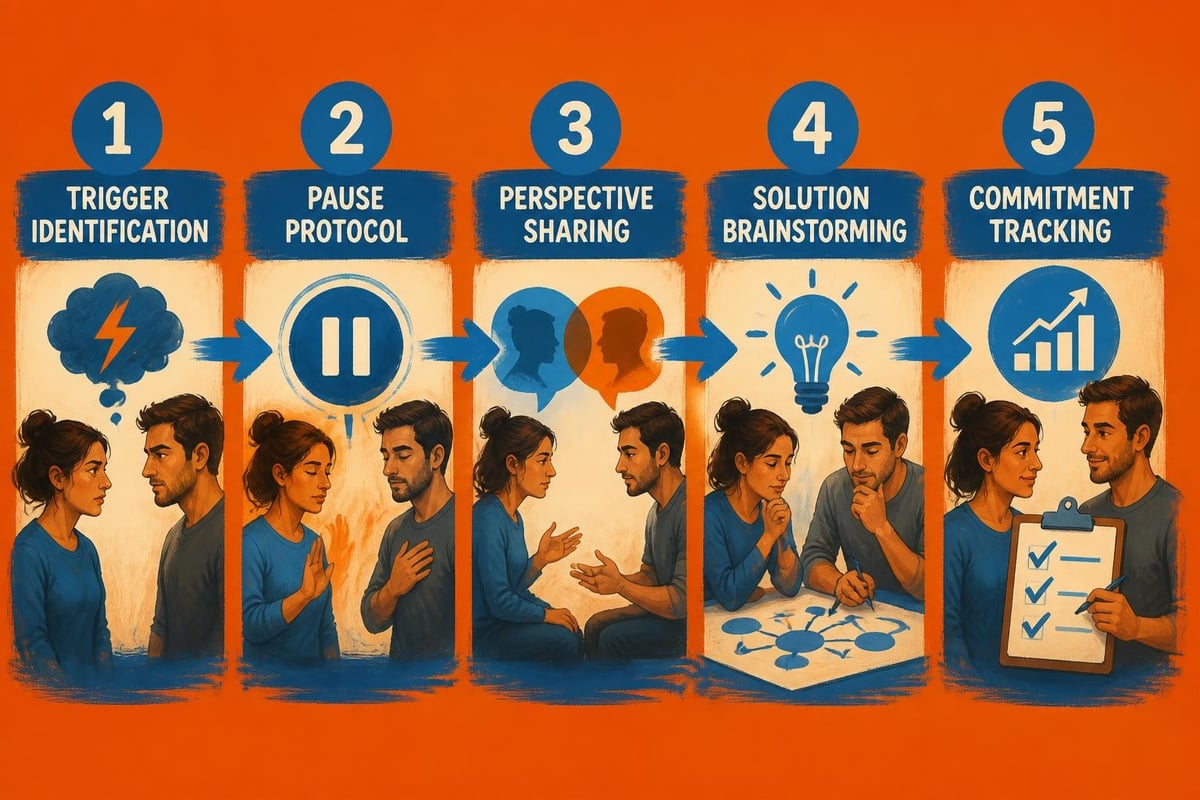
One couple reduced monthly blowup arguments to zero within six weeks by practicing the Timeout-Translate-Tradeoff method their coach introduced. The framework became automatic through repetition and feedback.
Business Partnership Stress Bleeding Into Personal Life
Couples who work together face unique pressure. Communication improvement strategies help, but entrepreneur couples need business operations coaching integrated with relationship support.
The boundary problem: When dinner conversations become strategy sessions and bedroom disagreements reference revenue targets, couples lose intimacy. Coaches establish work-life separation protocols while improving business decision processes.
A husband-wife consulting firm hired a coach after recognizing client disagreements were destroying evenings. The coach helped them:
- Set meeting hours with agendas
- Create decision authority matrices by business area
- Build a weekly personal connection ritual with zero business talk
Revenue increased 40% in six months as decision speed improved, and relationship satisfaction scores rose from 4/10 to 8/10.
Preventive Skill Building Before Problems Escalate
The smartest couples hire coaches proactively, not reactively.
Why couples hire coaches before major conflicts emerge connects to their growth mindset and outcome focus. They recognize that communication skills and conflict resolution abilities develop through practice, not crisis management.
Preventive coaching typically covers:
- Communication templates for difficult topics
- Financial decision frameworks
- In-law boundary setting
- Parenting philosophy alignment
- Intimacy scheduling and prioritization
These couples invest 3-6 months building skills, then return periodically for tune-ups. Their relationships show measurably higher satisfaction and lower crisis frequency than reactive help-seekers.
The AI Coaching Disruption That Changes Everything
AI relationship tools launched aggressively in 2025-2026, creating new dynamics in why couples hire coaches.
Apps now offer 24/7 conflict mediation, communication analysis, and relationship health tracking. Early adopters report mixed results. AI excels at pattern recognition and offering research-based suggestions but fails at nuanced contextual understanding and accountability enforcement.
What AI does well:
- Analyzes conversation tone and suggests improvements
- Tracks relationship metrics over time
- Provides immediate responses during conflicts
- Offers research-backed communication templates
What AI misses:
- Reading micro-expressions and energy shifts
- Understanding cultural and family dynamics
- Holding couples accountable to commitments
- Adapting frameworks to specific relationship contexts
Smart couples now use hybrid approaches. They employ AI tools for daily communication coaching and hire human coaches quarterly for strategic planning, accountability check-ins, and complex conflict resolution. This combination costs 60% less than weekly human coaching while maintaining progress.
The coaches who thrive focus on high-stakes decisions, pattern interruption, and accountability rather than basic communication tips that AI handles adequately. This shift mirrors how corporate coaching evolved to focus on measurable business outcomes rather than general development conversations.
What Couples Miss When Selecting Coaches
Most couples choose coaches using therapist selection criteria, which creates mismatches.
Common mistakes:
- Prioritizing credentials over demonstrated results
- Seeking coaches who validate rather than challenge
- Ignoring methodology clarity in favor of personality fit
- Failing to establish clear outcome metrics before starting
The best coaching relationships begin with explicit success criteria. What will be different in 90 days? How will you measure improvement? What accountability structures will keep both partners engaged?

Couples who define these elements upfront get better results faster. Those who choose coaches based on website aesthetics or vague "connection" often disengage after 4-6 sessions when progress stalls.
The Pricing Transparency Problem
Most relationship coaches hide pricing, forcing couples through discovery calls. This wastes time and creates suspicion.
Effective coaches publish clear pricing tiers tied to specific deliverables. Month-to-month arrangements work better than long contracts because they force coaches to deliver visible progress continuously. Couples stay engaged when results appear quickly, not because contracts trap them.
The practical coaching approach that ties progress to clear outcomes rather than session counts represents where the industry moves. Couples want measurable change, not endless processing.
FAQ: Why Couples Hire Coaches
Q: How is couples coaching different from couples therapy?
A: Coaching focuses on building future skills and achieving specific goals through structured frameworks and homework. Therapy explores past patterns and emotional wounds. Many couples use both, with therapy addressing underlying issues and coaching building practical relationship management skills.
Q: Do both partners need to be equally committed for coaching to work?
A: No. Coaching often succeeds when one partner initially drives the process, as long as both agree to participate. The structure and accountability gradually increase engagement from the less motivated partner as they see practical benefits.
Q: How quickly do couples see results from coaching?
A: Most couples notice communication improvements within 2-3 sessions when coaches introduce specific frameworks and assign practice homework. Lasting behavior change typically requires 8-12 weeks of consistent application and feedback.
Q: What if our coach gives advice that doesn't fit our values or culture?
A: Effective coaches adapt frameworks to your specific context rather than imposing one-size-fits-all solutions. If your coach doesn't customize approaches to your values, family dynamics, and cultural background, find a different coach.
Q: Should we hire a coach who has been married for decades or someone younger with fresh training?
A: Neither experience level guarantees results. Focus on demonstrated success helping couples with challenges similar to yours, clear methodology, and ability to hold you accountable. Pattern recognition from coaching many couples matters more than personal relationship duration.
Q: Can coaching help if we're considering separation?
A: Yes. Coaches help couples make clear decisions by exploring options systematically, testing trial separations with structure, or improving communication enough to choose confidently whether to stay together or separate respectfully.
Q: How much does couples coaching typically cost?
A: Rates vary from $150 to $500 per session depending on coach experience and location. Many coaches offer package pricing. Month-to-month arrangements typically cost $600-$2000 monthly for biweekly sessions, with higher rates for intensive programs or business partnership coaching.
Q: What happens if we disagree about what goals to work on in coaching?
A: Good coaches surface this disagreement immediately and use it as the first coaching focus. They facilitate goal negotiation using structured exercises that reveal shared priorities beneath surface-level disagreements.
Q: Do we need to do coaching in person or can it work virtually?
A: Virtual coaching works effectively for most couples, offering scheduling flexibility and access to specialized coaches regardless of location. In-person coaching helps when body language and spatial dynamics play important roles in your specific challenges.
Couples hire coaches when they want practical skills, clear frameworks, and measurable progress rather than open-ended exploration. The best outcomes happen when couples define success metrics upfront, choose coaches based on demonstrated results rather than credentials, and commit to practicing new skills between sessions. Whether you need help with communication breakdowns, business partnership stress, or preventive skill building, Noomii connects you with experienced coaches who focus on visible outcomes, accountability, and practical tools that create lasting relationship improvement.



Leave a Reply
Want to join the discussion?Feel free to contribute!