

What If a Coach Lies? Trust, Ethics, and Red Flags
The coaching industry runs on trust. Clients hire coaches expecting honest guidance, transparent methods, and genuine expertise. But what if a coach lies about their credentials, inflates their track record, or misrepresents their methods? It happens more often than the industry admits, and the consequences ripple through organizations, budgets, and careers. Understanding how dishonesty manifests in coaching and what you can do about it matters whether you're hiring a coach for yourself or deploying executive coaching across your leadership team.
The Most Common Lies Coaches Tell
Most coaching dishonesty isn't outright fraud. It's embellishment, selective truth, and strategic omission.
Credential inflation tops the list. A coach claims ICF certification when they've only completed coursework. They list a degree from a program they audited. They describe themselves as "trained by" a respected coach after attending one workshop. The professional standards outlined by coaching organizations exist specifically to prevent this, yet verification remains spotty.
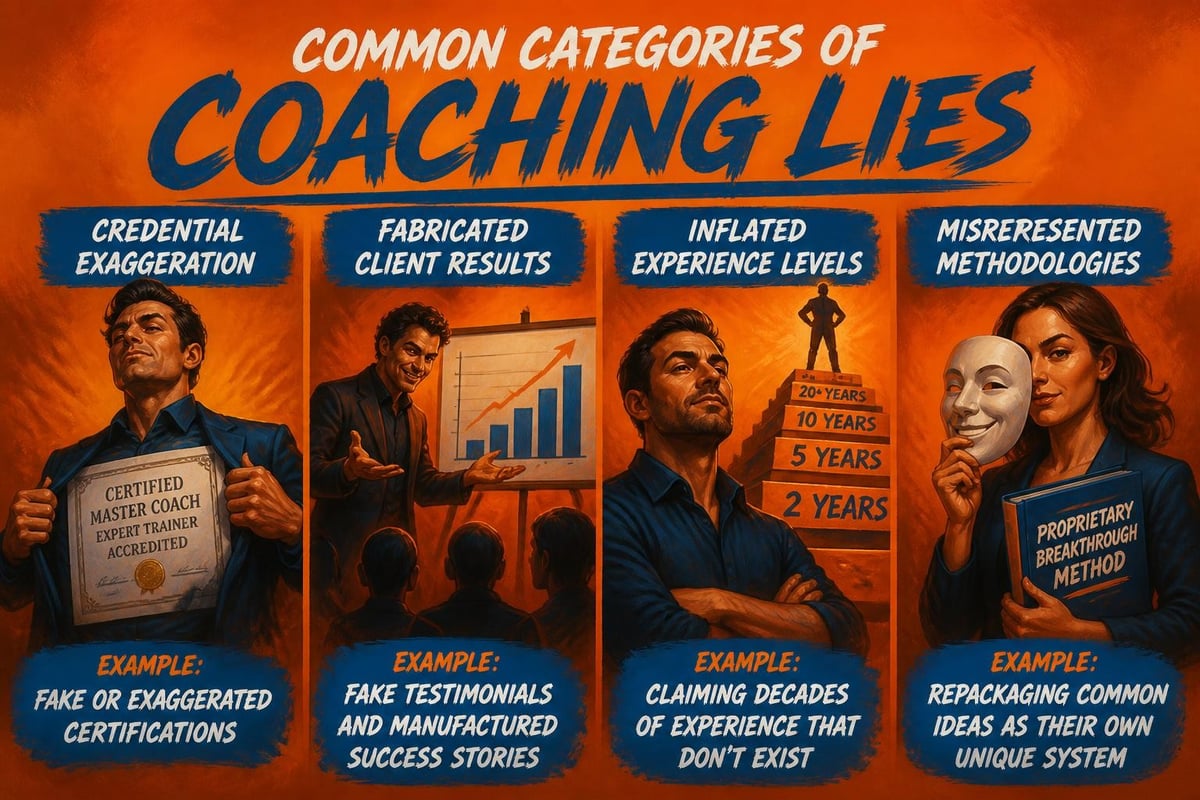
Fabricated results come next. "I've helped 500 executives double their revenue" sounds impressive until you ask for specifics. When pressed, the coach pivots to vague stories or changes the metric. Real coaches cite concrete outcomes tied to specific client scenarios. Understanding psychological safety in leadership development requires honesty about what coaching can and cannot achieve.
Experience Misrepresentation
Coaches who claim "20 years of executive coaching experience" often mean they've worked 20 years in various roles and recently became a coach. The math doesn't add up when you calculate backward from their actual coaching launch date.
- Check LinkedIn timelines against claimed experience
- Ask for client references from specific time periods
- Request examples of work from their early coaching years
- Verify whether they coached full-time or as a side project
One Fortune 500 HR director told me she discovered her hired coach had never actually worked inside a corporation. Every "corporate coaching" claim came from weekend workshops with individual clients who happened to hold corporate jobs. That's not corporate coaching, it's career coaching for people who work at companies.
Why Coaches Lie and What Triggers It
Market saturation drives much of the dishonesty. With coaching demand growing rapidly but differentiation remaining difficult, coaches feel pressure to stand out. A resume that shows modest experience and basic certification doesn't win contracts against competitors claiming proprietary methodologies and celebrity client lists.
Financial pressure accelerates the problem. Month-to-month income uncertainty pushes some coaches toward exaggeration during sales conversations. They promise outcomes they hope to deliver rather than outcomes they've consistently produced. The gap between aspiration and track record widens until what if a coach lies becomes not a hypothetical but a pattern.
| Trigger | How It Manifests | Red Flag to Watch |
|---|---|---|
| Market competition | Inflated credentials | Claims that can't be verified on official registries |
| Revenue pressure | Outcome guarantees | Promises of specific ROI percentages without context |
| Imposter syndrome | Experience inflation | Timeline inconsistencies when describing client work |
| Certification worship | Fake accreditation | Credentials from unrecognized or made-up organizations |
Certification worship in the industry creates perverse incentives. When buyers over-index on letters after a name, coaches manufacture letters. I've seen "PhD" used by coaches who completed non-accredited online programs. I've seen "Master Coach" titles self-awarded with no governing body behind them. The misconceptions about what credentials actually predict fuel this cycle.
Consequences When Dishonesty Surfaces
What if a coach lies and gets caught? The damage extends beyond embarrassment.
For individuals, discovery often comes during the coaching engagement itself. The coach can't deliver on promised expertise. Their frameworks fall apart under questioning. Clients realize they're paying premium rates for recycled blog content and motivational platitudes. Trust evaporates, and so does progress.
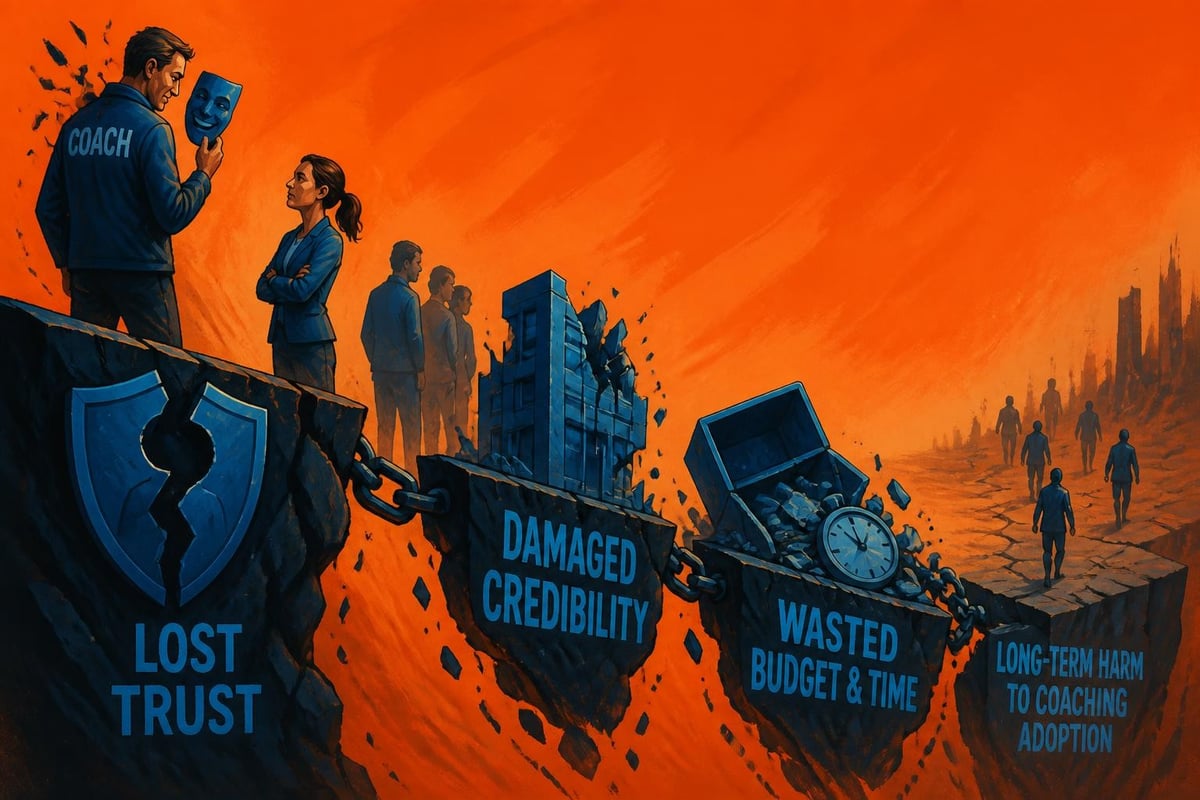
For organizations, the stakes multiply. A company that hired a dishonest executive coach for its leadership team faces:
- Wasted training budget with no ROI
- Leadership cynicism about future development initiatives
- Damaged credibility for the HR or L&D function that selected the coach
- Potential legal exposure if the coach's misrepresentation led to business decisions
One mid-market tech company discovered their "sales coaching expert" had never actually carried a quota. The sales methodology being taught contradicted their actual sales motion. Six months of coaching had to be unwound while the team relearned fundamentals. The measurable business results you expect from corporate coaching become impossible when you're working from false premises.
Legal and Professional Ramifications
Coaches who lie face consequences ranging from professional censure to legal action. The NCAA’s handling of a coach who provided false statements shows how seriously governing bodies treat dishonesty, even about minor matters.
Professional coaching bodies can revoke credentials. Civil lawsuits can result when organizations demonstrate financial harm from misrepresentation. Reputation damage in an industry built on referrals can end a coaching career.
How to Verify Coach Claims Before Hiring
Due diligence prevents most coaching dishonesty from affecting your organization. The process isn't complicated, just systematic.
Start with credential verification. The ICF maintains a searchable database of credentialed coaches. Other legitimate bodies offer similar tools. If a coach claims a credential, verify it directly with the issuing organization. Don't accept certificates or badges without independent confirmation.
Request references from similar engagements. If you're hiring for executive coaching, ask for references from other executive coaching clients, not life coaching testimonials. Speak with at least three references and ask specific questions about outcomes, methodology, and how the coach handled challenges.
- Verify claimed credentials through official registries
- Request and check three or more recent client references
- Ask for work samples or case studies with verifiable details
- Review their digital footprint for consistency across platforms
- Conduct behavioral interviews that reveal actual experience depth
- Request metrics from previous engagements similar to yours
Test their knowledge in conversation. Ask about their approach to specific scenarios relevant to your needs. A coach with real experience provides detailed, nuanced answers. A coach who's lying offers generic responses or tries to redirect the conversation. When discussing leadership development for managers, experienced coaches cite specific frameworks, challenges they've navigated, and adjustments they've made based on company culture.
Red Flags That Signal Potential Dishonesty
Certain patterns suggest a coach may not be entirely truthful. These don't prove dishonesty alone, but they warrant deeper investigation.
- Vague about methodology: Can't explain their process in concrete terms
- No verifiable client outcomes: Stories change when asked for specifics
- Credential inconsistency: LinkedIn shows different certifications than their website
- Defensiveness about verification: Resists providing references or proof of claims
- Outcome guarantees: Promises specific results that coaching alone cannot control
Pressure tactics often accompany dishonest coaches. They push for immediate commitment, discourage checking references ("my clients are too busy"), or become offended when you ask standard verification questions. Legitimate coaches, including those offering practical corporate coaching with clear KPIs, welcome thorough vetting.
The ethical standards maintained by professional coaching associations provide a baseline. Coaches who meet these standards answer questions directly, provide verification readily, and demonstrate transparency about their background and track record.
Building Coaching Relationships on Evidence, Not Trust Alone
The question of what if a coach lies matters less when you build selection processes around verification rather than trust. Trust develops from demonstrated competence, not from accepting claims at face value.
Request a paid pilot engagement before committing to a larger contract. A coach confident in their abilities and honest about their background welcomes the chance to prove value. Structure the pilot with specific deliverables and success metrics. Evaluate results against claims made during the sales process.
Involve multiple stakeholders in the selection process. When several leaders interview a potential coach, inconsistencies in their story become more apparent. One person might not catch a discrepancy, but a panel usually does.
Prioritize evidence of results over credentials. A coach with a modest credential set but documented outcomes beats a heavily credentialed coach with no verifiable track record. The next generation of coaching focuses on outcomes, not pedigree.

What Organizations Should Do When They Discover Coaching Dishonesty
If you discover your coach has lied about credentials, experience, or results, act decisively.
Document everything. Collect evidence of the misrepresentation, the claims made, and the actual facts. Save emails, proposals, contracts, and any credentials or materials the coach provided.
Terminate the engagement if the dishonesty is material to why you hired them. A coach who lied about corporate experience cannot suddenly acquire that experience mid-engagement. Cut losses rather than hoping they'll grow into the role they claimed to already hold.
Consider legal consultation if the financial impact is significant. Fraudulent misrepresentation can create liability, especially if you can demonstrate that you would not have hired the coach had you known the truth. Most coaching contracts won't be large enough to justify litigation, but documenting the incident protects your organization.
Share feedback appropriately. If the coach holds credentials from a professional body, file a complaint. Professional associations take violations of their code of ethics seriously. Your report may prevent other organizations from experiencing similar problems.
Learn from the incident. Update your selection process to include the verification steps that would have caught this dishonesty earlier. Share lessons learned with other departments so they avoid similar mistakes when hiring coaches or consultants.
Frequently Asked Questions
What should I do if I suspect my current coach is lying about their credentials?
Verify their credentials directly through the credentialing organization's official registry. Most professional coaching bodies maintain searchable databases. If the credential doesn't appear or doesn't match what they claim, address it directly with the coach and document their response.
Can a coach be effective even if they exaggerated their experience?
Effectiveness depends on whether they have the actual skills needed for your engagement, regardless of how they described their background. However, dishonesty about experience often signals other competency gaps and damages the trust necessary for coaching to work.
How do I check if a coach's claimed client results are real?
Ask for references from those specific engagements and speak with them directly. Request case studies with verifiable details, not generic testimonials. A coach with real results provides specific metrics, timelines, and context that you can validate.
What's the difference between marketing exaggeration and actual lying in coaching?
Marketing exaggeration highlights strengths and uses persuasive language but remains factually accurate. Lying involves false statements about credentials, experience, or results that would materially affect your hiring decision. The line matters for legal and ethical reasons.
Are certified coaches less likely to lie than non-certified coaches?
Certification provides accountability through professional bodies that can investigate complaints and revoke credentials. However, certification alone doesn't guarantee honesty. Some certified coaches still misrepresent their background, and some non-certified coaches maintain impeccable integrity. Verify everyone equally.
How common is dishonesty among professional coaches?
Hard data is scarce because most incidents go unreported, but industry veterans estimate 15-25% of coaches make material misrepresentations about credentials, experience, or results. The percentage varies by coaching niche and market segment.
What legal recourse do I have if a coach lied to secure a contract?
Fraudulent misrepresentation can void a contract and create liability for damages. Consult an attorney if the financial impact justifies legal action. Most coaching contracts are small enough that legal pursuit costs more than the potential recovery, making prevention crucial.
Should I always verify coaching credentials before hiring?
Yes, especially for corporate engagements or significant personal investments. Verification takes minimal time but prevents costly mistakes. Legitimate coaches expect verification and make it easy. Resistance to verification is itself a red flag.
What if a coach lies during our engagement rather than during the hiring process?
Document the dishonesty, assess whether it affects their ability to deliver results, and determine if continuing the relationship makes sense. Material dishonesty about methodology, progress, or challenges warrants termination. Address it directly and professionally, documenting everything for your records.
The question of what if a coach lies isn't hypothetical. It happens often enough that systematic verification should be standard practice, not optional diligence. The coaching relationship depends on trust, but that trust must be earned through demonstrated competence and verified credentials, not accepted blindly. When you need corporate coaching that delivers measurable business results backed by transparent methodology and verifiable outcomes, Noomii helps mid-market companies find coaches who prioritize results over credentials and tie progress to clear KPIs from day one.



Leave a Reply
Want to join the discussion?Feel free to contribute!