

What Clients Should Never Tolerate in 2026
The coaching industry has matured enough that buyers can now spot the difference between practitioners who deliver measurable results and those who hide behind credentials, vague promises, and long-term contracts that lock clients into underperformance. After observing thousands of engagements across mid-market companies and Fortune 500 divisions, patterns emerge showing exactly what clients should never tolerate regardless of how polished the marketing appears.
Vague Outcomes and Unmeasured Progress
What clients should never tolerate is a coaching engagement without clear, measurable outcomes tied to business results. The credential-obsessed segment of the industry has normalized conversations about "transformation" and "breakthrough" without defining what those terms mean in dollars, retention percentages, decision velocity, or promotion rates.
Insist on these benchmarks before engagement begins:
- Specific KPIs tied to your organization's operating cadence
- Timeline for achieving measurable progress (30, 60, 90 days)
- ROI methodology agreed upon upfront
- Regular progress reviews with data, not anecdotes
Real coaching engagements at Noomii tie every initiative to scorecards showing faster decisions, improved retention, stronger manager effectiveness, or cleaner execution across priorities. If a provider can't articulate outcomes in business language, you're paying for theory instead of results.

Scope Creep Without Documentation
According to the PMI Pulse of the Profession 2024 report, uncontrolled scope changes remain one of the top project risks across industries. Coaching engagements are no exception.
What clients should never tolerate is a provider who casually expands the work, adds sessions, or shifts focus without documenting changes and adjusting terms. This happens frequently when coaches lack business discipline or when contracts are too vague to enforce boundaries.
Scope Management Standards
| What's Acceptable | What's Not |
|---|---|
| Documented change requests with impact analysis | Verbal "let's also work on…" expansion |
| Updated timelines and budgets for new scope | Billing surprises mid-engagement |
| Clear distinction between core work and add-ons | Mission creep justified as "emergent needs" |
Professional engagements operate month-to-month with transparent terms. You stay because results are visible, not because you're trapped in a contract with ballooning scope.
Conflicts of Interest and Undisclosed Incentives
The American Counseling Association Code of Ethics establishes clear standards around dual relationships, conflicts of interest, and client welfare that apply equally to business coaching contexts. What clients should never tolerate is a coach who recommends specific tools, platforms, or assessments without disclosing financial relationships.
Red flags include:
- Pushing proprietary assessments without explaining alternatives
- Requiring clients to purchase specific software where the coach earns referral fees
- Steering organizations toward partners without transparent vetting criteria
- Selling "certification programs" to employees during coaching engagements
This practice has become endemic in parts of the industry where coaches earn more from product placement than from actual coaching outcomes. Organizations deserve full transparency about what drives recommendations.
Privacy and Data Security Failures
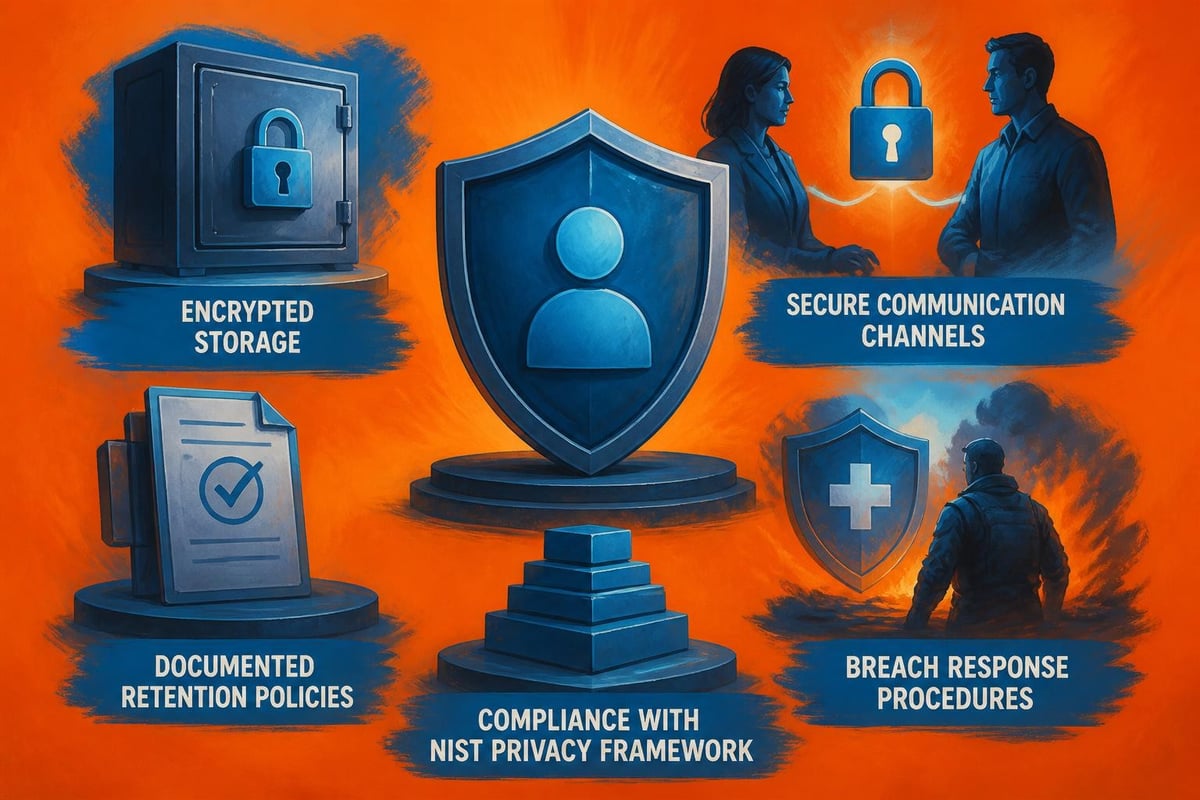
With organizational coaching involving sensitive performance data, 360 assessments, and confidential leadership challenges, what clients should never tolerate is careless handling of private information. The FTC provides clear guidance on protecting personal information, and the NIST Privacy Framework offers authoritative standards for managing privacy risk.
Yet smaller coaching practices often operate without basic protections: secure file storage, encrypted communication, data retention policies, or breach response procedures. When coaching involves performance reviews, succession planning, or executive assessments, data leaks can damage careers and expose organizations to legal risk.
Long-Term Contracts Without Performance Clauses
The most reliable signal that a provider lacks confidence in their own effectiveness is insistence on long-term contracts without performance accountability. What clients should never tolerate is being locked into 12, 18, or 24-month agreements with no exit options tied to results.
This is particularly common among certification-dependent coaches who position credentials as the primary value proposition rather than demonstrated expertise solving problems similar to yours. The UK Government guidance on fair contracts emphasizes transparency and fairness, principles that apply regardless of jurisdiction.
Contract terms that protect clients:
- Month-to-month flexibility after an initial onboarding period
- Performance milestones with documented review points
- Clear termination rights if measurable progress stalls
- Risk-sharing through incentive alignment where feasible
Organizations increasingly recognize that business coaching for small and mid-market companies should operate like other professional services: you continue because value is evident, not because paperwork traps you.
Credential Worship Over Demonstrated Expertise
The industry has created a certification ecosystem where coaches accumulate letters after their names while lacking practical experience in the domains where they consult. What clients should never tolerate is a provider who leads with credentials instead of case studies, outcomes, and relevant experience.
Credential vs. Expertise Comparison
| Credential-Led Approach | Expertise-Led Approach |
|---|---|
| "I'm ICF-certified with 500 hours training" | "I've coached 40+ sales leaders through territory restructures" |
| Theoretical frameworks from coursework | Proprietary methods from pattern recognition across engagements |
| Generic tools applied to every situation | Customized approaches based on industry context |
| Long explanations of methodology | Quick diagnosis and practical next steps |
After seeing hundreds of engagements, the correlation between certification levels and coaching effectiveness is weak at best. Organizations need coaches who understand their industry, recognize patterns quickly, and deliver results without hiding behind credentials.
Unfair Refund and Cancellation Policies
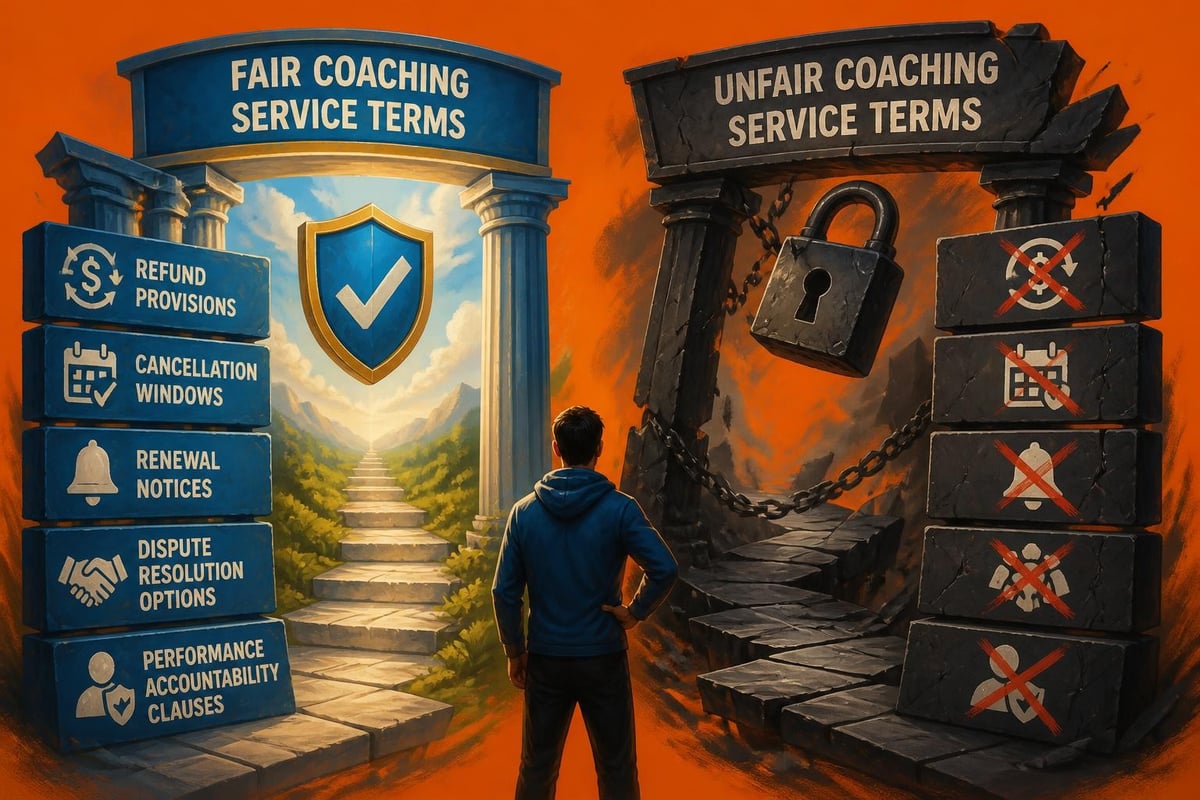
Consumer protection standards, outlined by the Federal Trade Commission’s guidance on marketplace purchases, establish reasonable expectations for refunds and dispute resolution. What clients should never tolerate is one-sided policies that make it impossible to exit when coaching isn't delivering value.
Warning signs in service agreements:
- No refund provisions regardless of performance
- Cancellation fees exceeding 30 days of service
- Automatic renewals without adequate notice periods
- Dispute resolution clauses that favor the provider exclusively
The FTC’s work on unfair or deceptive practices provides additional context showing that one-sided commercial terms often signal broader quality issues. Professional providers build terms that reflect shared commitment to outcomes.
Theory Without Application
The gap between classroom coaching and live business application has widened as certification programs proliferate. What clients should never tolerate is a coach who sits on the sideline offering advice without rolling up sleeves to coach in actual meetings, review real KPIs, or help managers navigate live situations.
This observation comes from years watching the difference between coaches who theorize about leadership and those who coach leaders during budget reviews, difficult conversations, territory planning, and team conflicts. The latter group delivers measurable change because they work in the mess, not above it.
Organizations seeking executive coaching increasingly demand practitioners who can diagnose issues quickly, operate within existing rhythms, and tie every intervention to business outcomes rather than coaching models.
Abandonment Without Transition Planning
Professional standards across helping professions prohibit abandoning clients without adequate notice and transition support, yet coaching engagements sometimes end abruptly when coaches pivot to new markets, burn out, or simply disappear. What clients should never tolerate is a provider without a documented succession plan or handoff protocol.
Minimum transition standards include:
- 60-day notice for planned departures
- Documentation of progress, methodologies, and next steps
- Referral to qualified alternatives when possible
- Return of organizational data and materials
Organizations invest time building trust with coaches who then gain deep knowledge of leadership challenges, team dynamics, and strategic initiatives. Sudden departures without transition planning waste that investment and can destabilize progress.
FAQ
What should I look for in a coaching contract to protect my organization?
Look for month-to-month terms after onboarding, clear performance milestones with review points, documented scope boundaries, transparent pricing without hidden fees, and fair cancellation provisions. Avoid long-term commitments without exit options tied to measurable results.
How do I know if a coach's credentials actually matter for my needs?
Ask for case studies and outcomes in situations similar to yours rather than focusing on certification levels. The best predictor of effectiveness is demonstrated expertise solving problems like yours, not letters after their name or hours of generic training.
What are red flags that a coaching engagement won't deliver ROI?
Red flags include vague promises without specific KPIs, resistance to tying work to business metrics, credential-focused marketing over outcome evidence, long contracts without performance clauses, and inability to articulate their methodology in business language.
How should coaching progress be measured in my organization?
Tie coaching to your existing operating cadence and KPI scorecards: decision velocity, retention rates, manager effectiveness scores, employee engagement, revenue per employee, or execution clarity on strategic priorities. Measure progress at 30, 60, and 90-day intervals minimum.
What's the difference between theoretical coaching and applied coaching?
Theoretical coaches sit outside your operations offering frameworks and advice. Applied coaches roll up their sleeves, attend your meetings, review actual KPIs, coach managers in real situations, and tie every intervention to measurable business outcomes within your existing rhythms.
How do I handle a coach who keeps expanding scope without documentation?
Immediately request written documentation of any scope changes including impact on timeline, budget, and deliverables. Refuse verbal agreements. If the pattern continues, exercise your termination rights and find a provider with stronger business discipline.
Should I worry about data security with coaching providers?
Yes. Coaching involves sensitive performance data, 360 assessments, and confidential leadership information. Require providers to document their security practices including encrypted storage, secure communication, data retention policies, and breach response procedures aligned with NIST Privacy Framework standards.
What questions expose whether a coach has real expertise or just credentials?
Ask: "Walk me through a similar situation you've coached through, the diagnosis, what you did, and the measurable result." Then ask: "What patterns have you noticed across multiple engagements in this area?" Real expertise produces specific answers; credential-dependent coaches pivot to methodology.
When should I consider ending a coaching engagement early?
End early when measurable progress stalls for two consecutive review periods, when the coach can't tie interventions to your KPIs, when scope creep becomes unmanageable, when conflicts of interest emerge, or when communication and accountability break down despite documented feedback.
The patterns across thousands of engagements show that clients who refuse to tolerate vague outcomes, credential worship, scope creep, conflicts of interest, data security gaps, unfair terms, theory without application, and poor accountability consistently achieve stronger results. Noomii operates month-to-month with coaching tied directly to your KPIs and business outcomes, because measurable results matter more than credentials, and you should only stay when progress is visible.



Leave a Reply
Want to join the discussion?Feel free to contribute!