

The Red Flags Every Client Should Know Before Hiring
Every mid-market leader has sat through a coaching pitch that sounded perfect until the engagement started. Then the promises blurred, deliverables shifted, and ROI became impossible to measure. After observing hundreds of coaching engagements across industries from 2015 to 2026, patterns emerge. The red flags every client should know are often visible during the sales process, but buyers miss them because they focus on credentials instead of evidence, on personality instead of process, and on promises instead of proof.
Credential Inflation Without Demonstrated Results
The coaching industry worships certifications, but credentials predict neither competence nor outcomes. A coach with three alphabet soups after their name may have attended workshops, passed exams, and logged practice hours. None of that guarantees they can diagnose your manager's communication breakdown or fix your team's accountability gap.
Watch for these signals:
- The coach leads with certifications before asking about your business challenges
- Client outcomes are vague or missing entirely from case studies
- References describe the coach as "nice" or "insightful" but can't quantify business impact
- The provider deflects when you ask for KPIs or measurable results from prior engagements
One Fortune 500 division hired an extensively credentialed leadership coach in 2024. After six months and $180,000, engagement scores hadn't moved, turnover remained flat, and managers still avoided difficult conversations. The coach had impressive credentials but zero experience coaching live in high-stakes leadership meetings. Credentials without relevant experience and proven outcomes are the first red flag every client should know.
You can verify a coach’s ICF credentials easily, but certification status tells you nothing about whether they've solved problems like yours.

Vague Deliverables and Shifting Scope
Scope creep destroys coaching ROI faster than any other factor. When deliverables remain fuzzy, coaching becomes an open-ended relationship that consumes budget without accountability. The red flags every client should know include providers who resist defining specific outcomes, timelines, or success metrics during contracting.
Clear Deliverables vs. Red Flags
| Green Flags | Red Flags |
|---|---|
| Specific KPIs tied to business outcomes (retention, decision speed, revenue) | "We'll help your leaders grow" without defining growth |
| Defined timeline with checkpoints and review gates | Open-ended engagement with no exit criteria |
| Deliverables include scorecards, 360 assessments, or documented frameworks | "Transformational journey" with no tangible artifacts |
| Monthly progress reports showing movement on agreed metrics | Quarterly "insights" emails with no data |
Harvard Business Review's research on scope creep and unclear deliverables applies directly to coaching engagements. When expectations shift monthly, neither party wins.
At Noomii, we've seen clients escape multi-year contracts that promised "leadership transformation" but delivered monthly check-ins with no measurable change in manager behavior, team communication, or execution speed.
Testimonial Manipulation and Review Gaming
Client testimonials should describe specific problems solved, not generic praise. Yet coaching directories and provider websites overflow with suspiciously similar five-star reviews. Research from ArXiv on detecting fake review networks shows how review manipulation operates at scale across service industries, including coaching.
Red flags in testimonials:
- Every review uses similar phrasing or structure
- Reviews lack specific details about the client's industry, challenge, or outcome
- No negative or mixed reviews anywhere, even on third-party platforms
- Reviewers have no LinkedIn profile or verifiable professional presence
- All reviews posted within a narrow time window
Consumer Reports offers practical guidance on spotting fake reviews that applies directly to coaching. When vetting providers, demand references you can call. Ask for introductions to former clients in similar industries facing comparable challenges. If the coach resists, that's a red flag every client should know.
The Reference Check Framework
Before signing, conduct structured reference calls:
- Problem: What specific business challenge prompted the engagement?
- Diagnosis: How did the coach identify root causes vs. symptoms?
- Solution: What frameworks, tools, or interventions did they deploy?
- Result: What changed? Which KPIs moved? By how much?
- Lesson: What would you do differently if hiring this coach again?
Generic answers or evasive responses reveal more than glowing praise.

Long-Term Contracts Without Proof of Concept
Multi-year coaching contracts lock clients in before results materialize. This benefits the provider, not the buyer. The red flags every client should know include any provider who insists on 12-month minimum commitments, upfront payment for entire engagements, or penalties for early termination.
Reasonable commercial terms look like this:
- Month-to-month or quarterly renewals tied to visible progress
- Payment aligned with milestone completion, not calendar dates
- Exit clauses that protect both parties but don't penalize the client for poor coach performance
- Pilot periods or proof-of-concept phases before scaling
Organizations exploring executive coaching options in 2026 should demand trial engagements. A confident coach with a proven methodology welcomes scrutiny and ties compensation to outcomes.
One mid-market manufacturing company signed a three-year leadership development contract in 2023. By month eight, turnover had increased, manager scores dropped, and the coaching firm blamed "cultural resistance." The contract included a $200,000 exit penalty. The company paid it and found a results-focused provider who worked month-to-month and tied fees to retention improvements.
Privacy and Data Handling Negligence
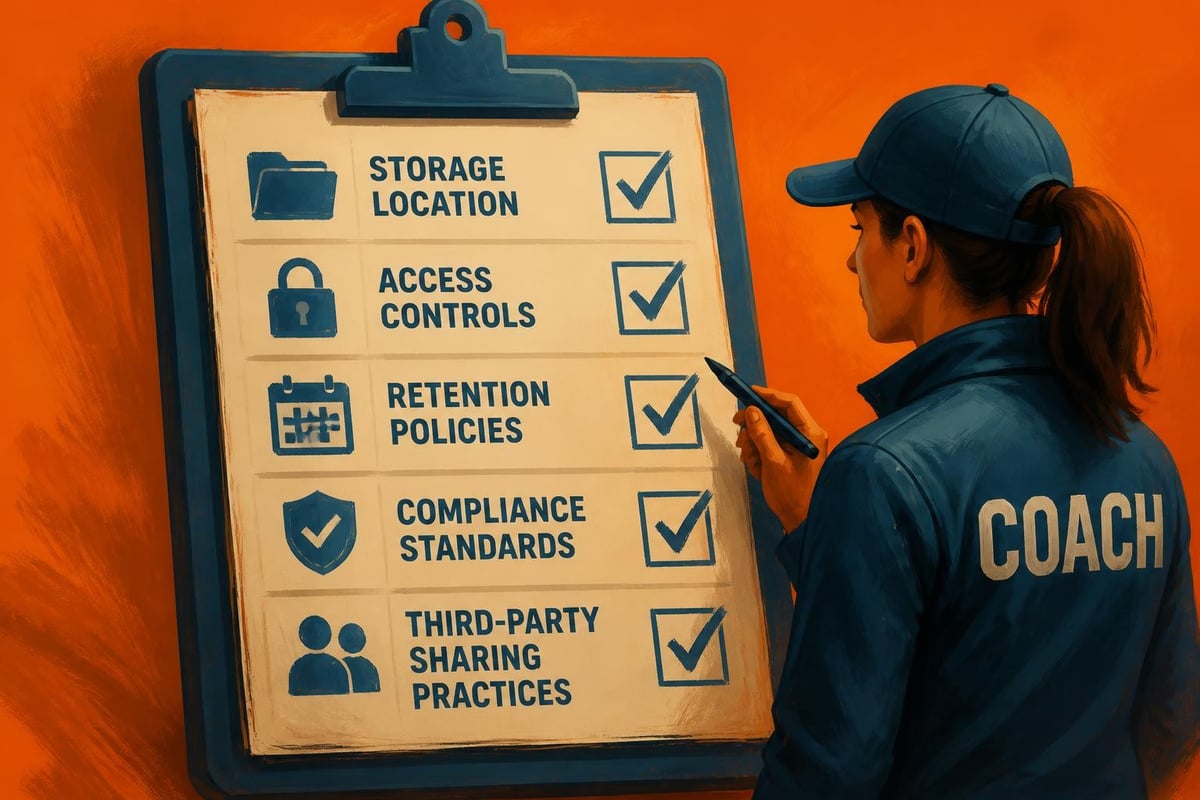
Coaching engagements generate sensitive information: 360 feedback, performance reviews, personal development plans, and confidential business strategy discussions. When providers treat this data carelessly, they expose clients to risk.
| Privacy Practice | Red Flag | Green Flag |
|---|---|---|
| Data storage | Unclear or non-existent data policy | Written GDPR/CCPA-compliant policy |
| Access controls | Coach stores notes in personal email or consumer apps | Encrypted platforms with role-based access |
| Retention | Indefinite retention of client data | Clear retention schedules and deletion protocols |
| Third-party sharing | Vague language about "partners" or "platforms" | Explicit disclosure of any third-party access |
The NIST Privacy Framework provides authoritative guidance clients can use to evaluate coaching providers' data practices. Ask direct questions: Where is my data stored? Who has access? How long do you retain it? What happens when the engagement ends?
Outcome Avoidance and Metric Resistance
Coaches who resist defining success metrics or tracking progress lack confidence in their methodology. The red flags every client should know include providers who:
- Claim coaching outcomes are "too complex to measure"
- Reject KPIs as "reductive" or "missing the transformation"
- Refuse to tie engagement success to business metrics you care about
- Pivot to subjective feedback when asked for objective evidence
Practical corporate coaching delivers measurable business results: faster decisions, improved manager capabilities, stronger communication, higher engagement and retention, cleaner execution. These outcomes can be tracked through employee engagement surveys, 360 assessments, turnover data, promotion velocity, project completion rates, and revenue per employee.
When a provider fights measurement, they're protecting themselves from accountability. Organizations serious about leadership development should walk away.
The Contract Term and Incentive Alignment Test
The final red flag appears in commercial terms. Providers confident in their value offer flexible engagements, share risk through aligned incentives, and allow clients to exit when results stall.
Test the provider with these questions:
- Will you work month-to-month or require a multi-year commitment?
- Can we tie part of your fee to measurable outcomes we agree on upfront?
- What happens if we're not seeing progress after 90 days?
- Have you ever offered performance-based pricing or risk-sharing arrangements?
Evasive answers or rigid contract requirements signal the provider prioritizes revenue stability over client outcomes. That's the ultimate red flag every client should know.
FAQ: Spotting Coaching Red Flags
What's the biggest red flag when hiring a coach?
Resistance to defining measurable outcomes or tying engagement success to business KPIs. If a coach won't discuss metrics, they lack confidence in their methodology.
Are coaching certifications reliable indicators of quality?
No. Certifications confirm training completion, not competence or relevant experience. Prioritize demonstrated results in contexts similar to yours over alphabet credentials.
How can I verify client testimonials are real?
Request direct references you can call. Ask for LinkedIn profiles of clients mentioned in case studies. Generic praise without specific outcomes or verifiable details suggests manipulation.
What contract terms should I avoid?
Multi-year commitments, large upfront payments, and exit penalties before you've seen results. Demand month-to-month or quarterly terms with clear performance checkpoints.
How do I know if scope is creeping during an engagement?
Compare monthly deliverables against the original scope document. If the coach regularly introduces new topics, extends timelines, or adds "phases" not in the contract, scope is creeping.
Should I worry about data privacy with coaching providers?
Yes. Coaching generates sensitive employee and business information. Ensure the provider has written data policies, encrypted storage, and clear retention schedules compliant with GDPR or CCPA.
What's a reasonable proof-of-concept period?
60 to 90 days with specific KPIs and checkpoints. If you're not seeing measurable progress in quarter one, you won't see it in year one.
Can I negotiate performance-based pricing with coaching firms?
Yes. Providers confident in their impact will consider incentive alignment: base fees plus bonuses tied to retention improvements, engagement score increases, or other agreed metrics.
How do I distinguish between a coaching relationship issue and a bad provider?
Review the original scope, deliverables, and success criteria. If the provider is delivering what was promised but outcomes aren't moving, the methodology may be wrong. If deliverables are vague, timelines are shifting, and accountability is missing, the provider is the problem.
The red flags every client should know become obvious once you prioritize outcomes over credentials, demand measurable progress over transformation promises, and insist on commercial terms that share risk. Most coaching failures are predictable and preventable when buyers focus on evidence during the vetting process. If you want practical corporate coaching that delivers measurable business results without the red flags, Noomii offers month-to-month executive coaching, leadership development, and team facilitation tied to clear KPIs and visible ROI from day one.


Leave a Reply
Want to join the discussion?Feel free to contribute!