

The Real Reason Coaches Buy Certification
The coaching industry generated over $4 billion in certification and training revenue in 2025, yet most coaches who invest thousands in credentials still struggle to land clients or command premium fees. After observing thousands of coaching engagements and buyer decisions across Noomii and direct corporate placements, a clear pattern emerges: the real reason coaches buy certification has almost nothing to do with what actually drives coaching success or what sophisticated buyers evaluate when selecting coaches.
The Safety Blanket Hypothesis
Most coaches purchase certification because it feels like the safe, legitimate path into a profession with no licensing requirements or regulated entry standards.
When someone decides to become a coach, the first question they ask isn't "What client problems can I solve?" or "What business outcomes can I create?" Instead, they ask, "What certification do I need?" This reveals the actual driver: fear of being perceived as unqualified.

Here's what happens in practice:
- A mid-career professional wants to transition into coaching
- They research the industry and immediately encounter ICF certification messaging
- They conclude certification is the "professional" requirement
- They invest $5,000 to $15,000 and 6 to 12 months into training
- They emerge with a credential but no clients, no niche, and no business model
The real reason coaches buy certification is to purchase permission to call themselves a coach, not to acquire the skills that actually generate client results or business growth.
What Certification Actually Delivers vs. What Coaches Believe It Delivers
The gap between certification promises and marketplace reality is enormous.
| What Coaches Believe | Actual Market Reality |
|---|---|
| Certification attracts clients | Buyers rarely ask about credentials first |
| ICF credential commands premium fees | Results and expertise drive pricing power |
| Training teaches client acquisition | Most programs focus on coaching skills, not business development |
| Certification proves competence | Corporate buyers evaluate case studies and outcomes |
I've watched hundreds of newly certified coaches struggle while experienced practitioners without credentials build six-figure practices. The difference isn't the certification. It's business acumen, niche clarity, and results orientation.
The Credential Paradox in Corporate Coaching
When mid-market companies seek executive coaching or leadership development, they conduct thorough evaluations. In 2026, fewer than 15% of corporate RFPs list ICF certification as a requirement, while over 85% emphasize proven experience in their specific industry, measurable outcomes, and business results alignment.
The real reason coaches buy certification becomes clearer when you examine what they don't buy: niche expertise, industry knowledge, business systems, or client acquisition skills. These elements actually drive coaching revenue, but they're harder to purchase and require real-world testing and failure.
The Social Proof Trap
Certification creates an illusion of differentiation in an oversaturated market.
When 53,000+ coaches hold ICF credentials globally, the certification stops differentiating and starts commoditizing. Yet coaches continue purchasing credentials because:
- Everyone else has one, creating perceived competitive disadvantage
- Training programs market heavily on LinkedIn and coaching forums
- The investment feels productive compared to the uncertain work of client acquisition
- It delays the harder question: What unique value do I actually create?
Consider this framework I use to evaluate coaching readiness:
The Five Pillars of Coaching Market Fit
- Narrow niche with specific, painful problems
- Firsthand experience in that niche or industry
- Repeatable methodology that creates measurable outcomes
- Business model that doesn't trade time for money exclusively
- Distribution channel that reaches decision-makers directly
Notice what's missing? Certification. Because the real reason coaches buy certification is to avoid the harder work of building these five pillars through market testing, client feedback, and business development.

What Corporate Buyers Actually Evaluate
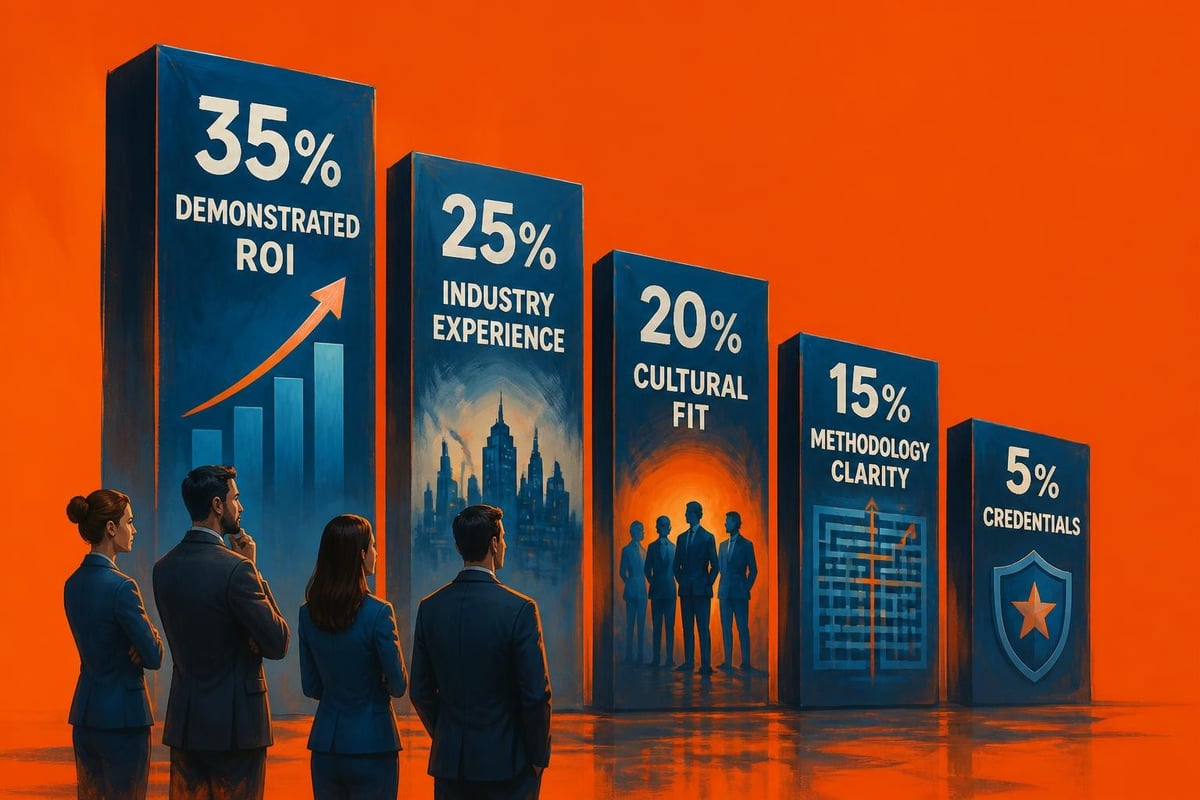
After facilitating hundreds of corporate coaching engagements, I can tell you exactly what mid-market companies and Fortune 500 divisions evaluate when selecting coaches:
- Results in similar situations: Can you show measurable outcomes with comparable teams?
- Business literacy: Do you understand P&L, KPIs, and operational execution?
- Industry context: Have you worked in our sector or with our challenges?
- Methodology clarity: Can you explain how you create change and measure progress?
- Cultural fit: Will you integrate into our team dynamics and communication style?
Understanding what certification actually means helps, but it rarely tops the evaluation criteria. The real reason coaches buy certification is that it feels more achievable than building genuine expertise, developing proprietary frameworks, or accumulating the scar tissue that creates coaching wisdom.
The Certification-as-Stalling Pattern
Here's a pattern I've observed dozens of times: coaches pursue additional certifications when their practice stalls.
The Certification Treadmill:
- Launch practice with ICF ACC credential
- Struggle to attract corporate clients
- Pursue ICF PCC to "level up"
- Revenue doesn't materially change
- Add niche certifications (neuroscience coaching, positive psychology, etc.)
- Still no sustainable client flow
- Consider ICF MCC or additional specializations
This pattern reveals the real reason coaches buy certification: it provides a tangible action that feels like progress while avoiding the uncomfortable truth that credential accumulation doesn't solve business development problems.
The coaches who build sustainable practices do the opposite. They:
- Pick a narrow niche based on their experience
- Develop a clear methodology tied to business outcomes
- Test it with early clients (often at reduced rates)
- Refine based on results and feedback
- Build case studies with specific metrics
- Use those case studies to attract similar clients
Notice this path requires risking failure, receiving critical feedback, and potentially serving clients before feeling "ready." The certification path delays all of these uncomfortable but necessary experiences.
The 2026 Reality: AI and Certification Disruption
The emergence of AI coaching tools has exposed another truth about why certification matters less than promised.
Corporate buyers now compare three options:
- Human coaches with premium pricing
- AI-powered coaching platforms at 10% of the cost
- Hybrid models combining technology and human expertise
When human coaches compete primarily on credentials rather than results, they lose to AI every time. The technology can cite every coaching framework, ask powerful questions, and maintain consistency without the overhead costs.
The real reason coaches buy certification in 2026 often includes fear of AI displacement, yet the certification doesn't provide protection. What protects coaches is the ability to create measurable business outcomes, navigate complex organizational dynamics, and provide the judgment and context that AI cannot replicate.
What Buyers Tell Me Privately
When I speak with HR directors, VPs of Sales, and COOs about their coaching experiences, a consistent theme emerges. They don't ask, "Is the coach certified?" They ask:
- "Can they handle our aggressive sales culture?"
- "Will they challenge our executives without creating defensiveness?"
- "Can they tie their work to retention numbers or deal closure rates?"
- "Do they understand our operational cadence and quarterly planning?"
The sophisticated buyers I work with at Noomii evaluate coaches like they evaluate any business investment. They want clear outcomes, measurable progress, and accountability to results. Certification occasionally serves as a screening filter, but it's never the decision driver.
This doesn't mean certification has zero value. It provides structured learning, exposure to frameworks, and practice hours. But understanding the difference between certified and uncertified coaches requires acknowledging that the market values demonstrated expertise over documented credentials.
The real reason coaches buy certification is that it offers a clear, marketed path through an ambiguous professional transition. It provides structure, community, and credibility signals. What it doesn't provide is clients, revenue, or competitive differentiation in an increasingly crowded and sophisticated market.
Frequently Asked Questions
Do corporate clients require ICF certification?
Most mid-market companies (25-500 employees) do not require ICF certification when selecting coaches. They prioritize demonstrated results, industry experience, and cultural fit. Less than 15% of corporate RFPs in 2026 list certification as a hard requirement, though some use it as an initial screening filter among many other criteria.
Is coaching certification worth the investment?
The ROI depends entirely on your goals and situation. If you need structured learning and coaching fundamentals, quality programs provide value. If you expect certification to automatically attract clients or justify premium fees, you'll likely be disappointed. The investment pays off most for career changers who need foundational skills, not for client acquisition.
What certification do I need to be a business coach?
No legal requirement exists for business coaching certification. However, ICF credentials (ACC, PCC, MCC) are the most recognized globally. More important than certification is demonstrable business experience, industry knowledge, and a methodology that creates measurable outcomes for clients.
Why do coaches with certifications still struggle to get clients?
Certification teaches coaching skills but rarely addresses business development, niche positioning, or client acquisition. Many certified coaches lack a clear target market, compelling value proposition, or distribution strategy. The gap between coaching competence and business competence explains why credentials don't guarantee commercial success.
How do corporate buyers evaluate coaching credentials?
Sophisticated corporate buyers view credentials as one data point among many. They weight results from similar engagements, industry experience, methodology clarity, and business literacy far more heavily. Certification may help you pass initial screening but won't differentiate you in final selection decisions.
What matters more: certification or coaching experience?
For corporate coaching specifically, relevant experience typically outweighs certification. A former VP of Sales coaching sales leaders brings context and credibility that certification alone cannot provide. However, combining experience with structured methodology (which certification can provide) creates the strongest foundation.
Should I get certified before starting my coaching practice?
Not necessarily. Many successful coaches build practices first, then pursue certification to formalize their methodology or access specific markets. Starting with a narrow niche based on your existing expertise, testing your approach with early clients, and building case studies often creates faster traction than certification alone.
Do clients trust certified coaches more?
Consumer coaching clients often value certification more than corporate buyers do. Individual clients may view credentials as reassurance, while corporate buyers focus on ROI, methodology, and results. Trust ultimately builds through demonstrated competence, not credentials alone.
What's the best alternative to coaching certification?
Building depth in a specific niche, developing a proprietary methodology tied to measurable outcomes, accumulating client case studies with quantified results, and creating thought leadership that demonstrates expertise often provides better ROI than additional certifications. These approaches directly address what buyers actually evaluate.
The real reason coaches buy certification reveals more about industry fears than marketplace realities. While credentials provide structure and learning, they don't replace business acumen, niche expertise, or results orientation. If you're looking for corporate coaching that prioritizes measurable business outcomes over credential worship, explore how Noomii connects mid-market companies with experienced practitioners who coach live in your meetings and tie progress to clear KPIs and ROI.



Leave a Reply
Want to join the discussion?Feel free to contribute!