
The Frightening Part of AI Coaching Explained
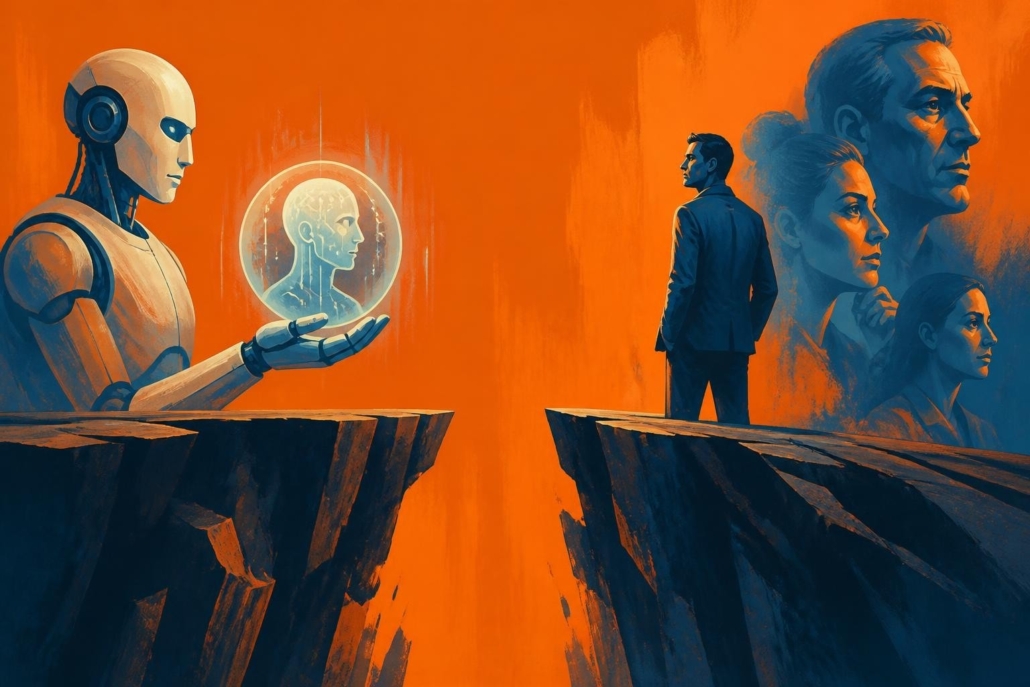
The frightening part of AI coaching isn't the technology itself. It's the invisible moment when decision makers mistake efficiency for effectiveness, when speed replaces judgment, and when personalization algorithms hide the absence of accountability. After observing hundreds of coaching engagements across mid-market companies, the pattern is clear: AI coaching tools fail most dramatically where the stakes matter most, in the messy, context-dependent moments that define leadership development and team performance.
The Real Risk Nobody Discusses
Most articles about AI coaching warn about data privacy or algorithmic bias. Those risks exist, but they're manageable with proper governance. The frightening part of AI coaching emerges in three less obvious places that directly undermine business outcomes.
First, AI coaching creates accountability gaps. When a manager receives AI-generated feedback on their leadership style, who owns the result? The algorithm can't sit in the next quarterly review. It won't adjust recommendations when market conditions shift. It doesn't have skin in the game.
We've seen this play out repeatedly:
- A VP receives AI coaching on delegation but the tool can't observe actual team dynamics
- Sales managers get generic communication scripts that ignore customer segment nuances
- Leadership development programs deploy chatbots that miss cultural red flags entirely
The shadow AI phenomenon compounds this problem when employees adopt unauthorized AI coaching tools, creating fragmented development approaches with zero organizational oversight.

Second, the frightening part of AI coaching shows up in false precision. AI tools excel at pattern matching against large datasets. They struggle with the exceptions, the outliers, the moments when standard advice fails. A manager facing team conflict during a merger doesn't need the statistically most common resolution strategy. They need diagnosis of their specific situation, stakeholder dynamics, and organizational constraints.
When Automation Replaces Judgment
The third risk hits hardest: AI coaching optimizes for engagement metrics, not business results. Platforms track completion rates, satisfaction scores, and time spent. None of these predict whether managers actually make faster decisions, communicate more clearly, or retain top performers.
| What AI Measures | What Businesses Need |
|---|---|
| Module completion | Manager effectiveness |
| User satisfaction | Team retention rates |
| Engagement time | Revenue impact |
| Click-through rates | Leadership accountability |
This measurement gap matters because overdependence on AI in the workplace erodes critical thinking skills. Managers learn to accept AI recommendations without testing them against reality. They stop developing judgment because the algorithm always has an answer.
The Pattern Recognition Problem
Here's what we've observed across dozens of coaching engagements: the frightening part of AI coaching intensifies when companies use it to avoid difficult conversations. An executive wants to address underperformance but deploys an AI coaching tool instead of having direct dialogue. A leadership team struggles with psychological safety but opts for automated feedback rather than building genuine trust.
The AI becomes an excuse, not a solution.
Consider these real scenarios:
- A sales director uses AI coaching to improve team performance but never observes actual customer calls
- An operations VP relies on automated leadership assessments instead of conducting one-on-ones with direct reports
- A founder implements AI-driven manager training while avoiding conversations about company culture
In each case, the AI tool provided data, recommendations, and action plans. In each case, business outcomes didn't improve because the underlying issues required human judgment, context, and accountability.
The Certification Parallel
The same dynamic appears in coaching credential worship. Companies hire certified coaches assuming the letters after someone's name predict results. They don't. Similarly, organizations adopt AI coaching platforms assuming sophistication equals effectiveness. It doesn't.
What actually drives coaching outcomes? Pattern recognition from experience, ability to diagnose root causes, willingness to challenge assumptions, and accountability for results. Forbes outlines 15 reasons to be cautious about AI in coaching, many centered on this gap between theoretical capability and practical impact.
The Data Bias Blind Spot
Research on ethical issues in AI coaching reveals how data bias creates invisible failure modes. AI coaching tools trained on executive populations from large enterprises recommend strategies that fail in mid-market companies with 25-500 employees. The algorithms don't know your operating cadence, KPI structure, or team composition.
This matters more than most buyers realize.
When evaluating coaching solutions, mid-market leaders should ask:
- Who owns the outcome if recommendations don't work?
- How does this adapt to our specific industry dynamics?
- What happens when our context differs from training data?
- Can this tool observe our actual meetings and team interactions?
Most AI coaching platforms can't answer these questions satisfactorily. They optimize for scalability, not specificity. They prioritize volume over value.
The Human Element You Can't Automate
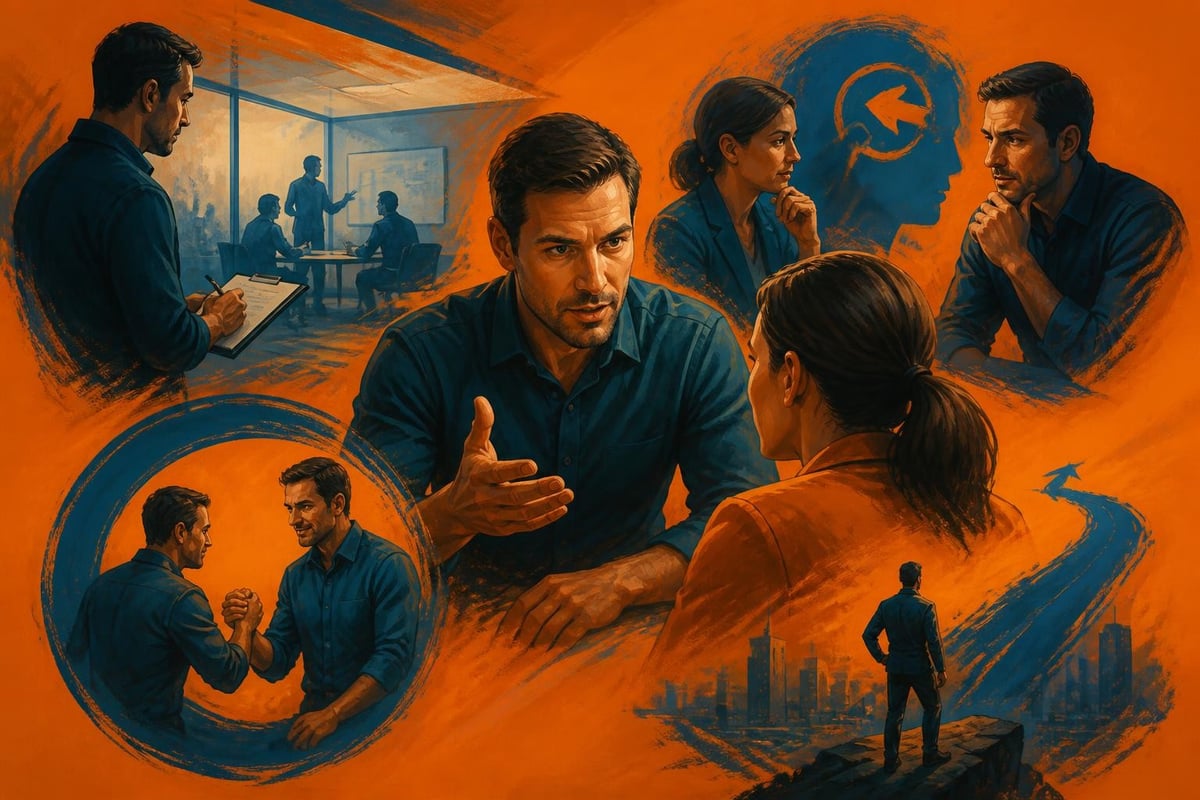
The frightening part of AI coaching becomes clearest when you examine what human coaches actually do in high-stakes situations. They observe. They diagnose patterns others miss. They ask uncomfortable questions. They hold leaders accountable when it's easier to make excuses. They adjust approaches mid-conversation based on body language, tone, and context.
None of this translates to algorithms in 2026. Not because the technology isn't sophisticated, it's because coaching effectiveness depends on relationship, trust, and shared risk. An AI tool doesn't care if you hit your retention targets. A human coach with aligned incentives does.
What Buyers Miss
After watching companies evaluate coaching options, here's the pattern: they overvalue features (AI recommendations, mobile apps, analytics dashboards) and undervalue effectiveness signals (case studies, outcome guarantees, flexibility to adapt, integration with actual work).
The result? Investments in coaching technology that produce engagement without impact. Managers complete modules but don't change behavior. Teams receive feedback but performance stays flat. Executives get reports showing high satisfaction scores while retention problems persist.
This isn't a technology problem. It's a buying problem.
Smart organizations in 2026 use AI for administrative tasks, scheduling, note-taking, and pattern identification. They rely on experienced human coaches for diagnosis, strategy, live facilitation, and accountability. The best AI for business coaching augments human judgment rather than replacing it.
The Verification Erosion
One more frightening aspect deserves attention: AI coaching trains people to accept recommendations without verification. When managers consistently act on AI suggestions without testing them, they lose the muscle for independent judgment. This compounds over time, creating leadership teams that can execute playbooks but struggle with novel situations.
We've observed this in:
- Strategic planning where AI tools generate five-year plans that ignore competitive dynamics
- Team development programs that follow generic relationship scripts without adapting to actual conflicts
- Performance management systems that automate feedback while avoiding difficult conversations
The pattern repeats: organizations adopt AI coaching to scale expertise faster, but they actually scale mediocrity faster. The truly frightening part of AI coaching isn't any single failure mode, it's the accumulated effect of replacing judgment with automation across thousands of small decisions.
The frightening part of AI coaching isn't inevitable, but avoiding it requires clear thinking about where technology helps and where it harms. If you need coaching that combines practical business focus with genuine accountability, Noomii delivers measurable results through live facilitation, clear KPIs, and month-to-month terms that prove value continuously. We coach in your meetings, tie progress to business outcomes, and share risk because we know results matter more than credentials or automation.
Frequently Asked Questions
What makes AI coaching risky for business leadership development?
AI coaching creates accountability gaps where no human owns outcomes, optimizes for engagement metrics instead of business results, and can't adapt to specific organizational contexts or novel situations that require judgment.
Can AI coaching tools replace human executive coaches?
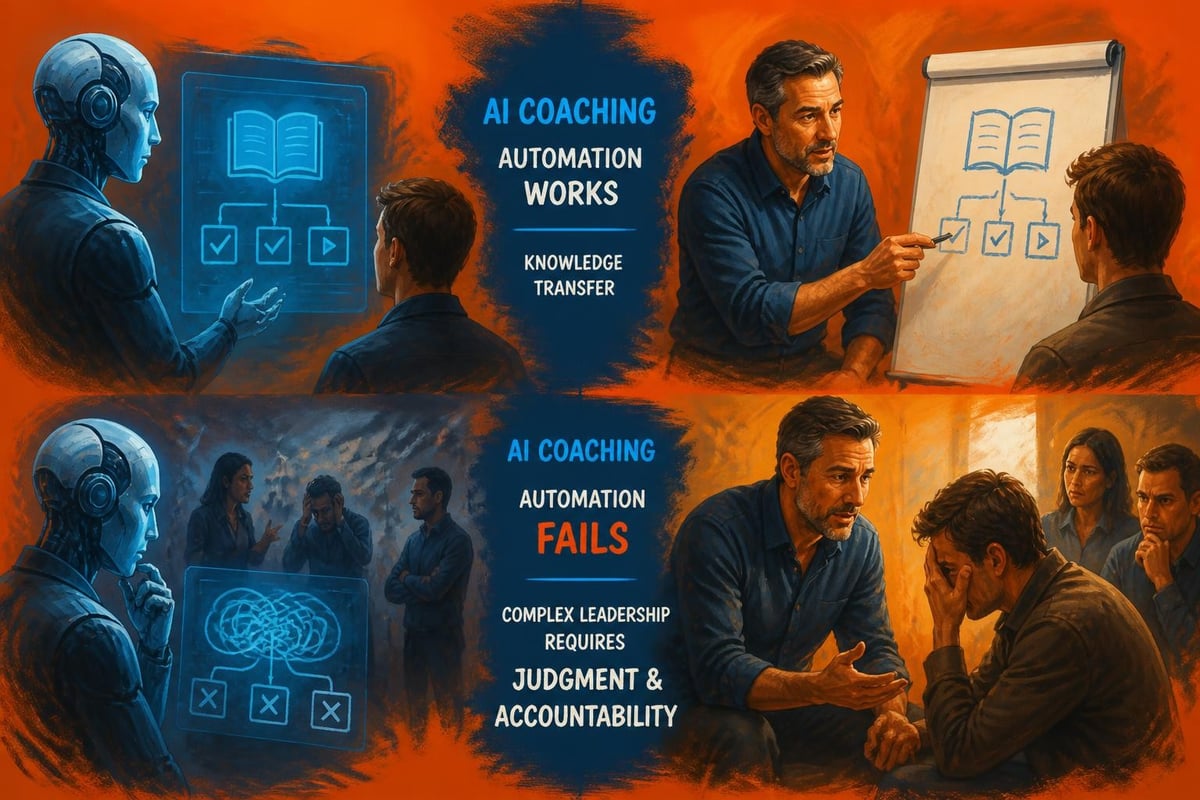
No. AI coaching works for knowledge transfer and administrative tasks but fails in complex leadership situations requiring diagnosis, real-time adaptation, accountability partnerships, and understanding of unique business dynamics.
What should mid-market companies look for when evaluating coaching options?
Focus on case studies showing measurable outcomes, coaches who observe actual work and meetings, flexible terms that prove ongoing value, and alignment between coach incentives and your business results rather than credentials or technology features.
How does AI coaching fail in team development situations?
AI tools miss cultural red flags, can't observe actual team dynamics, provide generic scripts that ignore relationship nuances, and create false precision by matching patterns without understanding specific stakeholder contexts.
Why do completion rates and satisfaction scores mislead about coaching effectiveness?
These metrics measure engagement, not impact. Managers can complete modules without changing behavior, teams can report satisfaction while performance stays flat, and high engagement scores often hide the absence of accountability for results.
What is the accountability gap in AI coaching?
It's the moment when AI provides recommendations but no human takes ownership if they don't work, can't adjust when conditions change, and has no stake in whether business outcomes actually improve.
How does AI coaching create dependency instead of developing judgment?
When managers consistently accept AI recommendations without testing them against reality, they lose the ability to diagnose novel situations, challenge assumptions, or adapt strategies to changing circumstances.
What's the biggest mistake companies make when buying coaching services?
Overvaluing features like analytics dashboards and mobile apps while undervaluing effectiveness signals like outcome guarantees, case studies, integration with actual work, and coaches who observe real meetings and decisions.
Where should businesses actually use AI in coaching programs?
AI works best for administrative tasks, scheduling, note-taking, pattern identification from data, and scaling knowledge transfer, while human coaches handle diagnosis, strategy, live facilitation, and accountability for results.



Leave a Reply
Want to join the discussion?Feel free to contribute!