
The Dangerous Illusion of AI Coaching in 2026
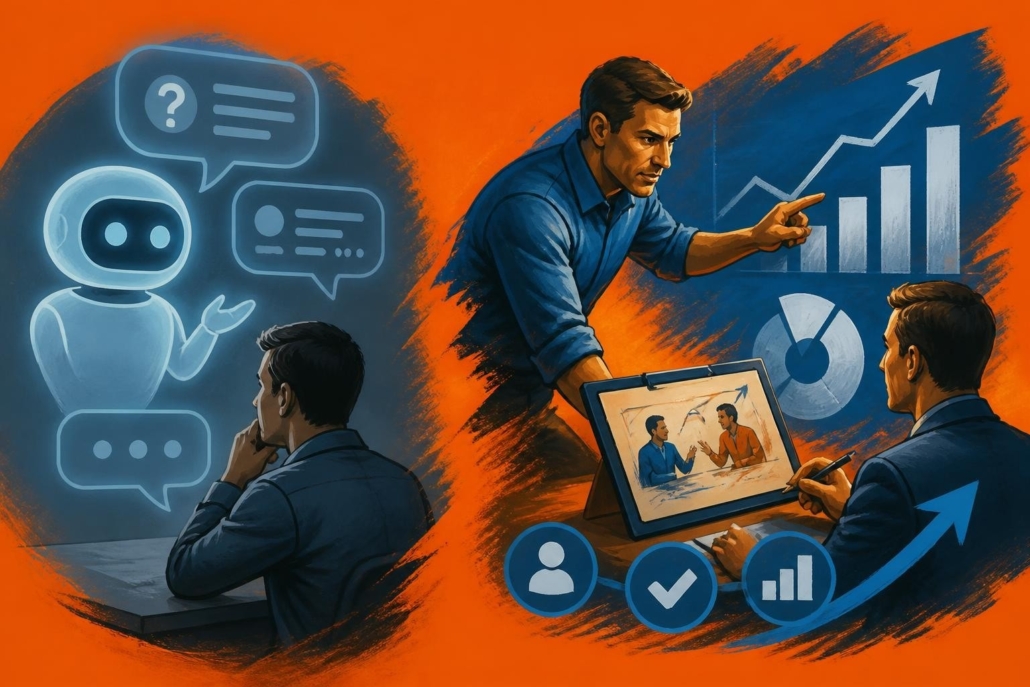
The coaching industry is being flooded with AI tools that promise instant leadership development, 24/7 availability, and fraction-of-the-cost guidance. Mid-market executives are being pitched chatbots that analyze communication patterns, generate development plans, and deliver nudges at scale. The dangerous illusion of AI coaching is that technology can replicate the accountability, contextual judgment, and behavioral change that human coaches deliver in real business environments. It cannot, and the gap between the promise and reality is costing companies measurable progress.
Why AI Coaching Fails Where Business Results Matter
AI coaching tools excel at one thing: generating plausible-sounding advice quickly. They fail at everything else that matters in corporate environments. The dangerous illusion of AI coaching starts with the assumption that leadership development is an information problem rather than an execution and accountability problem.
Real coaching outcomes depend on elements AI cannot provide:
- Live observation in actual business contexts (meetings, difficult conversations, strategic planning sessions)
- Persistent accountability tied to specific KPIs and operational cadence
- Adaptive challenge that escalates based on real-time performance and resistance patterns
- Emotional intelligence that reads subtext, power dynamics, and unspoken team tension
- Credibility earned through pattern recognition across industries, roles, and failure modes
A recent study in Frontiers in Psychology examined working alliance development between AI and human coaches. The findings confirm what experienced practitioners already know: trust, psychological safety, and sustained behavior change require human presence, judgment, and relationship depth that current AI systems cannot replicate.
The Three Costly Myths Driving AI Coaching Adoption
Myth One: Scale Equals Impact
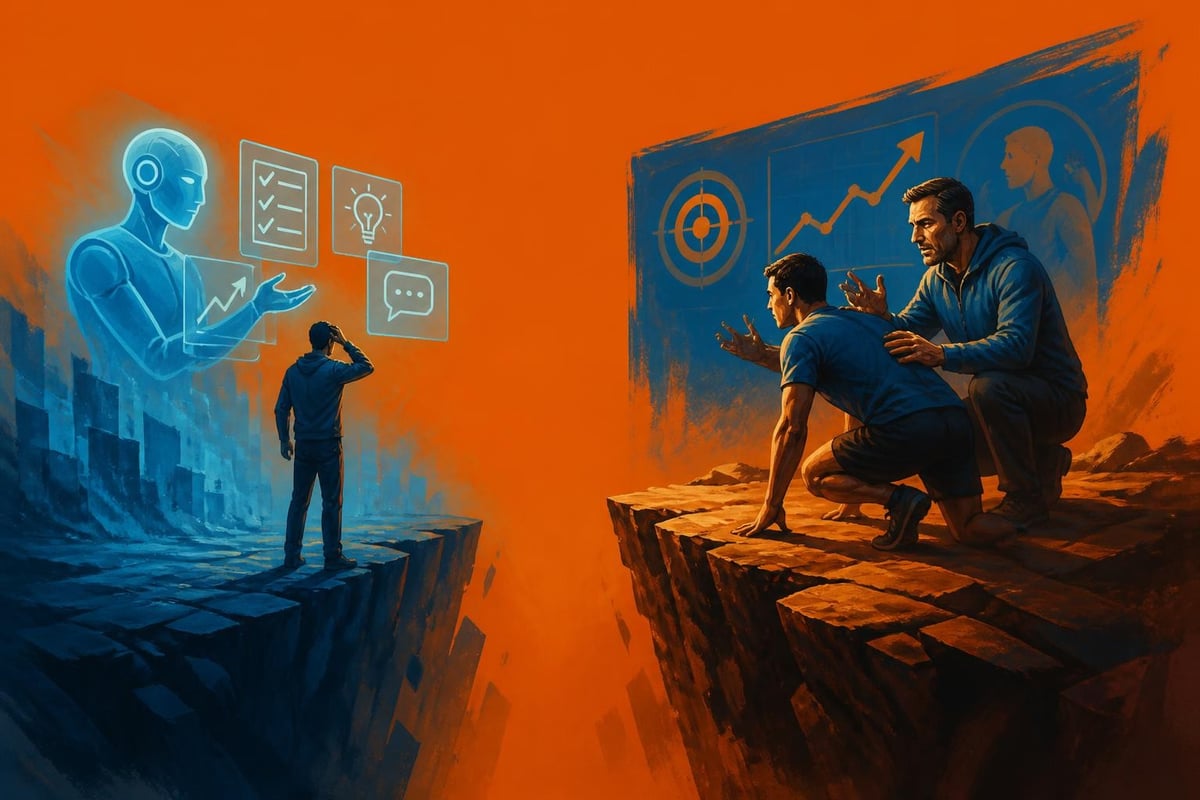
Organizations adopt AI coaching because it promises to reach more managers faster. But leadership development is not a distribution problem. The dangerous illusion of AI coaching obscures the fact that most managers do not lack access to generic advice. They lack someone who will observe them in action, call out patterns they cannot see, and hold them accountable week after week until new behaviors stick.
I have watched companies deploy AI coaching platforms to 200 managers, celebrate adoption metrics, and see zero movement on engagement scores, retention rates, or decision velocity. The illusion is that reaching more people matters if nothing changes.
Myth Two: Personalization Through Data Analysis
AI tools analyze speech patterns, email tone, calendar habits, and generate "personalized" insights. This is pattern matching, not coaching. Real personalization requires understanding the political landscape of a specific organization, the unwritten rules in a division, the history between two leaders who avoid conflict, and the strategic priorities that shift quarterly.
PLOS ONE research comparing AI chatbot coaching to human coaches revealed significant efficacy limits. AI performed adequately for surface-level goal clarity but failed dramatically when coaching required navigating organizational complexity, ambiguity, or interpersonal conflict.
Data-driven personalization misses what matters:
| What AI Analyzes | What Real Coaching Requires |
|---|---|
| Word frequency in emails | Understanding who holds informal power |
| Calendar meeting density | Knowing which meetings drive real decisions |
| Sentiment in Slack messages | Reading tension between two VPs who smile in public |
| Self-reported goals | Diagnosing the gap between stated and actual priorities |
Myth Three: Always-On Access Drives Faster Progress
The pitch is seductive: managers can get coaching at midnight, on weekends, whenever they need it. But leadership development does not happen in isolated moments of reflection. It happens through repeated cycles of attempt, failure, feedback, adjustment, and re-attempt in live business contexts. The dangerous illusion of AI coaching is that convenience substitutes for the discomfort of being observed, challenged, and held to commitments.
I have seen executives use AI coaching apps daily for three months and remain stuck in the same delegation failures, conflict avoidance, and planning gaps they started with. No one was there to watch them run a meeting poorly, stop them mid-pattern, and make them try again.
What the EU AI Act Reveals About Coaching Use Cases
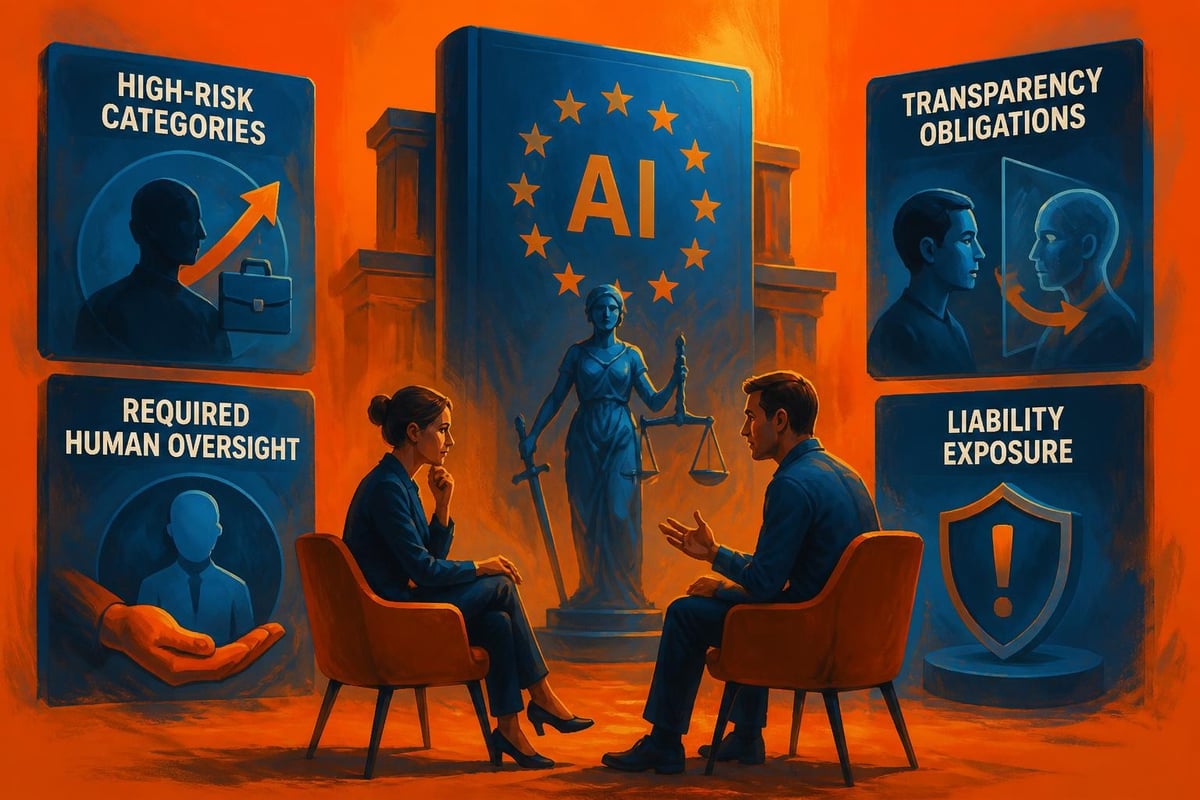
The EU Artificial Intelligence Act classifies certain AI applications as high-risk when they influence decisions about employment, well-being, or personal development. AI systems that provide coaching, mentoring, or developmental advice fall into regulatory scrutiny precisely because they carry risk of harm when used without human oversight.
The regulation requires transparency, explainability, and human-in-the-loop safeguards. Most AI coaching vendors do not meet these standards. The dangerous illusion of AI coaching is amplified when organizations deploy these tools without understanding the regulatory, ethical, and liability exposure they create.
Real Coaching Delivers Measurable Business Outcomes
Companies struggling with the challenges facing coaching businesses often chase credentials, platforms, and automation instead of outcomes. The market is saturated with tools that promise efficiency. What mid-market companies actually need is coaching tied directly to operational KPIs.
Practical coaching addresses specific business problems:
- Revenue stalls because sales managers cannot coach reps through objections
- Retention drops because middle managers avoid difficult feedback conversations
- Strategy execution fails because leadership teams lack operating cadence and clear accountability
- Decision velocity slows because executives defer to consensus instead of making calls
- Communication breaks down because cross-functional teams operate in silos with no facilitation
These are not problems AI chatbots solve. They require a coach who observes the actual sales meeting, sits in the leadership team session, reviews the operating scorecard, and then holds specific people accountable for specific behavior changes tied to specific KPIs.
When organizations search for the right business coach, they should prioritize evidence of measurable results over platform features, certifications, or AI integrations. The dangerous illusion of AI coaching is that technology shortcuts can replace the hard work of live observation, adaptive challenge, and relentless accountability.
The Role AI Should Play in Coaching Ecosystems
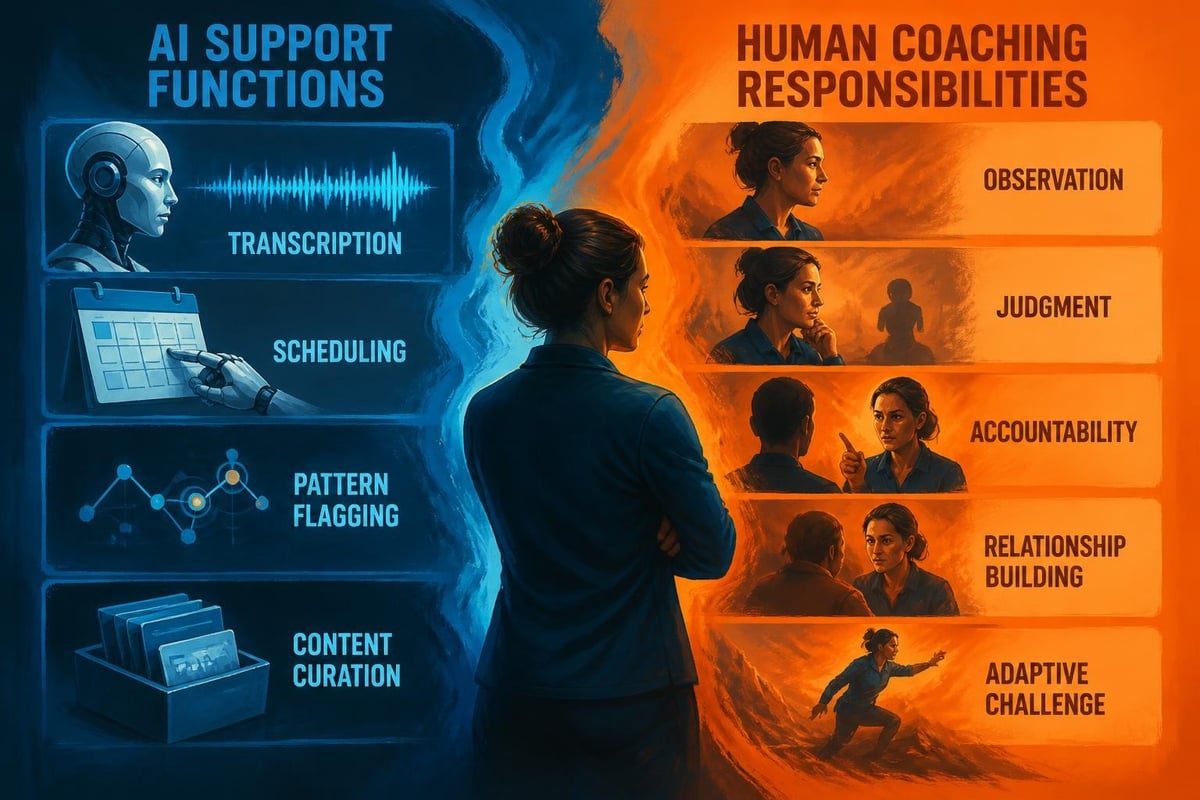
AI is not useless in coaching. It is useful in narrow, well-defined support roles. OpenAI’s safety best practices outline appropriate use cases: content generation, scheduling, note-taking, resource curation, and pattern flagging. These are administrative tasks, not coaching.
Where AI adds value without creating illusion:
- Transcribing coaching sessions so coaches can focus on the conversation instead of notes
- Flagging patterns across multiple clients to help coaches identify themes faster
- Generating first-draft development plans that human coaches refine and customize
- Scheduling follow-ups and tracking commitments between sessions
- Curating articles, frameworks, or tools relevant to specific client goals
The moment AI crosses into autonomous advice-giving, relationship-building, or accountability enforcement, the dangerous illusion of AI coaching takes over. Companies start believing the tool replaces the coach rather than supports one.
What Mid-Market Leaders Should Demand Instead
Organizations with 25 to 500 employees cannot afford to waste budget on coaching theater. The dangerous illusion of AI coaching thrives when executives confuse activity metrics (logins, modules completed, surveys filled out) with business outcomes (faster decisions, stronger retention, cleaner execution).
Before adopting any coaching solution, demand answers to these questions:
- Will the coach observe our actual meetings and working sessions?
- What specific KPIs will this coaching move, and how will we track them?
- What happens if results are not visible within 90 days?
- Is this month-to-month or a long contract we cannot exit?
- Does the coach have pattern recognition across our industry and company stage?
If the answer involves a platform login, an AI dashboard, or a certification acronym instead of a human who rolls up their sleeves, walk away. Real coaching requires proximity, judgment, and accountability that no current AI system can deliver.
Understanding how much coaching actually costs helps leaders evaluate whether they are paying for outcomes or paying for software subscriptions that generate reports no one acts on.
The dangerous illusion of AI coaching is that leadership development can be automated, scaled, and delivered without human judgment, live observation, or persistent accountability. It cannot. If you need practical corporate coaching that delivers measurable business results through KPI-driven accountability, live facilitation, and adaptive challenge, Noomii connects you with experienced coaches who work month-to-month, share risk through aligned incentives, and stay because progress is visible. No long contracts, no credential worship, just results you can measure.
Frequently Asked Questions
Q: Can AI coaching tools replace human executive coaches for leadership development?
A: No. AI tools can provide generic advice and surface-level insights, but they cannot observe leaders in real business contexts, adapt coaching to organizational dynamics, or hold leaders accountable to behavioral change tied to measurable KPIs. Leadership development requires human judgment, relationship depth, and live observation that current AI systems cannot replicate.
Q: What are the main risks of using AI coaching without human oversight?
A: Risks include inaccurate advice for complex situations, no accountability for implementation, inability to read organizational context or power dynamics, regulatory exposure under frameworks like the EU AI Act, and the illusion of progress based on platform engagement metrics rather than actual business outcomes.
Q: How does AI coaching perform compared to human coaches in research studies?
A: Research shows AI coaching performs adequately for simple goal clarification but fails when coaching requires navigating ambiguity, interpersonal conflict, or organizational complexity. Working alliance, trust, and sustained behavior change are significantly weaker with AI compared to human coaches.
Q: What should mid-market companies look for when evaluating coaching solutions?
A: Prioritize coaches who observe live meetings, tie progress to specific KPIs, work month-to-month without long contracts, have pattern recognition across your industry, and share risk through aligned incentives. Avoid solutions that emphasize platform features, credentials, or AI automation over measurable business results.
Q: Where can AI appropriately support coaching without replacing coaches?
A: AI is useful for administrative tasks like transcription, scheduling, note-taking, pattern flagging across sessions, and content curation. It should not autonomously provide advice, build relationships, enforce accountability, or substitute for live observation and adaptive challenge.
Q: What business outcomes should coaching deliver in mid-market companies?
A: Measurable outcomes include faster decision velocity, managers who effectively coach their teams, stronger cross-functional communication, higher employee engagement and retention, and cleaner execution across strategic priorities. Coaching should move specific operational KPIs, not just satisfaction surveys.
Q: Why do AI coaching platforms often fail to deliver results despite high adoption?
A: High login rates and module completion do not equal behavior change. Most managers do not lack access to generic advice. They need someone to observe them in action, diagnose patterns they cannot see, challenge them in real time, and hold them accountable week after week until new behaviors stick.
Q: What regulatory concerns apply to AI coaching tools in 2026?
A: The EU AI Act classifies AI systems that influence employment, well-being, or personal development as high-risk, requiring transparency, explainability, and human oversight. AI coaching vendors often fail to meet these standards, creating liability exposure for organizations that deploy them without proper safeguards.
Q: How can executives avoid the illusion of progress with coaching investments?
A: Demand coaching tied to specific, measurable KPIs with clear tracking mechanisms. Insist on live observation and facilitation in actual business contexts. Avoid long contracts and choose month-to-month terms. Prioritize coaches with industry pattern recognition and proven results over credentials or platform features.



Leave a Reply
Want to join the discussion?Feel free to contribute!