Team Develop: Building High-Performance Teams in 2026
Organizations that prioritize strategic initiatives to team develop consistently outperform competitors in innovation, retention, and market adaptability. The ability to systematically elevate team capabilities determines whether companies thrive or stagnate in competitive environments. With evidence-based approaches, structured interventions, and expert coaching partnerships, businesses transform fragmented groups into cohesive units that deliver exceptional results. The difference between average teams and high-performing teams lies not in talent alone but in deliberate development strategies that address leadership gaps, communication barriers, and alignment issues with precision.
The Science Behind Effective Team Development
Research demonstrates that successful efforts to team develop require more than periodic training sessions or motivational workshops. Evidence-based team development interventions reveal specific methodologies that create lasting behavioral change and measurable performance improvements. Organizations must understand the underlying dynamics that influence team effectiveness before implementing development programs.
Understanding Team Development Stages
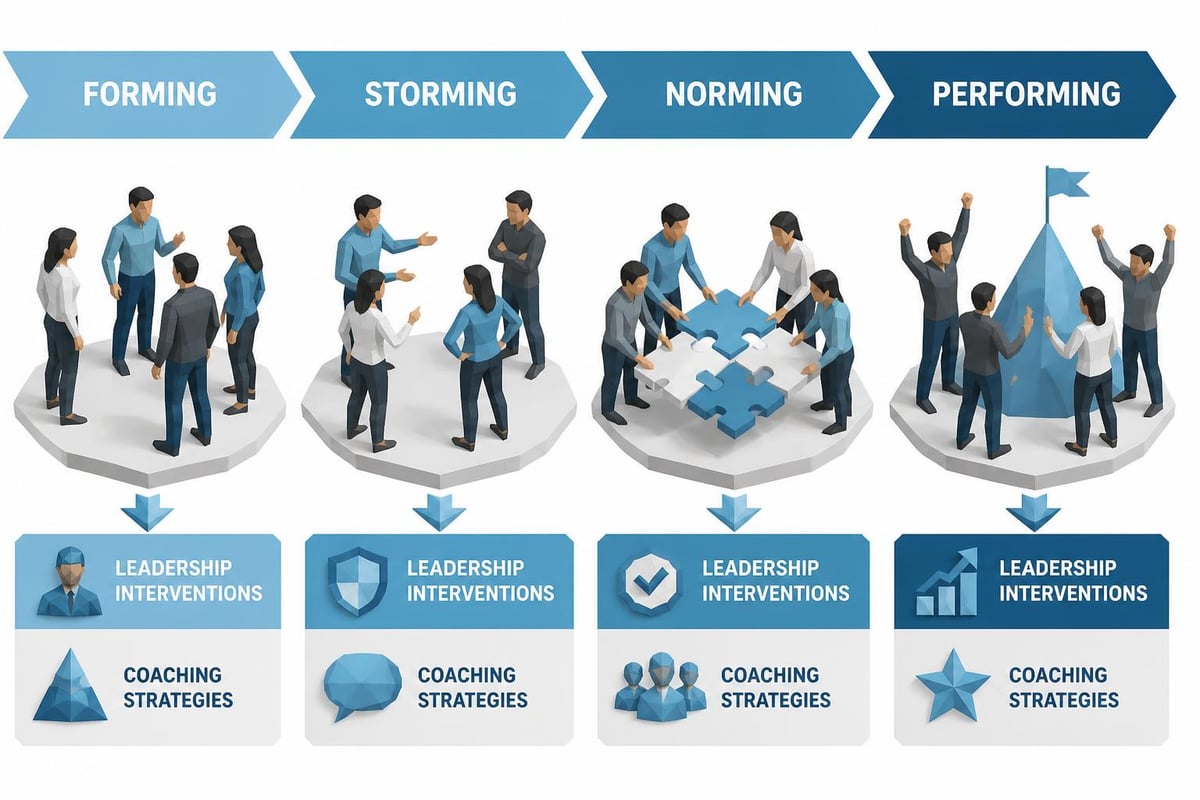
Teams progress through predictable stages requiring different leadership approaches and interventions. The forming stage demands clarity around roles, objectives, and expectations. During storming, conflicts emerge as team members challenge ideas and establish influence patterns. Norming brings cooperation and shared standards, while performing reflects optimal productivity and collaboration.
Each stage presents distinct development opportunities:
- Forming: Establish psychological safety and clear communication protocols
- Storming: Address conflict constructively and clarify decision-making authority
- Norming: Reinforce productive behaviors and strengthen team identity
- Performing: Optimize processes and maintain high performance standards
Organizations that recognize these stages design interventions matching team maturity levels. Research on team dynamics and development confirms that timing interventions appropriately significantly increases their effectiveness. Leadership coaching accelerates progression through these stages by equipping leaders with diagnostic skills and targeted strategies.
Strategic Frameworks to Team Develop Successfully
Organizations achieve superior results when they apply systematic frameworks rather than ad-hoc training efforts. The most effective approaches combine assessment, targeted intervention, skill building, and continuous reinforcement. This structured methodology ensures development initiatives align with business objectives and produce quantifiable outcomes.
Assessment-Driven Development Planning
Comprehensive assessment identifies precise capability gaps, behavioral patterns, and systemic obstacles limiting team performance. Organizations should evaluate both individual competencies and collective team dynamics using validated instruments. These assessments reveal hidden friction points, communication breakdowns, and unrecognized strengths that inform development priorities.
Leadership diagnostics examine decision-making patterns, emotional intelligence, conflict management approaches, and strategic thinking capabilities. Team assessments measure trust levels, role clarity, accountability mechanisms, and collaborative effectiveness. The combination provides complete visibility into development needs across the organization.
| Assessment Type | Focus Areas | Primary Benefits |
|---|---|---|
| Individual Leadership | Decision-making, emotional intelligence, strategic thinking | Personalized development plans |
| Team Dynamics | Trust, communication, accountability | Targeted intervention design |
| Organizational Culture | Values alignment, psychological safety | System-level improvements |
| Performance Metrics | KPIs, productivity, quality standards | ROI measurement capability |
Precision Coach Matching for Maximum Impact
Generic coaching approaches fail to address specialized challenges facing technical teams, executive groups, or cross-functional units. Matching team leaders with coaches possessing relevant sector expertise and proven track records in specific development areas dramatically increases program effectiveness. Organizations benefit from leadership and executive coaching partnerships that understand industry dynamics and regulatory contexts.
The matching process considers leadership style, developmental goals, team composition, organizational culture, and strategic priorities. Coaches with experience addressing similar challenges accelerate progress by applying proven methodologies rather than experimental approaches. This precision ensures development investments deliver measurable returns within defined timeframes.
Building Core Competencies That Transform Teams
Teams require specific competencies to perform at exceptional levels consistently. Development programs must systematically build these capabilities through structured learning, deliberate practice, and ongoing coaching support. Organizations that team develop around core competencies create sustainable competitive advantages.
Communication Excellence Across Channels
Effective communication transcends simple information exchange. High-performing teams master active listening, constructive feedback delivery, conflict de-escalation, and persuasive stakeholder engagement. Development programs should address both verbal and written communication, formal and informal channels, and internal and external interactions.
Critical communication competencies include:
- Delivering feedback that motivates improvement without triggering defensiveness
- Facilitating productive meetings that drive decisions and accountability
- Navigating difficult conversations about performance, priorities, or resource constraints
- Tailoring messages for diverse audiences with varying technical knowledge
- Building rapport across cultural and generational differences
Organizations often overlook the communication challenges specific to their industry or operational model. Government agencies require transparency and compliance-focused communication. Technology companies need rapid information sharing across distributed teams. Manufacturing environments demand clarity in safety-critical contexts. Best practices in team development emphasize customizing communication training to organizational realities.
Psychological Safety and Trust Building
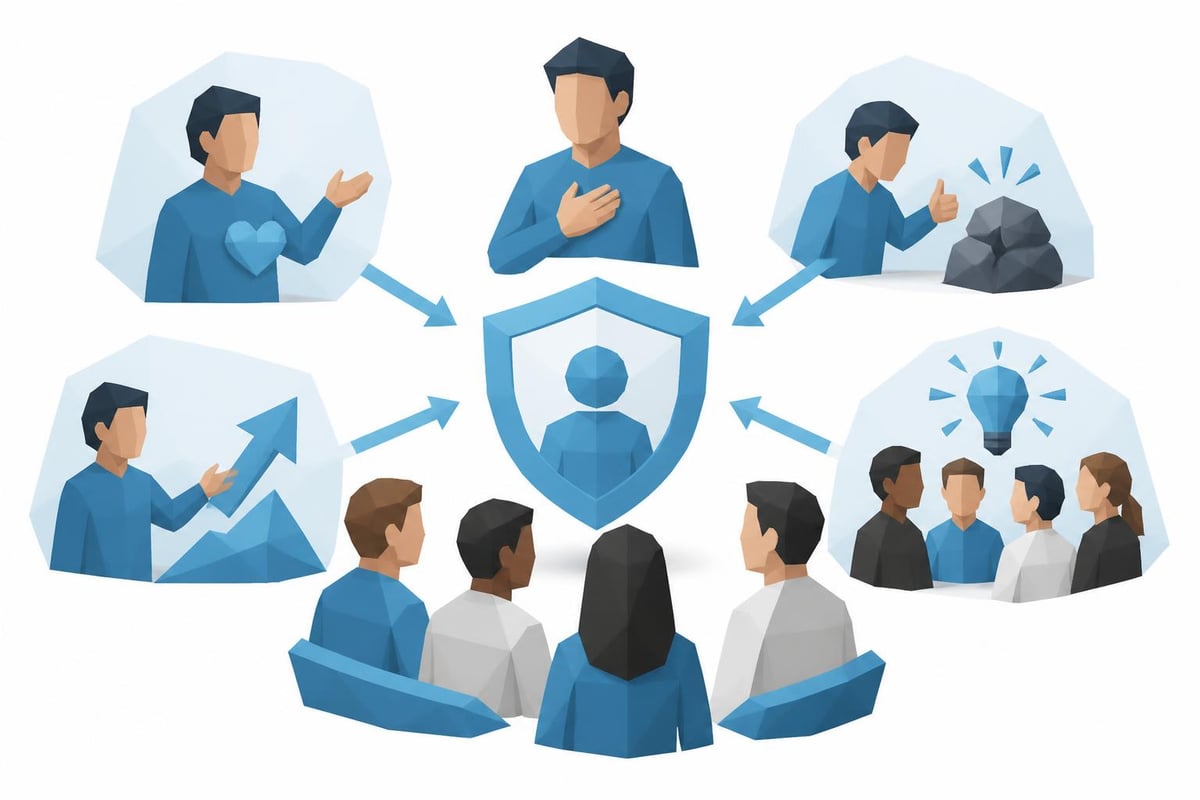
Teams perform best when members feel safe taking interpersonal risks, sharing dissenting opinions, and admitting mistakes without fear of punishment or embarrassment. Psychological safety in the workplace directly correlates with innovation, learning, and performance outcomes. Leaders must intentionally cultivate environments where vulnerability strengthens rather than undermines professional standing.
Development initiatives should equip leaders with specific behaviors that build psychological safety. This includes modeling vulnerability, responding productively to bad news, framing work as learning problems rather than execution problems, and demonstrating curiosity about different perspectives. Teams with high psychological safety identify problems earlier, experiment more frequently, and recover from setbacks faster than teams operating in fear-based cultures.
Measuring Development Impact With Precision
Organizations require concrete evidence that investments to team develop generate tangible returns. Measurement frameworks should capture both leading indicators of behavioral change and lagging indicators of business impact. This dual focus demonstrates program effectiveness while enabling course corrections before problems compound.
Key Performance Indicators for Team Development
Effective measurement systems track multiple dimensions of team performance over time. Quantitative metrics provide objective baselines and progress markers. Qualitative assessments capture nuanced improvements in collaboration quality, decision-making sophistication, and cultural health.
Essential metrics across development programs:
- Engagement scores measured through validated surveys tracking commitment and satisfaction
- Retention rates comparing turnover before and after interventions
- Productivity metrics specific to team deliverables and efficiency measures
- Quality indicators including error rates, rework percentages, and customer satisfaction
- Innovation outputs such as ideas generated, experiments conducted, or improvements implemented
- Leadership advancement tracking promotions and expanded responsibilities
- Cultural health assessing trust, collaboration, and psychological safety levels
Research on team training effectiveness demonstrates that organizations using comprehensive measurement systems achieve significantly better outcomes than those relying solely on participant satisfaction ratings. The rigor applied to measurement directly influences program quality and organizational commitment to ongoing development.
Translating Metrics Into Strategic Insights
Data collection alone creates minimal value. Organizations must analyze patterns, identify correlations, and extract actionable insights that inform future development decisions. This analytical capability separates sophisticated development functions from administrative training departments.
Analysis should examine which interventions produce the strongest results for specific team types, leadership levels, or developmental challenges. Organizations discover that certain coaching approaches work exceptionally well for technical teams but prove less effective for sales organizations. Some assessment tools predict leadership success accurately in stable environments but fail during periods of rapid change.
| Development Phase | Measurement Focus | Decision Points |
|---|---|---|
| Pre-Intervention | Baseline capabilities, current performance | Investment prioritization |
| During Program | Skill acquisition, behavioral changes | Real-time adjustments |
| Immediate Post | Knowledge retention, satisfaction | Program refinement |
| 6-Month Follow-Up | Behavior sustainability, performance impact | ROI validation |
| Annual Review | Cultural shifts, business outcomes | Strategic planning |
Addressing Common Team Development Challenges
Organizations attempting to team develop encounter predictable obstacles that derail initiatives or dilute results. Anticipating these challenges and implementing mitigation strategies significantly increases success probability. Leadership coaching provides the expertise needed to navigate complex development scenarios effectively.
Overcoming Resistance to Change
Team members frequently resist development initiatives, viewing them as criticism of current performance or additional burdens on already-stretched schedules. Leaders must frame development as investment in career growth and organizational success rather than remedial intervention. Transparent communication about development objectives, expected commitments, and potential benefits reduces resistance substantially.
Involving team members in development planning increases buy-in and ensures initiatives address real needs rather than perceived problems. When teams help design their development journey, they take ownership of outcomes and hold each other accountable for applying new capabilities. This participatory approach transforms development from something imposed by management into a team-driven improvement process.
Managing Time Constraints and Competing Priorities
Organizations struggle to allocate sufficient time for development activities amid operational demands. This challenge becomes particularly acute during high-pressure periods when development would deliver the greatest value. Leadership teams must establish development as a strategic priority reflected in resource allocation, calendar protection, and performance expectations.
Practical strategies for protecting development time:
- Schedule development activities during strategic planning cycles
- Integrate skill practice into regular team activities rather than separate sessions
- Use brief, focused interventions that respect time constraints
- Leverage technology for asynchronous learning and flexible engagement
- Demonstrate leadership commitment through consistent participation
Organizations that treat development as discretionary inevitably sacrifice it when pressures mount. Building development into operational rhythms and accountability systems ensures consistency despite changing circumstances.
Sustaining Momentum Beyond Initial Interventions
The most significant challenge facing efforts to team develop involves sustaining behavioral changes after formal programs conclude. Research indicates that without reinforcement mechanisms, participants revert to previous behaviors within weeks of completing training. Organizations must design sustainability systems that embed new capabilities into daily operations.
Sustainability requires multiple reinforcement mechanisms working in concert. Coaching provides ongoing support as leaders encounter real-world application challenges. Peer accountability structures create social pressure to maintain new behaviors. Performance management systems reward demonstrated capabilities and create consequences for reverting to ineffective patterns. Interventions that improve team effectiveness consistently include structured follow-up components that sustain initial gains.
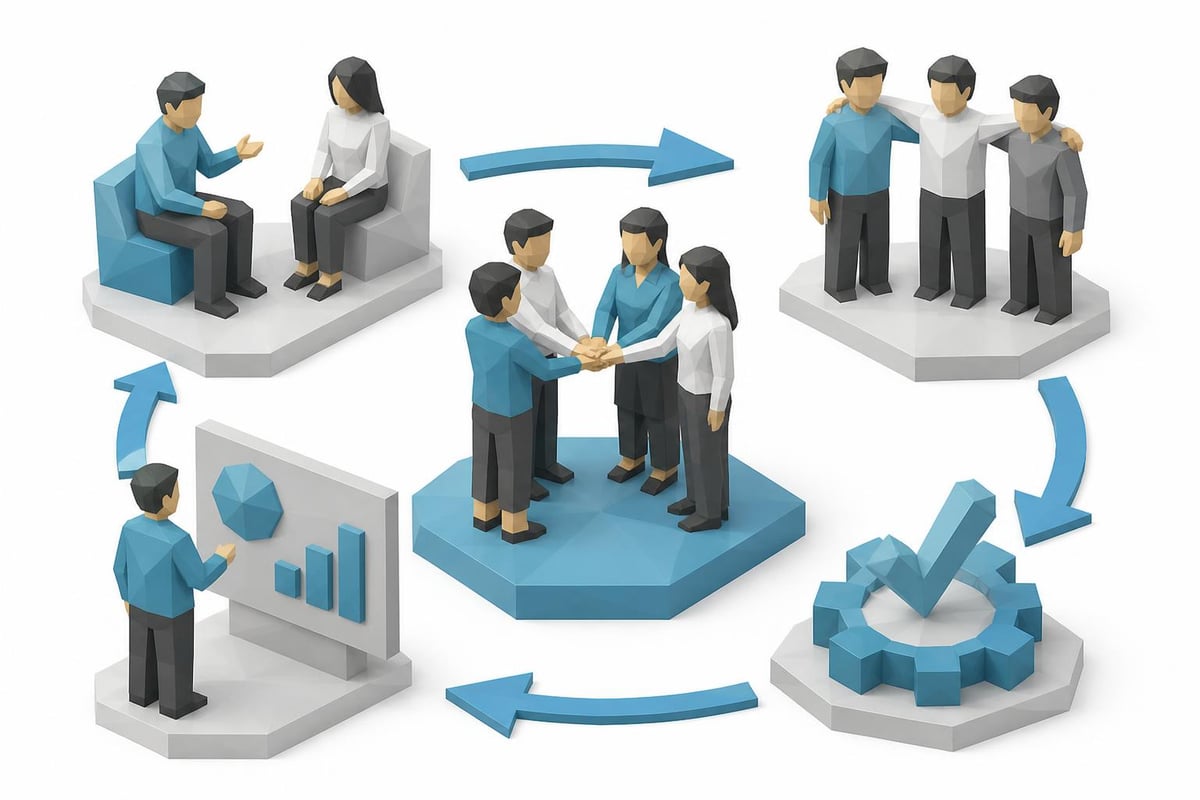
Scaling Development Across Growing Organizations
As organizations expand, maintaining consistent development quality across multiple teams and locations presents significant challenges. Scalable approaches preserve development effectiveness while accommodating growth and geographic dispersion. Leadership coaching networks provide the infrastructure needed to deliver consistent experiences regardless of team size or location.
Building Internal Development Capabilities
Organizations maximize long-term value by developing internal coaching and facilitation capabilities alongside external partnerships. Internal coaches understand organizational culture, political dynamics, and specific business challenges with depth external providers cannot match. However, internal resources require training, supervision, and protected time to develop teams effectively.
Hybrid models combining internal and external resources optimize both cost-efficiency and impact. External coaches handle sensitive situations, executive-level interventions, and specialized technical challenges. Internal coaches manage ongoing skill development, team facilitation, and culture reinforcement. This division of responsibility ensures appropriate resource allocation while building sustainable capabilities.
Technology-Enabled Development at Scale
Digital platforms enable organizations to team develop across geographic boundaries and time zones. Video conferencing, collaborative workspaces, and learning management systems create consistent experiences for distributed teams. However, technology alone cannot replicate the impact of skilled coaching and facilitation. Organizations must thoughtfully integrate technology with human expertise.
The most effective scaled development programs use technology for content delivery, asynchronous learning, and progress tracking while preserving high-touch coaching for complex challenges. This blended approach balances efficiency with effectiveness, ensuring teams receive appropriate support regardless of location or size.
Integrating Development With Organizational Strategy
Isolated development initiatives produce limited value compared to programs aligned with strategic priorities and business objectives. When efforts to team develop directly support strategic goals, leadership commits resources, participants engage seriously, and outcomes receive appropriate recognition. This alignment transforms development from an HR activity into a strategic capability.
Connecting Team Capabilities to Business Outcomes
Organizations should map required team capabilities to specific business objectives, identifying gaps that limit strategic execution. This analysis reveals which development investments deliver the highest strategic returns. For example, companies pursuing innovation strategies require teams skilled in experimentation, creative problem-solving, and rapid learning from failure. Organizations focused on operational excellence need teams mastering process optimization, quality management, and continuous improvement.
Development planning begins with strategic objectives rather than generic competency models. This approach ensures initiatives address actual business needs and produce measurable contributions to organizational success. Leadership coaching helps translate abstract strategies into concrete capability requirements and development roadmaps.
Strategic alignment process:
- Identify key strategic priorities for the next 12-24 months
- Define team capabilities required to execute each priority successfully
- Assess current capability levels against requirements
- Prioritize development initiatives based on strategic impact and gap size
- Design interventions targeting highest-priority capabilities
- Establish metrics linking capability growth to business outcomes
- Review and adjust based on strategic shifts and results
Governance and Compliance Considerations
Regulated industries and government agencies face additional complexity when designing programs to team develop. Development initiatives must align with compliance requirements, ethical standards, and governance frameworks. Leadership coaching in these environments requires expertise navigating regulatory constraints while delivering meaningful development.
Organizations operating under strict oversight benefit from development approaches that explicitly address compliance obligations, ethical decision-making, and risk management. These programs demonstrate how leaders can achieve objectives within established boundaries rather than viewing compliance as obstacles to performance. Addressing toxic leadership patterns becomes particularly critical in regulated environments where leadership failures create legal, financial, and reputational risks.
Creating Development-Focused Leadership Cultures
Organizations achieve sustainable competitive advantage when development becomes embedded in leadership culture rather than remaining a periodic program. This transformation requires intentional culture-building efforts, leadership modeling, and systemic reinforcement. Companies with development-focused cultures attract superior talent, adapt faster to market changes, and maintain performance through disruption.
Leadership Modeling and Accountability
Senior leaders set the tone for organizational commitment to development through their visible participation and personal growth efforts. When executives engage seriously with coaching, share development experiences, and demonstrate vulnerability about growth areas, they signal that development matters at all levels. This modeling creates psychological safety for others to embrace development opportunities.
Leadership accountability systems should include development metrics alongside operational and financial performance measures. When promotion decisions, compensation outcomes, and recognition programs reward demonstrated growth and team development contributions, leaders prioritize these activities despite competing demands. Organizations serious about development make it a non-negotiable expectation for leadership roles.
Building Communities of Practice
Communities of practice accelerate development by creating peer learning networks where leaders share challenges, exchange insights, and support each other's growth. These communities supplement formal coaching with ongoing peer coaching, collective problem-solving, and shared accountability. Organizations that team develop through community models create self-sustaining development ecosystems requiring less formal program infrastructure.
Effective communities require careful design, facilitation support, and organizational endorsement. They function best when members share common challenges, possess complementary expertise, and commit to regular participation. Leadership coaching helps communities establish productive norms, navigate conflicts, and maintain focus on meaningful development rather than devolving into complaint sessions.
Leveraging External Expertise for Accelerated Development
While internal capabilities provide important value, external coaching partnerships deliver specialized expertise, fresh perspectives, and proven methodologies that accelerate development timelines. Organizations benefit from strategic relationships with coaching networks possessing deep experience across industries, team types, and developmental challenges. Resources that help teams understand formation processes complement internal knowledge with external research and best practices.
When to Engage External Coaches
External coaches prove particularly valuable during leadership transitions, organizational restructuring, rapid growth phases, and crisis situations. These high-stakes scenarios demand expertise navigating complex dynamics with speed and precision. External coaches bring objectivity unconstrained by internal politics and relationships that sometimes limit internal resources.
Organizations should also engage external coaches for specialized challenges requiring specific expertise. Addressing toxic leadership, building cross-cultural teams, developing agile capabilities, or implementing large-scale transformations benefits from coaches with relevant specialized experience. Generic approaches prove insufficient for these complex developmental needs.
Maximizing Return on Coaching Investments
Organizations maximize coaching ROI through careful coach selection, clear objective-setting, and rigorous progress tracking. Precision matching between coach expertise and developmental challenges ensures appropriate resource allocation. Well-defined success criteria enable objective evaluation of coaching impact and inform future investment decisions.
Coaching engagements should include structured accountability mechanisms, milestone reviews, and stakeholder involvement. These elements maintain focus on agreed objectives and enable course corrections when progress stalls. The combination of expert coaching, structured processes, and organizational support creates conditions for transformative development outcomes that justify premium investments.
The capacity to systematically team develop determines organizational success in increasingly competitive and complex business environments. By combining evidence-based frameworks, precision coaching partnerships, and rigorous measurement systems, companies transform development from generic training into strategic capability building that drives measurable business results. Organizations ready to elevate team performance through structured development initiatives can accelerate their journey by partnering with Noomii Leadership Coaching, which delivers tailored solutions aligned with strategic objectives and compliance requirements. For additional frameworks and accountability systems that complement leadership development, explore resources at AccountabilityNow to reinforce the behavioral changes that sustain high performance.



Leave a Reply
Want to join the discussion?Feel free to contribute!