

Should You Hire a Coach? What Most Buyers Miss
The question "should you hire a coach" surfaces most often when leaders face a gap they cannot close alone: underperforming managers, stalled decision-making, retention bleeding, or teams that talk past each other. The coaching industry responds with a flood of credentials, frameworks, and promises. Yet most buyers fixate on the wrong criteria and miss what actually predicts results. This article cuts through the noise with evidence, real outcomes, and the contrarian lessons that separate coaching investments that deliver from those that disappoint.
The Credential Trap and What Actually Predicts Success
The coaching industry worships certifications. Buyers assume ICF credentials, Ivy League pedigrees, or proprietary models guarantee impact. They do not.
Research comparing coaching with mentoring and other developmental methods shows that outcomes depend far more on context fit, active practice, and accountability mechanisms than on the coach's alphabet soup of letters. A certified coach who works in theory and scheduled one-on-ones often delivers less than an experienced operator who coaches live in meetings, ties progress to KPIs, and adjusts weekly based on what is breaking.
What buyers should evaluate instead:
- Direct experience in your operating environment (mid-market, Fortune 500, startup, nonprofit)
- Evidence of measurable outcomes tied to retention, revenue, decision speed, or engagement scores
- Willingness to share risk through month-to-month terms or aligned incentives
- Coaching method that integrates into workflow rather than theoretical sidebar sessions
When you ask "should you hire a coach," start by asking whether the coach understands your business model, has delivered visible results in similar contexts, and can tie their work to numbers you already track. Forbes outlines crucial checks before hiring, emphasizing transparency and specialty fit over credential volume.

The Case Study: Manager Training That Moved Retention
Problem: A 180-person software company lost four mid-level managers in six months. Exit interviews cited lack of development, unclear priorities, and senior leaders who directed rather than coached.
Diagnosis: The executive team defaulted to command-and-control because they had no operating cadence, no coaching skill, and no shared language for accountability. Managers felt micromanaged and undervalued.
Solution: We embedded coaching directly into their weekly leadership meetings. Instead of theory sessions, we facilitated live decision-making, taught leaders to ask instead of tell, and built a KPI scorecard that clarified priorities. We coached managers on the spot when they deflected ownership or hid behind ambiguity. Leadership coaching focused on behavior change in real operating moments, not hypothetical scenarios.
Result: Retention stabilized. Manager engagement scores climbed 22 points in four months. The executive team cut decision cycles by a third because they stopped rework and aligned faster. One senior leader said, "I didn't need another certification. I needed someone in the room who would stop me from steamrolling my team."
Lesson: Should you hire a coach? Yes, if they work where the actual breakdowns happen and tie progress to metrics you care about. No, if they operate in sidebar theory sessions disconnected from your operating rhythm.
The ROI Question: Can Coaching Deliver Measurable Business Impact?
Many executives hesitate because coaching feels soft, expensive, and hard to measure. The evidence suggests otherwise when structure and accountability exist.
Government evidence snapshots on employment coaching show measurable impacts on job placement, earnings growth, and skill acquisition when coaching includes clear goals, regular check-ins, and outcome tracking. The pattern holds in corporate contexts: coaching tied to KPIs, operating cadence, and real-time feedback delivers visible results. Coaching that floats above operations does not.
| Coaching Approach | Typical Structure | Measurable Outcomes | Risk Profile |
|---|---|---|---|
| Integrated, KPI-tied | Live in meetings, weekly cadence, tied to scorecards | Retention, decision speed, engagement scores | Low (month-to-month, visible progress) |
| Sidebar theoretical | Scheduled one-on-ones, exercises, reflections | Self-reported insights, satisfaction | High (long contracts, delayed or invisible ROI) |
| Certification-focused | Curriculum, models, frameworks | Credential completion | Medium (cost without guaranteed application) |
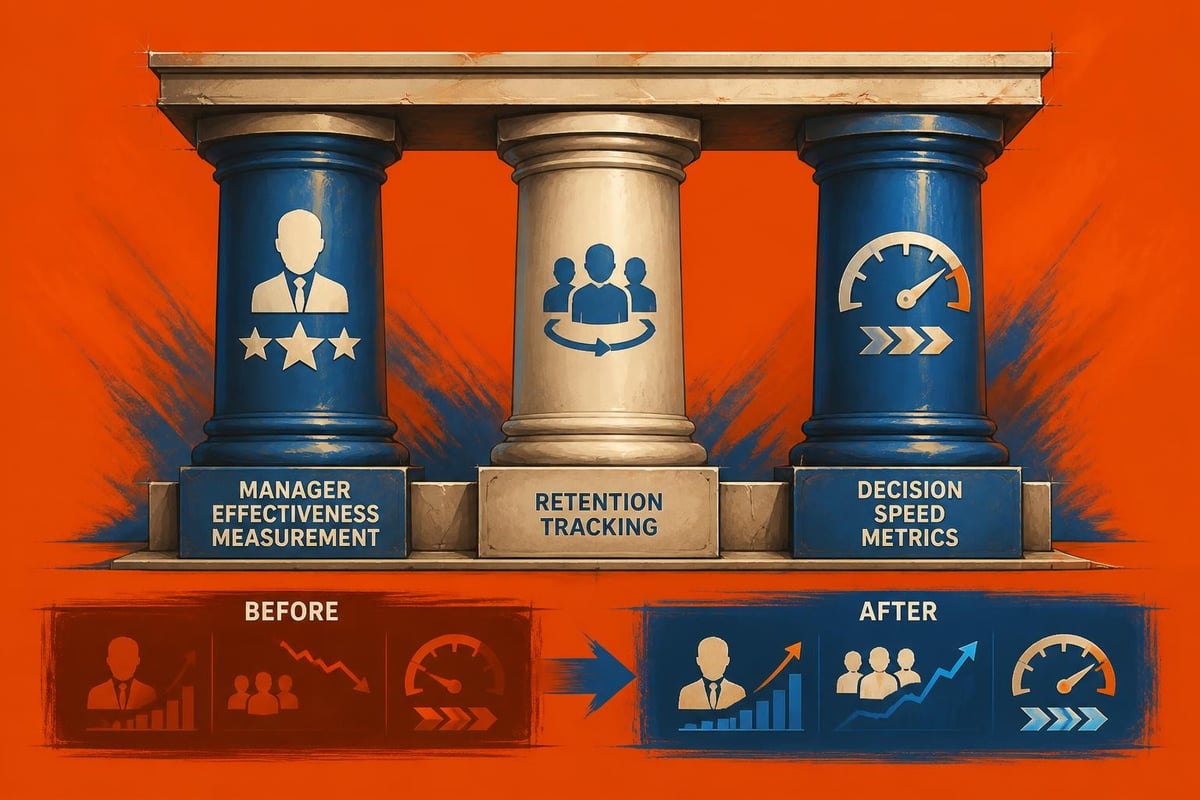
Three Metrics That Reveal Coaching Impact
- Manager effectiveness scores before and after coaching (measured via 360 assessments or team surveys)
- Retention rates among coached leaders and their direct reports
- Decision cycle time from issue identification to executed action
When you evaluate whether you should hire a coach, demand clarity on how they will track and report these numbers. Coaches who resist measurement or default to "trust the process" are red flags.
The AI Coaching Disruption: What Buyers Gain and Lose
AI coaching tools exploded in 2024 and 2025. Platforms promise 24/7 availability, infinite patience, and fraction-of-the-cost pricing. Should you hire a human coach or lean into AI?
The answer depends on what you need. AI tools for business coaching excel at:
- Role-play practice for sales calls, difficult conversations, or presentation rehearsal
- On-demand micro-coaching for specific tactical questions
- Scale coaching access across large populations without proportional cost increases
AI falls short on:
- Reading room dynamics and intervening in real team breakdowns
- Navigating organizational politics and unspoken power structures
- Building trust and accountability over time through relationship depth
- Customizing advice to messy, context-heavy situations that resist pattern matching
Most mid-market companies benefit from a hybrid model: human coaches embedded in leadership teams for high-stakes moments, AI tools for tactical skill-building and reinforcement. When you ask "should you hire a coach," consider whether your challenge requires real-time human judgment or scalable skill practice.
Contrarian Insight: Fire Fast, Hire Cautiously
The coaching industry encourages long commitments. Six-month minimums. Annual retainers. "Trust takes time."
Experience shows the opposite works better. Month-to-month terms force coaches to deliver visible value quickly. Aligned incentive options where feasible-such as tying fees to retention improvement or engagement score lifts-separate serious operators from those selling hope.
Red flags that suggest you should not hire a particular coach:
- Requires long-term contracts before demonstrating results
- Resists tying work to measurable KPIs
- Focuses conversation on their credentials rather than your outcomes
- Operates only in scheduled one-on-ones, never in your actual operating meetings
- Cannot provide case studies with specific, quantified results
The Month-to-Month Advantage
When coaches work month-to-month, they stay accountable. You stay because progress is visible, not because a contract traps you. This model also forces coaches to integrate into your operating rhythm fast, because they cannot coast on goodwill for months while "building trust."
If you should hire a coach, hire one who shares your risk.
Buyer Behavior Shifts: What Companies Actually Want in 2026
Buyer expectations shifted sharply between 2023 and 2026. The saturation of certified coaches, the rise of AI tools, and economic pressure on training budgets changed what companies demand.
What worked in 2023:
- Certifications and credentials as primary differentiators
- Multi-month onboarding and "trust-building" phases
- Theory-first approaches with delayed application
What buyers demand in 2026:
- Proven outcomes in similar industries and company sizes
- Immediate integration into existing operating cadence and meetings
- KPI-tied progress tracking with visible results within 60 days
- Flexibility through short-term agreements
Buyers no longer trust credentials alone. They want proof, speed, and alignment with how their business actually runs. Business coaches who cannot adapt to this shift lose opportunities to operators who deliver measurable impact fast.

Comparing Coaching to Alternatives: Mentoring, Consulting, Training
Should you hire a coach, or would mentoring, consulting, or training serve better?
Scoping reviews in medical education clarify the distinctions:
- Mentoring transfers experience and opens networks but relies on mentor availability and relationship chemistry
- Consulting diagnoses problems and recommends solutions but often leaves without building internal capability
- Training teaches skills in controlled settings but struggles with application transfer to real work
- Coaching builds capability through guided practice in real operating moments
| Method | Best For | Limitation |
|---|---|---|
| Mentoring | Career navigation, industry insight | Dependent on mentor time and chemistry |
| Consulting | Strategy, process redesign | Doesn't build internal capability |
| Training | Skill introduction, knowledge transfer | Low application transfer |
| Coaching | Behavior change, real-time capability building | Requires skilled coach and active engagement |
When you ask "should you hire a coach," first clarify whether you need advice (consulting), knowledge (training), connections (mentoring), or capability built through practice (coaching). Many organizations waste money hiring coaches for problems that consultants or trainers solve faster.
Nine Questions to Answer Before You Decide
FAQ
1. How do I know if coaching will actually improve performance?
Demand case studies with quantified results tied to metrics like retention, engagement scores, or decision speed. If a coach cannot provide specific numbers from past engagements, they likely do not track outcomes rigorously enough to guarantee impact.
2. What is the difference between an executive coach and a leadership coach?
Executive coaches typically work one-on-one with senior leaders on strategic thinking, influence, and organizational impact. Leadership coaches often work with managers across levels on team dynamics, communication, and operational execution. The labels overlap significantly, so focus on outcomes and experience rather than titles.
3. Should I hire a coach with an ICF credential?
ICF credentials indicate training completion, not effectiveness. Evaluate coaches based on direct experience in your industry, measurable results with similar companies, and willingness to tie progress to KPIs. Credentials alone do not predict impact.
4. How long does coaching take to show results?
When coaching integrates into real operating meetings and ties to clear KPIs, visible progress often appears within 30 to 60 days. If a coach requires six months before expecting measurable change, question whether their method truly drives behavior shifts or just builds rapport.
5. What should I expect to pay for corporate coaching?
Rates vary widely based on coach experience, engagement scope, and geography. Expect $200 to $500 per hour for individual coaching, $3,000 to $10,000 per month for team or leadership cohort work. Executive coaching packages provide cost benchmarks across different structures.
6. Can AI coaching tools replace human coaches?
AI tools excel at role-play practice, on-demand micro-coaching, and scaling access. They fall short on reading room dynamics, navigating politics, and building deep accountability. A hybrid approach-human coaches for high-stakes moments, AI for skill reinforcement-often delivers best results.
7. How do I measure ROI from coaching?
Track manager effectiveness scores, retention rates among coached leaders and their teams, and decision cycle times. Tie coaching directly to KPIs you already monitor, and require coaches to report progress against these metrics monthly.
8. What if coaching does not work?
Insist on month-to-month terms so you can exit quickly if progress stalls. Avoid long-term contracts until you have evidence of impact. Coaches confident in their methods should welcome risk-sharing arrangements and short-term commitments.
9. Should I hire one coach for the whole leadership team or individual coaches?
Team coaching addresses shared challenges like communication breakdowns, misaligned priorities, and decision-making bottlenecks. Individual coaching addresses personal leadership gaps. Start with team coaching if systemic issues exist; add individual coaching for leaders with unique development needs.
Should you hire a coach? Yes, when you find one who delivers measurable results, integrates into your operating rhythm, and shares risk through flexible terms. No, when credentials outweigh outcomes or theory replaces practice. Noomii connects mid-market companies with coaches who work live in meetings, tie progress to KPIs, and operate month-to-month so results stay visible and accountability stays real.



Leave a Reply
Want to join the discussion?Feel free to contribute!