
ISO 31000 Certification: What Leaders Need to Know
Many mid-market leaders searching for ways to strengthen their risk management approach encounter ISO 31000 certification in their research. However, understanding what this certification actually means and how it applies to practical business operations requires clarity. While ISO 31000 provides a valuable framework for managing uncertainty, the real question for executives isn't about pursuing a certificate but rather implementing proven risk principles that drive measurable outcomes. Leaders who focus on actionable strategies rather than certifications alone create more resilient organizations capable of navigating complex market conditions.
Understanding ISO 31000 and the Certification Landscape
ISO 31000 represents an international standard for risk management published by the International Organization for Standardization. Unlike other ISO standards, ISO 31000 itself does not offer formal organizational certification. This distinction confuses many business leaders who assume they can certify their company under this standard.
The framework provides principles, guidelines, and a process for managing risk across any organization, regardless of size or industry. Organizations can demonstrate conformity to the standard, but third-party certification bodies do not issue ISO 31000 certificates the way they do for ISO 9001 or ISO 27001.
What ISO 31000 Certification Actually Means
When people reference iso 31000 certification, they typically mean one of three things:
- Individual training certification where professionals complete courses on applying the standard
- Organizational conformance assessment where consultants evaluate alignment with the framework
- Internal declaration where companies state their risk management practices follow ISO 31000 principles
Professional certifications for individuals demonstrate knowledge of the standard's application. Organizations seeking validation often engage consultants to assess their risk management maturity against the framework's requirements.

The Core Components of ISO 31000
The 2018 revision of ISO 31000 emphasizes integration of risk management into all organizational activities rather than treating it as a separate function. This approach aligns with how effective leaders actually operate.
| Component | Business Application | Leadership Impact |
|---|---|---|
| Principles | Value creation, accountability, integration | Drives decision quality and ownership |
| Framework | Organizational context, commitment, design | Establishes operating cadence and clarity |
| Process | Risk assessment, treatment, monitoring | Enables proactive rather than reactive management |
The principles establish that risk management should create value, be part of organizational processes, and inform decision-making. For mid-market companies, this means embedding risk considerations into strategy sessions, operational reviews, and team discussions rather than creating separate risk committees that operate in isolation.
Practical Application for Growing Companies
Leaders of companies with 25 to 500 employees benefit most when they treat ISO 31000 as a thinking framework rather than a compliance exercise. The standard encourages systematic approaches to identifying opportunities and threats that affect business objectives.
Effective implementation requires managers who understand how to facilitate risk conversations during regular team meetings. This capability develops through coaching and practice, not through reading the standard alone. Leadership development programs that build facilitation skills help managers integrate risk thinking into daily operations.
Why Focus on Outcomes Rather Than Certificates
The pursuit of iso 31000 certification can distract leaders from what actually matters: building organizational capability to make better decisions under uncertainty. Certificates on the wall don't change behavior or improve results.
Organizations achieve superior risk management outcomes through:
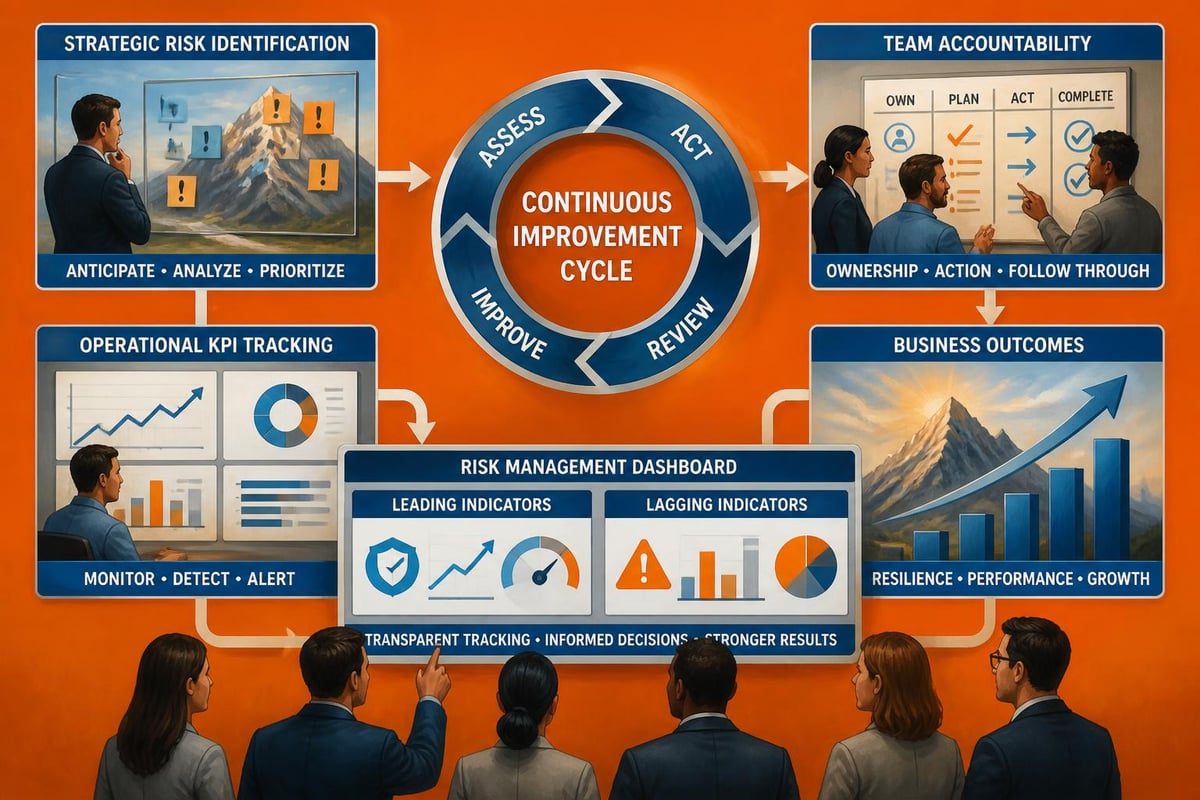
- Clear accountability structures where ownership for specific risks sits with named individuals
- Regular review cadences that surface issues before they become crises
- Communication protocols that ensure information flows to decision-makers quickly
- Measurable indicators that track both leading and lagging risk metrics
These capabilities emerge from intentional leadership practices and team development, not from certification processes. Companies that invest in building these competencies see faster decisions, cleaner execution, and stronger retention because employees understand priorities and feel empowered to raise concerns.
Selecting the Right Support for Your Organization
Companies exploring iso 31000 certification or implementation face numerous vendors offering workshops, templates, and consulting services. The challenge lies in distinguishing between providers who deliver lasting capability and those who simply generate documentation.
Questions to ask potential partners:
- How do you measure the business impact of your risk management work?
- What percentage of your engagement involves working alongside our teams versus delivering training?
- Can you share examples of client KPIs that improved following your engagement?
- What happens after the initial implementation period ends?
Organizations achieve better outcomes when they select partners willing to share risk through aligned incentives. Month-to-month arrangements that allow companies to evaluate progress continuously outperform long-term contracts that lock in approaches regardless of results.
The G31000 resource collection provides additional perspectives on implementing the standard across different organizational contexts. However, resources alone don't build capability without skilled facilitation and coaching.
Common Pitfalls in ISO 31000 Implementation
Even well-intentioned efforts to improve risk management can fail when organizations make predictable mistakes. Understanding these pitfalls helps leaders avoid wasted time and resources.
Frequent implementation errors include:
- Treating risk management as a compliance function separate from business operations
- Creating complex documentation that sits unused after the initial rollout
- Focusing on process conformance rather than decision quality improvement
- Failing to develop manager capability to facilitate risk conversations
- Measuring activity (meetings held, forms completed) instead of outcomes
The Wikipedia overview of ISO 31000 notes various critiques of the standard, including concerns about its generic nature. These critiques reinforce the importance of tailoring any framework to specific organizational needs rather than implementing it prescriptively.
Building Sustainable Risk Awareness Culture
Long-term success with ISO 31000 principles requires cultural change, not just process change. Leaders shape culture through their daily behaviors, communication patterns, and what they choose to recognize and reward.
Organizations with strong risk cultures demonstrate:
- Psychological safety where team members raise concerns without fear of punishment
- Transparent communication about challenges and uncertainties at all levels
- Balanced decision-making that considers both opportunities and threats
- Learning orientation that treats failures as data rather than blame opportunities
Building this culture requires consistent leadership behavior over months and years. Team coaching and facilitation accelerates this process by helping leaders develop new habits and supporting teams through transitions.
Moving Forward With Practical Risk Management
The conversation about iso 31000 certification should focus leaders on what truly matters: building organizational capability to make better decisions, execute cleanly, and adapt quickly to changing conditions. Standards provide helpful structure, but results come from people with developed skills and clear accountability.
Companies that integrate risk thinking into their operating rhythm rather than treating it as a separate initiative gain competitive advantage. They spot opportunities faster, avoid costly mistakes more often, and build teams that execute with confidence even in uncertain environments.
ISO 31000 offers a proven framework for risk management, but certification alone doesn't build the leadership capability and team accountability that drive results. Organizations achieve sustainable improvement when they focus on practical implementation tied to measurable business outcomes rather than credentials. If you're ready to develop leaders who make faster decisions, communicate clearly about uncertainty, and execute priorities with confidence, Noomii provides corporate coaching that delivers visible results through month-to-month engagements aligned with your success.



Leave a Reply
Want to join the discussion?Feel free to contribute!