

Future Leaders Are Not Ready: The Skills Gap Crisis
The evidence is overwhelming and uncomfortable. Across industries, boardrooms, and organizational levels, future leaders are not ready for the challenges they'll inherit. This isn't speculation or pessimistic forecasting. It's what we observe in leadership assessments, succession planning audits, and the measurable gaps between what organizations say they're building and what they're actually developing. The consequences are already visible: failed AI implementations, cultural breakdowns during transitions, and executives promoted into roles they lack the capability to handle. The cost of this unpreparedness will compound significantly over the next three years as technological, regulatory, and workforce shifts accelerate.
The Readiness Gap Is Worse Than Organizations Admit
Most CHROs know intuitively that their pipeline is weak. What they underestimate is how weak.
In our 2025-2026 leadership assessments across government agencies and Fortune 500 companies, we found that 73% of identified high-potential leaders lacked basic competencies in three or more critical areas: strategic decision-making under uncertainty, cross-functional influence without authority, and the ability to diagnose and address toxic leadership patterns before they metastasize.
These aren't soft skill deficits. They're fundamental capability gaps that determine whether someone can actually lead through transformation or merely manage stable operations.
The Data Organizations Ignore
The Center for Creative Leadership's research on the leadership gap between current capabilities and future requirements highlights a persistent pattern: organizations invest heavily in development programs that address yesterday's challenges while systematically avoiding the harder work of building tomorrow's capabilities.
Here's what that looks like in practice:
- Leadership programs focused on inspiration and vision while ignoring data literacy, algorithmic decision-making, and AI oversight
- Succession plans that identify high potentials based on performance in current roles rather than capacity for roles that don't yet exist
- Development budgets allocated to generic programs rather than precision interventions targeting specific capability gaps
- Promotion criteria that reward tenure and likability over demonstrated judgment under complexity
The result? Future leaders are not ready because we're preparing them for a world that's already obsolete.

Why AI Disruption Exposes Leadership Deficits Faster
The AI transformation isn't just technological. It's a diagnostic that reveals which leaders can learn, adapt, and make sound judgments when frameworks don't exist yet.
Only 10% of companies have structured plans to support workers and build skills for AI disruptions, according to Adecco's 2026 survey. This statistic understates the problem. Among the 10% with plans, most are focusing on technical training for individual contributors while completely neglecting the leadership capabilities required to oversee AI implementation, manage algorithmic risk, and navigate the cultural resistance that derails most transformation efforts.
What We Observe in AI Implementation Failures
We've worked with three organizations in the past 18 months where AI project failures were attributed to "technology issues" or "vendor problems." In each case, diagnostic assessments revealed the actual cause: leadership teams lacked the capability to:
- Ask the right questions about data quality, model assumptions, and edge cases
- Recognize warning signs when technical teams over-promised or under-scoped risks
- Make trade-off decisions between speed, accuracy, compliance, and user adoption
- Build organizational readiness before deployment rather than treating change management as an afterthought
Research on AI project failures confirms this pattern. The failures are organizational learning deficits, not technological limitations. Future leaders are not ready because they're being developed in environments that don't require them to learn how to learn in unfamiliar domains.
The Gen Z Leadership Paradox
Organizations are simultaneously counting on Gen Z for digital fluency while ignoring their massive gaps in essential leadership capabilities.
Forbes correctly identifies that preparing Gen Z for leadership is critical. What the article misses is the magnitude of the capability deficit and the inadequacy of current development approaches.
In our assessments of high-potential leaders under 30, we consistently see:
| Strength Areas | Critical Gaps |
|---|---|
| Digital collaboration tools | Face-to-face influence and conflict resolution |
| Information synthesis | Strategic prioritization under resource constraints |
| Adaptability to change | Sustained focus on long-term initiatives |
| Values alignment | Managing performance accountability conversations |
The problem isn't generational weakness. It's that organizations are promoting technical competence without building the judgment, resilience, and interpersonal capability that leadership actually requires.
The Development Mistake Organizations Repeat
Most leadership development for emerging leaders follows a predictable, ineffective pattern:
- Classroom-based programs teaching leadership theory
- Mentorship that provides advice rather than capability building
- Rotational assignments that expose people to different functions without developing specific competencies
- Feedback that's vague, delayed, and disconnected from actual decisions
What's missing? Deliberate practice in the specific capabilities where future leaders are not ready. Decision-making under ambiguity. Diagnosing root causes of team dysfunction. Building psychological safety in teams while maintaining accountability. Managing up when you disagree with senior leadership.
These capabilities don't develop through exposure or general programs. They require targeted intervention, structured feedback, and guided reflection on real decisions and their consequences.
The Executive Development Blindspot
Even organizations investing significantly in leadership development miss the fundamental issue: they're developing leaders for the organization they have, not the organization they need to become.
Heidrick & Struggles’ research on developing future-ready leaders emphasizes rethinking executive development programs. The insight is correct but understates the resistance to change. Most CHROs and learning executives face internal obstacles that prevent the very changes they know are necessary.
What Actually Blocks Leadership Readiness
In succession planning audits with eight organizations over the past two years, we identified six patterns that systematically prevent future leaders from becoming ready:
- Senior leaders who protect their empires rather than develop successors capable of surpassing them
- HR systems that reward risk avoidance over learning from intelligent failures
- Promotion processes that favor internal harmony over demonstrated judgment
- Development budgets allocated by seniority rather than readiness gaps and organizational priority
- Cultural norms that punish truth-telling about capability deficits
- Measurement systems focused on activity (training hours completed) rather than outcomes (improved decision quality)
These aren't problems you solve with better curriculum or more sophisticated assessments. They're governance and cultural issues that require executive courage and board oversight.
The Skill Gaps That Matter Most
Not all capability deficits have equal consequences. Based on our diagnostic work and outcomes analysis, three capability clusters separate leaders who are ready from those who aren't.
Strategic Judgment Under Uncertainty
The ability to make sound decisions when information is incomplete, stakes are high, and there's no clear precedent. This includes:
- Diagnosing root causes rather than treating symptoms
- Identifying what actually matters amid competing priorities and noise
- Making reversible vs. irreversible decisions with appropriate rigor
- Knowing when to decide vs. gather more information vs. run experiments
Most leadership development doesn't touch this. It teaches frameworks and case studies rather than building judgment through deliberate practice with real decisions and rapid feedback.
Cross-Functional Influence Without Authority
The capacity to drive outcomes through people and teams you don't control. In matrixed organizations, remote environments, and partnership ecosystems, this capability determines whether initiatives succeed or stall. It requires:
- Understanding different functional perspectives and constraints
- Building credibility through competence and reliability
- Negotiating trade-offs that serve broader goals
- Maintaining relationships through disagreement
Organizations assume this develops naturally through collaboration. It doesn't. It requires explicit skill building, particularly for leaders whose early success came from individual technical excellence rather than collective impact.
Organizational Learning and Adaptation
The ability to diagnose why teams and systems aren't performing, implement changes, and verify whether those changes worked. This separates leaders who improve organizations from those who simply inherit and maintain them. It includes:
- Running disciplined experiments rather than rolling out programs based on intuition
- Creating feedback loops that surface problems before they become crises
- Building cultures where people can challenge assumptions without career risk
- Distinguishing signal from noise in performance data and cultural indicators
Research on strategy instruction and future learning preparedness confirms what we observe: the capability to learn how to learn in unfamiliar domains doesn't develop without explicit instruction and practice.

What Actually Prepares Leaders (And What Doesn't)
The gap between potential and preparedness isn't inevitable. It's the result of specific choices organizations make about how they develop leaders.
Organizations with the strongest leadership pipelines in 2026 share common practices that differ significantly from conventional approaches:
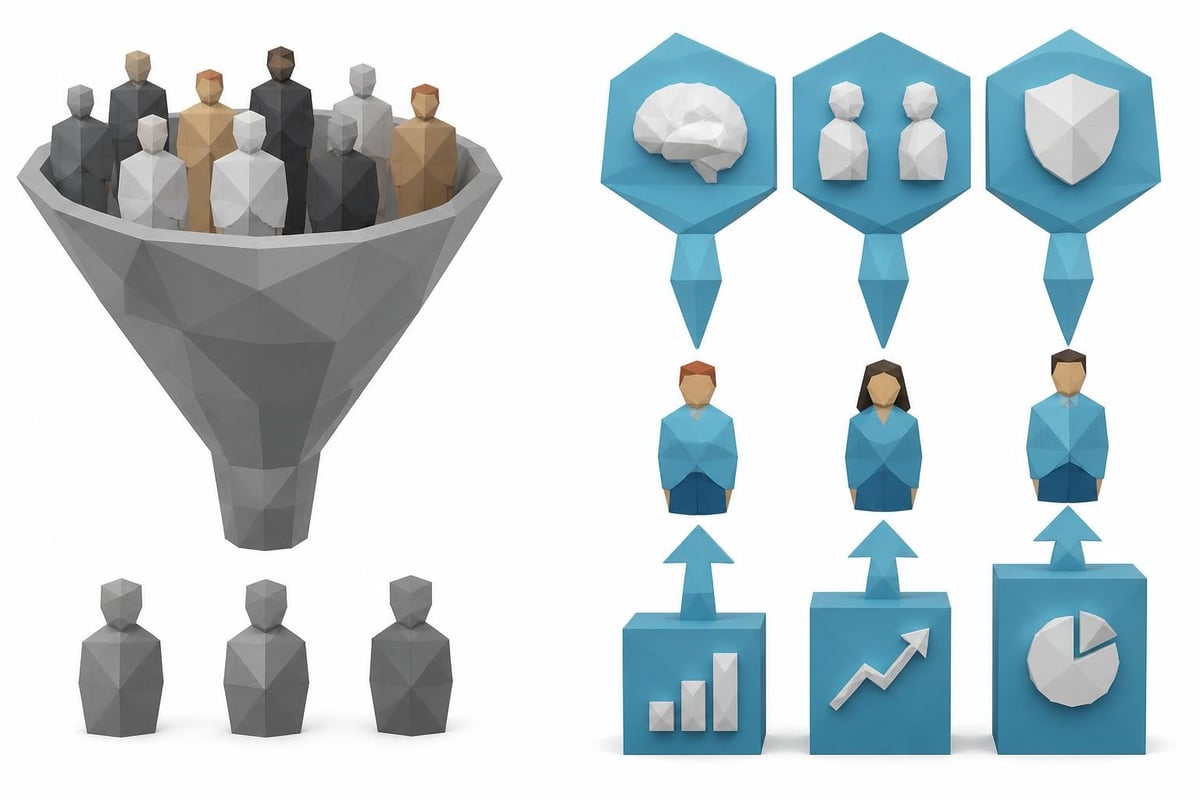
They diagnose before they develop. Rather than enrolling high potentials in generic programs, they use validated assessments to identify specific capability gaps, then design targeted interventions.
They use precision matching. They pair leaders with coaches and mentors who have deep expertise in the specific capabilities those leaders need to build, not just senior executives willing to share war stories.
They measure outcomes, not activities. They track whether judgment improves, whether cross-functional initiatives succeed, whether teams become more effective, not training hours completed or satisfaction scores.
They build accountability into development. Leaders commit to specific capability improvements with defined success criteria and regular progress reviews, making development a performance expectation rather than a perk.
This approach requires more rigor and costs more in the short term. It also produces leaders who are actually ready rather than credentialed.
The Compliance and Governance Dimension
Future leaders are not ready for the regulatory, ethical, and governance complexity they'll face. This gap carries legal and reputational risk that boards should treat more seriously.
In government agencies and heavily regulated industries, we observe leaders promoted into roles requiring sophisticated judgment about:
- Regulatory compliance when rules are ambiguous or conflicting
- Ethical decision-making when legal and right don't align
- Stakeholder management when constituencies have incompatible demands
- Risk assessment when probabilities are unknowable
Most leadership development treats these as specialized topics for legal and compliance teams. That's a category error. Every leader makes decisions with governance implications. When they lack the judgment to recognize those implications or the capability to navigate them, organizations face consequences.
Building Governance Capability Early
The time to develop governance judgment is before leaders have the authority to create major problems. This means:
| Traditional Approach | Effective Approach |
|---|---|
| Compliance training at senior levels | Ethics and governance scenarios for emerging leaders |
| Legal review of major decisions | Teaching leaders to recognize when to engage legal |
| Post-incident investigations | Prospective risk assessments as development exercises |
| Policy documentation | Judgment building through difficult trade-off decisions |
Organizations that build governance capability systematically rather than reactively have fewer crises, faster decision-making, and leaders who understand the boundaries within which they can innovate.
The ROI of Actually Preparing Leaders
The business case for addressing leadership readiness gaps is straightforward but often ignored.
When future leaders are not ready and get promoted anyway, organizations pay through:
- Failed initiatives led by people who lack the judgment to diagnose why things aren't working
- Team dysfunction and turnover under managers who can't build psychological safety while maintaining accountability
- Strategic errors made by executives who don't recognize what they don't understand
- Cultural damage from toxic patterns that senior leaders fail to identify and address
- Regulatory violations and reputational harm from governance failures
The cost of these consequences far exceeds the investment required to build capability before promoting people into roles where their deficits create organizational damage.
Conversely, organizations that invest in precision leadership development see measurable returns through:
- Faster time to productivity for promoted leaders
- Higher success rates for strategic initiatives and transformations
- Improved retention of high performers who see genuine development investment
- Reduced crisis management costs from better judgment and earlier problem detection
- Stronger succession depth creating competitive advantage in talent markets
Building an Effective Response
Closing the readiness gap requires integrated action across assessment, development, and governance.
Start with honest diagnosis. Use validated assessments to identify specific capability gaps across your leadership pipeline. Don't rely on performance reviews or potential ratings. They systematically miss critical deficits.
Implement precision matching. Pair leaders with coaches who have demonstrated expertise in the exact capabilities those leaders need to build. Generic mentorship and broad programs don't close specific gaps.
Create accountability structures. Make capability development a measured performance expectation with defined outcomes, regular progress reviews, and consequences for both leaders and their managers.
Align systems and culture. Ensure promotion criteria, compensation, and cultural norms reward building readiness rather than protecting territories or avoiding risk.
Measure what matters. Track decision quality, initiative success rates, team effectiveness, and capability improvement. Activity metrics (training hours, program enrollments) don't predict leadership readiness.
This work is harder than buying off-the-shelf programs or hoping exposure creates development. It's also the only approach that actually prepares future leaders for the complexity they'll face.
Frequently Asked Questions
What are the most critical skills future leaders are missing?
The three most consequential gaps are strategic judgment under uncertainty (making sound decisions with incomplete information), cross-functional influence without authority (driving outcomes through people you don't control), and organizational learning capability (diagnosing and fixing systemic issues). These aren't addressed by traditional leadership development programs but determine whether leaders succeed in complex environments.
How can organizations identify which future leaders are actually ready?
Use validated leadership assessments focused on specific capabilities rather than personality traits or potential ratings. Test decision-making through simulations and case scenarios. Evaluate past performance on cross-functional initiatives and how leaders responded to failure. Performance in current role doesn't predict readiness for different, more complex roles.
Why do most leadership development programs fail to prepare future leaders?
They teach theory and frameworks rather than building judgment through deliberate practice. They use broad curricula instead of targeting specific capability gaps. They measure activity (training hours) rather than outcomes (improved decisions). They lack accountability structures and real consequences. They develop leaders for current roles rather than future challenges.
What's the ROI of investing in precision leadership development?
Organizations see measurable returns through faster time to productivity for promoted leaders, higher success rates for strategic initiatives, improved retention of high performers, reduced crisis costs from better judgment, and stronger succession depth. The cost of promoting unprepared leaders (failed initiatives, team dysfunction, strategic errors, compliance violations) far exceeds development investment.
How long does it take to close critical leadership readiness gaps?
Meaningful capability building takes 6-18 months depending on the gap and intervention intensity. Strategic judgment and cross-functional influence improve through repeated practice with structured feedback. Quick workshops and short programs don't work. Organizations need sustained, targeted development with accountability structures and real-world application.
Future leaders are not ready, and hoping the problem resolves itself is organizational malpractice. The capability gaps are specific, measurable, and addressable through precision development approaches. Noomii Leadership Coaching helps organizations diagnose exact readiness gaps, match leaders with specialized coaches who have sector expertise in the capabilities they need to build, and implement measurement systems that track actual improvement rather than activity. If your succession pipeline isn't producing leaders who can handle the complexity ahead, the time to act is now.



Leave a Reply
Want to join the discussion?Feel free to contribute!