

Experience Beats ICF Certification: What Buyers Miss
The coaching industry has created a credential obsession that obscures the truth: most corporate buyers select coaches based on letters after names rather than documented outcomes. This pattern persists despite mounting evidence that experience beats ICF certification when measuring actual business impact. Between 2022 and 2026, hundreds of certified coaches entered the market with identical training modules but vastly different abilities to drive revenue, retention, and leadership accountability.
The Credential Gap Between Training and Performance
ICF certification establishes baseline competencies through standardized training hours and examinations. The three levels (ACC, PCC, MCC) require 60, 125, and 200 training hours respectively, plus mentored practice sessions.
What these requirements measure:
- Completion of prescribed curriculum
- Understanding of coaching ethics
- Ability to pass assessments
- Adherence to core competencies
What they don't measure:
- Business acumen in corporate environments
- Pattern recognition across industries
- Skill adapting frameworks to unique challenges
- Capacity to tie coaching to financial metrics
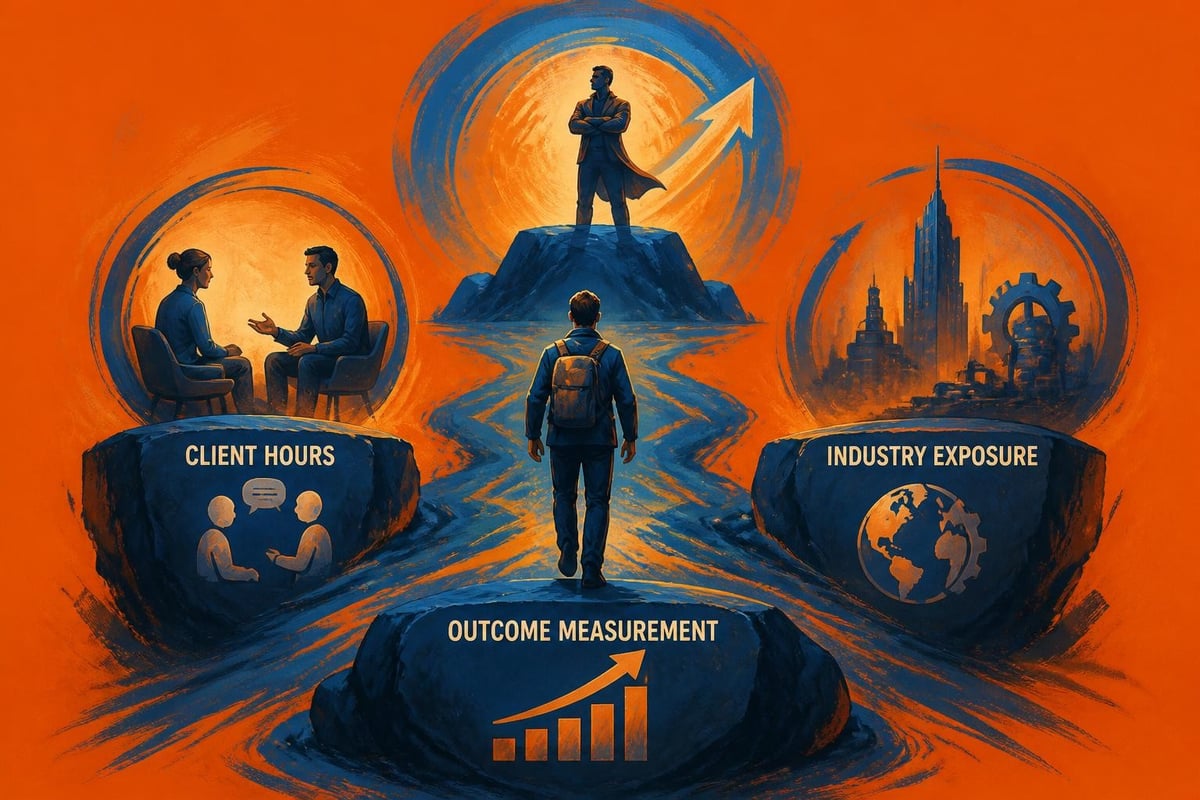
A 2024 study found that coaching impact varies significantly with proficiency level, but proficiency correlates more strongly with hours in real engagements than certification tier. The coach with 500 client hours across diverse scenarios outperforms the newly minted MCC in measurable outcomes nearly every time.
The Corporate Buyer's Blind Spot
Mid-market companies hiring executive coaches typically request ICF credentials in job specs without understanding what those credentials guarantee. Human resources teams treat certification as a risk mitigation checkbox, assuming it predicts coaching quality.
This assumption creates three problems:
-
Selection criteria ignore track record. Buyers request certification levels but rarely ask for documented outcome data, client retention rates, or measurable KPI improvements tied to coaching interventions.
-
Price signals mislead. Certified coaches often command premium rates based on credentials alone, while experienced practitioners without formal certification may deliver superior value at competitive pricing.
-
Theoretical knowledge doesn't transfer to execution. Understanding ICF certification levels helps buyers recognize credential tiers, but doesn't predict a coach's ability to facilitate difficult conversations, diagnose organizational dysfunction, or build accountability systems that stick.
When Experience Beats ICF Certification: Five Scenarios
| Scenario | Certified Coach Risk | Experienced Coach Advantage |
|---|---|---|
| Rapid turnaround needed | May lack pattern recognition for quick diagnosis | Identifies root causes faster through prior exposure |
| Executive resistance | Follows methodology but struggles with politics | Navigates power dynamics from experience |
| Multi-stakeholder alignment | Uses textbook facilitation | Adapts approach based on organizational culture |
| Metric accountability | May resist tying coaching to KPIs | Builds scorecards naturally into engagements |
| Industry-specific challenges | Generic frameworks don't translate | Domain expertise accelerates relevance |
The difference becomes stark in high-stakes engagements. A manufacturing VP facing retention issues in plant leadership needs a coach who understands operations, not just emotional intelligence frameworks. The certified coach asks reflective questions; the experienced coach recognizes the pattern from twelve similar clients and diagnoses structural issues in manager training and career pathing within two sessions.
The ICF Guarantee Myth
ICF certification does not guarantee coaching success because success requires capabilities beyond curriculum: business judgment, industry knowledge, interpersonal agility, and outcome discipline. These develop through client work, not coursework.
Consider psychological safety work in teams. Google's Project Aristotle research demonstrates its importance, but building psychological safety at work requires reading team dynamics, navigating personality conflicts, and facilitating tough conversations with credibility. A coach earns this credibility through demonstrated competence in prior engagements, not certification status.
Experience advantages in psychological safety work:
- Recognition of subtle team dysfunction patterns
- Ability to challenge leaders without triggering defensiveness
- Practical frameworks adapted to team maturity levels
- Track record clients can reference

The ROI Calculation Buyers Miss
When evaluating whether ICF certification is worth it, corporate buyers should compare certification investment against outcome data. A coach who increased manager retention by 23% across eight clients provides measurable value. A newly certified coach offers potential but no proof.
Asking Better Questions During Coach Selection
Replace credential-focused screening with outcome inquiry:
-
"What measurable results have you delivered in similar organizations?" Request specific metrics: retention rates, promotion velocity, revenue impact, employee engagement scores.
-
"How do you tie coaching to business KPIs?" Strong coaches build accountability frameworks naturally. Weak ones resist measurement as "not coaching."
-
"What's your client retention rate and why do they stay?" Multi-year client relationships signal value delivery better than any certification.
-
"Describe a coaching failure and what you learned." Experienced coaches own failures and adapt. Less experienced coaches deflect or lack reference points.
-
"How do you coach in real business contexts versus isolated sessions?" Practical coaches attend leadership meetings, observe team interactions, and coach in workflow. Theoretical coaches stay on the sidelines.
The Certification-First Culture and Its Costs
The coaching industry's emphasis on credentials creates artificial barriers. Exceptional business leaders who transition into coaching often lack ICF credentials but bring decades of operational expertise. Marketing professionals who become business coaches may understand growth strategy better than certified coaches who never built a revenue model.
Coaching certifications in 2026 serve as useful baseline indicators but poor predictors of impact. The corporate buyer who selects exclusively on certification misses coaches with superior business judgment, industry pattern recognition, and proven KPI accountability.
Evidence that experience beats ICF certification:
- Client outcome data shows wider variation within certification tiers than between them
- Manager coaching skill develops faster through facilitated practice than classroom hours
- Business acumen remains the strongest predictor of executive coaching value
- Multi-engagement track records outpredict single certification as success indicator
Building Accountability Through Coaching Structure
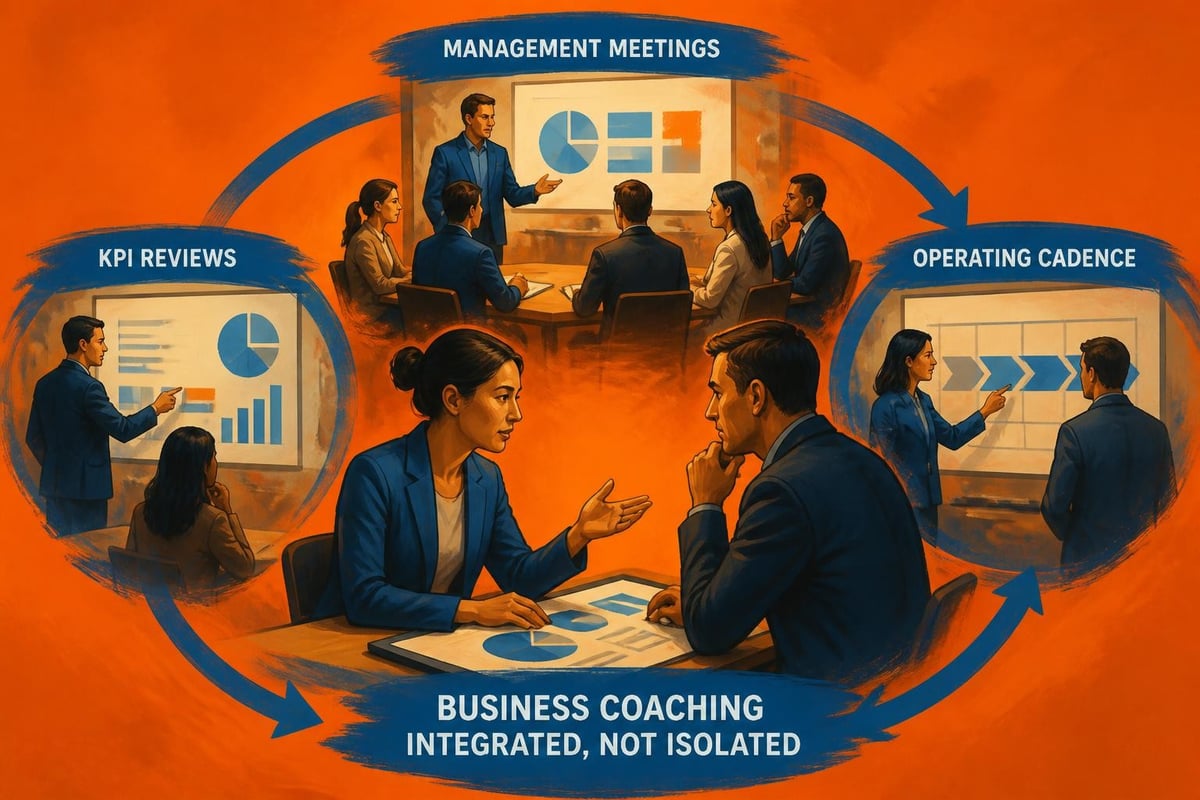
Effective corporate coaching integrates into operating rhythms, not isolated development sessions. This requires understanding how much business coaching costs relative to delivered outcomes, but more importantly, how coaching embeds in management cadence.
Month-to-month engagements with clear KPIs create natural accountability. Long contracts based on certification prestige create dependency without performance pressure. Experienced coaches welcome outcome measurement; it proves their value and differentiates them from credential collectors.
FAQ
What does ICF certification actually measure?
ICF certification measures completion of training hours, understanding of coaching ethics, adherence to core competencies, and passage of assessments. It does not measure business acumen, industry expertise, outcome delivery, or ability to drive measurable organizational results.
Why do corporate buyers prioritize ICF credentials over experience?
HR teams often use ICF certification as a risk mitigation checkbox, assuming credentials predict quality. This creates a selection bias toward certified coaches even when experienced practitioners without formal certification deliver superior measurable outcomes.
How can I evaluate a coach's real-world experience?
Request specific outcome data from prior engagements: retention improvements, revenue impact, promotion velocity, or engagement score changes. Ask for client references who can speak to measurable results, multi-year relationships, and business impact beyond personal development.
Does ICF certification guarantee coaching success?
No. Certification establishes baseline competency but doesn't predict business judgment, industry knowledge, interpersonal agility, or outcome discipline. These capabilities develop through client work and diverse engagement exposure, not standardized curriculum.
What advantages does an experienced coach have over a newly certified one?
Experienced coaches bring pattern recognition from prior engagements, industry-specific knowledge, ability to diagnose organizational issues quickly, skill navigating politics and resistance, and proven frameworks adapted to unique contexts rather than textbook applications.
Should companies ever require ICF certification?
Certification can serve as a useful baseline when evaluating coaches with limited track records. However, for coaches with documented outcomes across multiple clients, certification becomes less relevant than measurable business impact and industry expertise.
How do practical coaches differ from theoretical ones in corporate settings?
Practical coaches attend leadership meetings, observe team dynamics, coach in workflow context, tie interventions to KPIs, and build accountability frameworks naturally. Theoretical coaches conduct isolated sessions using standardized frameworks without adapting to business realities.
What questions reveal whether a coach can deliver business results?
Ask how they tie coaching to business metrics, request specific outcome examples with numbers, inquire about client retention rates and reasons, explore coaching failures and lessons learned, and understand how they integrate coaching into operating rhythms versus isolated development.
Why does the coaching industry emphasize credentials over outcomes?
Credentials create artificial differentiation in an unregulated industry and provide perceived risk mitigation for buyers. However, this emphasis obscures the reality that coaching value derives from business impact, not letters after names, creating a credential inflation cycle that doesn't correlate with improved client results.
Corporate coaching delivers value when tied to measurable business outcomes, not credential prestige. Experience beats ICF certification in scenarios requiring rapid diagnosis, executive navigation, industry expertise, and KPI accountability. Noomii Corporate Coaching brings practical experience to mid-market companies and Fortune 500 divisions, coaching live in your meetings with month-to-month terms and clear ROI measurement. If you need leadership development that drives faster decisions, stronger retention, and cleaner execution across priorities, choose coaches who prove results over credentials.


Leave a Reply
Want to join the discussion?Feel free to contribute!