

Executive Leadership Transition Coaching in Melbourne 2026
Leadership transitions represent one of the most vulnerable moments in any organization's lifecycle. When executives move into new roles, shift strategic directions, or navigate organizational restructuring, the stakes couldn't be higher. Executive leadership transition coaching in melbourne has emerged as a critical intervention that determines whether these pivotal moments become catalysts for growth or sources of disruption. Melbourne's competitive corporate landscape demands more than generic coaching approaches-it requires precision-matched expertise that aligns with organizational compliance standards, measurable outcomes, and the unique challenges facing Australian businesses.
The Critical Role of Transition Coaching in Modern Organizations
Executive transitions fail at alarming rates. Research consistently shows that 40-50% of executives struggle during their first 18 months in a new role, often because they lack targeted support during critical adjustment periods. This failure rate creates substantial financial consequences, with recruiting costs, lost productivity, and cultural disruption reaching well into six figures per failed transition.
Executive leadership transition coaching in melbourne addresses this challenge through structured interventions that begin before day one and extend through the critical first year. Unlike traditional coaching that focuses on generic leadership development, transition coaching zeroes in on the specific challenges executives face when navigating role changes, organizational politics, stakeholder relationships, and strategic realignment.
Why Melbourne Organizations Need Specialized Transition Support
Melbourne's business ecosystem presents unique challenges that generic coaching programs cannot address. The city's diverse corporate landscape spans financial services, healthcare, government agencies, technology firms, and multinational corporations-each with distinct cultural expectations and leadership requirements.
Organizations in Melbourne increasingly recognize that coaching leaders through transitions requires more than periodic check-ins. It demands comprehensive support systems that address technical competencies, emotional intelligence, stakeholder management, and strategic thinking simultaneously.
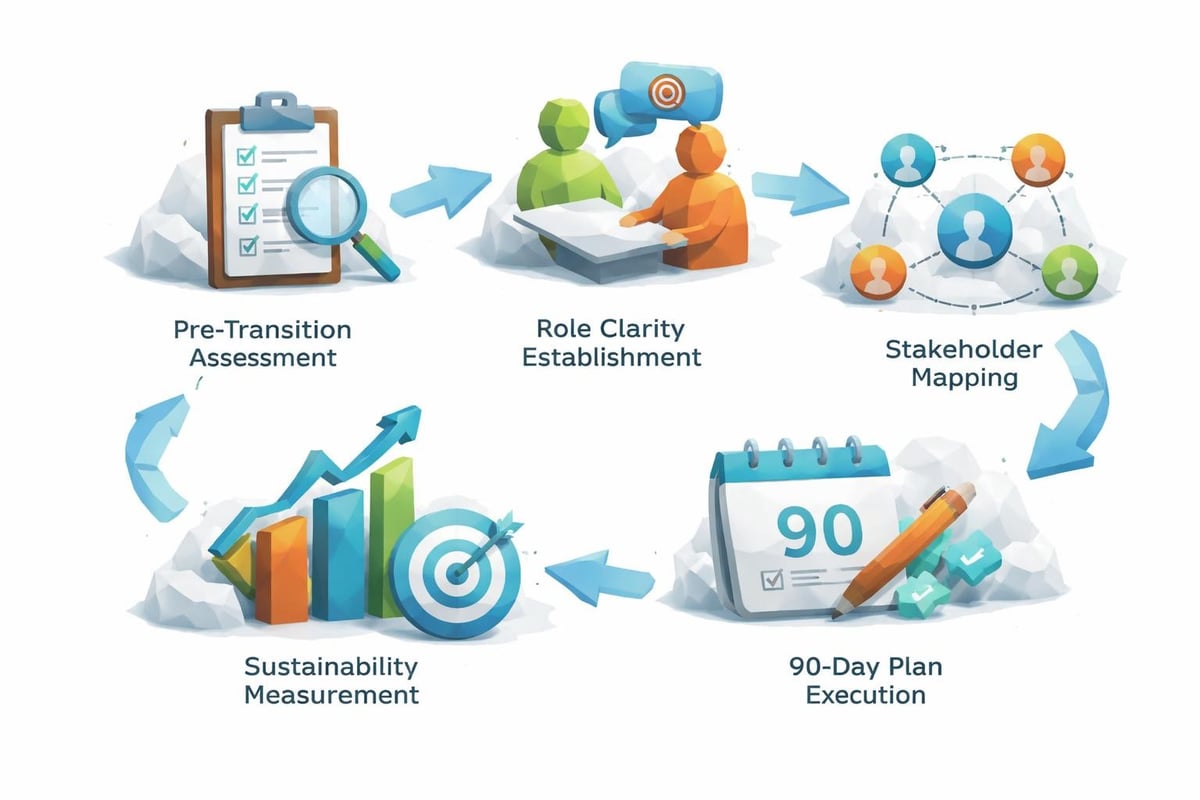
Evidence-Based Diagnostics That Drive Results
The foundation of effective executive leadership transition coaching in melbourne begins with rigorous assessment. Organizations that skip this diagnostic phase often waste resources on coaching that addresses symptoms rather than root causes.
Comprehensive leadership assessments reveal:
- Behavioral patterns that may create friction in new environments
- Communication styles that require adjustment for different stakeholder groups
- Decision-making tendencies that need refinement for strategic roles
- Emotional triggers that could undermine executive effectiveness
- Team dynamics that require immediate attention
These diagnostics go beyond surface-level personality assessments. They incorporate 360-degree feedback, validated psychometric instruments, leadership competency frameworks, and organizational culture analyses. The data generated becomes the roadmap for targeted intervention strategies.
| Assessment Type | Purpose | Timeline | Outcome |
|---|---|---|---|
| Behavioral Profile | Identify strengths and blind spots | Week 1-2 | Personalized development focus areas |
| 360-Degree Feedback | Gather stakeholder perspectives | Week 2-3 | Relationship and perception insights |
| Cultural Alignment Analysis | Assess organizational fit | Week 3-4 | Integration strategy recommendations |
| Leadership Competency Mapping | Measure against role requirements | Week 1-4 | Skill gap identification and prioritization |
Organizations leveraging leadership coaching services with evidence-based diagnostics report 73% higher satisfaction rates with executive transitions compared to those using informal assessment methods.
Precision Matching: The Competitive Advantage
Not all executive coaches possess the expertise required for successful transition coaching. A finance executive moving into a CEO role faces fundamentally different challenges than a technology leader transitioning to a government agency position. Executive leadership transition coaching in melbourne succeeds when organizations match leaders with coaches who have relevant sector experience, cultural competency, and specialized transition expertise.
The matching process should consider multiple factors:
- Industry knowledge and network connections that provide context-specific insights
- Transition type expertise (promotion, external hire, restructuring, succession)
- Cultural fluency in the organization's operational environment
- Track record with similar transition challenges
- Coaching methodology alignment with learning preferences
Sophisticated matching algorithms analyze these variables alongside personality compatibility, communication styles, and availability to create optimal pairings. This precision approach eliminates the trial-and-error process that wastes valuable transition time.
For organizations managing toxic leadership patterns during transitions, specialized coach matching becomes even more critical. Coaches must possess specific expertise in behavior modification, conflict resolution, and cultural transformation to address these complex situations effectively.
Targeted Intervention Plans That Address Real Challenges
Generic coaching programs fail during executive transitions because they don't address the specific pressures executives face. Effective executive leadership transition coaching in melbourne develops customized intervention plans that respond to actual organizational challenges rather than theoretical leadership concepts.
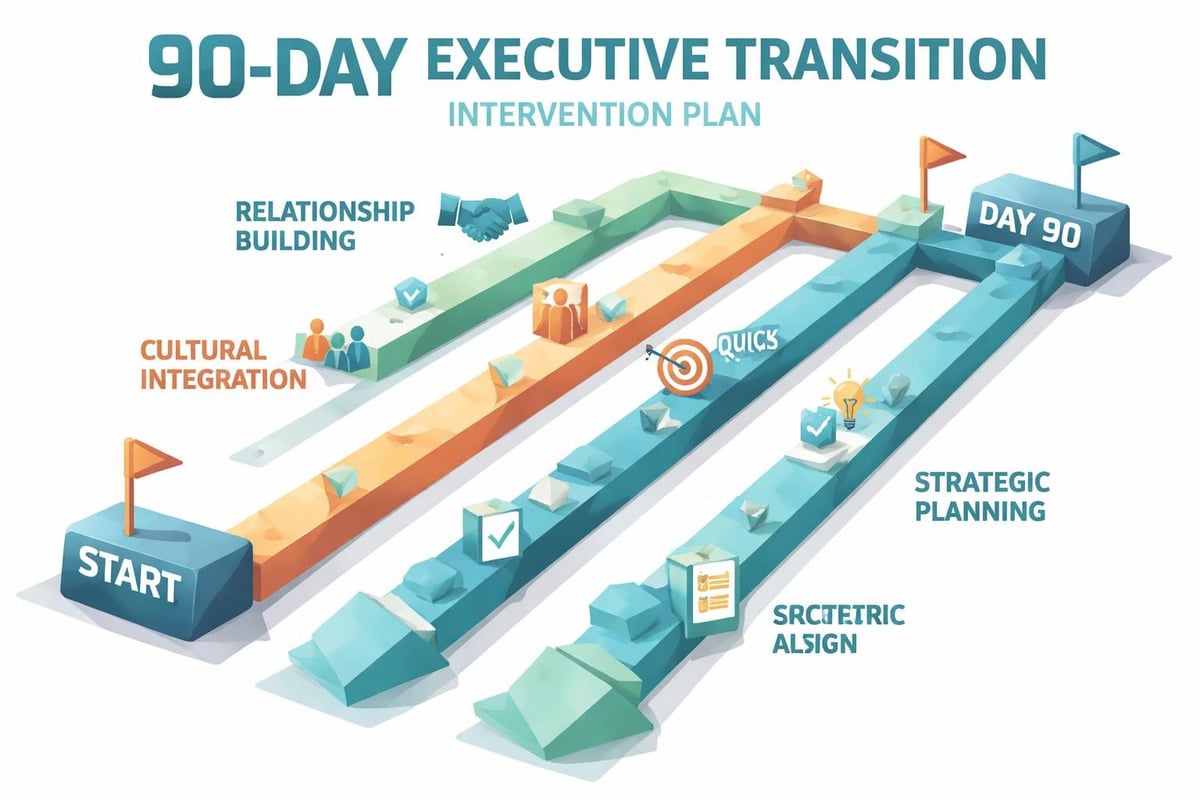
Common Transition Challenges and Targeted Interventions
Challenge 1: Stakeholder Relationship Building
New executives must quickly establish credibility with boards, direct reports, peers, clients, and external partners. Coaches facilitate stakeholder mapping exercises, communication planning, and relationship-building strategies tailored to organizational politics and power dynamics.
Challenge 2: Cultural Integration
Understanding and adapting to organizational culture determines transition success. Coaches help executives decode unwritten rules, identify cultural champions, and navigate resistance to change while maintaining authentic leadership presence.
Challenge 3: Strategic Direction Setting
Executives must balance learning with leading. Intervention plans include structured listening tours, quick-win identification, strategic planning frameworks, and communication strategies that build confidence without overcommitting.
Understanding best practices for managing executive transitions provides additional context for developing comprehensive intervention strategies that address organizational needs alongside individual development.
Compliance and Governance Alignment in Australian Context
Melbourne organizations, particularly those in regulated industries and government sectors, must ensure leadership development initiatives meet stringent compliance and governance requirements. Executive leadership transition coaching in melbourne that ignores these considerations creates legal and reputational risks.
Coaching programs must align with:
- Workplace Health and Safety regulations governing psychological wellbeing
- Privacy Act requirements for assessment data and coaching records
- Equal Opportunity and anti-discrimination legislation
- Corporate governance standards for board-level transitions
- Industry-specific regulatory frameworks (APRA, ASIC, etc.)
For government agencies and public sector organizations, additional considerations include public accountability standards, code of conduct requirements, and transparency obligations. Training providers supporting these organizations benefit from partnerships with compliance specialists like Skills Office Network, which brings expertise in governance frameworks and quality assurance processes.
| Compliance Area | Key Consideration | Coaching Program Impact |
|---|---|---|
| Data Privacy | Confidentiality of assessments and session notes | Secure storage systems, clear data handling protocols |
| Anti-Discrimination | Equal access to development opportunities | Objective coach matching, inclusive assessment tools |
| Workplace Safety | Psychological safety and wellbeing | Stress management strategies, burnout prevention |
| Governance Standards | Board oversight and reporting | Regular progress updates, measurable outcomes |
Measuring Impact Through Defined KPIs
Organizations investing in executive leadership transition coaching in melbourne demand accountability and measurable results. Effective programs establish clear key performance indicators at the outset and track progress throughout the engagement.
Critical metrics include:
- Time to productivity: How quickly the executive reaches full effectiveness
- Stakeholder confidence scores: Regular pulse surveys measuring trust and credibility
- Strategic initiative progress: Advancement on priority objectives and deliverables
- Team engagement levels: Direct report satisfaction and retention rates
- Cultural integration indicators: Alignment with organizational values and norms
- Return on investment: Financial impact relative to program costs
Research on whether executive coaching works demonstrates that organizations tracking these metrics report ROI ratios averaging 5.7:1, with top-performing programs exceeding 10:1 returns.
Measurement shouldn't focus solely on individual executive performance. The best programs track systemic impact including team performance improvements, organizational culture shifts, and strategic goal achievement.
Dashboard Reporting for Executive Sponsors
Modern executive leadership transition coaching in melbourne provides real-time visibility into coaching progress through dashboard reporting. These systems give HR leaders and executive sponsors objective data on:
- Session completion rates and engagement levels
- Progress against individualized development goals
- Assessment score improvements over time
- Stakeholder feedback trends
- Quick win achievement and strategic milestone progress
This transparency builds confidence in the coaching investment and enables mid-course corrections when needed.
The Melbourne Leadership Landscape in 2026
Melbourne's position as Australia's second-largest economy and a global hub for finance, healthcare, and technology creates unique opportunities and challenges for executive transitions. The city's corporate culture values innovation, collaboration, and social responsibility-qualities that transitioning executives must demonstrate quickly to gain credibility.
Several trends shape executive leadership transition coaching in melbourne currently:
Hybrid work complexity: Executives must lead distributed teams effectively while maintaining organizational culture. Transition coaching increasingly addresses virtual leadership skills, digital communication strategies, and remote team building.
Diversity and inclusion imperatives: Organizations demand leaders who champion inclusive practices. Coaching programs incorporate unconscious bias awareness, inclusive leadership frameworks, and cultural competency development.
Sustainability and ESG focus: Melbourne organizations expect executives to integrate environmental and social governance into strategic decision-making. Transition coaching helps leaders navigate these expectations while delivering financial results.
Rapid digital transformation: Technology disruption affects every sector. Executives transitioning into Melbourne organizations need coaching on digital strategy, innovation management, and leading through technological change.
For executives exploring coaching during CEO transitions, these Melbourne-specific factors require specialized local expertise that generic global programs cannot provide.

Scaling Transition Coaching Across Organizations
Large organizations managing multiple executive transitions simultaneously require scalable coaching solutions that maintain quality while accommodating volume. Executive leadership transition coaching in melbourne succeeds at scale when organizations implement systematic approaches rather than ad-hoc interventions.
Building Internal Coaching Capacity
Progressive organizations develop internal coaching capabilities to complement external expertise. This hybrid model provides:
- Cost efficiency for high-volume transition support
- Cultural continuity through coaches who understand organizational context
- Rapid deployment without external procurement delays
- Knowledge retention as coaching insights remain within the organization
Internal coaching programs require rigorous certification, ongoing supervision, and clear boundaries to maintain effectiveness. External executive coaches continue playing critical roles for C-suite transitions, sensitive situations, and specialized expertise needs.
Program Design for Government Agencies
Government agencies in Melbourne face distinct challenges requiring tailored transition coaching approaches. Public sector executives navigate political environments, media scrutiny, accountability frameworks, and mission-driven cultures that differ substantially from private sector contexts.
Effective programs for government clients incorporate:
- Understanding of Westminster system governance and ministerial relationships
- Experience with public sector performance management and accountability
- Sensitivity to political cycles and policy environments
- Expertise in stakeholder management across diverse community groups
- Alignment with public service values and ethical frameworks
Organizations can explore executive coaching packages designed specifically for government sector requirements to ensure appropriate program structure and delivery.
Integration with Broader Leadership Development
Executive leadership transition coaching in melbourne delivers maximum value when integrated with comprehensive leadership development ecosystems. Stand-alone coaching programs risk creating isolated interventions disconnected from organizational talent strategies.
Integration opportunities include:
- Succession planning processes that identify high-potential leaders early
- Leadership competency frameworks that provide consistent development standards
- Talent review cycles that trigger transition support at appropriate moments
- Mentoring programs that complement formal coaching relationships
- Action learning initiatives that apply coaching insights to real business challenges
This systems approach ensures transition coaching builds on existing development investments rather than duplicating or contradicting them. HR leaders benefit from working with coaching providers who understand managing and coaching as complementary leadership development approaches.
| Development Activity | Relationship to Transition Coaching | Integration Method |
|---|---|---|
| Succession Planning | Identifies future transition needs | Coach matching begins during succession review |
| 360 Feedback | Provides baseline assessment data | Results feed into coaching development plans |
| Leadership Programs | Builds foundational capabilities | Coaching applies concepts to real transitions |
| Mentoring | Offers organizational knowledge | Complements coach expertise with insider perspective |
Addressing Complex Leadership Challenges
Some executive transitions involve navigating particularly complex situations requiring specialized coaching expertise. Executive leadership transition coaching in melbourne increasingly addresses challenges such as:
Organizational Turnarounds: Executives hired to transform struggling organizations need coaches experienced in change management, stakeholder communication during crisis, and maintaining personal resilience under pressure.
Post-Merger Integration: Leaders managing combined entities require coaching on cultural integration, redundancy decisions, team restructuring, and building unified organizational identities.
Geographic Relocations: International executives moving to Melbourne need cultural adaptation support, local network development, and understanding of Australian business practices alongside traditional transition coaching.
Internal Promotions: High performers promoted to executive ranks face unique challenges balancing peer relationships, establishing authority, and shifting from tactical to strategic thinking.
For situations involving behavioral concerns, specialized approaches addressing toxic leadership patterns become essential components of transition coaching programs.
The Coach-Coachee Relationship Dynamic
The coaching relationship quality fundamentally determines transition success. Executive leadership transition coaching in melbourne succeeds when coaches establish trust, maintain confidentiality, challenge thinking constructively, and hold executives accountable without judgment.
Effective coaches demonstrate several critical capabilities:
- Active listening that uncovers underlying concerns beyond surface issues
- Powerful questioning that stimulates executive insight and self-awareness
- Direct feedback delivered with respect and developmental intent
- Contextual understanding of organizational dynamics and industry challenges
- Flexibility to adjust coaching approaches based on executive needs
The relationship typically progresses through predictable stages: relationship building, goal clarification, exploration and insight, action and experimentation, and sustainability planning. Understanding seven strategies for effective executive leadership transitions provides additional perspective on how coaching relationships support transition success.
Coaches must balance being supportive partners while maintaining objectivity. The best coaching relationships feel collaborative yet maintain appropriate professional boundaries that prevent dependency.
Technology-Enabled Coaching Delivery
Modern executive leadership transition coaching in melbourne leverages technology to enhance accessibility, measurement, and program effectiveness. Digital platforms enable flexible scheduling, virtual session delivery, progress tracking, and data-driven insights that traditional coaching couldn't provide.
Technology applications include:
- Video conferencing for remote session delivery accommodating executive travel schedules
- Mobile apps providing micro-learning content and reflection prompts between sessions
- Assessment platforms delivering validated instruments and automated scoring
- Progress dashboards visualizing development trajectories and goal achievement
- Secure messaging enabling quick coach access for urgent situations
These tools enhance rather than replace human interaction. The most effective programs blend high-tech platforms with high-touch personal coaching relationships. Technology handles administrative tasks, data management, and content delivery, freeing coaches to focus on relationship building and strategic thinking.
Organizations exploring executive coaching best practices discover that technology integration represents a competitive differentiator in 2026's coaching landscape.
Investment Considerations and Program Economics
Organizations evaluating executive leadership transition coaching in melbourne must understand program economics to make informed investment decisions. Coaching costs vary significantly based on coach experience, program duration, session frequency, assessment tools, and customization requirements.
Typical investment components include:
- Initial assessment and diagnostic work
- Coach matching and program design
- Individual coaching sessions (typically 6-12 months)
- Stakeholder interviews and feedback sessions
- Progress measurement and reporting
- Program management and coordination
While premium coaching programs require substantial investment, the cost of failed executive transitions far exceeds coaching expenses. Organizations calculate ROI by comparing coaching costs against recruiting fees, productivity losses, team disruption, and strategic delay costs associated with transition failures.
Smart procurement strategies include:
- Establishing coaching panels with pre-negotiated rates
- Volume discounting for multiple executive coaching engagements
- Pilot programs demonstrating value before broader rollout
- Performance-based pricing tied to measurable outcomes
- Internal capability building to reduce external dependency over time
Detailed information on executive coaching cost structures helps organizations budget appropriately and negotiate favorable terms.
Selecting the Right Coaching Partner
Organizations seeking executive leadership transition coaching in melbourne face numerous provider options, from independent practitioners to global consulting firms. Selection criteria should extend beyond cost to encompass expertise, methodology, cultural fit, and measurable results.
Evaluation framework:
- Proven transition coaching expertise with verifiable client outcomes
- Coach network depth across industries, specializations, and experience levels
- Assessment methodology using validated instruments and evidence-based approaches
- Matching process that considers multiple compatibility factors
- Measurement systems providing objective progress tracking
- Compliance capabilities addressing governance and regulatory requirements
- Scalability to support growing organizational needs
- References from comparable organizations with similar challenges
Due diligence should include interviewing potential coaches, reviewing case studies, checking certifications, and piloting programs before large-scale commitments. Organizations benefit from providers offering flexible engagement models that adjust as organizational needs evolve.
Melbourne-based resources like executive coaching services provide local expertise, while global platforms offer broader coach networks and specialized matching capabilities.
Building Sustainable Leadership Capacity
The ultimate goal of executive leadership transition coaching in melbourne extends beyond individual success to building sustainable organizational leadership capacity. Effective programs create ripple effects that strengthen leadership at every level.
Sustainability strategies include:
- Documenting lessons learned from transitions to inform future programs
- Building leadership transition playbooks capturing best practices
- Developing internal transition coaching capabilities
- Creating peer support networks among executives who've completed transitions
- Integrating transition planning into standard talent management processes
- Establishing ongoing leadership development pathways beyond initial transitions
Organizations investing in systematic transition support develop reputations as leadership development destinations, improving executive recruitment and retention. This cultural shift toward developmental support creates competitive advantages in talent markets.
Long-term success requires executive sponsorship, HR partnership, and organizational commitment to leadership development as strategic priority rather than tactical expense.
Executive leadership transitions represent critical inflection points that determine organizational trajectories for years to come. The specialized support provided through executive leadership transition coaching in melbourne transforms these vulnerable moments into catalysts for sustainable growth, cultural strengthening, and strategic advancement. Organizations that invest in evidence-based coaching, precision matching, and measurable accountability systems consistently outperform those relying on intuition and goodwill alone. The Noomii Leadership Coaching program delivers precisely this combination-connecting organizations with certified coaches who possess the expertise, methodology, and track record to guide executives through complex transitions while building sustainable leadership capacity. For organizations seeking accountability frameworks that complement leadership development, AccountabilityNow offers tools that reinforce coaching insights through structured follow-through systems.


Leave a Reply
Want to join the discussion?Feel free to contribute!