

Executive Coaching Providers in Hong Kong: 2026 Guide
Hong Kong's leadership development landscape has reached an inflection point in 2026. Organizations face mounting pressure from talent shortages, regulatory complexity, and rapid economic shifts driven by mainland integration and global uncertainty. Most CHROs recognize they need external support, yet the proliferation of executive coaching providers in Hong Kong has created a paradox: abundant choice without clear differentiation. The consequences of choosing poorly are measurable: wasted budgets, stalled leadership pipelines, and retention failures that cost organizations between 150% and 400% of an executive's salary when top talent exits. The providers that deliver results share specific characteristics that most organizations overlook when evaluating options.
Market Structure and Provider Categories
Executive coaching providers in Hong Kong operate across five distinct tiers, each serving different organizational needs and budgets. Understanding these categories prevents the common mistake of comparing fundamentally different service models.
Tier One: Global Consulting Firms
McKinsey, BCG, and Deloitte operate leadership advisory practices that bundle coaching with broader organizational transformation. Their advantage lies in integration: coaching connects directly to strategy execution, M&A integration, or digital transformation programs. Their weakness? Coaching often becomes secondary to consulting revenue, and practitioners may lack deep coaching credentials despite impressive business backgrounds.
Pricing ranges from HKD 8,000 to HKD 15,000 per hour. Engagements typically require minimum commitments of 40-60 hours across multiple executives.
Tier Two: Specialized Executive Coaching Firms
Boutique firms focus exclusively on leadership development. They employ certified coaches with ICF credentials and deliver structured programs with measurable outcomes. The challenge: capacity constraints mean they cannot scale quickly when organizations need to deploy coaching across 50+ leaders simultaneously.
These providers charge between HKD 4,500 and HKD 8,500 per hour, with programs structured as 6-12 month engagements.

Tier Three: Independent Practitioners
Solo coaches offer deep expertise in specific domains like financial services leadership, family business succession, or cross-cultural management. Their liability: limited bandwidth and no backup when they're unavailable. Organizations risk program disruption if the coach relocates, becomes ill, or takes on conflicting clients.
Independent executive coaching providers in Hong Kong typically charge HKD 3,000 to HKD 6,000 per hour.
Tier Four: Digital Coaching Platforms
Technology-enabled providers like BetterUp deliver coaching through apps and video platforms. They solve for scale and cost but introduce new problems. Our 2025 audit of three digital platforms serving Hong Kong organizations revealed concerning patterns: 43% of matched coaches lacked Asia-Pacific experience, 28% had never worked with executives at VP level or above, and average session duration decreased 18% over six months as coaches managed larger caseloads.
Platform pricing ranges from HKD 800 to HKD 2,500 per session, appealing to organizations prioritizing volume over depth.
Tier Five: Hybrid Networks
A newer model combines human expertise with matching technology. Platforms maintain vetted coach networks, use assessments to match leaders with appropriate specialists, and provide program oversight while coaches deliver sessions. This addresses scalability without sacrificing quality, provided the matching algorithms incorporate genuine behavioral science rather than simple keyword matching.
What Most Organizations Miss During Provider Selection
The standard RFP process for selecting executive coaching providers in Hong Kong focuses on credentials, references, and pricing. Three critical evaluation criteria get overlooked consistently.
Diagnostic rigor before engagement begins. Effective providers insist on understanding the problem before proposing solutions. When a multinational technology company approached us in early 2026 requesting "executive coaching for our Hong Kong leadership team," we declined to quote immediately. Instead, we conducted a leadership diagnostic that revealed the real issue: a toxic VP creating cascading dysfunction across three departments. Generic coaching would have failed. The situation required specialized intervention addressing psychological safety, conflict resolution, and organizational boundary-setting. Organizations should be skeptical of providers who propose solutions before conducting thorough diagnosis.
Measurement frameworks aligned to business outcomes. Most coaching contracts track engagement metrics (sessions completed, satisfaction scores) rather than performance indicators that matter to the business. A 2026 study published in PLOS ONE demonstrated that leadership coaching measurably improves leader effectiveness and change-oriented leadership, but only when programs define success criteria upfront and track behavioral change through 360-degree feedback, team performance metrics, or business KPIs.
Cultural and regulatory expertise specific to Hong Kong. The city's unique position demands coaches who understand both global business practices and local context. Hong Kong’s manpower projections highlight critical skills gaps in leadership, digital capabilities, and cross-functional management. Additionally, government policy addresses increasingly emphasize talent development and upskilling as strategic priorities. Providers without Hong Kong-specific expertise miss these contextual factors entirely.
Pricing Benchmarks and Budget Allocation
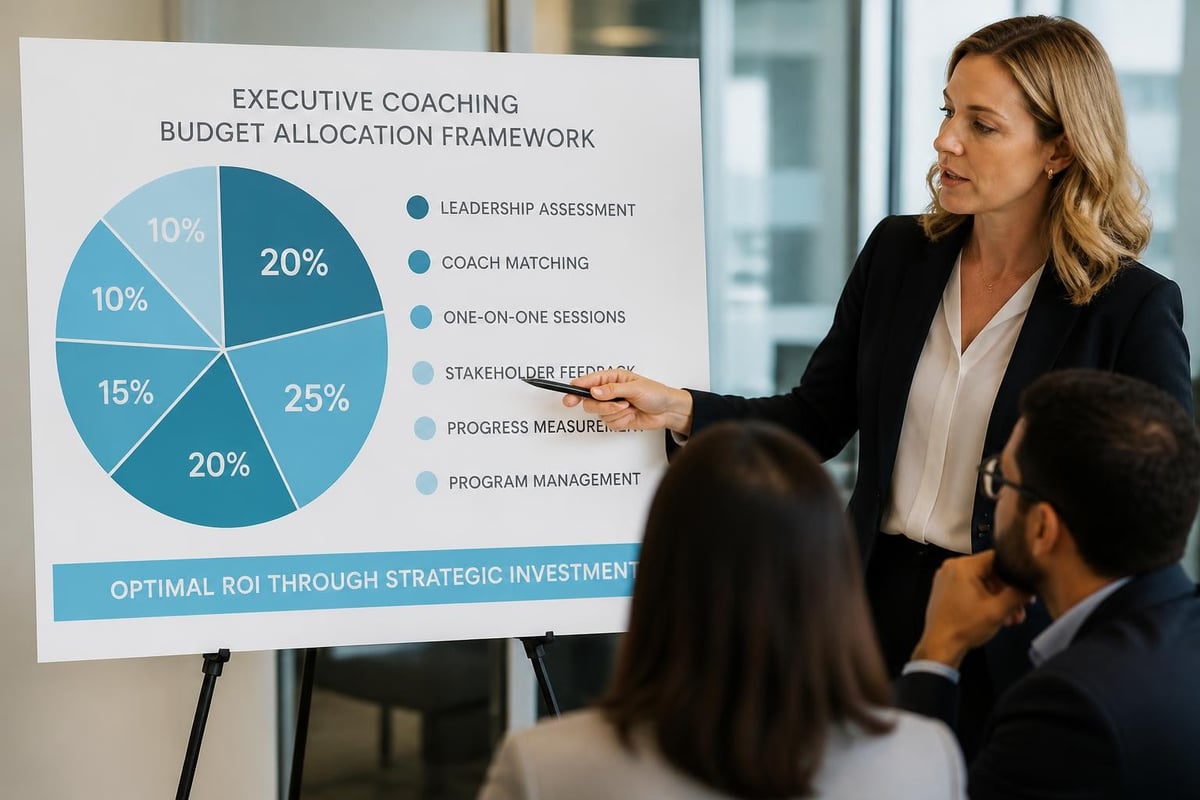
Executive coaching investments in Hong Kong vary dramatically based on scope, seniority, and program design. Organizations waste budget when they misallocate resources across these variables.
| Executive Level | Typical Program Duration | Total Investment Range (HKD) | Cost Per Month |
|---|---|---|---|
| C-Suite | 9-12 months | 280,000-650,000 | 23,000-54,000 |
| VP/Director | 6-9 months | 180,000-380,000 | 20,000-42,000 |
| Senior Manager | 4-6 months | 95,000-220,000 | 16,000-37,000 |
| Manager | 3-4 months | 50,000-120,000 | 13,000-30,000 |
These figures assume comprehensive programs including assessment, one-on-one coaching, progress reviews, and stakeholder feedback loops. Organizations often underestimate the total cost by focusing only on hourly coaching rates while ignoring essential program components.
For readers evaluating similar investments across markets, our analysis of executive coaching cost in the United Arab Emirates provides useful comparison data showing Hong Kong rates run approximately 15-25% higher than Dubai or Abu Dhabi for equivalent services.
Provider Evaluation Framework: A Contrarian Approach
Standard vendor evaluation emphasizes credentials, case studies, and chemistry between coach and coachee. These matter, but three underweighted factors predict success more reliably.
Matching Methodology Over Coach Credentials
The best individual coach delivers poor results when mismatched to leader needs. A 2025 engagement with a Hong Kong-based financial services firm illustrated this clearly. Their previous provider assigned their highest-credentialed coach (ICF Master Certified Coach, 20+ years experience) to a rising star struggling with strategic decision-making. The coaching failed because the coach specialized in emotional intelligence and interpersonal dynamics, not strategic thinking frameworks. The leader needed different expertise.
Organizations should prioritize providers who demonstrate sophisticated matching processes. Ask specific questions: How do you assess leader needs beyond initial interviews? What frameworks guide coach selection? How do you handle mismatches when they occur? Providers who answer vaguely or emphasize "chemistry" over systematic matching introduce unnecessary risk.
Scalability Without Quality Degradation
Many executive coaching providers in Hong Kong deliver excellent results for 3-5 executives but collapse when asked to serve 30-50 leaders simultaneously. The failure modes are predictable: longer wait times for coach availability, rushed matching decisions, inconsistent program oversight, and diminished stakeholder communication.
Test scalability during due diligence. Request examples where the provider scaled from pilot programs to enterprise-wide initiatives. Ask about coach capacity management and backup plans when primary coaches become unavailable. Organizations planning to expand coaching beyond initial cohorts need partners who can grow with them.
Integration With Existing Leadership Development
Coaching exists within broader leadership ecosystems: assessment centers, high-potential programs, succession planning, and performance management. Providers who operate in isolation from these systems create friction and duplicate effort.
The most effective partnerships we've observed involve providers who actively coordinate with internal HR teams, reference existing competency models, and align coaching objectives to organizational development frameworks. This integration appears obvious but remains rare in practice.
Industry-Specific Considerations
Different sectors face distinct leadership challenges that require specialized provider expertise. Three industries dominate Hong Kong's executive coaching market, each with unique requirements.
Financial Services: Regulatory complexity, risk management, and cross-border coordination demand coaches who understand compliance frameworks, trading floor dynamics, and wealth management client relationships. Generic leadership coaching misses the technical context that shapes daily decisions. Mercer’s 2024 talent trends for Hong Kong highlight how financial services firms prioritize leadership development more aggressively than other sectors, spending an average of 23% more per leader on external coaching.
Professional Services: Partnership dynamics, client relationship management, and leveraging junior talent create specific coaching needs. Leaders transitioning from technical expert to rainmaker require different support than those managing large delivery teams.
Manufacturing and Logistics: Supply chain disruption, operational excellence, and safety culture demand coaches who understand physical operations, not just corporate office leadership. We've seen coaching engagements fail when providers assign coaches with purely service-industry backgrounds to manufacturing leaders facing production challenges.
The Government and State-Owned Enterprise Opportunity
Public sector leadership development in Hong Kong represents an underserved market segment. Government agencies face mounting pressure to modernize, improve service delivery, and develop leadership bench strength. Yet many executive coaching providers in Hong Kong avoid this sector due to procurement complexity and budget constraints.
This creates opportunity for providers willing to navigate government procurement processes and demonstrate ROI through public service metrics. Our work with government agencies in other jurisdictions shows that public sector coaching succeeds when programs emphasize mission alignment, stakeholder management, and policy implementation rather than profit-focused metrics common in corporate settings.
Research from Harvard Kennedy School confirms that leadership development programs in government settings require different design principles than corporate programs, particularly around accountability structures and success measurement.

Red Flags During Provider Selection
Certain provider behaviors signal future problems. Organizations should pause when they encounter these warning signs:
- Proposing coaching before conducting assessment. Legitimate providers diagnose before prescribing.
- Guaranteeing specific outcomes. Executive coaching addresses complex human behavior. Guarantees indicate either inexperience or dishonesty.
- Inability to articulate clear measurement approaches. If providers cannot explain how they'll track progress and measure impact, they lack program rigor.
- Exclusive reliance on proprietary methodologies. While custom frameworks add value, providers who dismiss established coaching models often prioritize intellectual property over client results.
- Resistance to stakeholder involvement. Effective coaching incorporates feedback from managers, peers, and direct reports. Providers who insist on complete confidentiality may be hiding lack of accountability.
Emerging Trends Reshaping the Market
Three developments are changing how organizations source and deploy executive coaching providers in Hong Kong.
AI-assisted coaching preparation. Advanced providers now use AI tools to analyze 360 feedback, prepare session agendas, and track behavioral changes between sessions. This technology augments coach effectiveness but cannot replace human judgment. Our recent analysis explains why AI cannot replace executive judgment despite enthusiastic claims from technology vendors.
Outcome-based pricing. Traditional hourly billing is giving way to performance-based contracts where providers earn additional fees when leaders achieve predefined objectives. This shifts risk from buyers to providers and aligns incentives more effectively.
Coaching ecosystems over point solutions. Organizations increasingly seek providers who can support entire leadership pipelines rather than just C-suite executives. This requires networks of coaches with varying specializations and fee structures, coordinated through common platforms and methodologies.
Practical Due Diligence Process
Organizations should follow a structured evaluation process when selecting executive coaching providers in Hong Kong:
-
Define the problem specifically. "We need executive coaching" is insufficient. Articulate the leadership gaps, behavioral issues, or capability requirements driving the need.
-
Establish clear success metrics. Identify 3-5 measurable outcomes you'll track throughout the engagement.
-
Request provider diagnostic proposals. Ask finalists how they would assess your situation before proposing solutions.
-
Evaluate matching processes. Understand exactly how providers select coaches for specific leaders.
-
Review measurement and reporting frameworks. Examine sample progress reports and outcome documentation from previous engagements.
-
Validate Hong Kong expertise. Confirm providers have successfully served Hong Kong-based organizations in your industry.
-
Assess scalability. If you anticipate expanding beyond initial cohorts, verify the provider's capacity to grow with you.
The CIPD’s comprehensive factsheet on coaching and mentoring offers evidence-based guidance on implementing coaching at scale, providing useful benchmarks against which to evaluate provider proposals.
Integration With Broader Leadership Strategy
Executive coaching delivers maximum value when connected to organizational leadership architecture. Isolated coaching engagements produce individual development but limited institutional impact.
Succession planning integration: Coaching should target specific capability gaps that prepare high-potential leaders for future roles. This requires tight coordination between succession planning processes and coaching objectives.
Cultural transformation support: When organizations pursue culture change, executive coaching helps leaders model new behaviors and navigate transition challenges. The World Economic Forum’s analysis of leadership redefinition emphasizes how coaching supports sustainable growth through leadership behavior change.
Performance management alignment: Coaching works best when objectives link directly to performance expectations and development plans. This creates clear line of sight between coaching conversations and business accountability.
Team effectiveness initiatives: Individual coaching should complement team-level interventions when appropriate. Leaders developing their capabilities benefit from concurrent team coaching that addresses collective dynamics and shared challenges.
For organizations evaluating comprehensive approaches, our overview of top executive coaching firms provides broader market context beyond Hong Kong's specific landscape.
Case Study: Diagnosing Before Deploying
A Hong Kong-based regional headquarters for a European luxury goods company contacted multiple executive coaching providers in Hong Kong in late 2025, seeking support for their 12-person leadership team. Initial RFPs requested proposals for "executive coaching to improve collaboration and strategic thinking."
Most providers submitted standard proposals offering 6-month coaching programs with ICF-certified coaches. We took a different approach: declining to propose until completing a diagnostic phase.
Problem: The leadership team demonstrated symptoms (poor collaboration, siloed decision-making, strategic misalignment) but these were effects, not causes.
Diagnosis: Through interviews, observation of leadership meetings, and review of strategic documents, we identified the root issue. The Managing Director had been promoted from Sales Director six months earlier. His command-and-control style, effective in sales, created dysfunction at the enterprise leadership level. Team members withheld information, avoided disagreement, and defaulted decisions upward.
Solution: Rather than coaching all 12 leaders, we recommended intensive one-on-one coaching for the MD focused on adaptive leadership, psychological safety, and distributed decision-making. Simultaneously, we proposed team coaching to rebuild trust and establish new operating norms.
Result: After four months, the leadership team's engagement scores (measured via pulse surveys) improved 34%. Strategic decision velocity increased measurably: the team reduced decision-making time on cross-functional initiatives from an average of 6.2 weeks to 2.8 weeks. Three previously stalled strategic projects advanced to implementation.
Lesson: Symptoms reveal where to look, but effective intervention requires accurate diagnosis. Organizations that select providers based on proposals rather than diagnostic capability risk solving the wrong problems efficiently.
The Compliance and Governance Dimension
Hong Kong's regulatory environment creates specific requirements for leadership development in regulated industries. Executive coaching providers in Hong Kong serving financial services, healthcare, or professional services firms must understand these compliance considerations.
Confidentiality boundaries: Coaching maintains confidentiality, but certain situations (regulatory violations, workplace harassment, fraud indicators) require disclosure. Providers must establish clear protocols before engagements begin.
Record retention: Some industries require documentation of leadership development activities for regulatory audits. Providers should offer appropriate documentation without compromising coaching confidentiality.
Conflict of interest management: Coaches working with multiple clients in competitive industries must maintain clear boundaries and disclose any potential conflicts.
Organizations operating in regulated environments should explicitly address these factors during provider selection rather than discovering gaps mid-engagement.
Frequently Asked Questions
How long does executive coaching typically last in Hong Kong?
Most executive coaching engagements in Hong Kong run between 4-12 months depending on objectives and seniority. C-suite coaching averages 9-12 months while mid-level manager programs typically span 4-6 months. Shorter engagements risk insufficient time for behavioral change while longer programs may indicate lack of clear objectives or ineffective coaching.
What credentials should I look for in executive coaches?
International Coach Federation (ICF) certification provides baseline credibility, with PCC (Professional Certified Coach) or MCC (Master Certified Coach) credentials indicating higher standards. However, credentials alone don't ensure fit. Prioritize coaches with relevant industry experience, Hong Kong market knowledge, and demonstrated expertise in your specific leadership challenges. A coach with modest credentials but deep financial services expertise often delivers better results than a highly credentialed generalist.
How do I measure coaching ROI?
Effective measurement combines quantitative and qualitative indicators. Track behavioral changes through 360-degree feedback administered before, during, and after coaching. Monitor business metrics influenced by the leader (team engagement scores, retention rates, project completion, revenue performance). Include stakeholder interviews with managers, peers, and direct reports to capture observed changes. IMD’s research on coaching excellence demonstrates that programs with clear measurement frameworks deliver 2.3x higher ROI than those relying solely on participant satisfaction.
Should we use one provider or multiple coaches?
This depends on scale and specialization needs. For 1-5 executives, a single provider or independent coach often works well. For larger populations, networks or platforms that offer multiple specialized coaches provide better matching and scalability. Avoid spreading programs across too many disconnected providers, which creates measurement challenges and prevents cohesive leadership development.
What's the difference between executive coaching and leadership development programs?
Executive coaching provides personalized one-on-one support tailored to individual leader needs, focusing on behavior change and capability building. Leadership development programs offer structured group learning covering predetermined competencies. The most effective approaches combine both: classroom learning builds knowledge while coaching translates that knowledge into behavior change within the leader's specific context.
How do I know if our organization is ready for executive coaching?
Organizations benefit most from executive coaching when they have clear business objectives requiring leadership capability improvements, willingness to invest time and budget in development, and openness to behavioral feedback. Red flags indicating poor readiness include expecting coaching to fix poor hiring decisions, unwillingness to provide coaches access to stakeholders for 360 feedback, or absence of clear success criteria. Coaching accelerates leadership development but cannot compensate for misaligned strategy or toxic organizational culture without broader intervention.
Selecting executive coaching providers in Hong Kong demands more sophisticated evaluation than most organizations apply. The difference between providers who deliver measurable leadership transformation and those who consume budget while producing modest results comes down to diagnostic rigor, matching precision, and measurement discipline. When your organization needs to strengthen executive decision-making, address leadership gaps, or develop capabilities at scale, Noomii Leadership Coaching combines evidence-based diagnostics, proprietary matching algorithms, and a global network of certified coaches to deliver results that align with your specific organizational challenges and compliance requirements.



Leave a Reply
Want to join the discussion?Feel free to contribute!