
Executive Coaching Jobs: How to Land a Coaching Role
Executive coaching jobs come from three places: coaching firms that subcontract, corporations that hire internal coaches, and independent practices that win clients directly. Most job boards only show the first two, and most of the real income sits in the third.
The market is crowded and still growing. The 2025 ICF Global Coaching Study drew 10,035 responses from 127 countries and estimates 122,974 coach practitioners worldwide, a 15% increase since 2023. The same study estimates global coaching revenue at $5.34 billion. More coaches are chasing a larger pie, so how you position yourself matters more than how many postings you apply to.
What Executive Coaching Jobs Actually Look Like
Executive coaching roles fall into four categories, and each hires differently.
- Firm associate or contract coach. Leadership consultancies and coaching platforms assign you clients and take a margin. Hiring is slow and selective, often requiring a credential plus documented executive-level hours.
- Internal coach. A large employer hires you in HR, talent, or organizational development to coach managers and directors. The title is often "leadership development partner" rather than coach.
- Independent executive coach. You sell directly to companies or individual leaders. No one hires you; a buyer chooses you.
- Hybrid operator. A former executive coaches part time while holding an advisory or fractional role. This is the fastest route for people with real operating history.
Searching only for the title "executive coach" misses most of this. Search for leadership development, talent management, and organizational effectiveness roles too.
Do You Need a Certification to Get Hired?
Yes for some employers and no for most buyers, and confusing the two wastes years. The ICF study found that most coaches surveyed said clients and organizations expect coaches to have a certification or credential. That is a real signal, and it is also a perception reported by coaches, not proof that credentials drive hiring decisions.
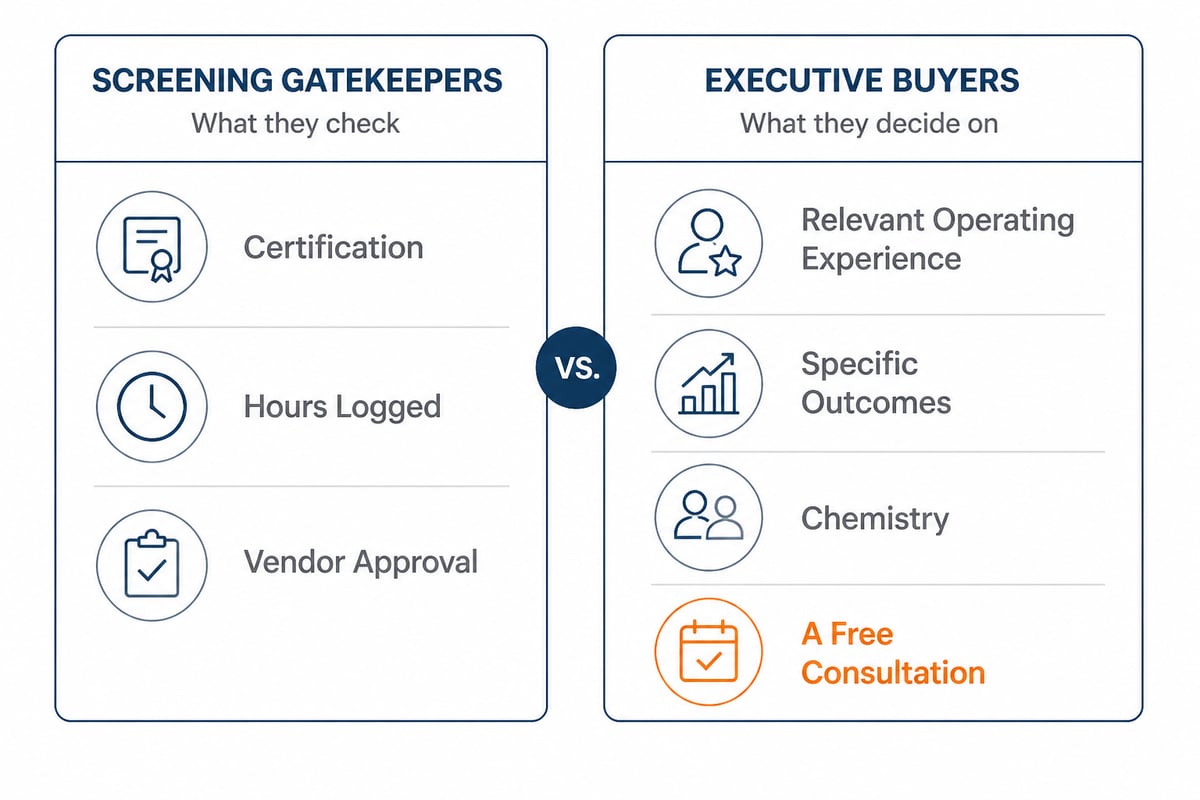
Here is the pattern we see repeatedly in this market. Large firms and procurement departments use credentials as a filter because they need a defensible shortcut. The leader actually choosing a coach asks different questions: have you sat in my chair, can you tell me something I don't already know, and what changed for your last client?
A certification opens doors at screening. Evidence of outcomes closes the engagement. If you have to choose where to spend the next $10,000 and six months, spend it on getting twenty executive-level coaching hours with documented results before adding a second credential.
The Proof-of-Practice Framework for Getting Hired
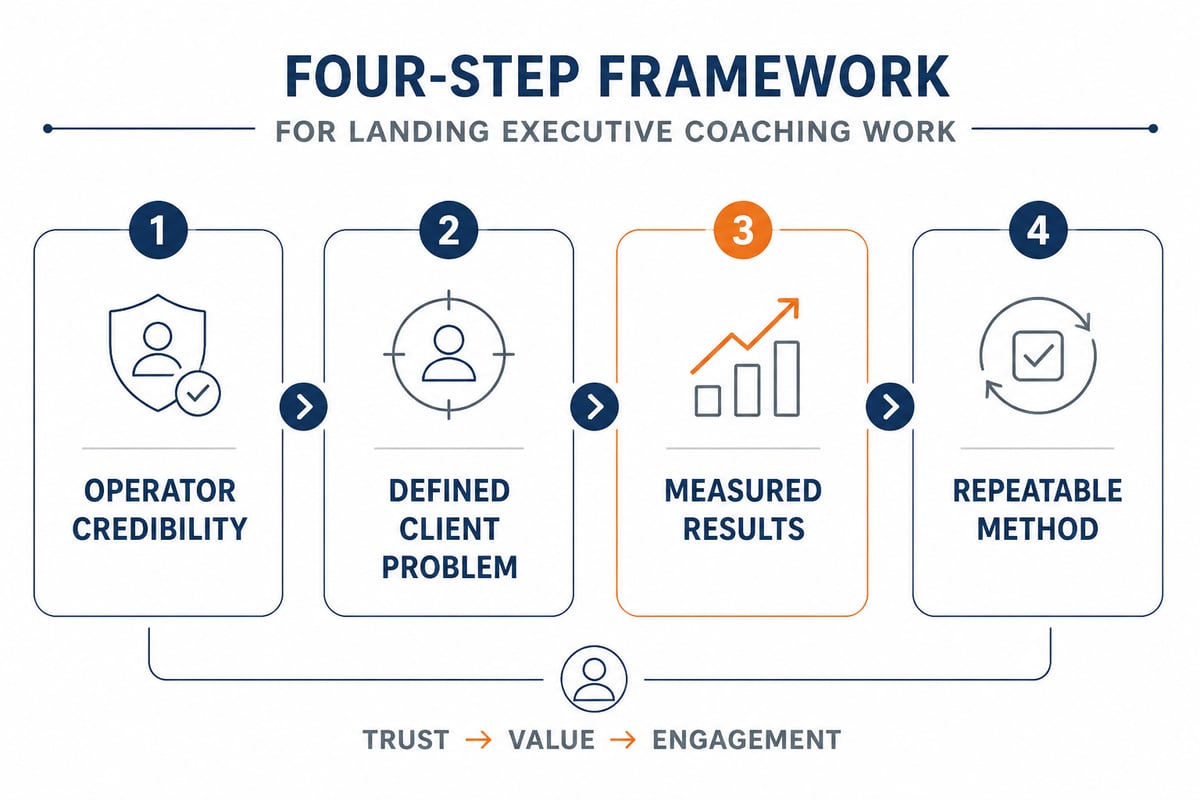
Coaches who land roles quickly tend to show the same four things, which we call the Proof-of-Practice framework.
- Operator credibility. Name the budgets, teams, or P&Ls you have run. Buyers pay a premium for coaches who have faced the pressure their client faces.
- A defined client problem. "Newly promoted VPs in mid-market manufacturing" gets hired faster than "leaders who want to grow."
- Measured results. Tie coaching to a business metric, such as decision speed, manager retention, or team engagement scores.
- A repeatable method. Describe your process in one page: assessment, goals, cadence, check-ins, and how progress is reported to the sponsor.
Mid-market buyers in particular, companies with 25 to 500 employees, have little patience for theory. They want a coach who works inside live meetings and reports against KPIs.
A Case Study: From Credential Collector to Booked Coach
Problem: A former operations director spent two years collecting certifications and sent forty applications to coaching firms. She got two interviews and no contracts.
Diagnosis: Her profile led with credentials and listed generic strengths. Nothing told a buyer what problem she solved or for whom.
Solution: She narrowed to one audience, first-time plant managers, and offered three discounted engagements in exchange for written results tied to turnover and on-time delivery. She used a 360 assessment at the start and end of each.
Result: All three clients renewed or referred her, and a regional manufacturer retained her for a cohort of eight managers.
Lesson: Specificity and documented outcomes beat a longer credential list. Treat your first three clients as research, not revenue.
How to Find Openings and Get Seen
Approach the search in this order, because the early steps convert best.
- Tell former colleagues and bosses exactly which leaders you coach and what changes for them.
- Join the vendor panels of companies in your industry; many HR teams keep a short approved list.
- Apply to firms that subcontract, with a one-page method summary attached.
- Apply to internal leadership development roles at employers you already understand.
- List yourself in a directory where buyers compare coaches. On Noomii, coaches are real independent professionals, and clients can search and match for free, which gives you a way to be found beyond referrals. Browse executive coach profiles in the Philippines or Qatar to see how coaches in other markets present themselves.
Remote delivery has widened the field. Location matters less, though local industry knowledge still wins engagements.

Will AI Replace Executive Coaching Jobs?
AI will replace parts of the work, not the accountable relationship at the center of it. Tools can already handle scheduling, session summaries, practice role-plays, and pattern spotting across assessments. They cannot sit in a tense leadership meeting, read the room, and say the thing no one else will.
The practical comparison looks like this:
| Task | AI tools | Human executive coach |
|---|---|---|
| Session notes and summaries | Strong | Adequate |
| Skill practice and drills | Good | Good |
| Live observation in meetings | None | Strong |
| Challenging a senior leader's blind spot | Weak | Strong |
| Accountability to a sponsor | Weak | Strong |
Coaches who position around live observation and measurable outcomes are safest. Generic advice-giving is the most exposed.
What Executive Coaching Pays and Which Niches Earn Most
Executive coaching often pays more than other coaching categories because the buyer is frequently a company, not an individual. Niches that tend to command the highest rates are those tied to money: executive and leadership coaching for senior teams, sales and revenue coaching, and coaching for founders approaching a scale or exit decision. Rates vary widely by market and experience, so ask peers in your niche and your region rather than relying on general figures.
If you want a view of where your skills fit, performance coaching and team coaching are adjacent specialties where operating experience transfers directly.
Red Flags Employers and Buyers Watch For
Buyers screen out coaches for predictable reasons.
- Credentials listed with no client outcomes beside them
- No stated audience or industry
- Promises of guaranteed transformation
- No process for involving the sponsor or manager
- Long-term contracts with no exit
The last one deserves attention. Month-to-month terms and clear KPIs signal confidence. Coaches who tie fees to visible progress stand out in a market where most engagements are sold on trust alone.
Where Noomii Fits for Executive Coaches and Buyers
If you are building an independent practice, Noomii's Executive Coaching category is one place buyers look for third-party coaching that exposes blind spots and sharpens strategic performance. Buyers can get matched with coach recommendations based on goals, personality, and budget, and many coaches offer a free consultation first. That consultation is where your operator credibility and method do the selling.
FAQ
What is the 70/30 rule in coaching?
It is a common guideline that the client should do roughly 70% of the talking while the coach listens and asks questions for about 30%. It is a guide, not a law, and executive coaching often shifts toward more coach input when observing live meetings.
What is the average cost for a career coach?
Rates range widely by market, experience, and format, so there is no single average that applies everywhere. Executive-level coaches generally charge more than general career coaches, so request pricing directly and use free consultations to compare.
Can I get an executive coaching job without a certification?
Yes, particularly as an independent or in a hybrid role where buyers hire on operating experience. Large firms and procurement teams are more likely to require a credential, so match your route to the buyer.
Your next step today is to write a one-page summary of the audience you coach, the business result you improve, and your method, then test it in a conversation with one former colleague. If you want to see how buyers compare coaches or you are a company looking for a practical partner, Get My Free Match and Noomii will point you to coaches suited to your goals, and our Corporate Coaching team works inside your live meetings, ties progress to clear KPIs, and offers month-to-month terms so you keep the engagement only while results are visible.



Leave a Reply
Want to join the discussion?Feel free to contribute!