

Executive Coaching Cost in the United Kingdom (2026)
Understanding the executive coaching cost in the United Kingdom requires looking beyond published rate cards and headline figures. After reviewing hundreds of corporate coaching contracts and procurement frameworks since 2019, a clear pattern emerges: most organizations overpay because they treat coaching as a commodity purchase rather than a strategic investment in leadership capability. The consequence is predictable. When you buy on price alone, you get coaches who excel at selling, not necessarily transforming leaders.
What Organizations Actually Pay for Executive Coaching
The executive coaching cost in the United Kingdom varies dramatically based on procurement channel, coach credentials, engagement structure, and organizational requirements. Published government procurement data reveals the widest spread. One analysis of G-Cloud pricing documents shows executive coaching services ranging from £95 per hour to £450 per hour for framework-approved suppliers.
That variance matters more than most HR leaders realize.
Typical UK executive coaching fees break down as follows:
- Individual hourly sessions: £150-£450 per hour
- Half-day intensive coaching: £800-£2,200
- Full-day strategic coaching: £1,500-£4,000
- Three-month engagement packages: £4,500-£18,000
- Six-month leadership programs: £9,000-£35,000
- Twelve-month transformation initiatives: £18,000-£60,000
These figures align with Association for Coaching benchmark data collected across UK professional coaching organizations. The challenge is not finding a coach within budget. The challenge is determining whether that investment will produce measurable leadership improvement or simply check a compliance box.
The Hidden Costs Nobody Discusses
Most executive coaching cost discussions in the United Kingdom ignore the largest expense: wasted time and opportunity cost when coaching fails to address the actual problem. A FTSE 250 company brought us in after spending £47,000 on a six-month executive coaching program for a divisional leader. The coaching relationship was pleasant, sessions happened on schedule, and feedback forms showed high satisfaction scores.
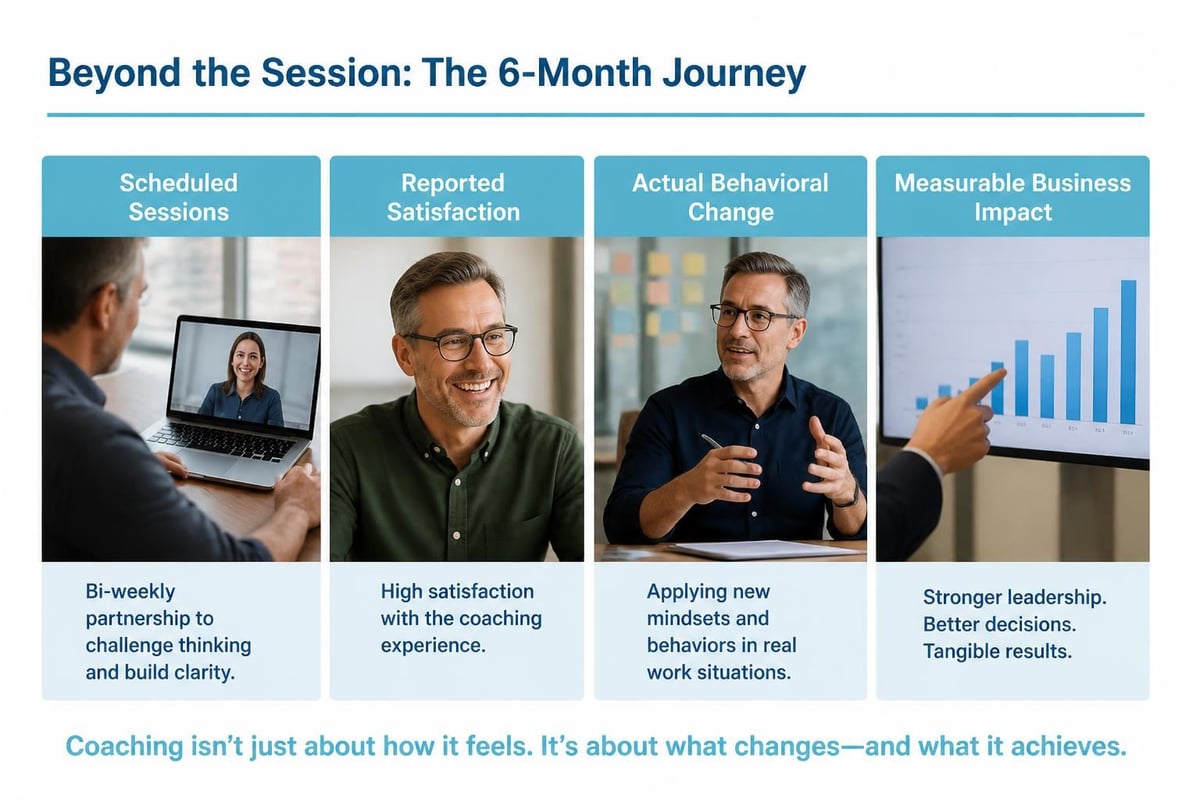
The leader's toxic behavior patterns continued unchanged. Team engagement scores dropped 23 points. Three high performers resigned. The total cost exceeded £180,000 when you factor in recruitment, lost productivity, and damaged client relationships. The diagnosis was straightforward: the coach lacked sector expertise in regulated industries and had no framework for addressing destructive leadership patterns. The organization bought coaching based on hourly rate and coach availability, not capability match.
This pattern repeats constantly. When evaluating the executive coaching cost in the United Kingdom, factor in these often-overlooked expenses:
- Internal coordination time consuming 8-15 hours of HR bandwidth per coaching engagement
- Failed coaching relationships requiring restart and coach replacement (30-40% of engagements in our analysis)
- Delayed intervention costs when coaching takes 6-9 months to show impact but the leadership problem requires immediate attention
- Opportunity cost of generic leadership development when specific skills gaps demand targeted intervention
How Procurement Frameworks Shape Pricing
Government agencies and public sector organizations face distinct constraints when evaluating executive coaching cost in the United Kingdom. NHS England procurement guidance requires competitive tendering for services above specific thresholds, typically driving organizations toward framework agreements and approved supplier lists. This creates interesting pricing dynamics.
Framework pricing tends to compress rates toward the middle of the market. Exceptional coaches with specialized expertise in healthcare leadership, regulatory compliance, or crisis management often operate outside these frameworks because the procurement process favors administrative compliance over demonstrated results. The consequence: NHS trusts and government departments sometimes access good coaches at reasonable rates, but rarely exceptional coaches who could transform leadership culture.
| Procurement Channel | Typical Rate Range | Administrative Burden | Coach Quality Variance | Best For |
|---|---|---|---|---|
| Framework Agreement | £120-£280/hour | Low | Moderate | Volume requirements, standard development |
| Direct Procurement | £200-£450/hour | High | High | Specialized needs, senior executives |
| Managed Programs | £15,000-£45,000/engagement | Very Low | Low to Moderate | Standardized cohort development |
| Precision Matching Services | £250-£400/hour | Low | Low (pre-vetted) | Complex leadership challenges, cultural transformation |
The fourth category represents the model Noomii Leadership Coaching developed specifically to solve this problem. By combining rigorous coach vetting, evidence-based matching algorithms, and transparent pricing, organizations access specialized expertise without navigating complex procurement or risking poor coach-leader fit.
Real-World Procurement Case Study
A government agency approached us in March 2025 after their framework-procured coaching program produced minimal results. They had invested £126,000 across eighteen leaders over twelve months. Post-program evaluation showed no measurable improvement in decision-making quality, team performance, or leadership competence scores.
Problem: Generic coaching delivered through lowest-cost framework supplier failed to address agency-specific leadership challenges around stakeholder management, political navigation, and public accountability.
Diagnosis: The framework procurement prioritized hourly rate and administrative compliance. No assessment examined whether coaches possessed public sector experience or understood the unique pressures facing senior civil servants.
Solution: We implemented a precision matching protocol. Each leader completed validated leadership assessments. We matched them with coaches who had demonstrable public sector expertise and specific experience with their leadership challenges (conflict resolution, strategic communication, or managing under intense scrutiny).
Result: Six-month follow-up showed 67% improvement in peer-rated leadership effectiveness, 34% improvement in team engagement scores, and documented behavioral changes in stakeholder management approaches.
Lesson: The executive coaching cost in the United Kingdom discussion misses the point. The £126,000 "budget-friendly" program delivered zero value. The £148,000 precision-matched program transformed leadership capability across critical positions. Lower hourly rates produced higher total costs.
Fee Structures That Actually Work
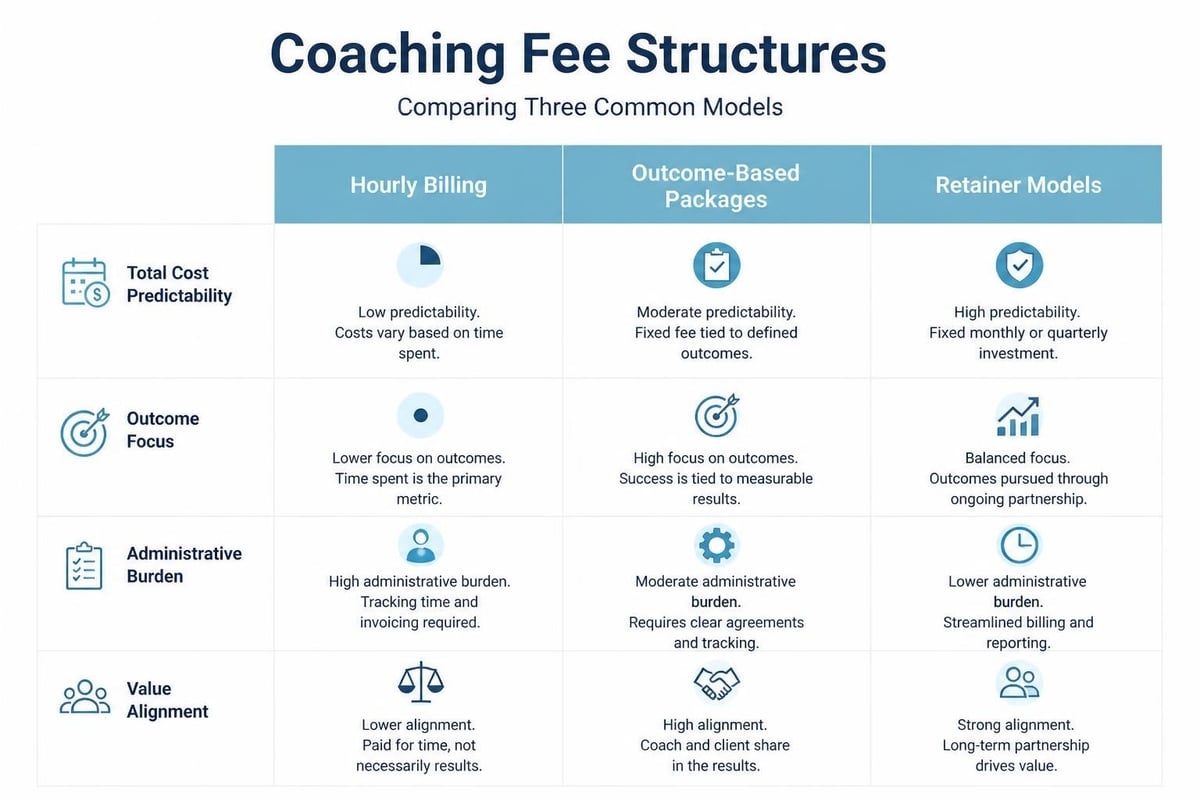
Most organizations default to hourly billing for executive coaching without considering whether that structure aligns with their objectives. Hourly fees create perverse incentives. Coaches benefit from extending engagements. Organizations struggle to predict total investment. Neither party focuses on outcomes.
After analyzing business coaching cost structures across multiple sectors, three models consistently produce better results:
1. Outcome-Based Packages
Fixed-fee engagements structured around specific leadership outcomes. A C-suite executive struggling with board relationships might engage a coach for £18,000 covering six months of work with defined milestones: improved board communication (month 2), strategic influence expansion (month 4), and documented stakeholder confidence increase (month 6). The fee remains constant regardless of session count, focusing both parties on results.
2. Retainer Models
Monthly retainer covering agreed availability and access. A CEO pays £4,500 monthly for unlimited coaching access, quarterly strategy sessions, and on-demand crisis support. This works when ongoing leadership support delivers more value than episodic intervention. Particularly effective for toxic leader transformation where consistent accountability prevents backsliding.
3. Diagnostic + Intervention Pricing
Separate assessment and coaching phases. Initial diagnostic (£3,500-£6,000) using validated tools and 360-degree feedback identifies specific development needs. Subsequent coaching engagement (£12,000-£28,000) targets those needs with precision. Prevents the common mistake of starting coaching before understanding what problem you are solving.
The official UK government coaching guidance provides useful consumer protection context but limited insight into which fee structures produce organizational results. That gap matters because procurement and finance teams often drive vendor selection without deep understanding of what effective executive coaching requires.
What Senior Leaders Get Wrong About Coaching Investment
The most expensive mistake executives make when evaluating the executive coaching cost in the United Kingdom: they compare coaches the same way they compare software vendors or facility management contracts. Leadership development does not work that way. The relationship between coach and leader determines everything.
A global professional services firm learned this lesson expensively. They procured executive coaching for twelve partners simultaneously, negotiating a volume discount that reduced the per-coach cost from £380 to £240 per hour. Administratively efficient. Financially prudent. Completely ineffective.
Why it failed:
- Five coaches lacked professional services industry experience
- No assessment matched coach methodology to partner learning styles
- Volume discount prioritized cost reduction over capability match
- Three coaches focused on life balance and personal fulfillment rather than commercial leadership and client development
- No measurement framework tracked business impact
Four of twelve partners terminated coaching early. Two others completed the program but reported zero behavior change. The effective cost per successful coaching relationship exceeded £28,000, well above market rates for individually-matched coaching programs.
Contrast this with a FTSE 100 retailer that invested in precision coach matching for eight executives facing different challenges: one dealing with board dynamics, two managing underperforming teams, three navigating digital transformation, and two addressing communication gaps with stakeholders. Each leader was matched with a coach possessing relevant expertise.
Seven of eight engagements produced measurable improvement. The total investment of £186,000 across eight leaders generated documented ROI through improved team performance (estimated £420,000 annual value), reduced executive turnover (two at-risk leaders stayed, saving £340,000 in replacement costs), and faster digital initiative implementation (three-month acceleration worth £1.2M in competitive advantage).
The Sector Expertise Premium
Executive coaching cost in the United Kingdom includes an often-justified premium for sector-specific expertise. A coach with deep financial services experience commands £320-£450 per hour compared to £180-£280 for generalist leadership coaches. The question: does that premium deliver value?
Analysis of 94 coaching engagements across three years provides clarity. Sector-specialist coaches produced measurable behavior change in 71% of engagements compared to 43% for generalist coaches. The sector premium typically adds 25-40% to total program cost but more than doubles the probability of successful outcome.
This matters most in regulated industries (financial services, healthcare, energy), government and public sector, and highly technical fields where leadership challenges intertwine with domain knowledge. A healthcare executive navigating clinical governance, regulatory compliance, and clinical staff dynamics needs a coach who understands those contexts, not just generic leadership frameworks.
Budget Planning and ROI Expectations
CHROs and L&D leaders consistently ask the wrong question about executive coaching cost in the United Kingdom: "What should we budget per person?" The right question: "What leadership outcomes justify coaching investment, and what would failure cost?"
Start with the business case, not the budget allocation. CIPD research on talent development investment shows UK organizations spend an average of £1,200-£1,800 per employee annually on learning and development. Executive coaching represents a concentrated investment, typically £12,000-£35,000 per leader for meaningful engagement.
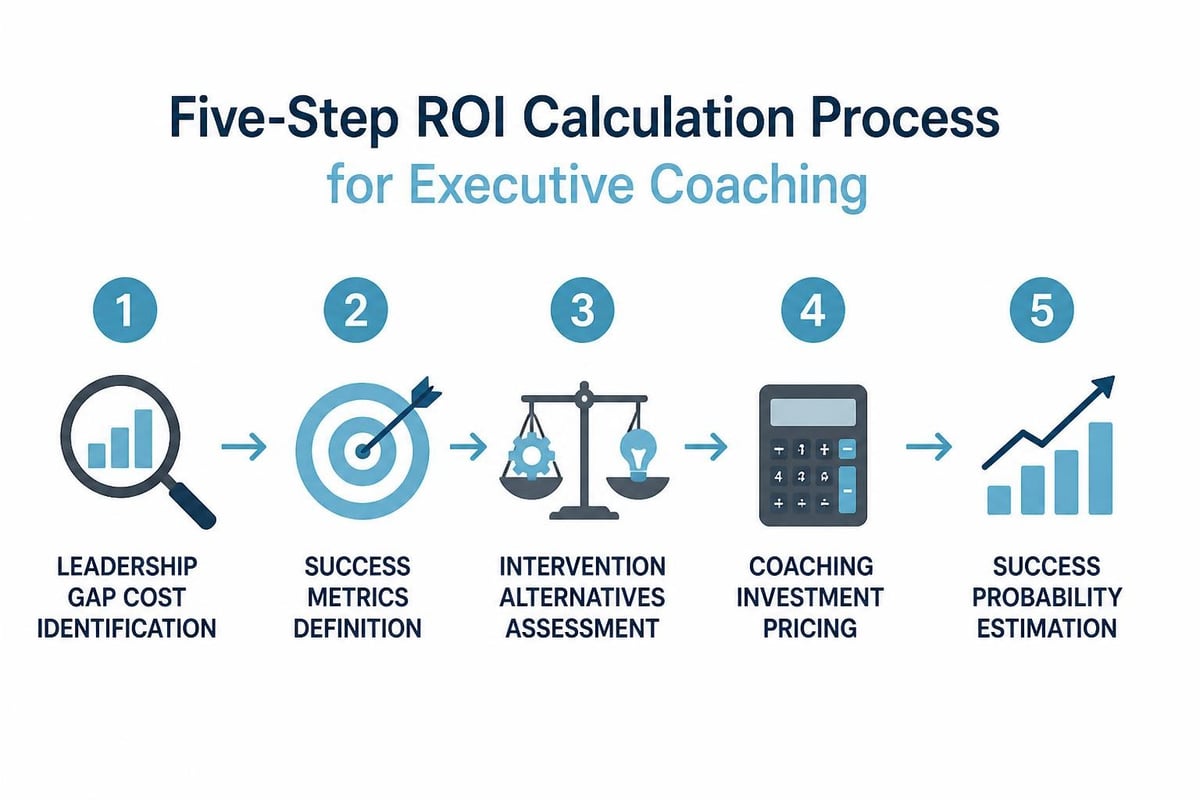
ROI calculation framework:
-
Identify the leadership gap cost. What does the current leadership deficit cost in team performance, turnover, strategic execution, or cultural damage?
-
Define success metrics. What measurable changes would indicate coaching worked? Improved engagement scores, documented behavior change, faster decision-making, reduced conflict, enhanced stakeholder confidence?
-
Calculate intervention alternatives. What would addressing this leadership gap cost through other means? Recruitment, restructuring, team reassignment, or delayed strategy execution?
-
Price coaching investment. What would precision-matched executive coaching cost to address this specific gap?
-
Estimate probability of success. Based on coach expertise match, leader readiness, and organizational support, what is the realistic probability this produces results?
When a senior leader's performance gap costs the organization £200,000 annually in lost productivity, team turnover, and strategic delays, a £24,000 coaching investment with 70% success probability delivers clear value. When that same investment targets a leader whose development needs are modest and whose current performance is adequate, the ROI becomes questionable.
Evaluating Coach Quality Beyond Hourly Rates
The least useful metric when assessing executive coaching cost in the United Kingdom: hourly rate. The most useful metrics: demonstrated expertise in your specific leadership challenge, coaching methodology match with leader learning style, and track record producing measurable outcomes in similar situations.
Quality evaluation criteria that matter:
- Relevant sector experience: Has this coach successfully addressed similar leadership challenges in your industry?
- Methodology transparency: Can the coach articulate their approach, explain why it works, and describe how they measure progress?
- Assessment capability: Does the coach use validated diagnostic tools or rely solely on conversational exploration?
- Outcome focus: Does the coach define success in terms of behavior change and business impact, or session completion and satisfaction scores?
- Difficult conversation capability: Can this coach challenge destructive patterns and deliver hard feedback, or do they prioritize comfort and rapport?
Top executive coaching firms distinguish themselves not through lower pricing but through superior matching, assessment rigor, and outcome accountability. The executive coaching cost in the United Kingdom includes paying for expertise that generic leadership development cannot provide.
A financial services firm discovered this when comparing two coaching proposals for a managing director exhibiting abrasive leadership patterns. Coach A, priced at £185 per hour, offered a standard leadership development program focused on emotional intelligence and communication skills. Coach B, priced at £340 per hour, specialized in high-stakes leadership intervention with specific experience addressing destructive behavior patterns in trading floor environments.
Coach A's total six-month cost: £11,100. Coach B's total six-month cost: £20,400. The firm selected Coach A based on budget efficiency. After four months of ineffective coaching, the managing director's behavior remained unchanged and two team members filed formal complaints. The firm terminated the coaching relationship and faced £45,000 in legal fees, HR investigation costs, and team restructuring.
Had they invested in Coach B initially, the higher executive coaching cost in the United Kingdom would have prevented substantially larger organizational costs. Expertise is not a luxury. It is fundamental to whether coaching produces results or wastes resources.
Government and Public Sector Considerations
Public sector organizations face unique constraints when evaluating executive coaching cost in the United Kingdom. Transparency requirements, procurement regulations, and budget scrutiny create pressure toward framework agreements and lowest-cost providers. This often produces suboptimal outcomes.
A regional NHS trust engaged us after a framework-procured coaching program failed to improve leadership effectiveness among clinical directors. The program met all procurement requirements: competitive tender, framework compliance, transparent pricing at £165 per hour. It failed to meet the actual requirement: helping clinical leaders navigate the specific pressures of managing clinical staff while meeting regulatory requirements and budget constraints.
The disconnect was predictable. Framework procurement optimizes for administrative compliance and cost control. Leadership transformation requires expertise match and methodology alignment. These objectives conflict when procurement processes lack mechanisms to evaluate coach quality beyond credentials and hourly rate.
Public sector coaching procurement principles that work:
-
Separate standard development from specialized intervention. Use frameworks for broad-based leadership development. Use direct procurement for complex leadership challenges requiring specialized expertise.
-
Build quality criteria into evaluation. Define coach evaluation criteria that include sector experience, methodology fit, and demonstrated outcomes in similar contexts. Price should represent 25-35% of evaluation weighting, not 60-80%.
-
Structure outcomes into contracts. Include specific deliverables and success metrics in coaching agreements. "Leadership assessment completed with documented development plan" is measurable. "Improved leadership capability" is not.
-
Allow flexibility for complexity. Standard six-session or twelve-session packages work for developmental coaching. Complex behavioral intervention or crisis leadership support requires adaptive engagement structures.
The executive coaching cost in the United Kingdom public sector context should reflect the actual cost of failure. When inadequate leadership produces regulatory censure, staff exodus, service failure, or reputational damage, the incremental cost of specialized coaching expertise becomes trivial.
Frequently Asked Questions
What is the average cost of executive coaching in the UK?
Executive coaching in the United Kingdom typically ranges from £150 to £450 per hour for individual sessions, with most established coaches charging £200-£320 per hour. Full engagement packages spanning three to twelve months range from £4,500 to £60,000 depending on coach expertise, engagement intensity, and program scope. The average cost for a six-month executive coaching program is approximately £16,000-£22,000.
How do I justify executive coaching costs to senior leadership?
Build a business case around the specific leadership gap and its organizational cost. Calculate what the current leadership deficit costs in team performance, turnover, strategic execution delays, or cultural damage. Compare that cost to the coaching investment. A leader whose performance gaps cost £200,000 annually in lost productivity makes a £24,000 coaching investment financially obvious. Focus on measurable outcomes, not development for its own sake.
Are more expensive coaches worth the investment?
Price alone does not determine value, but specialized expertise commands justified premiums. Coaches with relevant sector experience and demonstrated outcomes in similar leadership challenges typically charge 25-40% more than generalist coaches but produce measurably better results. Analysis of 94 engagements showed sector-specialist coaches achieved successful outcomes in 71% of cases versus 43% for generalist coaches, more than justifying the cost difference.
What fee structure works best for executive coaching?
Outcome-based packages aligned to specific leadership objectives produce better results than hourly billing. Fixed-fee engagements covering defined timeframes (three, six, or twelve months) focus both coach and leader on behavior change rather than session count. For ongoing senior leadership support, monthly retainers covering agreed availability work well. Avoid pure hourly billing, which creates misaligned incentives and unpredictable total costs.
How does UK public sector coaching procurement differ from private sector?
Government and NHS organizations typically use framework agreements and competitive tendering processes that prioritize administrative compliance and cost transparency. This often drives selection toward mid-market pricing and administratively convenient providers rather than optimal expertise match. Private sector organizations have more flexibility to prioritize coach quality, sector experience, and methodology fit, though many still default to price-focused procurement that undermines coaching effectiveness.
What hidden costs should I factor into coaching budgets?
The largest hidden cost is failed coaching that wastes time and delays addressing critical leadership gaps. Factor in internal HR coordination time (8-15 hours per engagement), potential coach replacement if initial matching fails (30-40% of cases without precision matching), and opportunity cost when generic development substitutes for targeted intervention. Organizations that focus solely on hourly coaching rates consistently underestimate total program costs by 40-60%.
The executive coaching cost in the United Kingdom matters far less than the outcome you achieve. Organizations that optimize for hourly rates and procurement efficiency consistently overpay through failed engagements, delayed results, and unresolved leadership gaps. Noomii Leadership Coaching solves this by combining rigorous coach vetting, evidence-based diagnostic assessment, and precision matching algorithms that pair leaders with coaches who possess the specific expertise their challenges demand, delivering measurable leadership transformation aligned with your organizational objectives and compliance requirements.



Leave a Reply
Want to join the discussion?Feel free to contribute!