
Cost Management Accounting Course: Build Better Leaders
Mid-market companies face a persistent challenge: managers promoted for technical expertise often lack the financial literacy to make informed decisions. A cost management accounting course bridges this gap, equipping leaders with the analytical skills to evaluate costs, allocate resources, and drive profitability. When managers understand cost behaviors, inventory valuation, and margin analysis, they move beyond gut instinct and build accountable teams anchored in measurable outcomes. For organizations seeking to strengthen leadership capability and tie coaching to clear KPIs, integrating financial literacy into manager training becomes a competitive advantage.
Why Managers Need Financial Literacy
Most leadership development programs emphasize soft skills while overlooking the financial foundation that enables strategic thinking. Managers who cannot interpret a P&L statement, assess cost-volume-profit relationships, or evaluate capital investments struggle to align team priorities with business goals.
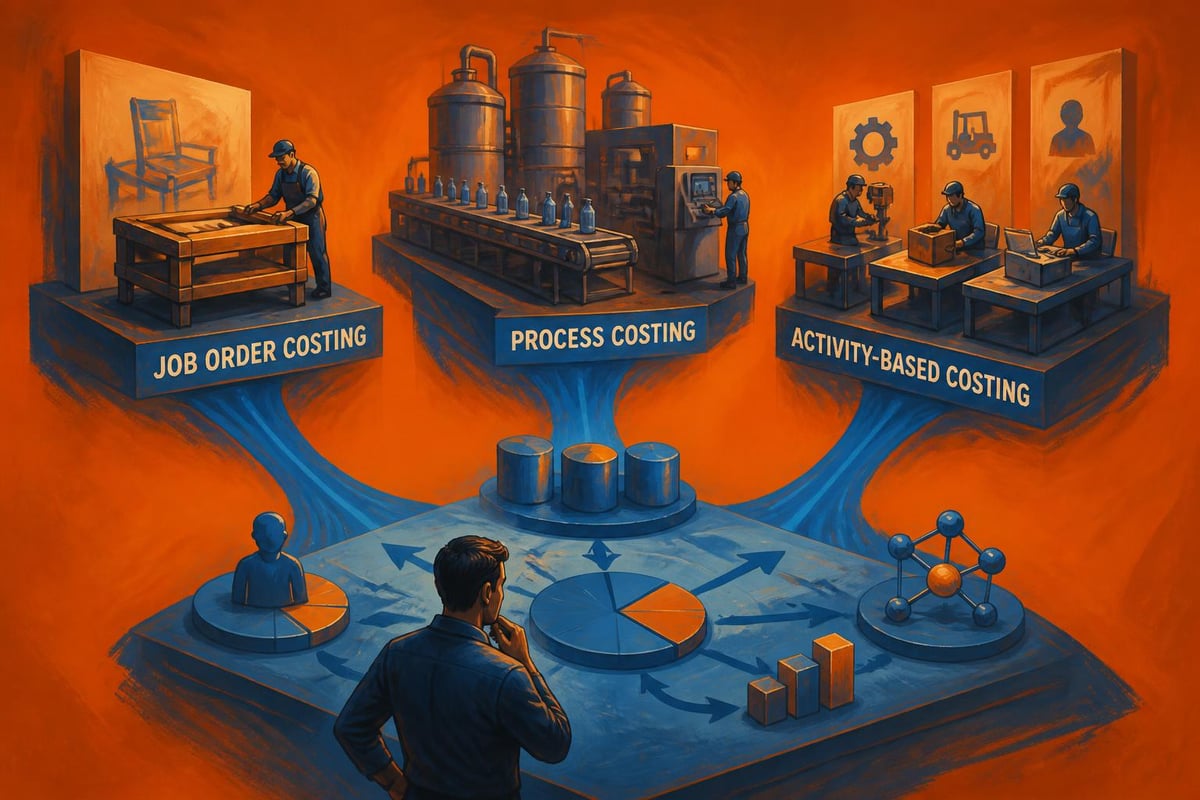
A structured curriculum-such as a cost management accounting course from NASBA-provides hands-on training in job order costing, activity-based costing, and total quality management. These concepts translate directly into operational decisions: which products to prioritize, how to price services competitively, and where to reduce waste without sacrificing quality.
Bridging the Gap Between Finance and Operations
Operational managers often view finance as a separate function, but cost management reveals how every decision impacts the bottom line. When leaders grasp the relationship between variable costs, fixed overhead, and contribution margin, they can:
- Forecast resource needs based on production volume
- Identify cost drivers that inflate budgets
- Negotiate supplier contracts with confidence
- Evaluate make-versus-buy decisions with data
This financial fluency strengthens cross-functional collaboration. Teams that speak the same language as finance build credibility, secure budget approvals faster, and demonstrate ROI with precision.
Core Components of a Cost Management Accounting Course
Effective programs balance theory with application, ensuring participants can immediately apply concepts to real business scenarios.
| Course Component | Business Application | Expected Outcome |
|---|---|---|
| Cost behavior analysis | Predicting how expenses change with volume | More accurate budgeting and forecasting |
| Inventory valuation methods | Choosing FIFO, LIFO, or weighted average | Optimized tax strategy and cash flow |
| Variance analysis | Comparing actual costs to budgets | Early detection of inefficiencies |
| Capital budgeting | Evaluating long-term investments | Data-driven expansion decisions |
Practical Tools for Immediate Use
Courses from the American Management Association emphasize creating costing systems tailored to manufacturing environments, while UC San Diego’s cost accounting program blends textbook theory with Excel templates for collecting and analyzing data. These resources enable managers to build scorecards, track KPIs, and report progress in language executives understand.
A cost management accounting course also introduces benchmarking techniques. Comparing departmental efficiency ratios, cost per unit, or gross margin percentages against industry standards reveals where your team excels and where improvement is needed. This accountability becomes especially valuable when paired with 360 leadership assessments that identify behavioral patterns impacting financial performance.
Integrating Cost Management Into Leadership Development
For mid-market companies, standalone training rarely delivers lasting change. The most successful organizations embed financial literacy into ongoing coaching and development programs.
Consider a sales manager responsible for client retention. Without understanding customer acquisition costs, lifetime value, or gross margin by account, decisions become reactive. A cost management accounting course equips this leader to:
- Calculate the true cost of serving each client segment
- Identify high-margin accounts worth deeper investment
- Propose pricing adjustments backed by data
- Collaborate with finance on incentive structures tied to profitability
Live Application in Team Settings
Traditional classroom training delivers concepts; coaching brings them to life. When executive coaching happens live in your meetings, coaches can guide managers through real-time financial analysis. A team debating whether to expand into a new market benefits from a facilitator who prompts cost-volume-profit discussions, challenges assumptions about fixed costs, and ensures ROI projections reflect realistic scenarios.
This approach aligns with how Noomii delivers measurable business results by coaching on the problems you're actually solving, not hypothetical case studies. Managers practice new skills in the moments that matter, receive immediate feedback, and see their decisions validated or adjusted based on financial impact.

Choosing the Right Program for Your Team
With dozens of options available-from university courses like those at University of Colorado Boulder to specialized programs from Becker CPE-selection depends on your team's baseline knowledge and business context.
Key Selection Criteria
- Industry relevance: Manufacturing-focused courses emphasize inventory and production variances, while service businesses benefit from overhead allocation and capacity utilization topics
- Time commitment: Self-paced online programs from providers like Coursera accommodate busy schedules, while intensive seminars deliver faster results
- Certification value: Courses offering CPE credits appeal to accountants transitioning into management, but practical application matters more than credentials for operational leaders
- Post-training support: Programs that include case studies, Excel templates, and peer discussion forums extend learning beyond the classroom
| Provider | Format | Duration | Best For |
|---|---|---|---|
| NASBA | Online self-paced | 8-12 hours | CPE credit seekers |
| AMA | In-person seminar | 2-3 days | Manufacturing managers |
| Coursera | Video lectures + assignments | 4 weeks | Budget-conscious teams |
| Becker | Online modules | 2-4 hours | Focused skill-building |
Organizations serious about building financial literacy across multiple management levels often choose blended approaches: core content delivered through a cost management accounting course, followed by team-based coaching that applies concepts to strategic priorities. This combination ensures knowledge retention and behavioral change, not just certificate collection.
Measuring the Impact on Business Performance
Training investments must deliver visible ROI. The best way to evaluate a cost management accounting course is by tracking changes in decision-making speed, budget accuracy, and profitability.
Leading indicators of success include:
- Reduction in budget variance percentages quarter over quarter
- Increased manager participation in financial planning cycles
- Faster approval timelines for capital requests due to stronger business cases
- Improved gross margin through better pricing and cost control

Lagging indicators confirm long-term value: higher employee engagement scores, lower turnover among managers who feel equipped to lead, and cleaner execution across priorities because teams understand how their work drives financial outcomes. When coupled with performance coaching that reinforces financial discipline, these programs transform company culture.
Linking Learning to Operating Cadence
Companies that integrate cost management principles into weekly scorecards and monthly business reviews see faster adoption. Instead of treating financial literacy as a one-time event, embed it into your operating rhythm. Review cost variances in team huddles, celebrate managers who identify savings opportunities, and make financial performance a standing agenda item.
This approach complements platforms like AccountabilityNow, which help teams track commitments and follow through on cost reduction initiatives. When managers know their cost management skills will be tested regularly through KPI reviews, they engage more deeply with training content and apply concepts immediately.
A cost management accounting course equips managers with the financial literacy to drive accountability, make data-backed decisions, and contribute to measurable business results. When organizations pair structured training with live coaching that ties progress to clear KPIs, leaders develop the confidence to execute cleanly across priorities. Noomii delivers this practical approach: rolling up our sleeves, coaching in your meetings, and ensuring every leadership development investment shows visible ROI. If you want manager training that builds accountable teams and strengthens execution, explore how Noomii can help.



Leave a Reply
Want to join the discussion?Feel free to contribute!