
Coaching and Development: Building Leadership Excellence
Organizations across all sectors recognize that sustainable competitive advantage stems from one critical asset: exceptional leadership. The strategic integration of coaching and development initiatives has evolved from a supplemental HR function into a core business imperative that directly impacts organizational resilience, innovation capacity, and long-term profitability. When implemented with precision and aligned to measurable outcomes, coaching and development programs transform individual capabilities while simultaneously strengthening institutional culture and strategic execution.
The Business Case for Strategic Coaching and Development
Executives and HR leaders investing in structured coaching and development programs report quantifiable improvements across multiple performance indicators. Research demonstrates that organizations implementing evidence-based coaching methodologies experience enhanced decision-making quality, improved team engagement, and stronger retention of high-potential talent.
The financial implications are substantial. Companies that deploy comprehensive coaching and development frameworks see measurable returns through reduced turnover costs, accelerated leadership pipeline development, and improved operational efficiency. These programs address the fundamental gap between technical competence and leadership effectiveness that frequently derails otherwise talented professionals.
Evidence-Based Impact Metrics
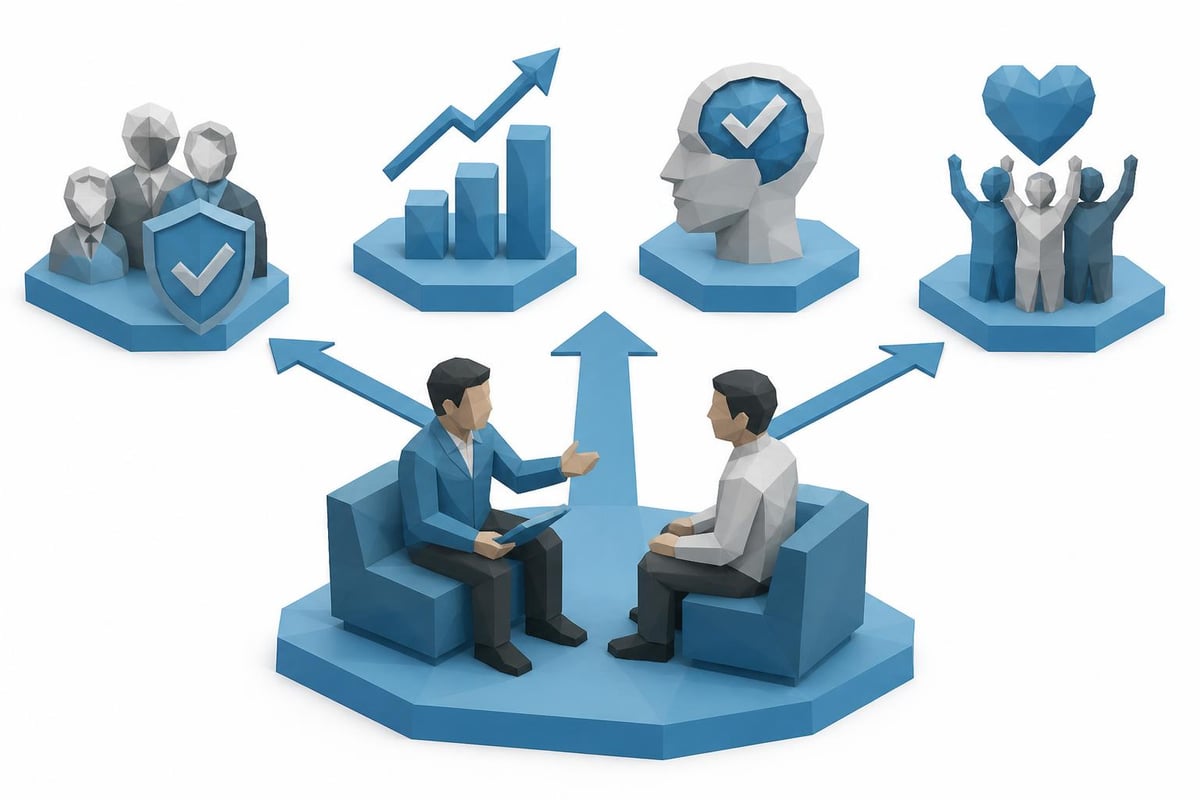
Organizations serious about leadership transformation track specific key performance indicators to validate their coaching and development investments:
- Executive retention rates increase by 25-40% when leaders receive targeted coaching interventions
- Team engagement scores improve significantly when managers participate in structured development programs
- Decision-making quality becomes measurably more strategic and data-informed
- Cultural health indicators show sustained improvement across trust, accountability, and psychological safety dimensions
The Chartered Institute of Personnel and Development emphasizes learning needs analysis as the foundation for effective development interventions. This diagnostic approach ensures coaching resources target the most critical capability gaps rather than applying generic solutions to complex organizational challenges.
Designing High-Impact Coaching and Development Programs
Effective coaching and development initiatives require more than assigning coaches to executives. The most successful programs integrate comprehensive diagnostics, precision matching, targeted intervention plans, and continuous measurement protocols.
Assessment-Driven Program Design
Leadership diagnostics form the cornerstone of results-oriented coaching and development. Organizations must identify specific behavioral patterns, capability gaps, and cultural misalignments before deploying coaching resources. Validated assessment tools provide objective baseline data that informs personalized development roadmaps.
This evidence-based approach distinguishes transformational programs from superficial interventions. When organizations understand the root causes of leadership challenges-whether ineffective communication patterns, strategic thinking deficits, or toxic leadership behaviors-they can deploy coaching resources with surgical precision.
| Assessment Type | Primary Focus | Organizational Benefit |
|---|---|---|
| Behavioral Diagnostics | Leadership style, decision patterns, interpersonal effectiveness | Identifies specific development areas with actionable insights |
| 360-Degree Feedback | Multi-perspective performance evaluation | Reveals blind spots and validates self-perception accuracy |
| Cultural Alignment Surveys | Values congruence, team dynamics, psychological safety | Highlights systemic issues requiring structural interventions |
| Strategic Thinking Assessments | Complex problem-solving, long-term planning capacity | Evaluates readiness for expanded leadership responsibilities |
Precision Coach Matching Methodology
The coaching and development field has evolved beyond generic practitioner assignments. Organizations now demand specialized expertise matched to specific leadership challenges. A finance executive navigating merger integration requires different coaching capabilities than a government agency leader addressing workplace psychological safety concerns.
Advanced matching protocols consider industry sector experience, specialized certifications, proven track records with similar challenges, and compatibility factors that influence coaching relationship effectiveness. This precision approach dramatically improves engagement quality and accelerates leadership transformation.
Implementation Frameworks for Coaching and Development
Successful program execution demands structured implementation frameworks that integrate seamlessly with existing organizational systems while maintaining flexibility to address emerging leadership needs.
Scalable Intervention Architecture
Organizations of all sizes benefit from coaching and development programs designed for scalability without sacrificing personalization. This requires modular program architecture that accommodates individual executive coaching, team-based interventions, and organization-wide leadership development initiatives.
- Diagnostic Phase: Comprehensive leadership assessment across individual, team, and organizational levels
- Strategic Planning: Development roadmap creation aligned to business objectives and compliance requirements
- Coach Deployment: Precision matching and formal engagement initiation with clear outcome definitions
- Active Intervention: Structured coaching sessions with ongoing progress monitoring and adjustment protocols
- Impact Measurement: Quantitative and qualitative evaluation against predefined success metrics
- Sustainability Planning: Integration of learned capabilities into daily operations and leadership practices
The CDC’s quality training standards provide valuable frameworks for structuring development interventions based on adult learning principles. These evidence-based approaches ensure coaching and development programs respect how experienced professionals acquire and integrate new capabilities.
Governance and Compliance Integration
Government agencies and heavily regulated industries require coaching and development programs that align with strict compliance standards and governance frameworks. These organizations cannot compromise on documentation protocols, confidentiality safeguards, or ethical standards.
Effective programs establish clear governance structures that define:
- Confidentiality boundaries between coaching conversations and organizational reporting requirements
- Documentation standards that satisfy audit requirements without compromising coaching relationship integrity
- Ethical guidelines for coach conduct and organizational expectations
- Escalation protocols for situations requiring immediate organizational intervention
- Data security measures protecting sensitive leadership assessment information
Addressing Complex Leadership Challenges Through Coaching and Development
Organizations face increasingly sophisticated leadership challenges that demand specialized coaching interventions beyond traditional development programs.
Transforming Toxic Leadership Patterns
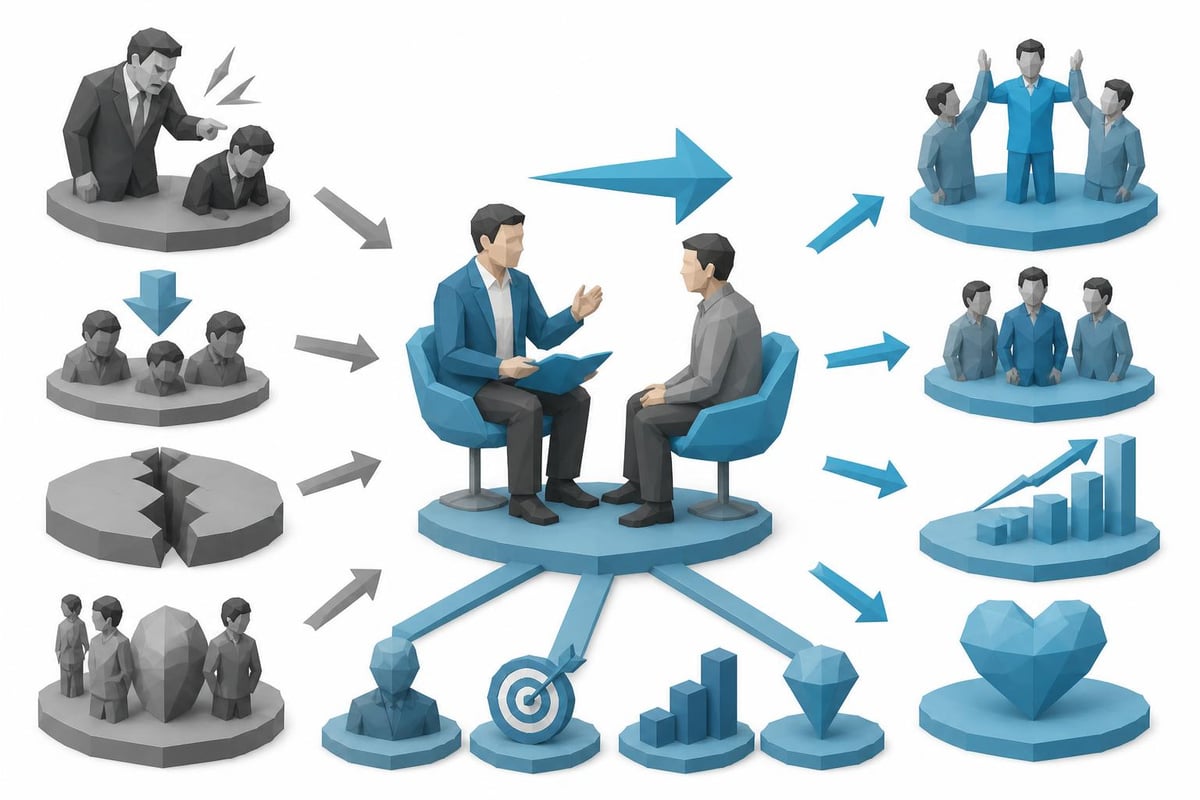
Toxic leadership destroys organizational culture, drives talent attrition, and creates legal liability exposure. Effective coaching and development programs recognize that addressing these patterns requires specialized expertise, structured accountability mechanisms, and clear behavioral change metrics.
Successful interventions combine direct feedback, behavioral modification techniques, ongoing accountability partnerships, and organizational support systems. The coach must possess both the expertise to address complex personality dynamics and the courage to deliver difficult truths that well-meaning internal stakeholders often avoid.
Research published in Frontiers in Psychology on workplace coaching effectiveness demonstrates that structured coaching interventions produce measurable behavioral changes when combined with organizational accountability systems. This meta-analysis validates the science behind professional coaching methodologies.
Strengthening Strategic Decision-Making
Many technically competent leaders struggle when transitioning to roles requiring strategic thinking, complex stakeholder management, and long-term organizational planning. Coaching and development programs targeting these capabilities accelerate executive effectiveness while reducing costly strategic missteps.
Effective interventions focus on:
- Enhancing pattern recognition across complex, ambiguous situations
- Developing stakeholder influence strategies that build coalition support
- Strengthening risk assessment and scenario planning capabilities
- Building resilience to manage uncertainty and navigate organizational politics
- Integrating data-driven insights with intuitive leadership judgment
Measuring Return on Investment in Coaching and Development
Organizations increasingly demand quantifiable proof that coaching and development investments deliver tangible business value. Sophisticated measurement frameworks track both leading indicators of leadership improvement and lagging indicators of organizational performance impact.
Comprehensive Measurement Architecture
| Metric Category | Specific Indicators | Measurement Timing |
|---|---|---|
| Individual Leadership Growth | 360-degree feedback improvement, competency assessment scores, behavioral change ratings | Quarterly during engagement, 6-month post-program |
| Team Performance | Engagement survey results, productivity metrics, collaboration effectiveness scores | Quarterly throughout program duration |
| Organizational Impact | Retention rates of coached leaders and their direct reports, promotion readiness, succession pipeline strength | Annual assessment with trend analysis |
| Financial Returns | Turnover cost reduction, productivity gains, revenue impact from improved decision-making | Annual ROI calculation |
Understanding how much executive coaching costs relative to these measurable outcomes helps organizations make informed investment decisions. The most effective programs demonstrate clear value creation that exceeds program expenditures within defined timeframes.
Longitudinal Impact Tracking
Sustainable leadership transformation requires extended measurement horizons beyond immediate program completion. Organizations implementing coaching and development initiatives track capability retention and continued leadership growth across 12-24 month post-program periods.
This longitudinal approach reveals whether behavioral changes become embedded leadership practices or revert to previous patterns. It also identifies which intervention components produce the most durable impact, informing continuous program improvement.
Building Organizational Coaching Cultures
The most sophisticated organizations move beyond episodic coaching and development interventions toward embedded coaching cultures where continuous learning and development become organizational norms rather than special programs.
Cultural Integration Strategies
Creating coaching cultures requires systematic integration across multiple organizational dimensions. Leadership teams must model vulnerability and growth mindsets while HR systems reinforce coaching values through performance management, promotion criteria, and talent development pathways.
Key integration elements include:
- Leadership modeling: Senior executives publicly engage in coaching relationships and share growth experiences
- Manager capability building: Equipping all people leaders with fundamental coaching skills through structured training
- System alignment: Integrating coaching principles into performance reviews, talent discussions, and succession planning
- Resource accessibility: Providing easy access to coaching resources at multiple organizational levels
- Recognition systems: Celebrating and rewarding leaders who demonstrate commitment to continuous development
The Institute of Chartered Accountants provides resources on coaching and mentoring that help organizations build internal capability while leveraging external expertise strategically.

Developing Internal Coaching Capability
While external executive coaches provide specialized expertise for complex leadership challenges, organizations benefit from developing internal coaching capabilities among HR professionals and senior leaders. This hybrid approach balances cost-effectiveness with access to specialized intervention when situations demand it.
Internal coaching capability supports day-to-day leadership development, normalizes coaching conversations throughout the organization, and creates sustainable development infrastructure independent of external resources. Organizations pursuing this approach must invest in rigorous coach training, supervision structures, and clear boundaries between managerial and coaching roles.
Technology-Enabled Coaching and Development
Digital platforms and artificial intelligence tools are transforming how organizations deliver, track, and optimize coaching and development programs. While technology never replaces the human expertise at the core of effective coaching, it significantly enhances program scalability, measurement precision, and accessibility.
Digital Platform Integration
Modern coaching and development programs leverage technology platforms that facilitate coach-client communication, track progress against development goals, administer assessments, and aggregate data for organizational insights. These systems create transparency while maintaining appropriate confidentiality boundaries.
Platform capabilities that enhance program effectiveness include:
- Centralized assessment administration with automated scoring and comparative analytics
- Secure communication channels for coaching session preparation and follow-up
- Goal tracking dashboards providing visibility into development progress
- Resource libraries offering curated content aligned to specific development needs
- Reporting engines generating individual progress reports and organizational trend analyses
Organizations exploring AI applications in business coaching recognize that technology augments rather than replaces human coaching expertise, particularly for complex leadership transformation initiatives.
Data-Driven Program Optimization
Technology platforms generate rich datasets that inform continuous coaching and development program improvement. Analyzing patterns across coaching engagements, assessment results, and outcome metrics reveals which interventions produce the strongest results for specific leadership challenges.
This evidence-based optimization approach allows organizations to refine matching algorithms, adjust intervention protocols, and allocate resources toward highest-impact activities. The University of Nebraska Medical Center offers coaching resources that help practitioners integrate research findings into practice improvement.
Sector-Specific Coaching and Development Applications
Different organizational contexts demand tailored approaches to coaching and development that respect unique constraints, cultures, and success definitions.
Government and Public Sector Leadership Development
Government agencies face distinct challenges including complex stakeholder environments, intense public scrutiny, regulatory constraints, and mission-driven cultures. Coaching and development programs serving these organizations must align with public service values while building leadership capabilities that navigate political complexity.
Effective public sector programs emphasize:
- Mission alignment: Connecting individual leadership development to broader public service objectives
- Stakeholder management: Building capabilities to navigate diverse constituent interests and political dynamics
- Change leadership: Developing skills to modernize operations within bureaucratic constraints
- Ethical leadership: Strengthening commitment to transparency, accountability, and public trust
- Collaborative governance: Enhancing abilities to work across agency boundaries and jurisdictional lines
Fortune 500 Executive Coaching and Development
Large corporations demand coaching and development programs that operate at significant scale while delivering personalized interventions for senior executives managing billions in assets and thousands of employees. These organizations require proven methodologies, measurable impact, and seamless integration with existing talent management systems.
Corporate programs prioritize:
- High-touch executive coaching for C-suite leaders navigating complex strategic challenges
- Scalable solutions that develop leadership capabilities across global operations
- Cultural transformation initiatives that shift organizational mindsets and behaviors
- Succession planning support ensuring leadership pipeline readiness
- Integration with existing HR technology platforms and talent processes
Understanding whether executive coaching works requires examining both immediate behavioral changes and long-term organizational impact across diverse business contexts.
Future Directions in Coaching and Development
The coaching and development field continues evolving as organizations face increasingly complex leadership demands and new research reveals more effective intervention methodologies.
Emerging Trends Reshaping the Field
Several significant trends are transforming how organizations approach leadership development:
Neuroscience integration: Coaching methodologies increasingly incorporate brain science insights about behavior change, habit formation, and decision-making processes. This evidence base strengthens intervention effectiveness and accelerates leadership transformation.
Virtual delivery models: Remote coaching has evolved from emergency pandemic response to sophisticated delivery methodology offering flexibility, accessibility, and cost advantages while maintaining intervention quality.
Team-based interventions: Organizations recognize that individual executive development produces limited impact when team dynamics remain dysfunctional. Coaching and development programs increasingly address collective leadership capabilities alongside individual growth.
Diversity, equity, and inclusion focus: Leadership development programs explicitly address bias, inclusive leadership practices, and creating psychologically safe environments where diverse perspectives strengthen organizational performance.
The research on coaching theories and practice published in Human Resource Development Review provides frameworks advancing both academic understanding and practical application of coaching methodologies.
Continuous Innovation in Assessment and Matching
Assessment technologies continue advancing, providing more nuanced insights into leadership capabilities, potential, and development needs. Sophisticated algorithms analyze behavioral patterns, communication styles, and decision-making approaches with increasing precision.
These innovations enable more accurate coach matching that considers not just surface credentials but deep compatibility factors predicting coaching relationship effectiveness. Organizations benefit from higher engagement rates, faster progress toward development goals, and improved return on coaching investments.
Strategic coaching and development initiatives transform leadership capabilities while delivering measurable organizational impact across retention, engagement, and performance metrics. When programs integrate evidence-based diagnostics, precision matching, targeted interventions, and robust measurement frameworks, they produce sustainable leadership excellence that drives competitive advantage. The Noomii Leadership Coaching program delivers these sophisticated coaching and development solutions through advanced assessment tools, proprietary matching algorithms, and a global network of certified executive coaches serving government agencies, Fortune 500 companies, and organizations committed to leadership excellence. For organizations seeking accountability in leadership transformation, Noomii provides the structured frameworks and specialized expertise that convert leadership potential into demonstrated performance.



Leave a Reply
Want to join the discussion?Feel free to contribute!