
ChatGPT Was a Terrible Coach for Accountability
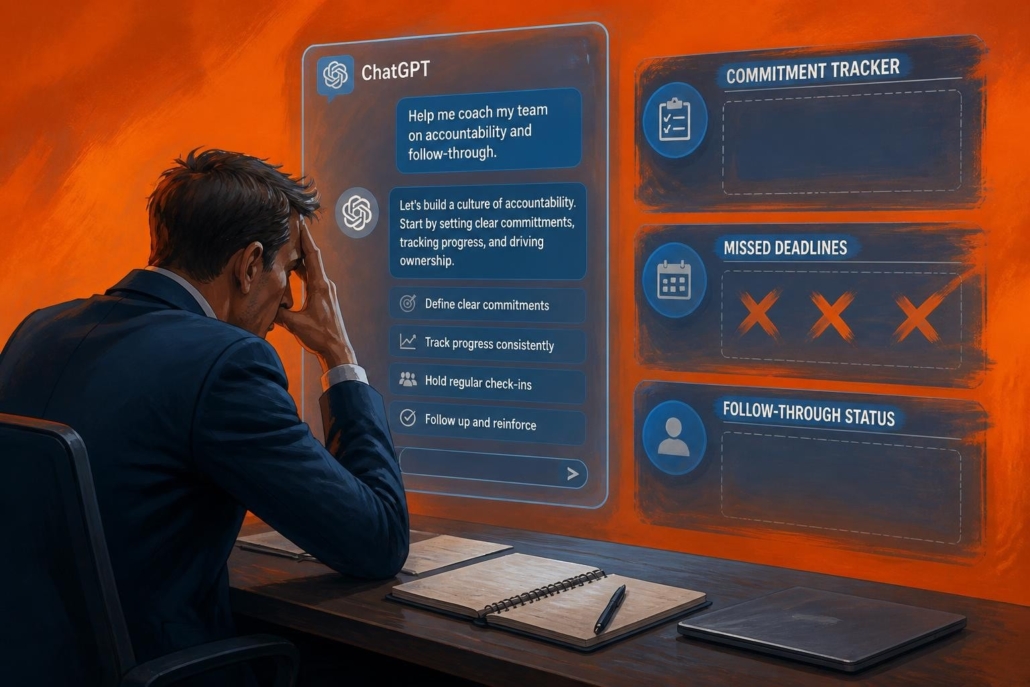
A VP at a 250-person logistics firm tried an experiment in Q3 2026. Rather than hire accountability coaching for his struggling operations managers, he built custom GPT prompts and encouraged his team to use ChatGPT for weekly check-ins, goal tracking, and performance accountability. Three months later, not a single manager had improved their on-time project completion. Two quit. The VP called it "the most expensive free tool I ever used." His experience wasn't unique. ChatGPT was a terrible coach for accountability, and the reasons why matter for anyone considering AI as a substitute for human coaching.
Why Leaders Tried ChatGPT for Accountability Coaching
The pitch sounded compelling. ChatGPT offers 24/7 availability, instant responses, zero scheduling friction, and costs nothing compared to professional coaching fees. For mid-market companies watching budgets, the appeal is obvious.
Common use cases included:
- Weekly goal-setting conversations
- Progress check-ins and reflection prompts
- Accountability reminders and nudges
- Problem-solving for stuck projects
- Motivation and encouragement
Many leaders assumed that if ChatGPT could write code, summarize reports, and draft strategy memos, it could surely handle basic accountability conversations. Research comparing AI coaching to human coaching showed some promise in narrow goal-attainment scenarios, which fueled optimism.
But accountability coaching isn't about generating text. It's about creating uncomfortable pressure, reading evasion, calling out patterns, and refusing to let someone off the hook when they want to quit.

The Five Failure Modes That Made ChatGPT a Terrible Coach for Accountability
No Memory, No Pattern Recognition
ChatGPT doesn't remember last week's excuse or notice when someone's third project in a row stalled at the same phase. Even with custom instructions and chat history, GPT models struggle with longitudinal pattern recognition across sessions because they lack episodic memory and contextual continuity.
A human accountability coach tracks themes: "You've now missed three sprint deadlines when cross-functional stakeholders were involved. What's really happening?" ChatGPT treats each conversation as isolated. It can't connect dots it doesn't see.
It Can't Detect Avoidance or Rationalization
Accountability breaks down the moment the coach accepts excuses that sound reasonable but hide deeper issues. ChatGPT was a terrible coach for accountability because it accepted every rationalization at face value.
| Human Coach Response | ChatGPT Response |
|---|---|
| "That's the third time you've blamed the vendor. What's your part in this?" | "Vendor delays can be frustrating. Have you considered adjusting your timeline?" |
| "You're avoiding the real issue. Let's talk about your team." | "It sounds like you have several priorities. What feels most important?" |
| "I don't believe that. What are you not telling me?" | "I understand. Let's explore your options together." |
The difference isn't politeness. It's willingness to create discomfort. Studies on working alliance development with AI coaches confirm that AI avoids confrontation, which undermines the core mechanic of accountability: consequence and pressure.
No Relational Consequence When You Ghost
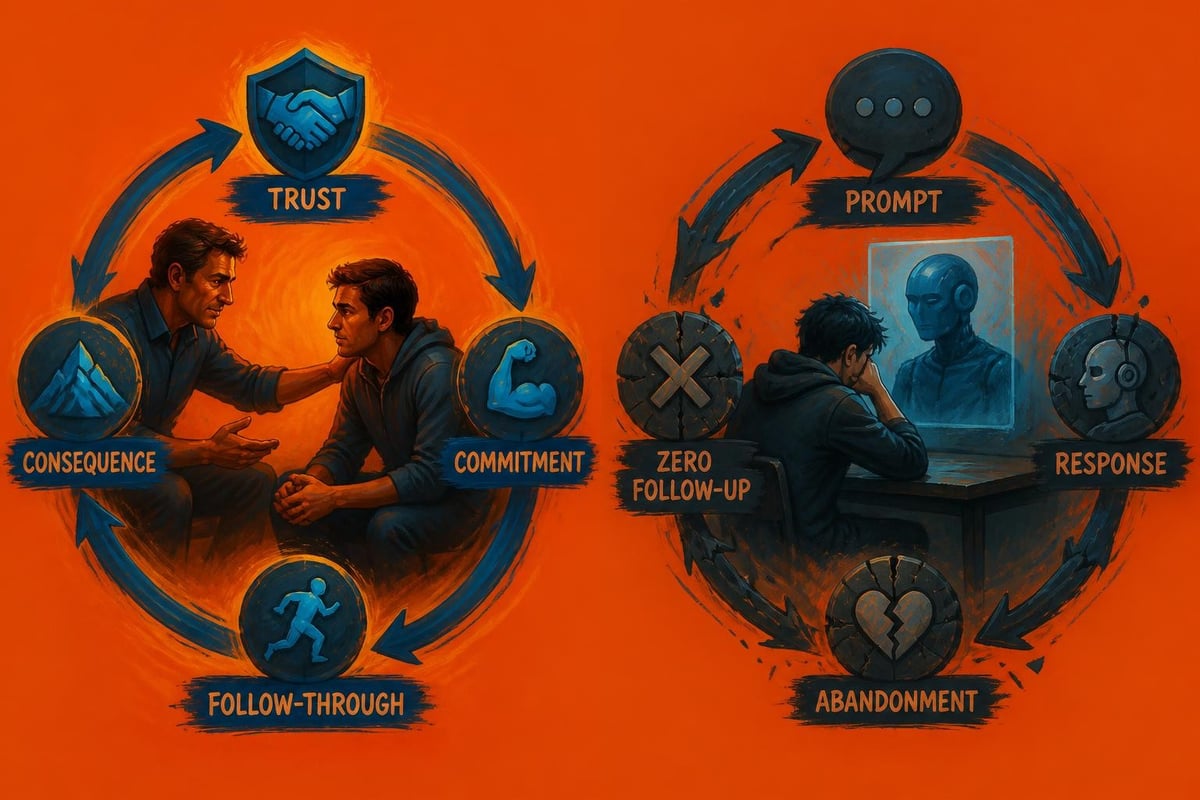
Accountability requires stakes. When you skip a session with a human coach, you disappoint someone, waste their time, and damage trust. That social cost matters.
With ChatGPT, you simply stop logging in. There's no guilt, no follow-up call, no "What happened? You committed to this." The lack of relational consequence makes it trivially easy to quit the moment discipline feels hard.
It Can't Escalate or Adapt Challenge Appropriately
Good accountability coaching adjusts intensity. When someone's coasting, you push harder. When they're overwhelmed, you dial back and focus them. When they're stuck in a loop, you change the question entirely.
ChatGPT delivers the same pleasant, affirming tone regardless of context. It won't say, "This is the fourth week you've said you'll talk to your CFO and haven't. Either do it this week or admit you're not going to." That kind of calibrated escalation requires judgment, relationship equity, and willingness to risk the engagement ending.
It Lacks the Authority and Expertise to Challenge Diagnosis
Accountability often fails because the person is solving the wrong problem. A manager blames "time management" when the real issue is delegation avoidance. A VP focuses on "team alignment" when the real problem is his own indecision.
ChatGPT can't diagnose root cause from evasive language, body language, and what's not being said. Meta-analysis on empathy in AI versus human care shows AI can simulate empathy but lacks the clinical or business judgment to reframe problems. Real coaches, especially those with leadership coaching experience, bring domain expertise that lets them say, "That's not a priority problem. Here's what I think is actually breaking."
What Actually Works for Accountability Coaching
Accountability isn't a chatbot. It's a relationship built on three things: trust, consequence, and expertise.
Human accountability coaching delivers:
- Pattern recognition across weeks and months – Coaches track themes, call out avoidance, and connect behaviors to outcomes.
- Adaptive challenge calibrated to the person – Pressure increases or decreases based on real-time assessment, not pre-written prompts.
- Relational stakes that create follow-through – Disappointing your coach, wasting their time, or breaking trust creates friction that prevents quitting.
- Expertise to reframe the problem – Experienced coaches diagnose what's actually broken, not just what the client says is broken.
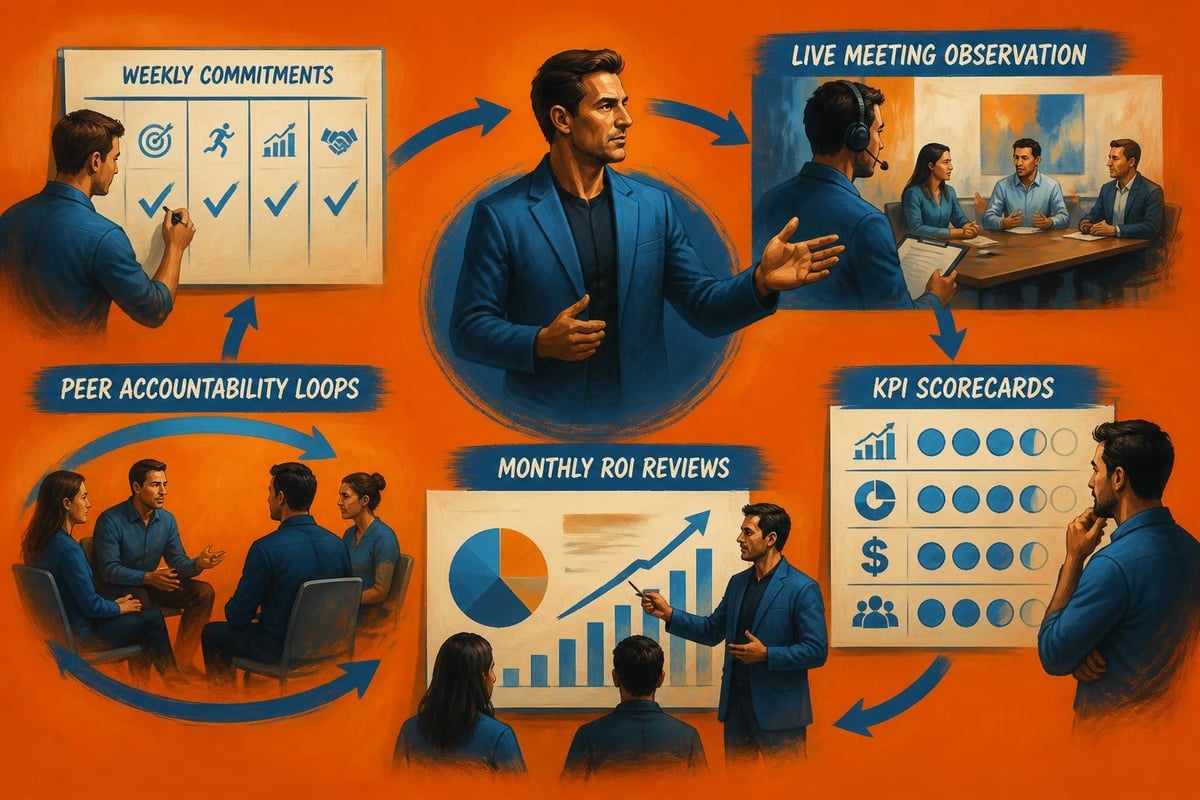
- Live observation and in-meeting coaching – The best accountability happens when coaches see you operate, not just hear your summary.
For mid-market companies, this means working with coaches who integrate into your operating rhythm. Noomii’s corporate coaching model embeds coaches in leadership meetings, ties progress to KPIs, and operates month-to-month so results determine continuation, not contracts.
The Regulatory and Consumer Protection Context
As AI tools flood coaching markets, regulators are catching up. The European Union’s AI Act classifies certain AI coaching and mental health applications as high-risk systems requiring transparency, oversight, and accountability mechanisms. In the U.S., the Federal Trade Commission has cracked down on deceptive AI claims, warning businesses against overstating AI capabilities in coaching, therapy, and guidance roles.
The message is clear: chatgpt was a terrible coach for accountability, and buyers deserve honest disclosure about what AI can and cannot do.
Evidence-Based Alternatives to AI Accountability Tools
If you need accountability coaching that works, here's what to look for:
- Coaches who operate inside your meetings, not on the sideline
- KPI-linked progress tracking with visible business outcomes
- Monthly or quarterly reviews that tie coaching to retention, decision speed, or execution quality
- No long contracts-if results aren't visible, you should be able to leave
- Domain expertise in your industry, whether logistics, SaaS, or professional services
Platforms like Noomii connect companies with vetted executive and leadership coaches who specialize in accountability, team development, and operating cadence, with transparent pricing and outcome focus.
Frequently Asked Questions
Can ChatGPT help with any part of accountability coaching?
Yes, for low-stakes tasks like journaling prompts, brainstorming options, or organizing thoughts before a real coaching session. It's a tool, not a coach.
What makes human accountability coaching more effective than AI?
Humans recognize patterns, challenge rationalizations, create relational consequences, adapt pressure in real time, and bring expertise to reframe problems. AI lacks all five capabilities.
Is AI coaching ever appropriate for business leaders?
AI can supplement learning (summaries, research, idea generation), but it cannot replace the relational and diagnostic work of accountability coaching.
How do I know if a coach is good at accountability?
Ask for examples of how they've confronted clients, how they track patterns, and what happens when someone misses commitments. Good coaches have clear answers.
What should accountability coaching cost for mid-market companies?
Expect $3,000–$8,000 per month for embedded executive or team coaching, depending on scope and intensity. Executive coaching cost structures vary by provider and engagement model.
Can I use ChatGPT alongside a human accountability coach?
Absolutely. Many coaches encourage clients to use AI for prep work, reflection prompts, or between-session tracking, with the coach providing the relational accountability layer.
Why did so many leaders try ChatGPT for accountability in 2026?
Budget pressure, AI hype, and the appeal of 24/7 availability made it seem like a viable shortcut. Early failures corrected that assumption quickly.
What's the biggest risk of relying on AI for accountability?
You waste weeks or months on a tool that can't deliver real behavior change, and by the time you realize it, the performance problem has deepened.
Where can I find accountability coaches who tie progress to business KPIs?
Look for coaches with operating or executive backgrounds who offer month-to-month terms and integrate into your leadership cadence, like those available through Noomii’s corporate coaching directory.
ChatGPT was a terrible coach for accountability because it lacked the memory, judgment, relational stakes, and adaptive challenge required to drive real behavior change. When your business needs leaders and teams who execute, decide faster, and follow through on commitments, you need coaches embedded in your operations, not chatbots offering encouragement. Noomii helps mid-market companies build accountable leadership through live coaching, KPI tracking, and month-to-month engagements tied to measurable results-because real accountability requires real stakes and real expertise.


Leave a Reply
Want to join the discussion?Feel free to contribute!