

Are Coaches Actually Qualified? What Buyers Need to Know
When you're about to spend $15,000 or more on executive coaching for your leadership team, the question "are coaches actually qualified" isn't academic. It's the difference between measurable ROI and expensive disappointment. The coaching industry lacks mandatory licensing, meaning anyone can print business cards tomorrow. Mid-market leaders need a framework to separate qualified practitioners from credential collectors who've never run a P&L or sat in a difficult board meeting.
The Credential Gap: What Certifications Actually Measure
Most coaching certifications test course completion, not competence. The International Coach Federation and similar bodies verify training hours and supervised sessions, but research on workplace coaching effectiveness shows that coach qualification is only one moderator of outcomes, and effect sizes vary widely based on how qualification is defined.
Here's what typical certification programs assess:
- Coaching model knowledge: Can the coach explain GROW, Co-Active, or Solution-Focused frameworks?
- Practice hours logged: Did they complete 100 or 500 hours of conversation?
- Mentor oversight: Did a senior coach observe and approve their sessions?
- Ethics training: Do they understand confidentiality and boundaries?
What certifications rarely measure:
- Business acumen in the client's industry
- Pattern recognition across hundreds of similar challenges
- Ability to diagnose organizational dysfunction versus individual gaps
- Track record linking coaching interventions to KPI improvement

The UK's Prospects career authority notes that coaching remains unregulated, meaning credentials serve as quality signals but guarantee nothing. A coach with zero letters after their name but fifteen years leading sales teams may deliver more value to your VP of Revenue than a freshly credentialed practitioner who's never closed a deal.
Five Tests That Reveal Actual Qualification
When evaluating whether coaches are actually qualified for your organization, apply these firsthand filters developed across hundreds of engagements:
1. The Diagnosis Test
Challenge: Describe a real performance issue in your organization without revealing the root cause.
What to listen for: Does the coach ask diagnostic questions about systems, incentives, and context, or do they immediately propose their favorite framework? Qualified coaches diagnose before prescribing. In one 2025 assessment, we watched a candidate coach misdiagnose a sales performance gap as a motivation problem when the actual issue was unclear territory assignments creating channel conflict.
2. The KPI Connection Test
Ask: "How would you measure success in this engagement, and what leading indicators would you track monthly?"
Coaches who default to "engagement scores" or "self-reported confidence gains" haven't connected their work to business outcomes. Look for practitioners who discuss pipeline velocity, decision cycle time, retention rates, or other metrics your CFO respects. Team coaching that doesn't tie to scorecards rarely survives budget reviews.
3. The Industry Pattern Test
| Question to Ask | Weak Response | Strong Response |
|---|---|---|
| "What patterns do you see in our industry?" | Generic leadership advice | Specific observations about your sector's challenges, competitive dynamics, or regulatory pressures |
| "Who else have you coached in our space?" | "Confidential, but many executives" | Names (with permission) or detailed anonymized case outcomes showing sector knowledge |
| "What's changing in our market?" | Boilerplate about disruption | Informed perspective on your specific headwinds backed by evidence |
4. The Methods Transparency Test
Ask coaches to explain their approach in detail. Qualified practitioners share frameworks openly because their value lies in application, not secret formulas. Red flag: coaches who describe proprietary methods but can't explain the theory or evidence base. The Global Code of Ethics emphasizes transparency and informed consent.
5. The Risk-Sharing Test
Proposal: "Our budget is tight. Would you consider tying some compensation to measurable outcomes?"
Coaches confident in their impact often structure aligned incentives. Those who refuse any performance element may be signaling that their work doesn't reliably move needles. We've used month-to-month terms with outcome bonuses since 2019, which forces constant demonstration of value.
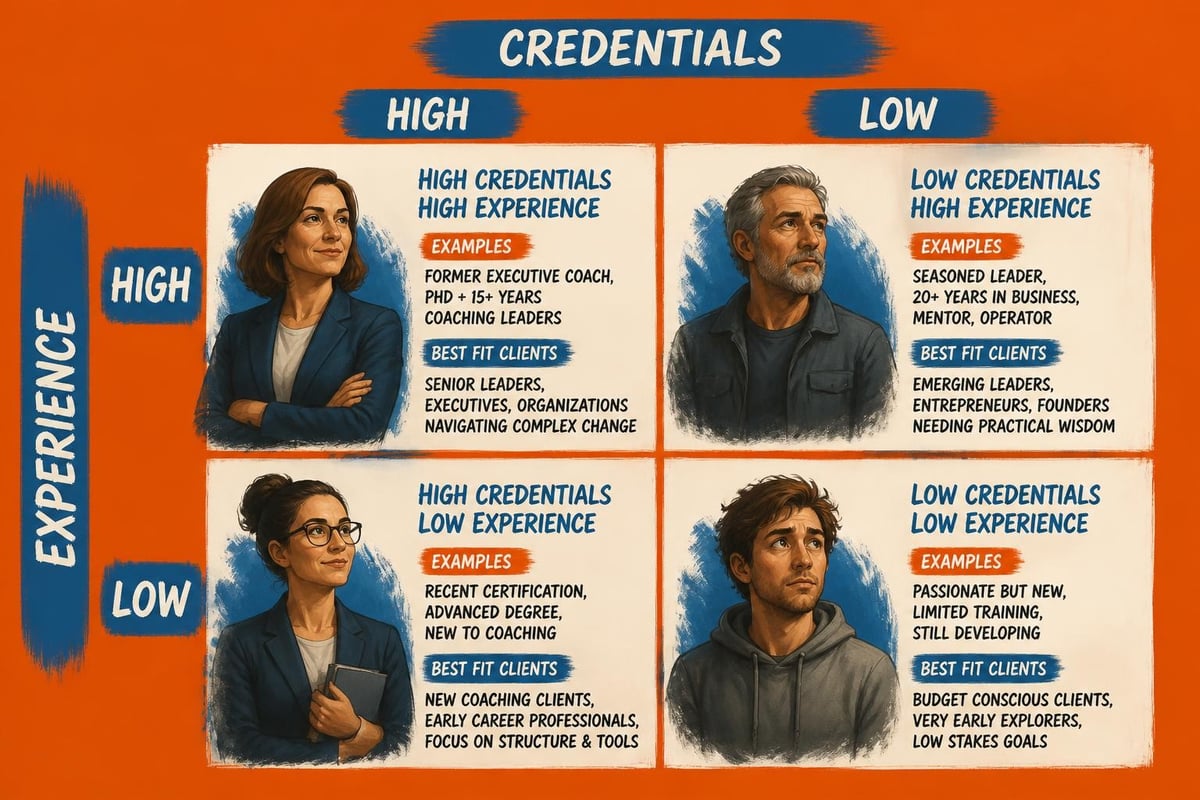
The Experience Versus Credential Tradeoff
A 2023 systematic review of healthcare coaching found that coach background mattered, but not always in the expected direction. Clinicians brought medical knowledge; non-clinicians sometimes delivered better behavioral change outcomes because they focused on motivation and systems rather than prescribing solutions.
The corporate parallel: are coaches actually qualified if they hold advanced credentials but have never navigated organizational politics, budget constraints, or board pressure? Context expertise often trumps certification level.
When credentials matter most:
- Specialized niches requiring technical knowledge (financial coaching, health/wellness coaching per Harvard Health guidance)
- Sensitive situations involving trauma, mental health boundaries, or clinical referrals
- Heavily regulated industries where compliance understanding is critical
- Organizations with strict vendor requirements mandating specific certifications
When experience matters more:
- Strategic execution challenges requiring business judgment
- Leadership development for seasoned executives skeptical of "soft skills"
- Cultural transformation in competitive, results-driven environments
- Situations where the coach needs instant credibility with hard-nosed operators
Many business coaches build exceptional practices by pairing deep industry experience with just enough coaching training to structure their wisdom effectively.
What Buyers Miss When Vetting Coaches
The Reference Check Failure
Most buyers ask for references but don't probe for disconfirming evidence. Try this: "Can you connect me with a client where the engagement didn't go as planned? What did you learn?" Coaches who've never had a difficult engagement are either lying or haven't done enough work to encounter complexity.
The Scope Mismatch
A coach brilliant at one-on-one executive presence work may lack the facilitation and systems-thinking skills for team coaching with intact groups. Qualification isn't binary; it's context-dependent. We've seen credentialed coaches fail in group settings because they couldn't manage conflict or navigate power dynamics in real time.
The AI and Technology Blind Spot
By 2026, qualified coaches need digital fluency. Can they use collaboration platforms effectively? Do they understand how AI coaching tools complement or threaten their work? Emerging standards around AI in coaching address data ethics and algorithmic transparency, but many practitioners haven't updated their competencies for hybrid delivery models combining human insight with technology leverage.
The Long-Term Development Gap
Some coaches excel at short interventions but lack the staying power for 12-18 month leadership development journeys. Ask about their longest client relationship and why it endured. The answer reveals whether they build dependency or growing independence.
Red Flags That Signal Underqualified Coaches
Watch for these patterns during vetting:
- Jargon overload: Excessive coaching-speak often masks thin business understanding
- One-size-fits-all proposals: Qualified coaches customize based on diagnostic conversations
- Defensiveness about methods: Credible practitioners explain their approach transparently
- Credential name-dropping: Leading with letters (ICF-PCC, EMCC-SP) before asking about your challenges
- Vague success stories: No specifics on problem, intervention, and measurable result
- Unwillingness to engage with skeptics: Strong coaches don't need everyone to believe in coaching upfront; they earn trust through results
Building Your Qualification Framework
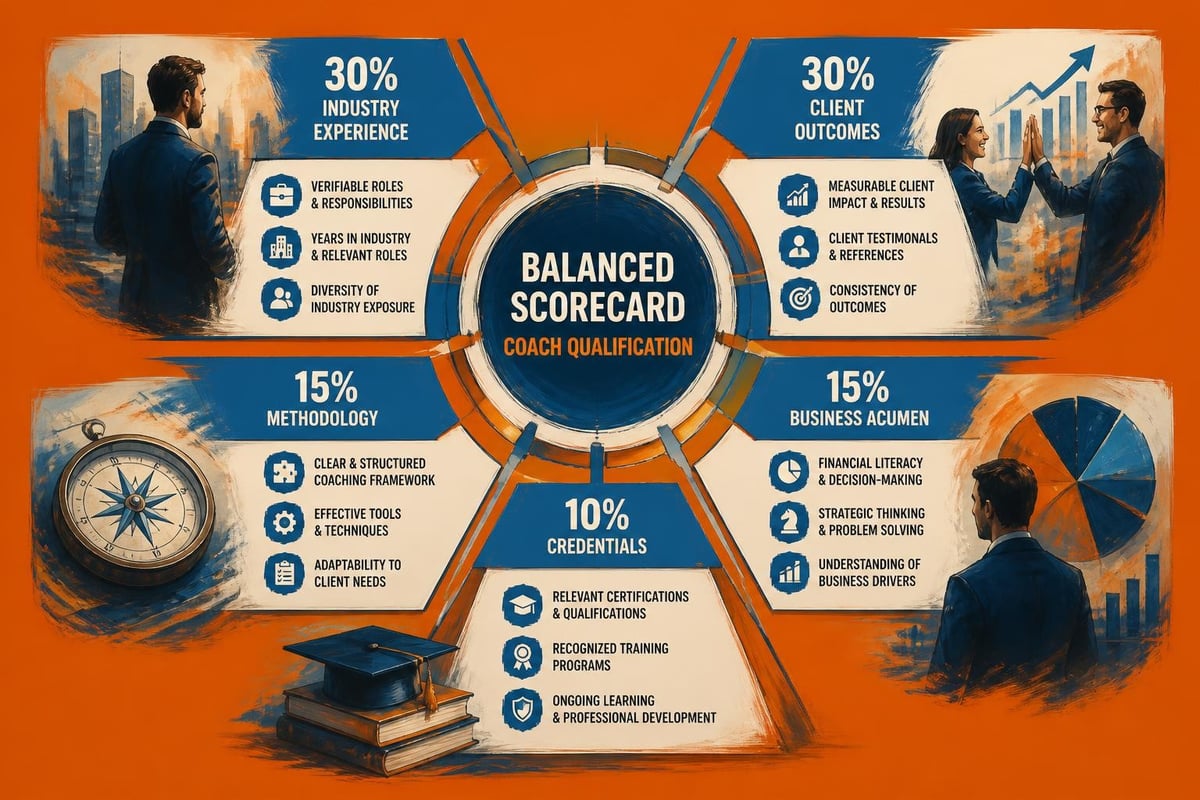
Create a scorecard balancing multiple factors:
| Qualification Factor | Weight | What to Verify |
|---|---|---|
| Relevant industry experience | 30% | Years in similar roles, company size, complexity |
| Demonstrated client outcomes | 30% | Case examples with metrics, reference depth |
| Coaching methodology | 15% | Clear approach, evidence-informed, customizable |
| Business acumen | 15% | P&L understanding, strategic thinking, commercial judgment |
| Credentials and training | 10% | Legitimate programs, ongoing development, ethics |
This framework prevents both credential worship and anti-intellectual dismissal of professional development. The question "are coaches actually qualified" requires nuanced assessment across multiple dimensions.
What Qualified Looks Like in Practice
Case Study: A mid-market SaaS company with 180 employees faced declining manager effectiveness scores and a 31% annual turnover among high-performers. They vetted eight coaches, ranging from newly certified practitioners to veterans with premium credentials.
Problem: First-time managers promoted from individual contributor roles lacked coaching skills and defaulted to micromanagement.
Diagnosis: The selected coach (15 years in SaaS operations, moderate credentials) diagnosed the issue as systemic, not individual. New managers received no training, unclear success criteria, and conflicting signals from executives about autonomy versus control.
Solution: Rather than pure coaching, the engagement combined manager training workshops, live coaching during actual 1-on-1s and team meetings, and scorecards tracking manager behaviors and team health metrics.
Result: After six months, manager effectiveness scores rose 28 points, high-performer turnover dropped to 18%, and the CEO could articulate clear ROI when the board questioned the investment.
Lesson: The most qualified coach wasn't the most credentialed but the one who understood SaaS growth challenges, diagnosed root causes versus symptoms, and tied interventions directly to retention economics.
Qualification in coaching isn't about credentials alone; it's about relevant experience, diagnostic skill, business judgment, and demonstrated outcomes in contexts similar to yours. When you're ready to work with coaches who roll up their sleeves, embed in your operations, and tie every intervention to measurable KPIs, explore how Noomii connects mid-market companies with results-focused practitioners. We help you cut through credential noise and find coaches qualified to move your specific needles, with month-to-month terms that keep everyone accountable.



Leave a Reply
Want to join the discussion?Feel free to contribute!